California Heats Up

A chilly summer suddenly switches to record-breaking heat in much of California.  Is this climate change?
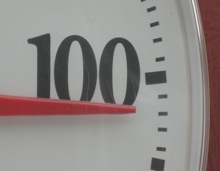
Photo: Craig Miller

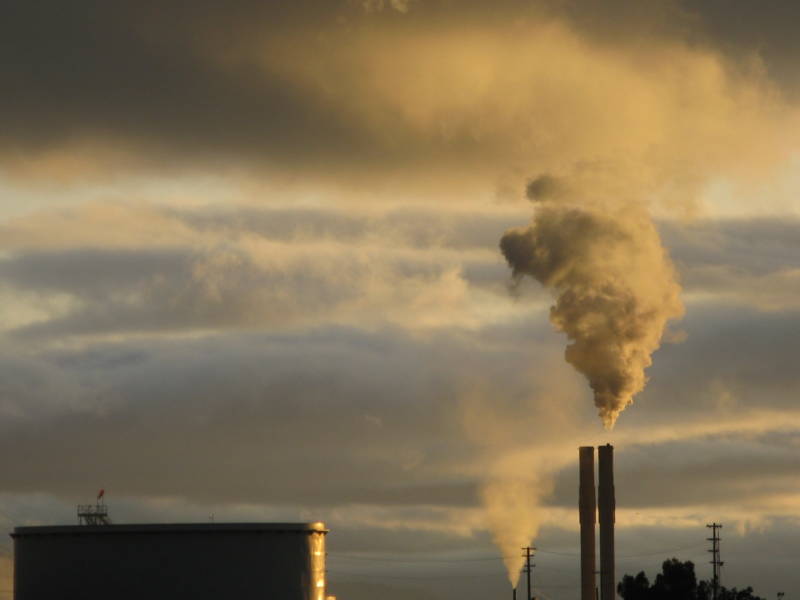
It reached 113 degrees in Los Angeles on Monday, a record. And while a string of hot days in California doesn’t signify climate change any more than do record snowstorms in Washington D.C., the summer of 2010 did set quite a few records for high temperatures and heat waves. Although for us here in California, this week notwithstanding, we’ve had a pretty cool summer.

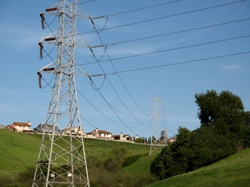
But this week’s heat — especially in Southern California — is a reminder of the ripple effects that could become commonplace if predictions of more frequent and severe heat waves come to pass, with a changing climate. Utilities pleaded with customers to conserve power as temperatures triggered record spikes in the electricity load and subsequent strain on the electrical grid. Continue reading California Heats Up


New Federal Climate Change Plan for Wildlife


Caribou on Alaska’s North Slope

By Andrew Freedman

Calling global climate change “the transformational conservation challenge of our time,” the U.S. Fish & Wildlife Service (FWS) issued a new climate change strategic plan on Monday, which represents a significant shift in the agency’s approach to protecting species. The plan puts a heavy emphasis on the need for the federal government to work closely with state and local agencies, academia, and private groups as climate change alters the suitable habitat for many species across the country.

As the plan notes, climate change is already shifting habitat and threatening species large and small, from polar bears to alpine plants.

“In the history of wildlife conservation, the Service and the larger conservation community have never experienced a challenge that is so ubiquitous across the landscape. Our existing conservation infrastructure will be pressed to its limits — quite likely beyond its limits — to respond successfully,” the plan states.
Continue reading New Federal Climate Change Plan for Wildlife

Schwarzenegger Blasts Oil Companies

Photo: Angela George

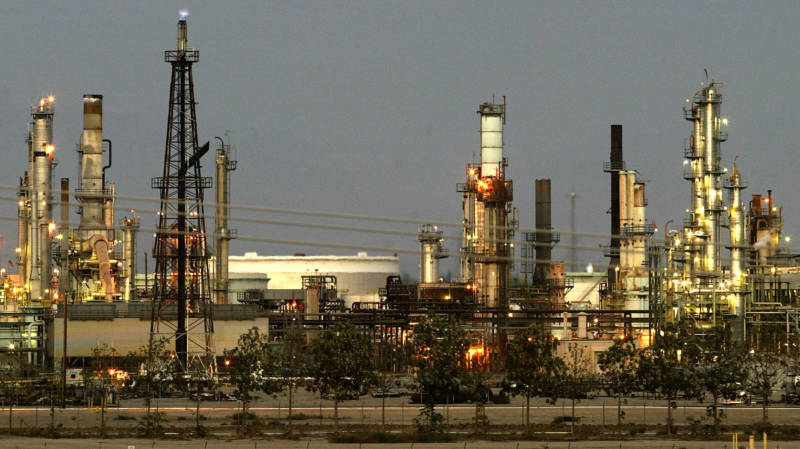
California Governor Arnold Schwarzenegger used his appearance at the Commonwealth Club in Santa Clara today to “put a spotlight” on what he called the “self-serving greed” of oil companies Valero, Tesoro, and Koch Industries. These companies, two of which he described as among the state’s top polluters, are bankrolling Proposition 23 for their own gain, while trying to hide behind a false claim that the initiative would be good for the state’s economy, said the Governor. Prop 23 would suspend California’s Global Warming Solutions Act, AB 32, which authorizes incentives and regulations for reducing the state’s greenhouse gas emissions to 1990 levels by 2020. Schwarzenegger’s speech was timed to the fourth anniversary of the law.

Proponents of the ballot measure claim that allowing AB 32 to be fully implemented would drive businesses from the state and could potentially cost the state more than a million jobs, a figure which has been challenged in several studies. Continue reading Schwarzenegger Blasts Oil Companies

Californians Split on Prop. 23

ConocoPhillips refinery in Rodeo, CA (Photo: Craig Miller)

A new poll finds that while two-thirds of Californians think global warming is an important issue, they are divided right down the middle when it comes to Proposition 23, the LA Times reports.  Prop. 23 is the ballot initiative that would suspend AB 32, California’s Global Warming Solutions Act, until the employment situation improves.  The poll, which was conducted for the Los Angeles Times and the University of Southern California, found 40% of those surveyed  in favor of Prop. 23 and 38% opposed.  Twenty-two percent were undecided.

More Proposition 23 coverage from Climate Watch

Tackling Greenhouse Gases from Cars

Photo: Craig Miller

California’s regional planning authorities need to find new ways to get people to leave their cars at home.

Passenger vehicles are the single largest source of greenhouse gases in California, comprising one third of all the state’s emissions.  Senate Bill 375, passed in 2008, is designed to chip away at those emissions by curbing sprawl and encouraging infrastructure that gets Californians to drive less — or at least, not as far.

This week the state Air Resources Board met a milestone (so to speak) in the implementation of the law by sending to California’s 18 regional planning organizations, greenhouse gas reduction targets for cars and light trucks .  Now it will be up to the regions to create their own strategies for linking land use and transportation planning in ways that lure Californians out of their cars. Continue reading Tackling Greenhouse Gases from Cars

Whitman, Utilities Commission Oppose Prop 23

The backers of California’s Proposition 23 can add two significant new names to its list of opponents: Republican Gubernatorial candidate Meg Whitman and the state’s Public Utilities Commission.

Neither should come as a huge surprise. Whitman hinted at a “no” vote weeks ago, when two conservative L.A. radio hosts backed her into a corner. Forced into at least a vague commitment one way or the other, Whitman said she would “in all likelihood” vote “no.” This week it became official when Whitman released positions on all measures that will appear on the statewide ballot. In a statement, Whitman said:

“While Proposition 23 does address the job killing aspects of AB 32, it does not offer a sensible balance between our vital need for good jobs and the desire of all Californians to protect our precious environment. It is too simple of a solution for a complex problem.”

That means there’s at least one thing on which Whitman and her Democratic rival, Jerry Brown, agree. Both oppose 23, though Brown is a staunch supporter of AB 32. Whitman still maintains that if elected, she would use the provisions of AB 32 itself to suspend regulations under the law, until the economy recovers from the current downturn. Continue reading Whitman, Utilities Commission Oppose Prop 23

California: The “Solar Saudi Arabia”

At solar-thermal plants, mirrors concentrate solar energy on a central tower, where steam is generated to run turbines. (Image: BrightSource Energy)

Prepare for a solar building boom in the deserts of Southern California. After spending years in the environmental review process and clearing other bureaucratic hurdles, approvals for clean energy producers are picking up steam.

State regulators have now given the green light to four major solar power projects in as many weeks. The most recent was on Wednesday, when the California Energy Commission gave the nod to a 370-megawatt solar-thermal array known as the Ivanpah project (the CEC does not have authority over photovoltaic or “PV” solar arrays). Developed by Oakland-based BrightSource Energy and built by Bechtel Corp., it will consume more than 3,500 acres near the California-Nevada border, in the northern Mojave Desert. Continue reading California: The “Solar Saudi Arabia”

Major California Utilities Rejecting Prop 23

(Photo: Craig Miller)

While some oil & gas companies are behind it, none of California’s three major electric utilities appear to support Proposition 23, the ballot measure to upend the state’s comprehensive climate law, known as AB 32.

The growing list is a Who’s Who of the state’s electrical grid:

This week, Sempra Energy made it’s declaration against the measure, completing a sweep of the big-three utilities. Sempra is the parent company of San Diego Gas & Electric, Southern California Gas Co., Sempra Generation, Sempra Pipelines & Storage and Sempra LNG. A Sempra spokeswoman told Climate Watch that the energy giant is against 23 because it’s for AB 32.  “AB 32 plays a critical role in helping California develop a low-carbon economy,” she said, and added that Sempra is “heavily invested” in clean technologies, like “smart meters” and the infrastructure designed to support mass adoption of electric vehicles in the next few years. Continue reading Major California Utilities Rejecting Prop 23

California Oil Refiners Split on Prop 23

Shell’s Refinery in the aptly named town of Oildale (near Bakersfield) back in 2004. (Credit: David McNew/Getty Images)

The Los Angeles Times today runs down the list of California’s major oil refiners, which are also California’s biggest individual carbon emitters, and finds Tesoro, Valero, and Koch Industries  have not brought along their industry brethren in the fight to stop AB 32 with Proposition 23.

Prop 23 would suspend the 2006 law until the state’s unemployment rate drops to 5.5% or below and stays there for a year, something that’s happened three times in the last four decades, depending on how you count. Continue reading California Oil Refiners Split on Prop 23

Prop 23: The Statistical Maze

How long would California’s climate law be frozen under the ballot measure to suspend AB 32? It depends on how you read the state’s labor statistics.

There were moments during Monday’s Forum program on KQED when I thought I’d stepped through the Looking Glass.

The two principal guests were, by design, on opposite sides of the campaign for Proposition 23, the upcoming ballot measure to suspend California’s 2006 greenhouse gas law. So I didn’t expect the “Yes” campaign’s Anita Mangels and Solaria VP David Hochschild to agree on much.  But I never expected a dust-up over California’s historical unemployment rate. I mean, that’s a pretty easy one to settle — a matter of public record, right? Nevertheless, the two duked it out over just that. Continue reading Prop 23: The Statistical Maze