
Rumblings of Another Attack on AB 32

More than a little interested in California’s Global Warming Solutions Act of 2006 (Credit: Wikimedia Commons)

Here’s proof positive conferences put on by the Minnesota Rural Electric Association are can’t-miss events. Mark Schapiro of California Watch attended last month, and got a scoop (and I’m not talking about a scoop of Minnesota’s famed butter.)

Schapiro learned the attorneys general of Alabama, Nebraska, Texas and North Dakota are preparing to sue California if the golden state’s landmark law limiting greenhouse gas emissions survives a challenge at the ballot box this November from Proposition 23.

The grounds? AB 32 interferes with interstate commerce, according to Wayne Stenehjem, attorney general of North Dakota (pop. 642,200), giving new meaning to old phrase “the long arm of the law.”

“We are going to test the limits of how much you can constrain interstate commerce in the name of climate change,” Stenehjem told Schapiro.
Continue reading Rumblings of Another Attack on AB 32
How to Save 890 Million Gallons of Water a Day

A new study out of the Pacific Institute in Oakland finds that California can save more than a million acre-feet of water each year — or 890 million gallons a day — through conservation and improved water efficiency.  That’s close to 12 times the annual water usage of the city of San Francisco, and it’s roughly equal to the water required to grow all the grain produced in California.

The report’s lead author, Heather Cooley, says the strategies outlined in this report can help the state achieve its goal of a 20% reduction of per capita urban water use by 2020.
Continue reading How to Save 890 Million Gallons of Water a Day

Republican Candidates Ambivalent About Prop 23

The e-mail from the Fiorina campaign Friday didn’t exactly sound like a ringing endorsement:

“Proposition 23 is a Band-Aid fix and an imperfect solution to addressing our nation’s climate and energy challenges. The real solution to these challenges lies not with a single state taking action on its own, but rather with global action. That’s why we need a comprehensive, national energy solution that funds energy R&D and takes advantage of every source of domestic energy we have – including nuclear, wind and solar – in an environmentally responsible way. That said, AB 32 is undoubtedly a job killer, and it should be suspended.”

Political reporters are reading that as a “Yes” on Proposition 23, the state ballot measure intended to freeze the state’s greenhouse gas regulations under AB 32.  But you could be forgiven for thinking she’s not really hot for the prop. Coming out against the state’s 2006 climate law isn’t necessarily an endorsement of Prop 23, since the former can be suspended — at least temporarily — without a referendum. Republican gubernatorial candidate Meg Whitman has vowed to suspend AB 32 by executive order, if she’s elected governor. Whitman has said she is leaning toward voting against Proposition 23 but has not taken an official position (Democratic candidates in both the senate and gubernatorial races oppose the measure). Continue reading Republican Candidates Ambivalent About Prop 23

The Science of Reconstructing Past Climate

To find out what tree rings are telling us about droughts in the Colorado Basin, and to get some current perspective on the current eleven-year drought in the region, listen to my radio story for The California Report and view the slide show of my journey to the region. — Gretchen Weber

With cores from trees like this one, TIngstad was able to reconstruct more than 1,000 years of climate history in this region.

Abbie Tingstad is a paleoclimatologist whose doctoral work at UCLA involved reconstructing climate in the Upper Colorado River Basin, using tree rings and lake sediments.

By Abbie Tingstad

Unlike biology, chemistry, or most mainstream sciences, it’s hard to envision what someone who studies paleoclimatology actually does. I run into a lot of blank stares at dinner parties. So I’ve started describing the field as “climate forensics.”

Paleoclimatology and forensics of the Law & Order or Bones variety share the basic goal of reconstructing something that has happened in the past. In the latter, of course, the sequence of events that led to a crime is put together. In the former, researchers identify past variations in climate.  These sciences also have quite a lot in common when it comes to the basic methodology: Continue reading The Science of Reconstructing Past Climate

Reducing Emissions with Inflated Tires

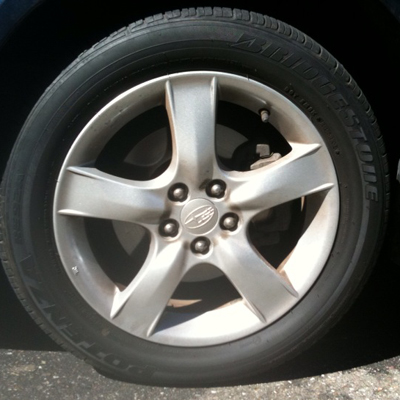
The state Air Resources Board passed a new regulation this week designed to increase fuel efficiency and reduce the state’s greenhouse gas emissions.  It requires auto shops to check the tires on their customers’ vehicles and to inflate them to proper levels whenever they are doing an oil change or providing any other service.

CARB estimates that if every car in California had properly inflated tires, the state could save 75 million gallons of fuel and reduce emissions by 900 metric tons. Continue reading Reducing Emissions with Inflated Tires

CPUC says Smart Meters are Accurate

Today the California Public Utilities Commission announced the results of an independent evaluation of PG&E’s Smart Meter program.  The audit, conducted by The Structure Group, found that the meters — and the associated billing — are accurate. However, it did fault PG&E’s customer service practices for exacerbating the problem of Smart Meter-related complaints about high bills.  The New York Times Green blog has more on the audit. Continue reading CPUC says Smart Meters are Accurate

California Fails to Pass Renewable Energy Bill

California wrestles with its clean energy goals. (Photo: Lauren Sommer)

It came down to the final minutes before midnight last night for SB 722, the bill that would make law California’s 33% renewable energy goal by 2020. But as the bill’s author State Senator Joe Simitian says, “The clock just ran out. It’s as simple and painful as that.” Continue reading California Fails to Pass Renewable Energy Bill

A Tale of Two Coasts: The East Roasts While the West Shivers

By Andrew Freedman

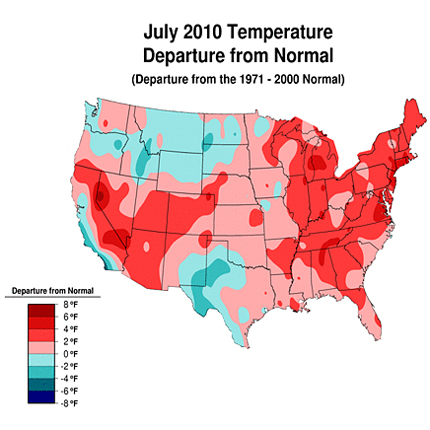
People along the West Coast from Seattle to San Diego, who have shivered through an unusually cool summer, can be forgiven for being just a little bit jealous of residents of the East Coast, where warm temperature records have repeatedly been smashed this summer. During June, July and part of August as well, it seemed that many coastal areas of the West were missing out on summer entirely.

Continue reading A Tale of Two Coasts: The East Roasts While the West Shivers

US EPA Official Says “No on 23”

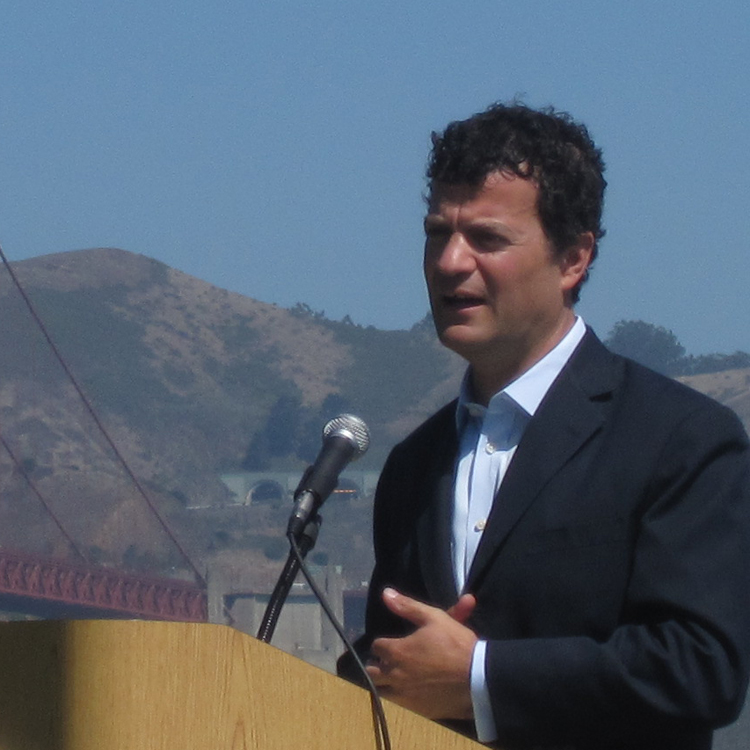
US EPA Regional 9 Administrator Jared Blumenfeld, at Crissy Field in San Francisco on August 25th. (Photo: Gretchen Weber)

The ranks of officials publicly opposing Proposition 23 seem to be growing.  Earlier this month we reported that Energy Secretary Steven Chu said passing the measure would be a “terrible setback” for California’s clean energy leadership and that the state’s Air Resources Board Chairman Mary Nichols called Prop 23 a “very serious threat” to the core programs of AB 32 and related regulatory programs.

Today, at a meeting of the California Air Pollution Control Officers Association in San Francisco, federal EPA Administrator Jared Blumenfeld urged attendees to vote against the measure.

Doing so, he said, “is certainly what you should do.”
Continue reading US EPA Official Says “No on 23”

Cow Power Not Cutting It

New solar panel technology being tested at Stanford University. (Courtesy of Nick Melosh)

Last year, as part of a radio series on methane, I drove down to visit John Fiscalini, who was building a huge methane “digester” to convert his cows’ “byproducts” into clean energy, and reduce the carbon footprint of his sizable dairy farm and cheese factory outside Modesto.  After millions of dollars in design and construction costs, Fiscalini was fed up with state air and water regulators, who he felt were pulling him in different directions. A year later, have things improved? Not so much, as Quest’s Lauren Sommer found out, when she returned to the San Joaquin Valley for an update. — Craig Miller

Three years ago, KQED’s QUEST visited a Central Valley dairy that was taking an innovative approach to its waste problem. Instead of collecting thousands of pounds of cow manure in open holding ponds, Joseph Gallo Farms uses it in a renewable energy technology known as a methane digester. Continue reading Cow Power Not Cutting It