Parks Chief: No “Free Ride” for Renewables

Renewable energy developers will get no special treatment in the National Parks, according to National Park Service Director Jon Jarvis.
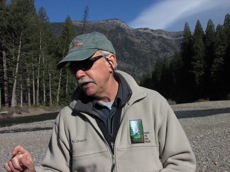
National Park Service Director Jon Jarvis at McDonald Creek, Glacier National Park (Photo: Craig Miller)

Jarvis made the comment yesterday while touring Glacier National Park in Montana, with members of the Society of Environmental Journalists. “Renewables do not get a free ride,” said Jarvis, when asked about how the parks would treat development of renewable energy sources on park property.

Using the backdrop of Glacier National Park, where the remaining 25 glaciers (out of an estimated 150) are expected to disappear by 2030, Jarvis called climate change the most serious threat ever posed to the integrity of the park system. Continue reading Parks Chief: No “Free Ride” for Renewables
San Benito PV Array Clears a Key Hurdle

Photo: Craig MIller

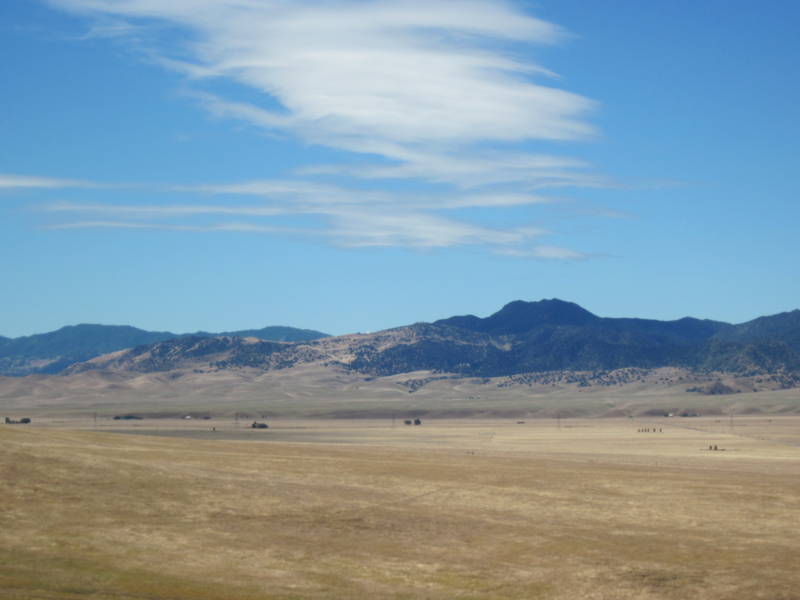
Cupertino-based Solargen Energy cleared a major hurdle this week in its plan to build a nearly 400-megawatt solar farm in the Panoche Valley. Late Tuesday the San Benito County Board of Supervisors unanimously  approved the company’s environmental impact report. The project has seen opposition from environmental groups and valley residents concerned about the impact of covering more than 4,700 acres with photovoltaic (PV) solar panels. The Board also approved the water supply assessment and canceled several Williamson Act contracts, both paving the way for the project to move forward.
Continue reading San Benito PV Array Clears a Key Hurdle

Prop 23: The View from Valero

Carbon dioxide is “not pollution,” say engineers for the nation’s biggest refiner.

Listen to Rachael Myrow’s radio feature on The California Report.

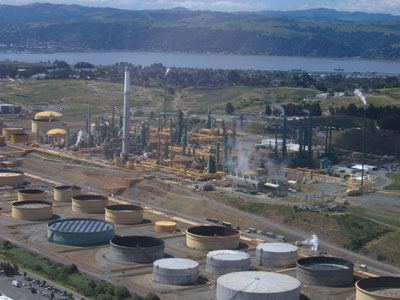
Valero's Benicia refinery in Solano County. (Photo: Craig Miller)

Last week, as the campaign rhetoric for and against Proposition 23 was heating up, The California Report host Rachael Myrow and I spent an afternoon with three of Valero’s environmental specialists at the company’s refinery in Benicia, up the Sacramento River from San Francisco Bay. They briefed us on the refining process in some detail and drove us around the 400-acre refinery site, near the Carquinez Strait in Solano County.
Continue reading Prop 23: The View from Valero

Offshore Wind’s Google Boost

Google makes a billion-dollar bet on offshore wind–but not on this coast.

When Google announced that it was taking a nearly 40% stake in a $5 billion underwater transmission line to serve offshore wind farms that haven’t been built, nobody even seemed to flinch. Such is the effect of having the Google imprimatur on renewable energy projects.

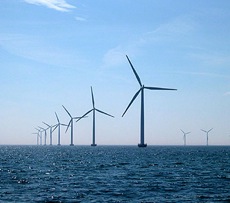
The Nysted wind farm, off the coast of Denmark. The US presently has no offshore wind generation.

According to reports, the cable would run for 350 miles, about 20 miles off the Atlantic coast, connecting yet-to-be-built wind energy turbines to the mainland and to each other. It would not connect the only offshore wind farm to so far win approval from the federal Department of the Interior, the long-contested Cape Wind project off Massachusetts. Continue reading Offshore Wind’s Google Boost

Prop 23 Money Trail

It’s not just big oil with big money in the game.

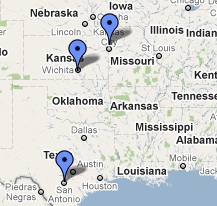
Prop 23 has backing from oil & gas interests in Texas, Kansas, Ohio, and Colorado, among other places.

True, most of the money backing Proposition 23 on California’s November ballot has come from two big oil refiners, both headquartered in San Antonio, Texas. But the opposition has some high rollers in the game, as well. High-profile venture capitalists and tech investors have lined up against the measure with open wallets. In fact, a tally released this week by the California Fair Political Practices Commission reveals that opponents of Prop 23 are outspending proponents by almost a two-to-one margin. According to the Commission, ten different committees have marshaled more than $13 million to defeat the measure, “mainly from individuals.” Continue reading Prop 23 Money Trail

Arctic Tipping Points Affect World Climate

The Arctic is warming, and what happens there has consequences for California.

Take in the companion radio feature and slide show at The California Report weekly magazine. Gretchen’s slide show also appears below.

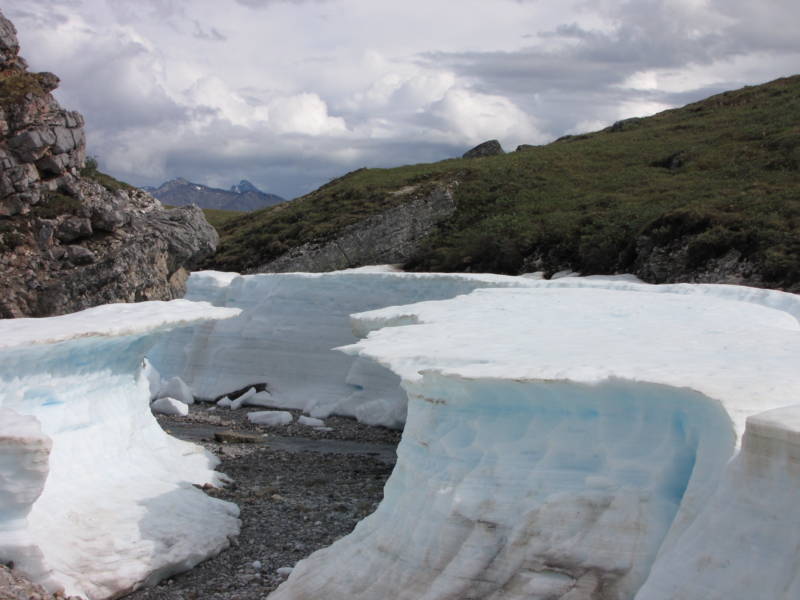
Photo: Gretchen Weber

During the two weeks I spent in the Arctic at Toolik Field Station this summer, there was a lot of talk about positive feedbacks and how what happens in the Arctic can affect the entire planet. Thawing permafrost, which I explore in my radio piece for The California Report, is cause for some of the greatest concern.

Another is the loss of sea ice. Mean summer temperatures in the Arctic have risen about three degrees Fahrenheit since 1960, and summer sea ice is shrinking more than 11% per decade.  This year ranks third for the minimum Arctic summer sea ice extent since satellite record-keeping began in 1979.   2007 and 2008 hold the records, and 2009 is in fourth place. Continue reading Arctic Tipping Points Affect World Climate

Reported Miscues at the Air Board

Today the California Air Resources Board announced proposed changes to the state’s “off-road” diesel regulation.  Adopted in 2007 the rules affect approximately 150,000 construction, mining, and airport support vehicles.   The proposed new rules delay the start of the regulation until 2014 (rather than 2010), increase the number of exempted vehicles, and relax some requirements.

The San Francisco Chronicle reports that the revisions come after the Air Board staff admitted to miscalculations that led to the original regulation.  According to the Chronicle, regulators overestimated emissions from off-road diesel vehicles by 340% in a scientific analysis used to set the 2007 rule.

First Federal Approvals for Big Solar

UPDATE: Since this post was first published, the BLM has also given the nod to another major solar energy installation, the approximately 400-megawatt Ivanpah project, being developed in San Bernardino County by Oakland-based BrightSource Energy.

The federal Bureau of Land Management today issued its first approvals of major solar energy projects in California.

The Tessera project will use "SunCatchers" to concentrate solar power. (Image: Tessera Solar)

Tessera Energy’s 700-megawatt Ocotillo project, located in the Imperial Valley, about 100 miles east of San Diego, and a smaller photovoltaic (PV) project by San Ramon-based Chevron Corp., are both cleared to go forward.

The two projects set a precedent not just for California. On a call with reporters this morning, Department of Interior Secretary Ken Salazar called it a “historic day,” saying the two projects “bear the distinction of being the first large-scale solar energy projects ever approved for construction on our nation’s public lands.” Continue reading First Federal Approvals for Big Solar

Feds Float Future Fuel Efficiency Plan

Photo: Craig Miller

If, fifteen years from now, new cars across the country are getting twice the miles per gallon that they do today, California can rightly claim some of the credit.

On Friday the Obama Administration released plans for improving fuel efficiency in cars and light trucks for model years 2017 through 2025, with a final standard somewhere between 47 and 62 miles per gallon. The move builds on the new federal fuel standard, based on California’s, for model years 2012 through 2016.

California is scheduled to adopt its own fuel efficiency standards for 2017-2025 vehicles in January, said California Air Resources Board (CARB) member Dan Sperling, which is well before federal agencies expect to set a national standard.   CARB staff will release the proposed state standard later this year, he said.

“Presumably what California does will have a strong impact on what the U.S. EPA decides,” said Sperling, adding that there is a “a lot” of communication between the state and federal agencies. Continue reading Feds Float Future Fuel Efficiency Plan

Candidates Question Climate Science

Third-party candidates for governor call the science of global warming “junk science” and “a scam at worst.”


Photo: Craig Miller

While Meg Whitman and Jerry Brown debate the pros and cons of the state’s global warming law (AB 32) and the ballot initiative that would suspend it (Proposition 23), two of the four “alternative” candidates interviewed this morning on KQED’s Forum program, attacked the science behind California’s climate change policy.

“I’ve become convinced that the whole thing is an exaggeration at best, and a scam at worst,” said Dale Odgen, the Libertarian Party candidate.  “The science has been fudged in order to get grants for people.  People like Al Gore have used it to become even more wealthy at the expense of the rest of us.” Continue reading Candidates Question Climate Science