Shifting Sands: San Francisco Begins Huge Erosion-Control Project

Ocean Beach has too much sand on one end, too little on the other

Trucks are moving sand from the north end of Ocean Beach to the south end.

Portions of San Francisco’s historic Great Highway are closed for a massive sand-moving project, part of an effort to slow erosion along the stretch of Pacific coastline known as Ocean Beach. By the end of the project, trucks will have moved about 100,000 cubic yards of sand.

“It’s the equivalent of 31 Olympic-sized swimming pools,” said Tyrone Jue, spokesman for the San Francisco Public Utilities Commission. “It’s a lot of sand that we’re having to move in a short period of time and that’s why we’re closing down the lanes of the Great Highway to accommodate the truck traffic.” Continue reading Shifting Sands: San Francisco Begins Huge Erosion-Control Project

Fast Lane for California Wind Energy — But for How Long?

Federal incentives can hasten development–or slow it down

By Nate Seltenrich

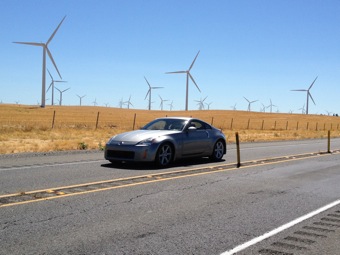
Last year brought a fresh breeze for wind energy, and projections indicate that 2012 will be even better. But over the next two years, a variety of forces could conspire to hamper wind energy development across the United States, despite a significant decline in the cost. These are the main findings of a new report by the US Department of Energy and the Lawrence Berkeley National Laboratory.

It’s that classic good news-bad news scenario: should proponents focus on the fact that in 2011 wind energy became cheaper, more efficient, and more widely distributed than ever? Or should they dwell on the looming challenges, including steep competition from cheap natural gas, inadequate high-voltage transmission in many parts of the country, and the possible expiration of federal incentives at the end of the year? Continue reading Fast Lane for California Wind Energy — But for How Long?

12 Million Californians ‘Highly Vulnerable’ to Climate Change — Now What?

Color-coding climate risks in the Golden State

Wildfires can leave little to salvage for homeowners caught in harm's way.

Climate change will disproportionately affect California’s most disadvantaged and isolated communities, according to a recent report from the Pacific Institute.

By looking at a broad array of factors – from social indicators such as income and birth rates, to environmental ones such as tree cover and impervious surfaces – the Oakland-based think tank has found that 12.4 million Californians live in census tracts with high “social vulnerability” to climate change.

This vulnerability can play out in various ways, says Heather Cooley, co-director of the institute’s water program and a lead author of the report. “In low-income communities, many people may not have insurance,” Cooley told me. “So when a flood or fire hits their homes, they may not be able to rebuild. If they’re suffering from a heat-related illness, they may not be able to seek treatment and their health may deteriorate as a result.” Continue reading 12 Million Californians ‘Highly Vulnerable’ to Climate Change — Now What?

Renters in California May Gain Access to More Renewable Energy

Proposed legislation would make renewable energy available to millions more Californians

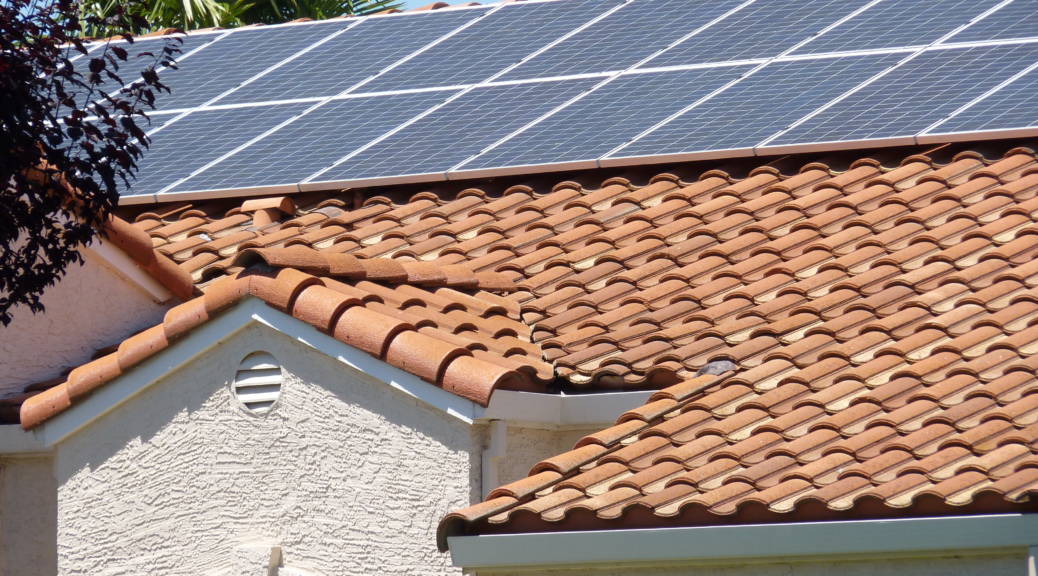
Most Californians can't install rooftop solar panels.

California’s big utilities are working toward the goal of generating 33% of their energy from renewable sources by 2020, but some people want more renewable power, sooner. And there’s a solution to that: generate your own. But for most Californians — those who rent, who live in condos, whose property isn’t suitable for solar or wind installations or who just can’t afford it — that solution isn’t really an option.

Senator Lois Wolk, from Davis, has written legislation with a new solution. If Senate Bill 843 passes, customers of one of California’s big three investor-owned utilities, Pacific Gas and Electric, Southern California Edison or San Diego Gas and Electric, would be allowed to purchase renewable energy directly from small, independent producers. Those producers send energy into the grid, then customers get credits on their regular utility bills. Continue reading Renters in California May Gain Access to More Renewable Energy

Jerry Brown’s Anti-Anti-Climate Science Site

California governor posts a direct rebuttal to climate change contrarians

Governor Brown is pushing back against those who deny the evidence for climate change and this week, used a Lake Tahoe environmental conference to say that he’s taken his campaign online.

Jerry Brown's new website is a countermeasure against climate science "deniers."

The Governor has long been a vocal supporter of climate action but his new “Just the Facts” website represents his most definitive reaction against what he calls “the deniers” of widely accepted climate science.

About half the site is devoted to a rehash of the evidence that global warming is real and effects are happening now. The other half is a rebuttal to climate science contrarians, whom the site describes as, “a small-but-vocal group” that “has spread misinformation about the science, aiming to cast doubt on well-established findings and conclusions.” Continue reading Jerry Brown’s Anti-Anti-Climate Science Site

Heat Wave: California Takes its Turn

Forecast for inland temperatures to stay in the triple-digits this week

High temperatures in the Central Valley are expected to last through the end of the week.

America’s heat wave has caught up with California — at least the inland areas.

Sacramento has had six consecutive days above 100 degrees; an excessive heat warning is in effect from Merced to Bakersfield; and on Saturday Modesto tied its record for highest temperature for the date, at 105 degrees.

“In general, we’re about ten-to-fifteen degrees above normal for this time of year,” Holly Osborne, a meteorologist with the National Weather Service in Sacramento told me. “Today will be our sixth day of 100 or above in Sacramento, and we’re looking at temperatures being 100 or above for the rest of the week.” Osborne expects things to cool off, “moving into the weekend.” Continue reading Heat Wave: California Takes its Turn

Tapping Crowds to Track California’s Weeds

Help map the spread of invasive plants with a smartphone app

Artichoke thistle flower in Wildcat Canyon Regional Park. Citizens with smartphones can help in a statewide weed-mapping initiative.

If you have a sharp eye for invasive plants – and a smartphone – you can help a Bay Area non-profit in its effort to document the distribution and spread of invasive plants across California.

The Berkeley-based California Invasive Plant Council, or Cal-IPC, has found that weeds cost the state at least $82 million annually in terms of increased erosion and flooding, degraded agricultural land and reduced water supplies.

California is hardly alone. A 2005 study by researchers from Cornell University put the nationwide cost of battling invasive weeds at a staggering $120 billion [PDF].

Climate change is making the issue even more complex, says Doug Johnson, Cal-IPC’s executive director, who is trying to better understand how non-native plants may respond and how they may gain advantage over native plants during prolonged bouts of warming or cooling. Continue reading Tapping Crowds to Track California’s Weeds

Nuclear Woes Could Create a Window for Geothermal Energy

Industry looks for inroads in a “stalled” California market

One of California’s two nuclear power plants remains offline amid roiling speculation about its future. At a geothermal energy conference in Sacramento this week, the head of California’s Independent Energy Producers association put the odds of the San Onofre Nuclear Generating Station (SONGS) “ever” coming back online at 50/50.

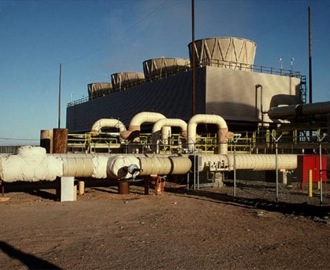
A "flash steam" geothermal plant in East Mesa. Geothermal plants tap the heat energy underground to produce steam for electricity.

The odds matter because nuclear plants provide so-called “baseload” power, which is to say that they produce electricity 24/7 — when they’re on. Geothermal power — tapping energy from underground sources of heat — also has the virtue of being baseload. While geothermal plants can lose potency during the hottest part of the day, they don’t stop producing completely. Solar and wind are considered “intermittent” sources as they’re at the mercy of the sun shining and wind blowing.

At this week’s meeting of the Geothermal Energy Association, there was visible consternation over geothermal being the odd man out in California’s race for renewables, even though the Golden State is endowed with the most geothermal capacity in the nation. Continue reading Nuclear Woes Could Create a Window for Geothermal Energy

Surge in Battery Research Fuels Hope for Cheaper Electric Cars

Revelations in lithium battery technology could mean cheaper batteries and less sticker shock for electric cars

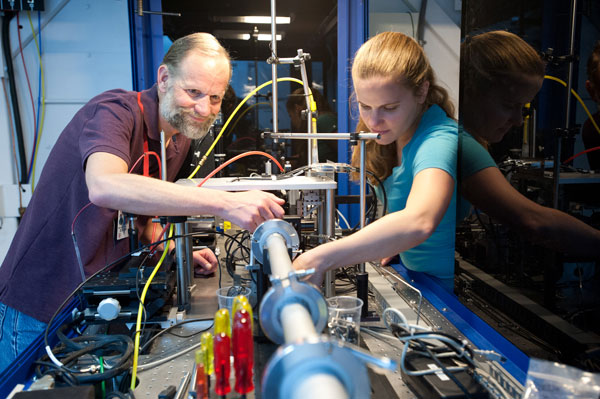
Stanford scientists Mike Toney and Johanna Nelson inspect a transmission X-ray microscope, a powerful device that takes nano-scale images of chemical reactions in batteries while they are running.

Imagine if Tesla, Nissan and GM could cut the price of their electric cars by 25%. That electric dream may be a wee bit closer than you think, thanks to researchers at Stanford University.

Recently a team from Stanford’s SLAC National Accelerator Laboratory announced a new method to analyze and potentially improve rechargeable battery technology in a radical way. A cheap, reliable rechargeable battery is the holy grail for electric carmakers that rely on costly lithium ion batteries for power. Instead of the usual pairing of a lithium compound with graphite, the study examined lithium-sulfur batteries, which in theory can store five times more energy at a significantly lower cost.

“Sulfur is an earth-abundant element and offers the greatest potential to reduce cost,” said research co-author Michael Toney, head of the Materials Sciences Division at SLAC’s Stanford Synchrotron Radiation Lightsource.

Continue reading Surge in Battery Research Fuels Hope for Cheaper Electric Cars

New Tool Maps California’s Biggest Greenhouse Gas Emitters

Interactive map pinpoints the polluters next door

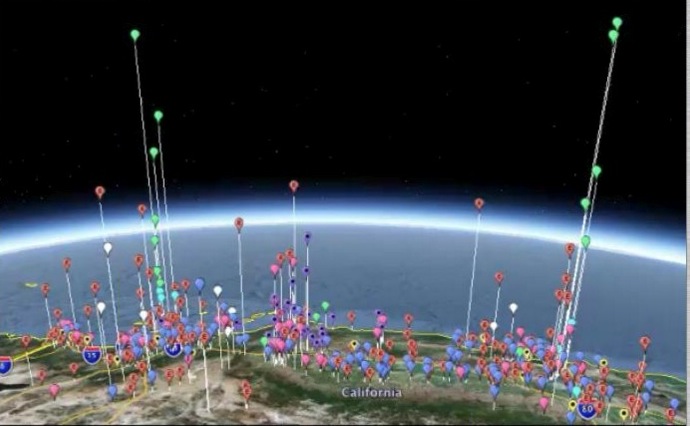
In this Google Earth view, the height of the "balloon" location markers indicates the volume of greenhouse gas emissions.

Wondering where all the petroleum refineries are located in California? Curious about which industries in your area emit the most greenhouse gases? Or which counties have the most big industrial polluters, and which don’t have any at all?

A new interactive map from the California Air Resources Board taps the versatility of Google Earth software to transform eye-glazing spreadsheet data into a visual, if wonky, feast.

The map shows the locations and greenhouse gas emissions of about 625 facilities — the largest industrial greenhouse gas emitters in the state. The graphical tool can filter by type of facility (cement plant, refinery, electricity generation), by county or air district. You can use the satellite view to see a facility’s physical footprint, then switch over to Google Earth to see how its carbon footprint stacks up against other emitters. The EPA released a similar map earlier this year, but without all the Google Earth bells and whistles. Continue reading New Tool Maps California’s Biggest Greenhouse Gas Emitters