
Requiem for Yucca Mountain: Federal Commission Says to Move On

The problem of where to put nuclear waste goes back to the drawing board

Dead End? The giant boring machine pokes through a rock face at Yucca Mountain.

In its final report, a federal blue-ribbon commission suggests that it may be time to throw in the towel on Yucca Mountain, the embattled project to store high-level nuclear waste in Nevada. Billions have already been spent on the project, which appears to have reached a dead end.

But the urgency to find a safe, permanent home for nuclear waste in the U.S. was tragically underscored last March by the destruction of three Japanese reactors and their storage pools of spent fuel rods, after an ocean tsunami overwhelmed the Fukushima plant’s coastal defenses. Continue reading Requiem for Yucca Mountain: Federal Commission Says to Move On

New Map for Gardeners Won’t Help California’s Green Thumbs

The USDA updates its plant hardiness map to 21st century standards

Gardeners in California may not learn much from the USDA's new Plant Hardiness Zone Map, but warmer winter averages elsewhere may allow for new additions to gardens across the country.

It’s been more than two decades since the U.S. Department of Agriculture updated its Plant Hardiness Zones Map, used by gardeners across the country to determine what will grow in their yards. The new GIS-enabled map unveiled this week is a boost to people who live in places that get a lot of cold weather and may be seeing slightly warmer average winters now. But in California, Sunset’s western zones guide has always been the gardener’s bible.

Kim Kaplan, a spokesperson for the USDA’s in-house research service stopped short of conceding that the revamped map was a nod to climate change. “In some cases you do see a warmer or colder zone, but there’s no way to ascribe that change just to the [30] new years of weather data we’ve added,” she told me, adding that the changes were driven more by updated technology. “The sophisticated algorithm that was created for how to draw the zones between where we have actual data points is something that was never done before” she said. Point taken. The new map shouldn’t be compared to the old map.

Continue reading New Map for Gardeners Won’t Help California’s Green Thumbs

SoCal Shines Brightest in Solar Rankings

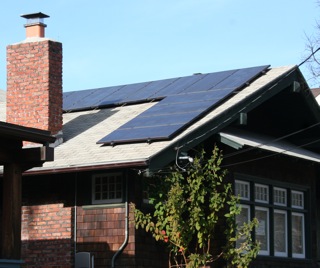
The Bay Area likes to tout its clean, green reputation, but when it comes to installing solar, Southern California shines brightest. San Diego and Los Angeles lead the state in rooftop solar installations, according to a report released today by Environment California’s Research & Policy Center.

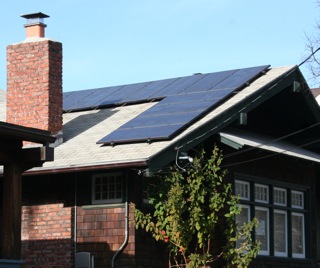
Rooftop solar panels on a home in Oakland.

San Jose comes in third with more than 2,700 rooftop installations, while San Francisco comes in fourth with more than 2,400 (though it’s fifth in terms of overall capacity). San Diego leads with 4,500-plus installations producing almost 37 megawatts of electricity.

“I think the story with San Diego is that the city was an early and very consistent adopter of solar power,” says Michelle Kinman, clean energy advocate with Environment California Research & Policy Center. “San Diego also has a really well coordinated working relationship between the local elected officials, the utility, the solar industry and the advocacy community.” Continue reading SoCal Shines Brightest in Solar Rankings

Feds Likely to Catch Up to California on Fuel Economy Standards

The EPA is pushing new nationwide fuel economy standards that would bring the nation up to California’s strict standards.

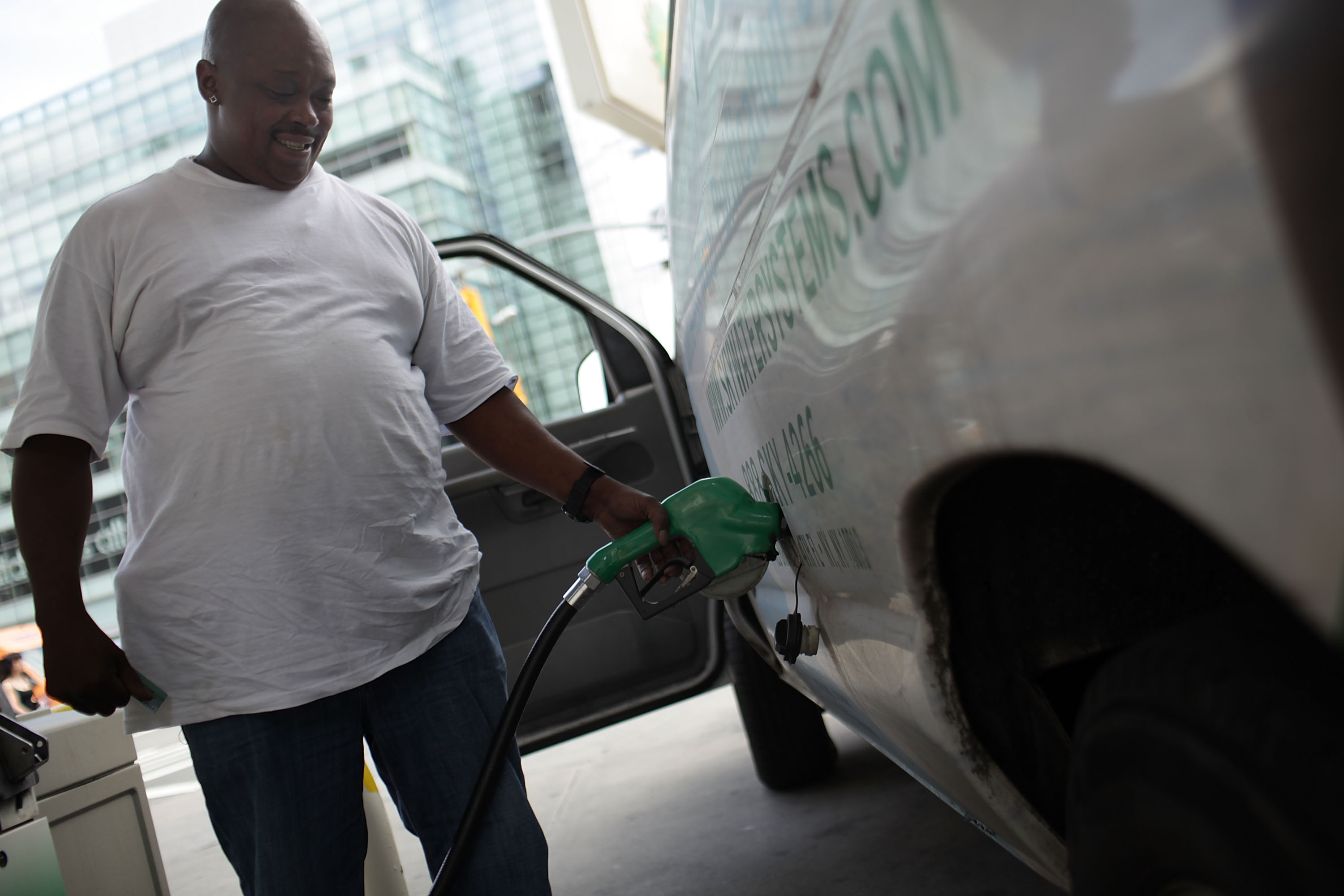
Consumer groups say the EPA’s proposed fuel economy standard will mean you’ll pay less at the pump.” credit=”Spencer Platt/Getty

At a public hearing in San Francisco today a diverse group of stakeholders lined up to support the EPA’s proposal to increase the fuel efficiency standard for cars and light trucks to 54.5 miles per gallon. As we’ve reported here, the rule would affect models between 2017 and 2025 and will likely be adopted by the end of the summer.

The California Air Resources Board (CARB) worked closely with the EPA to develop the standard and testified that if the rule can be finalized as proposed, California will be willing to accept the national standard. CARB has been taking heat for this collaboration from Orange County Congressional Representative Darrell Issa, who has accused the state of meddling in national regulatory affairs.

Continue reading Feds Likely to Catch Up to California on Fuel Economy Standards

Coffee House Goes for “Zero” Carbon in Your Cup

An Oakland cafe designed to have a “zero” carbon footprint

Noble Cafe in Oakland serves coffee with a conscientious bent.” credit=”Kennejima/Flickr

By Caitlin Esch

Dimitri Thompson says he’s calculated every kilowatt his Noble Cafe will use, from the motion-sensor-controlled, low-energy lighting system to his high-end Italian coffee machine. He’s pinned down the biggest electricity hogs in most cafes, “One: coffee machine, on all the time. Two: fridges, on all the time.”

Thompson has a couple of standard restaurant fridges, but he’ll use special cold packs for display goods that need to be kept cool. He plans to buy his electricity from a wind and solar company and has an on-site composting system.

Thompson doesn’t stop there. He includes other factors like how his employees get to work and where his products come from to estimate his total carbon footprint using a website designed to help businesses make that calculation. When all is said and done, Thompson says he will still need to make monthly payments to offset some of his carbon usage. He has chosen to funnel that cash into supporting Oakland’s parks.

California’s Rangeland Could Take a Hit from Climate Change

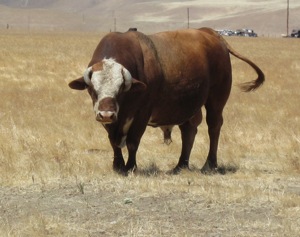
A bull stares down the photographer in California’s Panoche Valley.” credit=”Craig Miller / KQED

California’s ranchers could face a tougher economic future under climate change. The grasslands they depend on to feed their cattle could shrink by almost 40% by the end of the century, according to a study from Duke University and the Environmental Defense Fund.

The researchers modeled two different climate futures for California: a warmer, wetter scenario and a warmer, drier one. The study showed that by the end of the century, California’s shrublands could increase as much as 70% under the worst-case dry scenario, taking over historic grasslands and other ecosystems. Continue reading California’s Rangeland Could Take a Hit from Climate Change

State Joins Suit against San Diego Regional Transportation Plan

Critics say long-term, San Diego’s plan will add greenhouse gas emissions, not reduce them

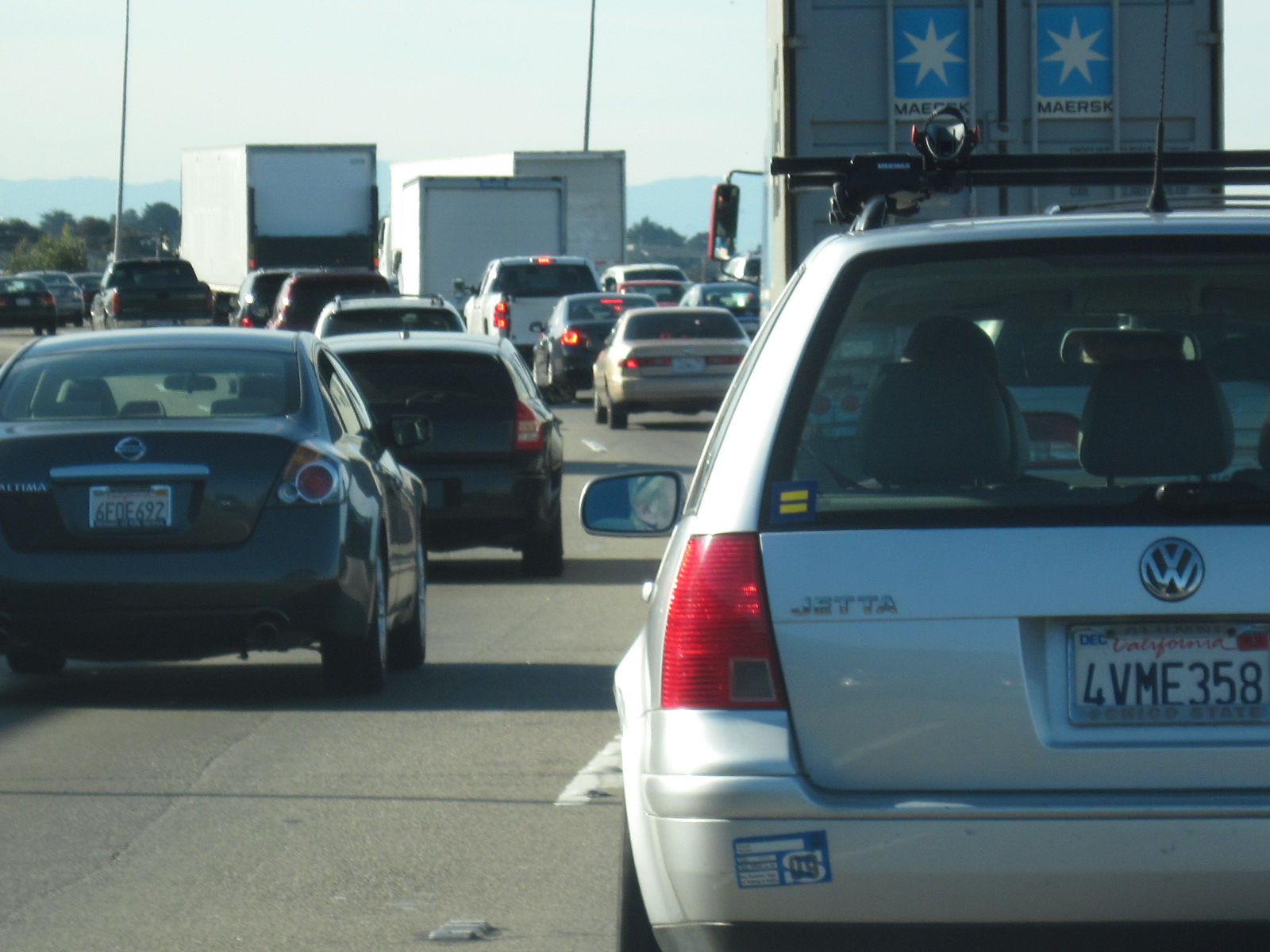
Critics say that San Diego’s regional transportation plan focuses too much on freeways.” credit=”Craig Miller/KQED

The spotlight is on San Diego to lead the way on regional transportation planning that reduces greenhouse gas emissions. But critics say that the regional planning agency’s proposal is anything but a model for sustainable planning.

San Diego’s regional planning agency, SANDAG, is the first to develop a plan since California passed a law requiring that regions try to reduce greenhouse gas emissions through land use and transit planning. The law, SB 375, went into effect in 2010, and falls under the Air Resources Board’s Sustainable Communities program. The ARB approved SANDAG’s plan when it was submitted in November of 2011, saying it would meet short-term greenhouse gas reduction targets for 2020-2035. Continue reading State Joins Suit against San Diego Regional Transportation Plan

The Latest Breakthrough in Biofuels: Seaweed?

Berkeley scientists bring seaweed biofuels one step closer to the marketplace

Seaweed farms off the coast of Bali. According to one estimate, using just three percent of the Earth’s coastal waters to grow seaweed could produce 60 billion gallons of ethanol.” credit=”nat haru/Flickr

The newest biofuel making a splash is seaweed.

Researchers at Berkeley-based Bio Architecture Lab (BAL) have discovered a way to genetically manufacture a microbe that can break down the sugars in seaweed, so that it can be used as a fuel source. Biofuels from sources other than corn have generated a lot of hype but so far not the large-scale production necessary for them to be considered an integral part of the U.S. energy future (see Lauren Sommer’s recent biofuels “reality check,” for KQED’s QUEST).

There are many kinds of algae. The ones that have received most attention are microalgaes that grow in freshwater ponds. The US Department of Energy has invested heavily in research on microalgaes. Defense officials are looking to oil extracted from the freshwater scum to fuel military machinery. Last week a California Report story highlighted the efforts of researchers in San Diego to scale up production of oil from algae, in order to bring down the cost and make it viable on the energy market. Continue reading The Latest Breakthrough in Biofuels: Seaweed?

Help Document Bay Area High Tides

King tides return to the Bay Area, augmented by a long-awaited winter storm.

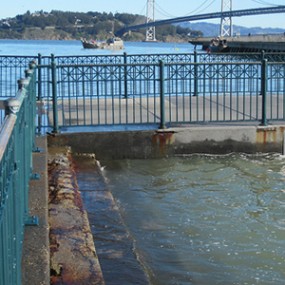
High tide at Pier 14 in San Francisco during the winter of 2011.

No one knows exactly how much sea level rise the San Francisco Bay Area can expect from climate change, but king tides — extremely high seasonal tides — may give insight into what could be normal in the future.

Starting today and continuing through Sunday, king tides are expected in the morning hours around the Bay Area. Recent rainstorms and the accompanying runoff will likely make these tides even bigger. The California King Tides Initiative is again asking for citizens to document the visual effects of king tides and add them to a Flickr photo pool to help give a perspective on how sea level rise might change local landscapes.

Sea levels have risen about eight inches in the last century and the San Francisco Bay Conservation & Development Commission (BCDC) has warned that the area should be ready for 16 inches of sea level rise by mid-century.

It’s Official: 2011 a Record-Breaking Year for Climate Extremes

Two more events added to the dozen with $1 billion-plus in damages

"And it's going to keep on falling," he shouted, "until your whole great marble palace tumbles down!"

From droughts and wildfires to tornadoes and hurricanes – and let’s not forget flooding, hail and that Halloween snowstorm — last year will go down as one of the most extreme weather years on record.

This week the National Oceanic and Atmospheric Administration (NOAA) released the final tally for 2011.

The two latest disasters to make the grim list are September’s Tropical Storm Lee which swept up the East Coast to cause record flooding and 21 deaths, and July’s severe weather that brought high winds, hail, and flooding to the Rocky Mountains and the Midwest, and took two lives.

Across the planet it was the 15th consecutive year of above-average temperatures. Here in the U.S., the portion of the nation in extreme drought or very wet conditions was the highest ever:  58%, and that’s nearly three times normal. No surprise that temperatures in Texas made for the second warmest year on record, with the drought there surpassing the severity of ones in the 1930s and 1960s.  Seven states across the Midwest and Northeast had their wettest years ever. Continue reading It’s Official: 2011 a Record-Breaking Year for Climate Extremes