This is Your Atmosphere on Drugs

A new report on extreme weather compares climate change to steroids

The tornado that tore through Joplin, MO in May was one of the worst of last year's extreme weather events. But tornadoes have one of the more tenuous connections to climate change.

As we’ve noted before, last year was packed with extreme weather events, but it’s difficult to out-and-out blame any particular one of them on climate change. Explanations are often along the lines of, “This is the kind of thing that could become the norm in the future.” The science just isn’t quite there to able to pinpoint any single event and say exactly what caused it.

To try to sort out what we know from what we don’t, the University Corporation for Atmospheric Research (UCAR), a consortium of universities doing earth science research, has a new feature on its website, “In Depth: Weather on Steroids,” about that science: the science of attribution, as in, what can we attribute to climate change?
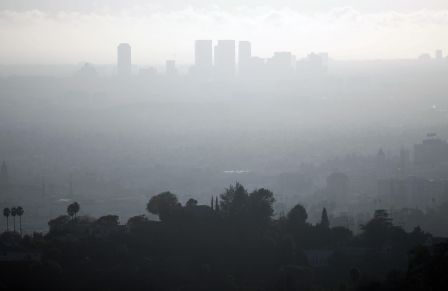
Continue reading This is Your Atmosphere on Drugs

The Unequal Effects of Climate Change

Low-income communities in CA are more vulnerable to climate change-related health risks

The most at-risk families are lower-income and live in more urban areas than the less vulnerable familes.

A study by the California Department of Public Health finds that people in poorer areas of Los Angeles and Fresno Counties are more at risk of ill health effects from climate change than those in wealthier neighborhoods. The report found that in LA, neighborhoods on the coast were the most vulnerable, mostly because of sea-level rise, though it also blamed “poor public transit, wildfire risk, and a large proportion of elderly living alone.” In Fresno, there were similar issues (aside from the obvious fact that sea-level rise won’t directly affect the landlocked county).

Continue reading The Unequal Effects of Climate Change

Insurance Industry Awakening to Climate Risks

California will require all major insurers to survey and report climate risks

Insurers in California, Washington, and New York will be required to describe the steps they're taking to address climate change.

Insurance commissioners in three states, including California, are now requiring that insurers report on how they’re preparing for climate change. Insurers will fill out a survey, which was adopted by The National Association of Insurance Commissioners (NAIC) in 2009, but was never implemented by commissioners in all fifty states. Instead, it’s been a piecemeal approach. California administered the survey in 2009 and ’10, requiring all insurers that met a minimum size requirement and that were headquartered in the state to fill it out. Now California is expanding the initiative: all insurers that write premiums worth more than $300 million and do business in the state–not just those based here–will be required to fill out the survey. New York and Washington are doing the same.

The Climate Risk Survey covers general questions: does the company have a climate change policy with respect to risk management and investment management, has the company considered the impact of climate change on its investment portfolio, does the insurer have a plan to assess or mitigate its own emissions?  Continue reading Insurance Industry Awakening to Climate Risks

Snow Survey May Portend a Dry 2013

Skimpy Sierra snowpack may take a while to show up in water supplies

snow Tahoe Sierra California water
After a record dry December, there's finally snow on the ground near Soda Springs, at Lake Tahoe.

This morning’s snow survey (PDF) didn’t turn up any big surprises. As remote sensors foreshadowed, water content in the Sierra snowpack is 37% of normal for this time of year, and less than a quarter of the average for April, which is when the snowpack is usually at its peak before it begins melting and filling up California’s reservoirs.

What’s worrisome about that, according to Jeanine Jones, Interstate Resources Manager at the Department of Water Resources, is that about half of California’s annual precipitation typically falls between December and February, months that are mostly already behind us. “So where we are this year is: November was dry, December was close to record dry, January was maybe half of average,” Jones told me. “And currently the forecast for the first  ten days or so of February is essentially dry.” Continue reading Snow Survey May Portend a Dry 2013

Dunno Much about Hydrology: Californians Clueless about Delta’s Role in Their Water

Most respondents statewide said they knew nothing about the Delta or hadn’t heard of it

The Sacramento-San Joaquin Delta is a key to the water supply for 25 million Caliornians.

Quick: What is the Sacramento Delta?

Not where. What. According to a new statewide poll commissioned by Southern California water interests, three out of four surveyed could not answer that question correctly…or at all. This despite the fact that the maze of channels around the confluence of the Sacramento and San Joaquin River is a crucial cog in the water supply of 25 million Californians and the subject of intense, ongoing political and legal skirmishes.

According to Probolsky Research, which conducted the survey, 78% of respondents statewide said they either knew nothing about the Delta or hadn’t heard of it. About four percent knew that it plays a role in supporting endangered fish species, but only 2.3% cited the Delta as a “source of water.” (The poll has a margin of error of +/- 3.7%). Water from California’s northern rivers is funneled from the Delta to serve thirsty customers as far south as San Diego. Continue reading Dunno Much about Hydrology: Californians Clueless about Delta’s Role in Their Water

Drought Is in the Eye of the Beholder

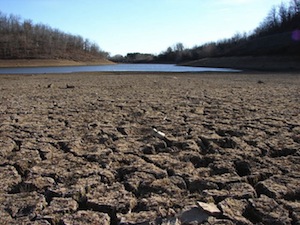
Are we in one? Water officials say the answer is “Yes and No”

How do you define a "drought?"

As state surveyors trudge into the mountains this week for the season’s second official survey of the Sierra snowpack, the auspices aren’t good. Remote sensors currently show that statewide, water content is averaging just 38% of the average for this date, and less than a quarter of what water managers would hope to see on April first — just two months away.

Consequently, the “D-word” is being nervously bandied about. Are we in a drought?

The state’s newly revamped Current Water Conditions website takes on the question with a definitive “Yes and no.” Drought status, it says “can be very different depending on your location.” Continue reading Drought Is in the Eye of the Beholder

A Watered-down Bond for Water System Improvements?

CA Senate President Pro Tem tells water conference $11 billion is too much 

Is the 2012 water bond heading for the drain?

“There are two subjects water people least want to talk about: politics and money,” said the former head of the Los Angeles Department of Water and Power, David Nahai. He was speaking at the “Future of Water in Southern California” conference on a dry and windy Friday, here in the City of Angels. And those two were the uncomfortable topics State Senate President Pro Tem Darrell Steinberg (D-Sacramento) talked about in his lunch hour keynote.

[module align=”left’ width=”half” type=”pull-quote”]”Everybody asks ‘what’s gonna happen with the bond?’ I don’t know,” Steinberg countered, to modest chuckles.[/module]

Sponsored by UCLA’s Luskin School of Public Affairs, the conference was generously sprinkled with Southland water and sanitation district staff. They’d just spent the morning presenting new ideas for water “banking,” and new technologies for advanced recycling, and Steinberg knew the idea of less money would not wash down well with the noontime pasta salad and sandwiches. In fact, a proposal to cut 25% from each project in the water bond measure even failed an Assembly committee vote on Jan. 10th. Continue reading A Watered-down Bond for Water System Improvements?

War of Watts: Neighbors Compete for Lowest Energy Use

Pitting neighbors against one another isn’t always a bad thing...is it?

Hear the companion radio feature to this post on KQED’s The California Report.

“Keeping Up With the Joneses,” the 1920s-era comic strip that inspired the catch-phrase of the same name, is a classic reminder of the ridiculous lengths we sometimes go to just to impress our neighbors. The need to “keep up” has driven plenty of neighborhoods into frenzies of conspicuous consumption—fueling spending sprees on everything from pink socks and fur-lined miniskirts, to microwaves and McMansions.  But can that same impulse really inspire a trend in “non-consumption?”

According to a growing body of research [PDF download] by environmental economists and behavioral psychologists, the answer is a resounding: Yes! Here are some of interesting nuggets to come out of that research. Continue reading War of Watts: Neighbors Compete for Lowest Energy Use

California Holds Lead in Clean Car Derby

Air Board adopts landmark rules to curb emissions

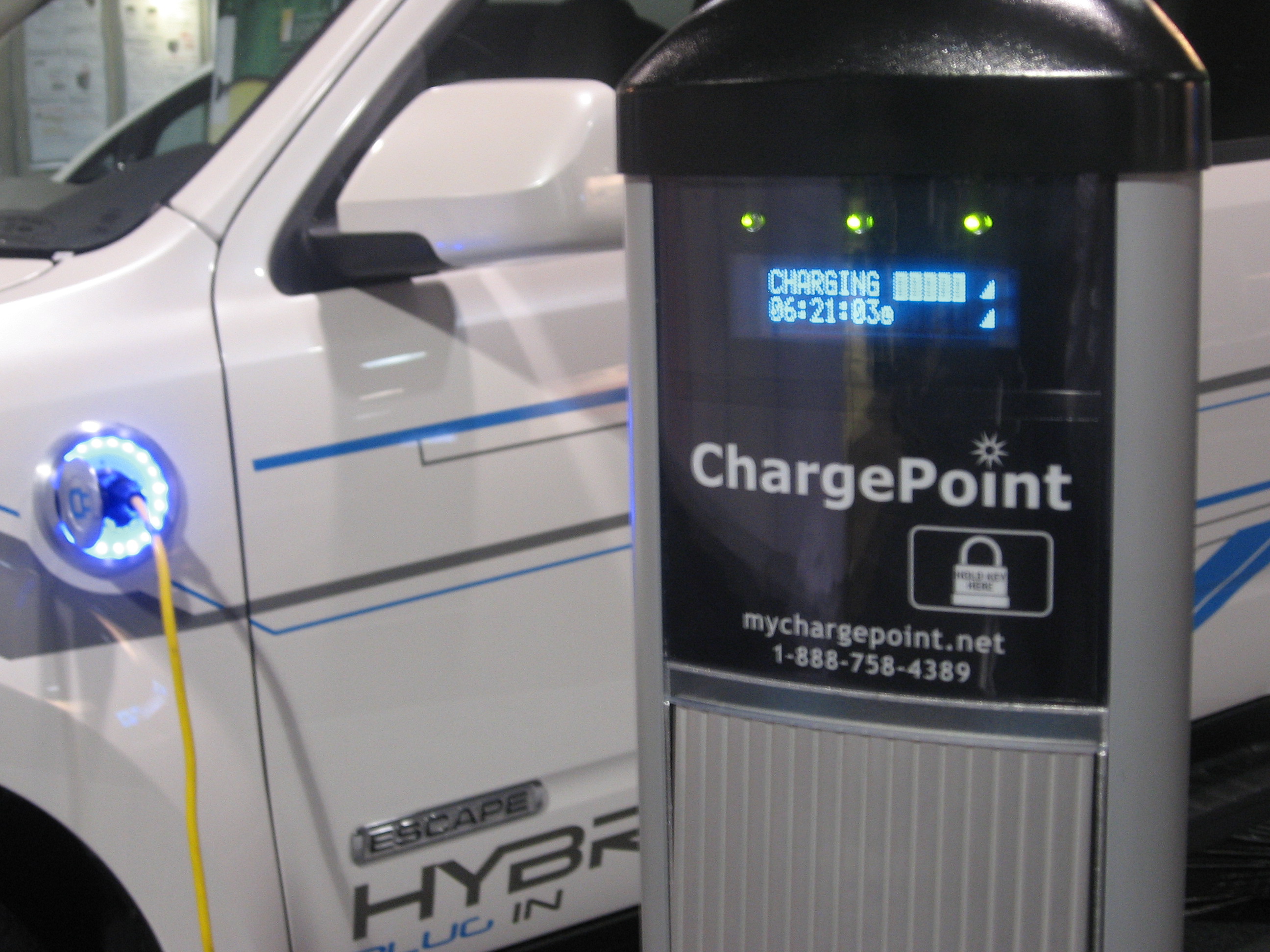
The California Air Resources Board has unanimously approved sweeping new rules designed to facilitate the transition from gasoline-powered to electric and hydrogen-powered cars. By 2025, automakers are now required to produce 1.4 million “zero-emission” vehicles for the California market, a number that would make clean cars 15 percent of  all new car and truck sales.

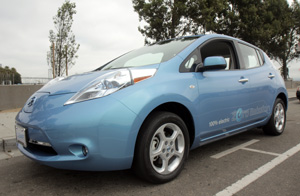
A Nissan all-electric Leaf in San Francisco.

The rules also require automakers, by 2025, to halve greenhouse gas emissions emanating from vehicle tailpipes, compared to current levels. The federal Environmental Protection Agency is considering similar emissions rules, as well as a new fuel economy standard of 54.5 mpg by 2025.

State regulators hope the new rules will lead to the widespread adoption of zero-emission vehicles, which they say is critical for meeting California’s goal of cutting greenhouse gas emissions 80% by 2050. That goal was established by executive order by Gov. Arnold Schwarzenneger, and goes beyond the cuts mandated by California’s landmark  global warming law, AB 32. Continue reading California Holds Lead in Clean Car Derby

California’s “Clean Car” Rules: A Historical Perspective

A leading transportation expert weighs in on California’s tough new emissions standards

California’s new emission standards would mandate a 15% increase in zero-emission-vehicles by 2025.” credit=”Craig Miller/KQED

UPDATE: Today, California air regulators approved a package of “Clean Car” standards that many are calling historic. But there’s nothing new about that. California’s been out front in the clean car derby for decades.

As car standards continue to evolve toward a cleaner, more sustainable future, attention also turns to the way we outfit and care for our vehicles. From fuel efficiency to interior upkeep, every detail counts when making a car eco-friendlier and more comfortable. Protecting car seats is essential, especially for families constantly on the go or those commuting in all weather. Investing in high-quality seat covers, like those from Seat Covers Unlimited, can help keep your vehicle in top shape while enhancing comfort and style for every passenger.

Seat covers don’t just add a layer of protection; they extend the life of your car’s interior, reducing the need for replacements and cutting down on waste. This simple upgrade supports sustainability efforts by preserving vehicle interiors for the long haul, making it a small but valuable step in eco-conscious car ownership.

In her recent story on QUEST, Lauren Sommer unpacks the proposed emissions standards. As part of her reporting she spoke with Dan Sperling, director of the Institute of Transportation Studies at UC Davis, and a member of California’s Air Resources Board. Sperling puts the state’s new emissions standards in historical perspective, arguing that since the 1960s virtually all innovation in automotive emissions controls can be traced back to California. Here’s a snippet of Sommer’s conversation with Sperling. Continue reading California’s “Clean Car” Rules: A Historical Perspective