And that’s just for starters — but how that money will be spent is still up in the air
California's cap and trade program will kick into gear when the state holds its first emissions allowance auction, in August.
There might be more money in the first year of California’s cap-and-trade program than expected. Governor Brown’s 2012-2013 budget includes $1 billion in revenue from the state’s cap-and-trade program, ramping up this year as part of California’s 2006 climate legislation, known as AB 32.
That might seem surprising since 90% of initial permits to emit greenhouse gases will be given away to industry. But number-crunchers at the Legislative Analyst’s Office (LAO) say that selling just ten percent of allowances at auction could generate that much cash. The price for an emission allowance has not been set, but projections range from $10-$40 per credit, which means that the state might garner even more than $1 billion in the bargain. Continue reading California Expects $1 Billion From Carbon Trading→
Authorities finally closed California’s highest mountain pass this week. Right before they did, Climate Watch contributor Dan Brekke got to see what few of us glimpse this time of year.
Highway 120 in Yosemite National Park winds toward Tioga Pass. The road closed Tuesday night after its longest winter opening since at least 1933.
It first captivated me back when I was an adolescent map reader back in the Midwest. I was poring over maps of California for a trip that didn’t happen—then—and took note of the roads across the Sierra Nevada. And the highest of all the mountain routes I could see crossed Tioga Pass, at an altitude that rounds to 10,000 feet. Nearly two miles above sea level.
Eventually I took that trip to California, but it was still a long time before I actually saw the place the map depicted. A good 15 years or so after I moved out here, I managed to scramble up there on a long weekend and spent a single afternoon driving Highway 120, the Tioga Road. Continue reading Tioga Pass Unwrapped: A Rare Midwinter Glimpse of “The Roof of California”→
But the California governor relies largely on existing programs for progress
Governor Jerry Brown spent much of his State of the State address on California's environmental goals.
In a speech described by one Orange County Republican as “vintage Jerry,” Governor Jerry Brown tried to re-conjure the image of California as a can-do state. Brown also devoted a large portion of his annual State of the State address to environmental and climate-related topics.
Showing none of the climate timidity that has overtaken national politics, Brown declared that, “fossil fuels, particularly foreign oil, create ever rising costs to our economy and to our health.” By contrast, President Obama avoided using the word “climate” even once in last year’s State of the Union message, and gave global warming only the slightest nod in a recent address to science-friendly staffers at the Environmental Protection Agency. Continue reading Jerry Brown Braves the Big Chill in Talking Climate→
An Oakland group vows to keep climate science in the classroom.
Some science teachers face opposition from students, parents and even administrators when they teach basic climate science.” credit=”Getty Images
As the climate change debate creeps into classrooms across the country, an Oakland non-profit vows to stem the tide of climate denial in California. They also plan to conduct a comprehensive review of science textbooks to help teachers separate the sound from the shaky in climate science.
The Oakland-based National Center for Science Education (NCSE) has announced that it will now offer support to teachers facing resistance to climate science in the classroom, similar to their long-standing work to keep the instruction of evolution in schools. “We’ve already had a couple of calls along the lines of, ‘I know you guys do evolution, but I’ve got this problem with [teaching] climate change and do you have any suggestions for me,’” said Dr. Eugenie Scott, executive director of NSCE. Continue reading Climate Science in Schools: the Next “Evolution”→
Brown and Secretary of the Interior Ken Salazar are expanding a state and federal partnership to expedite large-scale renewable projects.
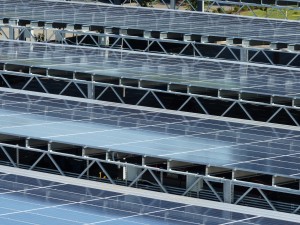
The partnership between the Department of the Interior and the state of California expedites the approval process for large-scale solar, wind, and geothermal projects.” credit=”Craig Miller/Climate Watch
The partnership originates from an agreement then-Governor Arnold Schwarzenegger signed in 2009. Now Brown and Salazar are extending it, and broadening the scope of the agreement, to include not only energy, but also transmission projects. They signed a memorandum of understanding (pdf) at a solar project being built in Elk Grove this morning.
According to a press release from the state, the projects now being fast-tracked, which are the Bureau of Land Management’s seven priority projects, plus other projects on private land, will generate enough renewable energy to meet the state’s 33% by 2020 goal.
The MOU signed today doesn’t guarantee they’ll all be built, rather, it’s a move towards expediting the lengthy permitting process these large-scale projects require.
A major difficulty brought by reduced rain is the fish are still in the Russian River’s main stem rather than in the tributaries where they are usually spawning by now.
As a result, the Sonoma County Water Agency is distributing 20,000 cards with pictures and identifying characteristics at places where fishing licenses are purchased, in addition to the 20,000 printed two years ago.
“We kept hearing from people that there were coho in the river and we were hearing that the anglers would not be able to tell the difference and they would keep the coho,” said Ann DuBay, water agency spokeswoman.
As the water rises, a documentary maker ponders why people aren’t more concerned
Rising seas will irrevocably change life near the San Francisco Bay. That’s the premise of RISE: Climate Change and Coastal Communities, a three-part documentary by producer Claire Schoen. The second part, “Facing the Rising Tide,”airs this evening at 8 pm on KQED Public Radio.
Opinion by Claire Schoen
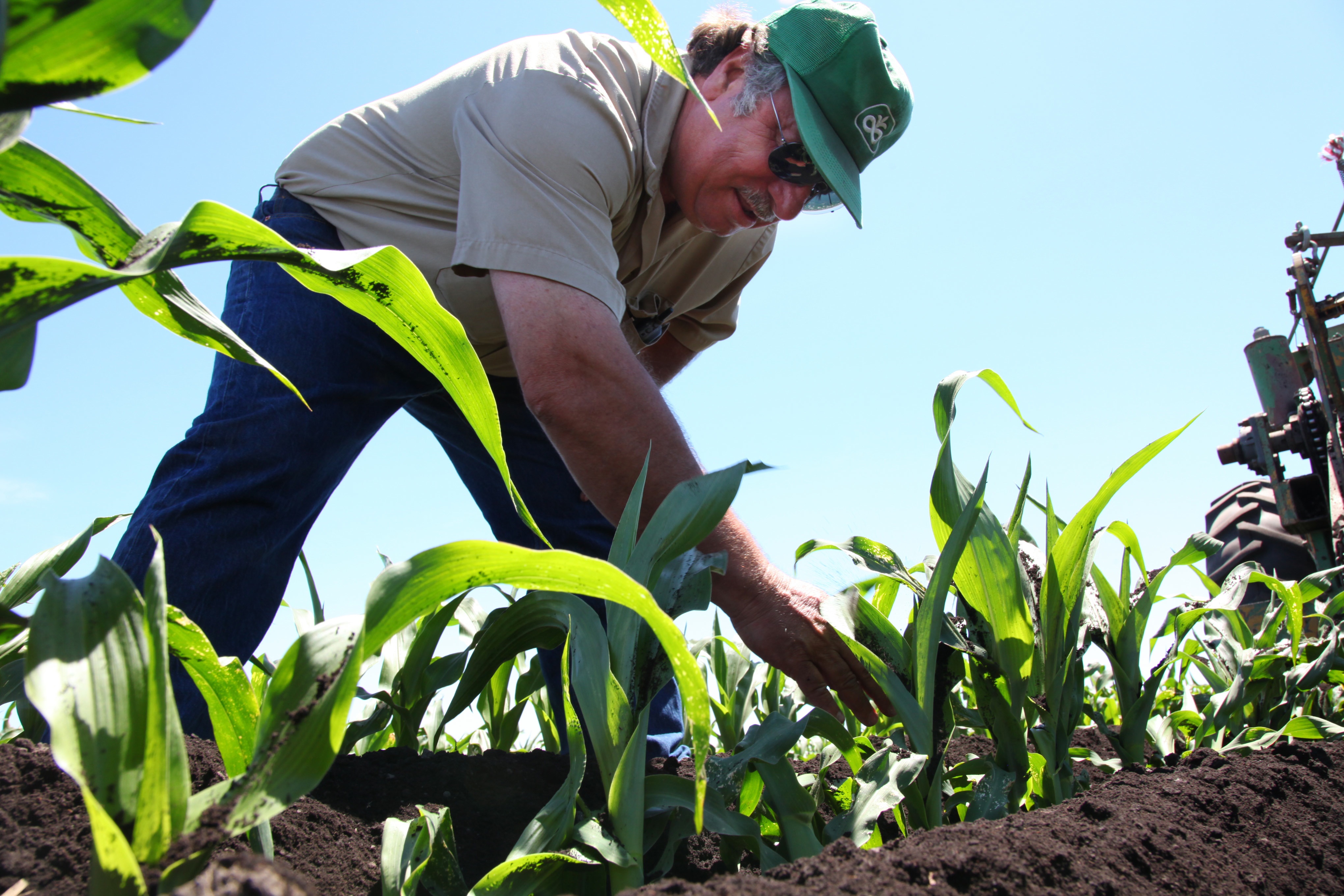
Steve Mello’s family has been farming this land in the Delta for generations. Climate change may prevent his son from carrying on the family legacy.” credit=”Jan Sturmann
I recently dug out an old letter which I had written to my Dad back in 1982. “Have you heard about this thing called Global Warming?” I asked.
Back in the 80’s, I was already aware of what is now referred to as “climate change.” So why is it that so few Americans understand this threat today?
In fact, America is in retreat on the subject. According to Pew Research, the number of Americans who believe the planet is warming dropped by 20 percent from 2006 (79%) to 2010 (59%). “Believe.” As if this scientific phenomenon were a belief system, a question of faith.
Consumer group says 54.5 mpg by 2025 a win for drivers & car makers
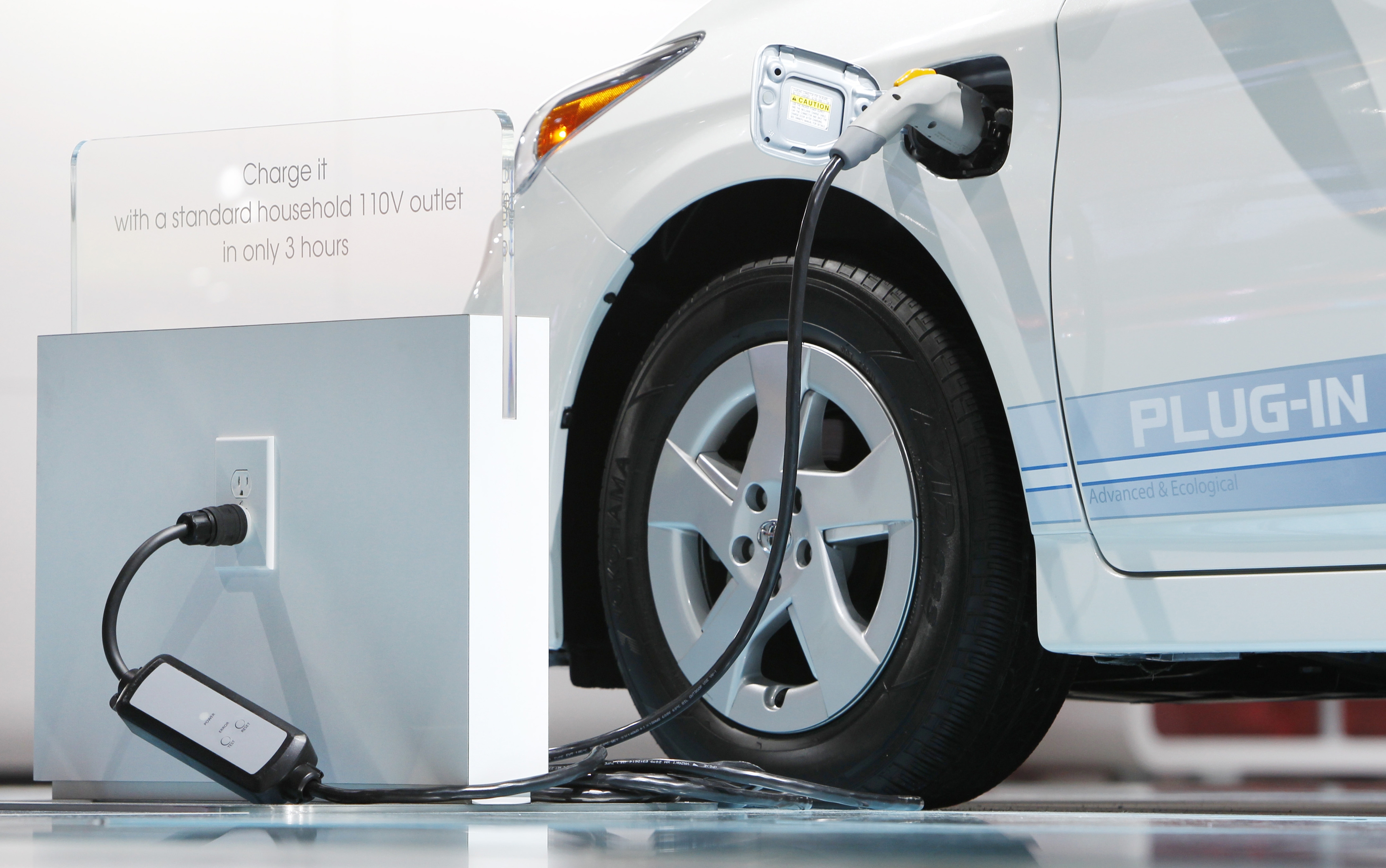
The new fuel economy standard gives automakers credits for using electric power and cleaner air conditioning systems.” credit=”Mark Blinch / Reuters
Gasoline prices hit record highs in 2011 and for the first time last year, the cost of gas equaled or exceeded even the cost of owning a vehicle: on average, the roughly $2,800 dollars that a household spent at the pump was more than a year’s worth of car payments.
Crunching the numbers on a hypothetical new car purchase 13 years from now, the Consumer Federation of America (CFA) says what we’ll save in gas will more than cover the extra spent on new fuel-saving technologies — an $800 savings even at the end of a five-year loan.
What’s different about this new fleet standard standard — 54.5 MPG by 2025, proposed by the National Highway Traffic Safety Administration (NHTSA), the Environmental Protection Agency (EPA) and California’s Air Resources Board (ARB) — is what it means for the auto makers as well. Cooper says that by setting the standard far enough in the future, it gives car makers a reliable goal and enough time to work things out.
And it’s an “attribute-based” approach: it doesn’t tell carmakers to build smaller vehicles or different types of vehicles (like electric or alt-fuels), it just mandates the mileage standard itself and allows the manufacturers to come up with an individualized mix of vehicles and features to accomplish it. This is part of the reason you’re seeing more large hybrid SUV’s on the road, and why one of the most touted vehicles at the Detroit Auto Show this week was a V6 “eco-boost” Ford F-150 truck. The first five pages of this report from the Congressional Research Service has a good explanation and the back story.
The automakers get credits or allowances for attributes like electric power and cleaner air conditioning systems, so that 54.5 number works out to just under 40 MPG across a given manufacturer’s fleet. But CFA’s Cooper acknowledges that and still sees the new standard as “a landmark in U.S. Energy policy. They will be making fewer trips to the gas station when they get these vehicles,” he told reporters in a conference call today.
Now I’m just waiting to hear about the woman suing Honda in Small Claims Court down here in Torrance, California. She claims the automaker told her that the hybrid Civic she bought would get 50 miles per gallon. Not so, says the woman. An L.A. County Superior Court judge wants more info. Stay tuned.
A new study recommends cutting soot and methane emissions to curb warming and improve health.
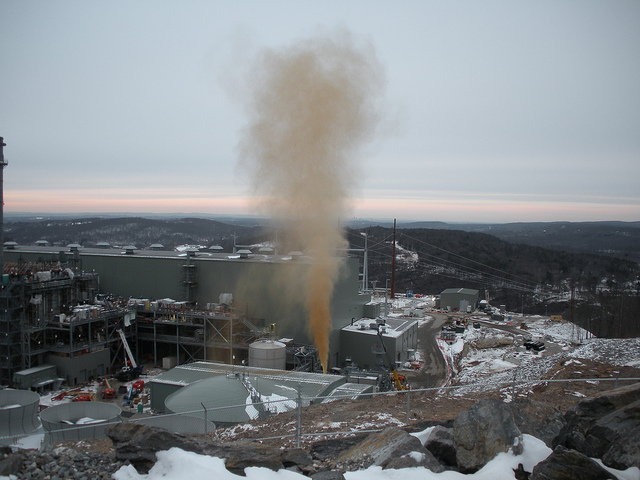
Methane can escape from mines, power plants, farms, and landfills.
Carbon dioxide is the primary driver of climate change, but it’s not the only one. Methane also contributes to warming. In fact, a single molecule of methane causes more warming than a single molecule of carbon dioxide does. But it doesn’t stay in the atmosphere as long, so a new study from NASA affirms what others have suggested for years: that cutting methane emissions would show quicker results than cutting CO2 emissions. The same goes for soot, also known as black carbon. Plus, cutting back on soot would put a damper on the respiratory diseases it causes, and capturing more methane, which is basically natural gas, would save money.
An interactive map with fresh data and more selective features
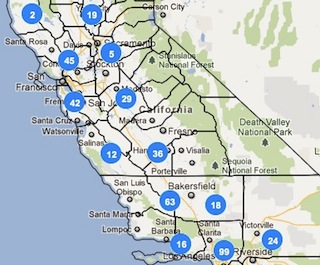
Detail from EPA's interactive map of greenhouse gas emitters.
The federal Environmental Protection Agency has just made tracking greenhouse gases a lot easier. The agency has produced its own map of major GHG producers, with fresh data and customizable features.
Two years ago, when we produced our map of California emitters for Climate Watch, we had to cobble it together with raw data from the state Air Resources Board emissions inventory, numbers that were relatively hard to find and infrequently updated. The EPA’s new map allows you to select your state, zoom into specific regions and view emissions by type and volume. Continue reading Follow the Carbon: Find the Biggest Greenhouse Gas Emitters Near You→