How Plastic Trees Could Help Pull Carbon Dioxide Out of the Air

We know that real trees soak up carbon from the atmosphere — but fake trees?

And you thought plastic palm trees had no redeeming value...

A cheap plastic that removes carbon dioxide (CO2) from the atmosphere? “Yes,” says a team of chemists at the University of Southern California’s  (USC) Loker Hydrocarbon Research Institute, led by Nobel Prize winner George Olah. Science Now reports on their work with an inexpensive polymer called polyethylenimine or PEI.

But how to maximize its absorption capabilities? Olah’s team dissolved the polymer in a solvent and spread it out, peanut-butter-style, on fumed silica — you know, like the stuff in those desiccant packets in your electronics packaging (“Do not eat,” by the way).  It’s also used as a stabilizer for lipstick and other make-up.

Continue reading How Plastic Trees Could Help Pull Carbon Dioxide Out of the Air
A Few May Lose Big as Delta Changes: How to Contain the Cost

A new report warns that some islands in the Sacramento-San Joaquin Delta may not be worth saving.

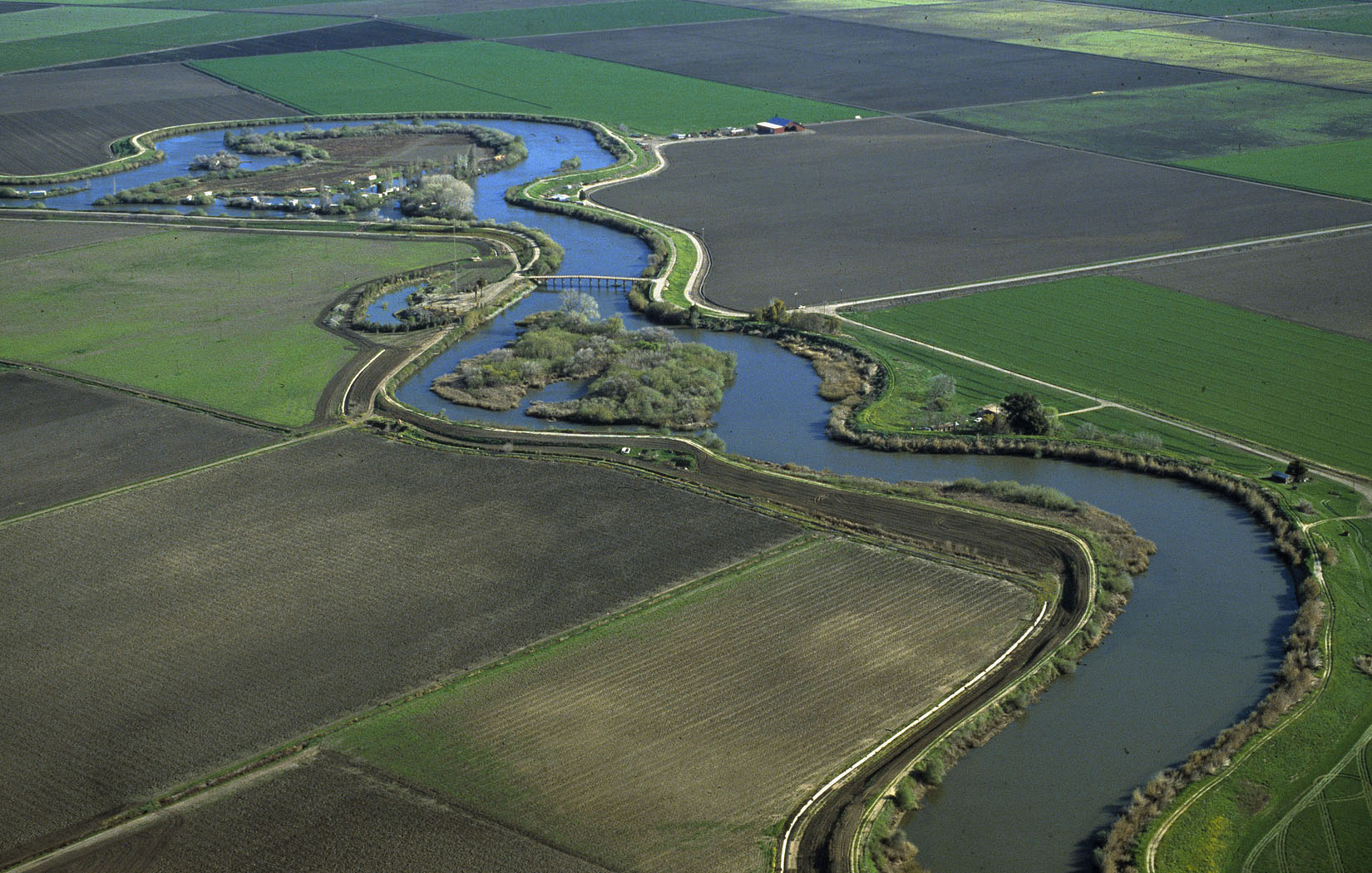
Increased flood risk in the Sacramento/San Joaquin River Delta has people worried about the economic impact on the farmers and residents located there.” credit=”California Department of Water Resources

Here’s the bad news for Delta farmers: A new report concludes that the worst climate impacts on the Sacramento-San Joaquin Delta could affect a relatively small number of people — the farmers whose land is below sea level and protected by a vast system of levees. Maintaining and repairing those levees falls on local reclamation districts, which can’t necessarily count on state or federal bailouts in the event of catastrophic flooding in the future. It can be expensive if a levee breaks. The Public Policy Institute of California (PPIC) studied the economic impacts of changes to the fragile Delta ecosystem and has produced some recommendations that are not likely to warm the hearts of some Delta landowners. Continue reading A Few May Lose Big as Delta Changes: How to Contain the Cost

We’re Not Alone: Wimpy Winter Weather Across the Country

Some atmospheric scientists think that could change soon.

By Andrew Freedman

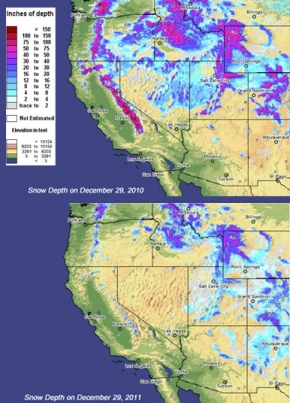
While some may be cheering the lack of snow as welcome relief, the widespread lack of it spells trouble for the ski industry, which pumps billions into the wintertime economy in states from California to Maine, and requires cooperation from Mother Nature to stay in business.

Snow from last year's big winter storms could still be seen on the mountains near Lake Tahoe on August 30th. This winter has been one of the driest on record.

Ski area operators across the country are already reporting drops in lift ticket sales, and are hoping for a major change in the weather pattern to bring colder, snowier weather. So far, die-hard skiers have been forced to either ski on man-made snow or travel to one of the few far-flung areas that have benefited from the unusual weather, such as the mountains of New Mexico or Alaska (where one town has had 18 feet of snow).

Compared to last winter, this wimpy winter weather is coming as quite a shock.

Snow was so widespread last winter that at one point in January, every state except Florida had some snow on the ground. But this year, the U.S. had the 11th least extensive December snow cover in the 46-year satellite record, said David Robinson, the director of the Global Snow Lab at Rutgers University.

“Is it fair to call it a snow drought? We’re getting there,” Robinson said. “It’s certainly an early season snow drought.”

Continue reading We’re Not Alone: Wimpy Winter Weather Across the Country

Drain it! Pay More for the Water! The Hetch-Hetchy Saga Continues

San Francisco’s use of the Hetch-Hetchy Valley to store 85% of its water has come under fire…again.

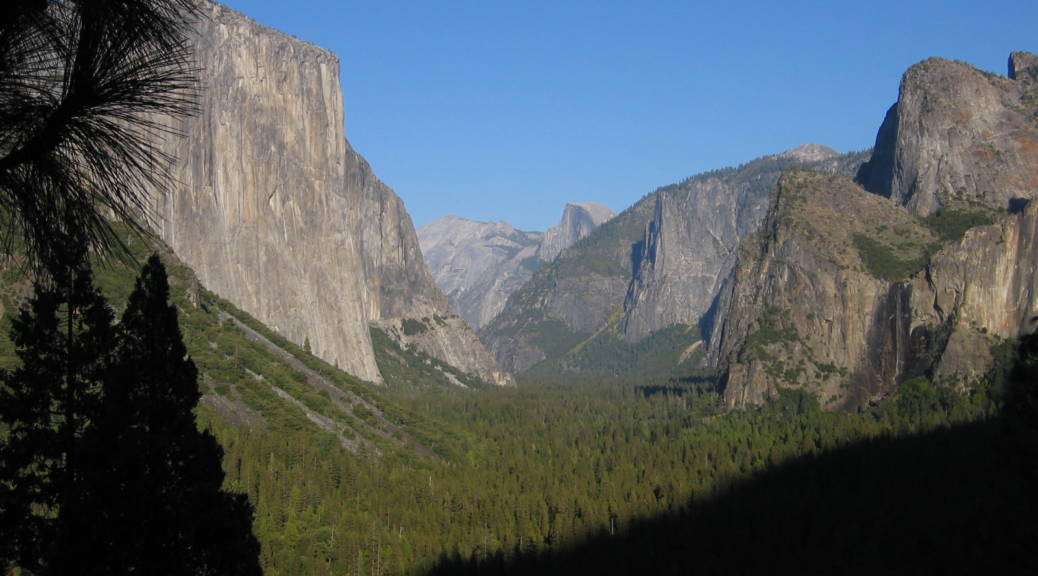
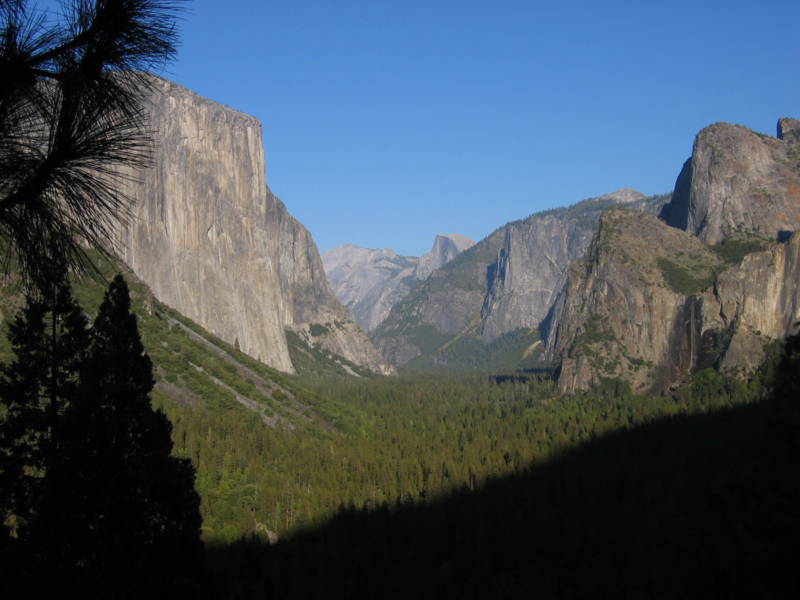
The Yosemite Valley offers some of the most spectacular views in California. Some people would like to see the Hetch-Hetchy Valley restored to a similar state.

Over the past couple of weeks San Francisco’s water supply and fixed annual fees for that water have come under attack by Republican Congressmen from other parts of the state. The first parry came from Representative Dan Lungren who represents the area stretching east from Sacramento. Lungren has a self-proclaimed “love affair” with Yosemite and thinks it’s worth spending some money to find out if restoring the valley is feasible. On KQED’s Forum program, Lungren argued that, “The possibility that we might have a second Yosemite Valley is something that at least I believe ought to be looked at. And yet everyone who opposes us seems to be afraid of looking at the facts.”

Continue reading Drain it! Pay More for the Water! The Hetch-Hetchy Saga Continues

Keeping Central Valley Crops and People Safe From Floods: A Costly Proposition

Big plans to revamp the Valley’s piecemeal flood management system…if there’s money for it

Now that the state’s revamped Central Valley Flood Protection Plan (big PDF) is out for public perusal, the question is whether the political will — and the cash — will be there to make it happen.

California status as an agricultural powerhouse is largely due to the fertile lands in the Central Valley, which are also prone to floods.

The Sacramento and San Joaquin river basins run through the valley and can overflow their banks threatening more than a million people and an estimated $69 billion in assets, according to the report. The current flood management system has been in place for about a hundred years and was designed specifically to keep water from the rivers off the land so that people could grow crops. Now the system has varied uses including conservation of habitat, water supply and water quality. The old system really isn’t up to the job anymore and almost everyone agrees that it will take a serious investment to bring it up to snuff.

Continue reading Keeping Central Valley Crops and People Safe From Floods: A Costly Proposition

Who Generated the Most Climate “B.S.” in 2011?

Despite flagging media coverage, there was plenty to go around, says a Bay Area scientist

Despite a dozen billion-dollar weather catastrophes in the US alone, year-end tallies show that overall, coverage of climate change continued to flag in the mainstream media.

That isn’t to say that there wasn’t plenty of public jabber about it, much of it wrong, according to Peter Gleick, who heads the Oakland-based Pacific Institute. Gleick is a hydrologist and one of the more outspoken science figures on Western water and climate issues. As a countermeasure against what he calls climate “disinformation,” Gleick and some colleagues have started handing out yearly Climate B.S. (Bad Science) Awards. In so doing, Gleick doesn’t spare the media itself. His list of 2011 “winners” came out today (gratefully we’re not on it). The following are Gleick’s words. Some of the links are mine. May I have the envelope, please: Continue reading Who Generated the Most Climate “B.S.” in 2011?

American Pika Gets Another Shot at Endangered Status

The American pika can only survive in a narrow temperature band and can suffer heat stroke at temperatures as mild as 80 degrees.

The California Fish and Game Commission is asking for public input on the status of the American pika. The small, alpine mammal has been at the center of a prolonged debate over whether to list it under the Endangered Species Act. If the pika ultimately wins endangered status it would be the first species to do so with climate change cited as a major factor contributing to its decline. The Center for Biological Diversity originally petitioned for the pika to receive protected status, considering it to be a bellwether for climate change in California. Continue reading American Pika Gets Another Shot at Endangered Status

Making Hay While the Sun Shines: A Flap over Solar Panels in Farm Country

The same things that make the San Joaquin Valley ideal for growing crops, plenty of sun and land, is also attracting large-scale solar power developers.

Hear the companion radio feature Wednesday morning, on The California Report.

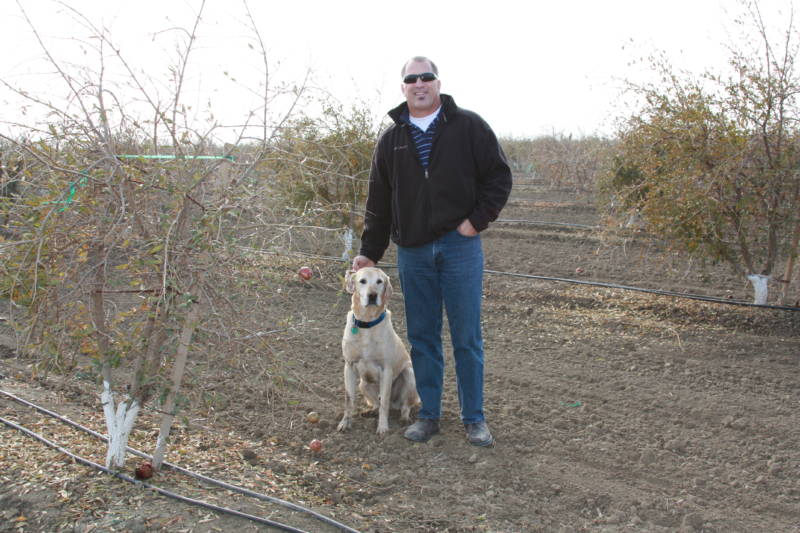
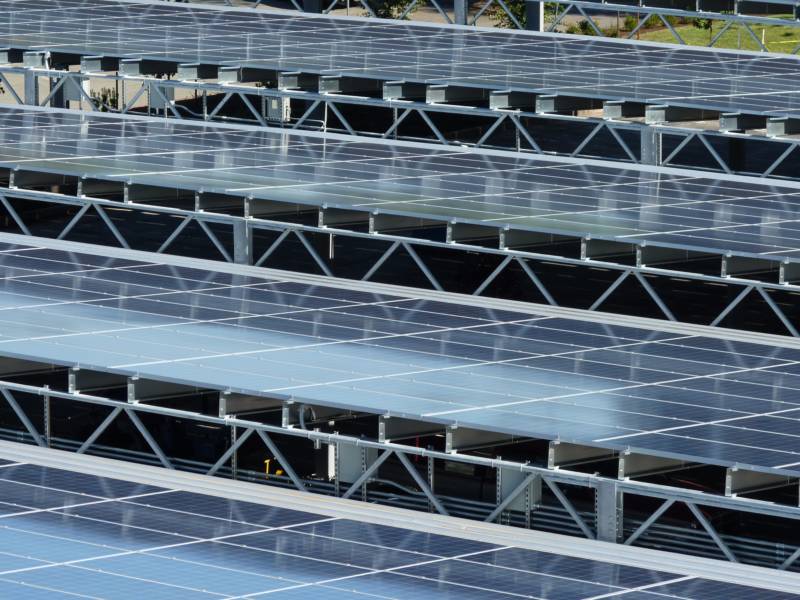
Tom Barcellos and his yellow lab, Maddox. Barcellos hopes to plant rows of pomegranate trees next to rows of solar panels, in an experiment to see if the shade from solar panels actually benefits crops.

Farmer Aaron Barcellos bristles at the idea that putting solar panels on his land is “paving it over,” as some critics have contended. Harvesting electrons, he says, is not the same as pouring concrete to build houses or a shopping center. Solar isn’t permanent: he can simply pull out the posts holding up the panels when he wants to plow the land under again. In the meantime, using a small part of his farm to generate power for the grid is a good way to bring in some guaranteed income, helping him weather the ups and downs of drought and crop prices.

But on Barcellos’s farm, the ground closest to a PG&E substation is considered “prime” farmland. That means he has to get permission from county supervisors to take his land out of the Williamson Act, which gives farmers a tax break for keeping prime farmland in agriculture. I explore that controversy in my radio story on today’s California Report.

Continue reading Making Hay While the Sun Shines: A Flap over Solar Panels in Farm Country

Sierra Snow Outlook is Bleak

Water users may be relying heavily on leftover water storage from last year

Hard to imagine now: A snowed-over road near Lake Tahoe in March.

It was startling to see the state’s lead snow surveyor kneeling on bare grass near Echo Summit, trying to find enough snow to measure the water content. But so it went with the first official survey of the season, conducted by California’s Dept. of Water Resources.

The manual survey affirmed what remote sensors had already relayed — that water content in the Sierra snowpack stands at just 19% of the average reading for this time, right around New Year’s. The readings are just seven percent of where things usually stand on April first, meaning we have a long way to go, to get back to “normal.” Continue reading Sierra Snow Outlook is Bleak

End is Near for Solar Tax Credit

Solar companies in the Bay Area are asking Congress to extend a popular renewable energy tax program that expires at the end of the year.

The 1603 program reimburses companies for a portion of the cost of installing solar projects.

Solar companies benefit from a 30 percent tax credit, but there’s a problem: most companies developing solar projects don’t have enough income to take the deduction. That’s where the 1603 treasury grant program comes in. It gives companies a cash grant up front in place of the tax credit.

“This program really was a fix that brought liquidity back to the market and enabled developers to move forward with their projects,” said Arno Harris, the CEO of Recurrent Energy, a San Francisco-based solar developer. “It’s definitely going to have an impact, if it’s not extended, on our appetite to continue investing in the US solar market.”

Continue reading End is Near for Solar Tax Credit