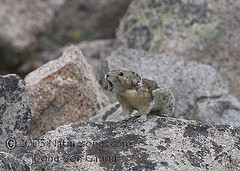
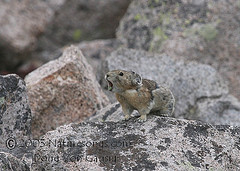
The American pika can only survive in a narrow temperature band and can suffer heat stroke at temperatures as mild as 80 degrees.
The California Fish and Game Commission is asking for public input on the status of the American pika. The small, alpine mammal has been at the center of a prolonged debate over whether to list it under the Endangered Species Act. If the pika ultimately wins endangered status it would be the first species to do so with climate change cited as a major factor contributing to its decline. The Center for Biological Diversity originally petitioned for the pika to receive protected status, considering it to be a bellwether for climate change in California. Continue reading American Pika Gets Another Shot at Endangered Status→
Big wind and solar buildouts spur a “bio-boom” in the California desert
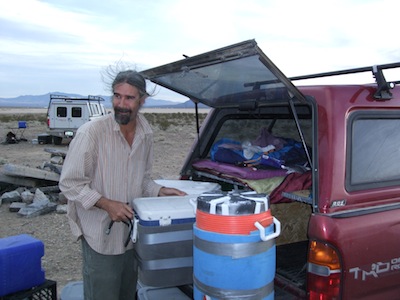
Field biologists like Mike Sally live a windblown, nomadic lifestyle, surveying sites for renewable energy projects. (Photo: Sarah McBride)
By Sarah McBride
I’ve reported on bubbles in plenty of stocks and commodities, but my springtime visit to the Ivanpah Valley was the first I’d heard anyone talk about a bubble in field biologists. The guy who used those words, Alex Mach, is a field biologist himself — and he was only half kidding.
Mach is one of dozens of field biologists who are out in the desert working to protect threatened animals and plants from solar and wind development projects. They’ve tapped into the rich vein of desert tortoises, whose habitats coincide with many of the areas scientists say are best positioned for solar plants — including Mach’s worksite at the time, BrightSource Energy’s solar plant in Ivanpah Valley, near the California-Nevada border. Continue reading Boom Times for Field Biologists→
The American pika has begun a long-delayed journey toward possible listing under the Endangered Species Act. It could become the first mammal in the Lower 48, let alone California, to be listed as specifically threatened by global warming.
The U.S. Fish & Wildlife Service agreed today to review the petition, as part of a court settlement with San Francisco’s Center for Biological Diversity.
Pika live in rock colonies only at high elevation (usually above 9,000 feet, though some have been documented lower). They’re well insulated against the harsh mountain environment but can suffer heat stroke at temperatures approaching 80 F.
As alpine temperatures increase with global warming, conservationists worry that the pika will be driven further upslope and eventually out of existence.
Back in the fall of 2007, CBD petitioned for listing under both the federal and California ESA’s. The feds more or less ignored the request. California turned it down flat, saying there was insufficient data to warrant a review. There was also some sentiment on the commission that using global warming as a basis for listing any species would be setting an uncomfortable precedent. CBD sued both agencies and the California case is still in court.
Not all scientists are convinced that the pika’s in trouble. Find out why in our Climate Watch radio feature, Monday morning on The California Report. Listen to the story here.
By the way, “boulder bunny” is a fairly accurate description. They may look like rodents but pika are actually relatives of rabbits and hares.
Use the audio player below to hear Doug Von Gausig’s recording of pika vocalizing.