What is the Delta, and Why Should You Care?

The Sacramento-San Joaquin Delta: ground zero for fights over water, fish and farms
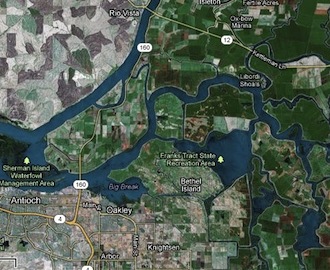
The Sacramento-San Joaquin Delta is a key to the water supply for 25 million Caliornians.

California’s Delta, where the Sacramento and San Joaquin Rivers meet, is the heart of the state’s complex water infrastructure. Where water from the north gets funneled to the south, wetlands have been turned into farmland, and native fish are in decline. Millions of Californians use water from the Delta, but in a poll conducted earlier this year, 78% of respondents didn’t know anything about it.

KQED’s Lauren Sommer is producing a series about the Delta, beginning today with a story introducing the architecture of the Delta, the battles being fought there and possible solutions–all made more complicated by climate change.

Continue reading What is the Delta, and Why Should You Care?

Iconic Icebreaker Makes Last Voyage — to Scrapyard

A reminder of U.S. vulnerability in the polar seas?

The retired Coast Guard icebreaker Glacier prepares for its final voyage.

Glaciers are slipping away everywhere. It was tough to see this one go.

I’m talking about a ship, not an actual river of ice. This morning I watched the retired Coast Guard icebreaker Glacier cast off on what is likely to be its final voyage, from a Vallejo dry dock to a scrapyard in Brownsville, Texas. It seemed like a poignant moment, given the decline of the U.S. icebreaker fleet. Just as Arctic seas are opening up to unprecedented shipping activity, the Coast Guard is left with just one icebreaker in working order. Icebreakers are important research platforms and could play a vital role in responding to oil spills from offshore drilling in far northern waters. Continue reading Iconic Icebreaker Makes Last Voyage — to Scrapyard

Controversial SF Bay Development Plan Dead in the Water — For Now

Saltworks, in Redwood City, would have built thousands of homes in salt ponds on the Bay

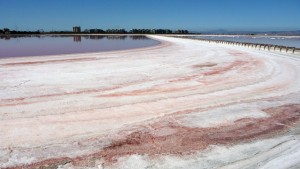
Salt ponds in Redwood City where the new Saltworks development is proposed.

The low-lying land along the Bay in Redwood City has been the center of a climate controversy: should the salt ponds that have been producing salt for Cargill for decades be turned into housing, or back into wetlands? Supporters of the development point out that Silicon Valley needs more housing. Supporters of the wetlands respond, birds need a place to land, too — plus, the wetlands will provide a much-needed buffer as the sea level rises.

Now, the fight is on hold: DMB Associates, the developer that is working with Cargill on a plan to turn nearly 1,500 acres of salt ponds into Saltworks, has officially withdrawn its application from the City Council of Redwood City. That’s after an ad hoc subcommittee of the council recommended that the application be denied at this coming Monday’s meeting.
Continue reading Controversial SF Bay Development Plan Dead in the Water — For Now

NOAA’s Margaret Davidson: Watching the Coasts, Preparing for Change

Tonight: The latest in our series of TV interviews with climate change thought leaders

As head of NOAA’s Coastal Services Center, Margaret Davidson has her eye firmly on the future of the country’s coasts, and the threats imposed from rising seas and more extreme weather. Davidson is based in South Carolina, but is a close watcher of California, where coast and climate may be on a collision course.

Climate Watch Senior Editor Craig Miller spoke with Davidson about sea level rise and the California coast. Their conversation will air this evening on This Week in Northern California, on KQED Public Television 9.

Here’s a clip that’s not included the TV broadcast.

Continue reading NOAA’s Margaret Davidson: Watching the Coasts, Preparing for Change

New Clues to California’s Climate Future From the State’s Oldest Lake

Scientists are using ancient pollen to help predict what’s next for California’s flora

A radio version of this story aired on The California Report.

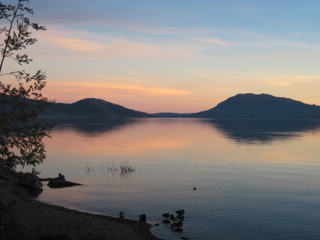
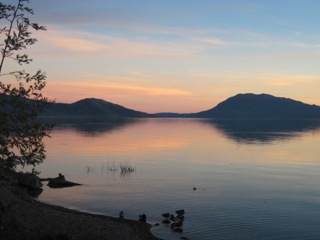
Clear Lake, north of San Francisco Bay, is California's oldest lake and a potential treasure trove for climate scientists.

Clear Lake is one of the largest lakes in the state, and one of the oldest in North America. For half a million years or more, pollen and dead bugs have been collecting on the bottom. That gives scientists a unique opportunity to look deep into California’s past to learn what’s grown here through ice ages and warmer “interglacial” periods.

Dr. Cindy Looy, an assistant professor in Berkeley’s Department of Integrative Biology, is leading a project to core Clear Lake, unearthing sediment that’s been collecting on the lake bed for up to 200,000 years. Looy is especially interested in the interglacials, times between ice ages, when the climate was warmer. We’re in one now — it began about 12,000 years ago — but Looy is prospecting in the one that began about 130,000 years ago, when the earth might have been warmer than it is now.

“There are a lot of people working on models to predict what the climate will look like,” she says. “In order to find out how plant life and animal life will respond to climate change, you can go back in the past, to periods where the climate was changing rapidly and even getting warmer than it is today.”

Video produced by Harry Gregory.
Continue reading New Clues to California’s Climate Future From the State’s Oldest Lake

Where Climate and Energy Intersect: The Flipside

Electrical generation may be changing the climate but the reverse is also true

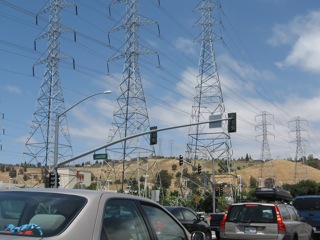
As temperatures rise, the power grid stands to become less efficient. Transmission lines could lose 7-8% of their peak carrying capacity by 2100.

Planners, policymakers and scientists are starting to look more closely at the crossroads of climate change and energy production in California.

For years the focus has been on how energy production affects the climate through emissions of greenhouse gases. Now the converse has come center stage: What happens to energy production in a changing climate? Some heavy-hitters in California climate and energy circles gathered at the California Energy Commission this week, to weigh the question. Some highlights: Continue reading Where Climate and Energy Intersect: The Flipside

California Winds Up “Wet” Season on the Dry Side

But communities that depend more on rain, less on the snowpack are looking good

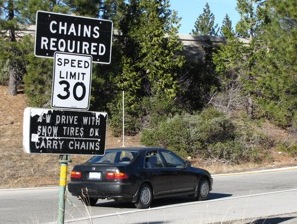
In mid-January, much of the Sierra remained snowless.

Despite what felt like a late-season deluge, this will go down as a dry winter in California’s record books.

The season’s final survey of the Sierra snowpack by California water officials confirms that even heavy spring rains and fresh mountain snow as recently as last week didn’t make up for a late start to the rainy season and one of the driest Decembers on record. Today’s survey finds water content of the mountain snow at just 40% of the long-term average. That puts four out of the last five years on the dry side, though last year was a gullywhumper. Continue reading California Winds Up “Wet” Season on the Dry Side

Brown Says State’s Buildings Must Go Green

An executive order directs state agencies to cut carbon emissions, save water and energy

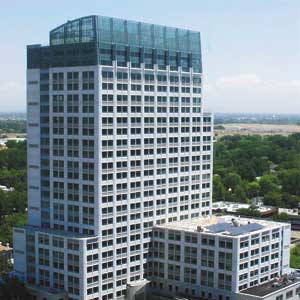
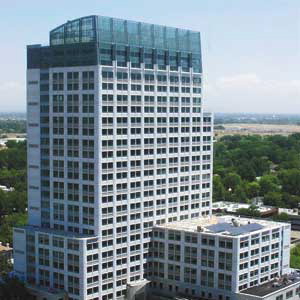
California Environmental Protection Agency headquarters in Sacramento. In 2003, the 25-story tower was given a “Platinum” rating by the U.S. Green Building Council in 2003.

Governor Jerry Brown decreed yesterday that state-owned buildings across California must go green.

The executive order stipulates that state agencies must reduce their greenhouse gas emissions by 20% using 2010 as a baseline, and half of all new and renovated buildings must be Net Zero Energy by 2020. The order, B-18-12, also continues a previous policy requiring state-owned buildings larger than 10,000 square feet to meet the guidelines of the U.S. Green Building Council’s “Silver” rating.

“This shows that the state is very focused on meeting very ambitious yet achievable goals,” said Evan Westrup, a spokesperson for the governor’s office.

The move is a step toward compliance with AB 32, the California Global Warming Solutions Act, which requires that statewide greenhouse gas emissions brought down to 1990 levels by 2020.

According to a release from the governor’s office, the statewide initiative will also save one billion gallons of water and an estimated $45 million in tax dollars each year. Westrup did not have figures on projected job creation, but he pointed out that similar initiatives geared toward efficiency have created 1.5 million jobs across the state since 1978.

Continue reading Brown Says State’s Buildings Must Go Green

California’s Low-Carbon Fuel Standard Back on Track — For Now

But the courts aren’t finished with the next big piece of the state’s AB 32 climate strategy

By Thibault Worth

California aims to cut the carbon content of fuels by 10%.

First it was go. Then it was stop. Now, it’s go again.

As of Monday, California’s groundbreaking Low Carbon Fuel Standard (LCFS) was back on track for implementation after the Ninth Circuit Court of Appeals issued a stay of an injunction against an earlier lower court ruling.

In a statement, the state’s Air Resources Board, which is responsible for the regulation, said the court’s decision would allow California to “continue implementation and resume enforcement of this important program to reduce greenhouse gas emissions.” [full statement PDF] Continue reading California’s Low-Carbon Fuel Standard Back on Track — For Now

Tesla and SolarCity Collaborate on Clean Energy Storage

The companies’ founders don’t just share business interests: they’re also family

Elon Musk is the founder of Tesla Motors and SpaceX, and supported the creation of SolarCity.

Elon Musk is well-known in Silicon Valley as the founder of the luxury electric vehicle company Tesla Motors, and of SpaceX, the private space transport company.

What’s less well-known is Musk’s contribution to SolarCity, the solar installer and energy efficiency auditor. Musk inspired–and helped fund–the creation of the San Mateo-based solar company. And Tesla is working closely with SolarCity on a clean energy storage solution that would combine Tesla’s lithium-ion batteries with SolarCity’s rooftop solar arrays. The collaboration makes sense: not only is Musk the chairman of SolarCity, but the founders of the company, brothers Lyndon and Peter Rive, are his first cousins.

Continue reading Tesla and SolarCity Collaborate on Clean Energy Storage