Category Archives: The Science

Latest research from the field and the lab

Study: Western Streams Resist Influence of a Warming Climate

Streams show varied response
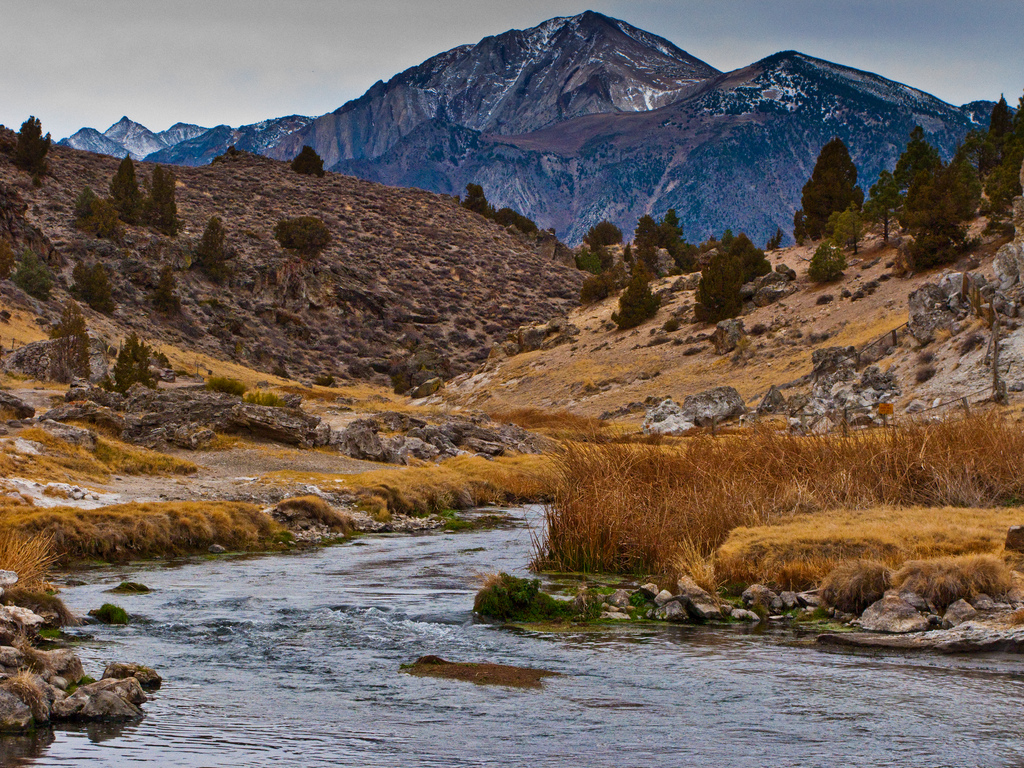
Hot Creek, near Mammoth Lakes, was one of 20 streams in the Western U.S. examined in a study by Oregon State researchers who found no clear relationship between increasing air temperatures and stream temperatures.” credit=”Josh Simerman, Flickr

Rising sea levels, melting glaciers, intensifying storm events – evidence is mounting that the effects of a warming planet will be far-reaching and potentially catastrophic. But one natural system may be more resilient than others when it comes to global warming: mountain streams.

Researchers from Oregon State University report in the journal Geophysical Research Letters that small streams in the western United States have not heated up in response to the region’s warming air temperatures.

Water temperature is a critical variable for aquatic ecosystems. Some fish, for example, time egg-laying to minute changes in water temperatures; in other species, stream temperatures are a key factor in determining the sex of juvenile fish. Continue reading Study: Western Streams Resist Influence of a Warming Climate
Studying the Mysteries of Migration

There are still many questions about bird migration, including how it’s affected by climate

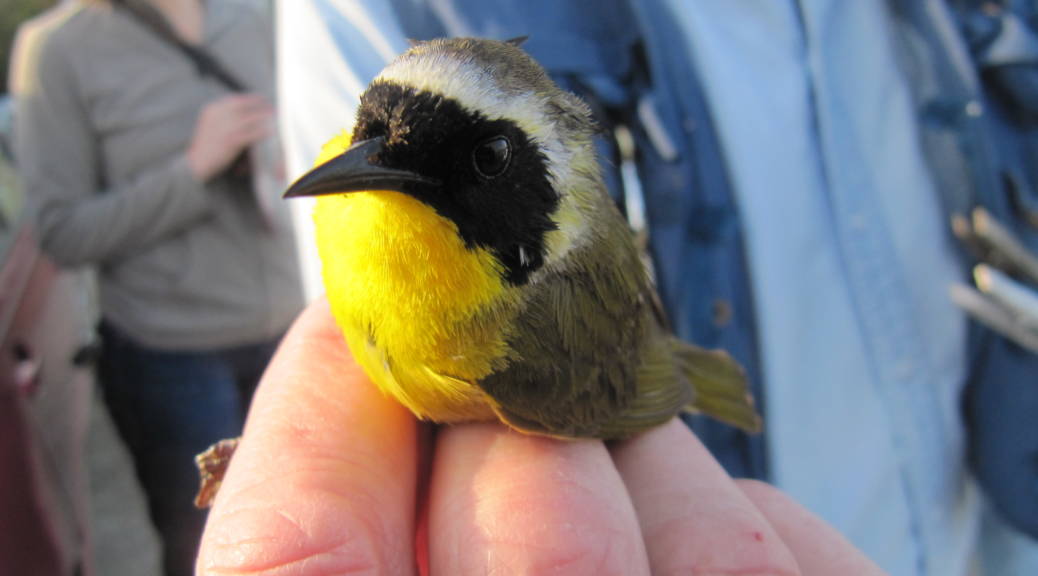
Millions of birds make their way through the San Francisco Bay Area on the way north to their breeding grounds every spring. Many shorebirds and waterfowl have already left, and now waves of songbirds are passing through. As well-watched as birds are, there are still a lot of things scientists don’t know about migration, including precisely where different species go each summer and winter, and what exactly triggers them to get going. Since so many birds pass through here, the Bay Area is a good place to try and sort out some of the questions, and to try to tackle another: how does climate change affect birds?

The San Francisco Bay Bird Observatory, a non-profit science and conservation organization, has been monitoring birds here for 30 years. The information collected through its bird banding program, has helped reveal some of the likely effects of climate change on birds. For example, a paper released last year suggests that climate change is making some species larger.
Continue reading Studying the Mysteries of Migration

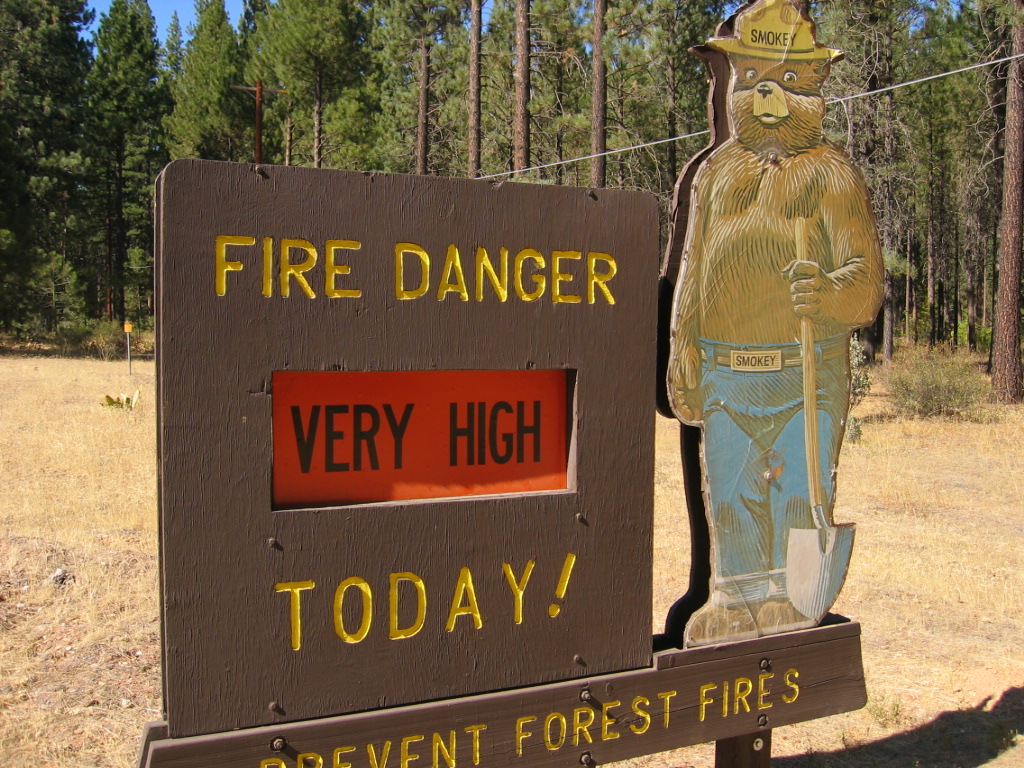
After Dry ‘Rainy Season,’ California Faces High Wildfire Risks

Exceptionally dry conditions this winter have heightened the risk of summer wildfires

By Alyson Kenward

Dry conditions in California during most of this winter have left many areas parched and vulnerable to ignition from both human and natural causes.

In California, May typically marks the beginning of a warm and dry summer season. This year, however, things are different. Not only has it been warm and dry for the past couple weeks; it’s been warm and dry for months. So dry, in fact, that officials are warning the risk of wildfires across much of the state is going to be much worse than usual, for several months to come.

According to their most recent outlook, the National Interagency Fire Center predicts that large parts of southern and central California, along with forests throughout the Sierra Nevada, are likely to see more wildfires than normal, particularly later this summer.

“A big chunk of the state is looking at above-average wildfire risk,” said Rob Krohn, a meteorologist with the U.S. Forestry Service’s Predictive Services Branch in Riverside. According to Krohn, the exceptionally dry conditions in California during most of this winter have left many areas parched and vulnerable to ignition from both human and natural causes.
Continue reading After Dry ‘Rainy Season,’ California Faces High Wildfire Risks

Poll Suggests Obama Should Come Out in Support of Climate Action

Most Americans want government to do something about climate change

The majority of Americans want the government to take action on climate change, but the majority is shrinking.

Two polls in as many weeks find that the majority of Americans support government policies to shift to cleaner energy. According to the first, conducted by the Yale Project on Climate Change Communication and the George Mason University Center for Climate Change Communication, nearly three-out-of-four Americans (72%) think climate change should be a priority for Congress, and 70% want corporations and industry to do more to address climate change.

The second, conducted by Stanford, finds that though they’re still a majority, the proportion of Americans who support climate change policies, versus those who don’t, has dropped by ten percentage points since 2010.

Despite the diminishing support, social psychologist Jon Krosnick, who directed the Stanford poll, says politicians stand to benefit by addressing climate change head-on.
Continue reading Poll Suggests Obama Should Come Out in Support of Climate Action

What is the Delta, and Why Should You Care?

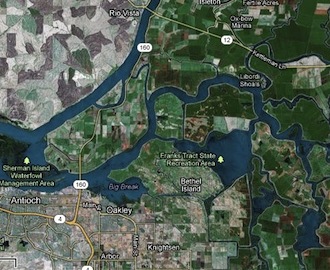
The Sacramento-San Joaquin Delta: ground zero for fights over water, fish and farms

The Sacramento-San Joaquin Delta is a key to the water supply for 25 million Caliornians.

California’s Delta, where the Sacramento and San Joaquin Rivers meet, is the heart of the state’s complex water infrastructure. Where water from the north gets funneled to the south, wetlands have been turned into farmland, and native fish are in decline. Millions of Californians use water from the Delta, but in a poll conducted earlier this year, 78% of respondents didn’t know anything about it.

KQED’s Lauren Sommer is producing a series about the Delta, beginning today with a story introducing the architecture of the Delta, the battles being fought there and possible solutions–all made more complicated by climate change.

Continue reading What is the Delta, and Why Should You Care?

New Clues to California’s Climate Future From the State’s Oldest Lake

Scientists are using ancient pollen to help predict what’s next for California’s flora

A radio version of this story aired on The California Report.

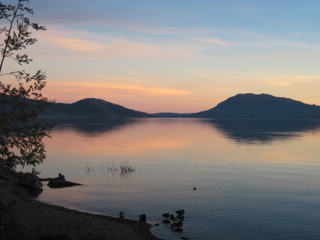
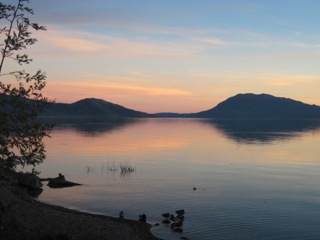
Clear Lake, north of San Francisco Bay, is California's oldest lake and a potential treasure trove for climate scientists.

Clear Lake is one of the largest lakes in the state, and one of the oldest in North America. For half a million years or more, pollen and dead bugs have been collecting on the bottom. That gives scientists a unique opportunity to look deep into California’s past to learn what’s grown here through ice ages and warmer “interglacial” periods.

Dr. Cindy Looy, an assistant professor in Berkeley’s Department of Integrative Biology, is leading a project to core Clear Lake, unearthing sediment that’s been collecting on the lake bed for up to 200,000 years. Looy is especially interested in the interglacials, times between ice ages, when the climate was warmer. We’re in one now — it began about 12,000 years ago — but Looy is prospecting in the one that began about 130,000 years ago, when the earth might have been warmer than it is now.

“There are a lot of people working on models to predict what the climate will look like,” she says. “In order to find out how plant life and animal life will respond to climate change, you can go back in the past, to periods where the climate was changing rapidly and even getting warmer than it is today.”

Video produced by Harry Gregory.
Continue reading New Clues to California’s Climate Future From the State’s Oldest Lake

Where Climate and Energy Intersect: The Flipside

Electrical generation may be changing the climate but the reverse is also true

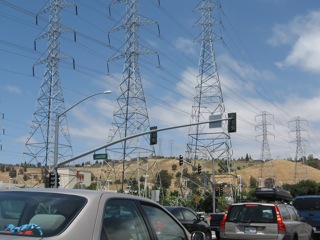
As temperatures rise, the power grid stands to become less efficient. Transmission lines could lose 7-8% of their peak carrying capacity by 2100.

Planners, policymakers and scientists are starting to look more closely at the crossroads of climate change and energy production in California.

For years the focus has been on how energy production affects the climate through emissions of greenhouse gases. Now the converse has come center stage: What happens to energy production in a changing climate? Some heavy-hitters in California climate and energy circles gathered at the California Energy Commission this week, to weigh the question. Some highlights: Continue reading Where Climate and Energy Intersect: The Flipside

Climate, Corn, and the Coming Market Chaos

Climate change has an outsize effect on corn price volatility

Climate change -- and the ensuing heat waves -- will create more volatility in the corn price market.

By Michael D. Lemonick

Farmers know all too well that the prices they get for what they grow can fluctuate from one year to the next, sometimes wildly. Drought or heat can reduce crop yields; so can frost and floods. For corn producers, the Renewable Fuel Standard, which mandates the addition of ethanol to gasoline, is yet another source of volatility. It puts extra demands on whatever supply there is, making corn more expensive for consumers even as it puts more money in farmers’ pockets. And overlaid on top of it all is climate change, which exerts its on push on the ups and downs of weather.

Scientists have looked at different pieces of this equation, but researchers from Stanford and Purdue have analyzed the entire equation, in a paper just published in Nature Climate Change, and determined which factor causes the most trouble: it’s climate change, and for Stanford’s Noah Diffenbaugh, that came as a surprise. “I genuinely expected that climate would be a minor player relative to these other influences,” he said in a telephone interview.

Continue reading Climate, Corn, and the Coming Market Chaos

What Will Conservation Cost?

Probably billions, as climate change complicates conservation

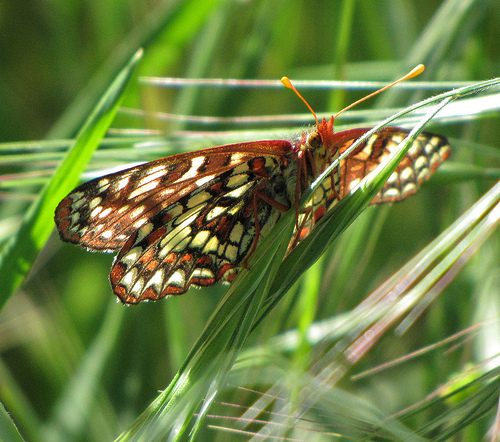
The Bay checkerspot butterfly is one of the species that might need help migrating.

Traditional approaches to preserving biodiversity may not hold up as the climate changes.

One common tool environmental groups use now is to buy land. But that tactic only works if, once the land is protected, the species that live there can stay there. Climate change scrambles that notion. Species won’t necessarily be able to stay where they are in perpetuity. A new study in the journal Conservation Biology (abstract only) examines what it would cost to stick to the current approach and the same conservation goals in one area in California. And that number — again, for just one conservation area — is staggering. By 2100, the study finds, the total price tag will be about $2.5 billion.

“It is a dizzying number,” Rebecca Shaw, the associate vice president of the Environmental Defense Fund and one of the study’s authors, told me. “And it’s dizzying because climate change is dynamic and our conservation strategies are designed for static systems.”

Shaw explains that the current approach — searching out good habitat, buying the land, hands-on management and monitoring — is expensive anyway. But she predicts that climate change will double the cost.

Continue reading What Will Conservation Cost?

Lightning, Twisters, Snow and Waterspouts (Oh My)

April arrives with a lot more than showers

We saw a little bit of everything around California last week.

Lightning strikes the Bay Bridge last Thursday evening, some of an estimate 740 "ground strikes."

On Friday, a small tornado touched down in Yuba City, sideswiping a car dealership.
A freak April snow shut down a stretch of I-5. That made local papers on the East Coast.
Waterspouts were sighted off Orange County, and a thunderstorm over San Francisco Bay spawned an extraordinary 740 lightning strikes, according to Christine Riley, a forecaster with the National Weather Service in Monterey. Opportunistic photographers caught bolts connecting with iconic bridges and the Transamerica Pyramid.

There was talk on Friday of this being a “record number” but Riley says the Weather Service doesn’t actually track that. It happens that a forecaster in Monterey added up the strikes from this event that showed up on NASA’s Lightning Detection Network. Riley says that figure includes only “ground strikes,” not the bolts that travel cloud-to-cloud. Continue reading Lightning, Twisters, Snow and Waterspouts (Oh My)