Category Archives: The Science

Latest research from the field and the lab

NOAA Chief: The Climate Crisis the Media is Missing

Carbon Emissions and Osteoporosis of the Sea

Ocean Acidification topped the list of concerns for a panel of marine scientists opening the annual Society of Environmental Journalists conference in Miami this week.

The topic was oceans, and when moderator Nancy Baron of the science education group, COMPASS asked the scientists to “Tell us how it is, really,” panelist and top NOAA administrator Jane Lubchenco said that rapidly rising acidity in the ocean is a “huge challenge.”

“It’s the most important under-reported global environmental story today,” she said. “The ocean has become 30% more acidic over the last century, and this massive change is likely to have serious impacts, and it’s likely to get worse.” Continue reading NOAA Chief: The Climate Crisis the Media is Missing

Yep, It’s Warmer Out There…But Not Everywhere

Berkeley study affirms temperature trends cited in major climate reports

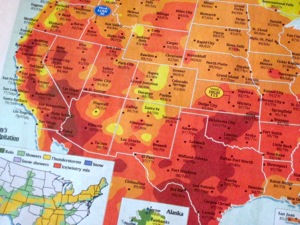
Hot enough for you? Temperature map from the July 31 edition of USA Today

Just in case you’ve been wondering, the world is getting warmer. Not everywhere but overall, things are heating up pretty much as advertised. A comprehensive study of temperature records — some of which had been under attack by climate change skeptics — concludes that the average global land temperature has risen one degree (Celsius) since the mid-1950s.

The project, known as the Berkeley Earth Surface Temperature Study, was launched by a team of scientists from various institutions, to address charges that climatologists had been relying on shaky data from temperature-logging stations around the world. Continue reading Yep, It’s Warmer Out There…But Not Everywhere

Global Warming May Worsen Effects of El Niño, La Niña Events

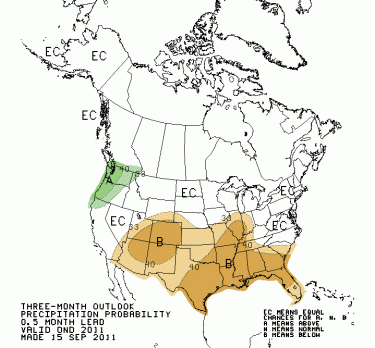
Precipitation outlook for winter 2011-12, showing the likelihood of below average precipitation in Texas and other drought-stricken states.

Does this mean Texas is toast?

By Michael D. Lemonick

As most Californians know, El Niño is a periodic unusual warming of the surface water in the eastern and central tropical Pacific Ocean. Actually, that’s pretty much a lie. Most people don’t know the definition of El Niño or its mirror image, La Niña, and truthfully, most people don’t much care.

What you do care about if you’re a Texan suffering through the worst one-year drought on record, or a New Yorker who had to dig out from massive snowstorms last winter (tied in part to La Niña), or a Californian who has ever had to deal with the torrential rains that trigger catastrophic mudslides (linked to El Niño), is that these natural climate cycles can elevate the odds of natural disasters where you live. Continue reading Global Warming May Worsen Effects of El Niño, La Niña Events

Climate Change Could Mean Cloudy Future for Lake Tahoe

New threats to lake’s clarity are emerging just as restoration funding is drying up

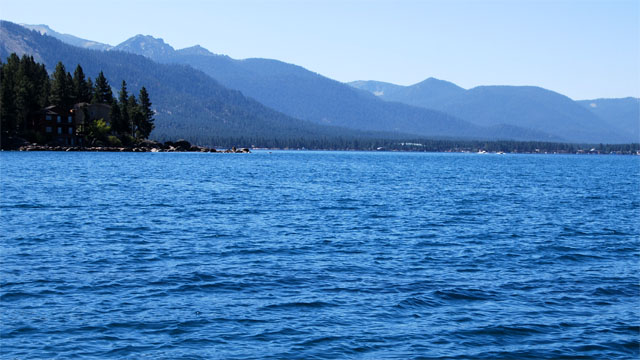
Climate change and invasive species threaten Lake Tahoe just as restoration funding dwindles.

Over the last 15 years, more than a billion dollars has been spent to protect Lake Tahoe’s clear waters from runoff and erosion. Now, new threats to lake’s clarity are emerging, just as restoration funding is drying up.

Researchers from UC Davis are hot on the trail of one of those threats. On a recent late summer morning, Katie Webb and a team from UC Davis’s Tahoe Environmental Research Center went looking for it on a boat near South Lake Tahoe.

Hear the radio version of this story Wednesday on The California Report. Continue reading Climate Change Could Mean Cloudy Future for Lake Tahoe

Taking the Pulse of the Mountains

Federal grant enables major new network of Sierra water sensors

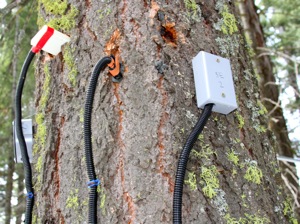
A tree at the Fresno County pilot project adorned with sensors

Researchers at UC Merced are set to open a whole new window on the Sierra Nevada. Using two million dollars from the National Science Foundation, hydrologist Roger Bales and his colleagues can now expand on a pilot project to measure the mountains’ “vital signs.”

Bales says beginning next summer, he, UC Berkeley’s Steven Glaser and their team will start installing a network of 20-to-30 instrument clusters throughout the American River watershed, casting a watchful eye over about 2,000 square kilometers that typically gets snow cover. The instruments record factors that affect the mountain’s hydrology, such as temperature, humidity, soil moisture, stream flow and even how much solar radiation penetrates the tree canopy.

Bales says the pilot phase has taught them how to put together a network of wireless sensors that will endure the extreme alpine conditions and still remain reliable (see Sasha Khokha’s post and slide show from March). Continue reading Taking the Pulse of the Mountains

Snapping Snakes for Science — with your iPhone

An innovative citizen science project gains momentum, sprouts new branches

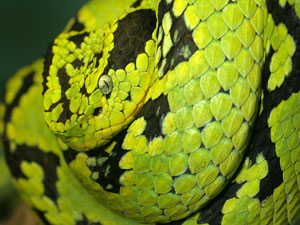
Tad Arensmeier photographed this Yellow-Blotched Palm-Pitviper for iNaturalist.” credit=”Tad Arensmeier/Flickr

The organizers of a new effort to catalog the world’s reptiles want to enlist you and your iPhone for their cause. The Global Reptile Bioblitz launched last month and aims to collect amateur observations of every species of reptile on Earth — all 9,413 of them. The project is the sister effort of the Global Amphibian Bioblitz which launched earlier this summer and, thanks to submissions from citizen scientists around the world, has already collected photos of more than 700 of the nearly 7,000 known amphibian species on the planet.

The observations are all logged at iNaturalist.org, an online citizen science community with more than 2,000 members who’ve cumulatively logged more than 30,000 field observations of species ranging from redwoods to coyotes.Observations can be uploaded to the site directly, or through an iPhone app, also called iNaturalist, which was launched earlier this year. Since we first reported on it back in January, the app has been downloaded more than 3,000 times, according to its developer Ken-ichi Ueda. Continue reading Snapping Snakes for Science — with your iPhone

Report: Five Smoggiest US Cities Are in California

And they’re not necessarily the ones you might guess

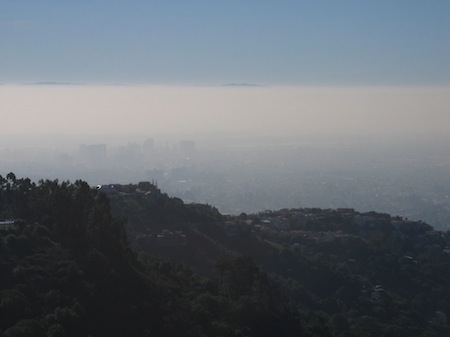
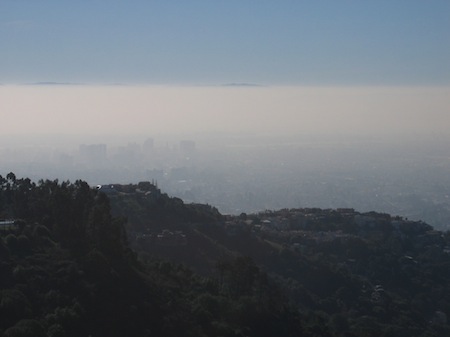
California may have great weather but also some of the nation’s worst air. The advocacy group Environment California has issued a report ranking the nation’s worst metropolitan areas for air quality. The five worst are in California, as are six of the top ten.

Smog in the Los Angeles Basin

Based on data from 2010, the report’s “Top Smoggiest Areas in the US” were:

1. Riverside-San Bernardino

2. Visalia-Tulare-Porterville

3. Bakersfield (tie)

3. Los Angeles-Long Beach (tie)

5. Fresno Continue reading Report: Five Smoggiest US Cities Are in California

How to Capture the Power of High-Altitude Winds

High altitude winds may have more than 100 times the energy needed to power civilization.  But as this video from KQED’s QUEST explains, capturing that power is going to take some very creative  solutions.

By Chris Bauer
A dreamer stares up into the sky, watches the clouds slowly pass by and ponders what could be. From da Vinci to Newton to the Wright brothers to the little kid down the street, sometimes there’s a fine line between the day-dreamer and the visionary. And now a group of innovative thinkers are looking at those same passing clouds in a whole new way.

Looking up at the jet stream, Ken Caldeira, a climate scientist from the Carnegie Institution of Global Ecology at Stanford University says, “We find that there’s more than 100 times the power necessary to power civilization in these high altitude winds.” 100 times the energy to power the world is going to get people’s attention.

The global need for clean energy is pushing scientists and engineers to search for new, untapped sources of energy. “To solve this problem we need a real revolution in our system of energy development,” continues Caldeira, “We need huge amounts of power, and the things that can provide huge amounts of power include fossil fuels like coal, oil and gas; nuclear power, solar power and wind.” The strongest and most consistent winds are found in the jet stream as high as 30,000 feet above the earth. But how do you harness the wind power from that high? Now the race is on to find the answer to that question. Continue reading How to Capture the Power of High-Altitude Winds

Scientists Look for Climate Trends in High Places

Mountaintops can be good places to study the effects of climate change because there aren’t any things like factories or highways or garden weeds up there. In that way, they’re more like laboratories.

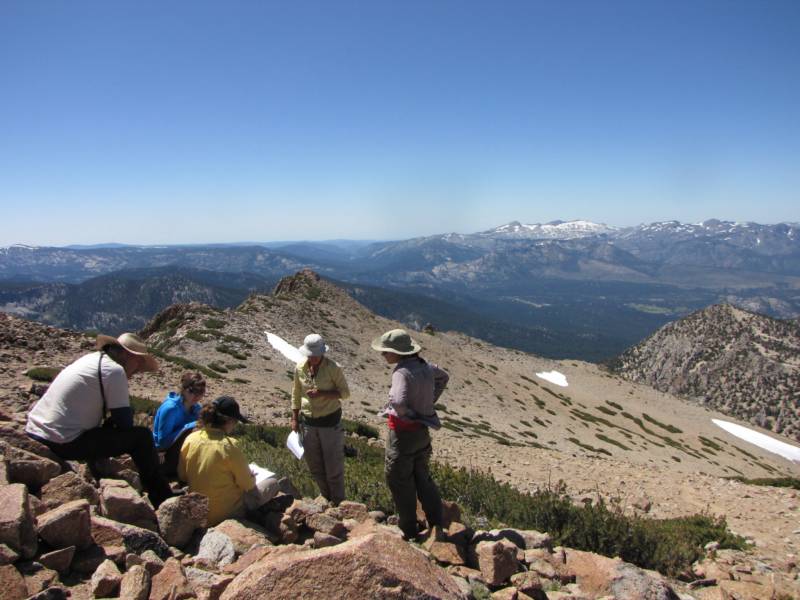
So, even though it involved a tough hike, about a dozen scientists gathered at the top of Freel Peak near South Lake Tahoe earlier this summer to count every single plant at the summit. It was for GLORIA, short for Global Observation Research Initiative in Alpine Environments, a project that sends botanists and plant ecologists to the world’s highest mountains to document the tiny, colorful plants that live on them.

Scientists gather on Freel Peak to take a census of the plants on the summit.

GLORIA surveys are repeated every five years, and this was the second survey on Freel Peak. By tracking the changes here, scientists can gain a better understanding of how alpine regions differ in their responses to climate change, and what the future may hold for lower elevations.

“Because of the nature of the alpine habitat, it is more sensitive to environmental changes,” explained GLORIA coordinator Colin Maher. “It’s kind of a beacon. It’s like a warning sign. We might not know for 20 years what’s happening, but it’s a place where change is more likely to happen and we can detect it.” Continue reading Scientists Look for Climate Trends in High Places

How California Dodged the Summer from Hell

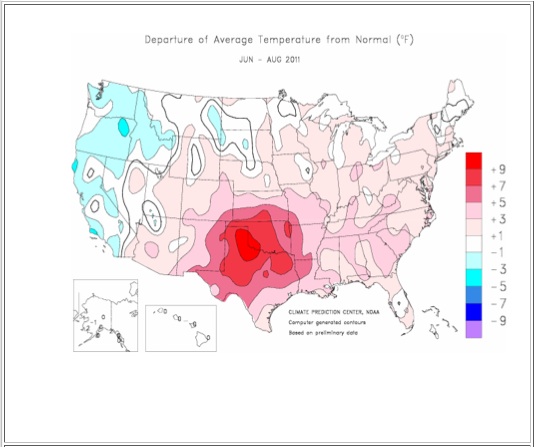
If the nation’s epic heat this summer seems like a distant bad dream, you must live on the West Coast. Not only did California largely escape the bake, it moved in the opposite direction, with temperatures running anywhere from one to five degrees (F) below normal in many areas.

The National Oceanic & Atmospheric Administration (NOAA) has released a map that provides a telling snapshot of summer aberrations around the nation.

While most of America cooked this summer, California bucked the trend.

David Kroodsma’s recent post for Climate Central provides excruciating detail of what the rest of the country was going through:

Using Climate Central’s record temperature tracker which draws on the National Climatic Data Center’s database, we found that June, July, and August saw more warm temperature records tied or broken than any other summer in the past decade: more than 26,500 record warm temperatures were set across the nation. By comparison, fewer than 3,500 record low temperatures were set — the fewest of any summer in the past decade.

It was a summer that brought new meaning to the term “Texas barbecue,” with NOAA confirming that the Lone Star State suffered the hottest summer on record for any state in the nation. Continue reading How California Dodged the Summer from Hell