Category Archives: The Science

Latest research from the field and the lab

Is Your City Planning Ahead?

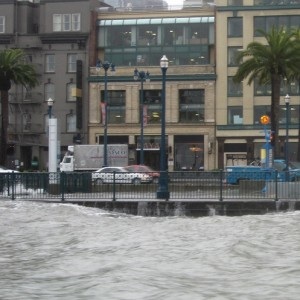
Flooding along San Francisco's Embarcadero during an extreme high tide in February, 2011.

With little being done at the national and international level to cut carbon emissions and curb the march of climate change, more and more communities and institutions are seriously considering how they will adapt to the environmental changes that lie ahead. 

Sea levels are rising, and in the Bay Area, planners are expecting an increase of nearly five feet by the end of the century.  According to climate models, temperatures across the state are likely to rise between three and seven degrees Fahrenheit by 2100, leading to increased heat waves and stressing the state’s water supply.

So, are we prepared?  Not really, according to a story today on the public radio program Marketplace.

And yet, as reporter Sarah Gardner explains, there are communities, including some in California, that are taking action now, and investing real money, to protect themselves (and their real estate) from the changes ahead, despite current fiscal challenges.
Climate Study Predicts Deadly Heat for Older Californians

California’s heat waves are going to be getting longer and hotter in the coming decades, according to a new climate modeling study commissioned by the California Air Resources Board (CARB) and the EPA. The authors predict that heat-related deaths among California’s 65-and-over population could spike more than nine-fold by 2090. According to the study, currently more than 500 elderly people die annually from heat-related causes.
Using IPCC climate projections, the study models how climate change will impact California up and down the coast, including coastal cities like San Francisco and inland cities such as Riverside and Fresno.

Lead author Scott Sheridan, a geographer at Kent State University, says that the projected increase in heat-related deaths among those 65 and over are due in part to physiological reasons, but also to growing population size of this age group. By the end of the century, he says, the state’s population of people in this age bracket will increase from 4 million to 15.7 million. Sheridan says California communities that are already used to dealing with hotter temperatures, like the inland city of Fresno, may be better prepared to deal with the heat than relatively cooler coastal cities. Continue reading Climate Study Predicts Deadly Heat for Older Californians

Making Wind Power More Efficient: Lessons from Fish

A possible game changer in wind technology with an unlikely inspiration

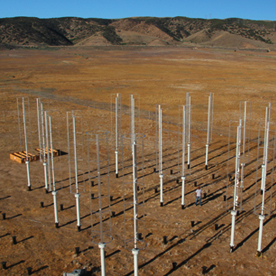
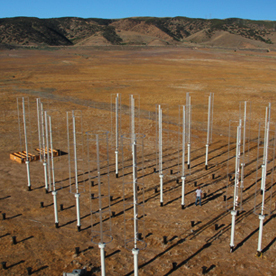
Vertical-axis wind turbines at a CalTech test site in northern Los Angeles County.

Most of the wind turbines you see driving throughout the deserts and hill country of California look pretty much the same: soaring towers hundreds of feet high with massive, pinwheel-like structures on top, blades churning (or not) as the wind blows (or not).

But there’s another design for generating wind power that, if new research proves correct, could eventually become a far more common sight as California ramps up its portfolio of renewable energy. Vertical axis wind turbines look a little like upside-down egg beaters. They tend to be smaller than traditional turbines, and therefore less powerful. But according to John Dabiri, head of Caltech’s Biological Propulsion Lab, they can be far more efficient at generating power than traditional turbines are when they’re used together in just the right way.

Dabiri said the problem with standard turbines is that the turbulence or “wake” from the turning of one turbine disrupts airflow and reduces the performance of surrounding turbines.  Locating them within 300 feet of each other can reduce performance by 20-50%, said Dabiri. That means standard wind farms need a lot of land. Continue reading Making Wind Power More Efficient: Lessons from Fish

A Close Look at a Melting Arctic

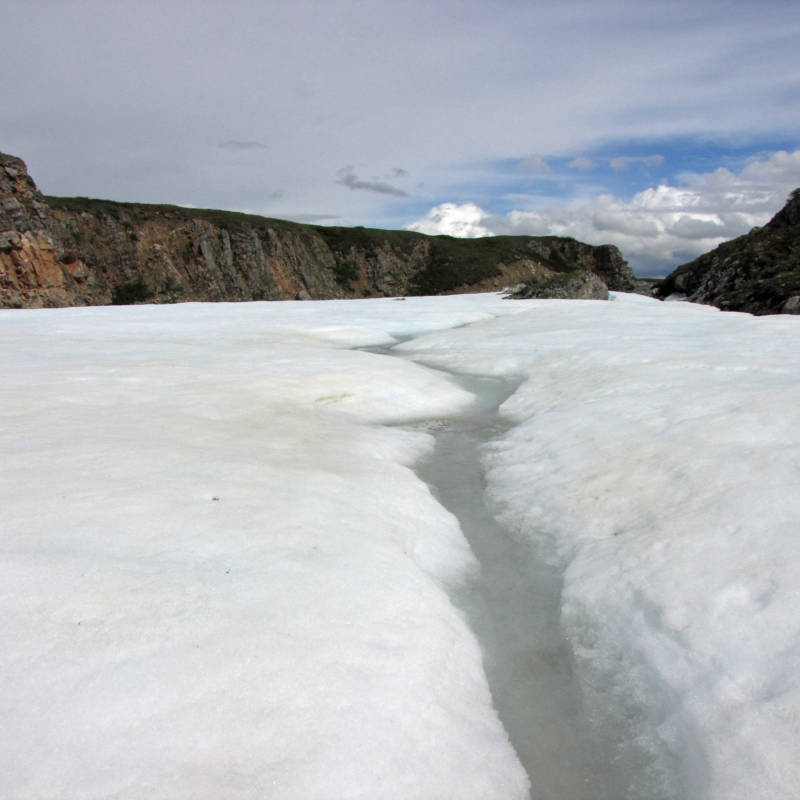
Ice melting in the Arctic, summer 2010

This week, NPR launches a six-part series on, “the changing Arctic,” taking a look at, “what may be the world’s next geopolitical battleground.” Part of that look includes considering the impact of rising temperatures and melting ice, such as freshly-opened strategic waterways and the rush to claim newly-accessible natural resources, like oil and gas deposits.

This focus comes just as MIT releases a new study arguing that the Intergovernmental Panel on Climate Change (IPCC) substantially underestimated the rate at which Arctic sea ice is melting.  The IPCC’s Fourth Assessment Report, released in 2007, forecasts an ice-free Arctic summer by the year 2100.  NPR has created an animated map, showing the Arctic’s loss of summer sea ice for the last 30 years. Continue reading A Close Look at a Melting Arctic

Climate Change Offers Up a New Wine List

Climate change could dramatically affect the microclimates that have made California wine country so successful. (Photo: Lauren Sommer)

You’ve probably heard of the wines that made Napa and Sonoma famous, like Cabernet Sauvignon or Chardonnay. But what about Negroamaro or Nero d’Avola?

They’re wine grapes that are well-adapted to hotter climates – the kind of conditions that California may be facing as the climate continues to warm. But for wineries that have staked their reputations on certain wines, adapting to climate change could be a tough sell.

Talk to any wine lover in California and they’ll tell you how lucky they are to live in such rich wine-producing region. Take the recent meeting of the San Francisco Wine Lovers Group at Toast wine bar in Oakland, where the favorites are California Pinot Noir, Russian River Zinfandel, and Napa Cabernet.

In fact, the type of grape – or varietal – is how most of us think about wine. Continue reading Climate Change Offers Up a New Wine List

Climate News Roundup: the Melting Arctic, Solar Power, and Peak Oil

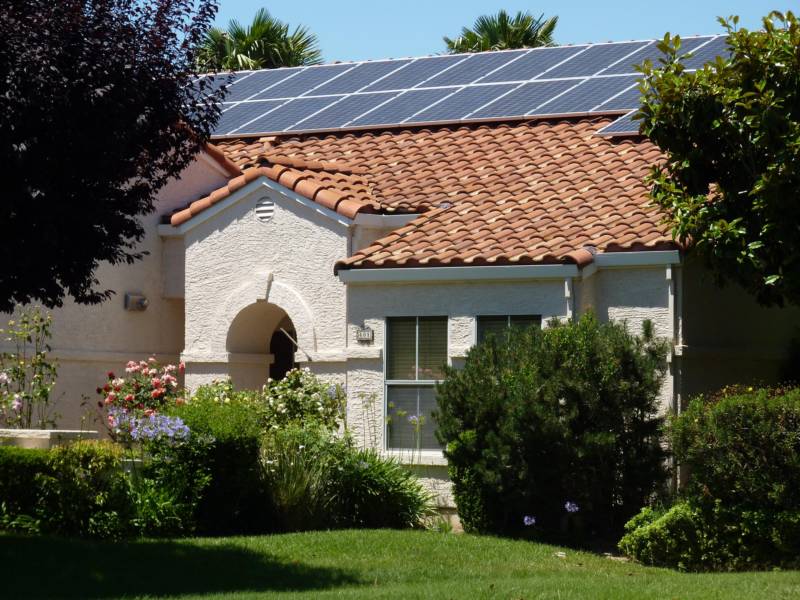
Rooftop Solar Panels in Vacaville. Photo: Craig Miller

1. MIT study finds IPCC underestimated Arctic ice melt

A forthcoming study by the Massachusetts Institute of Technology predicts that Arctic ice sheets are melting four times quicker than was forecast in the latest IPCC report. According to the study, the Arctic may be ice-free several decades sooner than 2100, which was predicted by the Fourth Assessment Report. Study authors say the IPCC data did not include forces such as wind and ocean currents that cause ice to break up.

The Journal of Geophysical Research – Oceans will publish the study next month, but you can read the full news release at MIT’s website. Continue reading Climate News Roundup: the Melting Arctic, Solar Power, and Peak Oil

Natural Carbon Storage Off the California Coast?

A new study from the University of Southern California finds that the cool waters off the coast of Los Angeles are acting as a carbon sink by sequestering more carbon than other parts of the world’s oceans.

Lisa Collins, a lecturer at the USC Dornsife College, spent four years studying samples from floating sediment traps in the San Pedro Basin as a way to determine what’s falling through the water column and how deep it’s getting.

“We have a pretty good idea of how much biomass is produced in the ocean, but we don’t have a great idea of how much of that biomass actually gets down through the water column and ultimately to the sediment,” said Collins.

One reason that matters, she says, is that phytoplankton, which make up much of the biomass, live and grow by taking up sunlight and carbon dioxide, just like plants on land do. When the phytoplankton die, they sink, taking that stored carbon down the water column with them. If they make it all the way to the mud at the bottom of the ocean, Collins says, that carbon will be sequestered there for hundreds or thousands of years or more. Continue reading Natural Carbon Storage Off the California Coast?

Climate Change’s Unusual Suspects

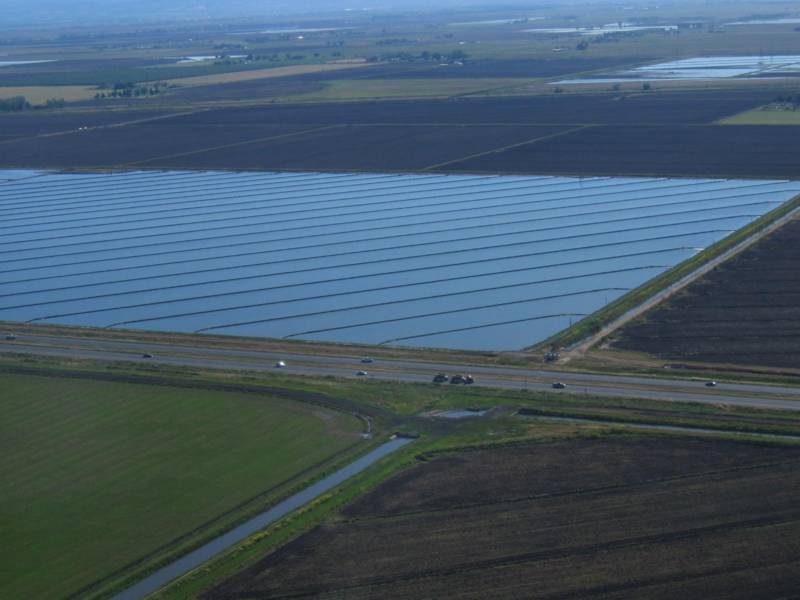
A rice field in the Sacramento Valley. According to NOAA, rice paddies are a source of methane emissions. Photo: Craig Miller

Despite all the focus on regulating CO2 as a way to combat global warming, a new NOAA study finds that to really put the brakes on climate change, the world can’t ignore the other greenhouse gases.

The study takes an inventory of non-carbon greenhouse gases including methane, which emits from landfills and farms, and nitrous oxide, which primarily comes from soil management and combustion. Per molecule, the study notes that these gases have a stronger muscle for trapping heat compared with carbon dioxide, but they don’t last as long in the atmosphere.

“This study looks at what would happen if society decided to go after the short-lived greenhouse gases, as well as CO2.” said Jim Butler, Director of Global Monitoring at NOAA and author of the study.

Short-lived is a relative term in atmospheric science. Butler said it takes decades for methane to fully run its course in the atmosphere, during which its potential to trap heat is much greater, even though its share in the atmosphere is pennies compared to that of CO2.

Carbon dioxide sticks around much longer, some of it for thousands of years, said Butler.

“CO2 is still the big dog in the fight,” he said. Continue reading Climate Change’s Unusual Suspects

Where Will Climate Change Affect Health the Most?

A new online tool maps where Americans’ health may be most vulnerable to climate change

The Natural Resources Defense Council (NRDC) released an interactive tool today that maps climate-related health risks across the country, including extreme heat, poor air quality, drought, flooding, and infectious diseases. The maps present a snapshot of current health vulnerabilities using recent data at the state and county levels.

“If we stay on our present course, we can expect these health vulnerabilities from climate change to accelerate” said NRDC Senior Scientist Kim Knowlton on a conference call with reporters. “We need to prepare for the worst in extreme events and the health vulnerabilities that will result.” Continue reading Where Will Climate Change Affect Health the Most?

California Cities Confront Water Challenges

Scientists and planners expect the Bay Area to face a host of water-related threats in the coming decades due to climate change, including flooding due to rising seas and summer water shortages due to warmer temperatures and a shrinking Sierra snowpack.

A new analysis released Tuesday from the non-profit Natural Resources Defense Council catalogs these threats, for San Francisco, and for 11 other American cities, including Los Angeles. The study also looks at how prepared the cities are to adapt to these climate challenges. It finds, in general, that San Francisco is leading the way when it comes to being prepared. Continue reading California Cities Confront Water Challenges