Category Archives: The Science

Latest research from the field and the lab

What’s Up With This Weather?

While most of the nation bakes, California keeps its cool–and not just along the coast

Climate scientist Phil Duffy and meteorologist Jan Null joined Michael Krasny on KQED’s Forum to discuss California’s cooler-than-usual summer and what it might reveal about climate change in the region. The upshot? We don’t really know.

“I think we’re seeing plain old climate variability,” said Duffy, who is a visiting scholar at Stanford and the Carnegie Institution for Science and chief scientist for Climate Central, a Climate Watch content partner.

Null agreed with Duffy, saying that in any given year, “stuff happens,” which can’t necessarily be attributed to a larger trend.

“It’s hard to take an individual year and say ‘This is the result of climate change’,” said Null. “It could be just the roll of the dice. If we see a lot of stuff happening over the next decades, then we’re talking about climate change.”

Null said this summer’s cool weather is due to a persistent trough of low pressure along the west coast.

“Anytime you have that for an extended period of time, you get what people call ‘unusual’ or ‘freakish’ weather,” he said. Continue reading What’s Up With This Weather?
Study: Climate Change Muscling in on Mussels

By Susanne Rust

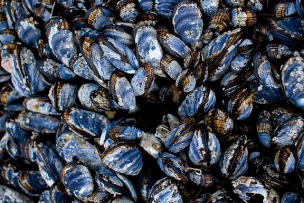
Polar bears may have stolen the show when it comes to climate change, but it may be the lowly California mussel that we really should be watching.

(Photo: Kate McCarthy/Flickr)A new study by researchers at UC Davis shows that rising acid levels in the ocean thin and weaken the shells of this diminutive bivalve. And that could spell trouble for entire marine ecosystems.

“This is a very important species, a foundation species,” said Brian Gaylord, lead author of the paper and a researcher at UC Davis. “They provide habitat, food and refuge for literally hundreds of other animals.”

According to the study’s authors, weakened shells could make the mussels more vulnerable to predation and sickness. Continue reading Study: Climate Change Muscling in on Mussels

Climate Change Chipping Away at the Coast

USGS: Warmer ocean temps portend more erosion along the West Coast

This week researchers at the US Geological Survey (USGS) issued a damage report that assesses how badly El Nino patterns tore up West Coast beaches during the winter of 2009-2010. Up and down the coast, the survey logged beach erosion 36% above average. The study’s authors point to the intensity of the El Nino conditions during that time, as well as a geological shift in the region of warmer water. They say high water, heavy storms and warmer waters were the culprits. And they warn that with the changing climate, these events may become more common.

“This little winter is a snapshot of what climate change may look like where we have baseline higher sea levels and more significant storms.” said Patrick Barnard, a coastal geologist with the USGS in Santa Cruz.

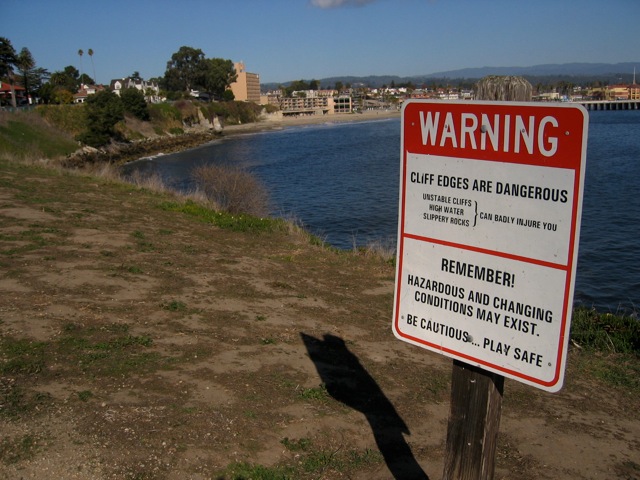
A sign warning beach visitors of the dangerous, changing coastal conditions. (Photo: Craig Miller)

One Bay Area snapshot the authors highlighted was San Francisco’s Ocean Beach. The thin coast retreated more than 184 feet, dumping the southbound lane of the Great Highway onto the beach. It took nine months before the lane was reopened and the clean-up cost $5 million.

Continue reading Climate Change Chipping Away at the Coast

Climate Change and the Phoenix Dust Cloud

Hotter temps could set the stage for more — but the science is complex

On July 5, a massive dust cloud

By Alyson Kenward

On Tuesday night, a massive dust storm rolled into Phoenix, Arizona knocking out power in much of the city, reducing visibility to nearly zero, and grounding flights overnight. Photos of the 100-mile wide dust cloud swallowing the city circulated yesterday, and the event looked practically apocalyptic. In fact, if the photos weren’t in color, and there weren’t YouTube videos of the dust storm, I would have thought I was looking at old-timey images from the 1930’s dust bowl. Now, a couple days later, lingering dust in the air has triggered allergy-like symptoms for many people. Continue reading Climate Change and the Phoenix Dust Cloud

The Heat is On for Napa Valley Wines

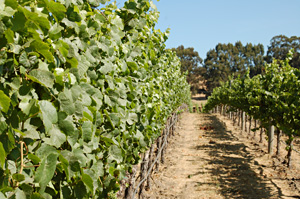
Temperatures are rising for Napa Valley grapes. (Photo: KQED Quest.)

California’s prime wine producing areas could shrink dramatically over the next three decades of climate change. That’s according to a study released this week by scientists at Stanford University.

Author Noah Diffenbaugh and colleagues looked at how Napa and Santa Barbara counties could be affected by a one-degree Celsius (1.8 degrees Fahrenheit) rise in average global temperature. They found that the land suitable for growing premium wine grapes could be reduced 30-50% by 2040. Continue reading The Heat is On for Napa Valley Wines

Ocean Changes Cause Consternation

Changing climate threatens web of life along California’s coast

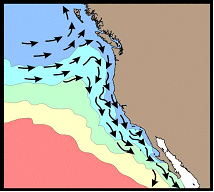
The California Current is a conveyor belt for cold water from the north Pacific.

It’s the reason that wetsuits are such big sellers in California. The river of ocean water known as the California Current barges in off the Aleutians, and as it rolls southward along the West Coast, makes for more than bone-chilling body surfing. It supports a robust stew of sea life.

But as Mike Lee reports for The San Diego Union-Tribune, it’s warming up. And that has researchers at the Scripps Institution of Oceanography concerned about future biodiversity off the California coast. Scientists say shellfish are already under attack from acid levels elevated when the ocean is forced to absorb more carbon dioxide from the atmosphere. Continue reading Ocean Changes Cause Consternation

Forget this Winter: Western Snowpack Shrinking

By Alyson Kenward

A new study finds large losses of springtime snow cover in the West in recent years, raising concerns about water supplies.

Spring snowpack in the West is an essential water resource, particularly in Southwestern states that are prone to summer drought, like California, Nevada, Arizona and New Mexico. (Credit: Wolfgang Staudt on Flickr)

This spring, from the Pacific Northwest and Sierra Nevada, to the Northern Rockies, western mountain ranges were more than just snow-capped – they were buried in the white stuff. In fact, many locations still have more spring snowpack than has been seen in decades.

Head south across the 40th parallel, however, and things are dramatically different. While there is still above average snow throughout the Sierra, a relatively snow-less winter and spring has left much of the Southwest in a drought that has fostered record wildfires. Already local officials are worried there won’t be enough water to get through the summer months ahead. Continue reading Forget this Winter: Western Snowpack Shrinking

Visualizing California Climate Change

An engrossing one-stop shop for California’s climate future goes online

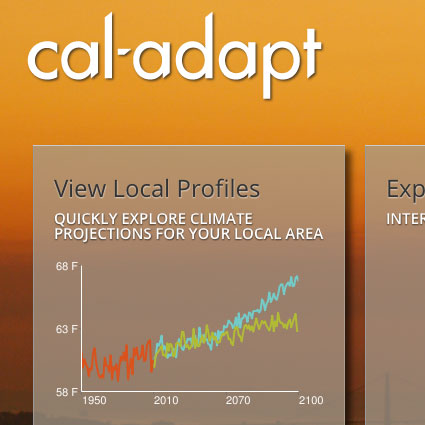
If you’re like me, and you spend a good part of every day thinking about climate change and California, you may have already lost yourself in the treasure trove of climate data and mapping fun that is Cal-Adapt, a comprehensive series of online tools just released by  the California Natural Resources Agency and the California Energy Commission.

And if you’re not like me, it’s still worth checking out.

Built by UC Berkeley’s Geospatial Innovation Facility, Cal-Adapt is designed to aid local and regional planners in preparing to adapt to climate change by providing scientific data from institutions like Scripps Institute of Oceanography, U.S. Geological Survey, UC Merced, and the Pacific Institute, and integrating it with mapping and charting capabilities from Google. The result is an attractive, interactive experience that enables you to view potential future climate-related scenarios for any location in California, and to sort by topics such as sea level rise, wildfire, and snowpack.  Importantly, data sources are prominently displayed. Continue reading Visualizing California Climate Change

The Long, Hot Summer: Longer & Hotter

Stanford study predicts the point of no return for hotter summers

By Katrina Schwartz

Just as many Californians are puzzling over winter-like weather in June, climate scientists are saying hotter days are ahead for most of the West. According to a new Stanford study (available soon at this link), we may be in for permanently hotter summers sooner than expected. Of course, for climatologists, “sooner” is a relative term.

Photo: Craig Miller

Plenty of climate scientists have studied the relationship between climate change and extreme temperature shifts, but until now no one has tried to pinpoint a moment when summer temperatures will permanently shift into a new “heat regime”, in which the coolest summer temperatures will be hotter than the hottest summer temperatures of the previous regime. Findings by the Stanford team suggest that the shift will likely happen sooner and be more widespread than expected. Continue reading The Long, Hot Summer: Longer & Hotter

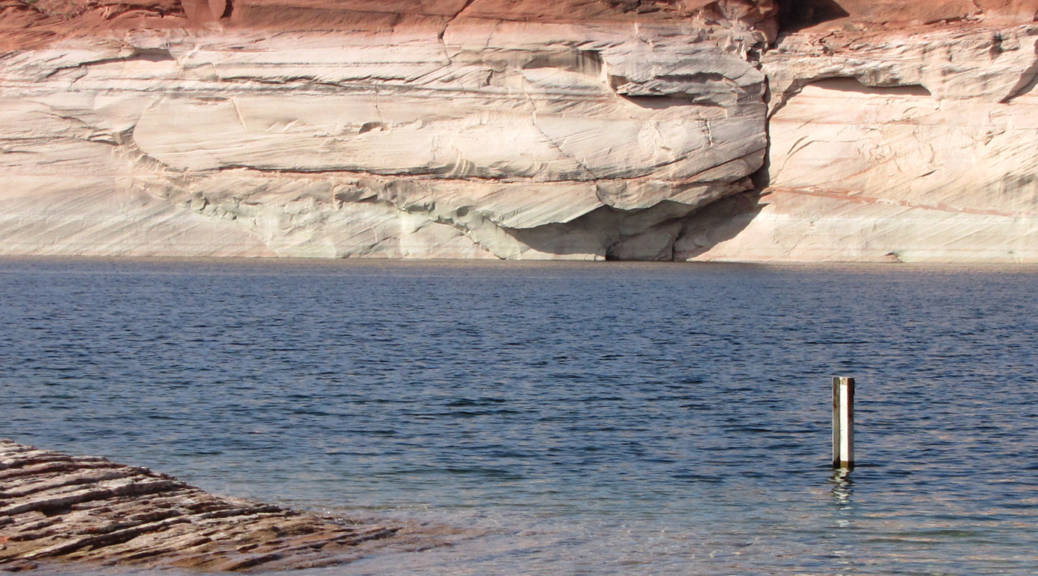
Running Drier: The Colorado 50 Years Out

A new federal study says the Colorado River may carry 9% less water by 2060.

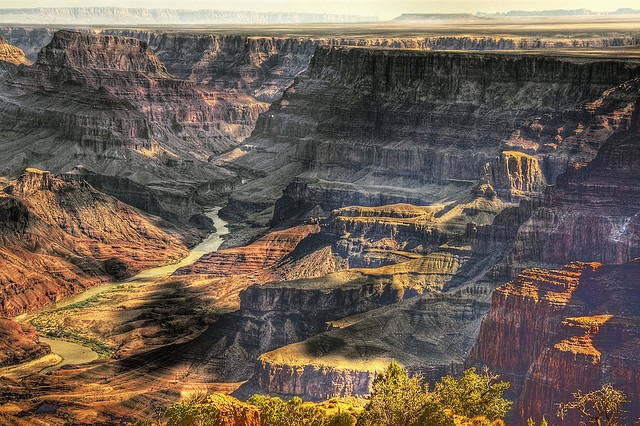
The Colorado River is a critical source of water for more than 30 million people throughout the western United States. California alone gets more than a trillion gallons of water each year from the Colorado. But over the years, recurring droughts and the growing demands of urban populations have stressed the river system, which the Bureau of Reclamation now characterizes as “over-allocated.”  In efforts to plan for the region’s future water needs, the agency, in collaboration with Western states, has undertaken a two-year study to look at what lies ahead for the river and the cities, farms, and families that rely on it.

On Monday, the agency released the first interim report of the “Colorado River Basin Water Supply & Demand Study,” which projects changes in the river’s flow under four different scenarios. A model that incorporates predicted impacts of climate change shows a nine percent reduction in the Colorado’s flow within 50 years.  The study also projects more frequent and more severe droughts throughout the system. Continue reading Running Drier: The Colorado 50 Years Out