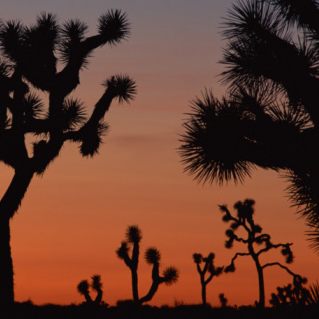
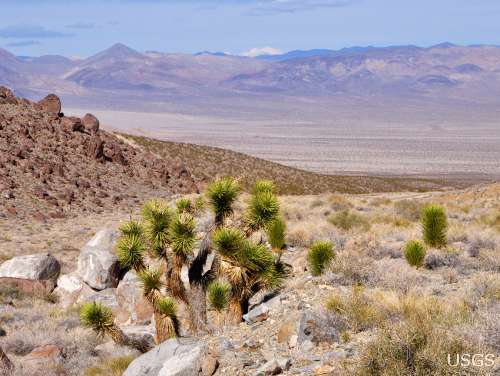
Joshua trees, the spiky desert-dwellers that are so iconic to Southern California’s dry country that they got a national park named after them, will likely disappear from 90% of their current range by the end of the century, according to a new study by scientists at the US Geological Survey.
Ecologist Ken Cole, the study’s lead author, said that means no more Joshua Trees in Joshua Tree National Park, which is currently in the southernmost part of the species’ range. It also means elimination of the trees across wide swathes of other parts of Southern California as well as Nevada and Arizona.
Cole and his team used climate models, field work, and the fossil record to project the future distribution of Joshua trees. They compared the projected increase in temperatures for the Southwest (four degrees Celsius, according to a “middle of the road” IPCC scenario) to a similar rapid increase in temperatures nearly 12,000 years ago, at the end of the ice age.
Using fossil sloth dung and packrat midden, the scientists reconstructed how Joshua trees responded to that warming. (Sloths, which are now extinct in the region, and packrats, ate the Joshua tree fruit, spreading the seeds and leaving them behind for the scientists to track.) Continue reading Joshua Trees Losing Ground, Fast →