Category Archives: The Science

Latest research from the field and the lab

Can Giant Sequoias Survive the Future?

Fragile seedlings are highly vulnerable to drought

Hear my companion radio feature on The California Report weekly magazine.
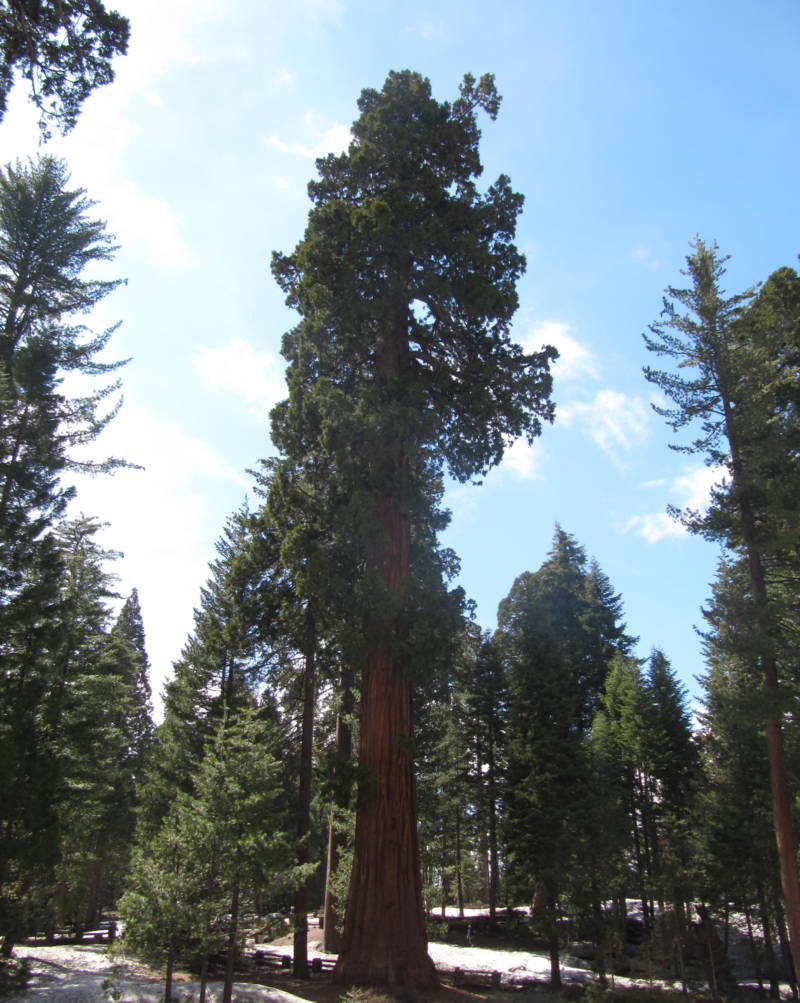
Giant sequoias naturally grow only on the western slope of the Sierra Nevada.

When William Tweed talks about giant sequoias, he doesn’t beat around the bush.

“Sequoias capture human interest because they’re the perfect thing,” says the writer, historian, and former National Park Service ranger. “They’re the world’s largest trees. We humans like big stuff. They’re also exceedingly old, and they also charm us because they’re rare. We humans go chasing around for the big, the old, and the rare.”

He says while other parks have charismatic megafauna, like bears, or bison, or elk, Sequoia-Kings Canyon National Park and the other national parks in the Sierra Nevada have charismatic megaflora: the giant sequoia. Continue reading Can Giant Sequoias Survive the Future?
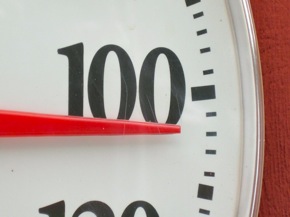
UN Panel Says More Severe Weather On the Way

But it’s still hard to pin down what, where and how bad

Climate change is likely driving some of the extreme weather events we’ve been seeing and more such weather is on the way, according to a much-anticipated report from the Intergovernmental Panel on Climate Change (IPCC).

“This is a pretty hard-hitting report,” says Chris Field, a Stanford climatologist and one of the co-chairs for the report. “What we can say is that some kinds of extremes are occurring more frequently,”

Some kinds. The UN panel carefully couches all of its findings in terms of probabilities and confidence levels, which vary widely depending on the type of weather event. Hence (italics are mine):

Sea Level Rise: “It is very likely (90-100% probability) that mean sea level rise will contribute to upward trends in extreme coastal high water levels in the future.” Continue reading UN Panel Says More Severe Weather On the Way

International Agency Issues Dire Warning

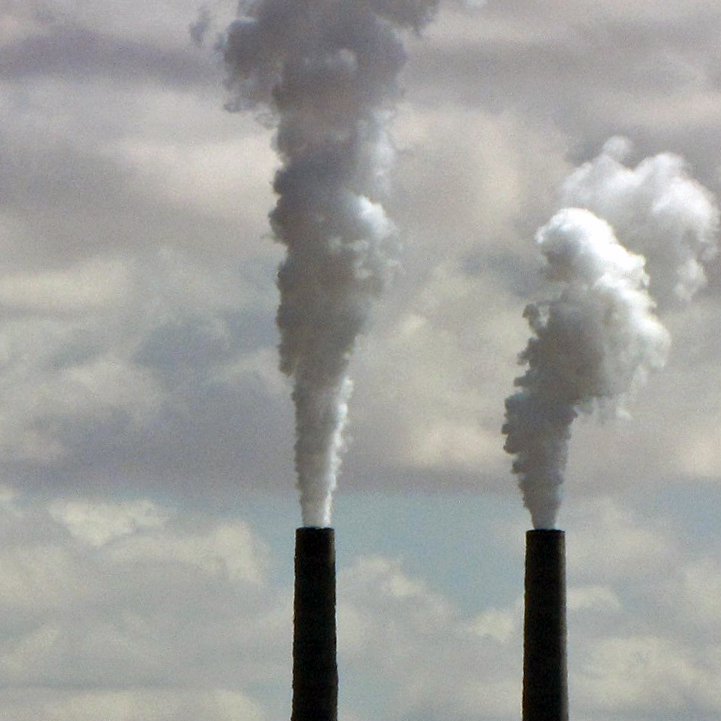
Navajo Generating Station, near Page, AZ

By Susanne Rust

Just as the federal government released its annual index of greenhouse gases, showing a steady increase over the past 21 years, the International Energy Agency warned that we are on the path to 11-degree warming if we don’t curb emissions now.

“Delaying action is a false economy: For every $1 of investment in cleaner technology that is avoided in the power sector before 2020, an additional $4.30 would be needed to be spent after 2020 to compensate for the increased emissions,” the authors of the energy agency report wrote in their 2011 World Energy Outlook.
Continue reading International Agency Issues Dire Warning

Global Warming, in Color

Berkeley Earth

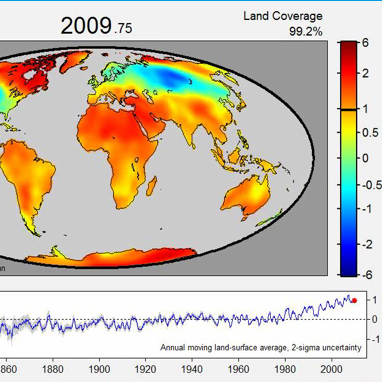
The head of the Berkeley Earth Surface Temperature (BEST) study, Richard Muller, a Berkeley physicist previously known for his skeptical views on anthropogenic warming, appeared on Capitol Hill Monday, for the first time since the release of the study’s results.

As we’ve reported, the study found that the Earth is warming. Surface temperatures have increased about one degree Celsius since the mid 1950s, according to the study, which relied on a database of 1.6 billion records. Continue reading Global Warming, in Color

Can a Changing Climate Make You Fat?

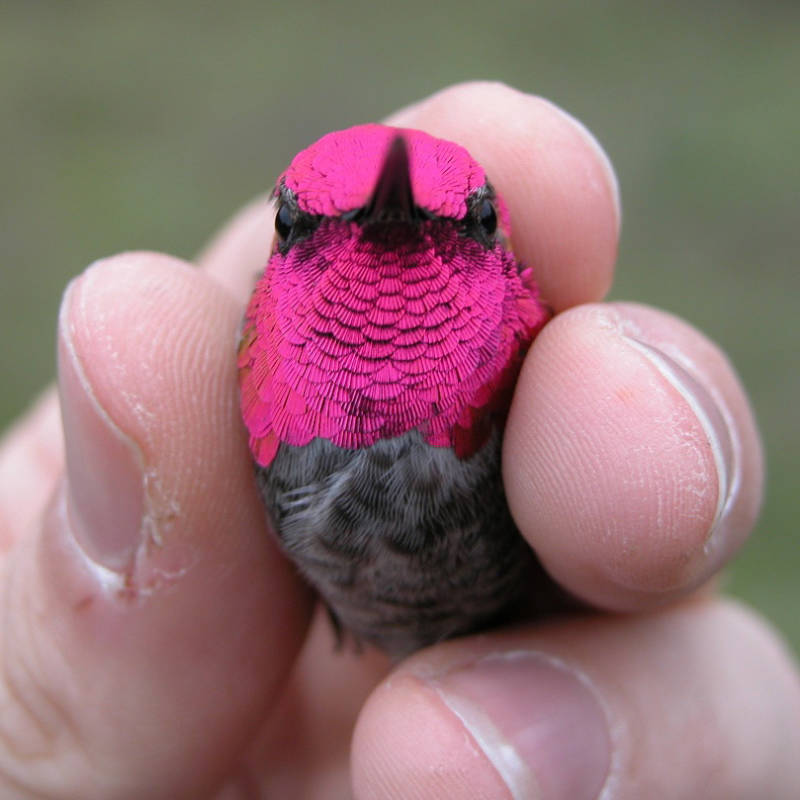
Anna’s Humminbird

Maybe… if you’re a bird.  

You may have heard that climate change is affecting the size of habitats, but did you know that it may also be changing the size of organisms themselves?

A new study finds that songbirds in central California are getting bigger.

The report, published this month in the journal Global Change Biology, looked at the wingspan and weight of thousands of small birds in the region, such as finches, robins, swallows and hummingbirds, and found that over the last 30 years size has increased from .02 percent to .1 percent annually.

Researchers at PRBO Conservation Science looked at data for 73 species, combing 40 years of data from Point Reyes National Seashore and nearly 30 years of data from Milpitas. Continue reading Can a Changing Climate Make You Fat?

Govt. Study Affirms Delta Fears, Water Risks for California

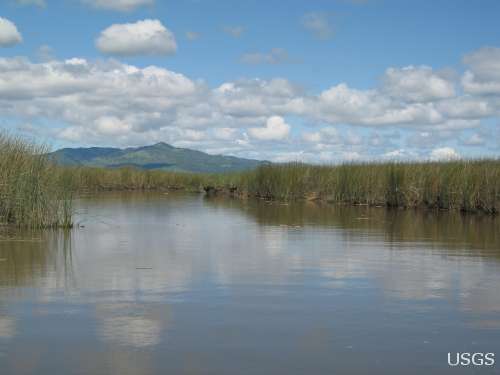
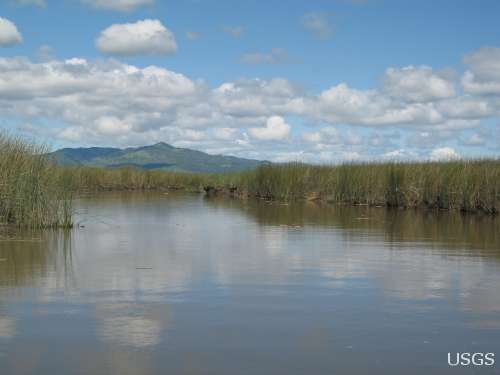
Suisun Slough in the lower Sacramento Delta. Twenty-five million Californians depend on the Delta for at least some of their water.

“Today’s extremes could become tomorrow’s norms”

That’s the upshot of an ambitious study by the US Geological Survey, which would appear to affirm some dire predictions for California’s most important water system.

The study, authored by nearly a dozen scientists, is billed as “the first integrated assessment of how the Bay-Delta system will respond to climate change.” It’s presented as a “flash forward” to what California’s Sacramento-SanJoaquin Delta could become by the end of this century. It ran a series of nine indicators through multiple models to project trends in temperature, precipitation, salinity, runoff and sea level rise.

The result: Pretty much what climate scientists have been saying; that we’ll see “potentially longer dry seasons,” a shrinking Sierra snow pack and “earlier snowmelt leaving less water for runoff in the summer.” Continue reading Govt. Study Affirms Delta Fears, Water Risks for California

The Easy Fix That Isn’t

Touted as a simple way to combat climate change, white roofs may actually increase global warming, according to a new Stanford study. 

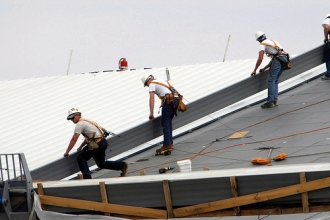
Installing white roofs (or painting them white) has been promoted as a way to help slow global warming. New research shows that white roofs may actually add to global warming.

By Alyson Kenward

If you’re interested in staving off climate change without trying too hard, painting your roof white seems like a complete no-brainer. It’s far cheaper than trading in your SUV for a Prius, and it turns the laws of physics to best advantage. Dark roofs absorb sunlight that heats up your house, office tower, or apartment building. That means you’re bound to crank up the energy-intensive air conditioner to keep pace in the summer months — and since electricity in the U.S. comes largely from fossil fuels, the net result is more heat-trapping greenhouse gas emissions, and more global warming.
Continue reading The Easy Fix That Isn’t

New Satellite Launched to Watch Climate, Weather

Agencies hope the next-generation satellite will serve as a bridge between the nation’s aging satellite fleet and the new ones yet to come.

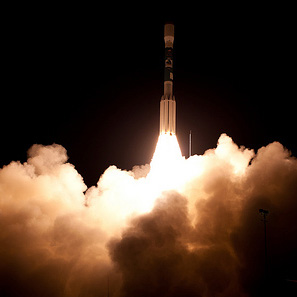
Launch of the NPP satellite from Vandenberg Air Force Base on Friday.

In a joint effort to improve observations of the Earth from space, NASA and NOAA launched a new satellite on Friday from Vandenberg Air Force base near Lompoc, CA. The satellite carries with it a suite of next-generation technologies and tools that the agencies say will enable scientists to continue monitoring climate change and weather patterns as many existing Earth-observing satellites are reaching the outer edge of their life expectancies.

The new satellite is part of the NPOESS Preparatory Project (NPP), which aims to monitor the entire planet, collecting and processing data on the Earth’s weather, atmosphere, oceans, land, and near-space environment.  The agencies say this data will not only help with monitoring climate change, but also with natural disaster prediction and planning, and military strategies.  NASA describes the NPP as a bridge between the aging Earth Observation System (EOS) satellites and the “forthcoming” Joint Polar Satellite System (JPSS) satellites, which are scheduled to begin launching in 2016. Continue reading New Satellite Launched to Watch Climate, Weather

A Source of CO2 That Might Surprise You

That babbling brook out back has been holding out on you

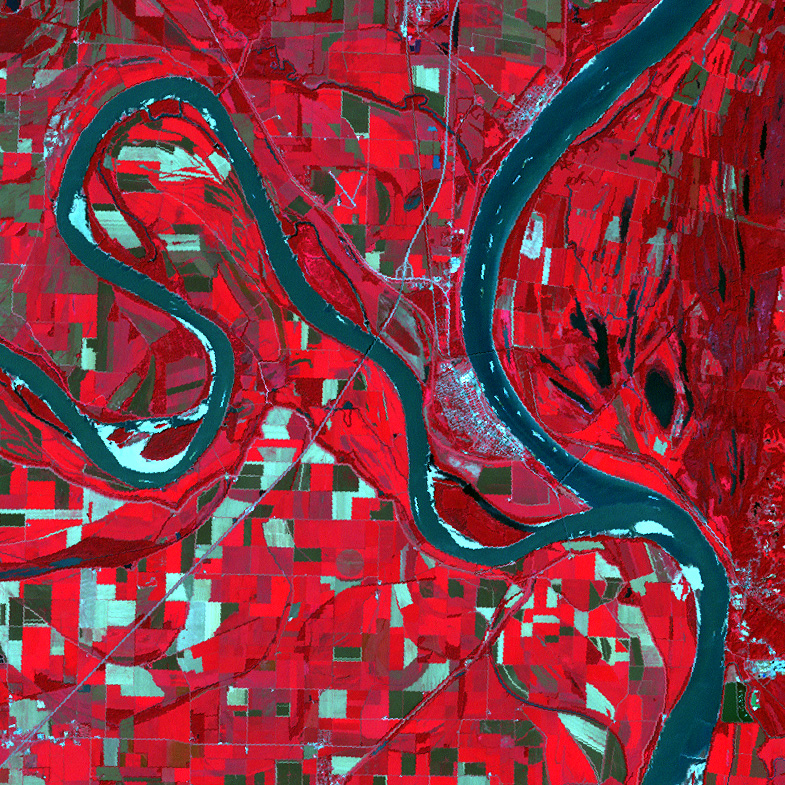
A satellite view of the Mississippi River shows a mosaic of riverbank land-use patterns.

Rivers and streams in the United States are releasing a lot more CO2 into the atmosphere than scientists previously thought, according to a new study by scientists at Yale. In fact, American waterways are discharging the gas into the atmosphere at a rate of 100 million metric tons per year, an amount equal to a car burning 40 billion gallons of gas, researchers say.

The study, conducted by David Butman and Peter Raymond of the Yale School of Forestry and Environmental Studies, looked at water chemistry data from more than 4,000 rivers and streams. The authors say identifying this significant source of CO2 could change the way scientists model the movement of carbon through ecosystems and the atmosphere.

“These rivers breathe a lot of carbon,” said Butman in a press release from the National Science Foundation, one of the study’s funders. “They are a source of carbon dioxide, just like we breathe out carbon dioxide and like smokestacks emit carbon dioxide.”

The study is published in the current issue of Nature Geoscience.

Clearing the Air on Climate and Smog

By Lisa Aliferis

Why climate change and public health policy make good chemistry

A major study released today in Fresno details the direct link between higher levels of air pollution and asthma-related ER and hospital admissions. So, what’s that got to do with climate change? Plenty.

Tourists snap photos of a murky sunset in San Diego” credit=”Sandy Huffaker / Getty Images

“There’s a division in the public’s mind between global warming and health effects of pollution,” says Dimitri Stanich of the California Air Resources Board.

In reality, there’s significant overlap. Some components of air pollution shown to have harmful warming effects on the planet are also harming people, especially children, right now.

Let’s start with ground-level ozone. Ground-level ozone is different from the ozone layer, which lies about 15 miles above the earth (not exactly ground level). The ozone layer shields us from most of the sun’s harmful rays. Ozone is good in the atmosphere but bad, in many ways, at or near ground level. Continue reading Clearing the Air on Climate and Smog