All posts by Craig Miller

Craig is a former KQED Science editor, specializing in weather, climate, water & energy issues, with a little seismology thrown in just to shake things up. Prior to that, he launched and led the station's award-winning multimedia project, Climate Watch. Craig is also an accomplished writer/producer of television documentaries, with a focus on natural resource issues.

A Year-Long Sky Journal as Video Mosaic

A motion mosaic of our ever-changing, endlessly fascinating atmosphere
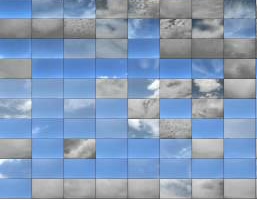
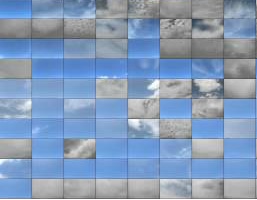
Detail from Ken Murphy's video sky mosaic

About two years ago, Ken Murphy set up a tripod on the roof of San Francisco’s Exploratorium science museum and aimed his video camera at a particular patch of sky. He’s spent the two years since shooting time-lapse sequences from his makeshift observatory and has stitched them together into this wonderful visual tableau.

Murphy, who is a web developer at KQED and a former artist-in-residence at the Exploratorium, says the project grew out of — well — boredom. He became restless with his experimentation with art works using LED lights. He says he was looking for more natural movement. So Murphy went dumpster-diving for parts and cobbled together a computer-controlled camera that would record the same sky segment every ten seconds, around the clock. He says it took two years of shooting to stitch together one full year of images. Eventually he found himself sorting through three million video frames for the mosaic. Continue reading A Year-Long Sky Journal as Video Mosaic
Where Water & Energy Converge: New Concern

US power plants are “stressing” freshwater supplies, finds science watchdog group

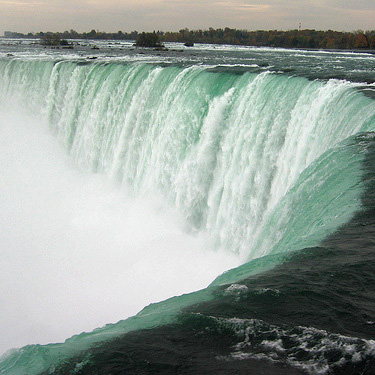
A UCS study says US power plants are sucking up three times the volume of water that goes over Niagara Falls on a daily basis.

For the second time in as many weeks, a major report has emerged warning of consequences from the demand that America’s electricity producers are placing on water supplies.

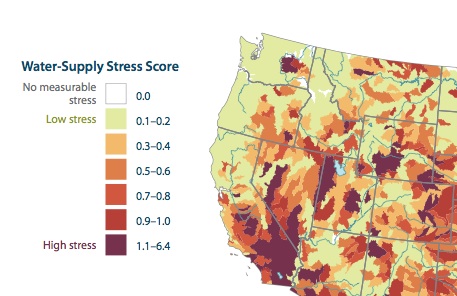
Today’s findings, from the Union of Concerned Scientists, conclude that water and power are on a collision course in the US, as nearly all major power plants slurp up water for cooling. As of 2008, the UCS study found that across the US, “thermocooled” power plants (which is most of them) took up somewhere between 60 billion and 170 billion gallons of water from rivers, lakes and aquifers. That’s three times the volume of water that pours over Niagara Falls. At least 2.8 billion and as much as 5.9 billion gallons of that was “consumed,” or not put back.

Power Plants are putting strain on watersheds throughout the nation, according to UCS researchers.

“It’s really water that keeps the lights on,” says Kristen Averyt, deputy director of the Western Water Assessment at the University of Colorado, and lead researcher for the report. Continue reading Where Water & Energy Converge: New Concern

How Saving Water Could Help Keep the Lights On

Water and electricity do mix

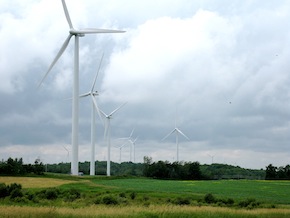
Wind is one of the few energy sources that requires virtually no water.

The Gordian knot of interdependence between water & power (not the political kind — that’s another story) has been getting a lot of attention lately as the “water-energy nexus.” A new report from Oakland’s Pacific Institute warns that as population grows and a changing climate further wrings water out of the West, “These trends will intensify water resource conflicts throughout the region.”

Oh, goody. Just what the West needs; more water conflicts. Continue reading How Saving Water Could Help Keep the Lights On

Govt. Study Affirms Delta Fears, Water Risks for California

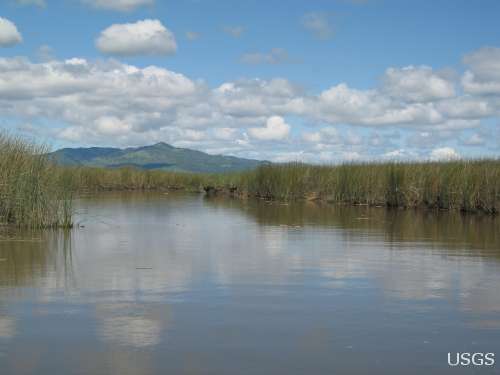
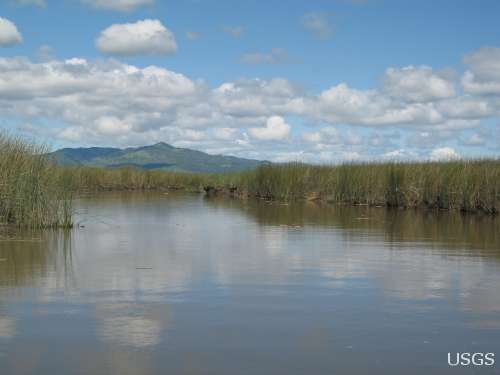
Suisun Slough in the lower Sacramento Delta. Twenty-five million Californians depend on the Delta for at least some of their water.

“Today’s extremes could become tomorrow’s norms”

That’s the upshot of an ambitious study by the US Geological Survey, which would appear to affirm some dire predictions for California’s most important water system.

The study, authored by nearly a dozen scientists, is billed as “the first integrated assessment of how the Bay-Delta system will respond to climate change.” It’s presented as a “flash forward” to what California’s Sacramento-SanJoaquin Delta could become by the end of this century. It ran a series of nine indicators through multiple models to project trends in temperature, precipitation, salinity, runoff and sea level rise.

The result: Pretty much what climate scientists have been saying; that we’ll see “potentially longer dry seasons,” a shrinking Sierra snow pack and “earlier snowmelt leaving less water for runoff in the summer.” Continue reading Govt. Study Affirms Delta Fears, Water Risks for California

California Adopts Nation’s Most Sweeping Cap & Trade Plan

But it’s just another milestone in a long journey that’s far from finished

It’s official (no, really, this time). California has cap & trade — or will once the program starts ramping up next year. Today’s approval by the state’s Air Resources Board was described by chair Mary Nichols as like “moving a large army a few feet in one direction.”

Ready to roll: A license plate in Sacramento bears the legislative shorthand for California's landmark climate policy.

The objective that “army” is marching — or shuffling — toward is, of course, the fulfillment of California’s goal to roll back greenhouse gas emissions to 1990 levels by the end of this decade. With at least a semi-intentional pun, Nichols calls cap & trade the “capstone” of that effort, although the program is expected to produce at most, 20% of the hoped-for reductions in carbon emissions. The rest will come from other measures either lumped under or related to the state’s Global Warming Solutions Act, more widely known as AB 32.

Those other measures include stricter standards for tailpipe emissions, a “low-carbon fuels standard” (still being worked on), and the ambitious-but-attainable goal to get a third of the state’s electricity from renewable energy sources, also by 2020. Continue reading California Adopts Nation’s Most Sweeping Cap & Trade Plan

Yep, It’s Warmer Out There…But Not Everywhere

Berkeley study affirms temperature trends cited in major climate reports

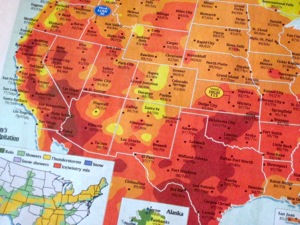
Hot enough for you? Temperature map from the July 31 edition of USA Today

Just in case you’ve been wondering, the world is getting warmer. Not everywhere but overall, things are heating up pretty much as advertised. A comprehensive study of temperature records — some of which had been under attack by climate change skeptics — concludes that the average global land temperature has risen one degree (Celsius) since the mid-1950s.

The project, known as the Berkeley Earth Surface Temperature Study, was launched by a team of scientists from various institutions, to address charges that climatologists had been relying on shaky data from temperature-logging stations around the world. Continue reading Yep, It’s Warmer Out There…But Not Everywhere

Yergin: Tar Sands Opposition is Misguided

The energy guru weighs in on dirty oil, fracking and California’s energy leadership

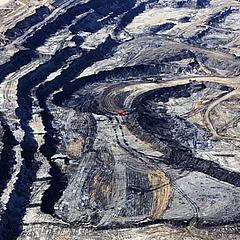
One of America’s foremost energy experts says Canada’s controversial oil tar sands are getting a bum rap.

Daniel Yergin, who became a go-to guy for energy wisdom after winning a Pulitzer Prize for his 1990 oil tome, The Prize, appeared on KQED’s Forum program today to promote his latest book, The Quest: Energy, Security and the Remaking of the Modern World.

When host Michael Krasny asked Yergin about the Canadian tar sands boom and a plan to construct a pipeline to bring it into the US for refining, Yergin said the project “has become a huge symbolic target.” Indeed the controversial Keystone XL pipeline proposal has been a lightning rod for demonstrations at the White House and a target of ongoing protests across the country. But Yergin said he thinks the risks of importing tar sands oil from Alberta have been overblown. Continue reading Yergin: Tar Sands Opposition is Misguided

Taking the Pulse of the Mountains

Federal grant enables major new network of Sierra water sensors

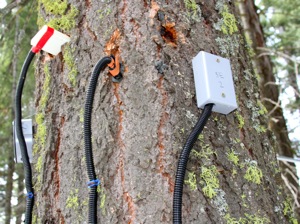
A tree at the Fresno County pilot project adorned with sensors

Researchers at UC Merced are set to open a whole new window on the Sierra Nevada. Using two million dollars from the National Science Foundation, hydrologist Roger Bales and his colleagues can now expand on a pilot project to measure the mountains’ “vital signs.”

Bales says beginning next summer, he, UC Berkeley’s Steven Glaser and their team will start installing a network of 20-to-30 instrument clusters throughout the American River watershed, casting a watchful eye over about 2,000 square kilometers that typically gets snow cover. The instruments record factors that affect the mountain’s hydrology, such as temperature, humidity, soil moisture, stream flow and even how much solar radiation penetrates the tree canopy.

Bales says the pilot phase has taught them how to put together a network of wireless sensors that will endure the extreme alpine conditions and still remain reliable (see Sasha Khokha’s post and slide show from March). Continue reading Taking the Pulse of the Mountains

Report: Five Smoggiest US Cities Are in California

And they’re not necessarily the ones you might guess

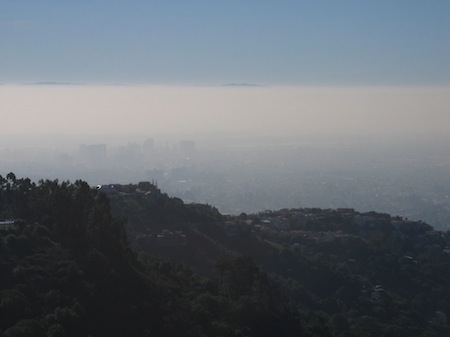
California may have great weather but also some of the nation’s worst air. The advocacy group Environment California has issued a report ranking the nation’s worst metropolitan areas for air quality. The five worst are in California, as are six of the top ten.

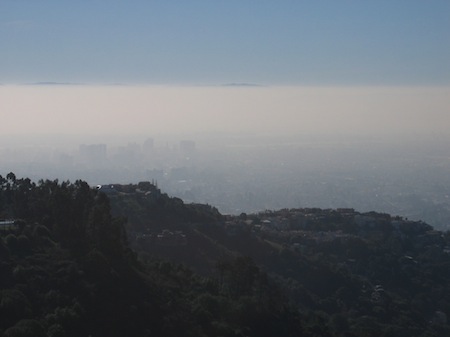
Smog in the Los Angeles Basin

Based on data from 2010, the report’s “Top Smoggiest Areas in the US” were:

1. Riverside-San Bernardino

2. Visalia-Tulare-Porterville

3. Bakersfield (tie)

3. Los Angeles-Long Beach (tie)

5. Fresno Continue reading Report: Five Smoggiest US Cities Are in California

How California Dodged the Summer from Hell

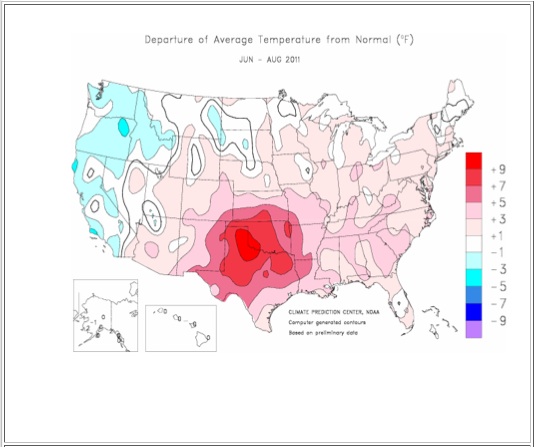
If the nation’s epic heat this summer seems like a distant bad dream, you must live on the West Coast. Not only did California largely escape the bake, it moved in the opposite direction, with temperatures running anywhere from one to five degrees (F) below normal in many areas.

The National Oceanic & Atmospheric Administration (NOAA) has released a map that provides a telling snapshot of summer aberrations around the nation.

While most of America cooked this summer, California bucked the trend.

David Kroodsma’s recent post for Climate Central provides excruciating detail of what the rest of the country was going through:

Using Climate Central’s record temperature tracker which draws on the National Climatic Data Center’s database, we found that June, July, and August saw more warm temperature records tied or broken than any other summer in the past decade: more than 26,500 record warm temperatures were set across the nation. By comparison, fewer than 3,500 record low temperatures were set — the fewest of any summer in the past decade.

It was a summer that brought new meaning to the term “Texas barbecue,” with NOAA confirming that the Lone Star State suffered the hottest summer on record for any state in the nation. Continue reading How California Dodged the Summer from Hell