Category Archives: Research

Today on Your Call: What’s working in schools?

KALW
Today on Your Call
Originally aired on February 1, 2012

kcet.org

On today’s Your Call we’ll talk about education success stories. With another round of severe budget cuts and a heated debate about education reform led by corporate funded think tanks, we’re taking a step back to talk about what’s actually working in our schools. Smaller class sizes? Textbooks that are more relevant to everyday life? More support for teachers?
Guests

Katy Murphy, education reporter for the Oakland Tribune
Eric Guthertz, principal of Mission High School
Kathy Schultz, dean and professor of education in the School of Education at Mills College

Listen to this story.

Join a Live Chat Friday at 1:30 p.m. ET on Dropouts and Delinquents

Newshour American Graduate
February 1, 2012
Written By: Kelly Chen

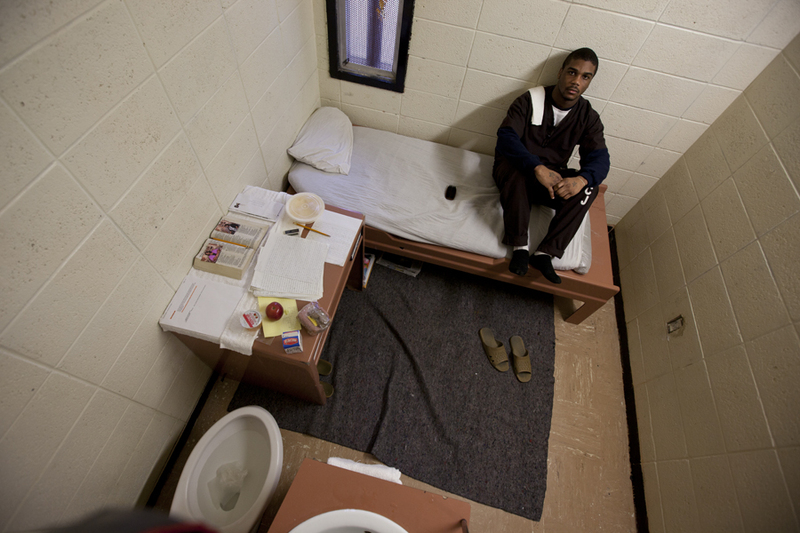
Richard Ross Photography

This week, the NewsHour’s American Graduate team takes a look at juvenile justice and gang violence as it relates to the dropout crisis, with reports starting Wednesday on our broadcast and website.

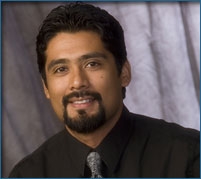
Join us for a live chat* with two people featured in our series — Victor Rios, a former gang member and high school dropout turned sociology professor, and Richard Ross, a photographer who documents what life is like for young people in prison.


Victor Rios

To participate in our live chat, join us here this Friday from 1:30 to 2:30 p.m. ET*. You can also leave your questions in the comments section below or tweet them to @NewsHourAmGrad using the hashtag #AmGrad.

The participants scheduled to join the chat (subject to change) include:

  • Victor Rios, is a former gang member who grew up in Oakland, Calif. He is now a sociology professor at the University of California, Santa Barbara studying juvenile criminal justice and gang life for young people. He is also the author of “Punished: Policing the Lives of Black and Latino Boys.” The NewsHour broadcast will air a report on Rios and his efforts on Wednesday.


  • Richard Ross is a photographer and professor at UC Santa Barbara. For the past five years, he has documented and interviewed juvenile delinquents as part of his”Juvenile In Justice” project. The NewsHour report featuring Ross is scheduled to air on Thursday’s NewsHour broadcast.


On Digital Learning Day, 7 Golden Rules of Using Technology

MindShift Blog
Tina Barseghian
February 1, 2012
Today is Digital Learning Day, a national promotional effort by the Alliance for Excellence in Education to call attention to using technology in schools.

More than 10,000 teachers and 1.5 million students have signed up in support to “celebrate innovative teachers and highlight instructional practices that strengthen teaching and personalize learning for all students,” according to the AEE.

To that end, a repost of Adam S. Bellow’s Golden Rules of Technology in Schools, as he stated them at the ISTE 2011 conference.
Learn more about the seven golden rules of using technology.

Steering Girls to Science and Tech Careers

KQED Mind/Shift Blog
January 6, 2012
Written by

For Ebony Green, a career as a scientist might have seemed unlikely just last year.
The stereotypical outcome for girls like Ebony, an eighth-grader at Frick Middle School in a rough part of East Oakland, isn’t necessarily a high-paying job in science, math, engineering or technology. In fact, 40 percent of Oakland Unified School District students drop out.
Still, despite her surroundings and the legacy of her race, gender, family background, and income bracket, Ebony sees a different future for herself. She wants to be a pediatrician, or maybe a vet, and she’s starting to take steps to get there.
Last fall, without her mother knowing, Ebony enrolled herself in Techbridge, an after-school science and math program geared specifically to girls. She signed up for math tutoring at school because she’s struggling in the subject. And her science teacher, Ken Eastman, says she even came to his science class twice a day for a while.

Read more about Ebony and Techridge.

Op-ed: Waiver for NCLB the Right Choice for California

New American Media
January 26, 2012
Arun Ramanathan

OAKLAND, Calif. — Around this time every year, millions of parents in California are working through the school enrollment process. Unfortunately, while many don’t have a choice regarding what school their child will attend, those who do often find their options bewildering.

My wife and I are both educators (her currently, me formerly). We know the education system well, and what qualities to look for in a school. Still, even we were confused when we moved from San Diego to Oakland and began looking at local public schools.

After months of research and hours spent talking about the pros and cons of schools, we filled out our “options” form with our top three school choices. In some ways, this final step was a leap of faith. The school we picked had low scores but we liked the Spanish immersion program and believed that the principal and teachers could turn it around.

Our experience is not uncommon, as conversations with numerous other parents showed us. As parents, we know that the schools we select will have lifetime implications for our children’s success. But as we make these choices, we lack high-quality information on school performance.

The first problem is the school rating system. Read further about California school’s two separate ratings.

The True Cost of High School Dropouts

New York Times
January 25, 2012
Written by Henry M. Levine and Cecilia E. Rouse

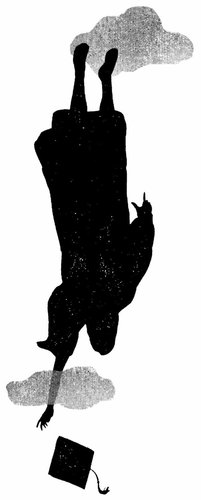
Oliver Munday and Ryan LeCluyse

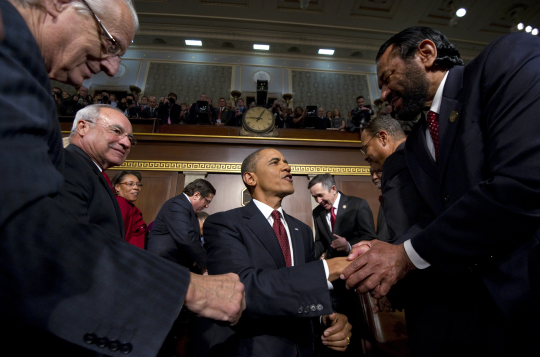
ONLY 21 states require students to attend high school until they graduate or turn 18. The proposal President Obama announced on Tuesday night in his State of the Union address — to make such attendance compulsory in every state — is a step in the right direction, but it would not go far enough to reduce a dropout rate that imposes a heavy cost on the entire economy, not just on those who fail to obtain a diploma.
In 1970, the United States had the world’s highest rate of high school and college graduation. Today, according to the Organization for Economic Cooperation and Development, we’ve slipped to No. 21 in high school completion and No. 15 in college completion, as other countries surpassed us in the quality of their primary and secondary education.
Only 7 of 10 ninth graders today will get high school diplomas. A decade after the No Child Left Behind law mandated efforts to reduce the racial gap, about 80 percent of white and Asian students graduate from high school, compared with only 55 percent of blacks and Hispanics.

Like President Obama, many reformers focus their dropout prevention efforts on high schoolers; replacing large high schools with smaller learning communities where poor students can get individualized instruction from dedicated teachers has been shown to be effective. Rigorous evidence gathered over decades suggests that some of the most promising approaches need to start even earlier: preschool for 3- and 4-year-olds, who are fed and taught in small groups, followed up with home visits by teachers and with group meetings of parents; reducing class size in the early grades; and increasing teacher salaries from kindergarten through 12th grade.

TO complete the article please go to the true cost.


The President’s New School Approach to Getting Americans to Graduate

Detroit Public TV

Originally Written in the Detroit Public TV American Graduate Blog

During the State of the Union address on Tuesday, President Obama made a bold call for new action against the drop out epidemic.
Obama called for the nation’s sates to enforce a new requirement which would keep students who have not already graduated from high school or turned 18 in school.
Currently, more than 7,000 students drop out of school every day in America. These numbers have implications to impact not only the lives of youths leaving school, but also the future of America’s economy.
It is proven those who graduate are more likely to earn higher earnings over the course of their lives, than those who do not. Individuals without diploma or a GED, struggle in a highly competitive job market. Lacking a high school diploma is a serious barrier to a career path.
“When students are not allowed to drop out, they do better.” Is Obama’s observation, and seems to hold true.

For a full run down of President Obama’s State of the Union

Diane Ravitch on KQED Forum


Influential education expert Diane Ravitch was on KQED’s Forum radio program with Michael Krasny on Wednesday, January 18, 2012.

Once a champion of reform policies such as vouchers and charter schools. Now, she has emerged as a leading defender of public education. We talk to her about the state of schools in California and across the country.
Listen to this valuable conversation on Forum with Michael Krasny.

Expert Says “College Ready For All” Will Not Solve Dropout Crisis

Could being on the high school football team prepare you just as well for the workplace as taking an advanced placement class? By forcing all students onto a college-bound track, we ignore the fact that there are other trajectories towards success and gainful employment, according to Russell Rumberger, who currently serves as provost in the Office of the President at the University of California, and director of the California Dropout Research Project.

Rumberger recently published a book called, Dropping Out: Why Students Drop Out of High School and What Can be Done About It. According to Rumberger, roughly 25 percent of U.S. high school students do not graduate.  And he says that our country is only making the problem worse by trying to prepare everyone for college.

Turnstyle spoke with Rumberger about how to re-define success in high school by creating multiple pathways for students to achieve inside and outside of school.

Read this compelling interview about multiple pathways to success.

Turnstyle News KALW
January 18, 2012
Written by Robin Gee

California Student Spending Near Bottom

Silicon Valley Education Foundation
January 13, 2012
Written by Kathryn Brown
California schools are the poster child for Gov. Brown’s new budget mantra that the state can’t spend what it doesn’t have. The latest Quality Counts report from Education Week ranks California 47th overall in how much it spends per student – $8,667 when adjusted for regional cost differences, about $3,000 below the national average of $11,665.
This is a drop over last year, when California spent $8,852 per pupil, with a ranking of 43rd in spending adjusted for regional cost-of-living variations.  Of course that was before the state faced a nearly $27 billion dollar deficit.
The state also falls short when it comes to education spending as a percentage of state and local taxable resources.  That comes to 3.3 percent according to the report, putting California in 40th place.  The national average is 3.9 percent.  For another perspective, Vermont puts 6 percent of its taxable resources into education; and even Texas does a little better than California at 3.7 percent.
The picture is better in the equity analysis.  California ranks 12th on a measure called the wealth-neutrality score.  This is defined by EdWeek as the “degree to which state and local revenue are related to the property wealth of districts.”  The state’s 0.038 average means that poorer districts receive more funding than wealthy ones on a weighted per pupil basis.
It’s interesting to note the differences in where states get the bulk of their education funds.  In California in 2008-09, local revenues contributed $21 billion or 29.6 percent; another $9.2 billion, 13 percent,  came from the federal government (above the national average of 9.6 percent); the state ponied up the remaining $40.6 billion.  Nationwide, according to the National Center for Education Statistics, state shares ranged from a low of 27.6 percent in Illinois, to a high of 85.7 percent in Vermont.
For more information please go to Spending Near Bottom.