Category Archives: Music

Matt Heckert

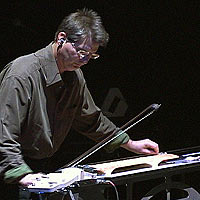
For nearly 20 years, Matt Heckert has been building visually striking machines to create arresting industrial soundtracks. Spark visits the sound artist and kinetic sculptor in his studio as he prepares for a one-person show at San Francisco’s Catharine Clark Gallery.

Heckert began playing with sound machines while working with the San Francisco mechanical art collective Survival Research Laboratories (SRL), commonly credited as the initiator of contemporary machine art. In addition to fabricating parts, Heckert assisted SRL by producing soundtracks intended to communicate the personalities and emotional states of various machines used in performances. In 1990, Heckert left SRL to take his own sound machines on the road, performing across North America and Europe with his Mechanical Sound Orchestra.

Since 1999, Heckert has been focusing his energies on gallery installations. Unlike many kinetic sculptors, Heckert is concerned primarily with the sounds his pieces make. He designs pieces according to an aesthetic that he feels adequately represents the sound. For example, “Birds” — a work he originally exhibited at Catharine Clark, then expanded for a show at Yerba Buena Center for the Arts — began with the sound of sheet metal as it bends. Only after the piece was completed did Heckert give the work a name, realizing that the resulting machines resembled a flock of birds.

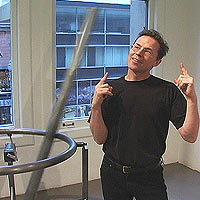
Like “Birds,” Heckert’s “Rotification” uses multiple identical components to create complex and varying soundscapes. It is composed of six steel poles that create centripetal sound as they rotate within circular steel armatures. As gallery visitors move between the sculpture’s parts, various aspects of the work’s densely layered bed of sound becomes audible.

Matt Heckert earned a B.F.A. from the San Francisco Art Institute in 1979. He has exhibited his work with SRL and as a solo artist in galleries throughout North America and Europe and has won numerous awards, including two fellowships from the National Endowment for the Arts and the prestigious Prix Ars Electronica. He currently teaches kinetic sculpture at the San Francisco Art Institute.

  • Array
  • Array
  • Array

Paul Dresher

For more than 30 years, world-renowned experimental musician and composer Paul Dresher has been fashioning remarkable instruments that help him push the limits of contemporary composition. Dresher employs his inventions in works that range from musical theater to contemporary opera to electronic chamber music to film and theatrical scores. Spark visits the maestro at work as he prepares for a performance of new music at San Francisco’s Yerba Buena Center for the Arts.

To create his instruments, Dresher often begins by experimenting with found or scrap materials. The quadrachord, one of his recent creations, began with a seven-foot-long plank of wood, onto which Dresher fastened guitar pickups and extended strings. A second version, which is twice as long, functions as a kind of giant electric/acoustic slide guitar that can be prepared, plucked, bowed or hammered.

Another such instrument is a giant metronome that Dresher created for his musical theater piece “Sound Stage.” Rather than merely replicate a metronome on a colossal scale, Dresher built the massive instrument to produce a complex array of sounds. The finished metronome, which became the centerpiece of “Sound Stage,” features two 15-foot swinging pendulums that pluck the strings of a giant harp and strike a series of percussive objects.

With the Electro-Acoustic Band — a high-tech experimental ensemble he founded in 1993 — Dresher performs his own music as well as the work of some of the most innovative composers of the last several decades. For their show at Yerba Buena, the ensemble tackles three new works by three different composers as well as Dresher’s own compositions from his CD “Cage Machine.” It is a difficult task, demanding long rehearsal hours to iron out the bugs in the technology-dependent compositions. In the end the concert is a success. Dresher and his band render the works both sonically complex and emotionally haunting.

Paul Dresher earned his B.A. in music from UC Berkeley and his M.A. in composition from UC San Diego, where he studied with Robert Erickson, Roger Reynolds, Pauline Oliveros and Bernard Rands. He has received commissions from numerous institutions, including the U.S. Library of Congress, Saint Paul Chamber Orchestra, Kronos Quartet, San Francisco Symphony, Zeitgeist, Walker Arts Center, University of Iowa, Meet the Composer and American Music Theater Festival. Dresher has performed throughout North America, Asia and Europe, including concerts with the Munich State Opera and New York Philharmonic. Dresher has also developed original music for dance performances for many choreographers, including Margaret Jenkins, Brenda Way, Nancy Karp, Wendy Rogers and Allyson Green.

Array

  • Array
  • Array

Danongan Kalanduyan

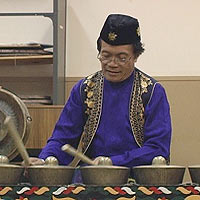
Master musician and ethnomusicologist Danongan Kalanduyan is the only expert on southern Filipino music living in the United States. In ” Global Village,” Spark catches a glimpse of the master at work as he teaches a class on Maguindanao, Maranao and Tausug tribal music and dance at San Francisco State University.

Kalanduyan is a master of the kulintang, a set of eight small embossed gongs in graduated sizes, arranged horizontally on a rack called an antangan. The kulintang is the central instrument in Kulintang music, which features a number of different percussion instruments: the babendil, a small handheld gong; the dabakan, a single-headed kettle-shaped wooden drum; the agung, a large wide-rimmed vertical gong; and the gandingan, a set of four large graduated vertical gongs.

Kalanduyan’s foremost goal is to use his music to help connect contemporary Filipino American culture with ancient tribal traditions. Kulintang music finds its roots almost entirely in a small Muslim region of the southern Philippines, but existed before both the Muslim and the Hispanic influences. In recent years, it has been embraced by young, secular Filipino Americans for whom it has come to serve as a symbol of pan-Filipino unity.

Kalanduyan earned his graduate degree in ethnomusicology at the University of Washington, Seattle, where he remained as an artist-in-residence for many years. In 1990, he served as a master artist in the California state apprenticeship program. In 1995, Kalanduyan was awarded the prestigious National Heritage Fellowship from the National Endowment for the Arts. Currently a lecturer at San Francisco State University, Kalanduyan is also the leader of the Palabuniyan Kulintang Ensemble. He has been a featured artist in performances at such major venues as the Hollywood Bowl (with the Los Angeles Philharmonic), the Metropolitan Museum of Art in New York, the Kennedy Center, and countless concerts and festivals throughout the United States.

  • Array
  • Array
  • Array

Naomi and Zak Diouf

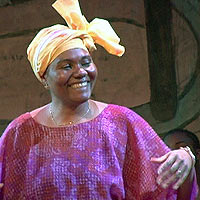
Diamano Coura means “those who bring the message” in the Senegalese Wolof language. Diamano Coura West African Dance Company was founded in 1975 by the husband and wife team of Dr. Zak Diouf and Naomi Washington Diouf. They are dedicated to the preservation, teaching and appreciation of traditional West African music, dance, theater and culture. Diamano Coura offers ongoing performances, classes and workshops as well as youth and community outreach programs.

In the Spark episode “Global Village,” Diamano Coura is preparing for its 2004 annual repertory show, “Kudul Khelate.” Zak, who comes from Senegal, and Naomi, from Liberia, both express the idea that in African cultures there is no separation of music and dance from daily life. They believe that “if you can walk, you can dance. If you can talk, you can sing.” Unlike Western European traditions, in which participation in the fine arts is historically the purview of the upper classes and experts to perform and produce, African cultures integrate all the art forms together within a community.

Dr. Diouf earned his Ph.D. in ethnomusicology from UC Berkeley and was the director of the Mali Ensemble, Les Ballets Africains and the Senegalese National Dance Company before founding Diamano Coura. He has performed as a dancer and drummer and has choreographed for such groups as the African American Dance Ensemble, Oakland’s Dimensions Dance Theater and the Harambee Dance Company. He has been on the faculties of Southern Illinois University, San Jose State University, Sonoma State University, the University of San Diego, UCLA, San Francisco State University and Hayward State University. He currently teaches West African music, dance and history at Laney Community College and music and dance at the Malonga Casquelourd Arts Center in Oakland.

Naomi Diouf began dancing at age 10 studying with prominent dancers and musicians of West African countries. Later, she studied ballet and modern dance in Paris. She holds a B.A. in sociology, with a minor in African history, from UC San Diego. She has choreographed works internationally for companies such as the Dutch Theater Van Osten in the Netherlands and Belgium, Dimensions Dance Theater, and Washington D.C.’s Kankoran Dance Company. She currently teaches West African dance and culture at Berkeley High School, Laney College and the Malonga Casquelourd Arts Center, as well as conducting workshops and consulting in costume design, cultural program coordinating and West African culture.

Array

  • Array
  • Array
  • Array

Tommy Guerrero

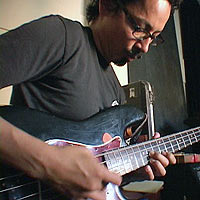
Native San Franciscan Tommy Guerrero is a legend in the skateboarding world. An original member of the famous Bones Brigade skateboarding team, Guerrero pioneered street skating in the 1980s and 1990s. Though he still skates and designs skateboards, lately Guerrero has been following his musical passions. As a solo artist and with his group Jet Black Crayon, Guerrero has been developing a hypnotic, pulsing style of music that is echoed in the sounds of the city he lives in. In “Up from the Street,” Spark checks in on one of San Francisco’s most versatile performers.

Guerrero made his name in skateboarding in 1984 when, as a young teenager, he entered the first streetskating competition, held in Golden Gate Park. The only amateur involved in the event, Guerrero won, beating out 15 well-known professionals. Propelled by this unprecedented success, Guerrero went pro, signing to the Powell Peralta skate team. Over the following years, Guerrero remained at the forefront of street skating, and in 1990, he helped found Real/Deluxe Skateboards, a San Francisco-based company that designs boards for skaters by skaters. Still a part owner in the company, Guerrero works as a designer for Real/Deluxe, creating graphics for decks, stickers, T-shirts, caps and other gear.

These days, though, Guerrero has been putting much of his energy into his musical projects. He has recorded several down-tempo, trip-hop records under his own name and two full-lengths with Jet Black Crayon, as well as doing guest spots on a number of other projects. Though writers and critics are fond of calling him an ex-professional skater turned musician, Guerrero is quick to point out that music has always been a part of his life, a track that has run parallel to his more public persona as a skater.

Just as Guerrero’s skating style took him to the city streets, rather than to skate ramps or empty swimming pools, so does his music turn to the urban environment for inspiration. Using music that evokes the sounds that might intertwine and drift through the streets, Guerrero’s moody, atmospheric music perfectly captures the tenor of San Francisco’s more urban neighborhoods. Listening to a Jet Black Crayon record, one might imagine an experience of the streets: hip hop beats pumping out of passing cars, a street performer strumming a guitar, the cacophony of passing conversations in multiple languages — all melding together into a hypnotic soundtrack for the city itself.

Array

  • Array
  • Array
  • Array
  • Array

San Francisco Opera

Producing an opera means thousands of hours of hard work and ingenuity, and many of the people that make it happen are not those in the spotlight. In the episode “Backstage Crafts,” Spark goes behind the scenes with the San Francisco Opera as the set construction crew takes on the staggering task of building the ambitiously designed scenery for the production of Ferruccio Busoni’s 1925 opera “Doktor Faust.”

Whereas American operatic productions have mostly stuck with traditional designs for sets and costumes over the last 20 years Europeans have been more interpretive in their art direction. “Doktor Faust,” which is co-produced with the Stuttgart Opera, brings some of the more avant-garde aspects of the new European opera to American shores. Set designer Anna Viebrock came up with a single set that will carry a narrative that takes place in four distinct scenes.

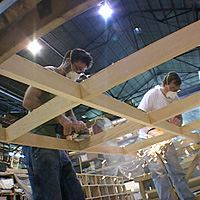
The opera tells the story of a man, whose life is shattered after he makes a deal with the devil, and Viebrock wanted the scenery to emphasize the harsh reality of Faust’s plight. While visiting the Potrero Hill warehouse where the SF Opera’s set construction crew works, she discovered a crumbling industrial scene shop that captured exactly the mood she hoped to create. The carpenters and painters then set about faithfully reproducing the room’s decrepit, ’50s-era acoustic tile ceilings, peeling paint, rusted water pipes, fire sprinklers and industrial windows.

One of the challenges of the design came from Viebrock’s set with more than 1,500 industrial acoustic tiles of the kind that she saw at the warehouse. But those tiles are no longer being manufactured. Moreover, they would have deadened the sound of the singers on stage. So the SF Opera scene shop contracted with an Ohio outfit to manufacture plastic replicas that were painted to look like the real thing. The surface was then painstakingly treated to simulate the stains and peeling paint that result from water damage.

The set for “Doktor Faust” is unusually large. The typical set for San Francisco’s War Memorial Theater, where the opera is being put on, is about 60 feet wide. At 98 feet across at its widest point, the L-shaped set for “Doktor Faust” occupies the entire stage, reaching 60 feet upstage and standing 48 feet tall. The floor, walls and ceiling of the set, an area of 10,000 square feet, required approximately 200 sheets of plywood, all of which were hand-painted by scenic artists to the specifications of the design.

Because the War Memorial Theater puts on more than one production at a time and because the opera will be traveling to the Stuttgart Opera, the set needed to be easy to break down, ship, and reassemble. The set construction team accomplished this by making 100 modular flats that are able to fit into four standard 8x8x40-foot shipping containers. Even the enormous ceiling for “Doktor Faust” is designed to be disassembled. Put together, with its skylights, hanging industrial sprinkler pipes and fluorescent lighting, the ceiling weighs approximately 9,000 pounds.

More about the San Francisco Opera
Founded in 1923 by Gaetano Merola, the San Francisco Opera is now the second-largest opera company in North America. The War Memorial Opera House has been the home of the SF Opera since 1932, when it was inaugurated with a performance of “Tosca.” All of their productions include supertitles — English translations of the libretto projected over the proscenium simultaneously with the action on stage. Additionally, the SF Opera presents an annual free concert in Golden Gate Park on the Sunday following opening night of their fall season.

  • Array
  • Array
  • Array

Best of Broadway presents “Hairspray”

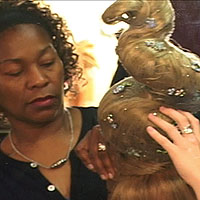
With a name like “Hairspray,” it’s easy to guess what an important part costuming, hair and make-up must play in the success of this Tony Award-winning musical. Spark gets a look at the woman behind the big hair with Best of Broadway’s “Hairspray” wig master Joy Marcelle.

  • Array
  • Array

Kymata

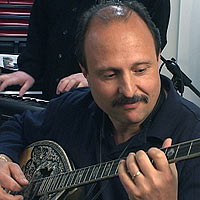
George Mylordos, one of the world’s most accomplished bouzouki players, is taking his band Kymata from playing weddings to recording a CD. Watch it all come together on the Spark episode “Making Their Move” as they practice and perform, working from the rich Greek music tradition and unique American styles to create a whole new sound.

Originally from the island of Cyprus, where he learned to play the bouzouki (a guitarlike instrument similar to the lute originating in Asia Minor, or modern-day Turkey), Mylordos came to America in 1982. He has played professionally in bands and as a backup musician. Right beside Mylordos throughout his career has been drummer George Mihailidis. Born in Thessaloniki, Greece, Mihailidis came to the United States at the age of 19 and went on to play in a wide variety of bands, even appearing at the Rockefeller Center and the White House.

Though Mylordos and Mihailidis both toured professionally, there came a time in their lives where they had had enough. They wanted to leave the constraints of that life and have a life in which, Mihailidis says, they could “create something that we can play whenever we want to and play for higher standards.” There was never any doubt that they would continue to create music together, and in 1994, Mylordos, Mihailidis and Kostas Papamichael formed the band called Kymata, which is Greek for “waves of the sea.” Papamichael started singing as a child, influenced by his father’s and grandfather’s Greek songs. He continues to sing for the band today as well as play the guitar and dumbek.

Over the years, the group has continued to grow, adding new members and refining their skills. The band’s newest member, 24-year-old singer Katerina Clambaneva, was born in Hayward, but moved to Greece at 6 weeks old, where she remained for the next 16 years. She returned, with her family, to attend Diablo Valley College and currently works in marketing. Her first love is Greek music, but she’s performed many other styles as well, including Latin music.

Since their founding more than a decade ago, Kymata has played hundreds of weddings and festivals, becoming a prominent fixture in the Greek community. They have developed a repertoire that tops a thousand songs and spans the full spectrum of Greek styles and musical traditions. Despite success, the band has recently made the decision to begin playing fewer gigs so they can focus on developing their own unique style, along with writing and recording their own music. They’ve blended Greek and other Mediterranean influences with the music that they loved as kids — rock and jazz from Dizzy Gillespie to John Coltrane to Led Zeppelin.

The band knows that making a CD is a risky proposition — there’s no telling how large the audience will be for their brand of musical fusion. For them, however, the rewards are reaped every time they gather together to play, and they see themselves as part of a historical continuum that dates back millennia.

  • Array
  • Array
  • Array

Matt Alber

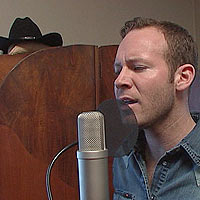
In “Making Their Move,” Spark meets Matt Alber, who has left a secure job to go out on his own as a country western singer. With no manager or agent, Alber is doing whatever it takes to make things happen. When a once-in-a-lifetime opportunity presents itself with a spot on the new television show “American Pride,” a search for the first openly Gay male country western singer, Alber jumps at the opportunity.

Growing up, Alber said, “I know I wanna be a singer, I just don’t necessarily know what kind I’m going to end up being.” Born in Wichita, Kansas, and raised in St. Louis, Missouri, he studied voice at Truman State University in Missouri. With a strong religious background, he thought his future was in Christian pop music. Unfortunately, while traveling with the Christian band Living Word, Alber was faced with hostility because of his sexual orientation. The group disbanded and re-formed without him.

Alber moved to San Francisco and became a full-time professional musician when he joined Chanticleer, a Grammy Award-winning ensemble of 12 voices that perform a diverse range of pieces, including jazz and gospel. Alber was then introduced to country western music and two-step. He found that his voice and writing were well suited to country western, and he has been well received at such venues as rodeos and the Sundance Saloon, a weekly country western event that serves the Lesbian, Gay, Bisexual and Transgender community.

The first original single by Alber, “What Took You So Long?” placed third in Universal Music’s 2002 Songwriting Contest. In 2003, he competed in a revived version of the television show “Star Search.” Although he didn’t win, the competition was close, and the experience led him to make the decision to leave Chanticleer and pursue solo performing as a country western singer-songwriter. Alber had his own studio built and continues to write music, inspired by country, alternative rock, electro, hip-hop and musical theater. He is at work on his first album with Whip Records in Berkeley.

Alber hopes that the show “American Pride” might be what it takes to push him to the next level. He learned of the plan to develop the show from record producer Larry Dvoskin in 2002. After more than a year of waiting, Alber received notification that the show was holding open auditions, so he flew out to New York and was selected for the cast. The show will follow competitors as they audition for a place in the finale in Nashville, where America will vote for the winner. The winner receives a record contract and the possibility of a place in history.

  • Array
  • Array
  • Array
  • Array
  • Array

SFJAZZ All-Star High School Ensemble

The SFJAZZ All-Star High School Ensemble, a program of SFJAZZ, has proven to be fertile ground for some of the most promising jazz talents in the Bay Area. For the hundreds of students auditioning for the 20-piece ensemble, the experience provides a unique opportunity to play with other accomplished student musicians. Spark shows the group from audition to performance in the episode “The Young and the Restless.”

Auditions are held every September, and Spark follows two students, drummer Ruthie Price and trombonist Emma Kelp-Stebbins. Dr. Dee Spencer, director of the ensemble, talks about her responses to both young women’s auditions and why they were accepted. Proud of all her students, she states, “I couldn’t play like that when I was that age. To have your own voice at 16 or 15 — that’s remarkable.”

For the young players, the prestige of being part of this ensemble is inspiring. Price says that “being on stage is like the home for all performers — where everyone sees you play your best or your worst.” Kelp-Stebbins says one of the main reasons she pursues jazz is that it is one of the hardest kinds of music, and “you can literally play it your whole life and always be learning something new about it and yourself because it is so complex.”

When the final ensemble has been assembled, Dr. Spencer leads and directs them, ensuring that they sound as polished as possible in the very short period of time they have to prepare for two high-profile events. Dr. Spencer chooses a challenging arrangement of the tune “Oleo,” by Sonny Rollins, one that many adult groups would not perform. Knowing her students’ abilities and their dedication, Dr. Spencer is uncompromising and has faith that it will come together.

More about SFJAZZ
Founded in 1983 under the name of Jazz in the City, the organization adopted its new identity as SFJAZZ in late 1999. SFJAZZ is dedicated to the growth of jazz and jazz audiences, celebrating this music as a living art built on a constantly evolving tradition, with concert performers ranging from acknowledged masters to the newest and most promising talents on the international, national and Bay Area scenes. Through the SFJAZZ Meet the Masters program, the students participating in the SFJAZZ All-Star High School Ensemble enjoy regular workshops, master classes and mentoring sessions with leading jazz artists, such as Branford Marsalis and Toshiko Akiyoshi, as well with as the SFJAZZ Collective. The SFJAZZ All-Star High School Ensemble have played in Jazz at Lincoln Center’s Essentially Ellington Competition and the San Francisco Jazz Festival and in top professional jazz venues throughout California.

Array

  • Array
  • Array
  • Array
  • Array
  • Array

‘Til Dawn

‘Til Dawn is a co-ed teen a cappella singing group. They perform popular songs as well as original compositions written by the group’s members and have recorded several CDs. ‘Til Dawn is one of five programs sponsored by Youth in Arts, which has provided arts education and opportunities to Bay Area youth since 1970.

  • Array

Kent Nagano

On the Spark episode “World Premieres,” encounter things previously unseen and unheard. Join maestro Kent Nagano and the Berkeley Symphony Orchestra (BSO) as they work with young Japanese composer Naomi Sekiya to bring her brand-new concerto for two guitars to fruition as part of the BSO’s first Composer-in-Residence program.

Most great musicians start very early in life, but not so for Sekiya. Having grown up in a small rural Japanese village, Sekiya had never played an instrument or written a single note of music. It wasn’t until receiving a scholarship and attending college that she enrolled in her first music course. She now holds degrees from UCLA and USC, and her career in music has exploded. She is catching the eyes of conductors and orchestras worldwide.

Sekiya first met the French-Spanish guitarists Gaëlle Chiche and Francisco Bernier, who perform as duo ASTOR, in Italy at Alessandria’s International Competition. She was so impressed by their playing that she decided to create a work for two guitars and a large orchestra. The world premiere of her “Double Guitar Concerto” marks the second work by Sekiya included in the BSO’s 2003-04 season as part of her residency.

Maestro Nagano, the music director and conductor of the Berkeley Symphony Orchestra since 1978, is a champion of undiscovered and cutting-edge works. Nagano has conducted the world premieres of John Adams’s “Death of Klinghoffer” and Debussy’s unperformed opera “Rodriguez et Chimene.” In 1997, he presented the world premiere of Leonard Bernstein’s posthumous “White House Cantata” with the London Symphony and performed and recorded Benjamin Britten’s original — and neglected — four-act version of “Billy Budd” with the Hallé Orchestra.

The partnership between Nagano, Sekiya and the entire Berkeley Symphony Orchestra hopefully marks the beginning of a productive Composer-in-Residence program, bringing new works to ever-greater visibility and rewarding risk and innovation with prominence.

More about the Berkeley Symphony Orchestra
The Berkeley Symphony Orchestra has a history of operating off the beaten path. Founded by Thomas Rarick in 1969 as the Berkeley Promenade Orchestra, the orchestra members abandoned the traditional tuxedo in favor of street clothing and opted to performed in unusual settings, such as the University Art Museum in Berkeley. They later adopted formal wear, but have never lost their pioneering spirit, presenting programs that comprise rarely heard 20th-century scores. The orchestra became the Berkeley Symphony Orchestra in 1981, and in 1989, it moved from the 750-seat First Congregational Church to UC Berkeley’s 2,015-seat Zellerbach Hall.

  • Array

The Crucible

In what might qualify as an unlikely artistic collaboration, the San Francisco Opera and Oakland’s industrial arts center, The Crucible team up to stage a pyrotechnic version of Purcell’s “Dido and Aeneas.” Spark visits The Crucible’s cavernous warehouse as The Crucible director Michael Sturtz and San Francisco Opera director Roy Rallo are preparing to unveil something never before seen — the world’s first fire opera.

  • Array
  • Array

Gospel Travelers

Though they’ve been playing together only a short time, the Gospel Travelers are quickly gaining a reputation as one of the country’s most exciting and inspiring contemporary gospel groups. Formed in 2003 in San Jose by Deacon George Pierce and led by Reverend Milton “Bill” Johnson, the Gospel Travelers have toured extensively in the southern United States and played in churches and clubs all over the Bay Area as well as at the All Faiths Gospel Festival. The Spark episode “Ensembles” offers a glimpse into Northern California’s hardest-working gospel group as they celebrate their one-year anniversary.

Born to a poor family in rural Arkansas, Johnson has endured more than his share of hardships. He left school at the age of 11 to help support his family by picking cotton and didn’t learn to read until just recently, at the age of 61. As a young man, he toured the South as a gospel singer until two of his bandmates died tragically. He moved to California, where he raised six children, working as a mattress hauler to support them. Johnson credits gospel music with having been his one solace throughout, allowing him to maintain his faith and trust in a higher power.

Gospel music uses traditional slave-era spirituals and melds them with the driving rhythmic emphasis that is characteristic of blues and early jazz. Traditionally, when it was performed in churches, gospel music was sung by a choir with individual soloists occasionally taking the spotlight. Often performed in a “call and response” form, the choir or the soloist would repeat or respond to the lyrics sung by the other, with the soloist improvising embellishments of the melody for greater emphasis. As the music developed, these soloists became more and more virtuosic, performing with wild emotion to express the spiritual ecstasy the music was intended to evoke. In the 1950s and 1960s, gospel music had an enormous impact on the development of R&B and soul music, which channeled gospel’s spiritual intensity into nonreligious themes.

In the spirit of the community-based roots of the music they play, the Gospel Travelers have become more than a musical group: To one another, they are a makeshift family, helping each other out in any way possible in difficult times. Johnson has taken on the role of spiritual leader to the other musicians and often gets calls from group members looking for guidance and assistance.

Though performing primarily in churches, the Gospel Travelers have recently moved their act to more secular venues in an attempt to reach a wider audience. Spark follows the group as they play Biscuits and Blues, a blues club in downtown San Francisco. Their hard work is beginning to pay off: Thanks to recent recordings and a groundswell of support from local audiences — both religious and secular — the group not only has many upcoming church performances booked, but also has been invited to play at the internationally acclaimed Monterey Bay Blues Festival.

  • Array
  • Array
  • Array
  • Array