Note that an update to this story was posted on May 6.
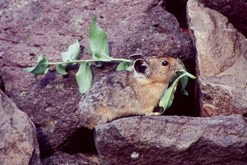
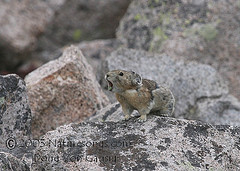
The hamster-sized, high-elevation haymaker known as the American Pika has had its “day” in court–and then some. Now it may be making inroads toward listing as a threatened species, while questions persist over whether that would be premature.
Friday was the deadline for officials at the U.S. Fish & Wildlife Service to decide whether to further consider the pika for listing under the federal Endangered Species Act.
The San Francisco-based Center for Biological Diversity (CBD) has been pursuing listing for the pika under both the state and federal Endangered Species Acts. On April 16, a Superior Court judge in San Francisco ruled that the California Fish and Game Commission applied too stringent a standard, when it voted last year to reject the CBD’s petition to list the pika under the California law. The CBD says it expects the court to formally order the state to go back and take a second look at whether the critter deserves protection.
Meanwhile federal wildlife officials had until May 1 to decide whether to formally review the pika’s plight and consider listing it under federal law. A response is expected to be published in the Federal Register this week.
Complicating the case is an apparent difference between the fate of pika populations in the Great Basin, where field research clearly shows pika colonies in trouble, and colonies in the Sierra Nevada range, which may be faring better.
Pika thrive only at high elevations, in the rocky conditions known as talus. Their band of tolerance for temperature is very narrow, so some biologists see them as an indicator species for global warming. Temperatures that humans may consider merely balmy, can be fatal for pika.
Chris Ray, an ecologist at the University of Colorado, has studied pika in the mountain ranges of the Great Basin. She’s identified and ranked several stress factors that pose threats to the animals, including habitat shrinkage and exposure to both heat and cold.
Ray, who presented her latest research at the USGS-sponsored Pacific Climate Workshop last month, is cautious about endorsing an ESA listing just yet, saying: “I do not think there are data indicating that the species as a whole is in danger of extinction, however the loss of isolated populations from the Great Basin has me concerned.”
“I think it’s very reasonable to consider potentially listing some sub-populations of pika.” Ray says that in order to do that, a case would have to be made that there are genetically distinct sub-species of pika. In its petition, CBD claims that five sub-species have been identified in California. But scientists at UC Berkeley and the U.S. Forest Service who have done field research in the Sierra, have said it’s less clear that those colonies are in trouble.
CBD staff biologist Shaye Wolf says a 1995 study found “evidence for four genetic units across the pika range, roughly grouped as Sierra Nevada, Cascades, Southern Rockies, and Northern Rockies. However, better genetic analyses using more sensitive genetic markers (like microsatellites) are necessary to understand pika population structure.”
Wolf says that for its ESA petition, the CBD drew on a 1981 study that used population distribution to break out 36 “subspecies” of pika.
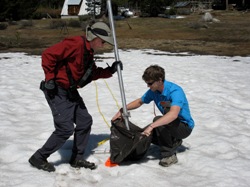
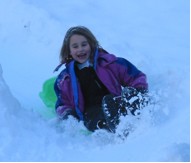 Snow will be less, soggier, at higher elevations, and on the ground for fewer days of the winter, melting some of the $500 million-per-year revenues of the ski industry–not to mention melting your favorite ski run. Altered river dynamics and temperatures will almost certainly cut into the state’s $33-million-per-year salmon industry. Climate-caused loss of forage means that in 2070 California’s cattle ranchers will be losing up to $92 million in comparison to today’s markets, which means higher beef prices at the grocery store. Combined, the losses in these ecosystem services likely will cost the state’s already suffering economy well over a hundred million dollars per year as we move into the next few decades. And those are just three of many ecosystem services that will be affected.
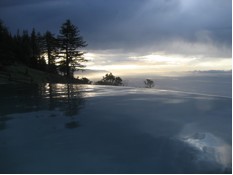 The third part of your relationship to nature is how it makes you feel. There’s no question: you can’t get the same feeling you get looking at a giant redwood anywhere but in a redwood forest. Among species that may have little or no suitable climate left in California, however, are its coastal redwoods and sequoias.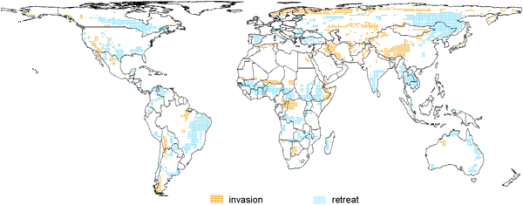
 After the puny amount of precipitation we had in January, you sort of knew this was coming. Sure enough, after the