EPA’s CO2 Rules Old-Hat for California

A much-hyped EPA ruling to regulate greenhouse gases in 2011 doesn’t really change much for California.

A lot’s being made of the move by the federal Environmental Protection Agency’s move to start regulating greenhouse gases in the new year, but policy analysts are greeting it as a relative non-event in states like California (and Massachusetts), which are already moving ahead with their own carbon regulation strategies.

“It’s really a complement to what we’re doing with AB 32,” said California Air Resources Board spokeswoman Gennet Paauwe.

The EPA is acting in response to a 2007 US Supreme Court finding that greenhouse gases fall under the jurisdiction of the Clean Air Act, and therefore are subject to regulation by the federal agency.

Critics of the EPA’s move, such as incoming House Energy Chair Fred Upton (R-Mich), say it’s a job-killer that will hurt domestic energy production. Other members of Congress, like California’s Barbara Boxer, support the EPA’s action.

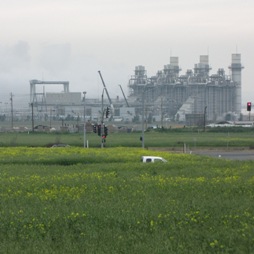
The new regulations will affect power plants and refineries, which together produce about 40% of all carbon dioxide emissions in the United States.  Starting January 2, industry will be required to consider new technologies and implement measures to mitigate greenhouse gas pollution for approval of new facilities and “major modifications” to existing ones.

“This is about taking a look at what technologies are available that can cost-effectively achieve reductions in greenhouse gases,” EPA assistant administrator Gina McCarthy told reporters in a recent conference call. “We set the standards, and the industry themselves figure out the most cost-effective ways to achieve those standards,” she said.

Vickie Patton, a lawyer for the Environmental Defense Fund, says a similar process is already in place for monitoring many other pollutants, and the new ruling simply adds greenhouse gases to the list.

Existing power plants and refineries will have to address greenhouse gas emissions, too, but not for at least a year.  Draft standards (providing details of the new rules) aren’t expected for power plants until July 2011, and December for refineries.  The agency says those standards wont be finalized until mid-to-late 2012 after a long period of public comment. By that time California’s cap & trade plan under AB 32 will be up and running, barring any legal delays.

The EPA says it will be up to each state to devise it’s own plans for implementing the standards.  And that’s where much of the uncertainly lies.  Texas has already refused to cooperate and sued unsuccessfully to stay the EPA ruling, long before the draft standards have been released or any formal process has been established for implementation.

“We’re really early stage,” said McCarthy. “I can’t tell you what types of reductions we hope to achieve. That’s all going to be driven by the technologies that come to our attention through the public comment period.”

Patton says that despite that state’s high profile objections, most states are on board with the federal process.

“Virtually every state in our country has rolled up its sleeves, prepared for this transition, and is ready to begin carrying out these protections to address global warming pollution, except for Texas,” she said.

Patton said that states like California, which has been a pioneer in both new technologies and in emissions regulation, will have “an important voice” as the standards are being developed.

“In the absence of an effective price on carbon or other incentives for industrial plants to choose clean technology, this is very important and useful tool to help the transition to clean energy and industry in California,” said CARB’s Paauwe. But once the AB 32 program is in motion, she said, this regulation could be redundant, as CARB hopes that the state cap and trade program as well as other market incentives will motivate firms to install the cleanest technologies on their own.

At that time, she said, “We can look at whether a separate clean technology process is necessary.”
Soggy Mountain High: Big Start for Sierra Snowpack


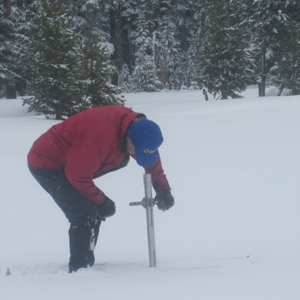
Frank Gehrke conducting last year’s first snow survey of the season. (Photo: Gretchen Weber)

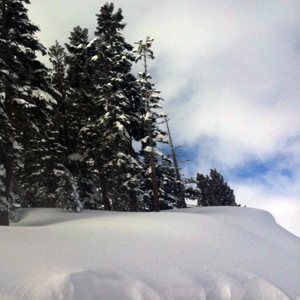
All the wet weather that’s been drenching much of the state has left the Sierra Nevada with an extra-thick blanket of snow, which has water officials optimistic about the state’s water supply for 2011.

Using a combination of manual and electronic measurements, the state’s Department of Water Resources conducted its first snow survey of the season on Tuesday, and found the water content of the state’s snowpack at 198% of normal for this time of year.   Last year at this time, the statewide average was just 85% of normal.
Continue reading Soggy Mountain High: Big Start for Sierra Snowpack

So Much for La Niña

Pacific ocean conditions that often portend a dry winter sure haven’t so far.

Scientists like to joke that “climate is what you expect, weather is what you get.” The relatively soggy winter so far is a classic example of that.

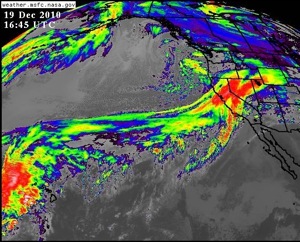
Satellite image from last weekend, showing storm systems marching across the Pacific toward California. (Image: NASA)

A closely-watched oscillation in the Pacific is in the La Niña phase this winter, creating colder-than-normal surface temperatures and distorting weather patterns. Usually a La Niña means drier-than-normal conditions for Southern California in particular and often for northern parts of the state as well. Not this year–at least not so far. The rain set multiple records over the weekend. Los Angeles has had a third of its average annual rainfall in a week. So what’s going on? Continue reading So Much for La Niña

…And It’s Not Even Winter Yet

Photo: Gretchen Weber

Good news for cities, towns and farms across the state that rely on the State Water Project: Today California’s Department of Water Resources doubled its projected 2011 deliveries of water from its initial 25% estimate to 50% of amounts requested.

Fifty percent doesn’t sound like much but compared to last year, when the initial projection for 2010 was a record-breaking low of five percent, this year is off to a pretty soggy start.  These allocations tend to climb throughout the season, so the 25 million Californians who rely on this water could actually see much higher numbers as the winter progresses.  2010 ended up with a 50% allocation despite its conservative early estimates.

Statewide, remote sensing indicates the mountain snowpack is 122% of normal for this date. As of Wednesday, the northern Sierra had already received nearly half its “normal” precipitation for the entire water year, which runs from October 1 to September 30, according to DWR.

And it looks like more of the same for the near future.  Meteorologists are predicting up to 15 feet of new snow for parts of the Northern Sierra by the middle of next week.

The Other Effect of CA’s Clean Air Laws

(Photo: David McNew/Getty Images)

By Andrew Freedman

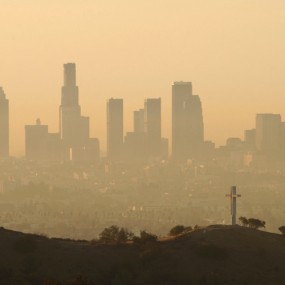
Pollution reduction measures that were aimed primarily at reducing California’s notorious smog problem and improving public health, also helped cut emissions of black carbon — a key global warming agent — according to a new study published Tuesday.

Black carbon, more commonly referred to as soot, is an atmospheric particulate that scientists have shown to be a significant contributor to global warming. It is an attractive target for emissions reductions because relatively cost effective technologies to reduce it already exist, such as diesel particulate filters for trucks, and because unlike carbon dioxide (CO2), which stays in the air for decades to millennia, black carbon only remains airborne for days to weeks. Continue reading The Other Effect of CA’s Clean Air Laws

It’s (Sort of) Official: Cap & Trade Is (Almost) Here

After a ten-hour hearing in which board members endured more than 170 speakers, the California Air Resources Board (CARB) voted to “endorse” a 200-page set of rules for what will be the world’s second largest cap & trade program (after Europe).

CARB is charged with implementing the 2006 Global Warming Solutions Act, or AB 32, which mandates that California reduce its greenhouse gas emissions to 1990 levels by 2020.  The cap & trade program is a key piece of the Air Board’s plans.

“It’s an exciting program,” said Board chair Mary Nichols. “It’s a very big step forward.”

Not that the job is done. Several facets of the regulation will now undergo a fine-tuning process, with another report back to the board in July of next year. Eventually it will find its way to the state’s Office of Administrative Law for review, and finally to the governor’s office, to be signed as an executive order. Continue reading It’s (Sort of) Official: Cap & Trade Is (Almost) Here

Federal Gov’t Eyes CA for Solar Projects

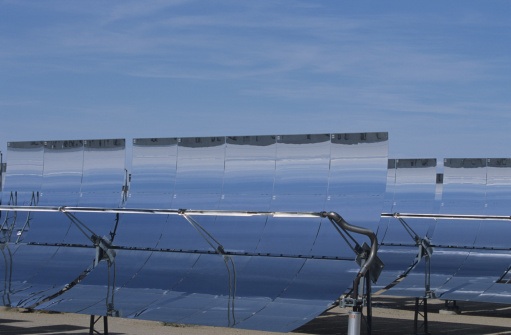
The federal government is recommending 24 areas in six Southwestern US states it says are “best-suited” for large-scale solar projects, both economically and environmentally.   Four of these “Solar Energy Zones” are in California: two in San Bernadino County and one each in Imperial and Riverside Counties, and together they account for nearly half of the nearly 700,000 acres recommended by the Obama Adminstration.

“These are areas in those states which have been determined to have the highest solar potential and the fewest amount of environmental and resource conflicts,” said Interior Secretary Ken Salazar on a conference call with reporters Thursday.

He said that because the recommended areas are likely to have fewer delays related to environmental issues, projects sited there are likely to have a faster permitting process.   The report and its recommendations, he said, will help speed up the implementation of renewable energy projects around the Southwest. (!–more–>

“It presents a common sense and flexible framework from which to grow our nation’s renewable energy economy,” he said.

While representatives from environmental groups such as the Wilderness Society, the Nature Conservancy, and the Center for Biological Diversity applauded the federal government for planning ahead for efforts to make the siting of solar projects more efficient, some voiced concerns about the specific sites named as Solar Energy Zones.

Ilene Anderson of the Center for Biological Diversity expressed concern that one of the areas designated in California, a swath of more than 200,000 acres called Riverside East, contains habitat of the endangered desert tortoise. Another zone she finds problematic is the Iron Mountain Zone, which Anderson says is too far from population centers, meaning that projects there could require the construction of additional transmission infrastructure.

Beyond the specific areas, however, Anderson said what concerns her to most is that the federal strategy leaves open the possibility for solar projects in sites outside the designated zones.

“My concern is that they’re still going to be entertaining applications anywhere on public lands, and that gets us back to the problem that we’re currently seeing which is these renewable energy projects spread willy-nilly across the desert,” she said.

You can see what the recommended sites actually look like with this interactive map that identifies the Solar Energy Zones and provides on-the-ground panoramic views of the sites.

Lonely Road for Cap and Trade

California is the lab rat in the cap & trade maze

(Photo: Craig Miller)

One day after the midterm congressional elections, President Obama was already talking about cap & trade in the past tense: “Cap & trade was just one way of skinning the cat. It’s not the only way,” the President told reporters. “It was a means, not an end. And I’m gonna be looking for other means to address this problem. Senator Joe Lieberman put it more bluntly. “Cap and trade is off the table,” Lieberman said. “We have to start on the presumption that the table is clean, that nothing is on it.”

But while Washington is “looking for other means” to reduce the carbon emissions that cause global warming, the table is set for cap & trade in California. By day’s end Thursday, the state will likely have the nation’s first system that covers more than electric utilities. Continue reading Lonely Road for Cap and Trade

Californians Who Rely on Delta at “Severe Risk”

Here’s a shocker: Yes, action is necessary on the San Francisco Bay Delta

(Photo: US Fish & Wildlife)

State and federal authorities provided an update Wednesday on the Bay Delta Conservation Plan (BDCP), which is tasked with restoring the damaged ecosystems of the Sacramento-San Joaquin Delta and safeguarding California’s water supply.

“The 25 million Californians who rely on the Delta for clean drinking water are at severe risk,” said Secretary of the Interior Ken Salazar, on a call with reporters. Continue reading Californians Who Rely on Delta at “Severe Risk”

Antidote for Urban Heat: More Trees

When the temperature shoots up, cities usually feel the heat the most. But some cities feel the heat more than others.

Scientists studying urban heat islands in 42 cities in the Northeastern U.S. have found that the greatest temperature differences between urban areas and the surrounding environment are in places you might not expect. Continue reading Antidote for Urban Heat: More Trees