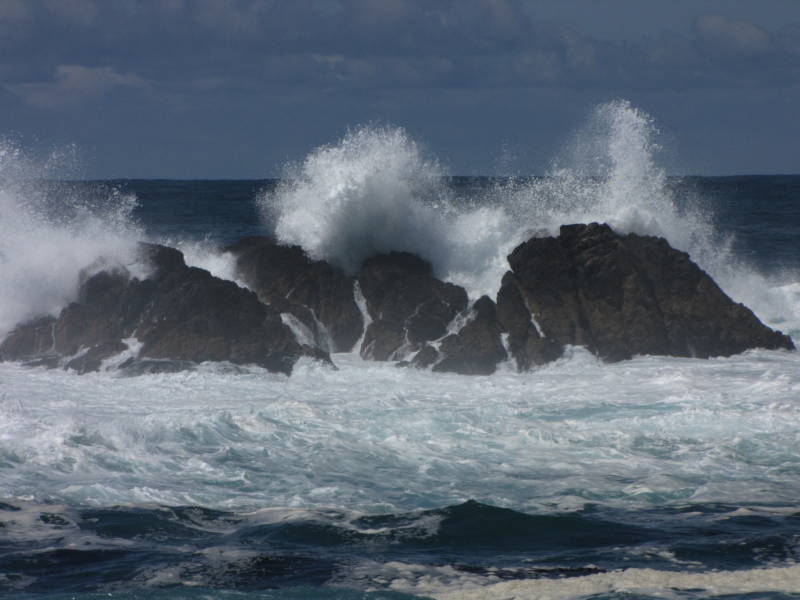
California Cities Confront Water Challenges

Scientists and planners expect the Bay Area to face a host of water-related threats in the coming decades due to climate change, including flooding due to rising seas and summer water shortages due to warmer temperatures and a shrinking Sierra snowpack.

A new analysis released Tuesday from the non-profit Natural Resources Defense Council catalogs these threats, for San Francisco, and for 11 other American cities, including Los Angeles. The study also looks at how prepared the cities are to adapt to these climate challenges. It finds, in general, that San Francisco is leading the way when it comes to being prepared. Continue reading California Cities Confront Water Challenges
Sweden Tries Taming its “Fox”

Making strides toward nuclear waste disposal by empowering communities

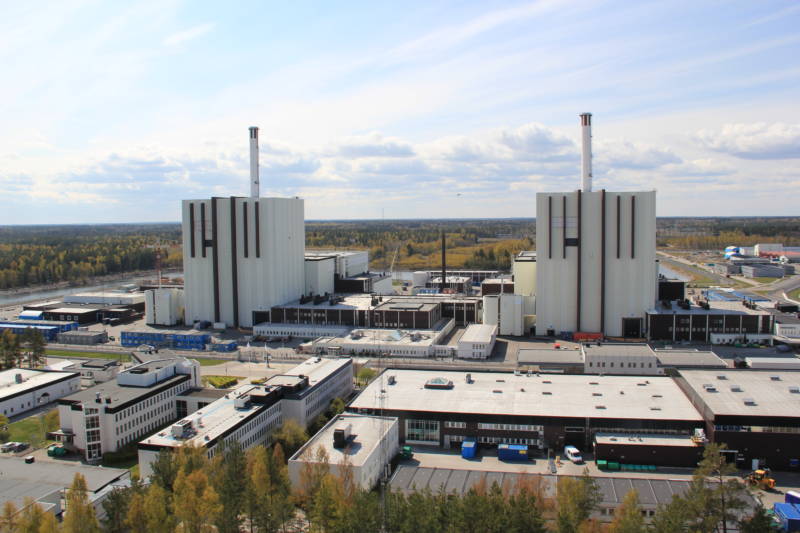
The Forsmark nuclear power plant is one of three in Sweden where about half the nation’s electricity comes from 10 reactors built on the coast.

Sweden gets a lot of press as the country that’s figured out not only how and where to dispose of its nuclear waste but – significantly — how to win community support.
Continue reading Sweden Tries Taming its “Fox”

Roofing It: Brown Stumps for Distributed Solar

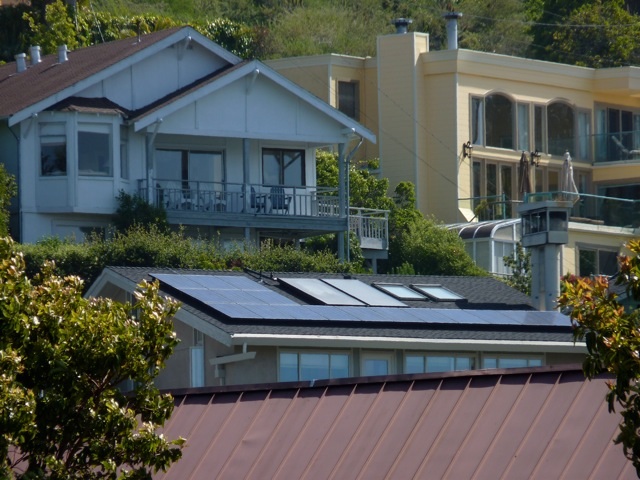
Governor Brown moves forward with plans to encourage more local solar generation in the state.

California has been on something of a solar frenzy recently, approving permits for more than 4,000 megawatts of new solar power in 2010 alone. Most of that is in the form of large, industrial-scale installations, which will provide lots of power, but also will require transmission infrastructure to get the clean energy from the desert sun to where its needed, primarily, the coastal cities.

This week Governor Jerry Brown is focusing on the other kind of renewable energy: the local kind that is smaller in scale and doesn’t require transmission to get where it’s needed. Continue reading Roofing It: Brown Stumps for Distributed Solar

California’s Nuclear Burden

Nearly 3,000 tons of spent nuclear fuel have accumulated at nuclear power plants in California…with nowhere to take it.

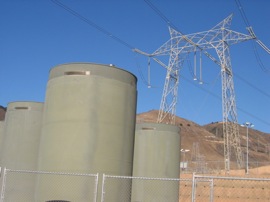
"Dry casks" waiting to be loaded with spent fuel at Diablo Canyon. (Photo: Craig Miller)

It could be worse. This could be Illinois, the undisputed spent fuel champ, with more than 8,000 tons piled up at plants. As it is, California ranks eighth in the nation.

“This country has an obligation to those states and those communities to take those materials and put them into deep geologic disposal, where they can be safely isolated for a very long period of time,” says Per Peterson, who chairs the nuclear engineering department at UC Berkeley.

Trouble is, the country seems farther now from meeting that obligation than it was in 1998, the original legislative deadline for opening a permanent repository for spent nuclear fuel. Continue reading California’s Nuclear Burden

What’s Up With This Weather?

While most of the nation bakes, California keeps its cool–and not just along the coast

Climate scientist Phil Duffy and meteorologist Jan Null joined Michael Krasny on KQED’s Forum to discuss California’s cooler-than-usual summer and what it might reveal about climate change in the region. The upshot? We don’t really know.

“I think we’re seeing plain old climate variability,” said Duffy, who is a visiting scholar at Stanford and the Carnegie Institution for Science and chief scientist for Climate Central, a Climate Watch content partner.

Null agreed with Duffy, saying that in any given year, “stuff happens,” which can’t necessarily be attributed to a larger trend.

“It’s hard to take an individual year and say ‘This is the result of climate change’,” said Null. “It could be just the roll of the dice. If we see a lot of stuff happening over the next decades, then we’re talking about climate change.”

Null said this summer’s cool weather is due to a persistent trough of low pressure along the west coast.

“Anytime you have that for an extended period of time, you get what people call ‘unusual’ or ‘freakish’ weather,” he said. Continue reading What’s Up With This Weather?

Study: Climate Change Muscling in on Mussels

By Susanne Rust

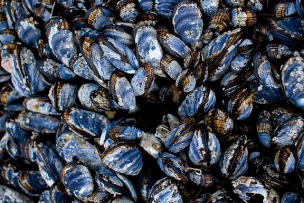
Polar bears may have stolen the show when it comes to climate change, but it may be the lowly California mussel that we really should be watching.

(Photo: Kate McCarthy/Flickr)A new study by researchers at UC Davis shows that rising acid levels in the ocean thin and weaken the shells of this diminutive bivalve. And that could spell trouble for entire marine ecosystems.

“This is a very important species, a foundation species,” said Brian Gaylord, lead author of the paper and a researcher at UC Davis. “They provide habitat, food and refuge for literally hundreds of other animals.”

According to the study’s authors, weakened shells could make the mussels more vulnerable to predation and sickness. Continue reading Study: Climate Change Muscling in on Mussels

Climate Change Chipping Away at the Coast

USGS: Warmer ocean temps portend more erosion along the West Coast

This week researchers at the US Geological Survey (USGS) issued a damage report that assesses how badly El Nino patterns tore up West Coast beaches during the winter of 2009-2010. Up and down the coast, the survey logged beach erosion 36% above average. The study’s authors point to the intensity of the El Nino conditions during that time, as well as a geological shift in the region of warmer water. They say high water, heavy storms and warmer waters were the culprits. And they warn that with the changing climate, these events may become more common.

“This little winter is a snapshot of what climate change may look like where we have baseline higher sea levels and more significant storms.” said Patrick Barnard, a coastal geologist with the USGS in Santa Cruz.

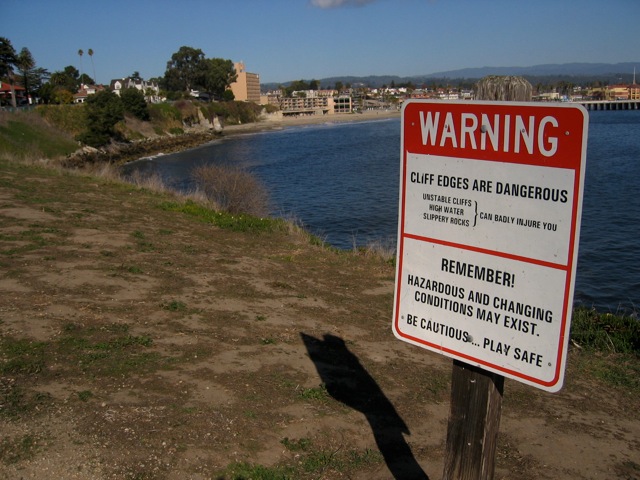
A sign warning beach visitors of the dangerous, changing coastal conditions. (Photo: Craig Miller)

One Bay Area snapshot the authors highlighted was San Francisco’s Ocean Beach. The thin coast retreated more than 184 feet, dumping the southbound lane of the Great Highway onto the beach. It took nine months before the lane was reopened and the clean-up cost $5 million.

Continue reading Climate Change Chipping Away at the Coast

Cutting Emissions…With Car Insurance?

The “Pay As You Drive” approach to auto coverage could save some drivers money–and cut lots of CO2, studies say.

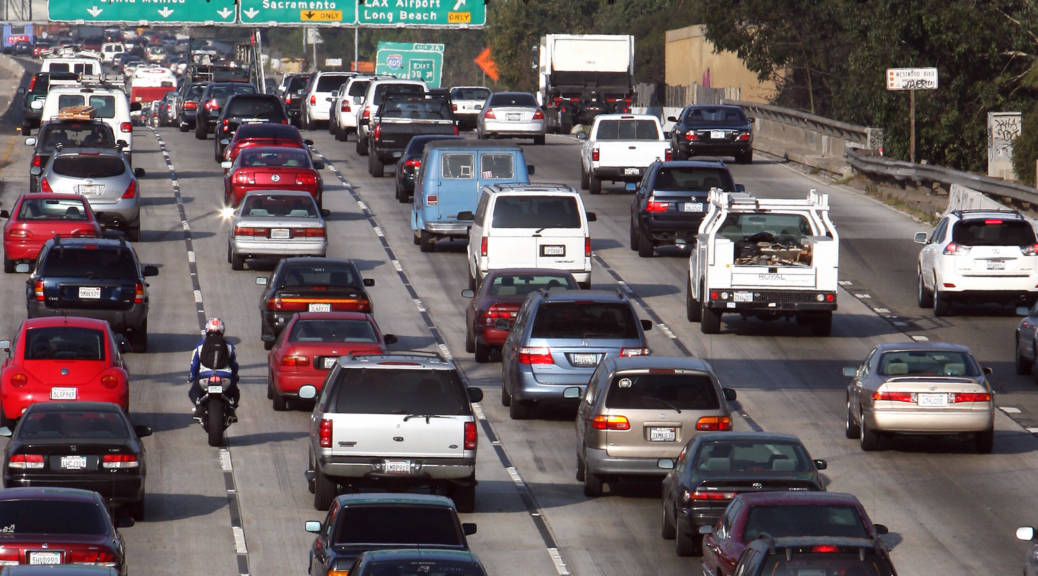
Most car insurance is priced in the United States kind of like an all-you-can-eat salad bar, says Justin Horner, a transportation analyst at the Natural Resources Defense Council. You pay a set amount once or twice a year, and then you can eat one little salad, or you can totally chow down, making several trips back for more food, piles of cole slaw and jello threatening to topple from your over-filled plate. Either way, it makes no difference to your wallet.

And, of course, regardless of hunger level, it can be kind of tempting to go back again and again, just because you can.

On the other hand, if you get your salad at one of those pay-by-weight places, you’re likely to be a lot more discriminating about what’s on your plate. That’s how we buy gas, says Horner.

Continue reading Cutting Emissions…With Car Insurance?

Free Cap-and-Trade System Beats Carbon Tax, Study Finds

By Susanne Rust

As governments try to figure out the best way to get carbon polluters to invest in and produce cleaner energy, two scenarios continue to come forward: cap and trade vs. carbon tax.

A new study from UC Merced and the University of New South Wales in Australia suggests that a free and uninhibited cap-and-trade system is the best way to go. The authors argue such a system will “trigger adoption of clean technologies at a considerably lower level of carbon prices” as compared with a tax system.

In addition, the study concludes that the higher risk and volatility of an unhindered market “are likely to induce suppliers to take early action to hedge against carbon risks.”

Continue reading Free Cap-and-Trade System Beats Carbon Tax, Study Finds

Climate Change and the Phoenix Dust Cloud

Hotter temps could set the stage for more — but the science is complex

On July 5, a massive dust cloud

By Alyson Kenward

On Tuesday night, a massive dust storm rolled into Phoenix, Arizona knocking out power in much of the city, reducing visibility to nearly zero, and grounding flights overnight. Photos of the 100-mile wide dust cloud swallowing the city circulated yesterday, and the event looked practically apocalyptic. In fact, if the photos weren’t in color, and there weren’t YouTube videos of the dust storm, I would have thought I was looking at old-timey images from the 1930’s dust bowl. Now, a couple days later, lingering dust in the air has triggered allergy-like symptoms for many people. Continue reading Climate Change and the Phoenix Dust Cloud