California Truckers React to New Fuel Standards

The trade group for California’s truckers says it welcomes the new federal fuel standards for big rigs — for the most part, anyway.

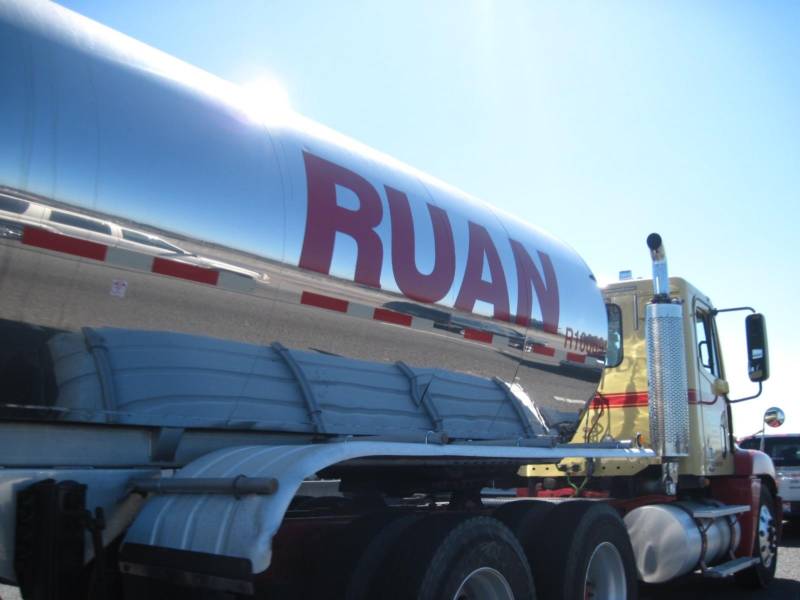
Yesterday President Obama announced that all heavy duty vehicles must get up to 20 percent better mileage by 2014.  This marks the first ever federal fuel efficiency rules for heavy trucks and buses.

Michael Shaw of the California Trucking Association said he welcomes the standards but wants equal focus on improving vehicle reliability.

“We want reliability considered as important as fuel efficiency because, ultimately, if a vehicle is running more efficiently, but it’s spending more time in the shop… then you may have to purchase a new truck.” said Shaw. “So are we really getting the benefit we’re expected to get?”

Shaw says these rules may also increase costs for truckers. Continue reading California Truckers React to New Fuel Standards

Natural Carbon Storage Off the California Coast?

A new study from the University of Southern California finds that the cool waters off the coast of Los Angeles are acting as a carbon sink by sequestering more carbon than other parts of the world’s oceans.

Lisa Collins, a lecturer at the USC Dornsife College, spent four years studying samples from floating sediment traps in the San Pedro Basin as a way to determine what’s falling through the water column and how deep it’s getting.

“We have a pretty good idea of how much biomass is produced in the ocean, but we don’t have a great idea of how much of that biomass actually gets down through the water column and ultimately to the sediment,” said Collins.

One reason that matters, she says, is that phytoplankton, which make up much of the biomass, live and grow by taking up sunlight and carbon dioxide, just like plants on land do. When the phytoplankton die, they sink, taking that stored carbon down the water column with them. If they make it all the way to the mud at the bottom of the ocean, Collins says, that carbon will be sequestered there for hundreds or thousands of years or more. Continue reading Natural Carbon Storage Off the California Coast?

Clean Energy Target Still Unmet, PG&E Signs More Renewables

California’s three big utilities have another two years to reach their mandated target of having 20% of their electricity generated from renewable sources, and today PG&E announced two new deals that could inch the company closer to that goal:

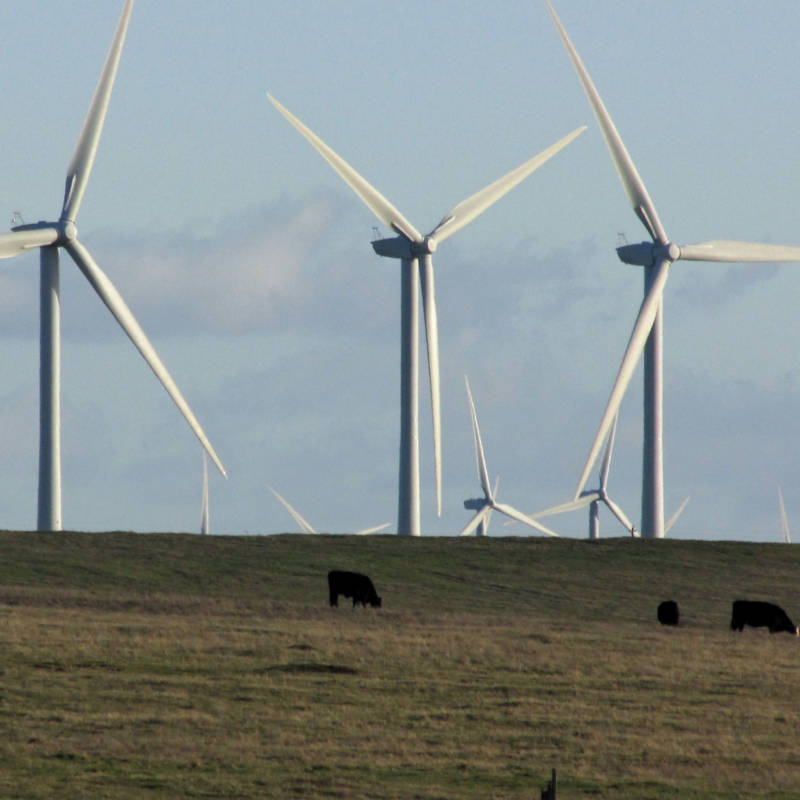
  • Wind:  An agreement with NextEra Energy Resources, for 25 years of wind power from the company’s 163 megawatt North Sky River project in Tehachapi, CA.  PG&E says the energy from this project could meet the needs of about 90,000 typical homes.
    • Solar:  A 25-year contract with Sempra Generation for 150 megawatts of solar power from an expansion of the Copper Mountain Solar complex near Boulder City, NV.  Just under 2/3 of that power is expected online in 2013, with the remainder available by 2015. Ultimately, the company says, this project could power 45,000 homes.

Continue reading Clean Energy Target Still Unmet, PG&E Signs More Renewables

Climate Change’s Unusual Suspects

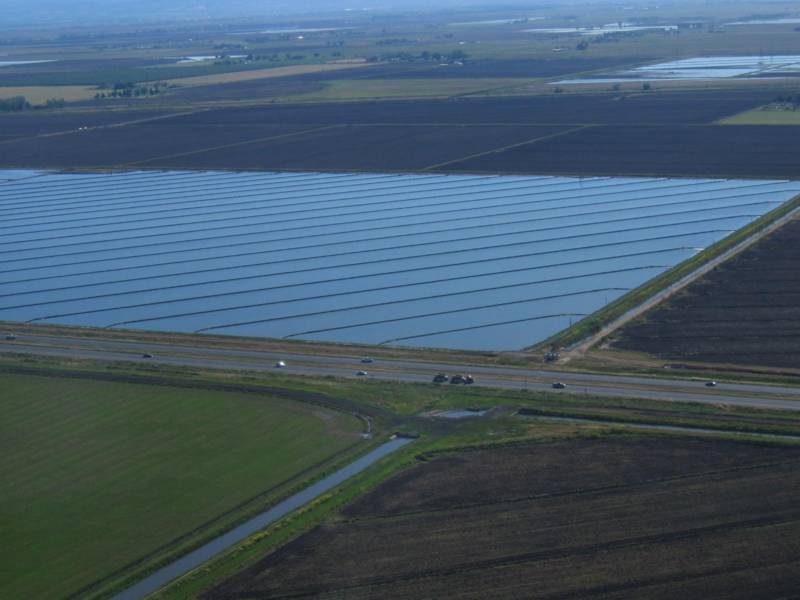
A rice field in the Sacramento Valley. According to NOAA, rice paddies are a source of methane emissions. Photo: Craig Miller

Despite all the focus on regulating CO2 as a way to combat global warming, a new NOAA study finds that to really put the brakes on climate change, the world can’t ignore the other greenhouse gases.

The study takes an inventory of non-carbon greenhouse gases including methane, which emits from landfills and farms, and nitrous oxide, which primarily comes from soil management and combustion. Per molecule, the study notes that these gases have a stronger muscle for trapping heat compared with carbon dioxide, but they don’t last as long in the atmosphere.

“This study looks at what would happen if society decided to go after the short-lived greenhouse gases, as well as CO2.” said Jim Butler, Director of Global Monitoring at NOAA and author of the study.

Short-lived is a relative term in atmospheric science. Butler said it takes decades for methane to fully run its course in the atmosphere, during which its potential to trap heat is much greater, even though its share in the atmosphere is pennies compared to that of CO2.

Carbon dioxide sticks around much longer, some of it for thousands of years, said Butler.

“CO2 is still the big dog in the fight,” he said. Continue reading Climate Change’s Unusual Suspects

Where Will Climate Change Affect Health the Most?

A new online tool maps where Americans’ health may be most vulnerable to climate change

The Natural Resources Defense Council (NRDC) released an interactive tool today that maps climate-related health risks across the country, including extreme heat, poor air quality, drought, flooding, and infectious diseases. The maps present a snapshot of current health vulnerabilities using recent data at the state and county levels.

“If we stay on our present course, we can expect these health vulnerabilities from climate change to accelerate” said NRDC Senior Scientist Kim Knowlton on a conference call with reporters. “We need to prepare for the worst in extreme events and the health vulnerabilities that will result.” Continue reading Where Will Climate Change Affect Health the Most?

NASA and Google Team Up for Zero-Emissions Flight Contest

Google’s made all kinds of headlines with its investments in clean energy recently: $280 million for a California residential solar company, $55 million for a wind project in Kern County, more than $10 million for geothermal R&D projects, and $168 million for a massive solar farm in the California desert, just to name a few.

A new move by the company seeks to address another kind of energy challenge: airplane fuel. The company has teamed up with NASA to sponsor the Green Flight Challenge, a competition to develop emissions-free aircraft.

The challenge?  Build a plane that can fly at least 100 miles per hour and achieve the equivalent energy efficiency of 200 miles per gallon of fuel on a 200-mile flight. Continue reading NASA and Google Team Up for Zero-Emissions Flight Contest

Rough Waters for Sea Level Rise Planning

Salt ponds in Redwood City where the new Saltworks development is proposed. Photo: Lauren Sommer.

What do Bay Area airports and some big Silicon Valley companies have in common? They sit right on the edge of San Francisco Bay, where sea level rise is expected to have a big impact by the end of the century.

That may seem far in the future, but state agencies are preparing for climate change now by writing new rules for construction along the bay’s shoreline. As you can imagine, developers and environmentalists aren’t exactly seeing eye to eye.

That’s evident on a patch of land at the edge of the bay in Redwood City. For more than a century, it’s been home to one thing: salt. Continue reading Rough Waters for Sea Level Rise Planning

Brown Praises Tougher Federal Fuel Standards

Fifteen years from now, the average car in the United States must get nearly 55 miles to the gallon,  according to new fuel-efficiency standards proposed Friday by the Obama Administration.  That’s a sharp increase from the current requirement that vehicles average 34.5 miles per gallon by 2016.

California officials, environmental groups, and automakers are praising the new rules, which would require  a fleet-wide average for cars and light trucks of 54.5 miles per gallon by 2025.

On a call with reporters today, Governor Jerry Brown called the new regulations, “probably the brightest light I’ve seen in Washington in many a month, if not years.” Continue reading Brown Praises Tougher Federal Fuel Standards

Support for Climate Policy High in California


Three-quarters of Californians believe climate change is a serious threat to the state’s economy. And a majority thinks we need to act now to reduce emissions, rather than wait until the economy improves. These are among the findings of a new survey by the Public Policy Institute of California

“Californians really believe that in our state there’s an opportunity to have a better environment and a better economy through addressing climate change,” concludes Mark Baldassare, who directed the survey and says Californians believe — by a two-to-one margin — that climate change policies, like requiring more renewable energy, will create jobs.

The survey also finds overwhelming bipartisan support for requirements mandating more fuel efficient cars (81%), “greener” buildings and appliances (74%), requiring utilities to increase renewable energy sources (82%), and for requiring industry to reduce emissions (82%). Continue reading Support for Climate Policy High in California

Yes, In Our Backyard

After more than a decade with a nuclear waste dump next door, the sky has not fallen on Carlsbad

Okay, so Yucca Mountain hasn’t worked out so well. In fact, the current betting is that the planned Nevada repository for nuclear waste will never open its doors. No matter. New Mexico beckons.

A transport container for nuclear waste, outside the Waste Isolation Pilot Plant in New Mexico.

Few Americans seem to realize that the world’s only functioning geologic repository for nuclear waste of any kind is already open for business in the southeastern corner of New Mexico. In fact, the Waste Isolation Pilot Plant is well beyond the “pilot” phase. It’s been taking in truckloads of the stuff since 1999, without mishap, it’s success no doubt a factor in its anonymity.

An average of 30 truckloads a week from all corners of the US, roll into what is essentially a glorified salt mine, licensed by the federal government to accept low-level “transuranic” waste from defense-related facilities only. Continue reading Yes, In Our Backyard