
Climate Study Predicts Deadly Heat for Older Californians

California’s heat waves are going to be getting longer and hotter in the coming decades, according to a new climate modeling study commissioned by the California Air Resources Board (CARB) and the EPA. The authors predict that heat-related deaths among California’s 65-and-over population could spike more than nine-fold by 2090. According to the study, currently more than 500 elderly people die annually from heat-related causes.

Using IPCC climate projections, the study models how climate change will impact California up and down the coast, including coastal cities like San Francisco and inland cities such as Riverside and Fresno.

Lead author Scott Sheridan, a geographer at Kent State University, says that the projected increase in heat-related deaths among those 65 and over are due in part to physiological reasons, but also to growing population size of this age group. By the end of the century, he says, the state’s population of people in this age bracket will increase from 4 million to 15.7 million. Sheridan says California communities that are already used to dealing with hotter temperatures, like the inland city of Fresno, may be better prepared to deal with the heat than relatively cooler coastal cities. Continue reading Climate Study Predicts Deadly Heat for Older Californians
Texas Drought: Two Compelling Portraits

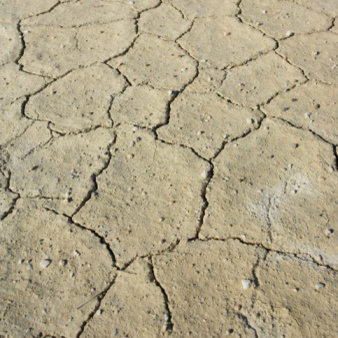
This summer, Texas is baking. The state is experiencing its worst drought in history, which is wreaking havoc on the cattle industry, and along with that, a way of life.  Rivers are drying up, and wildfires have burned through more than three million acres in the last five months, spelling disaster not just for ranchers, but also for the region’s natural ecosystems. Plants aren’t growing normally due to the lack of rain, and this is disrupting entire food chains.

Two new reports on NPR’s  Morning Edition paint vivid portraits of how Texas is weathering the severe effects of this historic drought.

Listen to Wade Goodwyn’s report “Drought Puts Texas Ranchers, and Cattle, At Risk” and John Burnett’s “Texas Drought Takes Toll on Wildlife” on NPR.org.

Making Renewable Energy from Farm Waste

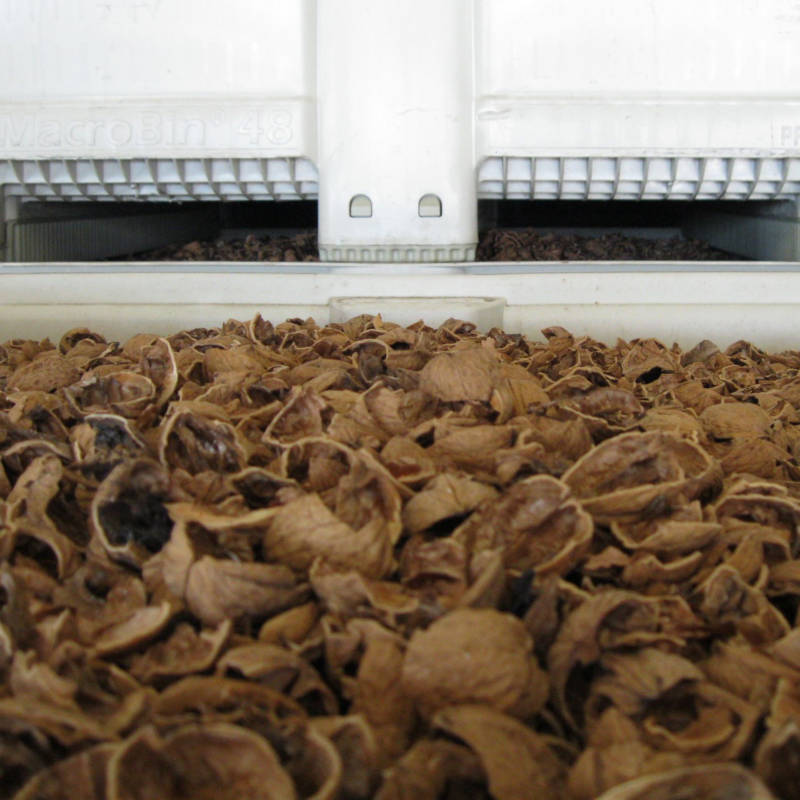
Cast off walnut shells await Lester’s biogasifier. Lester has more than enough for an entire year stored in his warehouse.

By Katrina Schwartz

California is just a few votes away from changing the rules to allow farmers to connect machines that create bioenergy to the electrical grid, a privilege that has thus far been reserved for farm-generated wind and solar energy.

Passage of the bill — SB 489 — would mean they could use the byproduct of their crops as fuel to create electricity.

Russ Lester, the owner of Dixon Ridge Farms, has been leading the charge to get the rules changed. He has gone to extraordinary lengths to shrink the carbon footprint of his organic walnut farm and processing plant in Yolo County. Brian Jenkins of the California Biomass Collaborative at UC Davis calls Lester the “guinea pig” of bioenergy. Continue reading Making Renewable Energy from Farm Waste

Activists to Air Board: Keep the Cap, Lose the Trade

Regulators vote to keep cap-and-trade plan on track

A parade of environmental justice proponents pleaded with officials to abandon cap-and-trade. A woman in the background holds a sign that says: "Keep the cap. Drop the Trade."

Members of the “environmental justice” movement lost a major round to air officials on Wednesday, when the latter voted to keep California’s nascent cap-and-trade plan on track.

The program is a key component of the state’s landmark strategy to cut greenhouse gas emissions to 1990 levels by 2020.

Activists sued to stop the program, claiming it does little to curb toxic emissions from industrial facilities and farming operations.

Environmental justice advocates packed the Sacramento hearing room of the Air Resources Board to fight the state’s plan to allow corporate trading of carbon pollution rights. Marie Harrison of San Francisco’s Bayview district put it succinctly:

“We are relying on you to do what you were put here for and that is to protect us.” Continue reading Activists to Air Board: Keep the Cap, Lose the Trade

Analysts Cut Carbon Price Forecast for California

Carbon may come cheaper than first predicted when California’s cap-and-trade program finally gets rolling.

Analysts at Thomson Reuters have dropped their projections of what polluters would pay for emissions permits from $40 to $36 per metric ton of CO2-equivalent gases.

Emilie Mazzacurati, who heads the firm’s North America Carbon Team, says pushing back the compliance date to 2013 and fears of a double-dip recession are behind the 10% trimming from its prior forecast.

Analysts say they expect greenhouse gas emissions to decrease in a sluggish economy. In 2009 and 2010, California’s emissions from power plants dipped by 12% due to a combination of milder temperatures, leading to less air conditioning demand, and a lull in manufacturing.

The trading price assumes that California goes it alone in cap & trade, although two Canadian provinces are expected to join the market eventually. Rules for the State’s cap & trade program have to be finalized by the end of October.

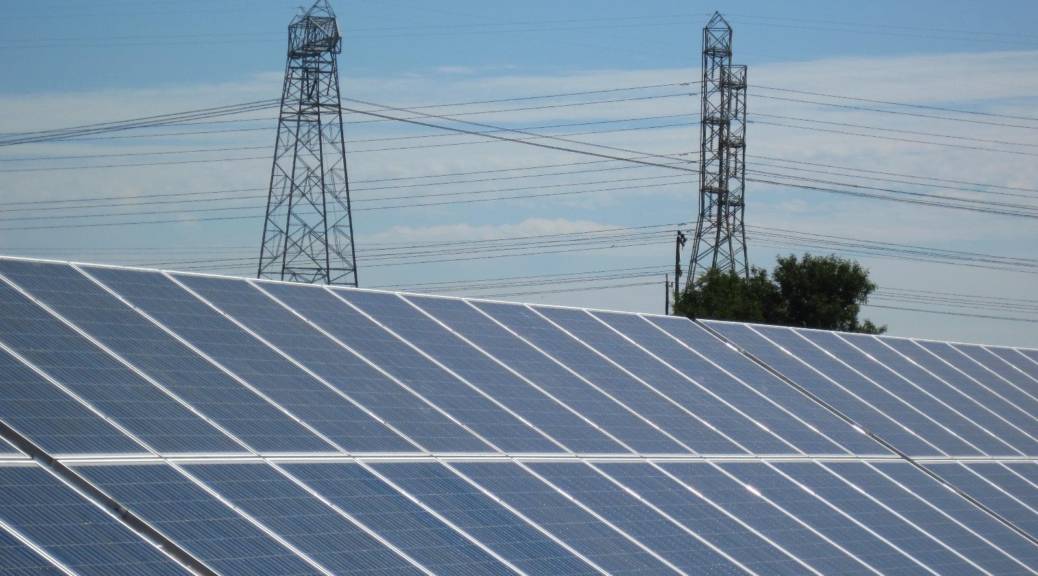
Cheap Panels Changing the Game for Big Solar

Developers are moving toward photovoltaic panels for utility-scale solar plants

Photovoltaic solar panels are becoming the new black for large-scale solar projects in California.

Developers of what’s billed as the world’s largest solar project, spanning 7,000 acres in Blythe, California, say the plant will get half of its 1,000 megawatts from photovoltaic panels. This recent announcement makes Solar Trust of America the fourth large-scale solar developer in California to switch from solar thermal to photovoltaic panels, which Solar Trust CEO Uwe Schmidt calls “the right technology at the right time.”

Brett Prior, Senior Analyst at Greentech Media, says that large-scale solar developers have preferred solar thermal but the plummeting cost of photovoltaic panels is changing that.

“Over the last couple of years PV [photovoltaic] panels have dropped significantly in price,” says Prior.

How’s 70% over the last two years for “significant?” Prior says that’s because China is emerging as a major player in panel manufacturing. “Just in the last five years, China has gone from sort of a minimal role to over 50% of all worldwide manufacturing of PV panels.” says Prior.

However, cost of technology isn’t the only factor affecting large-scale solar projects.

“One area where [solar thermal] players are making a lot of progress is incorporating thermal storage,” says Prior.

For some solar developers, thermal storage is a viable feature for solar thermal power and worth the extra cost. Since solar photovoltaic panels only work when the sun is shining, some solar-thermal plants incorporate a feature that uses molten salts, which can store heat throughout the day and be released to generate steam for turbines.

Prior says solar-thermal plants using storage features allow more flexibility to grid demand, which is consistent after the sun sets.

“They can store energy during the morning when it’s not really needed by the grid, deliver 100% output at one p.m. when it’s most needed, and continue to deliver 100% output at eight p.m. when electricity demand drops off,” says Prior.

Despite the emerging energy storage technology, three other large-scale solar plants (links to interactive map, below) have made the transition from solar thermal to solar photovoltaic panels for at least part of the project. Other developers like NextERA’s Beacon Solar, builder of a large project in Kern County, have suggested similar plans.

View Making the Swtich in a larger map

Making Wind Power More Efficient: Lessons from Fish

A possible game changer in wind technology with an unlikely inspiration

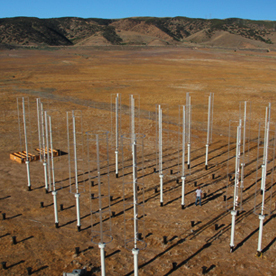
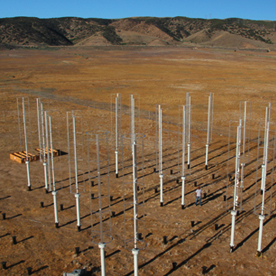
Vertical-axis wind turbines at a CalTech test site in northern Los Angeles County.

Most of the wind turbines you see driving throughout the deserts and hill country of California look pretty much the same: soaring towers hundreds of feet high with massive, pinwheel-like structures on top, blades churning (or not) as the wind blows (or not).

But there’s another design for generating wind power that, if new research proves correct, could eventually become a far more common sight as California ramps up its portfolio of renewable energy. Vertical axis wind turbines look a little like upside-down egg beaters. They tend to be smaller than traditional turbines, and therefore less powerful. But according to John Dabiri, head of Caltech’s Biological Propulsion Lab, they can be far more efficient at generating power than traditional turbines are when they’re used together in just the right way.

Dabiri said the problem with standard turbines is that the turbulence or “wake” from the turning of one turbine disrupts airflow and reduces the performance of surrounding turbines.  Locating them within 300 feet of each other can reduce performance by 20-50%, said Dabiri. That means standard wind farms need a lot of land. Continue reading Making Wind Power More Efficient: Lessons from Fish

A Close Look at a Melting Arctic

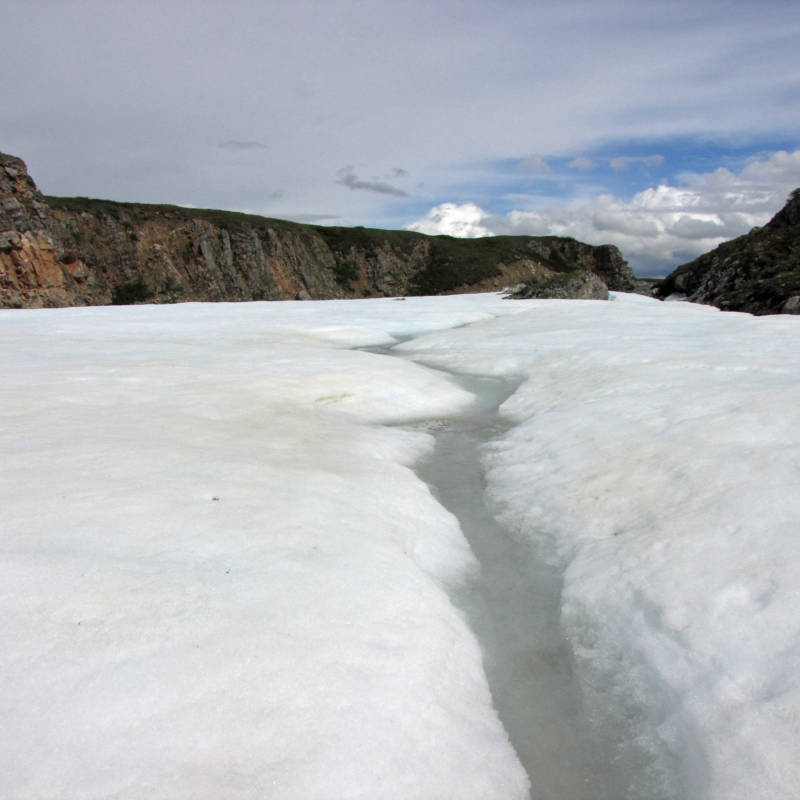
Ice melting in the Arctic, summer 2010

This week, NPR launches a six-part series on, “the changing Arctic,” taking a look at, “what may be the world’s next geopolitical battleground.” Part of that look includes considering the impact of rising temperatures and melting ice, such as freshly-opened strategic waterways and the rush to claim newly-accessible natural resources, like oil and gas deposits.

This focus comes just as MIT releases a new study arguing that the Intergovernmental Panel on Climate Change (IPCC) substantially underestimated the rate at which Arctic sea ice is melting.  The IPCC’s Fourth Assessment Report, released in 2007, forecasts an ice-free Arctic summer by the year 2100.  NPR has created an animated map, showing the Arctic’s loss of summer sea ice for the last 30 years. Continue reading A Close Look at a Melting Arctic

Climate Change Offers Up a New Wine List

Climate change could dramatically affect the microclimates that have made California wine country so successful. (Photo: Lauren Sommer)

You’ve probably heard of the wines that made Napa and Sonoma famous, like Cabernet Sauvignon or Chardonnay. But what about Negroamaro or Nero d’Avola?

They’re wine grapes that are well-adapted to hotter climates – the kind of conditions that California may be facing as the climate continues to warm. But for wineries that have staked their reputations on certain wines, adapting to climate change could be a tough sell.

Talk to any wine lover in California and they’ll tell you how lucky they are to live in such rich wine-producing region. Take the recent meeting of the San Francisco Wine Lovers Group at Toast wine bar in Oakland, where the favorites are California Pinot Noir, Russian River Zinfandel, and Napa Cabernet.

In fact, the type of grape – or varietal – is how most of us think about wine. Continue reading Climate Change Offers Up a New Wine List

Climate News Roundup: the Melting Arctic, Solar Power, and Peak Oil

Rooftop Solar Panels in Vacaville. Photo: Craig Miller

1. MIT study finds IPCC underestimated Arctic ice melt

A forthcoming study by the Massachusetts Institute of Technology predicts that Arctic ice sheets are melting four times quicker than was forecast in the latest IPCC report. According to the study, the Arctic may be ice-free several decades sooner than 2100, which was predicted by the Fourth Assessment Report. Study authors say the IPCC data did not include forces such as wind and ocean currents that cause ice to break up.

The Journal of Geophysical Research Oceans will publish the study next month, but you can read the full news release at MIT’s website. Continue reading Climate News Roundup: the Melting Arctic, Solar Power, and Peak Oil