Category Archives: Water

Potentially the biggest climate impact on life in California

Six Books that Shed Light on Our Water Future

Festive reading? Water fears are fueling a publishing frenzy
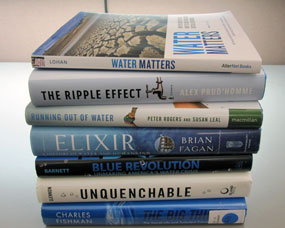
 ” credit=”Sarah Terry-Cobo/KQED

Blue is the new black. It’s not the latest fashion marketing campaign, but a realization about natural resources: water is the new oil.

It’s essential to life, it’s becoming ever more scarce and people are already fighting to control its access. In case you had any doubt, just check out Amazon.com’s cascade of books, reports and studies published this year. (When you sort out the ones on Fukushima, there are about 70.)

Here’s a brief look at just a few that have drifted through our offices of late. Continue reading Six Books that Shed Light on Our Water Future

Water Risks a Looming Iceberg for Global, California Business

Big California companies and investors see “significant near-term risk” at the spigot

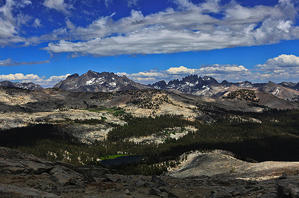
Lake Almanor in the northern Sierra, November, 2009

Companies around the world are beginning to recognize “a significant near-term risk” to their water supplies, according to the second annual Water Disclosure Global Report released today by the non-profit Carbon Disclosure Project (CDP) in London. But despite the obvious connection, water appears to lag climate as a priority in corporate boardrooms. The CDP report found that a whopping 94% of Global 500 companies that responded have board-level oversight of climate change. Water risks, not so much: just 57% of the respondents to the water disclosure report have board level oversight on those issues. Continue reading Water Risks a Looming Iceberg for Global, California Business

Where Water & Energy Converge: New Concern

US power plants are “stressing” freshwater supplies, finds science watchdog group

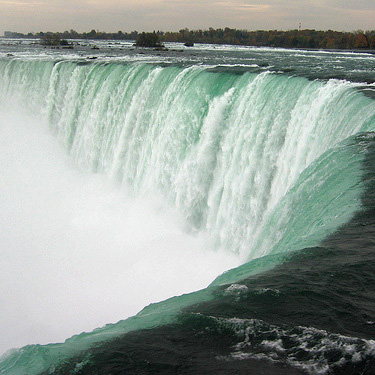
A UCS study says US power plants are sucking up three times the volume of water that goes over Niagara Falls on a daily basis.

For the second time in as many weeks, a major report has emerged warning of consequences from the demand that America’s electricity producers are placing on water supplies.

Today’s findings, from the Union of Concerned Scientists, conclude that water and power are on a collision course in the US, as nearly all major power plants slurp up water for cooling. As of 2008, the UCS study found that across the US, “thermocooled” power plants (which is most of them) took up somewhere between 60 billion and 170 billion gallons of water from rivers, lakes and aquifers. That’s three times the volume of water that pours over Niagara Falls. At least 2.8 billion and as much as 5.9 billion gallons of that was “consumed,” or not put back.

Power Plants are putting strain on watersheds throughout the nation, according to UCS researchers.

“It’s really water that keeps the lights on,” says Kristen Averyt, deputy director of the Western Water Assessment at the University of Colorado, and lead researcher for the report. Continue reading Where Water & Energy Converge: New Concern

How Saving Water Could Help Keep the Lights On

Water and electricity do mix

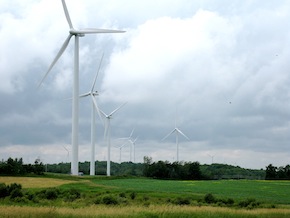
Wind is one of the few energy sources that requires virtually no water.

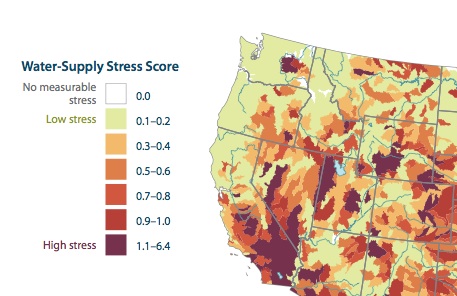
The Gordian knot of interdependence between water & power (not the political kind — that’s another story) has been getting a lot of attention lately as the “water-energy nexus.” A new report from Oakland’s Pacific Institute warns that as population grows and a changing climate further wrings water out of the West, “These trends will intensify water resource conflicts throughout the region.”

Oh, goody. Just what the West needs; more water conflicts. Continue reading How Saving Water Could Help Keep the Lights On

Govt. Study Affirms Delta Fears, Water Risks for California

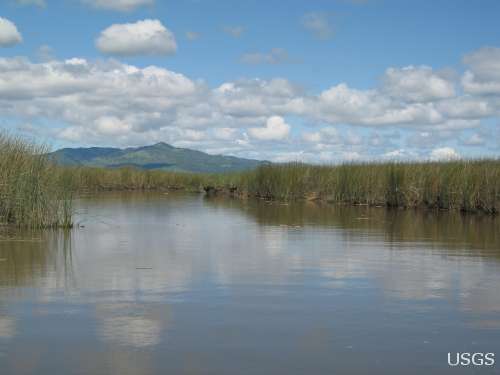
Suisun Slough in the lower Sacramento Delta. Twenty-five million Californians depend on the Delta for at least some of their water.

“Today’s extremes could become tomorrow’s norms”

That’s the upshot of an ambitious study by the US Geological Survey, which would appear to affirm some dire predictions for California’s most important water system.

The study, authored by nearly a dozen scientists, is billed as “the first integrated assessment of how the Bay-Delta system will respond to climate change.” It’s presented as a “flash forward” to what California’s Sacramento-SanJoaquin Delta could become by the end of this century. It ran a series of nine indicators through multiple models to project trends in temperature, precipitation, salinity, runoff and sea level rise.

The result: Pretty much what climate scientists have been saying; that we’ll see “potentially longer dry seasons,” a shrinking Sierra snow pack and “earlier snowmelt leaving less water for runoff in the summer.” Continue reading Govt. Study Affirms Delta Fears, Water Risks for California

Another Run for Flush-to-Faucet Water Recycling

L.A. tries some new technology to get past the “yuck factor”

Hear the companion radio feature to this post on The California Report.

Ten million dogs can't be wrong.

For the record: the route isn’t nearly as direct as the popular canine version. I tasted this water in Orange County and it’s fine — actually, a little “tasteless” since all the minerals had been removed from it as well. The engineering folks in both Orange County and LA’s Department of Water and Power will tell you that this recycled water has a “distilled” quality to it.

With the future of Southern California’s water supply in some doubt, municipal water managers are moving again toward the ultimate recycling strategy, which lingers in the public’s mind with such appetizing monikers as “toilet to tap.” The region went through a political tempest a decade ago as it tried to bring the East Valley Water Recycling Project on line, a system that did not use the final “advanced” stage of water treatment (being used today in the OC and proposed for the new effort by LADWP). Mired in engineering concerns and a public relations mess, the project was scuttled by newly-elected LA mayor James Hahn. Today, the technology has improved and now, the process has a successful SoCal track record for “potable re-use.” Continue reading Another Run for Flush-to-Faucet Water Recycling

A Source of CO2 That Might Surprise You

That babbling brook out back has been holding out on you

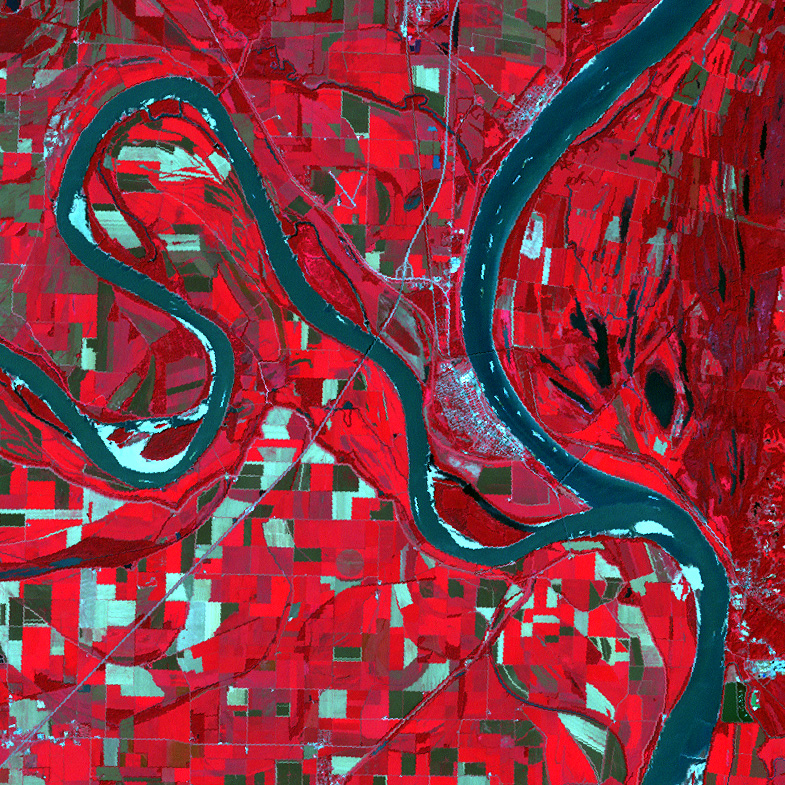
A satellite view of the Mississippi River shows a mosaic of riverbank land-use patterns.

Rivers and streams in the United States are releasing a lot more CO2 into the atmosphere than scientists previously thought, according to a new study by scientists at Yale. In fact, American waterways are discharging the gas into the atmosphere at a rate of 100 million metric tons per year, an amount equal to a car burning 40 billion gallons of gas, researchers say.

The study, conducted by David Butman and Peter Raymond of the Yale School of Forestry and Environmental Studies, looked at water chemistry data from more than 4,000 rivers and streams. The authors say identifying this significant source of CO2 could change the way scientists model the movement of carbon through ecosystems and the atmosphere.

“These rivers breathe a lot of carbon,” said Butman in a press release from the National Science Foundation, one of the study’s funders. “They are a source of carbon dioxide, just like we breathe out carbon dioxide and like smokestacks emit carbon dioxide.”

The study is published in the current issue of Nature Geoscience.

Drought Gone, Less Support for California’s Water Bond?

By Lance Williams, California Watch

Post Peak Pass is a granite notch on the remote southern boundary of Yosemite National Park, altitude 10,700 feet.

On Saturday, its north face was partly covered with a 100-yard-long patch of crusted snow – a reminder of just how emphatically California’s three-year drought was broken by the wild winter of 2010-11.

Although California’s high peaks still are capped with last year’s snowpack and its reservoirs are brimming with runoff [PDF], voters will be asked next year to approve an $11.1 billion state water bond measure that was crafted in response to the crippling drought.

But with the drought a fading memory and the state’s finances in disarray, many believe the pricey package of dam-building and water conservation infrastructure has an even slimmer chance of passage today than in 2010, when then-Gov. Arnold Schwarzenegger yanked it off the ballot and slated it instead for November 2012. Continue reading Drought Gone, Less Support for California’s Water Bond?

Taking the Pulse of the Mountains

Federal grant enables major new network of Sierra water sensors

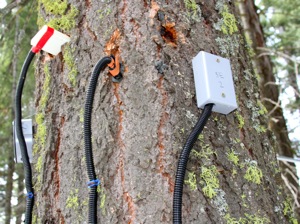
A tree at the Fresno County pilot project adorned with sensors

Researchers at UC Merced are set to open a whole new window on the Sierra Nevada. Using two million dollars from the National Science Foundation, hydrologist Roger Bales and his colleagues can now expand on a pilot project to measure the mountains’ “vital signs.”

Bales says beginning next summer, he, UC Berkeley’s Steven Glaser and their team will start installing a network of 20-to-30 instrument clusters throughout the American River watershed, casting a watchful eye over about 2,000 square kilometers that typically gets snow cover. The instruments record factors that affect the mountain’s hydrology, such as temperature, humidity, soil moisture, stream flow and even how much solar radiation penetrates the tree canopy.

Bales says the pilot phase has taught them how to put together a network of wireless sensors that will endure the extreme alpine conditions and still remain reliable (see Sasha Khokha’s post and slide show from March). Continue reading Taking the Pulse of the Mountains

A Sneak Peek at “World’s Biggest” Solar Project

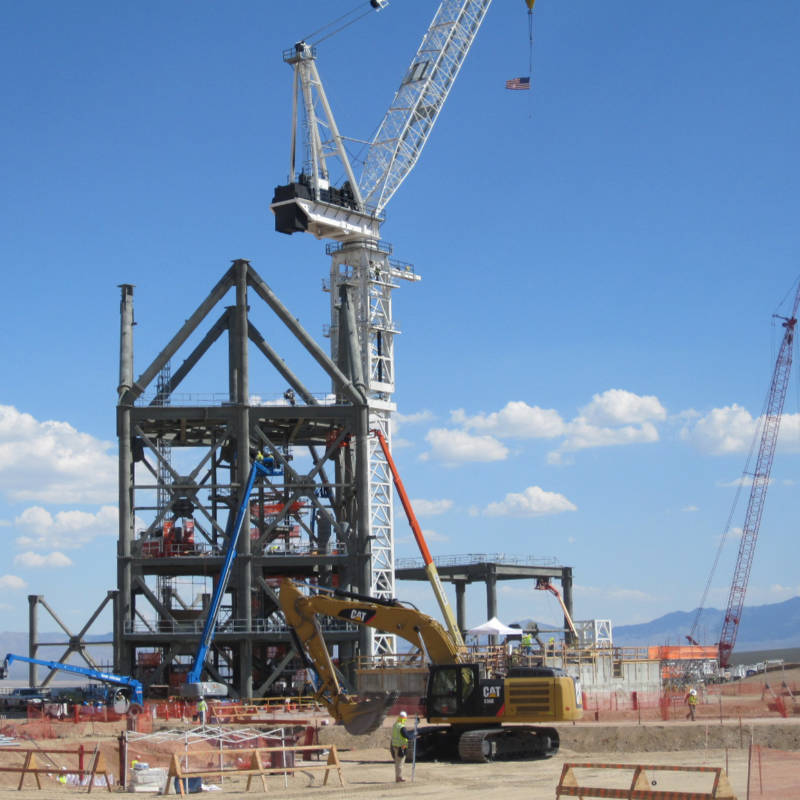
Construction of one of three planned solar thermal towers at the Ivanpah Solar Electric Generating System, Ivanpah Dry Lake, CA

Construction of the Ivanpah site is reportedly on-schedule for completion in 2013

The National Clean Energy Summit 4.0 opens in Las Vegas on Tuesday, bringing policy makers and industry leaders from around the country together to “chart the course for the future of energy in America.” It’s also attracting lots of media, which is why on Monday Oakland-based BrightSource Energy opened the gates to the construction site of its 3,500 acre Ivanpah Solar Complex, which lies just over the California border, 45 minutes southwest of the Las Vegas Strip.

About 15 reporters donned hard hats and safety goggles in 100-plus temperatures to tour the active construction site in the Mojave Desert, along with officials from BrightSource, San Francisco-based construction company Bechtel Corp., and NRG Energy, which, along with Google, is the project’s main investor. Continue reading A Sneak Peek at “World’s Biggest” Solar Project