Category Archives: Water

Potentially the biggest climate impact on life in California

Texas Drought: Two Compelling Portraits

This summer, Texas is baking. The state is experiencing its worst drought in history, which is wreaking havoc on the cattle industry, and along with that, a way of life.  Rivers are drying up, and wildfires have burned through more than three million acres in the last five months, spelling disaster not just for ranchers, but also for the region’s natural ecosystems. Plants aren’t growing normally due to the lack of rain, and this is disrupting entire food chains.

Two new reports on NPR’s  Morning Edition paint vivid portraits of how Texas is weathering the severe effects of this historic drought.

Listen to Wade Goodwyn’s report “Drought Puts Texas Ranchers, and Cattle, At Risk” and John Burnett’s “Texas Drought Takes Toll on Wildlife” on NPR.org.
California Cities Confront Water Challenges

Scientists and planners expect the Bay Area to face a host of water-related threats in the coming decades due to climate change, including flooding due to rising seas and summer water shortages due to warmer temperatures and a shrinking Sierra snowpack.

A new analysis released Tuesday from the non-profit Natural Resources Defense Council catalogs these threats, for San Francisco, and for 11 other American cities, including Los Angeles. The study also looks at how prepared the cities are to adapt to these climate challenges. It finds, in general, that San Francisco is leading the way when it comes to being prepared. Continue reading California Cities Confront Water Challenges

Two-Year Drop in California Carbon Emissions

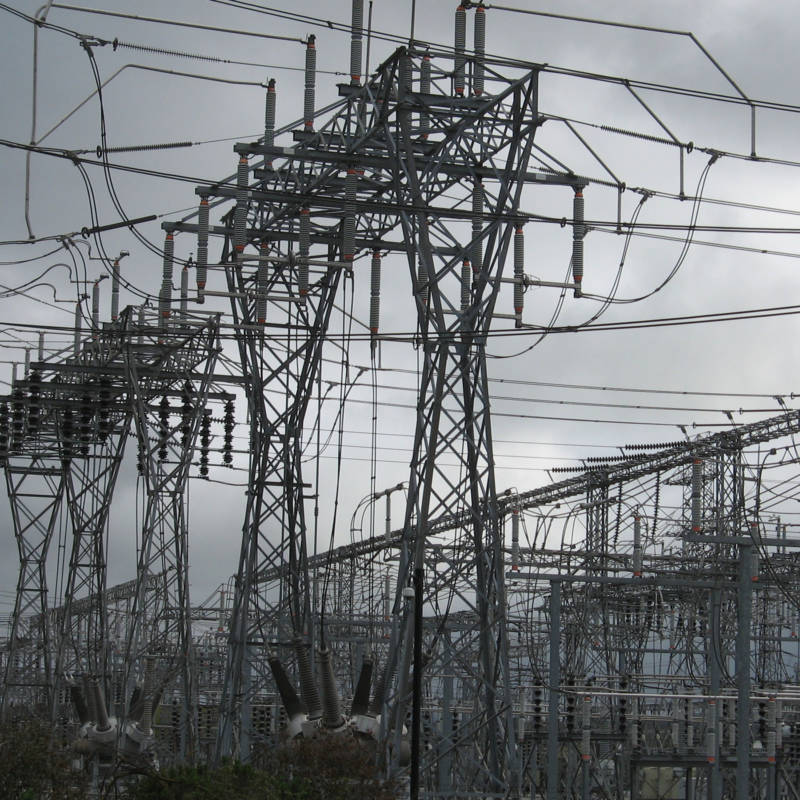
Power Substation in San Jose, CA (Photo: Craig Miller)

If you’re ready for some good news on the climate front: California’s carbon emissions from power generation dropped in 2009 and 2010.

That’s according to a new analysis from Thomson Reuters’ Point Carbon that looked at power generated here in California, as well as electricity imported from out of state.

According to the report (available by subscription only), emissions were down 12% over the study period. Part of the drop, not surprisingly, was due the global recession and the state’s slowed economy in 2009. But the study found that even when the economy started growing again, emissions continued to decline.

Sound mysterious? Not really, according to study co-author Ashley Lawson. Continue reading Two-Year Drop in California Carbon Emissions

Water Efficiency May Ease Colorado River Woes

Study shows most western cities aren’t wasting as much water

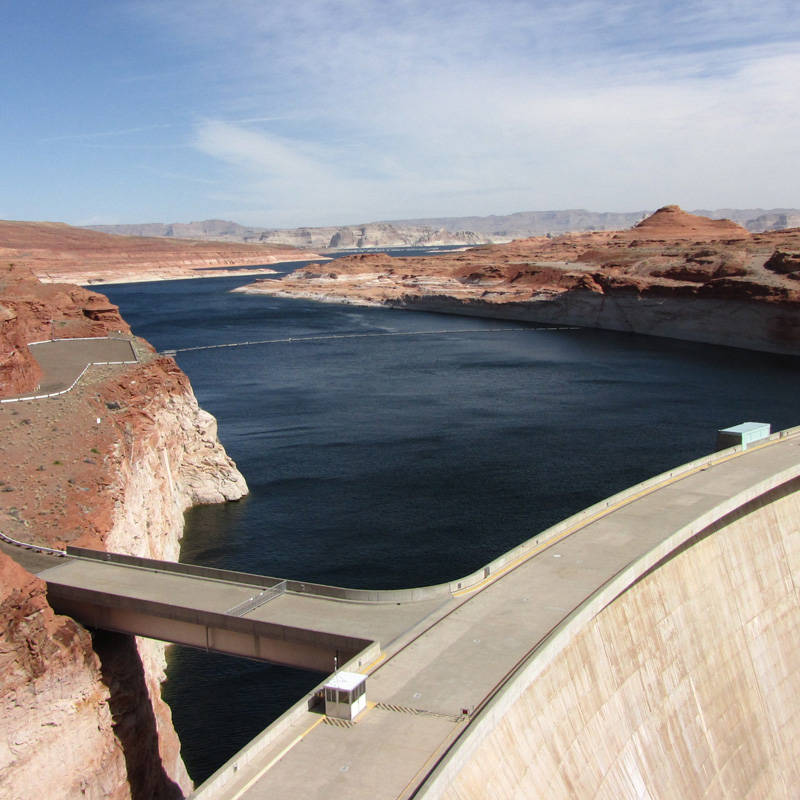
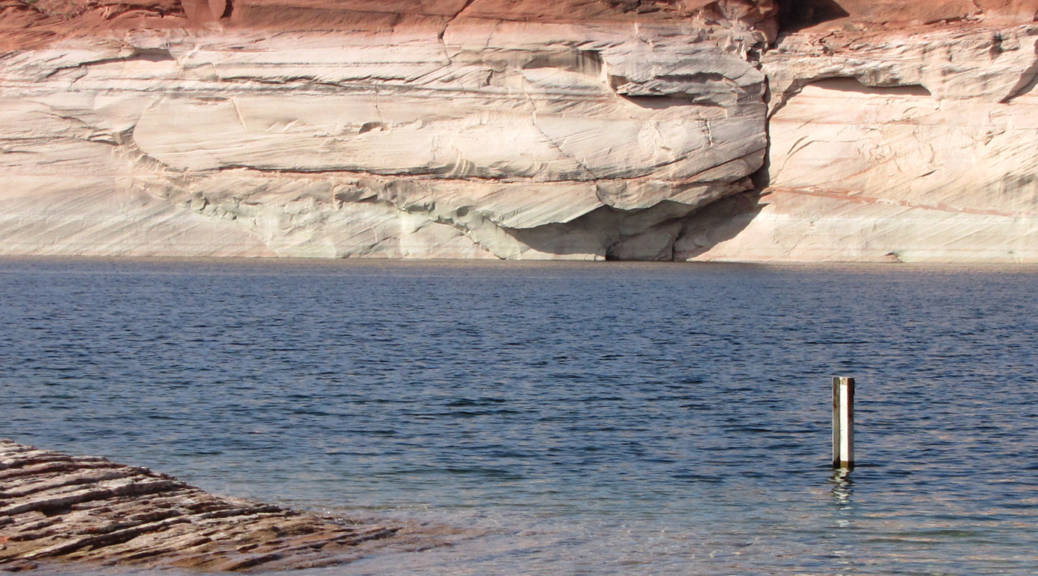
Lake Powell, the Colorado River’s second-largest reservoir, in April 2010 (Photo: Gretchen Weber)

There’s some good news for the 35 million people in the Western United States who rely on the Colorado River for their water, says a new study from the Oakland-based Pacific Institute.

No, the supply isn’t increasing.  And yes, the population is still growing.

But according to the paper, entitled Municipal Deliveries of Colorado River Basin Water, more efficient water use by water agencies across the West is making the supply/demand gap a lot less painful than it could be.

“Although population growth has increased very quickly, the amount of water delivered has not kept pace,” said study author Michael Cohen. “That shows that people have been getting much more efficient with their use of water.” Continue reading Water Efficiency May Ease Colorado River Woes

Deconstructing the Drought

A new report disputes some alleged impacts to the Central Valley from water restrictions, reveals others

(Photo: Craig Miller)

Blame the housing recession, not water restrictions. That’s the conclusion of a new report from the Oakland-based Pacific Institute, which scrutinizes the connection between cutbacks in farm water deliveries and Central Valley job losses during California’s recent three-year drought.

Impacts of the 2007-2009 California Drought: What Really Happened? is described by its authors as a “nine-month assessment of new data from California’s agricultural, energy, and environmental sectors.”

Its main finding, that “Farm job losses were largely unrelated to water constraints,” appears to be a direct refutation of claims by Congressman Devin Nunes (R-Fresno), and others, that regulatory and court-ordered restrictions on water deliveries have caused “massive unemployment” in the San Joaquin Valley. Continue reading Deconstructing the Drought

A Water Meter Mandate for California Farms

Regulators seek better tracking of farm water use

Flooded rice fields in the Sacramento Valley. (Photo: Craig Miller)

Most urban dwellers get a water bill each month that’s based on how much water they use. But on some California farms, that’s not the case.

“In many parts of the state, the amount of water farmers use is not measured,” says Susan Sims of the California Water Commission.

Instead, farmers are charged a flat rate for water in some districts. Sims says that makes it difficult for farmers to conserve water. “It’s very hard, even when you want to conserve. I think the first step in saving water is knowing what you’re using.”

Toward that end, the Water Commission votes today on rules that would require water districts to meter the volume of water farmers use — and to charge them accordingly. Sims says many water districts, including some in the San Joaquin Valley, already do this. Others in Northern California don’t. Continue reading A Water Meter Mandate for California Farms

The Cruel Paradox of Water Conservation

The more we conserve, the more it costs  :-/

The cost of water could soon rise for more than a million people in East Bay communities of the San Francisco Bay Area.

Tonight the East Bay Municipal Utility District (EBMUD) will consider a six-percent price hike for this fiscal year.

(UPDATE: District directors approved the increase unanimously)

Water districts around the state are also increasing rates as customers conserve water.

“It’s a horrible conundrum,” admits Herb Niederberger, a division chief at the Sacramento County Department of Water Resources. “The more you conserve, the better it is for the utility, but at the same time, less revenue is generated and in order to cover costs you have to raise rates.”

The Sacramento agency and EBMUD are completing a regional water-supply project.
EBMUD is also contemplating another six-percent hike next fiscal year.

An Assault on Hetch Hetchy Dam from the Flank

Activists take a new tack in attempt to restore a scenic valley in Yosemite

After years of frustration with the frontal assault, activists have shifted to a flanking maneuver to restore Yosemite’s Hetch Hetchy Valley. The group Restore Hetch Hetchy (RHH) says it will challenge the re-licensing of Don Pedro hydroelectric dam, downstream from Hetch Hetchy.

The flooded Hetch Hetchy Valley stores water from the Tuolemne River, for San Francisco. (Photo: San Francisco PUC)

Often compared to Yosemite Valley in grandeur, Hetch Hetchy Valley has been flooded since the construction of O’Shaughnessy Dam in the 1920’s. Water from the reservoir serves the City and County of San Francisco but activists have long argued that it’s not needed, and that the Valley’s original attributes are more valuable. Continue reading An Assault on Hetch Hetchy Dam from the Flank

Forget this Winter: Western Snowpack Shrinking

By Alyson Kenward

A new study finds large losses of springtime snow cover in the West in recent years, raising concerns about water supplies.

Spring snowpack in the West is an essential water resource, particularly in Southwestern states that are prone to summer drought, like California, Nevada, Arizona and New Mexico. (Credit: Wolfgang Staudt on Flickr)

This spring, from the Pacific Northwest and Sierra Nevada, to the Northern Rockies, western mountain ranges were more than just snow-capped – they were buried in the white stuff. In fact, many locations still have more spring snowpack than has been seen in decades.

Head south across the 40th parallel, however, and things are dramatically different. While there is still above average snow throughout the Sierra, a relatively snow-less winter and spring has left much of the Southwest in a drought that has fostered record wildfires. Already local officials are worried there won’t be enough water to get through the summer months ahead. Continue reading Forget this Winter: Western Snowpack Shrinking

Running Drier: The Colorado 50 Years Out

A new federal study says the Colorado River may carry 9% less water by 2060.

The Colorado River is a critical source of water for more than 30 million people throughout the western United States. California alone gets more than a trillion gallons of water each year from the Colorado. But over the years, recurring droughts and the growing demands of urban populations have stressed the river system, which the Bureau of Reclamation now characterizes as “over-allocated.”  In efforts to plan for the region’s future water needs, the agency, in collaboration with Western states, has undertaken a two-year study to look at what lies ahead for the river and the cities, farms, and families that rely on it.

On Monday, the agency released the first interim report of the “Colorado River Basin Water Supply & Demand Study,” which projects changes in the river’s flow under four different scenarios. A model that incorporates predicted impacts of climate change shows a nine percent reduction in the Colorado’s flow within 50 years.  The study also projects more frequent and more severe droughts throughout the system. Continue reading Running Drier: The Colorado 50 Years Out