Category Archives: Water

Potentially the biggest climate impact on life in California

New Battlefront Over California Water

Garamendi warns of a “serious water war” if Nunes bill passes

Lawmakers traded punches on Capitol Hill this morning over the future of California’s water.

(Photo: University of California)

In a contentious hearing before the House Subcommittee on Water & Power, Delta Democrat John Garamendi warned that a Republican-sponsored bill to ensure farm water in the Central Valley would start a “serious water war.”

“Are you guys kidding?”, Garamendi asked his congressional colleagues. “You really want to start a serious water war in California? And you think that’s going to solve your problems and get you more water? This is really, really terrible public policy.”

The proposed policy at issue is the San Joaquin Valley Water Reliability Act (HR 1837), sponsored by Republican Devin Nunes of Fresno.

Environmentalists say the bill (HR 1837) would gut efforts to restore the Sacramento and San Joaquin Rivers. Nunes says it’s essential to save farms and jobs. Continue reading New Battlefront Over California Water
Planting Seeds for a New CA Nuclear Plant

Could California’s next nuke be on the horizon?

Backers of a new Fresno “clean energy park” aim to use nuclear power to clean up salty irrigation water in California’s Central Valley.

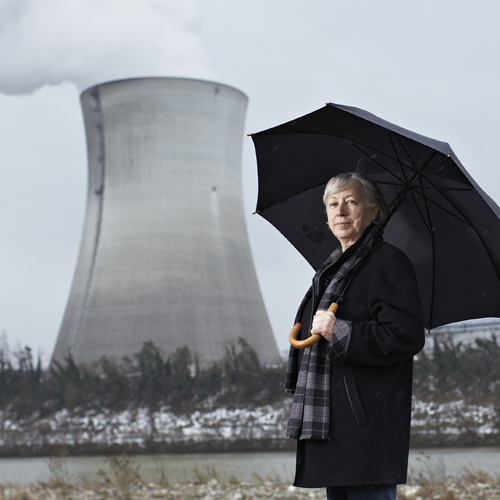
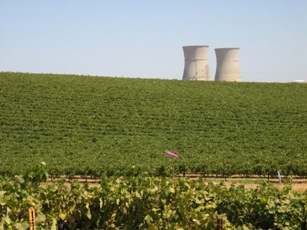
The twin cooling towers of the decommissioned Rancho Seco nuclear power plant. Could the Central Valley see another nuke constructed near Fresno? (Photo: Craig Miller)

They see the state’s 35-year-old moratorium on expansion of nuclear power as a mere speed bump in the road. They wouldn’t be the first. There have been several attempts to challenge the ban over the years – in the courts, in the legislature, and even a couple false starts through the initiative process.

But the idea of simply drawing up plans for a plant and gearing up to build it – without getting permission from the state – that’s a new approach, which I explain in my Wednesday radio feature for The California Report.

Fresno Nuclear CEO John Hutson told me he thinks it would be much more profitable to sell precious clean water to farmers than to generate electricity for the grid. Continue reading Planting Seeds for a New CA Nuclear Plant

California’s Ingenious Flood Relief Valve

Opening California’s “spillway” is not the sort of thing that brings out CNN

This week officials made the uncomfortable decision to place thousands of homes and businesses in harm’s way, in order to avoid an even bigger catastrophe on the lower Mississippi River.

But as the opening of the Morganza Spillway was the subject of national media attention, California’s version had already been deployed a month earlier — and hardly anyone noticed.

The Yolo Bypass may be California’s most ingenious contrivance for flood protection and yet, many people drive over it every day without knowing its purpose.

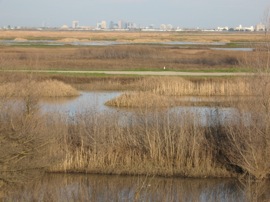
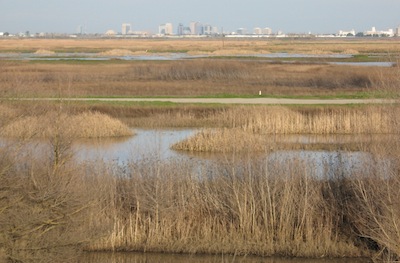
The Yolo Bypass on March 1 of this year. The Sacramento skyline rises in the distance. (Photo: Craig Miller)

The bypass is a 59,000-acre funnel designed to catch the overflow of the Sacramento River and divert it harmlessly downstream, dumping it back into the main channel near Rio Vista. Generally speaking, it works like a charm. And it does so without fanfare because there are nobody lives there. That’s the idea. Continue reading California’s Ingenious Flood Relief Valve

Sierra Snow Survey: Lots of Water but No Records

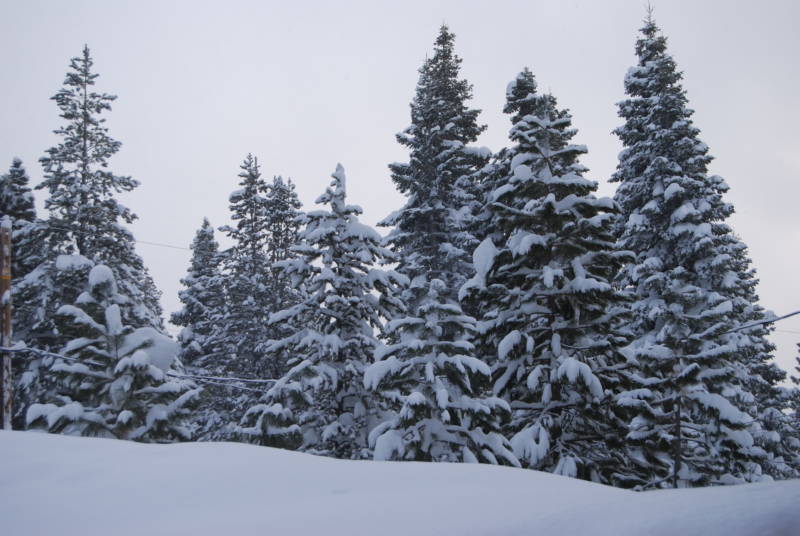
Snowy trees in Truckee, CA, in February 2011. (Photo: Lauren Sommer)

Surveyors from the Department of Water Resources strapped on their skis today and headed out to measure the status of the Sierra snowpack for the fifth and final time this season.  As expected, they reported good news for the state’s water supply.

It’s been a big year for the snowpack – the biggest since 1995 – and the snow’s water content is about 180% of what’s “normal” for early May. The spring melt has already begun, so there’s less snow than there was month ago.  Historically, early April is when the snowpack is at its peak, as it was this year.  And yet, the current water content of the snowpack is still 50% higher than the historic average for April first.

All this water has prompted officials to project water deliveries of 80% of requests from farms and towns served by the State Water Project this year.  That’s the highest percentage since 2006. Last year just 50% was delivered.

And yet when I asked DWR snow survey master Frank Gehrke if this year’s snowpack was record breaking, he chuckled a little and said, “Not even close.” Continue reading Sierra Snow Survey: Lots of Water but No Records

News Flash (Not): Western Water in Peril

Yes, it rained and snowed a lot this winter and left us with an epic Sierra snowpack. Now forget all that. The long-range outlook: still dry.

A new report from the federal Bureau of Reclamation may offer the most comprehensive forecast yet for western water in the 21st century — but few surprises.

The report, Managing Water in the West, breaks down the outlook for eight key river systems, including three vital to California. The overall message is predictably sobering.

The risks that California faces from climate change are pretty well known, says Peter Gleick of the Oakland-based Pacific Institute. He says the 200-plus-page report “doesn’t offer any new surprises about those risks — but it does reaffirm those risks in an increasingly compelling way.”

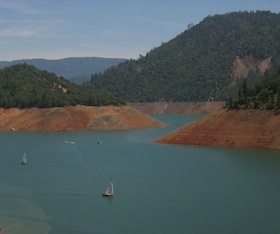
Lake Oroville reservoir during California's recent three-year drought. (Photo: Craig Miller)

Some media coverage of the report seems to conclude that California gets off lightly in the study. But the section of the report covering the critical Sacramento and San Joaquin basins seems sobering at best. While it does predict a small (0.6%) increase in annual precipitation on the Sacramento, the report also foresees a drop in San Joaquin precipitation of somewhere between 4.2% and 5.3% by 2050. Continue reading News Flash (Not): Western Water in Peril

Time Running Out for Delta Fix

Time is running out to fix Northern California’s beleaguered Sacramento-San Joaquin Delta. That seems to be the consensus from the latest major meeting of officials and stakeholders.

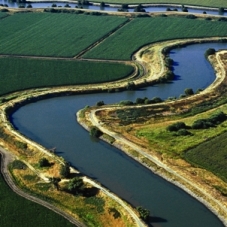
Part of the labyrinth of waterways in the Sacramento Delta. (Image: CA Dept. of Water Resources)

Today’s meeting in Sacramento was a rarity; both state and federal officials sat down to explain the complicated Delta planning process in a public setting.

David Hayes, Deputy Secretary of the federal Department of the Interior, underscored the urgency, telling the gathering that “We are one seismic event away” from a potential three-year interruption in water supplies to Southern California.

“Even if you don’t have a seismic event, the effects of climate change, a major flooding event, threaten the Delta because it’s built on quicksand  — basically levees that will not hold against a major event,” said Hayes.

 The Delta provides water for 25 million Californians. Hayes said his agency and the White House are “in full lockstep” with Governor Jerry Brown’s process for dialing in a Delta strategy. The state is pursuing “co-equal goals” of satisfying California’s water demands while protecting Delta eco-systems, which several speakers said are “crashing.” Continue reading Time Running Out for Delta Fix

Goldman Prize Winners Reflect Energy, Water Concerns

The 2011 Goldman Environmental Prize winners were honored in San Francisco last night. In a ceremony at the Opera House, they were each awarded $150,000 for their grassroots work addressing pressing environmental issues around the world.

Environmental degradation from energy production is a common theme in the work of at least half the winners: Dmitry Lisitsyn, who’s worked to protect the ecosystems of Sakhalin Island from rapid destruction caused by companies exploiting the region’s petroleum reserves; Hilton Kelley, for environmental justice work on the Texas Gulf Coast, a region plagued with air-quality-related health problems due to emissions from the major refineries and petrochemical plants in the area; and Ursula Sladek, who created Germany’s first cooperatively-owned renewable power company. Continue reading Goldman Prize Winners Reflect Energy, Water Concerns

Snow Surveys of the Future

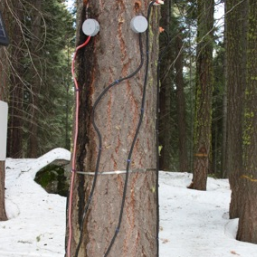
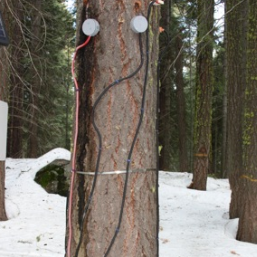
A white fir outfitted with snow sensors in the Southern Sierra Critical Zone Observatory. (Photo: Sasha Khokha)

Trying to interview guys who wear backcountry skis to work can be tough…especially when trudging behind on snowshoes with a pack full of recording equipment. But my visit to the Southern Sierra Critical Zone Observatory was worth the slog.

It’s a patch of forest at about 6,000 feet near Shaver Lake in the Southern Sierra, in what’s known as the rain-snow transition zone. The snowpack at this elevation is likely to be the first to reflect climate change as temperatures warm and snow turns to rain. Scientists at UC Merced’s Sierra Nevada Research Institute, in conjunction with UC Berkeley, have developed new, high tech sensors to intensively monitor snow melt and runoff here. Continue reading Snow Surveys of the Future

CA Drought Lifted, Snowpack at 15-Year High

Governor lifts drought declarations from 2008, 2009

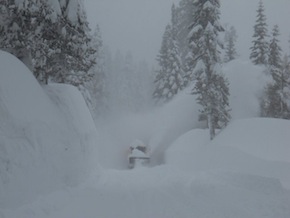
Snow removal near Mt. Lassen. (Photo: KNVN Chico-Redding).

Frank Gehrke summed it up: “Well, it has been a really crazy winter,” said the state’s chief surveyor of the Sierra Nevada snowpack.

Statewide averages from the season’s fourth survey Wednesday, shows water content at 165% of normal for April 1.

The latest survey shows statewide, water content of the Sierra snowpack is 165% of normal. Gehrke says it’s been about 15 years since there’s been this much snow on the ground at this point in the season. Earlier this month, some locations were reporting total seasonal accumulations equivalent to the height of a six-story building. Continue reading CA Drought Lifted, Snowpack at 15-Year High

Federal Budget Pressure on Rivers, Wetlands

Witnesses tell an Assembly committee that looming federal cuts would leave state programs adrift

The Yolo Bypass, with Sacramento in the background. (Photo: Craig Miller)

An array of state programs to protect and restore rivers and wetlands is endangered by current plans to cut funding on Capitol Hill. That’s what a string of witnesses told the Assembly Water, Parks & Wildlife Committee in Sacramento this week.

At risk are programs that have leveraged federal money to restore hundreds of thousands of acres of wetlands and wildlife habitat in California, according to speakers for environmental and outdoor groups.

For a nearby example of how federal funds have been used, waterfowl advocate Bill Gaines pointed to the Yolo Bypass, almost within sight of the state Capitol. Gaines, president of the California Outdoor Heritage Alliance, said that over ten years, $5 million in federal money has fueled restoration of 4,300 acres of wildlife habitat. Continue reading Federal Budget Pressure on Rivers, Wetlands