Category Archives: Power

Progress and pitfalls in California’s clean energy quest

Analysis Highlights Tricky Business of Carbon Accounting

San Francisco’s carbon footprint as political football

 ” credit=”Craig Miller / KQED

As business and public entities face more pressure to lower their carbon footprints, an entire industry has sprouted to quantify and verify their progress. The whole enterprise can be tricky business, as San Francisco officials are finding out.

Props to The Bay Citizen for looking beyond the claims and doing its own analysis. As John Upton writes in Citizen:

“…some energy experts and environmentalists have raised questions about the city’s calculations. Although San Francisco has taken significant steps to shrink its carbon footprint, these critics said, the numbers are misleading, and the end result is not nearly as green as the city claims.”

Specifically, TBC looked into the claim that the City and County of San Francisco has cut its carbon emissions by 12% since 1990, driven mostly by the shutdown of two gas-fired power plants in the city. The article features a graph that shows its own tracking of greenhouse gas emissions clocking in well below the City’s estimates.

San Francisco was given high ratings recently in at least one independent study, for its “political leadership and commitment” to climate planning.
Where Water & Energy Converge: New Concern

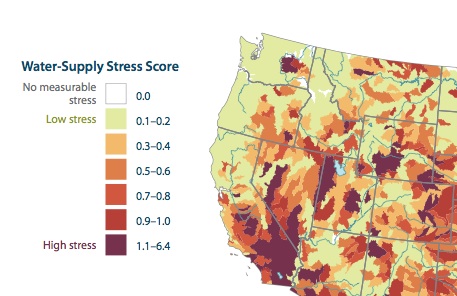
US power plants are “stressing” freshwater supplies, finds science watchdog group

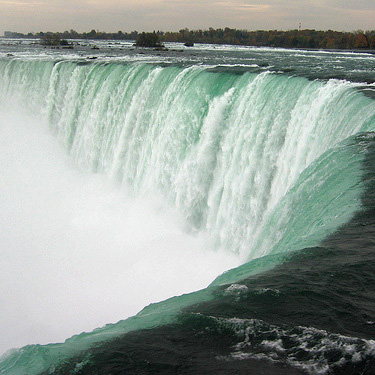
A UCS study says US power plants are sucking up three times the volume of water that goes over Niagara Falls on a daily basis.

For the second time in as many weeks, a major report has emerged warning of consequences from the demand that America’s electricity producers are placing on water supplies.

Today’s findings, from the Union of Concerned Scientists, conclude that water and power are on a collision course in the US, as nearly all major power plants slurp up water for cooling. As of 2008, the UCS study found that across the US, “thermocooled” power plants (which is most of them) took up somewhere between 60 billion and 170 billion gallons of water from rivers, lakes and aquifers. That’s three times the volume of water that pours over Niagara Falls. At least 2.8 billion and as much as 5.9 billion gallons of that was “consumed,” or not put back.

Power Plants are putting strain on watersheds throughout the nation, according to UCS researchers.

“It’s really water that keeps the lights on,” says Kristen Averyt, deputy director of the Western Water Assessment at the University of Colorado, and lead researcher for the report. Continue reading Where Water & Energy Converge: New Concern

California Hits Solar Energy Milestone

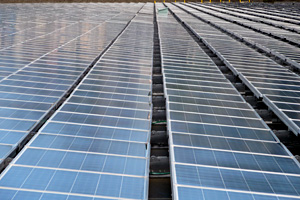
Homeowners and businesses have now installed one gigawatt of roof-top solar panels, according to a report released this week by the advocacy group Environment California.

A gigawatt – or a thousand megawatts – is enough energy for about 600,000 homes. Only five nations — let alone states — including Germany and Japan, have reached that level. “Even in a bad economy, the solar industry has been growing exponentially by 40 percent per year,” says Michelle Kinman of Environment California. Continue reading California Hits Solar Energy Milestone

How Saving Water Could Help Keep the Lights On

Water and electricity do mix

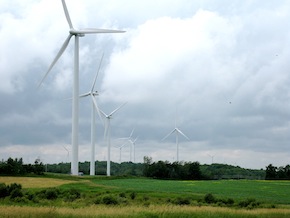
Wind is one of the few energy sources that requires virtually no water.

The Gordian knot of interdependence between water & power (not the political kind — that’s another story) has been getting a lot of attention lately as the “water-energy nexus.” A new report from Oakland’s Pacific Institute warns that as population grows and a changing climate further wrings water out of the West, “These trends will intensify water resource conflicts throughout the region.”

Oh, goody. Just what the West needs; more water conflicts. Continue reading How Saving Water Could Help Keep the Lights On

California’s Dirty Secret: The Five Coal Plants Supplying Our Electricity

The “invisible” fossil fuel that may be powering your lifestyle

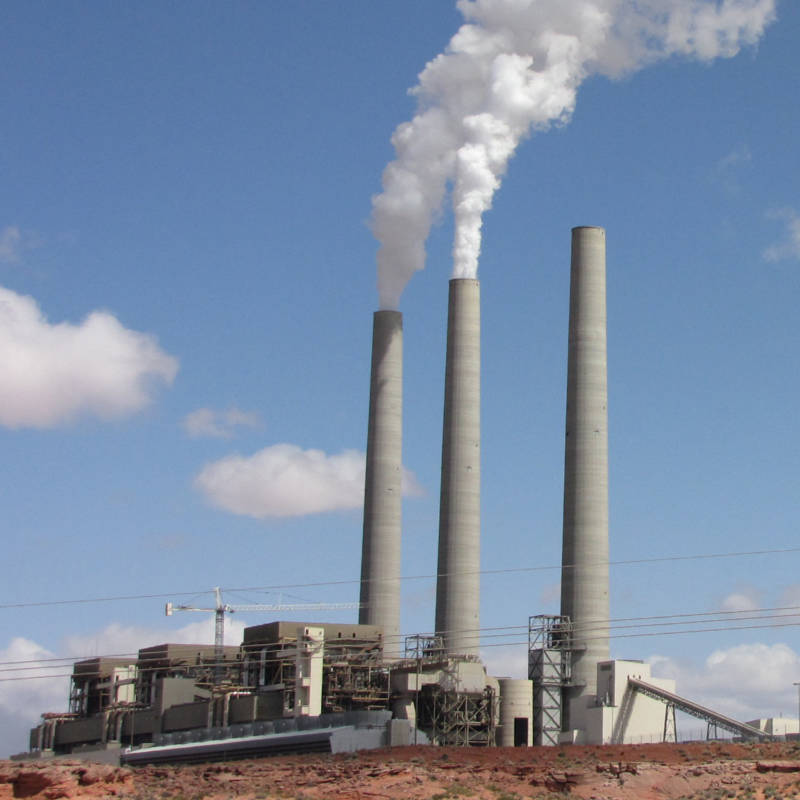
The Navajo Generating Station is coal-fired power plant in Arizona, just outside the Grand Canyon National Park. It’s one of two coal plants that supplies more than 40% of Los Angeles’ power.

Here in California, you hear a lot about our “green” reputation.  We have one of the most ambitious greenhouse gas reduction goals in the country, and the state is certainly a hotbed for new solar and wind energy investments and installations. We also have a law that says electricity providers have to get 33% of their power from renewable sources by 2020.

So… you might be surprised to hear that coal — that’s right, dirty ol’ coal — is still very much a part of the power supply in parts of Southern California. If you’re one of the 1.4 million residents of Los Angeles who gets power from the city’s Department of Water and Power, about 40% of your electricity comes from coal.

But how’s that possible?  Here in California, we don’t have much in the way of coal deposits, and no significant coal power plants. But we do have several public utilities that own portions of out-of-state coal power plants, and that entitles them to lots of less-than-clean, coal-fired energy. Continue reading California’s Dirty Secret: The Five Coal Plants Supplying Our Electricity

Sneak Preview of Living in a “Zero-Net Energy” World

Davis housing development claims to the the nation’s biggest

West Village features sleek lines and cutting-edge energy efficient design concepts.

The typical American master-planned community sill features cookie-cutter houses, cement driveways and green lawns. But UC Davis is putting a new spin on the concept with the unveiling of West Village, a $300 million student and faculty housing community designed to be “zero-net energy.” Developers say it’s the nation’s largest to employ this kind of green construction.

And although “zero-net” [PDF] may sound complicated, the concept is actually quite simple: All the buildings in West Village will take in as much energy as they put back into the power grid — not on a daily basis but at the end of each year, the total consumption of the entire housing development should “net out” to zero. Continue reading Sneak Preview of Living in a “Zero-Net Energy” World

Yergin: Tar Sands Opposition is Misguided

The energy guru weighs in on dirty oil, fracking and California’s energy leadership

One of America’s foremost energy experts says Canada’s controversial oil tar sands are getting a bum rap.

Daniel Yergin, who became a go-to guy for energy wisdom after winning a Pulitzer Prize for his 1990 oil tome, The Prize, appeared on KQED’s Forum program today to promote his latest book, The Quest: Energy, Security and the Remaking of the Modern World.

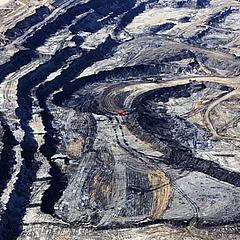
When host Michael Krasny asked Yergin about the Canadian tar sands boom and a plan to construct a pipeline to bring it into the US for refining, Yergin said the project “has become a huge symbolic target.” Indeed the controversial Keystone XL pipeline proposal has been a lightning rod for demonstrations at the White House and a target of ongoing protests across the country. But Yergin said he thinks the risks of importing tar sands oil from Alberta have been overblown. Continue reading Yergin: Tar Sands Opposition is Misguided

Clean-Tech’s Unlikely Champion

Is the Pentagon setting the pace for renewable energy?

A Riverine Command Boat running on a 50/50 blend of algae-based and traditional fuel.

Thirty years ago, the idea of a military-alternative energy partnership might have raised some eyebrows, particularly among solar entrepreneurs here in Northern California. But in the wake of Solyndra’s crash and burn, the Pentagon has become one of clean-tech’s strongest remaining allies in Washington. Leading the charge is Navy Secretary Ray Mabus, whom I interviewed last week for my radio report on KQED’s Quest.

According to a recent study from the Pew Charitable Trust, the military has tripled its investment in technologies like biofuels, solar panels, and electric vehicles over the last four years. Today, it spends $1.2 billion a year on alternative fuels. That amount is expected to reach $2.25 billion by 2015. Mabus says he wants to see the Navy and Marine Corps getting at least half of their fuel from non-fossil fuel sources by 2020. Continue reading Clean-Tech’s Unlikely Champion

Salazar: Risky Times for Western Water

Interior Chief to California: Don’t allow significant water supply and infrastructure projects be derailed

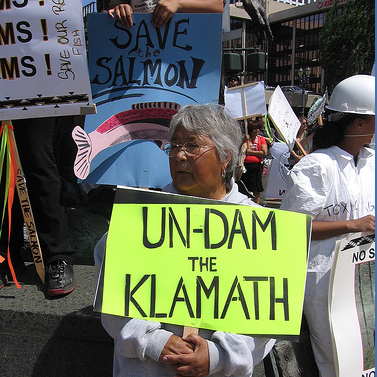
Demonstrators rally in 2006 for the removal of dams on the Klamath RIver.

Today at the Commonwealth Club in San Francisco, Secretary of the Interior Ken Salazar weighed in on three major water projects in the state and called on Californians to “stand firm” and defend the “hard-gained agreements and settlements” built in past decades.

“Never before have water agreements that provide safety and certainty for Westerners been so at risk,” said Salazar, referring to debates over the future of the San Joaquin River, the California Bay Delta, and the Klamath River.

Salazar argued that the state, and the country, should not back away from the 2006 San Joaquin River Restoration Program settlement, which, he said enabled the river to run from its headwaters to the ocean this year for the first time in half a century. He lobbied for the Bay Delta Conservation Plan, calling it a “comprehensive approach that includes new habitat for endangered fish species, coordinated measures to attack toxics that are fouling delta waters, and improvements to the state’s water infrastructure.” Continue reading Salazar: Risky Times for Western Water

How to Capture the Power of High-Altitude Winds

High altitude winds may have more than 100 times the energy needed to power civilization.  But as this video from KQED’s QUEST explains, capturing that power is going to take some very creative  solutions.

By Chris Bauer

A dreamer stares up into the sky, watches the clouds slowly pass by and ponders what could be. From da Vinci to Newton to the Wright brothers to the little kid down the street, sometimes there’s a fine line between the day-dreamer and the visionary. And now a group of innovative thinkers are looking at those same passing clouds in a whole new way.

Looking up at the jet stream, Ken Caldeira, a climate scientist from the Carnegie Institution of Global Ecology at Stanford University says, “We find that there’s more than 100 times the power necessary to power civilization in these high altitude winds.” 100 times the energy to power the world is going to get people’s attention.

The global need for clean energy is pushing scientists and engineers to search for new, untapped sources of energy. “To solve this problem we need a real revolution in our system of energy development,” continues Caldeira, “We need huge amounts of power, and the things that can provide huge amounts of power include fossil fuels like coal, oil and gas; nuclear power, solar power and wind.” The strongest and most consistent winds are found in the jet stream as high as 30,000 feet above the earth. But how do you harness the wind power from that high? Now the race is on to find the answer to that question. Continue reading How to Capture the Power of High-Altitude Winds