All posts by Craig Miller

Craig is a former KQED Science editor, specializing in weather, climate, water & energy issues, with a little seismology thrown in just to shake things up. Prior to that, he launched and led the station's award-winning multimedia project, Climate Watch. Craig is also an accomplished writer/producer of television documentaries, with a focus on natural resource issues.

California’s Ingenious Flood Relief Valve

Opening California’s “spillway” is not the sort of thing that brings out CNN

This week officials made the uncomfortable decision to place thousands of homes and businesses in harm’s way, in order to avoid an even bigger catastrophe on the lower Mississippi River.

But as the opening of the Morganza Spillway was the subject of national media attention, California’s version had already been deployed a month earlier — and hardly anyone noticed.

The Yolo Bypass may be California’s most ingenious contrivance for flood protection and yet, many people drive over it every day without knowing its purpose.
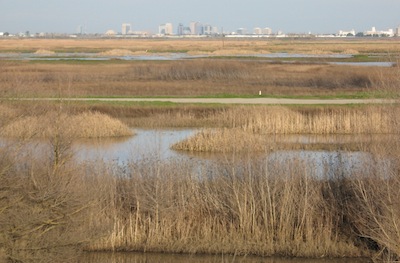
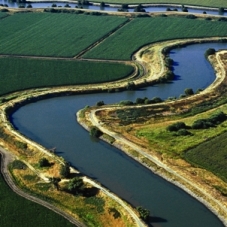
The Yolo Bypass on March 1 of this year. The Sacramento skyline rises in the distance. (Photo: Craig Miller)

The bypass is a 59,000-acre funnel designed to catch the overflow of the Sacramento River and divert it harmlessly downstream, dumping it back into the main channel near Rio Vista. Generally speaking, it works like a charm. And it does so without fanfare because there are nobody lives there. That’s the idea. Continue reading California’s Ingenious Flood Relief Valve

PG&E Abandoning Wave Power

Challenges prove too much for one of California’s largest utilities

Waves crash along the Monterey coast. (Photo: Craig Miller)

One of the nation’s more progressive electric utilities is bailing out of wave energy.

Pacific Gas & Electric is giving up its pilot projects along the California coast.

“There’s definitely still a future for wave energy,” PG&E renewable energy spokesman Denny Boyles told me in a Sacramento interview. “Our hope is that one day it will become a more viable source,” PG&E had secured development permits for three areas along the California coast but with the technology for converting wave action into electric power still in its nascent stage, the company never got as far as getting any hardware into the water. “We did several different studies,” said Boyles. “There is wave energy conversion  technology that’s out there that’s working. It’s just not at a point where it’s widespread enough for us.” Continue reading PG&E Abandoning Wave Power

News Flash (Not): Western Water in Peril

Yes, it rained and snowed a lot this winter and left us with an epic Sierra snowpack. Now forget all that. The long-range outlook: still dry.

A new report from the federal Bureau of Reclamation may offer the most comprehensive forecast yet for western water in the 21st century — but few surprises.

The report, Managing Water in the West, breaks down the outlook for eight key river systems, including three vital to California. The overall message is predictably sobering.

The risks that California faces from climate change are pretty well known, says Peter Gleick of the Oakland-based Pacific Institute. He says the 200-plus-page report “doesn’t offer any new surprises about those risks — but it does reaffirm those risks in an increasingly compelling way.”

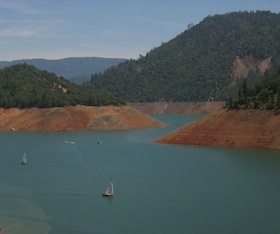
Lake Oroville reservoir during California's recent three-year drought. (Photo: Craig Miller)

Some media coverage of the report seems to conclude that California gets off lightly in the study. But the section of the report covering the critical Sacramento and San Joaquin basins seems sobering at best. While it does predict a small (0.6%) increase in annual precipitation on the Sacramento, the report also foresees a drop in San Joaquin precipitation of somewhere between 4.2% and 5.3% by 2050. Continue reading News Flash (Not): Western Water in Peril

Time Running Out for Delta Fix

Time is running out to fix Northern California’s beleaguered Sacramento-San Joaquin Delta. That seems to be the consensus from the latest major meeting of officials and stakeholders.

Part of the labyrinth of waterways in the Sacramento Delta. (Image: CA Dept. of Water Resources)

Today’s meeting in Sacramento was a rarity; both state and federal officials sat down to explain the complicated Delta planning process in a public setting.

David Hayes, Deputy Secretary of the federal Department of the Interior, underscored the urgency, telling the gathering that “We are one seismic event away” from a potential three-year interruption in water supplies to Southern California.

“Even if you don’t have a seismic event, the effects of climate change, a major flooding event, threaten the Delta because it’s built on quicksand  — basically levees that will not hold against a major event,” said Hayes.

 The Delta provides water for 25 million Californians. Hayes said his agency and the White House are “in full lockstep” with Governor Jerry Brown’s process for dialing in a Delta strategy. The state is pursuing “co-equal goals” of satisfying California’s water demands while protecting Delta eco-systems, which several speakers said are “crashing.” Continue reading Time Running Out for Delta Fix

EU Lesson for CA: Don’t Give Away the Store

Advice from Europe for California’s cap-and-trade captains

As California lurches toward what would be the nation’s most comprehensive carbon trading program, I got an interesting perspective from the world’s largest, the European Union. “California is one of the states that is actually moving forward in the US,” EU Commissioner Connie Hedegaard told me in a one-on-one interview this week. “And we know in Europe that sometimes when California starts to do something, that it’s the start of something that will end up being the American way of doing things.”

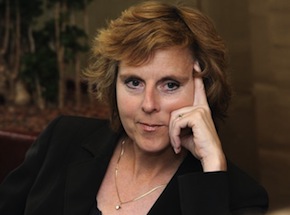
Connie Hedegaard directs climate action for the EU. (Photo: European Union)

Hedegaard, who is the EU’s Commissioner for Climate Action, cited California’s leadership in regulating tailpipe emissions, among others, though when it comes to cap-and-trade for carbon, it’s unclear who will be following. Certainly Congress is in no mood, and the regional trading scheme known as the Western Climate Initiative has been severely stunted.

Citing recent estimates that five years of carbon trading in Europe has lowered total greenhouse gas emissions by less than one percent, I asked her if she considers that a success. “Yes, I do,” replied Hedegaard. She countered with her own figures that while US emissions had continued to rise between 1990 and 2009, those in Europe had fallen 16%. “So we’re doing something right,” she said (again, EU carbon trading only began in 2005). “Of course when you’re building a complex system like that, those who do it first, in the first couple of years, have a lot of lessons learned.” Continue reading EU Lesson for CA: Don’t Give Away the Store

On the Capitol Hill Climate Hotseat

And the Smoking Gun that Never Fired

This week’s hearing on climate science before the House Committee on Science, Space & Technology had some observers on the edge of their seats.

Berkeley Physicist Richard Muller testifies on Capitol Hill, Thursday (Image: House Committee on Science, Space & Technology)

Much of the pre-game analysis focused on Richard Muller, UC Berkeley physicist and author of Physics for Future Presidents.

Muller started taking hostile fire weeks ago when bloggers noted that the famously anti-climate-regulation Koch Brothers were providing funding for his audit of the global temperature data used in UN climate reports. When he was slated to testify, speculation arose that Muller was hand-picked by House Republicans to savage the prevailing science.

But if there was any agenda behind Muller’s remarks, it wasn’t in evidence at this hearing, as Andrew Revkin notes in his Dot Earth blog. After Muller’s opening statement, which was deadpan and laden with technical detail, committee members seemed to shy away from him and pursue soundbites from more colorful panelists, who included: Continue reading On the Capitol Hill Climate Hotseat

CA Drought Lifted, Snowpack at 15-Year High

Governor lifts drought declarations from 2008, 2009

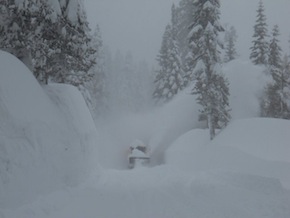
Snow removal near Mt. Lassen. (Photo: KNVN Chico-Redding).

Frank Gehrke summed it up: “Well, it has been a really crazy winter,” said the state’s chief surveyor of the Sierra Nevada snowpack.

Statewide averages from the season’s fourth survey Wednesday, shows water content at 165% of normal for April 1.

The latest survey shows statewide, water content of the Sierra snowpack is 165% of normal. Gehrke says it’s been about 15 years since there’s been this much snow on the ground at this point in the season. Earlier this month, some locations were reporting total seasonal accumulations equivalent to the height of a six-story building. Continue reading CA Drought Lifted, Snowpack at 15-Year High

Ecosystems by Ear: It’s About Time

To paraphrase Yogi Berra, you can observe a lot by listening

It was interesting to hear a report from NPR’s Richard Harris on a “new” branch of science called “soundscape ecology.” Harris interviewed Purdue landscape ecologist Bryan Pijanowski, who is part of a group of scientists advancing a “research agenda” to fully integrate the discipline into the study of ecosystems.

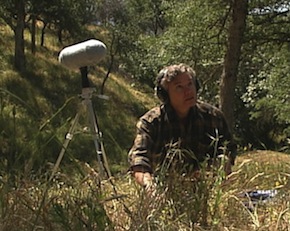
Bernie Krause, recording a soundscape in the Sycamore Creek area of Sequoia-Kings Canyon National Park.

“We’re trying to understand how sounds can be used as measures of ecosystem health,” Pijanowski told Harris. Pijanowski is hardly the first to make this connection. An article co-authored by him and seven colleagues for the the March issue of the journal BioScience cites references back to 1969 (and gives a nod to Rachel Carson’s Silent Spring, which appeared in 1962). Continue reading Ecosystems by Ear: It’s About Time

How “Tsunami-Ready” Are You?

Crescent City has the drill down

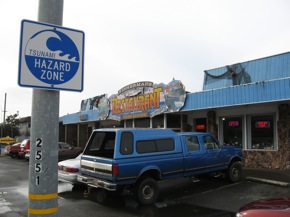
A sign along Highway 101 in Crescent City marks the tsunami hazard zone. Officials say they can evacuate the hazard zone in about two hours. (Photo: Craig Miller)

Of course, after facing down 34 tsunami events in the past 100 years, I suppose they should have it down. When I was there to cover the aftermath of the March 11 event that pretty much took out the working harbor, it was clear that the possibility of a seismically-triggered surge is never far from the public consciousness in Del Norte County.

“It’s here with us from the names of buildings to the names of the businesses,” Cindy Henderson told me. “Tsunami is our world. So yeah, it is a very big threat,” said Henderson, who heads emergency services for the county. “We do have others we have to prepare for but in the backs of our minds, we are always thinking about tsunamis — every time there’s a big earthquake.” Continue reading How “Tsunami-Ready” Are You?

Another Wrench in AB 32

Air board will appeal ruling on implementation of AB 32

Environmental justice advocates will tell you they never intended to shut down the state’s whole climate law, when they filed suit against it. But a broadly-worded court decision could put some or all implementation of AB 32 on hold.

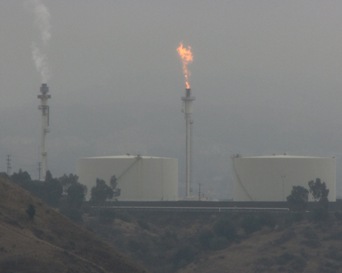
Waste gases are burned off at the ConocoPhillips refinery in Rodeo. (Photo: Craig Miller)

The ruling, which was rendered last Friday by a state superior court in San Francisco and made public yesterday, finds that in putting together its implementation (scoping) plan, the California Air Resources Board failed to give adequate weight to potential alternatives to cap & trade.

Judge Ernest Goldsmith issued the ruling:

“…enjoining any further implementation of the measures contained in the scoping plan until after (the Air Board) has come into complete compliance with its obligations under its certified regulatory programs and CEQA (the California Environmental Quality Act).

The broad wording of that would seem at odds with the assessment of CARB chair Mary Nichols, who, in an interview on Friday, described the likely ruling to me as “a tempest in a teapot.” Continue reading Another Wrench in AB 32