Category Archives: Research

Student Guest Blogger: Hallie Cohen

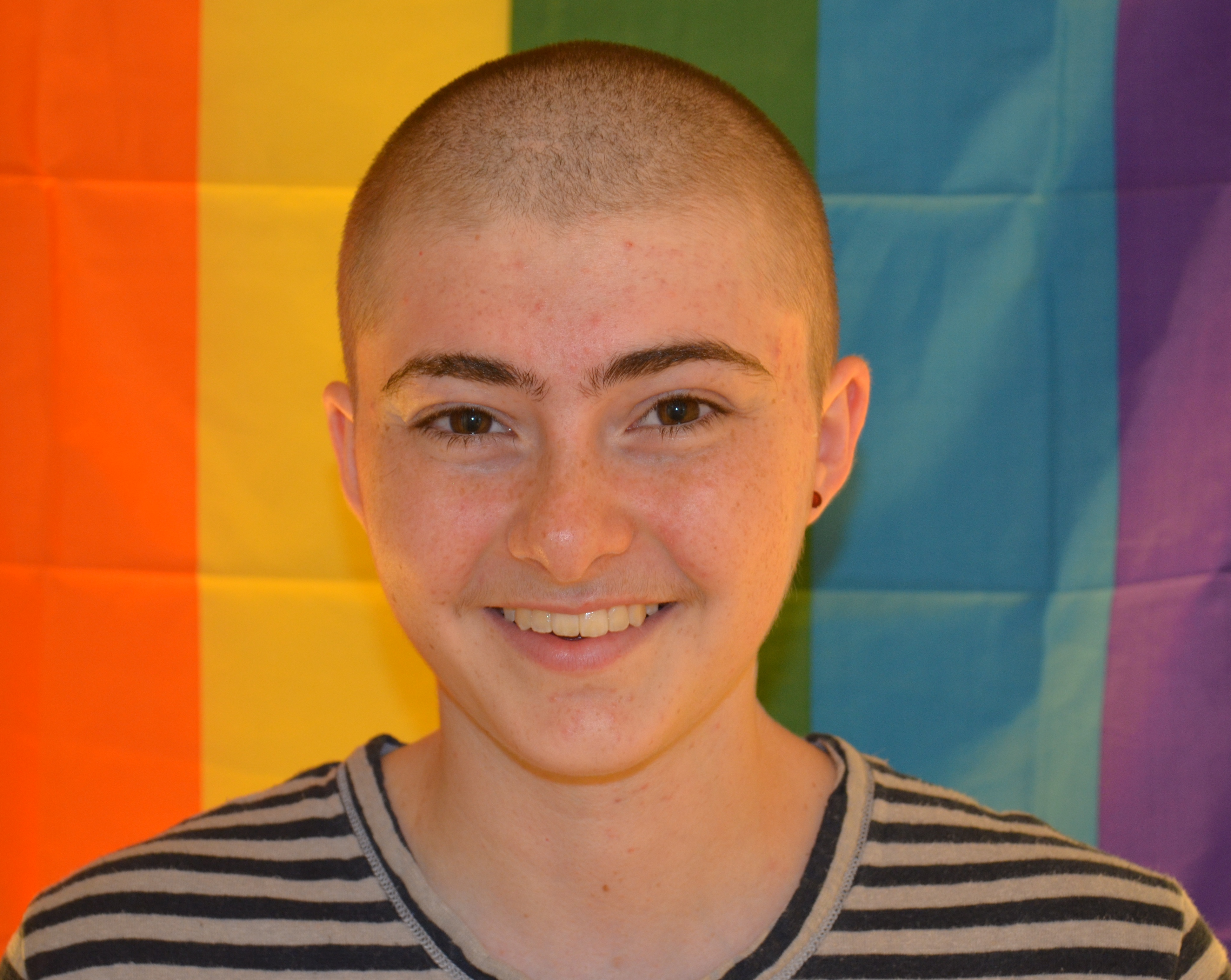
Hallie is a seventeen-year-old Gay-Straight Alliance Network youth leader who attends the Haven Program at Peninsula High School.

Why I Stay In School
By Hallie Cohen

School has always been difficult for me even in my elementary school years, mainly because of social anxieties. It showed through my horrendous attendance record. By my fifteenth year, I had stopped going to school entirely. That was the same year that my mental health completely disintegrated. The depression became debilitating, and the eating disorder drained my energy. I heard and saw things that no one else could. Being in school was impossible and I missed my entire sophomore year of high school. I asked my mom to fill out papers allowing me to officially drop out when I turned sixteen. Ironically, there was a problem with my paperwork and I was mistakenly referred to another school. That mistake changed my world around, and I’ll be forever grateful that it led me to the place I am now.

Now I stay in school because it’s my haven. The teachers, therapists, and students all do an exceptional job in ensuring that my school is an emotionally and physically safe place to be. This kind of safety, along with the academic support I need, allows for me to thrive. I am given the tools to dream and do, with unbridled encouragement all along the way.

The students in my new school all have one thing in common: we all have some form of anxiety. To combat the anxious feelings, we start every morning with a yoga session consisting of four or five sun salutations with a couple of balance poses thrown in for good measure. Another way we are taught to manage our anxiety is Over Energy Correction: a type of deep breathing exercise. Some tricks we use are maybe a little less conventional, like blowing bubbles, which also regulates your breathing.

One major contributor to my anxiety is leaving the confines of my small separate classroom and going onto the main campus. There, it is not so friendly. I stand out from the crowd and am constantly harassed because of my genderqueer/transgender identity and perceived sexual orientation. For example, no matter which restroom I enter, I am punished by the other students. I’m too masculine to be in the women’s, and too feminine to be in the men’s. I am lucky that my teachers understand and allow me to use the single-stall staff bathrooms, because without that accommodation, I would have no gender-neutral options.

The bullying and harassment leaves marks, literally and figuratively. My school’s incredible Gay-Straight Alliance (GSA) club has become one of the few places I feel comfortable enough to share my true thoughts and feelings. The students in the GSA are dedicated to making positive change, and are supportive, protective, and truly interested in each individual and how to make school a safer place for everyone. After our GSA enacted a new anti-slur policy, and did a teacher training on the subject, the amount of hateful language used on campus has dramatically decreased. This was a huge victory for our GSA and for students like me who were being bullied on a daily basis.

I consider my school to be my second family, and I couldn’t ask for better relatives. The teachers and therapists are adults that I not only admire, but also wish to emulate. They are my role models, and have been my heroes by introducing me to life-saving resources like the Trevor Lifeline and Gay-Straight Alliance Network.  School is a stable force and comforting routine in my life. If it weren’t for the support that I receive at school, I wouldn’t be here today. I stay in school because it’s the place I crave to be when I am homesick, or lonely, or both; because there is no place on earth that is safer; and finally, because our Uno games get pretty intense. We have fun, and that’s important.

So thank you, Haven Program and Peninsula High School, for being there when I needed it most. Thank you for laughing with me, crying with me, and keeping me on the right path to a bright future. You helped me get from zero attendance, to now having one hundred and twelve days of uninterrupted perfect attendance. One hundred and twelve reasons to be proud, and counting…
Summer Games with PBS LearningMedia

KQED Edspace blog
July 10, 2012
Written By: Almetria Vaba

Educators and parents are turning more frequently to open educational resources including online games and educational apps to engage 21st century learners. Summer can be a great opportunity to blend a child’s interest in science or history with their fascination for digital games. And studies show that summer is a crucial time for students as much learning is lost during the hot months. PBS LearningMedia, launched a year ago, has a robust collection of free interactive games to experiment, manipulate, and investigate with this summer.

Continue reading>>

Graduation and Dropout Rates For the Class of 2011

Education Blog
June 27, 2012
Written By Katy Murphy

The four-year graduation rate in Oakland Unified rose about four points in the latest estimate released today by the California Department of Education. About 59 percent of students who started high school in 2007 graduated with their classmates in 2011. About 28 percent dropped out, and 12 percent were still enrolled in school when the data were collected.

Some Oakland high schools had dropout rates in the 40s. Life Academy and Metwest lost the lowest percentage of students among OUSD schools, though their dropout rates were still higher than 10 percent. Charter schools are listed separately; you have to call each of them up individually to see how they did.

This is the second year the state has followed a cohort of students — each, with a unique ID — through four years of high school to get what is supposed to be the most reliable estimate yet.

Read more about these statistics.

How Would You Rate Oakland’s Superintendent, Three Years In?

Education Blog
July 3, 2012
Written by Katy Murphy

After three years, Tony Smith can no longer be described as Oakland Unified’s new superintendent. Still, he’s said the systemic changes outlined in OUSD’s strategic plan — approved a year ago — will take several more years to take root.

We have a profile of Smith in the paper today — and we’ve just posted an online poll on his leadership and on his community schools vision that I invite you to take.

BAYMN Presents Rise to the Occasion Youth Media Festival — Call for Entries

Applications are now open for BAYMN’s Rise to the Occasion Youth Media Festival, hosted at the Kaiser Center in Oakland on October 13, 2012, 2-5pm.

Deadline for submission: August 27, 2012

For its first public festival, the Bay Area Youth Media Network (BAYMN) is seeking youth-produced videos that tell stories or highlight issues of social change. Two issues of specific interest are:

  1. The 2012 Presidential Election
  2. The High School Dropout Crisis

Prizes will be awarded in both of these categories as well as in the general competition.

So what constitutes social change? Issues that affect people in your community, nationally and globally. Issues such as gang violence, drug abuse, bullying, college access, unemployment, affordable housing, medical care, teen pregnancy, racism, sexism, financial inequity… you get the picture. Any issue that you feel passionate about and want your voice to be heard. We want to hear it. And so do your peers.

We are now accepting submissions from youth ages 12–24 who have made video projects in school, in an after-school program, in a summer program, or independently. The video must be self-contained and able to stand alone (e.g., not a segment of a larger project). Digital media presentations that are not film or video (e.g., PowerPoint, Prezi, etc.) will not be accepted. Projects must be published on a video-hosting site such as YouTube, SchoolTube, or Vimeo. Videos may not exceed 15 minutes and must have been produced AFTER June 1, 2011.

Download our criteria for selecting entries to the Rise to the Occasion Youth Media Festival.

Youth whose entries are accepted to the festival will receive iTunes gift cards. Grand prizes include Apple mobile devices.


SUBMISSION

Before submitting your project, post the video on a video-hosting site such as YouTube, SchoolTube or Vimeo, and make sure that your video is public (we will not be able to view or judge a project that is set to private). To submit your project, fill out our online entry form below. Please read the guidelines completely BEFORE filling out the form. You can download a copy of the entry form HERE to review it.

Submission Guidelines:

  1. Rise to the Occasion showcases the work of youth media makers (ages 12-24). If you are younger than 13, please have a parent, teacher or instructor submit your project. All communication will be sent to the email listed in the form, so please be sure it is active and checked often.
  2. Teachers: For classroom projects, please submit only the “best” one or two for consideration (e.g., if your students are all creating similar projects on air pollution, please submit no more than two for consideration for the Festival).
  3. Create a complete, high-resolution copy of your project. This is required for all projects that are selected for the Festival.
  4. Entries must be received by 11:59pm PST, August 27, 2012.
  5. Entries must represent work that was completed after June 1, 2011.
  6. All entries must be submitted online using a preferred web-hosting partner or other media-hosting provider (e.g. SchoolTube, YouTube, Vimeo, etc.). All entries MUST have a valid, public URL that our judges can access.
  7. If your project includes copyrighted material, please follow the Center for Social Media guidelines for Fair Use or view the post on KQED Edspace and be sure to cite your sources in the end credits.

Please contact mwilliams@kqed.org with submission questions, or if you need an alternate submission option.

Guest Blogger: Robyn Bykofsky Oakland Innovation Film Lab – Youth Mobile Media Workshop

June 25th 2012
Written by Robyn Bykofsky

I have been facilitating media literacy and video production workshops with Bay Area youth and educators for over 12 years and the Youth Film Lab was the experience of a lifetime.  It was the first workshop I taught in which teens produced and edited their videos within 4.5 hours and then an hour later screened the videos to a live audience at the Oakland School of the Arts Black Box Theater.
 
How did we accomplish this task? First, we had a talented and motivated group of 14 teens from all over Oakland.  Second, TILT (the youth media program at Ninth Street Independent Film Center) and Disposable Film Festival (DFF) crafted an action-packed curriculum that had the teens on the flip cameras right away.  Teens were able to express themselves in the hands-on video activity When People See Me.  This effective icebreaker allowed the teens to quickly get to know each other and therefore they were ready to jump into a brief discussion about using mobile media for social action and change.
 
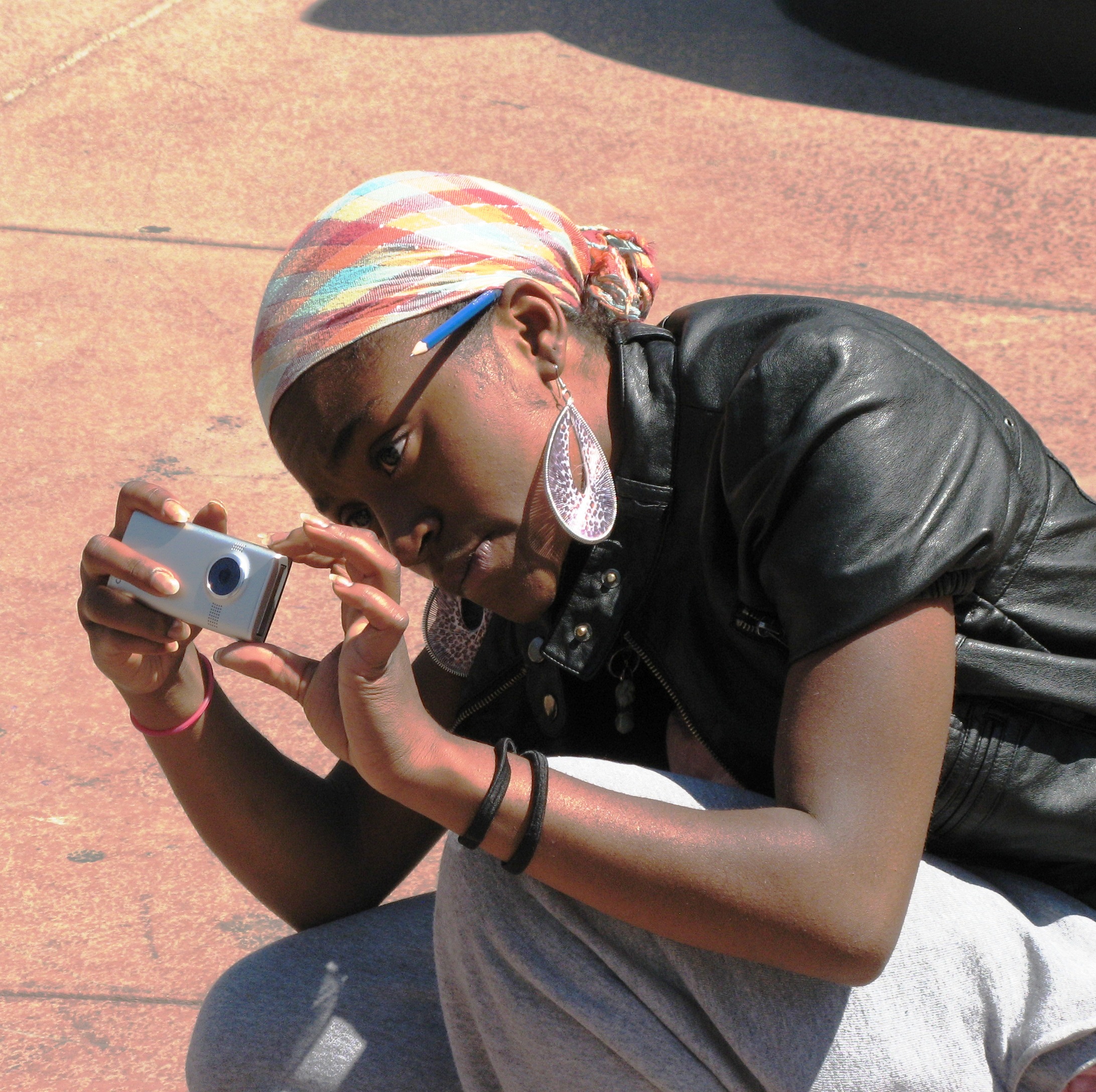
The next hands-on camera activity focused on Media Aesthetics and the importance of framing camera shots, sound and lighting.  Teens were broke into teams of two to explore the neighborhood (well block radius) as they practiced different types of camera shot-sizes, angles, and movement.
 
(Example of a few of the Video Scavenger Hunt camera directions)
___  Extreme close up of a small object that has big meaning
___  Smooth pan of the street
___  A shot (any size and angle) of a reflection that represents YOU

___  Smooth tilt up to a positive message
 
Once the group had a chance to practice and explore, it was time to move onto the main mobile media event…Mobile Mission Speed Production.  Once again the teens broke into teams of two to brainstorm topics and themes related to success, leadership, learning, education, etc.  Since time was limited – only 1 hour to per-production and production, each step of the process was timed.
Brainstorming – 5 min
Deciding on an idea – 5 min
Writing 1-2 sentence synopsis describing the message of the short video – 5 min
Writing a shot list – (what will the video look like) – 15 min
Video shoot – 30 min
 
After a very short break the production teams spent the next 2 hours editing, which included getting acquainted with iMovie – learning its advantages and limitations; making difficult editing decisions – what shots to keep? What shots to delete; add  video transition that would lend to the storytelling; choosing royalty-free music that will help in the delivery of the message; and adding credits.
During the teens dinner break, Katie (Managing Director of DFF), Jason (TILT Assistant Instructor), and myself (TILT Youth Media Manager) worked diligently in exporting the 6 short videos and prepping them for the Screening at 7:30pm.This was an amazing experience and I look forward to partnering with KQED and DFF for another whirlwind mobile media workshop. 
I also want to give a big shout out to the teen media makers…
Thank you Ana, Anthony, Aramonti, Bela, Elijah, Gervonne, Jaison, Justine, Katie, Marvin, Nakia, Tiffany, Tiphereth, and Ysabelle!!! 

What Keeps Jorge Paredes from American Indian Charter in Oakland, CA Motivated?

As part of the American Graduate Initiative, KQED will serve as a community convener and will work with local media, education, community, civic, corporate and other relevant organizations, to create a better understanding of the community impact of the dropout crisis in the Bay Area with a focus on Oakland and implement effective plans to positively impact the situation.
KQED made a recent visit to the Junior Statesman of America Regional Conference in San Jose, CA. Learn more about Junior Statement America.