Mark Wahlberg Heading Back to High School

Mark Wahlberg Will Earn His High School Diploma Online

CBS News
June 13, 2012

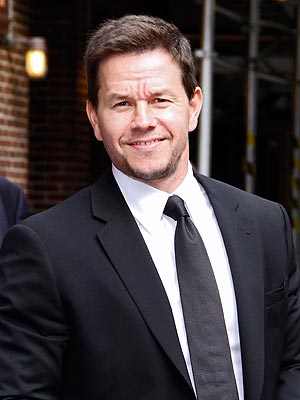
Actor Mark Wahlberg is returning to school later this month to study for his high school diploma.

The star quit school at the age of 13 and, after a stint behind bars for assault, he became a model and pop star before making it in Hollywood.

Last year, the Massachusetts-born Wahlberg admitted he was eager to go back to school so he can become a better role model for his children – and the actor has now enrolled in an online course to complete his education.

He tells David Letterman, “I am going back now. They have this new program in Massachusetts now where you can actually take the courses online, so I’m starting this month; I’m gonna go and get my high school diploma.”

Wahlberg admits he is “a little nervous” at the prospect of returning to his school books, but he is determined to pass with flying colors – and he’s hoping to take advantage of his spare time in between filming movies so he can speed through the tests and graduate within months.

He says, “It’s an actual diploma, so I gotta take up all the courses that I missed and I’m a little nervous, but … I have a lot of down time on sets and in trailers so I just wanna blast through (the course). Hopefully be able to do it (graduate) in six to eight months.”

Wahlberg’s kids aren’t the only reason behind his desire to complete school. He feels guilty serving as the spokesman for Taco Bell’s Graduate To Go program, which provides support to at-risk students.

He adds, “They asked me to do this and I was like, ‘Dude, I never graduated, why would you pick me to do this?’”

And Wahlberg has his sights set on another type of studies once he passes his high school exams.

He says, “I would love to, at some point, go to film school.”

Teaching America’s New Majority

Washington Post
June 1, 2012
Maggie Severns

A couple weeks ago, the Census bureau announced that minority babies made up the majority of births in the United States in 2011. I wrote an opinion piece for today’s Washington Post about why this symbolic shift should be a wake-up call for the public school system: Student demographics are changing, but policies revolving around how we instruct English language learners have yet to catch up.

Read the full article here.

New Education Standards End Rote Learning, Cursive

San Francisco Chronicle
June 11, 2012
Written By Jill Tucker

Like fashion, trends in public education come and go.

What’s in vogue depends on the decade and often reflects which way the political wind blows and what shiny gadgets have hit the market.

With the threat of Soviet innovation and Sputnik, old math became new math in the 1960s and then back to old arithmetic about 10 years later.

Phonics, like bell bottoms, always makes a comeback, although some fads are but brief historical blips. Think the metric system and mullets.

But with such limited time to teach, there have long been debates about what children need to know and how and when to teach it – and when to stop teaching something altogether.

Another Death at Life Academy

The Education Blog
June 5, 2012
Written By Katy Murphy

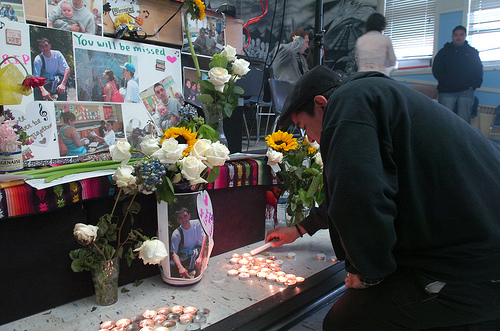
Yesterday in the school auditorium at Life Academy, school employees and grief counselors stood in a circle and quietly discussed their plan for the memorial assembly in 18-year-old Alejandro Aguilera‘s honor. Some of them had puffy eyes. Most looked exhausted.

Apart from the sorrow and the heaviness in the room that day, something else hit me:  Everyone seemed to know what to do. One teacher noted that her students erected altars for the dead with a disturbing degree of expertise.

Learn more about teen violence.

Radio Forum: Gov. Proposes Nixing High School Science Requirement

Host: Spencer Michels

A little-known proposal from Governor Jerry Brown would eliminate the state’s mandate that all high school students get two years of science education. Sacramento says it’s in the name of fixing the budget. But many argue that subjects like science and math are only rising in importance, and nixing science is too high a price to pay.

We examine the state of science in California’s public schools.

Guests:

  • Caleb Cheung, science manager for the Oakland Unified School District
  • H.D. Palmer, deputy director, external affairs for the California Department of Finance
  • Kerry Benefield, reporter for the Santa Rosa Press Democrat
  • Rick Pomeroy, professor in the UC Davis School of Education, president of the California Science Teachers Association and former science teacher for 20 years


Why Daydreaming Isn’t a Waste of Time

MindShift Blog
June 4, 2012
Written By: Ann Murphy Paul

Parents and teachers expend a lot of energy getting kids to pay attention, concentrate, and focus on the task in front of them. What adults don’t do, according to University of Southern California education professor Mary Helen Immordino-Yang, is teach children the value of the more diffuse mental activity that characterizes our inner lives: daydreaming, remembering, reflecting.

Yet this kind of introspection is crucial to our mental health, to our relationships, and to our emotional and moral development. And it promotes the skill parents and teachers care so much about: the capacity to focus on the world outside our heads.

Read more about the benefits of daydreaming.

Guest Blogger: Amy Loomis from American SCORES Bay Area

Giving Back to the Community One Project at a Time

Written By Abby Loomis, Program Manager, America SCORES Bay Area

In March, when J. Serra (4th) grader Diego raised his hand to suggest an idea for his team’s service-learning project, he didn’t know that very same hand would soon be shaking that of San Francisco Mayor Ed Lee.

This unlikely duo came together to celebrate the first ever SHOUT! at Civic Center on May 15, 2012, where the Mayor honored four SCORES teams whose service-learning projects demonstrated commitment, teamwork and compassion.

Ironically, the J. Serra boys team project idea emerged from a moment of intolerance: when one of Diego’s teammates suggested that they help the homeless, another asked, “but won’t they just spend that money on drugs and alcohol?” Instead of simply lecturing the student, J. Serra Coach Edgar took the opportunity as a teaching moment. He shared about his own friends and family members who had experienced life on the streets, and the variety of reasons that had led them to end up there.

“The students weren’t aware of different people’s situations,” said Edgar. “It was a great opportunity to change their perspective on homelessness.”

The team eventually decided to base their project on a collaboration with Street Soccer San Francisco, a homeless soccer team who would soon be competing in New York City for a chance to play in the Homeless World Cup.  They invited Street Soccer director Rob and  two of his players, Carlos and David, to the school to run an informal practice. As they stretched, Carlos and David shared stories and talked about the importance of listening and setting goals. “It was interesting,” said Diego, “Because Carlos escaped from his house, and his family, and that’s very rough.”

After this meeting, the boys got into action. They crafted a letter describing their project and went door to door, raising a dollar for every ten toe-touches they performed. With the money the boys raised, Coach Edgar purchased soccer equipment for the new Street Soccer women’s team. The Jaguars also put their artistic talent to use by creating an enormous flag for the Street Soccer team to take with them to the tournament in New York City.