All posts by Spark

Octavio Solis

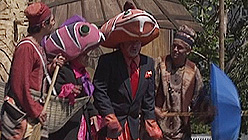
The short story collection The Pastures of Heaven isn’t the first title that springs to mind when you talk about author John Steinbeck, but his sharp-eyed portraits of human nature and life in a Salinas Valley farming community in the 1920s have inspired a new play by San Francisco-based playwright Octavio Solis.

Commissioned by the California Shakespeare Theater as part of their New Works, New Communities series, John Steinbeck’s The Pastures of Heaven takes viewers on a journey into the heart of the American Dream as seen through the eyes of the Munroe family and the other ordinary folks of Las Pasturas del Cielo, a small village situated along the stretch of Highway 68 between Monterey and Salinas. Spark follows Solis as he explores Salinas and the stunning valley of Corral de Tierra, the real-life setting for The Pastures of Heaven, in order to draw inspiration for his adaptation.

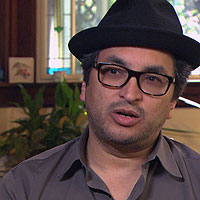
Solis, a native of El Paso, Texas, has seen his poetic dramas produced at festivals and venues all over the country, from the Oregon Shakespeare Festival to the Magic Theater in San Francisco, from the New York Summer Play Festival to the Yale Repertory Theatre. He is the literary heir of a generation of Chicano playwrights, and his works, such as El Paso Blue and Lydia, trace a Latino experience that might not be prominent in The Pastures of Heaven. But in Steinbeck’s brief vignettes, Solis finds a dark undercurrent of human foibles and struggles that transcends culture.

The verdant pastures of green that inspired Steinbeck’s short story cycle were discovered accidentally in 1776 by a Spanish corporal, whose name has been lost to history. Throughout the 19th and early 20th centuries, ranchers and homesteaders established a loose community in the area, but from the late 1950s onward, development in the lush valley and the establishment of the posh Corral de Tierra Country Club gradually eroded the remnants of the farm community, as wealthy Silicon Valley businessmen built multimillion-dollar estates on the subdivided plots of land where cattle once grazed.

Partnering with the Word for Word Performing Arts Company, Solis and his fellow collaborators began extensive research and workshops in October 2007, all leading to the play’s premiere at the Bruns Amphitheater in Orinda in June 2010. The community outreach aspect of the project took the cast and crew to Salinas to work in the fields and learn firsthand about the world Steinbeck portrays, one that, even in 1932, Steinbeck saw slowly vanishing, like the dreams of his characters.

“If I have any vision, I tell you this,” says one of Steinbeck’s characters, in the author’s uncannily accurate voice, “some day there’ll be big houses in that valley, stone houses and gardens, golf links, and big gates and iron work. Rich men will live there, men that are tired of working away in town, men that have made their pile and want a quiet place to settle down to rest and enjoy themselves.”

  • Array
  • Array
  • Array

Mission District Street Art

In October 2009, the production model of Spark changed, moving from a stand alone series of original programs to the production of Spark segments, which will be premiered throughout the year as part of the newly re-vamped This Week in Northern California.

In this segment, Spark visits San Francisco’s Mission District, which has been a breeding ground for alternative art and culture for more than 40 years. Why has the neighborhood, more than any other in the city, been such a beacon for outdoor creative expression? We meet artists Susan Greene and John Jota LeaƱos and talk to Annice Jacoby, who explores the question in her new book Street Art San Francisco: Mission Muralismo.

This Week Produced by Spark for This Week in Northern California.

Mission District Street Art

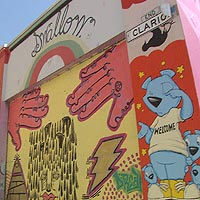
San Francisco’s Mission District is home to a high concentration of street art, bearing witness to an artistic community as vibrant as it is diverse. A heady mix borrowed in equal parts from the Mexican muralistas, 1930s WPA murals, graffiti, skater graphics, hip hop, and the alternative comics that emerged in the 1960s and 1970s, the street art of the Mission reflects the concerns, aspirations, celebration, and anguish of a dynamic and vital neighborhood. Spark takes a tour through the Mission’s famous decorated streets.

The diverse background of Mission residents is staggering, encompassing every economic and social stratum — from loft-dwelling urban professionals to undocumented day laborers. Residents range from newly landed 20-somethings fresh out of college to families whose roots in the neighborhood run generations deep. Decades of changing demographics and diversity have created a kind of cultural laboratory that has produced more than 500 murals since the Mission mural movement began in the 1960s.

Balmy Alley, located off 24th Street’s bustling commercial strip, is a one-block stretch of fences and residential structures covered with a dynamic series of murals. The project dates back to 1972, with the work of Patricia Rodriquez and Graciela Carillo, who collectively came to be known as Las Mujeres Muralistas. Their project grew in 1984, when Ray Patlan led an initiative that resulted in 25 additional murals, connected through the common themes of celebrating the indigenous cultures of Central America and protesting U.S. intervention in the region. Since then, artists have continued to add to the project, making the alley an ongoing visual record of cultural and social developments.

The other major mural concentration in the Mission is Clarion Alley, a narrow passage that runs from Valencia Street to Mission Street, just south of 17th Street. Clarion has been a center of artistic activity and bohemian culture at least as far back as the early 1960s, when acclaimed minimalist composer Terry Riley occupied a warehouse space on Clarion. In 1992, inspired by Balmy Alley, a group of street artists came together to form the Clarion Alley Mural Project (CAMP). But whereas Balmy Alley grouped its murals together around a common theme, CAMP’s goals were social inclusiveness and aesthetic variety. CAMP works primarily with young artists — some are muralists, some are creating public work for the first time. CAMP has become something of a rite of passage for many artists who have gone on to establish themselves internationally.

The street art of the Mission District is available for viewing anytime. Guided tours can be booked through Precita Eyes Mural Arts and Visitor Center.

Array

  • Array
  • Array
  • Array
  • Array
  • Array

Bay Area Glee Club

In October 2009, the production model of Spark changed, moving from a stand alone series of original programs to the production of Spark segments, which will be premiered throughout the year as part of the newly re-vamped This Week in Northern California.

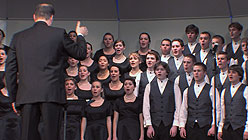
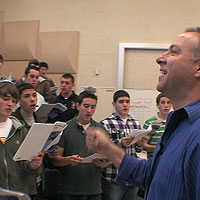
In this segment, Spark visits the San Ramon Valley High School Concert Choir as they prepare pop, classical, and folk selections for their 2010 spring concert. Choir director Ken Abrams, who stresses music theory and comprehension, leads this 82-member chorus.

This Week Produced by Spark for This Week in Northern California.

San Ramon Valley High School Concert Choir

Ken Abrams has been the choir director at San Ramon Valley High School (SRVHS) in Danville, California since the 1980s. Under his direction are several choirs, including the SRVHS Concert Choir and the Treble Clef Choir, which were both first place winners at the 2009 Golden State Choral Competition. Many of the SRVHS choirs tour the country in the summer as well as record an annual CD. Spark visits with the 82-member SRVHS Concert Choir as they prepare for their 2010 spring concert, which features selections from Antonio Carlos Jobim, George Gershwin, and Freddie Mercury.

  • Array
  • Array

Torah Scribe

In October 2009, the production model of Spark changed, moving from a stand alone series of original programs to the production of Spark segments, which will be premiered throughout the year as part of the newly re-vamped This Week in Northern California.

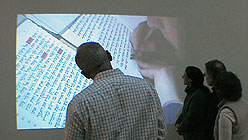
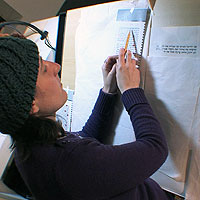
In this segment, Spark heads to San Francisco’s Contemporary Jewish Museum, where Julie Seltzer, a female scribe known as a soferet, is breaking ground by writing out an entire Torah. Being a woman in a traditionally male-dominated field, Seltzer continues to make history, one letter at a time, at the museum until October 3, 2010.

This Week Produced by Spark for This Week in Northern California.

Julie Seltzer

Art figures into the work scribe-in-residence Julie Seltzer creates at the Contemporary Jewish Museum in more ways than one. Commissioned by the San Francisco museum to write the Torah, Judaism’s sacred text, from beginning to end using scribal techniques and traditions passed down for thousands of years, Seltzer must follow strict rules governing the document’s production. And she faces the added challenge of completing the lengthy spiritual practice in plain view of museum visitors observing her progress.

One of very few soferets — a soferet is a woman trained to write the Torah — Seltzer is performing the ritual as part of the museum’s As It Is Written: Project 304,805, a yearlong living exhibition allowing public access to a private religious act almost exclusively performed by male scribes. According to tradition, Seltzer will handwrite the 304,805 letters of the Torah on 62 sheets of paper using parchment ink and feather quills she sharpens by hand.

As she works, Seltzer follows tradition and states out loud the words she is about to write. She then creates the sacred text using calligraphy lettering techniques learned during an apprenticeship with Brooklyn-based soferet Jen Taylor Friedman, widely considered to be the first known woman to write a Torah from beginning to end. Rules dictate how many columns of text appear on each page, how many lines make up a column, and the spacing and formation of each letter.

Seltzer’s work is as potentially controversial as it is methodic and meditative. Performing an act long reserved for men, Seltzer is producing a text that many conservative Jewish communities will not consider Kosher or suitable for religious use. Ultimately, the Torah she completes will be given to a Jewish congregation that is accepting of its origins.

Before becoming the scribe-in-residence at the museum, Seltzer was a baker at a Jewish retreat center, where she often created challah bread depicting Torah scenes and letters from the Torah. Seltzer started her writing of the Torah at the museum in October 2009. The project continues through October 2010.

  • Array

The Fillmore Project

In October 2009, the production model of Spark changed, moving from a stand alone series of original programs to the production of Spark segments, which will be premiered throughout the year as part of the newly re-vamped This Week in Northern California.

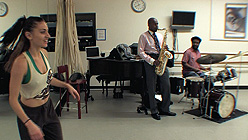
In this segment, we follow choreographer Jacinta Vlach and saxophonist Howard Wiley as they start work on a new dance theater production about San Francisco’s Fillmore District. “The Fillmore Project” is a tribute to the cultural legacy of the neighborhood once known as “The Harlem of the West.”

This Week Produced by Spark for This Week in Northern California.

Shanghai at the Asian Art Museum

In October 2009, the production model of Spark changed, moving from a stand alone series of original programs to the production of Spark segments, which will be premiered throughout the year as part of the newly re-vamped This Week in Northern California.

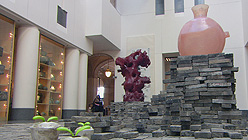
Shanghai at San Francisco’s Asian Art Museum is the first large-scale exhibition to feature the cultural productions of the city of Shanghai. Using a wide range of visual artifacts, the exhibition traces the impact that globalization has had on molding the city’s dynamic, international character. Spark gets a guided tour of this unprecedented exhibit.

This Week Produced by Spark for This Week in Northern California.

Richard Mayhew

In October 2009, the production model of Spark changed, moving from a stand alone series of original programs to the production of Spark segments, which will be premiered throughout the year as part of the newly re-vamped This Week in Northern California.

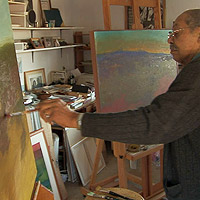
Spark goes to the Museum of the African Diaspora in San Francisco to see an exhibition of paintings by an artist who has been called one of the most important African American landscape painters of the 20th century. But this label doesn’t accurately describe the breadth of Mayhew’s experience and perspective. Spark then travels to Mayhew’s studio near Santa Cruz to discuss his life and work, and watch him paint. The MoAD exhibit runs through March 7, 2010.

This Week Produced by Spark for This Week in Northern California.

Richard Mayhew

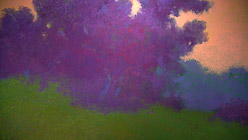
Though he’s considered by many in the art world to be one of the most important abstract landscape artists of the 20th century, Richard Mayhew is more likely to describe his approach not in traditional art terms, but rather in terms more closely associated with jazz music. Frequently referring to himself as an improvisationalist, Mayhew, a one-time jazz singer himself, has been painting dream-like landscapes since his start amid the abstract expressionists of 1950s New York.

By the early 1960s, Mayhew had joined such artists as Romare Bearden, Hale Woodruff, Charles Alston, and Alvin Hollingsworth to become a founding member of Spiral, an influential group of African American artists that sought to use the arts as a vehicle in the fight for civil rights and racial equality. And while continuing to garner critical praise, Mayhew taught in art programs around the country, including a 14-year professorship at Penn State University.

Interestingly for an artist so closely associated with landscapes, Mayhew is less concerned with issues of place than with the spontaneity of the mind, nature, and spirituality. A lone tree, an image rife with symbolic overtones, occupies many works. Its colors and abstractions rove from muted and hazy to brilliant and arresting and back again, sometimes in the space of a single piece.

Spark visits Mayhew at his home studio outside Santa Cruz, California, in 2009. During this time, his work is appearing concurrently at the Museum of the African Diaspora in San Francisco, the Santa Cruz Museum of Art and History, and the de Saisset Museum of Santa Clara as part of a three-part retrospective tracing his career chronologically from the 1950s onward. His work is featured in the permanent collections of such museums as the Whitney Museum of American Art, the Smithsonian Institution, the Metropolitan Museum of Art, and the Los Angeles County Museum, among others.

  • Array
  • Array
  • Array
  • Array
  • Array

Jonathan Moscone

In October 2009, the production model of Spark changed, moving from a stand alone series of original programs to the production of Spark segments, which will be premiered throughout the year as part of the newly re-vamped This Week in Northern California.

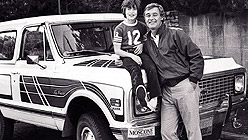
Spark visits California Shakespeare Company’s Jonathan Moscone and Berkeley Repertory Theatre’s Tony Taccone as they discuss their collaboration on “American Revolutions: The United States History Cycle.” The play is inspired by the turbulent 1970s, brought into focus by the assassination of Moscone’s father, George Moscone, San Francisco’s mayor who was shot along with gay rights activist Supervisor Harvey Milk on November 27, 1978. Aiming less to put George Moscone’s story into historical perspective, than to investigate what it means to be a father and a son, the play is scheduled to debut in 2011.

This Week Produced by Spark for This Week in Northern California.

Jonathan Moscone

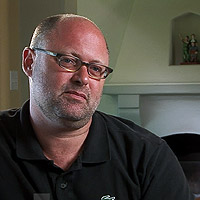
Spark visits California Shakespeare Theater’s Jonathan Moscone and Berkeley Repertory Theatre’s Tony Taccone at the first read-through of their play at the Oregon Shakespeare Festival. Their collaboration on American Revolutions: The United States History Cycle is inspired by the turbulent 1970s, brought into focus by the assassination of Moscone’s father, George Moscone, the San Francisco mayor who was shot, along with gay rights activist City Supervisor Harvey Milk on November 27, 1978. Aiming less to put George Moscone’s story into historical perspective, than to investigate what it means to be father and son, the play is scheduled to debut in 2011.

A New York native and graduate of Boston College, Tony Taccone arrived at Berkeley Rep in 1988, after directing San Francisco’s Eureka Theater for six years. As one of the leading directors in American regional theater, Taccone has developed a reputation for finding and nurturing unusual new works that have gone on to critical acclaim, including The Convict’s Return, Culture Clash in AmeriCCa, The First 100 Years, Geni(us), Ravenshead, and Virgin Molly. For some productions — like Tony Kushner’s Angels in America, Stew’s Passing Strange, Carrie Fisher’s Wishful Drinking and Sarah Jones’s Bridge and Tunnel — Taccone has shaped and honed them before they made successful moves to off-Broadway and Broadway. Others have successfully gone on to different arenas, such as David Edgar’s Continental Divide, which transferred to London’s Barbican Theater and garnered international praise.

Taccone and Jonathan Moscone worked with each other during Moscone’s directorial internship at Berkeley Rep in 1989 before he left to pursue an M.F.A at Yale School of Drama. In 2000, Moscone assumed the directorship of Orinda’s California Shakespeare Festival, expanding the repertoire of the company to include award-winning productions of works by George Bernard Shaw, Oscar Wilde, Anton Chekhov, and Tom Stoppard. Critical accolades have also greeted his productions of Man and Superman, Nicholas Nickleby, Twelfth Night, and The Seagull as well as his production of Henrik Ibsen’s Ghosts for Berkeley Rep.

In a 2008 interview with the Bay Area Reporter, the younger Moscone, who was 14 years old at the time of the shooting, noted that his father “changed City Hall. He made a Harvey Milk possible. He helped Harvey succeed. He opened the doors of city power to those who had been denied entrance.”

  • Array
  • Array
  • Array
  • Array

50 Years of The San Francisco Mime Troupe

In October 2009, the production model of Spark changed, moving from a stand alone series of original programs to the production of Spark segments, which will be premiered throughout the year as part of the newly re-vamped This Week in Northern California.

In this segment, the San Francisco Mime Troupe celebrates 50 years of irreverent and thought-provoking political theater. The segment follows the Troupe as they mount a performance of their new musical comedy: “Too Big to Fail”, and takes a look back at the group’s incarnation and early years.

This Week Produced by Spark for This Week in Northern California.