League of Legends is a video game with 70 million players a month. (Riot Games, Inc)
Imagine the lede in the campus newspaper:
The Eagles swept to a win last night in 100 hours of tournament gameplay. Tabbz made the absolute best usage of the shields and heals that were available to him. Froggen went for utility and pushing power, while Nyph’s black shields were near perfect, and he hit a bunch of bindings. Airwak’s Lee Sin kick ended the encounter with a massive multicolor explosion.
Monday morning quarterbacking will never be the same.
A private university in Chicago has become the first in the country to make video games a varsity sport. Robert Morris University-Illinois says it will offer between 45 and 50 athletic scholarships to competitive gamers who play an online, multiplayer battle-arena video game called League of Legends.
Kurt Melcher, the associate athletic director, has been a gamer himself. He says that in addition to the scholarships, which are worth about $19,000 each, the school will also be looking to hire a video game coach. (Unlike other team coaches, whose job is to get players to practice more and harder, Melcher told Inside Higher Edthat the job for a video game coach is to exhort the team to ease up on the all-night Red Bull marathons and actually include some balance in their lives.)
Why League of Legends? The game has 70 million players per month and was the most popular video game in the U.S. and Europe in 2012 in terms of hours played. It’s a six-year-old descendant of the game Warcraft, featuring a loose medieval/fantasy/Asian theme.
Players spent $624 million last year on in-game purchases like “skins” to modify the look and powers of their “champions.”
“LoL,” as it’s called by fans, is designed for large-scale competition, with players combining into teams to do virtual battle.
In many ways the move marks yet another step in the mainstreaming of video games, which in this context are also called e-sports, within education. There’s already a Collegiate Star League dedicated to video gaming, with teams at 100 universities including MIT and the University of California, Berkeley. At some schools these are official student clubs, while at others they are informal groups of gamers. The RMU Eagles will be part of this league.
They’ll be competing in a North American Collegiate Championship with $100,000 in scholarship prizes. The players are often drawn from a High School Star League, which includes 750 schools. And just as with other college sports, they will have a chance to join the major leagues–that is, Major League Gaming, which by coincidence, held its national championships in Anaheim, California this past weekend.
The connection to traditional sports raises some interesting questions. David Williamson Shaffer, a professor of educational psychology at the University of Wisconsin-Madison and an expert in educational games, says this is a sign of games as a growing “cultural phenomenon.” He compares the move to what many high schools have done by turning debate into a letter ‘sport.’
“It seems to me this fulfills the goals of the university as much as any varsity sport does,” he said. “It provides support for students who have a passion and want to develop it toward mastery and excellence. It attracts students with talent to the university, and promotes the university through the achievements of those students.” The promotional angle is clear here–Robert Morris University-Illinois, a school of 7000 students, reports it has received 70 applications and over 500 email inquiries since the announcement.
The only qualm Shaffer has, he said, is the existence of varsity sports in the first place, and the millions of dollars spent on them by universities around the country. “Whether it makes sense to award scholarships to an academic institution based on performance in a sport (whether electronic or not) is less clear.”
In other words, if giving kids money to hit buttons on a controller seems strange, so is rewarding kids who are good at putting a ball through a hole.
The games-and-learning landscape is changing quickly. What’s happening in classrooms now will look very different in a decade, so what really matters right now is how we frame the conversation. The way we understand the expectations and promises of today’s game-based approaches will have a long-term impact on how we imagine and implement them in the future.
It’s critical that teachers, parents, and administrators understand not only the research, but also the way corporations, foundations, and research organizations are thinking about games and learning. There are big players involved in researching the benefits of game-based learning in schools. Companies and foundations like the Bill and Melinda Gates Foundation, the MacArthur Foundation, the Educational Testing Service (ETS), Pearson, Inc., Electronic Arts (EA), and the Entertainment Software Association (ESA) are all involved. Each has a different role in the matter and teachers have different perceptions of what those roles are.
We have a sense of what research says about the general benefits of gaming, so now we’ll look at summarizing a bit of the scant research that’s specific to the classroom.
Some of the most significant research on game-based learning is done by GlassLab (the Games and Learning Assessment Lab), which was established with a “significant investment” from the Bill & Melinda Gates Foundation in cooperation with the MacArthur Foundation. GlassLab designs and implements game-based formative assessments which, according to SRI, “are being developed in response to the climate of student disengagement that currently exists in many classrooms.” The concept is simple: kids like video games and the hope is that “by applying Evidence Centered Design (ECD), the game-based formative assessments address the needs of both students and teachers for reliable and valid real-time actionable data within a motivating learning environment.”
So far, the research seems to be showing success. The 2013 study, which is the most significant to date, found that “when digital games were compared to other instruction conditions without digital games, there was a moderate to strong effect in favor of digital games in terms of broad cognitive competencies.”
“For a student sitting in the median who doesn’t have a game, his or her learning achievement would have increased by 12 percent if he or she had that game,” said Ed Dieterle, Senior Program Officer for Research, Measurement, and Evaluation for the Bill and Melinda Gates Foundation, in a MindShift article last year. In the world of education achievement, 12 percent is significant.
In the same study, SRI also looked at simulations, and in those studies, students improved by 25 percent. That’s huge. But how do they define a simulation? Think of something that’s more interactive than an animated anatomy lesson and less game-like than Nintendo’s Super Smash Brothers.
The SRI report describes it this way: “A computer simulation is a tool used to explore a real-world or hypothetical phenomenon or system by approximating the behavior of the phenomenon or operation of the system.” According to the SRI study, a simulation differs from a game in that it does not employ a points or “currency” based reward system and it doesn’t have level based achievement goals. In addition, simulations have an “underlying model that is based on some real-world behavior.”
The promise of game-based learning lies in the premise that the technology provides an efficient and effective tool with which to replace a points-based extrinsic motivation system with a contextualized hands-on learning experience. Unlike this SRI study, which uses the word “simulation” to describe this kind of learning, I’ve made the distinction between “gamification” and “game-based learning.” As I’ve argued before, “we don’t need gamification if gamification is about competition and commodification of learning, there’s no need for more commodified motivation. We don’t need more gold coins or badges.” SRI’s findings provide evidence to support this claim.
The key point here is that games themselves are not necessarily competitive. Play is useful because it simulates real life experience — physical, emotional, and/or intellectual — in a safe, iterative and social environment, not because it has winners and losers. The achievement lies in the act of learning and understanding itself. Whether or not we make a distinction between “simulation” and “games” the SRI study shows that interactive digital tools can offer an efficient means to provide effective contextualized learning experiences.
For some of us, these findings are hardly surprising. Many teachers have already intuited how beneficial game-based learning can be. According to the recent teacher’s survey undertaken by the Joan Ganz Cooney Center, 55 percent of students play games at least weekly and 78 percent reported using games in the classroom at all.
These teachers are not newbies. The 694 K-8 teachers surveyed have an average of 14.5 years of experience in the classroom. And 30 percent of the teachers said the games are equally beneficial for all students. But there also seemed to be a trend that identified games as most beneficial for “low-performing students,” “students with emotional/behavioral issues,” “student with cognitive or developmental issues.” In other words, students who have been labeled and/or diagnosed because they struggle within the traditional school environment, benefit from game-based approaches. From the study: “65 percent of teachers note that lower-performing students show increased engagement with content, versus only 3 percent who show a decrease.” This is good news.
In addition, 53 percent of teachers find that video games foster positive collaboration between students. Anyone who has watched kids play video games together has seen this trend: They give each other tips and advice, they share tricks. They teach each other to understand the games’ systems. No wonder gameplay YouTube videos are so popular. Gaming inherently involves systems-thinking which is best taught through collaborative learning. Still, 52 percent of teachers assign digital games as independent activities for students. Only about a third (34 percent) “assign digital games to groups of 3-5 students.” And only 29 percent “direct the whole classroom to use digital games together.”
What accounts for this preference toward independent gameplay among teachers? Perhaps it is leftover residue from an old paradigm that values individual achievement over collaboration.
It’s becoming more apparent that teachers will need to do more than just embrace new technologies. They will also need to embrace the epistemological foundations of these technologies. There are connected, networked ways of knowing that will dominate the digital future. Sharing and collaboration go hand-in-hand with integrating non-competitive and non-commodified ways of playing. The way students play and learn today is the way they will work tomorrow.
3D printers like this one can be found at Monticello High School’s new library/WikiCommons
At a time when public libraries are starting to offer everything from community gardening plots to opportunities to check out humans for conversations, some school libraries are similarly re-evaluating their roles and expanding their offerings.
Case in point: Monticello High School in Charlottesville, Virginia. When librarian Joan Ackroyd arrived there four years ago, she found an environment very different from the “engaging, creative, fun” elementary and middle school libraries to which she was accustomed. “Its library was none of those things,” she recalls. “It was a traditional, quiet research space.”
Ackroyd decided this wasn’t optimal. “People no longer have to come to a library to get information,” she says, “so the library has to get people coming in for different reasons. Students need somewhere to socialize, create things and collaborate.”
As her first step, she and her co-librarian at the time (music teacher Dave Glover), converted a storeroom into a technology lab. They salvaged computers destined for the landfill and installed music-authoring software on them.
Teachers balked because the library was no longer quiet, but students liked it, and many at-risk students became frequent visitors. Some even admitted to Ackroyd that the only reason they still came to school was to go to the lab.
When the principal witnessed this new level of engagement, she decided to support a full library renovation, funded by rent collected from a company that used the space every summer. They hired an experienced library consultant and took inspiration from libraries designed for younger patrons. “We have open, flexible scheduling, and let students in even when other classes are there,” Ackroyd explains. “We also have banked computers that students can use independently, and a circulation desk in a more central area. It’s a matter of attitude, to make students feel welcome any time.”
The book collection was weeded, and shelves were moved to one wall, freeing up space for collaboration and instruction (with glass walls that serve as sound buffers but enable participants to see what’s happening in the rest of the library). Rooms that had been used for offices or storage were turned into student areas. The library now also has reading lounge areas with comfortable modular seating, as well as tables with chairs and stools that students are free to move around; two music studios; a HackerSpace (with high-tech equipment such as a microscope, 3D printer, gaming hardware and software, and a green screen for filming) and a Maker Space that also houses a 3D printer and serves as a “hands-on” craft room where old technology can be disassembled and re-configured with other materials. In short, the Monticello Library Media Center has become a “Learning Commons.”
“Students work more productively in that kind of environment,” Ackroyd says. “It’s not an adversarial relationship, with teachers at the front of the room and students at their desks. It makes the teacher’s job easier and more pleasant.”
“Our library is now more like the workspace of the future,” adds Ackroyd’s fellow librarian, Ida Mae Craddock, who previously taught English at the school. “Kids who graduate from here will be more productive in those environments.”
A New Culture Develops
The new surroundings were also accompanied by a new attitude. “We went from managing students’ time to giving them ownership,” Ackroyd explains. “They’re almost out the door, and they have to be able to manage their time. We are more like an academic library now.”
“They need natural consequences,” Craddock adds. “What happens when adults don’t turn in our work on time? Controlling children that much and then telling them ‘goodbye’ when they turn 18 doesn’t work well.”
But it didn’t happen overnight — the shift entailed a transition period. “At first they came to the library to experience freedom, but they weren’t using it wisely,” Ackroyd recalls. “The first year, and even a little bit into the second year, students saw it as a place where they didn’t have to be quiet anymore, where they could come and laugh. They weren’t studying.”
But now, accepting the responsibility that comes with freedom has become ingrained in the school culture, and new students adjust quickly. “You learn behaviors from the people around you,” Craddock notes. “They train each other, through social learning.”
As a result, parents’ worst fears (of “atrophy, a fate worse than death,” as Craddock puts it) haven’t materialized. “Atrophy is fairly hard to achieve here, because everything is moving,” she says, and students are either busy on their own or engaging each other.
Students are free to use phones and other devices. But no first-person shooter games are allowed, and the library uses county Internet filters. Students police each other if they become disruptive to others.
“They know we trust them, and they trust us,” Ackroyd says. “We form relationships. We circulate all the time, and try to be welcoming.”
A Resource for Teachers
Teachers have come around to embrace the “Learning Commons,” holding classes there when they want to conduct lessons that require research, equipment, additional space, personnel or expertise, or that may get messy. “All that has migrated down here,” Craddock says. “Teachers want to be creative, do interesting things, and engage students. We provide that environment.”
Students are free to use the library during study hall, remediation period, or during internship hours (available to juniors and seniors). They can also use the library during lunch (food and drink are allowed). Some students do their internships in the library, for example by staffing the help desk or maintaining the equipment.
The Virginia School Boards Association recognized the library in its “Showcases for Success,” and other librarians have visited Monticello High School to inform their own practices. Many are stunned by the statistics: the “Learning Commons” logs more than 33,000 student visits per year outside class time (the school’s enrollment is 1,104).
Visitors also ask if it’s loud and messy. “Yes, it is,” Craddock tells them,” because people are loud and messy. It’s not a problem.” To accommodate those students who still want quiet, some areas are designated as quiet spaces during certain periods. Students can also use the office for quiet study. Meanwhile, the rest of the “Learning Commons” is buzzing, which suits this new breed of librarians just fine. “It creeps me out when it’s quiet in here,” Craddock says.
Math teacher Michael Doroquez works with students.
By Matt Levinson
As the school year heads into the final days and weeks, now’s the perfect opportunity to gather feedback from students about their use of iPads. Taking the time to construct a thoughtful survey that will elicit helpful feedback can help set the stage for professional development, program enhancements, and more thoughtful steps into using the devices.
Here are eight key questions to ask:
1. Mobility: How often did you use the iPad indoor versus outdoor? Apple’s Your Verse Ad campaign makes a compelling case for the outdoor use of the iPad. How did your school take advantage of indoor and outdoor spaces with the iPad?
2. Gaming: What types of games did you play? How much time did you spend gaming? Kids love to play games, and learning can be part-and-parcel of playing games.
3. Classes: In which classes did you use the iPad the most? Get specific data and feedback. This can serve as your focal point for professional development efforts with teachers. Without this key data, schools are left guessing.
4. Email: How often did you use your school email? Did you check your email every day? Kids don’t use email. They prefer texting and social media and schools have to create a reason for kids to check and use email. Find out how often and why kids used their school email.
5. Engagement: What was the best assignment you had this year involving the use of the iPad? What made the assignment so strong? Read more about how educators are using iPads to foster collaboration and creation — not just consumption — and using the devices for curation and See this post by Grant Wiggins on student engagement.
6. Screen time: How many hours per day did you spend on a screen at (a) school and at (b) home? There is often a perception in 1-1 iPad schools that kids are on screens all the time. Gathering specific data is important to framing a useful conversation with families about balance both at school and at home.
7. Personalization: What was the most interesting thing you learned on your own on the iPad? Kids can learn a lot on their own, when driven by their interests and passions. Finding out what motivates students can be great information to collect in determining clubs and activities to offer for the following school year.
8. Creation vs. consumption: What percent of your time on the iPad was devoted to creating vs. consuming content? Drawing this distinction can serve as a wonderful way to frame teaching and learning with the iPad for both students and teachers.
More teachers are using digital games in the classroom, and they’re using them more frequently, according to a new teacher survey just released by the Joan Ganz Cooney Center. But more surprisingly, the study reveals that teachers are finding that one of the most impactful use of games is for motivating and rewarding students, specifically those who are low-performing.
The survey, which interviewed 694 K-8 teachers with an average of 14.5 years of teaching experience, aims to understand how and why teachers are using digital games in the classroom.
More than three-quarters of teachers surveyed — 78 percent — report using digital games in class, and that’s up from 50 percent who reported using them in a different survey two years ago. “Teachers say they want to use digital games to deliver standards-based content and assess student knowledge and skills,” said Cooney Center’s Senior Director and Research Scientist (and survey designer) Lori Takeuchi. “But they’re mixed on how effective games have been in doing these things.”
Of those who do use games in the classroom, 53 percent said they use video game devices to motivate and reward students, and 41 percent said they use non-digital games for that same reason. Teachers also said they offer games to their students as a way of giving them a break.
Almost half the teachers surveyed — 47 percent — said low-performing students who’ve been struggling in traditional school settings benefited the most from using games. Conversely, only 15 percent of teachers said that high-performing students benefited from playing games.
Of those who use games in the classroom, more teachers (41 percent) are using them to cover content mandated by state or national standards than for formative assessment (29 percent).
With more findings to be released in a later report, it’s still too soon to find an overarching theme other than the fact that games are becoming more commonplace in classrooms, Takeuchi said. Yet the first half of the survey released Monday does include important information about the future of digital gaming in the classroom.
Teachers report the greatest barriers to using more digital games in the classroom to be time (45 percent) and cost (44 percent), but researchers found that teachers who play digital games themselves are less likely to be unsure of how to integrate games into the classroom (20 percent) as compared to teachers who don’t play digital games outside the classroom (29 percent).
Perhaps most surprising is the strong use of non-digital games, more than video games, to connect students to one another: 41 percent of teachers use non-digital games to practice material already learned, 41 percent for motivation and reward, and 26 percent use them to “connect students to one another.”
Gamesandlearning.org
What is it about a game of Scrabble or Sorry that fosters connection? Takeuchi said that it’s more than just the individual nature of digital games — in fact, the survey suggests that most digital game-playing students play in twos or small groups. “What’s interesting about the board game findings is that they’re still being used quite a lot – more than video games,” said Takeuchi. “And there is something about the face-to-face orientation of board game play, and the fact that you have to play board games with other people that make ‘connection’ a frequent purpose of this medium in K-8 classrooms.”
The release of the Gates Foundation-funded survey is seen as a timely conversation due to a convergence of factors surrounding games in the classroom. “There are demographic, policy, and empirical circumstances that make this survey particularly timely,” Takeuchi said.
In 2014, 91 percent of 2–17-year-olds play video games (NPD, 2013), and 58 percent of American adults also play, according to the Entertainment Software Association’s 2013 estimates. “And since teachers are adults, it stands to reason that today’s teachers would be more open to the notion of using games to teach,” Takeuchi said. In addition, the Common Core implementation has teachers searching for ways to deliver content set by the new standards, and two recent meta-analyses published by GlassLab, according to Takeuchi, “have unequivocally ruled in DGBL’s (Digital Game-Based Learning’s) favor.”
DIFFERENT DEVICES
As expected, teachers are using tech in the classroom regularly: 81 percent of teachers report using laptops and desktops on a weekly basis. The technology teachers rely on most to deliver new material to students are projectors (72 percent) and digital white boards (73 percent). While this conjures the image of a traditional lecture model on nothing more than fancier devices, Takeuchi said that digital white boards and projectors offer much more: both can be used for multiple purposes, including group digital game play. When it comes to assessment, teachers appear to be split, but most do not currently use technology to assess students.
About half of teachers (55 percent) report using digital games in classrooms, most commonly on Mac or PC desktops and laptops, on a weekly basis — though Takeuchi said they defined “digital games” for the survey quite broadly.* With thousands of games to choose from, finding the most appropriate ones for their class is teachers’ biggest complaint, according to the study. For the most part, teachers choose which games to use by talking with other teachers, playing with the games themselves, and asking students their opinions about the games.
Other factors in drawing teachers toward games include whether they track students’ performance (43 percent) and whether they find evidence that the game is effective (37 percent). Perhaps surprisingly, only 15 percent of teachers noted the reviews the game received and only a quarter cited the cost of the games as factors that influenced their decisions to use a game in the classroom.
The use of video gaming devices in particular in classrooms remains low. Nearly 80 percent of teachers report they “never” use video gaming devices in the classroom, and only 13 percent report use these devices to cover new material. But when it comes to motivating or rewarding students for a job well done, 53 percent of teachers allow students to play video games on gaming devices as motivation or reward. (Nearly half of teachers surveyed use TV, DVDs and DVR for the same purpose.)
More information on teachers and games, including gaming teacher profiles and the kinds of students who seem to benefit most from digital games, is coming when the second half of the survey is released in the fall of 2014. At that time, researches will get a more complete view of where classrooms are when it comes to game-based learning, and how far they have to go.
* Update June 10, 2014: This version of the article reflects the removal of a reference to games that were not part of the initial release of the study.
As game-based learning increases in popularity, it’s easy to get pigeon-holed into one particular way of thinking about it or one way of employing it. This is true regardless of how teachers feel about gaming in the classroom, whether they’re for or against it.
One common objection to game-based learning is that students will sit in front of screens being taught at. Sure, games are interactive, but on some level, don’t they still just replace the sage on the stage with the sage on the screen? Does a joystick really change the nature of pedagogy?
In previous posts in this series, I’ve argued that because games involve systems thinking, they contextualize learning. Game-based learning could bring us a step closer to John Dewey’s call for “learning by doing.”
However, virtual simulations of hands-on experience are not the same as tangibly engaging with the world. Simulating doing is, by definition, not the real thing. Plus, some of game-based learning’s strengths can also be seen as weaknesses. Games provide sequenced instruction blended with practice, feedback, and assessment. But even adaptive games have a finite number of sequential variations. Structures, and therefore, frameworks and perspectives, all remain fixed in a game. Certainly it is part of an educator’s job to frame content, but we don’t want to do it in a way that prevents students from figuring out their own way to make meaning out of the material. In order to model a respect for diverse perspectives, we need to employ a variety of teaching methods.
Fortunately, few people are calling for games to replace school as we know it. Kids shouldn’t sit in front of screens all day. Games are just one of the many tools that teachers can use in the classroom. In addition, there is more than one way to teach using games. It’s not just about playing the games, it’s also about making them. Game making is one way to create a space where students are empowered to freely experiment with their own way of framing ideas and choosing perspectives. In this way, game making is tantamount to project-based learning.
Just as there are many apps and platforms designed to teach kids coding, there are also many apps and platforms that make it easy for kids to design their own games. Gamestar Mechanic is one of the better examples.
Created by E-Line Media and the Institute of Play, with initial funding from the MacArthur Foundation, Gamestar Mechanic is currently used in more than 7,000 schools, with over 600,000 youth-created games published and played over 20 million times in 100+ countries. It was created, the company states, “with the understanding that game design is an activity that allows learners to build technical, technological, artistic, cognitive, social, and linguistic skills suitable for our current and future world.”
Gamestar Mechanic is a web-based software platform with a drag and drop interface that makes it simple for kids to make their own games. Successfully manipulating Gamestar Mechanic requires that students learn pretty sophisticated “systems thinking,” or systems-based problem solving. “Game mechanics” learn to adjust settings and manipulate the relationship between components within a particular framework.
Brian Alspach, Executive Vice President at E-Line Media, explains that “a game is a system designed to create a fun, challenging experience for the player. Within the systems they design, kids get to set how things work, and their rules can be very different from the real world. Kids have to understand how all the pieces of the system they design will fit together. This system based thinking — which can let you create a really fun, well-designed and unique game — is also vital in understanding how systems in the real world work.”
Just fiddling with Gamestar Mechanic, or some other game design platform is a great way to get students thinking about how separate components relate to one another within a fixed system. On a general level, it might serve as a way to convey the nature of bio-systems or economic systems. By constructing their own games, students get a tangible project-based introduction to the big abstract concept of systems thinking. But there’s no reason to be so philosophical. It can also be concrete. Teachers have also created game-making exercises that “provide reinforcement and review of concepts related to ratios, proportions and percents.”
Additionally, game design is one way that the arts and humanities can benefit from game-based learning. In a world of non-linear networked communication, modes of self-expression take on new forms. The personal essay, the autobiography, and the self-portrait are no longer sufficient by themselves. Intelligent educational models need to consider how to provide meaningful creative and interpretive skills that embrace interactive social technologies. Forward thinking teachers in so-called “soft” subjects might begin to see video games as a new narrative genre. Perhaps we can reimagine some of our creative writing assignments so that students design games, exploring nonlinear narrative conventions in addition to linear ones. Both are forms of self-expression.
Scratch, from MIT media lab, is another simple platform that allows students to build their own “interactive stories, games, and animations.” Based on basic coding, or algorithmic thinking, “Scratch helps young people learn to think creatively, reason systematically, and work collaboratively — essential skills for life in the 21st century.” Scratch emphasizes the way coding can break down the boundary between STEM and ELA education.
Although coding, as a skill, is usually classified as a STEM subject, game design shows kids that it is ultimately a semiotic system. That is, it is about language. Through design-thinking, coding allows folks to put together specific metaphors, signs, and systems in ways that enable the articulation of experiences through a shared system of meaning-making. Whether they belong to STEM or ELA, metaphors are all we have. We represent the universe through analogies that make social, technological, and medical accomplishments possible.
The great thing about any kind of project based learning — whether it involves game design or not — is that when students make meaning through creative articulations, they have to make active and intentional choices. Just as students need to choose paint colors or media in a fine arts class, they need to choose components in order to make a game. While these might seems like simple aesthetic choices, the right mentoring can show students how they are constructing their framework, how constructing a system is like constructing a viewpoint. When we challenge students to consider and explain why they make each choice, a sophisticated lesson in perspective is learned in a fun, engaging, hands-on way.
I’ve written a lot about metacognition in this series, emphasizing the importance of teaching kids to think about their own thinking. With game design students take metacognition to the next level, learning that ideas are constructed. They understand that knowledge is always framed from a particular perspective, with a particular kind of intention. The benefits of this kind of reflexive consideration are intellectual, social, and emotional.
Intellectually, students learn that all information is presented in some way — a lesson in methodology and epistemology. Socially, they become cognizant of the ways in which others construct knowledge — a lesson in tolerance and empathy. Emotionally, they understand that feelings are part of a complex meaning system within which individuals are empowered to make their own decisions — they have emotions rather than emotions having them.
Imagine a classroom where you swap back and forth between books, essays, lectures, and games. Imagine if your students sometimes demonstrated understanding and retention by expressing themselves using game design platforms. Students might even begin to design their own learning games, constructing game-based curriculum for other students. Every teacher knows that the best way to learn is to teach. If an individual can create a game that delivers the content, you can be pretty sure that he or she understands it in a comprehensive way.
For years, most people thought that video games were like candy: mostly bad, tempting to children, but okay in moderation. Now we understand that they can have more “nutritional” value than our parents ever imagined.
My brothers and I played Space Invaders and Pac Man, Asteroids and Breakout. We pulled the plastic casing off the Atari joystick and stuck the accordioned bottom end to our foreheads like a suction cup. These were still the early days of interactive home computing and because game consoles were so unfamiliar, the adults were afraid. Surely, they assumed, staring at a box of glowing light while pressing buttons in response to electronic triggers would cause some invisible neural damage.
Kids played video games for hours. They wiggled joysticks and maneuvered “paddles” until they discovered the game’s patterns. They talked about the games with their friends. They shared tips and tricks. Even if they were learning together, and if the arcade was always a kind of educational community, what exactly were they learning? Clearly, not the things that mattered. All learning is not good learning. Something had to be done.
Along came Oregon Trail, Reader Rabbit, Math Blaster, and others. Gamification was not yet a household word. Back then, folks “school-ified” video games. The shoot-em up alien attack narratives were replaced with educational curriculum: facts about letters, numbers, history, science. Each correct solution launched a missile at your enemy. If kids were going to memorize all the details of a video game, why not construct those details so that they align with classroom content? It made sense. And it worked. Many of us learned touch typing from Mario and geography from Carmen Sandiego.
Clearly, the world has changed considerably since then. Interacting with machines is commonplace. It’s normal to respond to screen-based electronic stimuli. Work almost always involves some interaction with digital platforms. Maybe this is why video games no longer inspire the same kind of anxiety and terror from parents and caregivers as they once did. In fact, we now know that games can teach much more than just content. There are social, emotional, and meta-cognitive benefits.
In 2013, the American Psychological Association published a study that identified some of the benefits of gaming, and the results were surprising. For example, in controlled tests, kids who played first-person shooters showed “faster and more accurate attention allocation, higher spatial resolution in visual processing, and enhanced mental rotation abilities.” This likely has very little to do with the violent narrative and a lot to do with repetitive execution of reflex-based actions. Essentially, first person shooters are intricate 3D virtual simulations of the carnival classic “whack-a-mole.” Players need to react fast. This is why kids who play a lot of games seem to show “measurable changes in neural processing and efficiency” and a positive increase in creativity. Players practice quick thinking and hurried response.
Of course, neural advantages like these are vague and invisible. Research that assumes a biologically deterministic view of humanity should be questioned. When we imagine ourselves as cellular organisms first and only second as uniquely human, we equate ourselves with amoebas, insects, and animals. This theoretical approach implicitly assumes that our development and actions are determined by electrochemical and biological impulses alone. Instinct reigns. The classic conception that distinguishes humans as “moral” animals is rendered obsolete. These neuroscientific discoveries may be accurate, but when it comes to learning, is this approach useful? After all, our intention is not husbandry in a petri dish. Instead, we aim to nurture human citizens that contribute to an ethical civilization.
We want our children to develop strong meta-cognitive skills. We want students to become critical thinkers that are motivated to make a difference in the world. When it comes to motivation, look to the work of Carol Dweck, Stanford professor who writes about motivation and social development. She makes a distinction between an entity theory of intelligence and an incremental theory of intelligence. When kids develop an entity theory of intelligence, they believe they have innate, fixed traits. They’re praised for being smart, or being good at math. It has a negative impact on long term attitudes. When kids develop an incremental theory of intelligence, on the other hand, they understand that they have certain skills. They are praised for their effort: “you worked so hard on that problem, you solved that puzzle.” They have a growth mindset.
Video games nurture an incremental understanding of intelligence. Because players are rewarded for one task at a time — for overcoming one obstacle after another — they learn to understand learning and accomplishment iteratively. For example, each track in Nintendo’s classic game Mario Kart has its own particular challenges. Each time a player drives it he or she addresses the weaknesses of the previous attempt. The player iterates performance incrementally, addressing shortcomings and adjusting accordingly. He or she understands that mastering one course doesn’t necessarily equate to mastery of the next. A new learning process begins at the conclusion of the previous one.
Games designed for the classroom can leverage the same sort of motivational intelligence. Consider a game like Reach For The Sun (Filament Games). This resource management game is designed to teach plant life cycle sciences and photosynthesis. Players are challenged to “become a plant” and balance resources like starch and water. “Extend your roots, sprout leaves, and make your flowers bloom before winter hits.”
Succeeding in Reach For The Sun is about more than just trial and error. It involves an incremental approach that’s way more authentic than a workbook, lecture, or a quiz. It is not about right and wrong; it is about simulation. Students don’t just retain textbook bullet points of photosynthesis. They understand in an experiential way that the plant is a vibrant, dynamic life system that is constantly adjusting to its surroundings. They succeed when they comprehend the way a plant relates to the world around it. Learning is about incrementally applying content in context. And context is all about iterating relationships.
In the process of learning to incrementally iterate in context, students are developing metacognitive skills. Put simply, metacognition describes an individual’s ability to think about his or her own thinking. Among other things, it refers to the ability to self-evaluate a thought process and to iterate based on an analysis of strengths and weaknesses. For learners, strong metacognitive functions translate into study skills. Strong metacognitive functions mean students have the ability to identify problem areas and seek out the necessary and deliberate practice needed to compensate for weaknesses.
Metacognition is also another word for what educators are talking about when we say we want to create life-long learners. When we talk about critical thinking, problem solving skills, creating innovators, or nurturing perseverance, we’re talking about metacognition.
Those skills are not really unique to the new millenium. They are the same reflexive skills that have always been the prerequisite to critical thinking. Character education is code for metacognition. It’s all about producing individuals who have the desire, the drive, and the skill, to look at themselves and evaluate the way they think about their place in the world.
Most importantly, strong metacognitive skills translate into strong interpersonal skills. After all, the ability to look at yourself is one of life’s most important social skills. How can you relate to others if you can’t even relate to yourself? Not well. Relationships, conflict resolution, and emotional intelligence all require strong metacognitive skills.
What does this have to do with video games? A lot: 70 percent of gamers play their games with other people. Contrary to the popular image of the gamer as an awkward, socially inept loner, players are actually engaged with one another. Think back to that educational community that emerged in every 1980s pizza parlor around the Ms. Pacman machine. Gamers play cooperatively. They play competitively. They share tips and tricks. They work together. The teach each other how to get better at the game-
Imagine a classroom where collaboration is the norm. Where assessment is collective and individual assessment and competition do not create a culture of “entity intelligence.” Game-based learning is one tool that can help make it a reality.
A new group of developers is trying to tackle the educational app market, which has huge potential for profits, but has been hard to crack because of parent and teacher skepticism about what’s actually considered educational. Zynga, an established commercial game company responsible for hits like Farmville and Words with Friends, is hosting the non-profit accelerator in its building. Now in its second cohort, Zynga’s co.lab offers nascent game developers access to advice from experienced game, marketing and product experts.
The co.lab’s first group of developers, which included the hit game Motion Math, worked mostly on games with a clear focus on math or reading, but this group is interpreting the definition of education a bit more broadly and attempting more open-ended learning outcomes. What’s more, many of the games in this second cohort are targeting the commercial market first, through parents, while other companies, like Filament Games are trying to broaden the use of games in schools.
“Kids are spending a lot of time playing games and parents have no idea if it’s junk food or organic food,” said Esteban Sosnik, executive director of co.lab. As educational games take off, he says parents will be looking for a trusted brand and the right metrics to gauge whether their children are really learning. The co.lab is trying to instill that kind of accountability into the game design process.
Zynga’s affiliation with the co.lab is meant to help them develop a profitable business model that will scale, which means starting in the commercial market. But Sosnik says the current cohort of developers wouldn’t have been chosen if they hadn’t demonstrated their interest in entering the school market as well — and that’s hard to do. “It’s hard enough to make a successful game,” Sosnik said. “For our entrepreneurs, you need to do that and deliver on an educational promise and get teachers to use it in the classroom.” He laughed. “When you look at it that way, you understand why so many people stay away. But that’s why we hope to create some successful models that will inspire people,” he said.
It’s been difficult to prove learning efficacy from educational apps. A Joan Ganz Cooney Center has been calling for either voluntary or regulatory reporting on app and game efficacy. But it’s still very early days, and new studies are rolling in all the time, with some reports suggesting that some math and science games do boost students’ test scores.
UPCOMING APPS
One of the companies Sosnik is most excited about is TinyTap, an app that allows kids and teachers to create their own content. “It’s the potential of putting kids in the driver seat,” Sosnik said. “And turning educators into content creators, the rock stars.” The app allows a user to create a series of pages — what amounts to an app in and of itself — that explains a concept. It offers a lot of room for creative play by allowing the creator to find and use images online, record narration, and create a narrative sequence themselves. Users can follow one another’s profiles and TinyTap will even highlight really strong educator content so other teachers can find it.
Another co.lab company, Pixowl, leverages the popularity of the building game Minecraft, which is very popular with educators because of its open building premise. It offers a similar kind of limitless exploration, but in a two-dimensional world. Players can immediately start building things, rather than Minecraft’s model of wandering around the space collecting resources that eventually allow them to build.
Brainquake is an exploratory math game that allows for experimentation, meant to help kids develop an understanding of what numbers mean beyond the symbol. If a child gets something wrong while playing the game, there’s no red X or other sign of failure. They just keep trying until they get it right.
Kiko Labs is a brain training game for kids aged three to six. The idea is to help them develop memory, control and attention through different exercises. Kiko Lab’s CEO Grace Wardhana has young children of her own and is sensitive to the concerns that little kids shouldn’t be on screens for long periods of time. To address this, she’s designed each session to be just a few minutes long. The company is working with educators at University of California, Berkeley and Harvard to externally validate the game’s efficacy.
Timbuktu is a game meant to teach kids about healthy eating and the importance of physical activity. The game designers are trying to incorporate prompts for kids to go outdoors and engage in physical play as part of the virtual game. That part is still in development.
Kid Bunch is more of a narrative than a game right now, but they hope the accelerator will help them parlay the animation and storytelling they’ve already been working on into a gaming environment. They’re in the accelerator to learn how to make a game.
CourseMaster is the outlier, with a platform to allow offline and online communication between teachers, students and parents.
By now, you’ve probably heard the buzzwords: “game-based learning” and “gamification” are pervading headlines in education coverage. Video games have always been popular with kids, but now increasingly, educators are trying to leverage the interactive power of video games for learning. Why? It turns out games are actually really good teachers.
Think about the compounding way in which Angry Birds teaches the rules, one baby step at a time, one superpower after another. Video games teach players the skills needed to overcome particular kinds of challenges; then they require a demonstration of mastery in order to move onto the next level. Players may get three or four chances to show their ability to execute the new skill. If they fail, it’s back to the prior level. If they succeed, it’s on to the next.
Think about popular games, old and new: Pac-Man, Mario Brothers, Space Invaders, Minecraft. Even very small kids can learn to play really complex games. Kids play for hours until they master the game, until they discover the patterns. They talk about it with their friends. They share tips. They share tricks. They learn together.
All games facilitate some kind of learning. Even games that are not meant to be educational teach kids something — even if it’s just the rules of the game. The learning is so effective that it deserves our attention. Educational psychologists study it. Sociologists study it. Neuroscientists study it. They’re all trying to figure out what makes the great games work. In some cases, researchers are attempting to isolate and identify the attributes of video games that stimulate engagement and perseverance. It is this kind of research that has led to the “gamification” trend.
Gamification is popular in advertising, human resources, coffee shop loyalty programs, ongoing fast food promotions. Think of McDonald’s Monopoly game as an early example of intentional gamification. In general, gamification attempts to superimpose the stimulating motivational aspects of the game world onto the life world.
Across the country, teachers are using gamification in their classrooms every day. They gamify learning by replacing grades with levels and merit badges. Rather than simply delivering lectures and then testing for retention, gamification manifests when teachers create project-based units where completion, or the demonstration of mastery, is what allows the student to move on.
Perhaps students receive badges recognizing the successful completion of each assignment. Maybe future learning units are imagined like sequential game worlds–a certain number of badges are required to “open each portal.” The portal is the next lesson or the next learning module. When learning is structured this way, students intuitively understand the cumulative nature of learning. They’re motivated to master a compounding sequence of skills.
TAPPING INTO THE NATURAL INSTINCT TO LEARN
Any teacher can implement a “gamified” approach fairly easily — you don’t need tablets or laptop computers. It’s a matter of reframing traditional assignments as inquiry-based individual or group projects. It’s also a matter of employing a more mastery-based assessment strategy that’s grounded in project-based learning and understanding the motivational benefits of a more game-like structure. Done well, gamifying the classroom encourages students to be motivated by the excitement of moving on to new challenges. Gaming emotions like “Fiero” become a commonplace part of the learning experience. Fiero is the rush of excitement that gamers experience when they overcome challenges. In Reality is Broken, a popular book that suggests ways to bring the wisdom of the game-world into the real-word, Jane McGonigal writes:
Fiero, according to researchers at the Center for Interdisciplinary Brain Science Research at Stanford, is the emotion that first created the desire to leave the cave and conquer the world. It’s a craving for challenges that we can overcome, battles we can win, and dangers we can vanquish.
Scientist have recently documented that fiero is one of the most powerful neurochemical highs we can experience. It involves three different structures of the reward circuitry of the brain, including the mesocorticolimbic center, which is most typically associated with reward and addiction. Fiero is a rush unlike any other rush, and the more challenging the obstacle we overcome, the more intense the fiero.
Obviously, when researchers stick their microscopes in people’s brains they don’t find neuro-receptors with the word “fiero” scribbled on them like tiny calligraphy on a minuscule grain of rice. But the word “fiero” was chosen by researchers for a reason — to signify a particular neurochemical phenomena. Why that word?
The Italian word “fiero” comes from the same Latin root as our English word “fierce.” This is not only because the particular kind of pride that fiero describes makes us feel like an aggressive alpha predator at the top of the virtual food chain. Fiero also has to do with feeling of wildness. The Latin root “fiera” is also the origin of the English word “feral,” which means untamed or undomesticated.
The feeling of fiero, then, is less about pride and more about being your untamed self. Fiero is about the way you feel when you are liberated from restrictions and constraints and enabled to just be uninhibited, to play free. Gamers want those little rushes of fiero because, in a way, it’s the opposite of feeling self-conscious, of feeling like they need to conform. It neurochemically reminds them that they have the ability to respond in an unrestrained way to the immediate circumstances of the world around them.
In the classroom, fiero makes students see that they’re empowered players in their own education. They’re released into the exciting adventure that learning can be. Without the intrinsic motivating power of fiero, however, gamification becomes nothing more than semantic spin: a language game in which a letter-based grade system is replaced by a points-based reward system. In these cases, gamification does little to address the shortcomings of a system that relies on high-stakes testing.
Be wary of gamifying your classroom in a way that disempowers students through extrinsic rewards. Remember, it is not the gold stars, points, or smiley faces that motivate gamers (nor students). Stars, points, and badges are simply symbolic representations marking a task well-done. All teachers, however, can attempt to harness the motivational power of fiero.
GAME-BASED LEARNING VS. GAMIFICATION
Game-based learning is another great way to empower your students to engage with intellectual problems. They get to experience the fiero rush that comes with knowing that they successfully overcame a challenge. That’s right: game-based learning is different from gamification. Gamification is about making a non-game into a game. Game-based learning usually refers to using actual digital video games as a classroom tool (although, traditional non electronic role playing and board games work exactly the same way, but perhaps not so efficiently), and there’s a slew of video games, digital apps, and adaptive software platforms that can be used for instruction. Some are great, while others are not so helpful.
Each time we reframe class content in order to clarify something, we’re reaching for a tool. Every time we try a different activity with the hope that this approach will deepen our students’ understanding, we’re using a new tool. Teachers can never have too many tools in their tool boxes. Tools enable flexibility and great teaching requires being adaptable.
This blog series is an in-depth guide to game-based teaching tools. It’s about making it easy for you to adopt games for teaching. It’s not that we want you to replace what you’re already doing with video games. Instead, we want you to supplement and compliment your already successful strategies with another potentially powerful tool.
Over the next few weeks and months, we’ll explain the key ideas in game-based learning. We’ll discuss pedagogy, implementation, and assessment. We’ll summarize the research and provide suggestions for practical use. We’ll talk about the pros and cons of game-based learning. We’ll offer you a guide for adding games to your classroom.
Play is nothing if not social. Games organize play, allowing us to wrangle and experiment with the world. When we play games, more often than not, it’s us under the microscope.
Video games, however, have been a bit of an aberration in the history of play and games. Many of them have been solitary experiences. That’s changing, though. We’re in the midst of a multiplayer video game renaissance that’s bringing people together. Equally exciting is the trend in design toward video games that build social skills and encourage players to reflect on themselves and their relationships. Here are a few games that do just that.
This app features a series of appealing animated episodes that model real world social situations. Rather than passively watching the scenes play out, kids have choices to make, such as helping the characters navigate common social interactions, follow social cues, and make the appropriate decisions. Along the way, they learn key social skills in a safe environment that makes it much easier to transfer the skills into daily life.
Billed as an “indie minimalist platformer,” Thomas Was Alone’s characters are just colorful shapes, yet they all have distinct personalities. The game’s well-crafted narration provides the characters with personality strengths and weaknesses mirrored in differing abilities and mechanics. By guiding these characters through the world and empathizing with them, players naturally map themselves and their relationships on the characters. It’s a great example of how a single player experience can still build social and emotional intelligence. One teacher on Common Sense Education loves that it focuses on “character building” and “made… students stop and think.”
The most experimental and perhaps most irresistibly interesting game on this list, Way makes collaboration and communication crucial to success. Players get paired together and then guide each other through a level using gesture and non-verbal cues. Players take turns being the guide and guided, experiencing what it’s like to be responsible for someone else as well as what it’s like to place trust in another. It’s a simple but smart concept that helps kids be better collaborators while simultaneously getting them to think critically about all the myriad ways we communicate.
Developed by learning and behavior experts, Social Adventures offers a treasure trove of resources for caregivers or educators looking for ways to help kids –particularly those with learning difficulties or special needs – learn about and practice basic social strategies, skills, and routines. While it’s not necessarily a game, it features a host of activities and games caregivers and educators can facilitate with individual kids or small groups.
Social Adventures” credit=”
All of the games above are designed – both explicitly and implicitly – to be pro-social, but what about games that aren’t? Caregivers and educators need to recognize that all of the games kids play — whether on a field, tabletop, or screen – can be deeply social. Kids need the tools to make sure that these gaming experiences are enriching and productive. The games on this list are a good first spark to get kids on their way.
Tanner Higgin is director, education editorial strategy at Common Sense Education, which helps educators find the best edtech tools, learn best practices for teaching with tech, and equip students with the skills they need to use technology thoughtfully, critically, and creatively. Go to Common Sense Education for free resources, including full reviews of digital tools.
Web-based games can prove to be a treasure trove of learning opportunities, and there are a variety of content-areas, age ranges, and skill levels to choose from. The true pay dirt for browser-based learning games can be found on large online digital game hubs. Here are 10 game hubs players that teachers can use to as one tool in their arsenal.
Headed by Brad Sheppard, Sheppard Software hosts hundreds of free, online, educational games for kids. The site organizes its games into categories, which allow students and teachers to easily navigate by subject area and find a suitable game that caters to either an instructional need or a child’s sense of curiosity and thirst of knowledge and challenge.
PBS KIDS creates curriculum-based entertainment. The games site hosts a number of browser-based gaming experiences based on popular literary and media franchises such as The Cat in the Hat, Curious George, Sesame Street, and more. Games are organized by subject-type, which includes math, healthy habits, science, reading, and teamwork.
Created by Greg Nussbaum, a Virginia public school teacher, Mr. Nussbaum boasts over 3,500 content pages with a wide variety of learning games organized by content type and grade level. This site is also optimized for use on a tablet and an interactive whiteboard.
Under the creative direction of Jeff Kinney, author of Diary of a Wimpy Kid, Poptropica® is a virtual world in which kids explore and play in complete safety. Every month, millions of kids from around the world are entertained and informed by Poptropica’s engaging quests, stories, and games.
Funbrain, created for kids ages preschool through grade 8, offers more than 100 fun, interactive games that develop skills in math, reading, and literacy. Plus, kids can read a variety of popular books and comics on the site, including Diary of a Wimpy Kid, Amelia Writes Again, and Brewster Rocket.
The British counterpart of our PBS, the BBC, offers interactive digital games and activities involving subjects such as literacy, numeracy, history, mathematics, music, and the arts. The games are also categorized into age ranges. The cartoon graphics are very appealing for children, but the content is stellar for teachers and parents that want children to play to learn.
With games and activities that meet curriculum needs for math, science, language arts, and social studies, Primary Games houses over 1,000 game titles. The site includes curriculum guides for teachers to use in conjunction with the games.
This game site offers teacher-created and approved educational computer games for elementary students to learn math and language arts on the web. Featured by The New York Times, Apple, and Fox News, ABCYa.com provides young children well-crafted games and activities.
Arcademic Skill Builders are online educational video games that offer a powerful approach to learning basic math, language arts, vocabulary, and thinking skills. Arcademic games challenge students to improve their scores through repetitive, timed learning drills that provide immediate feedback.
Ryan Schaaf is Assistant Professor of Technology at the School of Education at Notre Dame of Maryland University.
Between societal changes and technological breakthroughs, it’s become abundantly clear that the human brain is transforming the way it processes and learns information. While there are many discussions about whether or not this is good or bad for us as a society, it’s definitely a change.
As educators, it’s our job to make sure that students (and adults) are learning. Part of that process isn’t only about making an engaging activity or lesson, but also realizing how the modern brain learns. Teachers all over America are faced with this challenge of keeping students engaged in the classroom when their world outside of school is one of constant engagement and stimulation. Knowing the world outside of our institutional walls is only one step in addressing modern learning styles. How to act and adjust schools today is the next step in making the classroom of today ready for tomorrow.
To do that, let’s examine which features of society (and media) have changed and then consider what we can do in education to use it as an advantage for learning.
The Increase of Interactivity
One only need to look at the gaming market to see the evolution of how our brains crave interaction. We went from Backgammon to Atari and realized that with some simple interaction, like a yellow circle eating dots, our brains could stay occupied for hours. The recent shift to touch screen and even motion-based interaction means that we now involve our whole body when interacting with games.
Classroom Outcome: We might notice that our students seem more “antsy,” but in reality, sitting still in a seat for several hours has never been ideal for learning. Research is now becoming more abundant to back that statement. Incorporating regular brain breaks or mini-activities that require kids to move every 15-30 minutes re-invigorate the brain and get them refocused in the tasks at hand.
On-Demand Living
Most of us grew up in an era of either three basic television channels or the privilege of many via paid cable. With the digital era, television and movies have seen an exponential change in how they are distributed and accessed. You no longer have to wait for that favorite re-run of Moonlighting; today, you can just pull it up on your phone. Better yet, you can pause it on one device and then watch it on another when you choose. If you really get hooked on a show, why wait a week when you can just binge view it?
Classroom Outcome:Flipped-teaching comes to mind when thinking of the “on-demand” model of learning. Not everyone has the time or energy for a full-fledged flipped-teaching model (not to mention at-home access for all students), but recording some lessons or concepts for later viewing, even in class, would be one way to let students have access to information when they want it. Wouldn’t it be nice if kids wanted to binge learn?
Self-Publishing the World As We See It
They ways we viewed and read the news was previously distributed to us through a filter. Publisher, editor, advertisers, and corporations decided what we should watch and read when it came to content. In some ways, the classroom has followed a similar path. Look at the world now when it comes to news. We are all publishing to the world around us in blogs, tweets, posts and…yes…even Instagram selfies. Our brains are no longer designed to sit back and take what is given to us. We want to create and share what we see and learn too.
Classroom Outcome: This is one area where I feel that education has excelled, but there is still room for improvement. We’ve always encouraged students to write and report on what they think or believe. As students, we learned to play the game of “know your audience” when it came to writing a paper for a certain professor. Our purpose was writing for writing’s sake. Now we no longer have to limit ourselves to one recipient. Our students have access to a global audience and don’t have to write just to please one teacher. They can write based on what they see and believe to be true.
Everything is Mobile (and Instant)
As fast as the internet took the world by storm, the mobile revolution dropped a bomb of societal change and practice. People can now have all of their media in the palm of their hand. They can connect with anyone, anywhere. While there isn’t always value to why we use our devices, having that instant access means our brains can now outsource menial facts and focus on application and creation rather than retention.
Classroom Outcome: One of the greatest challenges to the classrooms of today is mobile technology. Do we fund a 1:1 program? Allow a Bring Your Own Device policy? Won’t this just add the distraction of the outside world into a classroom? Rather than avoid or ban the use of mobile devices, some are embracing it as a way to not only engage learners, but also dig deeper into learning. This isn’t without its pitfalls, and can be quite messy, but setting expectations of use can be a powerful way to model how our kids use these in the non-school setting. Maybe instead of whipping out their phones when at a restaurant, kids will actually sit and have a conversation with the grown-ups around them. Of course, this is assuming the grown-ups have put down their devices too.
Embracing the Digital Brain
As we can see from these few examples, the world around us is changing. This change affects the way we think, learn, and connect. In education, we have three options when dealing with these changes: avoid it, struggle with it, or embrace it. Technology would seem to be the panacea for solving all of these issues when it comes to engaging the digital brain. However, while it does have an impact in the classroom, the greatest impact still lies within the teacher and the content that they are trying to get their students to learn. Until the pedagogy and purpose align with this new world, we are all left fighting a battle rather than embracing it.
Carl Hooker is the Director of Instructional Technology for Eanes ISD in Texas, an Apple Distinguished Educator, an EdTechTeacher consultant/trainer, and founder of iPadpalooza.
Alex Tu, left, an Advanced Placement student, works during a computer science class in Midwest City, Okla. There's been a sharp decline in the number of computer science classes offered in U.S. secondary schools.
By Eric Westervelt
A handful of nonprofit and for-profit groups are working to address what they see as a national education crisis: Too few of America’s K-12 public schools actually teach computer science basics and fewer still offer it for credit.
It’s projected that in the next decade there will be about 1 million more U.S. jobs in the tech sector than computer science graduates to fill them. And it’s estimated that only about 10 percent of K-12 schools teach computer science.
So some in the education technology sector, an industry worth some $8 billion a year and growing, are stepping in.
At a Silicon Valley hotel recently, venture capitalists and interested parties heard funding pitches and watched demonstrations from 13 ed-tech start-ups backed by an incubator called Imagine K-12. One of them is Kodable, which aims to teach kids five years and younger the fundamentals of programming through a game where you guide a Pac-Man-esque fuzz ball.
“As soon as you can start learning [coding] you should, because the earlier you start learning something, the better you’ll be at it later in life,” says Grechen Huebner, the co-founder of Kodable. She’s working two computer screens to demonstrate how the game works in the hotel lobby.
“Kids have to drag and drop symbols to get their fuzzy character to go through a maze so they learn about conditions, loops and functions and even debugging,” Huebner says.
So should kids who’ve barely shed their pull-up diapers really learn to code? Huebner thinks it’s vital. “We have kids as young as two using it. Five is just kinda the sweet spot.“
My daughter’s behind, I think. She’s four and she hasn’t started coding. Bad parent.
Even if kids aren’t offered game-based computer science concepts in pre-K, there is growing consensus students should get exposed to basic computer science concepts early. Kodable and other startups hope to make a profit filling this enormous void in American public education.
“Ninety percent of schools just don’t even teach it. So if you’re a parent and your school doesn’t even offer this class, your kids aren’t going to have the preparation they need for 21st century,” saysHadi Partovi, co-founder of the nonprofit Code.org. “Just like we teach how electricity works and biology basics they should also know how the Internet works and how apps work. Schools need to add this to the curriculum.”
Through his “Hour of Code” initiative,Partovi is working to get kids, parents and schools interested computer science curriculum.
‘It’s All Around Us’
Third graders at a public elementary school in Baltimore recently took part in a game-based Hour of Code to start to try to learn the very basics of coding even though they don’t realize it. “So you’re moving three blocks and then you press start,” one third grader says.Gretchen LeGrand with the nonprofit Code in the Schools is trying to bring computer science fundamentals to underserved, low-income kids in Baltimore. She says it’s a huge challenge in a district with few resources.
“The computers are old or outdated. We either can’t install the software we want to use to teach computer programming or the connection’s slow.”She’s had to adapt to teaching about coding without a computer or what more teachers are calling teaching CS unplugged.
Partovi says teaching computer science is not about esoteric knowledge for computer geeks or filling jobs at Google or Microsoft. Most of these jobs are not with big high tech companies. It’s about training a globally competitive workforce and keeping most every sector of the U.S. economy thriving.
“Our future lawyers and doctors and politicians and businessmen — the folks in the other jobs — need to have a little bit of a background about how the world around them works,” Partovi says. “It’s all around us, and every industry gets impacted by it.”
According to a study by the largest U.S. computing society, only 14 states have adopted secondary school standards for computer science. At the same time, there’s been a sharp decline in the last five years in the number of introductory and advanced placement (AP) computer science classes offered in U.S. secondary schools.
Ironically, that decline comes just as states tout improvements to science, technology, engineering and math (STEM) curricula. And several groups and corporations have voiced deep concern that the new Common Core state standards promote no significant computer science content in either math or science.
There are some bright spots: New York, Los Angeles, Chicago and Broward County, Fla., have all recently boosted their commitments to expanding computer science offerings. But there’s a long way to go, says Chris Stephenson who directs the Computer Science Teachers Association. She says a big problem is profound confusion about just what computer science is. Too many parents and administrators conflate gaming and basic point-and-click literacy with computer science — the principles and practices of computing and coding.
“I’ve had administrators actually say to me in all good intention, ‘I know kids are learning computer science in my schools because there are computers in the schools.’ And that is just not true,” Stephenson says.
“I think that they just don’t understand that having access to a computer isn’t the same as learning computer science any more than having a Bunsen burner in the cupboard is the same as learning chemistry,” she says. “There’s a scientific discipline here you can’t just learn by playing around with the technology.”
Informational Divide
The “guesstimate” is that only five to 10 percent of schools teach computer science, based largely on data on students who take the AP test in computer science annually. The real percentage may be lower. Nobody tracks the figures nationally.
Some sobering stats from last year’s AP data:
In Mississippi, Montana and Wyoming, no girls took the computer science exam.
In 11 states, no black students took it.
In eight states, no Hispanics took it.
In 17 states, fewer than 100 students took it.
“It’s crazy small. I mean it would be absurd if it weren’t so scary; that’s how terrifying it is,” Stephenson says.
So never mind the hardware-based digital divide, there’s a growing digital information divide. Computer science education, it seems, is now privileged knowledge accessible mostly by affluent kids.
“The people that are most likely to succeed have access to it and other kids do not, and we really need to look at those facts and figures and be horrified by them,” Stephenson says.
She says the Hour of Code — which has reached millions of students around the world — is a terrific start. But until more public schools offer computer science— for credit — she says the knowledge gap will only continue to widen.
Copyright 2014 NPR. To see more, visit http://www.npr.org/.
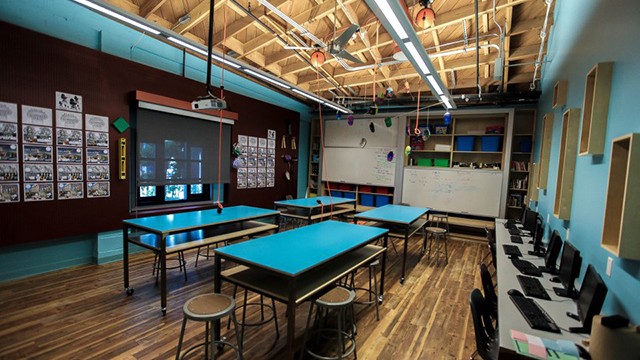
As K–12 schools refocus on team-based, interdisciplinary learning, they are moving away from standardized, teach-to-test programs that assume a one-size-fits-all approach to teaching. Instead, there is a growing awareness that students learn in a variety of ways, and the differences should be supported. The students often learn better by doing it themselves, so teachers are there to facilitate, not just to instruct. Technology is there as a tool and resource, not as a visual aid or talking head.
Gensler, a national architecture firm that’s working with a broad range of schools — from primary schools in redeveloping inner cities to NYU Magnet, Wharton, and Duke — is working with one of the global pioneers, the PlayMaker School in Los Angeles. Behind the venture is GameDesk, which views gaming as an interactive medium for learning. Launched with a sixth-grade class, the PlayMaker program builds on play and explores how its young students can use a variety of tools and games to learn in new ways. Instead of classrooms, PlayMaker School has a suite of spaces that are interconnected physically and visually. There’s an ideation lab, a maker space, and an immersive gaming and learning zone where the students can try out the games they create and the software they develop. [Read more about PlayMaker School here.]
“There’s no teacher at the front,” says Gensler’s Shawn Gehle. “The rooms are like different scenes in a video game. They inspire active learning.
Also in Los Angeles, Wiseburn School District will collocate three charter schools into a renovated 330,000-square-foot building, the former high-security offices of an aerospace firm. Given the radical change in function, “we’re basically hacking an office building, using strategic interventions to reshape it to fit the schools’ project-based curricula and support their combined staffs and 1,200 students,” says Gensler’s David Herjeczki.
Like PlayMaker, Wiseburn moves away from the traditional classroom, opting for neighborhoods of teaching spaces — “pods”— that open out to a large commons area for each school and an atrium that interconnects all three but provides each with a unique address.
When it comes to integrating STEM into classroom space, there are real implications for how teachers interact, says Thaler. “When you put math and science teachers together, they can cross-collaborate on lesson plans. If they’re teaching trigonometry or wave properties in math, they know they have to pull in the physics faculty also.” Schools that embrace STEM end up retraining. “They have to stretch their conception of what’s being taught.”
When Gensler first looked at the Dwight-Englewood School in New Jersey, an independent prep school, its campus planners realized that the STEM program had separate buildings for math and science. “It wasn’t really STEM,” Thaler says. “The new campus plan called for a building that would support a truly interdisciplinary curriculum.” The faculty, administrators, and the design team toured 16 private schools, colleges, and universities on the US East Coast to try to understand the hallmarks of interdisciplinary STEM.
They were inspired by facilities that “let spontaneous collisions happen,” Thaler notes, but the takeaway was less a model than a point of view. Gensler documented it in a paper on STEM education. One of its major findings was that, to succeed, STEM and other interdisciplinary programs need to create propinquity—literally, “nearness”—among their participants.
“We learned that a STEM building is not a linear thing, with math on one side and science on the other,” Thaler explains. “What we designed is like the petals of a flower, with math and science sharing the classrooms and a great melting pot in the middle.”
There are still labs. They operate in two modes: students seated around a large table or working as teams around a lab bench. The lab classrooms can shift easily between the two modes, so they’re slightly larger than tradition dictates. The idea is that you can do a math lab at the table or a science lab at the bench.
The labs have all the traditional equipment, but—designed for mobility and portability—they can be quickly reconfigured. “What’s radical about the building is that it can support the gamut—biology, chemistry, whatever anyone wants to teach,” Thaler says.
Allison Arieff is editorial director at SPUR and writes about architecture and design for The New York Times.



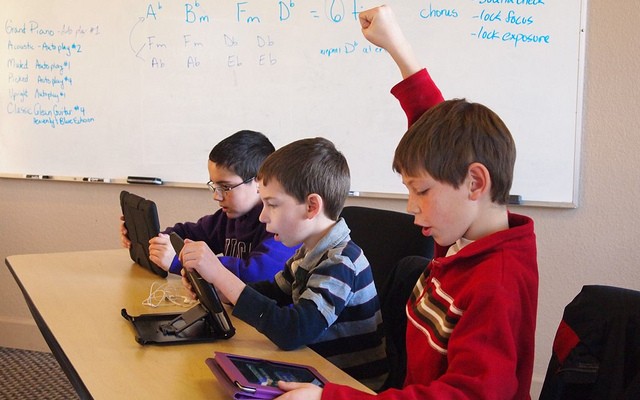


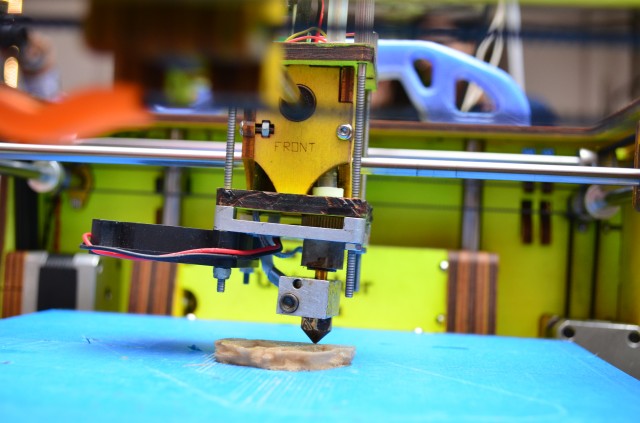



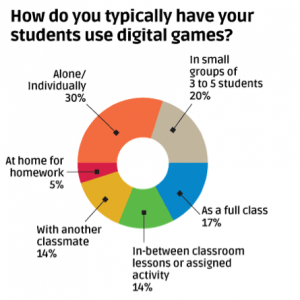


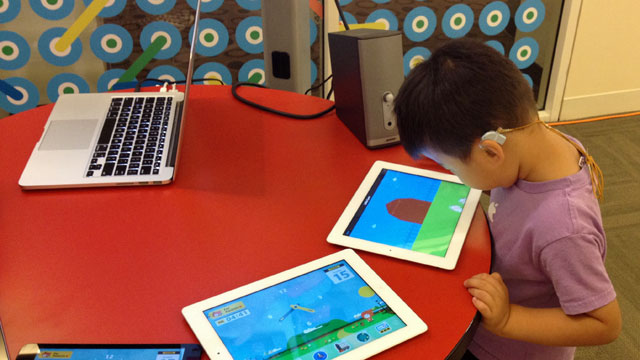
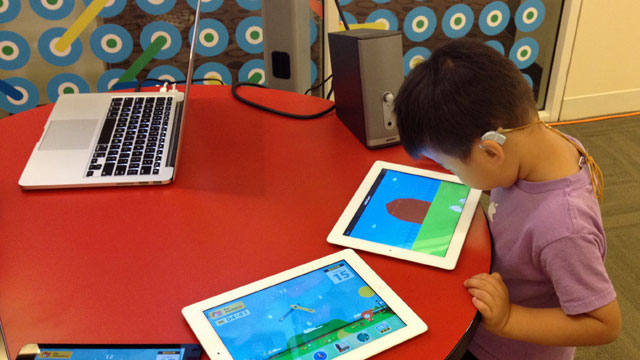


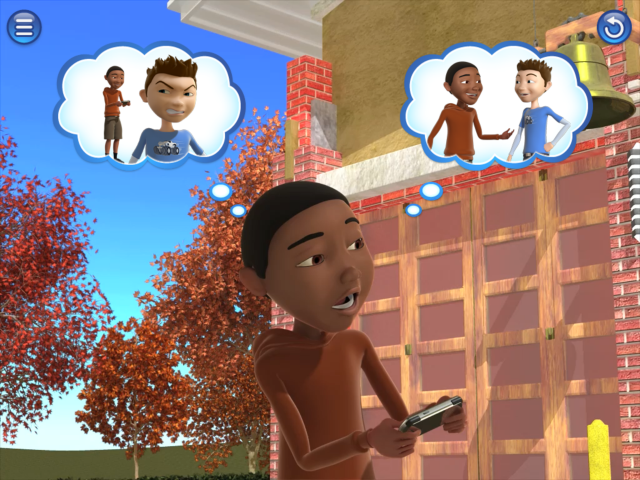
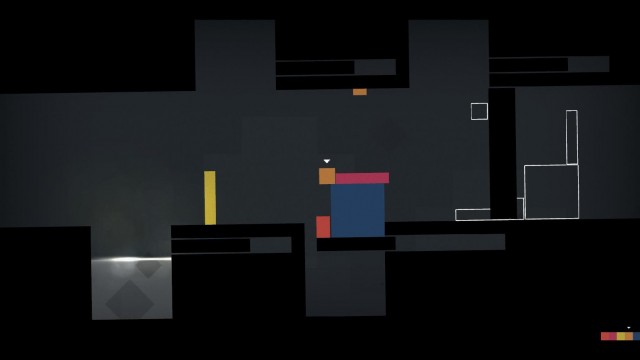
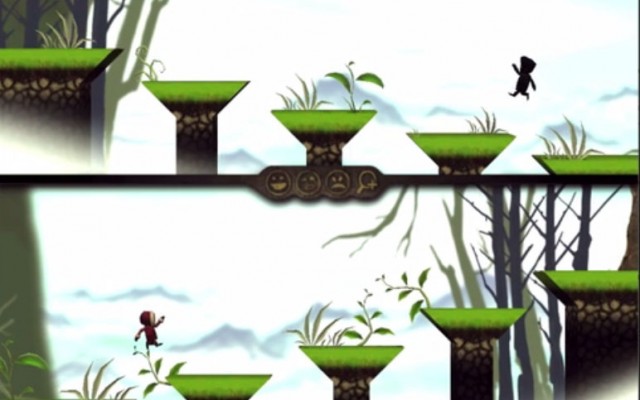




9(MDAxOTAwOTE4MDEyMTkxMDAzNjczZDljZA004))