Spanish teacher Dorie Conlon, like so many teachers, is extremely familiar with hearing phrases from students like, “I don’t remember that” or “you never taught us that.” Conlon generally teaches her students for a few years in a row, so she knows exactly what those students have been taught in her classes.
Conlon’s response to those students? “You may not have acquired it, but it was definitely something that has been covered,” she said.
While it’s easy to get frustrated, Conlon doesn’t assume that a student is lying when they tell her that she never taught them a certain concept. Instead, she tries to take the perspective of the student and understand what they are trying to tell her.
Usually, “the student is actually saying, ‘I need more time with this concept’…and it’s my job as a teacher to provide that,” said Conlon.
Oftentimes teachers and other adults can forget what it’s like to be a student learning information for the first time. Additionally, there are other issues that can influence the ability to retain information.
How learning new information works
“The more you know, the easier it is to learn new things,” said Daniel Willingham, a professor of psychology at the University of Virginia. When children learn new information, their ability to take in that information is informed by their prior knowledge of a related topic.
However, when students lack the foundational knowledge that they might be able to relate to the new information provided, they may struggle with getting to a good understanding of the material.
Additionally, students who are pressed to memorize information without truly understanding the material can stymie their future learning. Why? When students are required to memorize information that they don’t understand, “that’s going to be something you’re going to forget really rapidly,” Willingham continued. “Understanding is really the cornerstone of remembering.”
Another reason why students can’t remember what they learned is because people just forget things.
Cara Goodwin, a child psychologist, said there is a neurological reason why students may not remember something that they were present for. The prefrontal cortex and hippocampus, the regions of the brain responsible for memory integration and retrieval, are not fully developed until 25 years of age, she said. “Our brain is developing very gradually throughout the course of childhood, so…these memory skills should get better and better as children get older,” she said.
According to Willingham, “forgetting is a natural part of memory.”
Teaching tools for information retention
Despite some forgetting, Conlon has her toolkit of strategies to help her students retain as much information as possible, such as speaking in Spanish for most of the class time to ensure kids have lots of exposure to Spanish. She also makes activities and lessons emotionally engaging for her students. “I do think that the more invested they are, the more they are going to be able to learn that language, and really pay attention to the input they’re getting,” said Conlon.
For Conlon’s first through fifth graders, emotionally engaged learning is done through play, singing, dancing and reading stories. In Connecticut, where she teaches, play-based learning is mandated for preschool and kindergarten, and schools are required to allow teachers to use a play-based learning approach through fifth grade.
According to Willingham, one effective strategy for learning is low stakes and ungraded quizzes with immediate feedback. “Going into your memory and trying to find something, even if you fail, is a really good way to cement something into memory that was in there, but kind of fragile,” he said.
Context clues can also be very helpful when helping students retrieve information that they think they’ve forgotten. This is also true for adults, said Goodwin. For example, if someone asks you what the capital of Virginia is, you might not remember, but if they give you a context clue like “it starts with the letter ‘R’” you might be able to guess that it’s Richmond, she continued.
Year-over-Year Curriculum Alignment and Teacher-to-Teacher Communication
Teachers can help students retain knowledge, but these processes need to be baked into the curriculum, at appropriate times, said Willingham. If there’s a skill or knowledge that must be retained by the time a student graduates from high school, but that student acquired this information for the first time in middle school, “then that content needs to be periodically revisited,” in meaningful ways, Willingham said.
Oftentimes teachers and other adults can forget what it’s like to be a student learning information for the first time. The “curse of knowledge,” as Willingham describes it, makes it difficult “to put yourself back in the mindset of someone who doesn’t yet know [certain information], and so it seems like it ought to be a whole lot simpler than it is.”
Conlon credited a district-wide push for stronger vertical articulation for the helpful inter-level conversations she’s had with other teachers in her department. Through these meetings Conlon and her elementary teacher colleagues are able to meet with middle school teachers to discuss how students prepare for sixth grade
Conlon encouraged teachers to take an observation day to see what other teachers at different levels are doing in their classrooms. At the elementary level, you might see students playing, “but that playing is leading to learning, and language acquisition, and social emotional skills and all those things that hopefully are setting them up for success for sixth grade,” said Conlon.
The free community college movement effectively began in 2014 when Republican Gov. Bill Haslam of Tennessee signed the Tennessee Promise Scholarship Act, which offered the state’s high school graduates free tuition to attend any two-year public community college or technical college in Tennessee.
Communities around the country had been experimenting with free college programs since 2005, usually with private funding, but Tennessee was the first to make it a statewide policy, and it inspired 36 states to follow suit. This year, Massachusetts was the most recent to make community college free. (Here is a search tool for all the free college programs, including more than 400 local ones.)
But as free-tuition programs have multiplied, so have questions and doubts. Are low-income students benefiting? Is free tuition leading to more college graduates?
Thirty-seven states operate statewide free college tuition programs. Some programs cover all tuition and fees; others don’t. Some just cover two-year community colleges while others include four-year institutions. Some only give assistance to low-income students; others give aid only to students who meet certain academic thresholds. Some states offer free tuition to a combination of those with need and merit. Source: College Promise
Unfortunately we have to wait years to allow students time to get through college, but answers to these important questions are starting to emerge from Tennessee. College Promise, a nonprofit that advocates for making college free, along with tnAchieves, the nonprofit that helps administer the Tennessee program, released a 10-year anniversary report on Oct. 14. The report offers encouraging signs that the Tennessee Promise scholarship program, which now costs about $29 million a year in tuition subsidies and other services, has helped more students go to college and earn two-year associate degrees. In addition, Tennessee shared some of the lessons learned.
First the numbers. The report highlights that more than 90 percent of all Tennessee high school seniors apply for the free college program. All students regardless of family income are eligible, and roughly 15,000 students a year ultimately use the program to enroll in college right after high school. About half come from low-income families who qualify for the Federal Pell Grant.
Thirty-seven percent of students who initially enrolled in college with the Promise scholarship program earned a two-year associate degree within three years, compared with only 11 percent of students who applied for the scholarship but never met its requirements, such as financial aid paperwork and service hours.* Tennessee projects that since its inception, the scholarship program will have produced a total of 50,000 college graduates by 2025, administrators told me in an interview.
Before the free tuition program went statewide, only 16 percent of Tennessee students who started community college in 2011 had earned an associate degree three years later. Graduation rates then rose to 22 percent for students who started community college in 2014. At this time, 27 Tennessee counties had launched their own free tuition programs, but the statewide policy had not yet gone into effect.
By 2020, when free tuition statewide had been in effect for five years, 28 percent of Tennessee’s community college students had earned a degree in three years. Not all of these students participated in the free tuition program, but many did.
It’s unclear if the free tuition program is the driving force behind the rising graduation rates. It could be that motivated students sign up for it and abide by the rules of the scholarship program and might have still graduated in higher numbers without it. It could also be that unrelated nationwide reforms, from increases in federal financial aid to academic advising, have helped more students make it to the finish line.
I talked with Celeste Carruthers, an economist at University of Tennessee Knoxville, who has been studying the free tuition program in her state. She is currently crunching the numbers to figure out whether the program is causing graduation rates to climb, but the signs she sees right now are giving her “cause for optimism.” Using U.S. Census data, she compared Tennessee’s college attainment rates with the rest of the United States. In the years immediately following the statewide scholarship program, beginning with the high school class of 2015, there is a striking jump in the share of young adults with associate degrees a few years later, while associate degree attainment elsewhere in the nation improved only mildly. Tennessee quickly went from being a laggard in young adult college attainment to a leader – at least until the pandemic hit. (See graph.)
Computations by Celeste Carruthers, University of Tennessee Knoxville. Data Source: American Community Survey, via IPUMS (https://usa.ipums.org/usa/index.shtml). Graph produced by Jill Barshay/The Hechinger Report.
Although there will likely be continuing evaluation of the Tennessee program, researchers and program officers point to three lessons learned so far:
The scholarship program hasn’t helped many low-income students financially. The Federal Pell Grant of $7,395 far exceeds annual tuition and fees at Tennessee’s community colleges, which hover around $4,500 for a full-time student. Community college was already free for low-income students, who represent roughly half of the students in Tennessee’s free college program. Like other free college programs around the country, Tennessee’s is structured as a “last dollar” program, which means that it only pays out after other forms of financial aid are exhausted.
That means that tuition subsidies have primarily gone to students from higher income families that don’t qualify for the Pell Grant. In Tennessee, the funding source is the state lottery. Roughly $22 million of lottery proceeds were used to pay for community college tuition in the most recent year.
Free tuition alone isn’t enough help. In 2018, Tennessee added coaching and mentoring for low-income students to give them extra support. (Low-income students hadn’t been receiving any tuition subsidies because other financial aid sources already covered their tuition.) Then, in 2022, Tennessee added emergency grants for books and other living expenses for needy students – up to $1,000 per student per semester.* The extra assistance for low-income students is financed through state budget allocations and private fundraising. For students who are the first generation in their families to attend college, current graduation rates have jumped to 34 percent with this extra support compared with 11 percent without it, the 10-year report said.
“Pairing the financial support with the non-financial support – that mentoring support, the coaching support – is really the sweet spot,” said Graham Thomas, chief community and government relations officer at tnAchieves. “It’s the game changer, and that is often overlooked for the money part.”
Coaching is best conducted in person on campus. During COVID, Tennessee launched an online mentoring platform, but students didn’t engage with it. “We learned our lesson that in-person is the most valuable way to go when building relationships,” said Ben Sterling, chief content officer at tnAchieves.
The worst case scenario didn’t happen. When free community college was first announced, critics fretted that the zero price tag would lure students away from four-year colleges, which aren’t free. That’s bad because the transfer process from community college back to a four-year school can be rocky with students losing credits and the time invested. Studies have shown that most students are more likely to complete a four-year degree if they start at a four-year institution. But the number of bachelor’s degrees did not fall. It seems possible that the free tuition policy lured students who wouldn’t have gone to college at all in the past, without cannibalizing four-year colleges. However, bachelor’s degree acquisition in Tennessee, though rising, remains far below the rest of the nation. (See graph.)
Computations by Celeste Carruthers, University of Tennessee Knoxville. Source: American Community Survey, via IPUMS (https://usa.ipums.org/usa/index.shtml). Graph produced by Jill Barshay/The Hechinger Report.
As an aside, students are also able to use their Tennessee Promise scholarship funds at a limited number of public four-year colleges that offer associate degrees. About 10 percent of the program’s students take advantage of this option.
Despite all the positive signs for educational attainment in Tennessee, recent years have not been kind. “Everything that’s happened to enrollment since COVID kind of erased all of the gains from Tennessee Promise,” said the University of Tennessee’s Carruthers. The combination of pandemic disruptions, a strong job market and changing public sentiment about higher education hammered enrollment at community colleges nationwide. Students have started returning again in Tennessee, but community college enrollment is still below what it was in 2019.
* Correction and clarifications: Because of incorrect information supplied to The Hechinger Report, an earlier version of this story mischaracterized the two groups of students that succeeded in earning a college degree within three years. This story was also modified to clarify that only coaching was introduced in 2018. A separate mentoring service already existed. In addition, the $1,000 emergency grants, which began in 2022, are not one-time grants but can be issued multiple times.
Imagine something you love. Then imagine it’s threatened.
That’s what Jada Alexander experienced when she was studying coral reefs in French Polynesia. During her first trip, as a student at the University of California, Santa Barbara, she was captivated. “The coral reef was vibrant. It was beautiful,” she recalls. It was teeming with life, full of crabs and fish.
But on a return trip one year later, much of the reef appeared dead. “It was dull and gray,” she says, which left her feeling hopeless.
Alexander is not alone. Survey data has shown that more than half of young adults have felt anxious, angry, powerless or helpless about human-driven climate change.
“If our young people can’t have hope and engage in climate action, then we’re going to have that much harder of a time bending the curve back,” says Elissa Epel, a renowned stress researcher at UC San Francisco.
So, she and a group of her colleagues developed a new course, called Climate Resilience, which they offered for the first time at several UC campuses last spring. The goal is to turn students’ distress about the climate into collective action. Alexander signed up for the class and became a teaching assistant.
The course offers inspiring lectures from scientists and leaders in the climate movement to introduce a counternarrative to the doom and gloom. Many of us are living in an “information bubble” that can be devastating, Epel says. We’re inundated with negative stories about record heat, hurricanes, floods and wildfires. The challenge is real, but so too are the potential solutions.
And, crucially, the course teaches resilience and coping skills, including mindfulness meditation, to empower students.
“There’s an arc — or a process — for leading people out of these dark inner worlds where they feel alone and separate,” Epel says.
People who feel negative and hopeless are more likely to disengage or walk away.
“The great Zen master Thich Nhat Hanh says the way out is in,” she says. To transcend fear and anger, people need to practice compassion, not only for themselves but for others.
“Students do come in very skeptical,” says Jyoti Mishra, a neuroscientist at UC San Diego and co-director of the course. But by the end of the class, there’s a shift in mindset among many, she says. Once a person feels more positive, it can be easier for them to imagine being part of the solution.
End-of-class surveys were very positive, and the course will be offered at 10 UC campuses next spring.
Students reported an increased sense of belonging and a belief that they could “work with others” on climate change, says Philippe Goldin, a clinical neuroscientist at UC Davis who co-leads the Climate Resilience course.
Students in the course took action: They worked in community gardens dedicated to sustainable agriculture, a waste reduction workshop and a recycling project focused on clothing. Jada Alexander, who has graduated, is now starting an initiative that integrates surfing with environmental stewardship.
Alexander knows the solutions are complex, and she still fears for the planet, but “I think that the class increased my ability to be a part of the solution,” she says.
Epel says the techniques and exercises taught in the class are “universal skills” that can help people manage stress from all sorts of situations. If you want to try, here are some strategies adapted from the course.
1. Slow down with moments of calm
(Maria Fabrizio for NPR)
If you want to stay engaged with the world’s problems, you have to start with your own well-being.
When you pause to be present and let go of worries, it’s a chance for a quick reset.
In daily life, you can look for prompts or create new rituals to help you slow down. For instance, if there’s a church, town hall or campus bell that chimes, you can use that as a moment to pause. Or you can set a reminder on your phone to take pauses throughout your day.
“There’s all sorts of cues and signals that can remind us to stop and take a breath,” says Diana Hill, a clinical psychologist who teaches the course at UC Santa Barbara. When we focus on breath we can activate the parasympathetic nervous system — so our body feels more at ease.
If you want to try a longer self-care pause, here’s a nature meditation used in the course from meditation teacher Mark Coleman.
2. Just like me: Stare into the eyes of a stranger
In the class, people are asked to pick a partner, typically someone they don’t know. Then, they’re asked to look into each other’s eyes as they’re led through a guided meditation. “This can be uncomfortable,” Hill says, so it’s OK to close your eyes.
You can use this recording by Jack Kornfield as a guide.
“This person was once a small child just like me. This person has had happy times, just like me,” it begins.
The exercise is intended to help people see how much they have in common with every human, even strangers or people who see the world differently.
“This person has been hurt, just like me.This person has experienced physical pain, just like me. This person wants to be loved, just like me.”
The meditation ends by asking you to picture your partner’s happy moments and to send them this message: “I know you want to be happy, just like me.”
This practice of seeing that common humanity is pretty powerful, Hill says.
You can also use the Just Like Me exercise with someone you have a difficult relationship with. Even if they’re not sitting opposite you, you can imagine looking at them.
3. Honoring others’ pain: It’s OK to cry
(Maria Fabrizio for NPR)
“To be activists for any cause, we need to work together, and that starts by expressing our grief, ” Epel says. The course adapted a practice from Joanna Macy and Molly Brown, called Honoring our Pain, which takes about 15 minutes.
Find a friend to try this with. Take turns voicing your concerns. Begin with this prompt: “What concerns me most about the world and society today is….” As one person speaks, the other listens.
People think no one wants to hear any thoughts of gloom or grief, Epel says. “But we need to talk about it. We need to process these very heavy emotions of sorrow.”
And here’s an important takeaway: Listening is a gift. “The quality with which we really listen and offer our attention to others is an act of compassion,” Goldin says.
During these conversations, “you begin to experience a sense of trust in experiencing your own emotions, sitting with your own emotions and the emotions of others,” he says.
If you do this repeatedly, you really begin to understand what is possible in trusting and being with another person. “It’s very powerful,” Goldin says.
4. Joy spreads, and so do grumbles
(Maria Fabrizio for NPR)
Partners again! This takes about 10 minutes, with each person talking about half the time. For two minutes, you get to complain. It can be a stream of consciousness gripe session — everything that annoys you, anything that’s wrong!
Notice how it feels to let it all out. Now it’s time to flip the script.
For the next two minutes, talk about things that bring you joy. What is bringing you happiness today? What are you grateful for at this moment? A recent study found that people who are taught to practice gratitude have better mental health and fewer symptoms of anxiety and depression.
“I very distinctly remember this exercise,” says Alexander. When people complained, the negative energy spread really quickly. Then there was a distinct shift when they switched to gratitude. “People were laughing, people were smiling, and it created such a vibrant energy throughout the room, “ she says.
5. Write a love letter to the Earth
(Maria Fabrizio for NPR)
Take a short walk outside — five or 10 minutes should do it — or just sit quietly in a favorite outdoor spot. Think of it as a mini nature retreat to connect with the natural world. When you feel relaxed, you can start to write down some thoughts and compose a letter. Here are some potential prompt questions borrowed from the class.
What has your experience been like in nature? Have you felt love?
Epel says letting yourself feel love and gratitude for the Earth can elicit strong emotions, so let go and fall into the stillness. You can check out Vietnamese Buddhist monk Thich Nhat Hanh’s love letters to the Earth to help you get started.
6. Letter to your future self
Writing a letter to your future self is a “perspective taking” practice, says Hill. It’s a way to step away from your current struggles or stressors and shift the focus to all your potential opportunities.
Start by imagining yourself at some date in the future, be it one year from now or even 20 years down the road. What is it that you hope for yourself? Where do you want to be? What kind of hurdles have you overcome?
Maybe you can see a future where the climate crisis is being solved, where you’re working with others on solutions to specific problems. Once you have that kind of future in mind, you could start thinking about some specific goals — and steps to take — to get there. “It can be quite motivating,” Hill says.
Another option is to write a letter to your future self about what happens if you don’t engage in helping solve the problem. “If you bring awareness to the pain or the discomfort of what could happen if you didn’t do anything, that can be a motivating force too,” Hill says.
Stress Less editors are Carmel Wroth and Jane Greenhalgh.
Years ago, Virginia Clinton-Lisell, a professor of educational psychology at the University of North Dakota, decided to use a commercial textbook for her class along with an online homework platform.
Clinton-Lisell said the publishing company rep told her that if she used their homework platform in her course, students would benefit from adaptive learning technology. If students got the questions wrong, they would be given questions more suited for them — “so it was ‘scaffolded,’” Clinton-Lisell said. She was also told this homework was “free.” What she didn’t learn until later was that the homework platform was free with the purchase of the hard copy of the book.
“It was a lot of education buzzwords that, being an educational psychologist, I was very interested in,” she said. When class started, a student approached her wanting to use the hard copy from a friend who took the class the previous term. But the student wondered how to access the homework. Clinton-Lisell realized students would need to pay for a new copy of the book before they could do the exercises she was so excited about.
“I had all these students who had to purchase access,” she said.
In recent years, use of online homework systems that students gain access to by buying a code has become more widespread. A recent survey conducted by Clinton-Lisell and her colleague Alison Kelly, found that nearly 80% of students say they have been required to purchase an access code to an online homework system. A 2022 study found most faculty in the United States, 72%, have required or recommended use of online homework systems for their students to complete coursework in at least one of their classes.
Often the homework systems are bundled with required digital or hard copy textbooks and the digital platforms offer students supplemental materials such as practice questions, quizzes and videos. And they come with a price tag — an average of $90 per course, according to the survey findings.
“If you’re taking five courses and they all require access codes, that is an additional $450 for that semester that you need to pay just to do your homework,” Clinton-Lisell said. “It creates a financial barrier to what used to be free resources.”
Access codes for homework platforms, created by educational publishing companies, are assigned individually, are not reusable by others and they expire after a certain period of time. For many students, their grades could be dependent on whether they complete assignments within the system.
The survey conducted by Clinton-Lisell and Kelly received responses from 966 students at campuses across the county.
Some students noted in the survey that they like the immediate feedback they receive from the homework systems and that it encourages interaction with their courses. But others complained of costs and were concerned that questions in the homework systems might be different from what’s being presented in class.
In the survey, Black students said the homework systems were more helpful compared to other students. Latinx students were more likely to say that their grades went down because they were not able to afford access codes. Additionally, more first-generation students reported avoiding certain courses requiring online homework systems compared to continuing-generation students, according to the survey.
“We are always sensitive to and aware of the challenges that students face in the context of the environment these days and the costs that they’re having to navigate and juggle, and that is one of the motivations and drivers for us to how to sort of create digital products that are affordable, of high quality and improve student outcomes,” said Kate Edwards, senior vice president of efficacy and research at Pearson, one of the largest course material publishers in the country.
Students think the price of doing homework is “unreasonable”
Features of an online homework platform often include quizzes, interactive problems, videos and other visuals that can help students learn course concepts.
In the survey by Clinton-Lisell, students described the costs of online homework systems to be “somewhat unreasonable.” In comparison, the price students considered to be fair for these features was one-third of the actual figure.
Jake Twomey, a student at University of California Santa Barbara and a member of Student Public Interest Research Group (PIRG) is appalled by the idea of paying for homework.
“[Students are] not the most well off people,” said Twomey. “I know students who sometimes, really unfortunately, have to make the decision between buying access codes for a class, or getting dinner tomorrow. These are very real decisions for students.”
Students in the survey also questioned the seamlessness of the systems. Clinton-Lisell said many students feel that because publishers are the ones creating the exercises, professors end up not being knowledgeable about the problems their students are working on or they are unable to help troubleshoot technical issues that might come up.
“[Faculty are] not involved in curating or developing the homework, or at least as much,” said Clinton-Lisell, citing a lack of alignment sometimes between the homework and the class content.
Edwards said Pearson’s online homework platforms such as MyLab, provides a selection of assessments from the core content of a course and an instructor is then able to have “the flexibility to select the questions that they think are most suitable for their own class context.” Edwards adds that there are many opportunities for an instructor to personalize and ensure that their classes and the assignments align.
What historically underrepresented students say about homework platforms
First-generation college students are spending more per semester for online materials compared to their continuing-generation peers, according to the survey. At the same time, 11% of first-generation students reported failing a class because they could not afford the access codes compared with 2.9% of continuing generation students. And 35.8% of first-generation students said they got worse grades compared to 25.6% of continuing generation students because of the costs of online homework systems.
“We have students who are already marginalized by systemic barriers now being given another,” said Clinton-Lisell.
Latinx students reported high levels of stress over the cost of online homework systems and were more likely to not purchase textbooks, and have their grades suffer because of it. Black students said they paid for more access codes than any other student groups but had the lowest stress levels related to cost.
The benefits to online homework systems
Despite the fees, some students who were part of Clinton-Lisell’s survey did report benefits. Black students in particular said they were useful and reported more course content engagement compared to other students.
Clinton-Lisell said that in the survey, students praised the idea of homework itself rather than the platforms where they complete the work.
“They want to be able to practice, they don’t want to wait until the test to find out if they know it, and it’s a way for them to support their grade,” she said.
For students who are more visually inclined or need to understand dense material, online exercises are especially helpful for visualizing certain concepts. The online systems will often include videos and other visuals to explain complex ideas.
But Clinton-Lisell said those benefits should be weighed against the impact of costs on students.
Kyle Goodin, an accounting professor at Missouri State University, uses an online homework system by McGraw Hill, where he is also a consultant. He said the platform, called Connect, has increased student engagement and improved “drop, fail, withdrawal” rates for some classes.
“I think the value that students get for what they pay for these is astronomical,” Goodin said.
In Goodin’s financial accounting course, for example, students pay $152 for a digital book, homework manager, proctoring service and additional resources per term. Goodin said because of the homework platform, students can immerse themselves in data analysis and visualizations, which is increasingly important in the field of accounting.
“I remember paying much more than this, for much less when I was a student,” Goodin said.
Moving toward open education resources
Back in 2020, when the coronavirus pandemic forced campuses to shut down, big publishers made online homework platforms free. Many faculty incorporated them into their courses and have kept on using them even after the fees were reinstated.
But Clinton-Lisell said results of her survey shows faculty could look more into open education resources — course materials available under public domain or open license that are free or accessible at a nominal fee.
Dan Xie, political director of PIRG Campus Action, said in a world where knowledge and information is everywhere, students shouldn’t have to pay exorbitant amounts to learn course material and do their homework.
“We have open textbooks … that are extremely high quality, peer reviewed, that professors can and do choose from,” Xie said.
But professors like Goodin are skeptical about widespread use of open education resources.
“These textbook companies like Wiley and McGraw Hill and Pearson, they’ve got authors that are vetted experts in their subject matter,” he said. Goodin said he doesn’t believe, at this point in time, that open-source textbooks can provide as much value compared to what publishers’ course materials provide.
Still, there’s a movement to try and incentivize faculty — through grants and stipends — into creating their own open textbooks and course materials.
“I really think that’s the future of education,” said Xie.
If your last name starts with an A, that could mean that you’re also more likely to score an A on a test. But if you’re a Wilson or a Ziegler, you may be suffering from a new slight of the modern age: lower college grades.
Grading processes have profoundly changed at colleges and universities in the past decade. Instead of placing assignments on a table in the front of the classroom, students today upload their work to a website, called a Learning Management System or LMS, where course documents, assignments and communications are all housed. Students can even take their exams directly within the LMS.
Course instructors mark assignments, papers and exams within the LMS, which also functions as a computerized grade book. The default setting is to sort student submissions in alphabetical order by surname. The computer system automatically guides the instructor to grade Adams before Baker all the way down to Zimmerman.
A trio of researchers at the University of Michigan, including one whose surname begins with W, documented an unintended consequence of grading in alphabetical order. “There is such a tendency of graders to give lower grades as they grade more,” said Helen Wang, lead author of the study and a doctoral student at the University of Michigan’s business school.
Wang and her two co-authors analyzed over 30 million grades at a large university that uses the most popular LMS, which is called Canvas. They calculated that surnames starting with U to Z were docked a little more than half a point (0.6 points) on a 100-point scale compared with A-to-E surnames. That’s a rather small penalty. But cumulatively, these small dings can add up and eventually translate into the difference between an A-minus and a B-plus on a final grade.
The study is described in a 2024 draft paper posted on the website of SSRN, formerly known as the Social Science Research Network. It is currently undergoing revisions with the academic journal Management Science.
The researchers detected grading bias against the end of the alphabet in a wide range of subjects. However, the grading penalty was more pronounced in the social sciences and the humanities compared to engineering, science and medicine.
In addition to lower grades, the researchers also found that students at the bottom of the alphabet received more negative and impolite comments. For example, “why no answers to Q 2 and 3? You are setting yourself up for a failing grade,” and “NEVER DO THAT AGAIN.” Top-of-the-alphabet students were more likely to receive, “Much better work on this draft, [Student First Name]! Thank you!”
The researchers cannot prove precisely why extra points are deducted for the Wilsons of the world, but they suspect it’s because instructors – mostly graduate students at the unnamed university in this study – have heavy grading loads and they get tired and cranky, especially after grading the 50th student in a row. Even before the era of electronic grading, it’s quite likely the instructors were not as fair to students at the bottom of the paper pile. But in the paper world, a student’s position in the stack was always changing, depending on when the papers were turned in and how the instructors picked them up. No student was likely to be in the bottom of the pile every time. In the LMS world, the U’s, V’s, W’s, X’s, Y’s and Z’s almost always are.
Another theory mentioned by the authors in the paper is that instructors may feel the need to be stricter if they’ve already given out a string of A’s, so as not to be too generous with high marks. Students at the bottom of the alphabet may be the victims of a well-intentioned effort to restrain grade inflation. It’s also possible that instructors are too generous with students at the top of the alphabet, but grade more accurately as they proceed. Either way, students at the bottom are being graded differently.
Some college instructors seem to be aware of their human frailty. In 2018, one posted on a message board at Canvas, asking the company to randomize the grade book. “For me, bias starts to creep in with fatigue,” the instructor wrote. “I grade a few, go away from it, grade a few more, take a break. Or that’s the goal when I’m not up against a deadline.”
If you’ve read this far, perhaps you are wondering how the researchers know that the grades for the U-to-Z students were unfair. Maybe they’re comparatively worse students? But the researchers matched the grades in Canvas with the student records in the registrar’s office and they were able to control for a host of student characteristics, from high school grades and college GPA to race, ethnicity, gender, family background and income. End-of-the alphabet surnames consistently received lower marks even among similar students who were graded by the same instructor.
The researchers also found that a tiny fraction of instructors tinkered with the default settings and graded in reverse alphabetical order, from Z to A. That led to the exact opposite results; students with end-of-the alphabet names earned higher grades, while the grades for A, B and C surnames were lower.
The bias against end-of-alphabet surnames is probably not unique to students who use the Canvas LMS. All four major LMS companies, which collectively control 90 percent of the U.S. and Canadian market with more than 48 million students, order submissions alphabetically for grading, according to the researchers. Even Coursera, a separate online learning platform, does it this way.
Wang’s solution is to shake things up and have the LMS present student work for grading in random order. Indeed, Canvas added a randomize option for instructors in May 2024, after the company saw a draft of this University of Michigan study. “It was something that we had on our radar and that we’d heard from some users, but had not completed it yet,” a company spokesman said. “The report from the University of Michigan definitely pushed that work to top priority.”
However, the default remains alphabetical order and instructors need to navigate to the settings to change it. (Changing this default, according to the study authors, has “low visibility” within system settings on the site.) I hope this story helps to get the word out.
When you are in the trenches of parenthood, it is easy to forget that the ultimate goal is to raise well-adjusted, happy, fully-formed adults. This goalpost may seem far away and abstract, particularly for those of us with young children, and it can be so easy to focus only on the strategies we need to get us through our everyday lives. However, it is nice to zoom out occasionally and consider the bigger picture.
So can research give us any insight here? Can we look at well-functioning adults and figure out what their parents did “right” and “wrong”? Well, researchers have done just that by following people from childhood to adulthood and looking at the parenting practices that are associated with “psychological well-being” in adulthood. Psychological well-being is a measure of life satisfaction and psychological health that includes personal growth, self-acceptance and having purpose in life (translation: how well-adjusted you are). I think we can all agree that this is something that we would want for our children.
Two relatively large studies (see here and here) have found two parenting factors that are associated with psychological well-being as adults:
High levels of parental care: Parental care refers to a warm and loving relationship with parents. Parental care has been linked to having positive relationships later in life. This may be because the parent-child relationship provides a template for healthy relationships for their children.
Low levels of psychological control: Psychological control is a parenting approach that involves trying to control your child’s thoughts and feelings. This may involve inducing guilt, manipulating your child to feel or think the way you want them to, shaming, invalidation, personal attacks, or withdrawing affection when your child doesn’t share your thoughts or feelings. Psychological control can be contrasted with behavioral control, which simply means putting limits on your child’s behavior. Psychological control is typically linked to worse psychological outcomes while behavioral control is linked to better outcomes
What does parental care actually look like in practice?
Being affectionate (both physically and verbally) (see this previous newsletter for tips on being more affectionate)
Listening to and truly seeking to understand your child’s problems and worries
Using a warm and friendly voice with them and showing them positive emotions
Praising them and giving them positive attention whenever possible
Showing your children that you enjoy spending time with them and are interested in what they have to say
Helping them to feel better when they are upset
Making them feel valued and important
What do low levels of psychological control look like in practice?
Encouraging your child’s increasing independence from you
Letting them know that you trust them
Allowing them to make decisions on their own whenever possible
Validating their emotions even when you aren’t experiencing the same emotions
Asking about their thoughts and opinions and really listening to what they say
Allowing them to explore their own interests and passions
Overall Translation
The most well-adjusted adults are more likely to have had parents that were loving and warm and did not try to control their thoughts and feelings. These studies are only correlational, so we do not know whether parental care and psychological control actually cause children to grow into well-adjusted adults or were simply associated with this outcome. However, these studies are some of the best evidence that we currently have for understanding how parenting impacts well-being in adulthood. Although these concepts can seem very complicated, it really boils down to simply showing your child love and allowing them the space to have their own thoughts and feelings.
Cara Goodwin, PhD, is a licensed psychologist, a mother of four and the founder of Parenting Translator, a nonprofit newsletter that turns scientific research into information that is accurate, relevant and useful for parents.
The list of what we are not supposed to say as parents seems to be getting longer— first we were told we could not say “good job,” then “be careful” became off-limits. [For the record, I don’t think there is anything wrong with “good job” or “be careful”— except that these phrases are perhaps not specific enough to communicate most efficiently with your children.] Now the phrase “hurry up” has been effectively cancelled.
The recent controversy over “hurry up” seems to stem from a post that went viral on Instagram claiming that the #1 cause of anxiety in children is parents rushing them. But almost any parent who has young children that go to school or participate in literally any activity that happens at a certain time has probably tried to rush or hurry their child out the door. So is this a real concern or just another way to make parents feel guilty about very normal behavior?
Because I am not one to let parent-shaming happen without at least challenging the source of the claims, I asked the psychologist who made these bold statements whether she could please send me a link to the research to which she was referring. She sent me this article, which claims that hurried child syndrome leads to stress and depression but does not cite any actual research but only cites other articles on hurried child syndrome that are also not based in any actual research. Furthermore, hurried child syndrome, as described in this article, seems to be a different and broader concept than simply rushing a child to get out the door.
What is Hurried Child Syndrome?
So where did this concept come from if it isn’t based in research? Psychologist Dr. David Elkins coined the term “hurried child syndrome” in his book, The Hurried Child, which was originally published in 1981. According to Dr. Elkin, hurried child syndrome is when a child is pushed to grow up “too fast,” such as when a child is over-scheduled with extracurricular activities, pressured to achieve or expected to act older than they are. However, hurried child syndrome is not an official diagnosis used by mental health professionals and it seems to be a more theoretical concept.
But Does Saying “Hurry Up” Actually Cause Anxiety?
So hurried child syndrome seems to be a different concept than simply telling your child to “hurry up” occasionally, but you may still be wondering whether rushing causes anxiety in children. It seems possible that regularly rushing children may cause stress that then leads to more chronic anxiety. However, we currently have no evidence that saying “hurry up” or rushing a child causes anxiety or any negative outcomes. Research suggests that anxiety disorders in children are caused by both genetic and environmental factors (translation: both nature and nurture) and it is unlikely that one factor alone would cause an anxiety disorder. Some research has linked parents being overly controlling to anxiety in children. This might look like not allowing your child to make any choices during the getting ready process, not permitting them to have any control whatsoever over their schedule, or doing everything for your child. Yet, asking your child to hurry or rush doesn’t seem to be overly controlling or intrusive. More broadly, research finds that parenting only accounts for 4% of the variance in child anxiety, suggesting that your parenting decisions alone are unlikely to cause an anxiety disorder in your children.
Overall Translation
We have no evidence that hurried child syndrome is a real concern for parents or that asking your child to “hurry up” causes anxiety. However, telling your child to “hurry up” may not be most effective strategy because it isn’t informative and doesn’t teach any skills. In addition, rushing may cause more immediate stress for both you and your child.
So what can you do when you feel the need to say “hurry up”?
Be more specific. There is nothing inherently wrong with saying “hurry up” or rushing your child. However, it does not provide them with information as to what they should be doing. Although it may seem obvious to us as adults, it isn’t always obvious to kids. For example, instead of “hurry up,” you could say “walk to the car please.” One of my colleagues, The Mom Psychologist, recommends that parents give one or two words to tell kids what they need to do such as “shoes” or “breakfast” and I agree that limiting the language can be very helpful for overwhelmed parents and children in these situations
Help your children to develop time management skills. Give children a sense of time through timers (visual timers such as the Time Timer can be particularly useful), songs, or other concrete ways of explaining length of time. One of our goals as parents is to teach children to ultimately manage their own time.
Allow more than enough time. Everything with kids takes longer than you think and a lot of our time pressure is self-induced because we do not allow enough time (and trust me when I say that I know how hard this is— I am guilty of this at least once per day). Instead, aim to be ready 15 minutes before you have to leave, so when the inevitable diaper blowout or missing shoes happen, you won’t stress about being late!
Let them face natural consequences of being late. This isn’t always possible but try to let your children face the natural consequences of being late whenever you can. Of course you would not want to let your child arrive late for school every day but if you are going somewhere that your child is motivated to arrive on time, such as a birthday party or a movie, allow them to face the natural consequences of being late which might mean they miss some or all of the event. Of course, it is only fair to give them a warning (such as, “I’m going to set a timer for 5 minutes and if we don’t leave before the timer goes off, you will miss some of the movie.”)
Manage your own anxiety when you are running late. Running late is a common trigger for anxiety in parents and it makes sense because there are real implications for being late as an adult. If you arrived late everyday for work, you would probably lose your job, or at least the respect of your co-workers. Your rising anxiety may be compounded by children who are moving unimaginably slow. However, as you might know from experience, being anxious yourself or losing your cool will only make the situation worse. Stay calm by using coping skills such as deep breathing and self-talk (such as telling yourself “this is not an emergency” or “this isn’t worth losing my peace over”).
Cara Goodwin, PhD, is a licensed psychologist, a mother of four and the founder of Parenting Translator, a nonprofit newsletter that turns scientific research into information that is accurate, relevant and useful for parents.
Until she was nine years old, Aisha O’Neil grew up in Zion National Park, where her father was a ranger. “That place raised me just as much as my family,” she said. Her love of the park’s sandstone cliffs and caverns became the bedrock of her passion for the environment, and for securing a future where her own children could enjoy the same experiences that she did.
But O’Neil never learned much about climate change in school. What she did learn came from the news, and it was “dramatically horrifying,” she said. “I started seeing articles every day — this city’s on fire, these people were evacuated.”
As a senior in high school last year, in rural Durango, Colorado, O’Neil started a statewide climate action group called Good Trouble. She and fellow students campaigned for state legislation to create a “seal of climate literacy” that high school graduates across Colorado could earn.
Thanks in part to their lobbying, the bill passed with bipartisan support, and O’Neil became part of the first group of students to earn the seal on her diploma this spring. “An education without referencing climate change is not complete,” she said. “You can’t say you’re educating kids about our future without telling them what that future will look like.”
But just what is “climate literacy”? What are the ABCs, the grammar and vocabulary, of climate change?
The U.N. and other leading global organizations have identified education at all levels and across disciplines as a key strategy for fighting the climate crisis. The world is going through a historically rapid transition to clean energy and sustainable infrastructure, and the workforce is thirsty for people with the skills to do the necessary climate mitigation and adaptation work. Communities also need empowered citizens to push back against fossil fuel interests. But as of now, few states have comprehensive climate education, and most of the lessons that exist are confined to science classes — lacking in areas like justice and solutions.
Colorado’s seal of climate literacy, which high school graduates can earn through a combination of coursework and out-of-school projects, is one attempt to build support for more comprehensive climate education. Another attempt was on display in late September. The U.S. Global Change Research Program, with input from agencies including the State Department, NASA and the Department of Transportation, released a document called “Climate Literacy: Essential Principles for Understanding and Addressing Climate Change.”
The definition of climate literacy its authors arrived at, after 21 months of work, includes eight essential principles that I’m summarizing here:
How we know: climate science, interdisciplinary observations and modeling
Causes: burning fossil fuels and other human activities
Impacts: threats to human life and ecological systems
Equity: climate justice
Adaptation: social, built, natural environments
Mitigation: reducing emissions, net zero by 2050
Hope and urgency: “A livable and sustainable future for all is possible with rapid, just, and transformational climate action.”
During Climate Week NYC, dozens of educators crowded into a basement room beneath the grand marble Museum of the American Indian, in downtown Manhattan, to hear about the new guide. Standing at the front of the room was Frank Niepold, of the National Oceanic and Atmospheric Administration. He has been engaged in climate education within the federal government for 30 years, and he’s been as involved as anyone in helping this effort see the light of day. “This is a guide for educators, communicators and decision makers,” he said. “We’re not just talking to classroom teachers.”
This guide is technically a third edition. The first one appeared in 2008, during the George W. Bush administration; it was rapidly updated in 2009 when President Barack Obama took office. Then came the Trump administration, and, in Niepold’s words, the thinking was, “Don’t try to do this really complicated thing at that time.” Efforts restarted after Joe Biden was elected president, many new staffers who came in as part of the Inflation Reduction Act provided input to the new guide— and now here we are.
Niepold said that since the 2000s, there’s been a lot of evolution in our collective understanding of both the problem and the solutions. “Before, the document was called ‘essential principles of climate science literacy,’” he said. “We knew that was too narrow. We wanted something that gets you into an action, not just an understanding orientation.”
Still, earlier editions of the document were influential: They informed the Next Generation Science Standards, some version of which is now in use in 48 states. The previous guide was also incorporated into K-12 and college curricula and into museum and park exhibits.
With the new edition, Niepold hopes to see even more impact. The guide is unusually clear and accessible for a government report. The pages are laid out like a textbook, featuring artwork that depicts some of the core themes of climate literacy — as defined in the report – like climate justice and traditional and Indigenous knowledges (the plural s is intentional).
“Success means it would activate all forms of education, all stages, across all disciplines,” and outside the United States as well as within it, Niepold said. He wants to see more prominent NGOs taking on climate education as part of their purview — such as Planet Ed at the Aspen Institute, where, disclosure, I’m an advisor.
Niepold would like to see community-based climate efforts take public communication and workforce development seriously, and to see media coverage promote a fuller picture of climate literacy as well. “Success is: People, regardless of where they’re coming from, understand [climate change] and address it.”
His concern is similar to that of Aisha O’Neil in Colorado: that young people are currently learning about climate change primarily through the media, in a way that’s not solution-oriented, emotionally supportive, or trauma-informed. “That opportunity to be blindsided is high,” Niepold said. That’s why the guideline’s eighth principle unites urgency with hope. Said O’Neil:
“Being taught about issues in a way that emphasizes solutions is telling our youth that they can be part of progress and that the world isn’t doomed.”
Upgrading lessons to meet the moment is taking time. Even in New Jersey, known as a national leader for its comprehensive state-level climate education standards, teachers have shared concern about a lack of resources for implementation and training. Mary Seawell, whose organization Lyra campaigned for the climate literacy seal in Colorado, said her group wanted to take a grassroots, student-led approach. “We want to show demand. What the seal really is doing is creating an opportunity for youth to direct their own learning.”
In order to earn the seal of climate literacy, Colorado students have to take at least one science class in high school — which currently is not a general graduation requirement — and at least one other class that satisfies principles of climate literacy. They also have to engage in some kind of out-of-school learning or action. “This is opt-in,” said Colorado state Sen. Chris Hansen, who co-sponsored the legislation. “The state can’t tell districts what classes to offer. This is for districts that want to have something that is easily recognizable across the state and beyond.”
O’Neil, now a freshman at University of Colorado Boulder, said it’s a good start. Her student group at the college is campaigning for new state curriculum standards. “This is the only logical next move. “ she said. Although the climate seal of literacy encourages climate learning, “we need everyone to be educated, not just the ones who go out of their way.”
O’Neil thinks students could especially use tutelage on taking climate action, something she has had to figure out on her own, with some mentorship from her debate coach and from a state legislator. Planet Ed, for one, has just released a Youth Climate Action Guide with the Nature Conservancy that engages many areas of climate literacy, from mitigation to adaptation to justice.
“I feel like in an ideal world we would learn how climate impacts every element of our lives,” O’Neil said. “Not just the science, but social justice. Policy positions that have created it, and policies that can get us out. My goal right now would be to have students get to a place where they feel like they aren’t terrified by the climate crisis, but empowered by it.”
Everybody is trying to find ways to help students catch up after the pandemic. One new data analysis suggests some promising ideas.
TNTP, a nonprofit based in New York that advocates for improving K-12 education, wanted to identify schools that are the most effective at helping kids recover academically and understand what those schools are doing differently. These are not schools where students post the highest test scores, but schools where kids learn more each school year than students typically do.
TNTP researchers plunged into a giant pool of data housed at Stanford University that tracked hundreds of millions of students’ scores on state tests at more than half the elementary and middle schools in the nation from 2009 to 2018. The researchers found that at 28,000 of the 51,000 elementary and middle schools in the database, students entered third grade or middle school below grade level. TNTP calculated that the top 5 percent of these start-behind schools – 1,345 of them – were helping students learn at least 1.3 year’s worth of material every year, based on how test scores improved as students progressed from grade to grade. In other words, the students at the top 5 percent of the start-behind schools learned the equivalent of an extra full year or more of math and reading every three years.
“Growing at this rate allows most students to catch up to grade level during their time in school,” concluded the report, which was released in September 2024.
Previous researchers conducted a similar analysis in 2017 with whole school districts instead of individual schools. In that study, Chicago emerged as the nation’s most effective school district. Like the schools in the 2024 analysis, Chicago didn’t post the highest test scores, but its students were progressing the most each year.
“There are many schools that are effective at helping students learn, even in high-poverty communities,” said Sean Reardon, a Stanford sociologist who was part of the team that developed the Stanford Education Data Archive. “The TNTP report uses our data to identify some of them and then digs in to understand what makes them particularly effective. This is exactly what we hoped people would do with the data.”
TNTP did identify seven of the 1,345 highly effective schools that it selected to study in depth. Only one of the seven schools had a majority Black population, reflecting the fact that Black students are underrepresented at the most effective schools.
The seven schools ranged widely. Some were large. Some were small. Some were city schools with many Hispanic students. Others were mostly white, rural schools. They used different instructional materials and did a lot of things differently, but TNTP teased out three traits that it thought these schools had in common.
Seven of the 1,345 schools where students started behind but made large learning gains over a decade from 2009 to 2018
Red dots represent the seven schools that TNTP named and studied in depth. Green dots represent all 1,345 schools that TNTP identified as producing large annual gains in learning for students who entered school behind grade level. Source: TNTP Opportunity Makers report 2024.
“What we found was not a silver-bullet solution, a perfect curriculum, or a rockstar principal,” the report said. “Instead, these schools shared a commitment to doing three core things well: they create a culture of belonging, deliver consistent grade-level instruction, and build a coherent instructional program.
According to TNTP’s classroom observations, students received good or strong instruction in nine out of 10 classrooms. “Across all classrooms, the steady accumulation of good lessons—not unattainably perfect ones—sets trajectory-changing schools apart,” the report said, contrasting this consistent level of “good” with its earlier observation that most U.S. schools have some good teaching, but there is a lot of variation from one classroom to the next.
In addition to good instruction, TNTP said that students in these seven schools were receiving grade-level content in their English and math classes although most students were behind. Teachers in each school used the same shared curriculum. According to the TNTP report, only about a third of elementary school teachers nationwide say they “mostly use” the curriculum adopted by their school. At Trousdale County Elementary in Tennessee, one of the exemplar schools, 80 percent of teachers said they did.
Teachers also had regular, scheduled sessions to collaborate, discuss their instruction, and note what did and did not work. “Everyone holds the same high expectations and works together to improve,” the report said.
The schools also gave students extra instruction to fill knowledge gaps and extra practice to solidify their skills. These extra support classes, called “intervention blocks,” are now commonplace at many low-income schools, but TNTP noted one major difference at the seven schools they studied. The intervention blocks were connected to what students were learning in their main classrooms. That requires school leaders to make sure that interventionists, classroom aides and the main classroom teachers have time to talk and collaborate during the school day.
These seven schools all had strong principals. Although many of the principals came and left during the decade that TNTP studied, the schools maintained strong results.
The seven schools also emphasized student-teacher relationships and built a caring community. At Brightwood, a small charter school in Washington, D.C., that serves an immigrant population, staff members try to learn the names of every student and to be collectively responsible for both their academics and well-being. During one staff meeting, teachers wrote more than 250 student names on giant pads of paper. Teachers put check marks by each child they felt like they had a genuine relationship with and then brainstormed ways to reach the students without checks.
At New Heights Academy Charter School in New York City, each teacher contacts 10 parents a week—by text, email, or phone—and logs the calls in a journal. Teachers don’t just call when something goes wrong. They also reach out to parents to talk about an “A” on a test, academic improvement, or good attendance, the report said.
It’s always risky to highlight what successful schools are doing because other educators might be tempted to just copy ideas. But TNTP warns that every school is different. What works in one place might not in another. The organization’s advice for schools is to change one practice at a time, perhaps starting with a category that the school is already pretty good at, and improve it. TNTP warns against trying to change too many things at once.
TNTP’s view is that any school can become a highly effective school, and that there aren’t particular educational philosophies or materials that a school must use to accomplish this rare feat. A lot of it is simply about increasing communication among teachers, between teachers and students, and with families. It’s a bit like weight-loss diets that don’t dictate which foods you can and cannot eat, as long as you eat less and exercise more. It’s the basic principles that matter most.
Contact staff writer Jill Barshay at (212) 678-3595 or barshay@hechingerreport.org.
Over the past several years, formative approaches have gained significant traction as a preferred method of assessment, thanks in large part to the ideology behind the practice. Not too long ago, students were taught material in classrooms, mainly via stand-and-deliver direct instruction, and were subsequently asked to demonstrate their learning in what is now called a summative or “high-stakes” assessment. In this model, it wasn’t just grades that were cast in stone once test results came back; there was also an assumption that students knew the material enough to move forward with new concepts and that anyone who was falling behind needed to either catch up or succumb to continued (perhaps permanent) struggle.
This sink-or-swim approach to education has lost popularity over time, particularly in the wake of both increased awareness of equity-driven instruction and amid the aftereffects of teaching and learning during the pandemic. Turning a blind eye to student struggle is harmful, and so is closing down opportunities for growth. Additionally, the idea of determining student achievement within any given content standard only at the close of a unit of instruction is fundamentally unsound. Ideally, teachers clear up confusion and check for understanding continuously throughout a unit of study.
The pushback that leaders often encounter when they ask teachers to formatively assess students with more frequency is centered on a protectiveness around two rare commodities: time and bandwidth. How, teachers ask, can they possibly assess students with any frequency when the instructional period is short, when grading piles up, and when district leaders provide no extra time for planning or preparation?
The answer to a complex question can be startlingly simple, and that is true in this instance. Rather than think of formative assessment as a drawn-out process, it helps to focus on using tools that will tell us what we need to know quickly. The following assessment bank shares some tried-and-true methods of quickly gathering information about what students know and are able to do. Students can be asked to do any of the following:
Take a brief poll (one or two questions).
Summarize the daily learning goal in one sentence.
Fill out an exit or entry ticket that shares a concept or presents an open-ended question.
Hold up color-coded cards (often red, yellow, and green to align with traffic lights) to indicate a level of understanding or confusion.
Reflect briefly (3−5 sentences) about a concept.
Complete the sentence stem: “I still don’t understand . . . .”
Place questions that don’t need immediate attention into a communal “Parking Lot.”
Put “Burning Questions” on the board to clear up more immediate confusion.
Draw an important concept instead of writing about it.
Take new learning and apply it to a different situation.
Create a short assessment for peers to complete.
Write a brief social media-style summary of the learning.
Make a “mic drop” statement that leaves everyone with a final thought for the day, either orally or in writing.
When students complete brief assessment activities like these, they more clearly focus on the outcome of whatever they learned, and their progress is also more visible. Shorter checks for understanding do not negate the need for longer, summative tests that show what students have learned by the close of a unit or a period of study. However, when teachers grow weary of giving one long assessment after another with dubious benefits, adopting the regular habit of using quick formatives removes a great deal of stress and uncovers valuable data that moves everyone in the classroom forward.
Miriam Plotinsky is an instructional specialist with Montgomery County Public Schools in Maryland, where she has taught and led for more than 20 years. She is the author of Small but Mighty: How Everyday Habits Add Up to More Manageable and Confident Teaching and three other books for educators: Teach More, Hover Less: How to Stop Micromanaging Your Secondary Classroom; Lead Like a Teacher: How to Elevate Expertise in Your School; and Writing Their Future Selves: Instructional Strategies to Affirm Student Identity. Miriam is a regular contributor to several publications, including Education Week and Edutopia, and she is a frequent guest on education podcasts internationally. A National Board–certified teacher with additional certification in administration and supervision, she lives in Silver Spring, Maryland.
Last year, Roosevelt Middle School in San Francisco, California introduced a campus-wide cellphone and smartphone ban. That meant devices are “off and away at all times while you’re on campus,” said Emily Leicham, Roosevelt Middle School’s principal. Among those in favor of the policy was Marta Lindsey, whose child started sixth grade at Roosevelt in fall 2024. She said that the phone policy was the reason her family chose the school as their first pick in the district’s lottery system. “I just feel super lucky that we got into this school…I don’t even care about anything else about this school except for this policy,” she said.
However, not everyone is enthusiastic about cellphone and electronics bans in middle schools. Richard Culatta, CEO of the International Society for Technology in Education (ISTE), and Tanner Higgin, a senior educational technology researcher at WestEd, support a more nuanced approach to technology use in schools. Instead of a permanent ban on cellphones, Culatta and Higgin suggested that schools teach digital citizenship and develop technology policies that foster healthy electronic use among students.
Implementing a cellphone ban
At Roosevelt Middle School, the policy worked immediately, according to Leicham. She said she confiscated 40 to 50 phones, airpods and smartwatches on the first day of the cellphone ban in 2023. The second day, she only confiscated two devices. The new system and school policy took years to develop, with parents initiating the conversation during Leicham’s first year as principal in the 2021-22 school year. While parents drove a lot of the interest in a cellphone free school campus, Leicham made sure to include students and teachers in the conversation. Students were given the opportunity to discuss the potential of a cellphone policy during their advisory periods, and teachers had ongoing conversations during staff meetings about their concerns and anticipated challenges, said Leicham.
This year, Roosevelt expanded the policy to cover all electronics, including Google Chromebooks when not directly in use in a classroom. Additionally, the policy allows no room for warnings. Once a student’s electronic is spotted by a teacher or administrator, it is placed in the front office for the day. Students collect confiscated phones after school. This eliminates power struggles between teachers and students, according to Leicham.
Math teacher Melanie Buntichai said that it was a challenge for individual teachers to enforce their own classroom cellphone policies before the ban. If she engaged with a student who was using their phone inappropriately in class it could take up to ten minutes away from class time. Since Roosevelt implemented a schoolwide policy, “the students don’t fight back as much,” and interruptions became less time consuming, she said.
Leicham said students interact with each other more during lunchtime now. “It’s nice to see them, you know, being kids; hanging out with each other,” she said.
Roosevelt requires Common Sense Media’s digital citizenship lessons for students during advisory classes. According to Leicham, for the 2024-25 school year, Roosevelt aims to have students complete four lessons. The school also provides Common Sense Media resources for parents that covers appropriate and responsible tech use.
Student and parent responses
While parents have been on board with the electronics policy at Roosevelt, students have been harder to win over. Leicham said that transparency helps when explaining to students why smartphones and other devices don’t belong on campus. “Middle school is the time to build relationships with others,” and middle schoolers “need less screen time and more interaction with others,” Leicham said.
Psychologist Jacqueline Nesi thinks there is some truth to this. But “it’s not always the case that when students are using screens in general, that they are not socializing at all,” said Nesi, who studies the effects of technology on children. Increased focus on social interactions is a hallmark of early adolescent development, according to Nesi. However, when it comes to fitting in, smartphones can be both a source of disconnection and connection for middle schoolers. On one hand, a student can feel left out if they don’t have access to the same technology that their peers do. On the other hand, a student who feels “marginalized in their offline community” might find belonging through technology “even if it’s in an online environment,” said Nesi.
Like it did for Lindsey, Roosevelt’s cellphone policy attracted Eiko Sugano to the school. She also hoped to enroll her child there for sixth grade, but he ended up at another school further down on their lottery list. For Sugano, a full cellphone and electronics ban is what initially drew her to Roosevelt. “It was definitely one of my top factors,” she said. Sugano’s son does not have a cellphone. She prefers that he engages in-person rather than on a device, and learns to navigate everyday challenges, like missing a bus, without the help of a smartphone.
Kids need “increasing independence as they age [and] there’s value in giving them opportunities to solve problems,” said Nesi. There is no one-size-fits-all approach to parenting decisions about which devices to allow adolescents to use and when, she added.
Lindsey held an on-campus and online community conversation for families about cellphone and electronics policies at her child’s elementary school last year. “Parents are feeling so alone in this,” she said. Coming together as a school community provided a much needed space for “information sharing between parents about how they’re navigating things or what they’re worried about,” she continued.
Although Lindsey is hopeful for the future of students’ cellphone use both in school and outside of school, she wants these conversations and electronics to happen at a more rapid pace because kids are struggling right now. “I can’t even think of a bigger issue right now that parents are having to navigate,” she said.
No to outright bans, yes to guided practice
Bans on cellphones and electronic devices are taking off beyond Roosevelt. Some large school districts like Los Angeles Unified School District and New York City Public Schools are looking to or have already implemented district-wide cellphone bans. But Culatta, the ISTE CEO, thinks these bans are too hasty. He said banning phones removes students’ opportunities to learn appropriate and effective use of technology. While a ban might feel like a satisfying solution, “it doesn’t actually prepare kids to be successful down the road,” he said. If students aren’t learning digital etiquette in school, “where will they ever learn it?” Culatta asked.
Instead, Culatta advocates for school electronics policies that consult students and “create healthy conditions” for technology use. Writing these expectations in plain and positive language is important. Instead of telling students all the things they can’t do, Culatta suggested that schools clearly lay out norms that students can follow. At the bottom of these technology guidelines, there should also be clear guidance on what the expectations are when students have broken the code of conduct, said Culatta. The policy should be age-specific, too.
According to Culatta, having technology guidelines in place of a ban opens the opportunity for learning moments to remind students about responsible and appropriate technology use. No ban doesn’t mean no consequences, said Culatta. He also said that a temporary ban can help to jumpstart a more robust and nuanced technology policy. “It is totally appropriate to pause and say ‘timeout for a second, we need all the devices to go away for a minute while we talk about what the norms are, while we talk about what this looks like’ and then start to bring them back,” he said.
Higgin, the WestEd researcher, believes that educators can incorporate conversations about technology use without necessarily bringing those technologies into the classroom. “Encourage students to think about their habits and uses of technology [and] how those uses align with their values and goals,” he said. To help with those conversations, he pointed teachers toward free resources provided by Common Sense Media – where he used to work – and their partner The Center For Digital Thriving at Harvard, as well as ISTE’s digital citizenship curriculum.
Hanif Abduraqqib. Sarah Kay. Elizabeth Acevedo. Clint Smith. Do any of these names sound familiar? How about Amanda Gorman? All of these writers are part of America’s thriving contemporary poetry scene. But you won’t find them in many text books, because high school poetry units tend to focus on dead poets, like Robert Frost, Walt Whitman and Edgar Allen Poe. North Carolina teacher Melissa Alter Smith is working to change that. For the last seven years, she’s been diversifying the canon in her classroom, and encouraging other teachers to do the same with the hashtag #teachlivingpoets.
The shift has inspired teachers across the country to get creative with how they teach students things like tone, rhythm and structure in poetry. “I love being creative. So if I love being creative and learning in creative ways, why wouldn’t I expect my students to want the same thing?” Smith said.
MindShift asked Smith and other educators to share some of the poems by living poets that have resonated with their students. Here are their highlights.
“It Is Maybe Time to Admit That Michael Jordan Definitely Pushed Off” by Hanif Abdurraqib
By referencing a legendary basketball player and iconic (if debated) moment in sports history, the title of this poem immediately interests students and nets buy-in before they’ve begun reading, said Smith. But the poem is about more than Jordan’s title-winning shot. It’s also about the death of a loved one and processing grief.
Smith uses the poem to teach her students about structure, pacing, allusion, metaphor and point of view. They learn by going outside and “walking the poem.” They read the poem out loud as they walk, making turns at every ampersand (there are more than 20) and pausing at every stanza break, comma or period (there are fewer than 10).
Smith said it’s one her favorite lessons because “it’s such an unfolding of understanding that happens” as the students walk. “What this does is it allows the students to get a physical understanding of the pacing and the movement of the poem … that they did not get upon their initial reading, just sitting in their desk reading the poem out loud.”
“New Day’s Lyric” by Amanda Gorman
Smith teaches this poem right after winter break. “Since Gorman wrote it as a poem to ring in the new year, it’s perfect for kicking off the new semester and resetting ourselves with purpose and hope while interrogating the mistakes of our past,” she said.
The poem deals with themes of reckoning with the past, coming together, hope and healing, and it features a range of literary devices. “This poem provides students the opportunity to witness a master of word play and language,” Smith said. “By asking students to notice the nuances of Gorman’s craft, they witness how a poem ‘works.’”
“Acevedo manages to teach history and ancestral wisdom with this poem about her own hair and the hair (and experiences with it) that is part of the inheritance belonging to every woman of African descent,” said Julia Torres, a librarian in the Denver Metro Area. “Her poem is both intimate and universal, a reclamation of self in a world that constantly tries to get Black women to betray themselves in the pursuit of ‘beauty.’”
Torres said the poem is valuable for teaching metaphor and symbolism, “abstract language that can be difficult for students to grasp.” Acevedo also uses juxtaposition in the poem. Torres shared two examples of her students’ reactions to the poem:
“Personally I am not a person of color, but I know how important hair is to this culture. With this being such a big part of her, she takes a lot of pride in her hair. It’s curly and has so much volume and texture to it. Making it, in my mind, beautiful. I feel as though she shouldn’t have to hide it.” – K.A.
“When people have self-confidence, they will always be proud of their state of life.” – D.N.
“This Is Not a Small Voice” by Sonia Sanchez
Adrian Neibauer’s fifth grade students in Colorado have loved this “short and powerful” poem. As not-quite-tweens, Neibauer said his students “are often seen as young children without opinions of their own.” The poem’s themes of voice and activism inspire them to find their own voices. “Students are able to easily relate to themes of humanity, the power of one’s voice and activism,” Neibauer said.
The poem also provides examples for teaching anaphora. “I love how Sanchez uses repetition, which helps students with their poetic fluency,” Neibauer said.
“Wild Horses” by Paisley Rekdal
Another one with an activism theme, Neibauer said “Wild Horses” is “a great introduction to more challenging themes of suffrage and protest.” It is written from the point of view of Seraph Young Ford, the first woman to vote in Utah and the modern nation, and requires some pre-teaching about her, as well as suffrage and Indigenous history.
“This is a more challenging poem, but students respond well to the historical significance embedded in the poem,” said Neibauer, who pairs it with the Rolling Stones’ song of the same name and enjoys discussing the imagery in both. The poem is also rich with vocabulary words, like “acculturation,” for young readers.
“A Bird Made of Birds” by Sarah Kay
“The heart, care and precision of this poem’s images has always stayed with me,” said R.A. Villanueva, a Sarah Lawrence College professor and middle school teacher. “There’s a genuine devotion to the strangeness and sublime beauty of the world — and a trust in bewilderment as a spark for creativity.
Villanueva, who is also a poet himself, shares with students a TED Talk in which Kay describes her inspiration and performing the poem. “Listening to her storytelling flow into her performance has inspired amazing conversations about the catalytic specifics that power poems,” Villanueva said. “And since ‘A Bird Made of Birds’ is also an array of personal responses to diverse kinds of knowledge and visuals, I’m able to introduce [students] to ekphrasis / ekphrastic poetry.”
Two of the visuals in Kay’s talk and poem are the anatomical heart of a blue whale and starling murmurations. Villanueva’s students view diagrams showing the scale of whale hearts and watch a video of starling murmurations. “After they see all those varied layers together, wonderful things happen: They’re able to free write through the connections they discover, practice annotation and note-taking skills, and apply some essential craft vocabulary,” he said.
“For Estefani Lora, Third Grade, Who Made Me A Card” by Aracelis Girmay
This poem “pulses with mystery and playfulness,” said Villanueva. In it, the writer tries to decipher an unrecognizable word in a hand drawn card given to her by a young child. “It’s not just description or mere reporting on a memory; she’s able to convey the tumbling of her imagination and her genuine, child-like joy at connecting with her former student’s affirmations. It’s a hopeful, tender poem,” Villanueva said.
His students – those in sixth grade and those in graduate school – first encounter the poem in an animated video recitation. “Listening to Aracelis Girmay’s own voice, her own crescendos and pauses, helps enliven their experience with the poem. They’re free to join in the suspense and then celebrate the epiphany along with the speaker,” Villanueva said.
After that, students read a printed copy in small groups, analyzing Girmay’s unusual arrangement of lines and stanzas, her stretching of punctuation conventions, and the changing rhythms. “We talk about how enjambment works like musical notation, how onomatopoeia helps the poet tussle with sounds and meanings of the words she loves,” Villanueva said. “The admixture of laughter and close reading analysis is incredible to hear.”
“One Vote” by Aimee Nezhukumatathil
This poem makes an allusion to the letter that Harry T. Burn received from his mother just before his vote tipped the Tennessee General Assembly in favor of ratifying the 19th Amendment. Susan Barber, a high school English teacher in Atlanta, Georgia, teaches the poem during election season. Her students are all seniors, many of whom have the opportunity to vote for the first time. For them, the poem “reinforces the idea that each vote – their vote – makes a difference,” Barber said.
Barber encourages students to notice the poet’s use of enjambment and stanza breaks, and to unpack the metaphor of an eagle and an eaglet learning to fly. “I love the way that Nezhukumatathil turns to nature imagery as a means to understanding ideas and daily occurrences,” she said.
“Perhaps the World Ends Here” by Joy Harjo
With its descriptions of the many life experiences that occur around a kitchen table, Barber said this poem is full of juxtapositions and contrasts for students to unpack.
“I love the way Harjo sizes up life through a common object,” Barber said of the former United State Poet Laureate who was the first Native American to hold that title. “Everyone can relate to the table and experiences around the table, so students always enjoy this poem.”
Barber said the poem connects to the idea of “breaking bread” and can lead to discussions of the intimacy of eating together. She loves to teach it close to Thanksgiving break, when students are anticipating family gatherings at kitchen tables.
“A New National Anthem” by Ada Limón
Zach Czaia, an English teacher in Minneapolis, Minnesota, said he loves that this poem “talks back to a ‘classic’ text” – the national anthem. “It empowers students in a college prep course to exercise their own voices, and feel like they, too, belong. Their voice, too, matters,” he said.
Czaia focuses on diction with this poem, using an exercise from the Teach Living Poets website that asks students to make concentric circles on butcher paper and choose the most important word from the poem to place in the center. In the middle circle they list images and personal connections to the central word, and in the outer circle they write about the overall meaning and theme of the poem.
“Students have definitely responded positively to this poem, and appreciated its connection to history that they have studied in the past,” Czaia said.
“America Is Loving Me To Death” by Michael Kleber-Diggs
In this poem, Kleber-Diggs lays bare the pains of being Black in America. And he does amid what Czaia called “two very accessible but also formally interesting strategies.” The first letters are an acrostic, spelling out the poem’s title. The last word in each line comes from another text – the pledge of allegiance. This latter form is called a “golden shovel poem” and was created by poet Terrance Hayes and inspired by Gwendolyn Brooks.
“This attentiveness to structure and pattern allows students ways to consider Kleber-Diggs’ deep critique of systemic American racism,” Czaia said of the combination of an acrostic and golden shovel.
Czaia uses “America Is Loving Me To Death” as a mentor text for students to write their own golden shovel poems. He said his students love the poem and some have written letters to Kleber-Diggs, who lives in Saint Paul, Minnesota, “just across the river” from Czaia’s school. Czaia said Kleber-Diggs has responded to those letters his students also visited his class – something only living poets can do.
“Camaro” byPhil Kaye
Brett Vogelsinger, an English teacher in Pennsylvania and author of Poetry Pauses: Teaching With Poems to Elevate Student Writing in All Genres, said his classroom goes quiet after watching Kaye perform this spoken word poem. “Kaye’s delivery adds extra dimension to the words that are already wonderful,” Vogelsinger said.
The poem weaves through memories from a childhood crush, a long ago road trip, and a later encounter after a breakup. “It speaks to how moments stick with us for a long time, and reminds us of how sadness and fondness can interact in our memories,” Vogelsinger said. “Students love talking about the way the past elementary school memory and the more recent Camaro memory interact to impact the present moment, and how and why two people can remember (or forget) the same moment differently.”
Students also can dissect the poet’s use of repetition, flashback, imagery, and figurative language. And, Vogelsinger said, “There will always be at least one student in class who will recognize the sly allusion to E. T. as well!”
“Burning the Old Year” by Naomi Shihab Nye
As the name might suggest, this is another good poem to teach after winter break. “The imagery is crisp and beautiful and the idea of what we hold onto and let go of is important,” said Vogelsinger.
“Metaphors shine in this poem,” Vogelsinger said. After reading the poem, his students discuss the meaning of the two metaphors in the lines “So much of a year is flammable” and “so little is stone.” Then he asks them to respond in their notebooks to two questions:
What do you hope is flammable from last year?
What do you hope is stone?
“No one has to share what they write, as this is a more personal prompt, but I close by reminding them how poetry can be a catalyst for reflection like this, to make us slow down and think about our hopes, our priorities and our longings – the things that make us human!” Vogelsinger said. “It’s a potent moment to share together as we reunite in January, and so much more interesting than resolutions.”
On a spring afternoon last year, students in Melissa Alter Smith’s class bustled around the room, filling 16 ounce plastic bottles with hot water, food dye, glitter and glue.
“You can mix colors if you want. Just use one whatever you think represents the theme of your poem,” Smith instructed as students moved between stations.
This was English, not art class, and the goal was not just to make a pretty, calming bottle. Each student had selected a contemporary poem to analyze, and they chose food coloring and glitter that would represent the tone of the poem. When finished with their bottles, they wrote a paragraph on an index card, explaining their choices.
One student, Christina, chose a poem called, “Like When Passing Graveyards” by R.A. Villanueva. In it, the poet recalls holding his breath when riding past cemeteries as a child. “The sparkles are for nostalgia and your childhood and looking back when you have like, you’re growing up with your siblings,” Christina said as she held up her bottle. “But then also the dark color is the whole point of the poem is it’s about a childhood fear. So I wanted to do something that shows the darkness of a graveyard and the fear behind it.”
The “tone bottles” exercise, which was created by teacher Valerie A. Person, is one of dozens on Smith’s Teach Living Poets website. Smith created the website as a place for teachers to share lesson plans as her hashtag, #teachlivingpoets, took off on social media in the late 2010s. The idea behind both the website and the hashtag is to encourage teachers to diversify the literary canon and expose students to the vibrant world of contemporary poetry.
High school teacher Melissa Smith is the creator of the #teachlivingpoets hashtag and website. (David Boraks for KQED)
Smith began using the #teachlivingpoets hashtag about eight years ago, after seeing how actively her students tuned in when she invited real poets to class to give readings and talk about their craft. After a few students asked to borrow her poetry books over spring break, she tweeted about it, and tagged the poets. One of them, Kaveh Akbar, replied: “Thank you for teaching living poets.”
“I was like, that has a real ring to it, doesn’t it? And so that’s how the hashtag was born,” Smith said. “So every time I would share then, anything I was doing in my classroom regarding living poets, I included that hashtag with it, and teachers were liking it. They were sharing it, they were replying to it, they were eating it up.”
As the idea and hashtag grew, so, too, did the need for lesson plans to teach the work of living poets. “You can easily find a curriculum guide for Robert Frost’s work or for Shakespeare’s sonnets, right? But if you’re going to teach a poem that was just published a month ago, there’s no SparkNotes for that,” Smith said.
— Kristin Stanfill (@StanfillKristin) May 18, 2024
For Christina, making the tone bottle reminded her of kindergarten – in a good way. “It makes it honestly a little bit more fun,” she said. “When you notice the colors and you’re able to point out more techniques and, like, the smaller details of a poem, especially when we’re looking for certain lines and certain words, rather than just ‘Oh, what’s the theme? What’s the tone?’ You’re looking for more specifics.”
According to Smith and former students, teaching and studying living poets not only makes poetry more fun; it also makes it more accessible and relevant to current generations and empowers them to find themselves as readers and writers.
Opening up the canon
Aaliyah Farmer, a former student of Smith’s and recent college graduate, remembers loving poetry as a kid – when her classes read whimsical poetry by Shel Silverstein. “In elementary school and middle school, we’re so used to reading poetry like that. And then whenever we got to, like, ninth grade, 10th grade, 11th grade, it was immediately like, oh, you’re reading Shakespeare or like Shakespeare-esque poets from previous, before, like, way before we could even think about.”
Farmer said that when she read centuries-old poetry, the language and the themes felt disconnected from her life. But things changed when she took Smith’s AP literature class at Lake Norman Charter High School. Reading books by contemporary poets, like Clint Smith and Aimee Nezhukumatathil, reminded Farmer of her early love for the form. “18-year-old, 17-year-old Aaliyah, reading Clint Smith and Aimee, I’m so excited to read it because I just understand it better than other poets I had read before,” she said.
For Farmer, Clint Smith’s writing did something the classics did not: It reflected the world she was growing up in. “For me and I would say my other friends that I had the class with that were also African-American, we had a pride in what he was saying in the book,” she explained. “If he was talking about, like his father or his grandfather or influential people in his life, we all have like that same person in our lives, so we were just able to build that pride and then also … how there’s also duality between slavery, but also everything that everything else that we’ve overcome, we were able to connect. And I think the pride for me came out in that sense as well.”
Students in Melissa Smith’s class at Lake Norman Charter High School take notes while watching Rudy Francisco recite “My Honest Poem.” (David Boraks for KQED)
Giving students a chance to see themselves in the literary canon is one of the biggest benefits of teaching living poets, according to Smith. She has a lot of stories about her students finding personal connections to living poets. Like when she gave a blog writing assignment and two transgender students chose to write about the trans poet H. Melt. With permission from her students, Smith shared the blog posts with H. Melt, who in turn sent signed book copies to the students.
One of Kaveh Akbar’s poems about addiction resonated with another student. “One of my students’ father was struggling with alcoholism, and the way that the poem hit her was very different than how I took in the poem,” Smith said. “Hers was just more raw and emotional and personal, and really beautiful, actually, in the way that she processed it, and tied it to her own experiences with her family.”
A Latina student told Melissa that her class was the first time in her entire schooling she’d been assigned a book by a Latino writer. “And she’s a senior. So it’s moments like that that make all of this – the Teach Living Poets hashtag, movement, website, all the things happening in the classroom – worth it,” Smith said.
Farmer said Clint Smith’s Counting Descent has stuck with her. “A lot of the books from high school, I’m not going to lie, I did not keep. But that one I did keep.”
Empowering young writers
Another powerful effect of teaching living poets, according to Smith, is empowering students as writers. Every spring, she organizes a big workshop where guest poets visit in person to give readings and discuss their craft with her students.
“It was probably one of my favorite days of high school. It was like a full day and we had lunch with them,” said Jenna Johnson, another of Melissa’s former students. “I sat at a table with R.A. Villanueva and I was just, like, freaked out the whole time, like kind of starstruck.”
Johnson started writing poetry around age 15. “It felt important in the moment. But looking back, it’s like reading your embarrassing diary. Like a lot of just melodramatic high school love poems, breakup poems, all that stuff,” she said.
Early in high school, Johnson planned to become a nurse. But when she didn’t like AP bio and loved AP lit, she started rethinking her path. “One of the big things that I didn’t realize until I read contemporary poets is kind of like the lawlessness of poetry. You don’t have to adhere to strict forms or rhyme schemes or – kind of knowing that you can literally just write a poem and there’s so many different forms, you can do literally anything with it. That was a huge thing to me that felt like that made it something I could do,” she said.
The workshop in Smith’s class was Johnson’s first time hearing poets read their work live. “That just changes how you can approach someone’s work completely. Kind of hearing the tone and the voice that they intend for it to be read.”
Johnson is now in a creative writing master’s program at New York University. She wants to continue writing poetry and become a professor. This fall, she’s teaching a writing class for undergraduates. Heading into the semester, Smith’s influence was still present.
“I felt like I had a really good education in poetry because of her. And I felt really well prepared going into undergrad and grad school that I knew of these contemporary poets,” Johnson said. “So when I was writing my syllabus, I was thinking a lot about it, and including as many living poets as possible that I felt like my students will be able to feel close to and feel like they can relate to a lot more.”
Embracing joy and rigor
Villanueva – the writer whose poem Christina analyzed and who Johnson met during the workshop – is not only a living poet. He’s also a middle school English teacher and a professor at Sarah Lawrence College. He met Smith on Twitter, around the time she started the #teachlivingpoets hashtag. He said it was inspiring to see that conversation spread among teachers.
“Melissa’s pedagogy really continues to vivify and bring to life over and over again, the fact that poetry is not some ancient, antiquated form for us to to be archeologists and dig around in. But it’s that and something else. It’s something contemporary, it’s something modern. It’s something that people do because they love and are frustrated by language,” he said.
Villanueva is a recurring guest at Melissa’s poetry workshop. He said her classroom is special because of the way she challenges students academically while also centering joy. He thinks teachers are too often told that joy and rigor can’t co-exist.
“What if rigor is not just pain?” He asked. “What if … what you’re actually trying to say is there’s a certain intensity? But intensity can also be imagination. And that’s what her classroom feels like. … There are skills that are being tested, muscles that are being stretched. But it’s not done only through trauma or grief or like rote memorization and then regurgitation. It’s something else. It’s something weirder. And I think that is what we should allow teachers to have space to try.”
Smith said teaching living poets has transformed not only what she teaches, but how she teaches. “It has re-sparked my passion for teaching in general. I have loosened up my sense of the need for control over the lesson and the learning and giving some of that control over to my students,” she said. “I have come to realize for me in my classroom that the best learning happens when I actually don’t say a thing, right? Where I allow my students to have a conversation, to collaborate and to explore a poem together, and then to share it with me.”
Episode Transcript
Shel Silverstein: “I cannot go to school today!” / Said little Peggy Ann McKay / “I have the measles and the mumps / A gash, a rash, and purple bumps / My mouth…
Kara Newhouse: That’s the voice of Shel Silverstein, who’s been one of the most popular poets for elementary schoolers – for multiple generations now. Recent college graduate Aaliyah Farmer remembers loving Silverstein’s poems when she was young.
Aaliyah Farmer: In elementary school and like middle school, we’re so used to reading poetry like that. And then whenever we got to, like, ninth grade, 10th grade, 11th grade, it was immediately like, oh, you’re reading Shakespeare or like Shakespeare-esque poets from previous, before, like way before we could even think about.
Kara Newhouse: Aaliyah says that when she read poetry from several centuries ago, the language and the themes felt disconnected from her life. But things changed during her senior year of high school. That’s when Aaliyah took AP literature, and her teacher assigned books by contemporary poets, like Clint Smith and Aimee Nezhukumatathil.
Aaliyah Farmer: That was like a comparable experience, like five-year-old or six year old Aaliyah reading Shel Silverstein, like, I was so excited to read poetry. 18-year-old, 17-year-old Aaliyah, reading Clint Smith and Aimee, like, I’m so excited to read it because I just understand it better than other poets I had read before.
Kara Newhouse: For Aaliyah, Clint Smith’s writing did something older poetry did not: It reflected the world she was growing up in. Here’s an excerpt from Smith’s poetry collection, Counting Descent, whichexplores themes of lineage, tradition and Black humanity.
Clint Smith: My grandfather is a quarter century / older than his right to vote & two / decades younger than the president / who signed the paper that made it so. / He married my grandmother when they / Were four years younger than I am now / & were twice as sure about each other / As I’ve ever been about most things.
[Music]
Aaliyah Farmer: For me and I would say my other friends that I had the class with that were like also African American, we like, had a pride in what he was saying in the book. If he was talking about, like his father, or his grandfather, or influential people in his life, we all have like that same person in our lives, like so we were just able to build that pride and then also, like, how there’s, like, also duality between slavery, but also everything that everything else that we’ve overcome, um, we were able to connect. And I think the pride for me came out in that sense as well.
Kara Newhouse: Aaliyah says Counting Descent has stuck with her.
Aaliyah Farmer: A lot of the books from high school, I’m not going to lie, I did not keep. But that one I did keep.
Kara Newhouse: This is MindShift, where we explore the future of learning and how we raise our kids. I’m Kara Newhouse.
[Music]
Kara Newhouse: Aaliyah Farmer read Clint Smith’s book in a class at Lake Norman Charter High School in North Carolina. Her teacher, Melissa Smith, has made it her mission to bring vibrant contemporary poetry into her classroom. She encourages other teachers to do this too – through the social media hashtag #teachinglivingpoets. She’s written a book and created a website with the same name.
Melissa Smith: When I say teach living poets, I don’t mean to completely cut off those traditional canonical poets. To discover how they’re in conversation with poets today is actually really brilliant and amazing. It’s just we need to open the door wider to let more voices into our classrooms and who we’re teaching in our poetry curriculum.
Kara Newhouse: Melissa first observed the power of teaching living poets about eight years ago.
That’s when she found out that Pulitzer Prize finalist Morri Creech taught at a university not far from her school. She invited him to visit her classes.
Melissa Smith: He was like, here, sitting in front of us and having conversation with us about his poems. And I distinctly remember one of my boys, he was decked out in his soccer uniform because he had a game later that day, and at the end of that class he said, ‘Miss Smith, that was the coolest class I ever had.’ And I was like, by golly, I’ve unlocked some sort of secret, right? I was like, I need to do this more and more.
[Music]
Kara Newhouse: So she reached out to poets who were active online. She invited them to speak with her students in person and on Skype.
Melissa Smith: I saw just the energy change in my classroom. I saw their eyes light up. I saw them actually being interested.
Kara Newhouse: When some of Melissa’s students wanted to borrow her poetry books over spring break, she was thrilled. She tweeted about it, and tagged the poets.
Melissa Smith: And Kaveh Akbar, one of my favorite, most favorite poets ever retweeted and said, ‘Thank you for teaching living poets.’ And I was like, huh, that has a real ring to it, doesn’t it? And so that’s how the hashtag was born, was out of his, retweet, ‘Thank you for teaching living poets.’ And so every time I would share then, anything I was doing in my classroom regarding living poets, I included that hashtag with it, and teachers were liking it, they were sharing it, they were replying to it. They were eating it up.
Kara Newhouse: As the #teachlivingpoets hashtag grew, Melissa realized there weren’t a lot of materials for teaching contemporary poetry in high school English.
Melissa Smith:You can easily find a curriculum guide for Robert Frost’s work or for Shakespeare’s sonnets, right? But if you’re going to teach a poem that was just published a month ago, there’s no SparkNotes for that. Right? And so I think a lot of teachers are – I don’t want to use the word fearful, but for lack of a better word, nervous or uncomfortable with teaching contemporary poetry, because it’s, they feel like they have to have all the answers. And that’s really not the case.
Kara Newhouse: Melissa created the Teach Living Poets website to fill the gap. She and other English teachers share free lesson plans there.
Melissa Smith: Sometimes as a teacher it can be a very isolating job, especially in our current climate, with teachers being attacked by angry parents and, you know, trying to ban books at school board meetings and whatnot. To have a community that you feel supported by and included in can be a game changer for some teachers.
[Music]
Kara Newhouse: One activity Melissa’s students enjoy is a March Madness Poetry Bracket. It’s like the March Madness basketball tournaments. But instead of athletes competing, it’s poetry.
Melissa Smith: So first thing we’re going to do is we’re going to watch the poems one last time.
Kara Newhouse: Each day Melissa’s classes watch two poetry videos. Students decide which poem they think is best and try to persuade their classmates in an informal debate. Then they vote.
Melissa tallies the votes across all periods. The winners from one week go head-to-head the next week, and so on. Until only two remain for the final round.
That’s where things stand today. The students are going to vote for the big winner.
Melissa Smith: OMG. A true battle of champions.
Kara Newhouse: The first contender is “My Honest Poem” by Rudy Francisco. It’s an exploration of his fears and flaws. Here’s an excerpt.
Rudy Francisco: I’m still learning how to whisper / I’m often loud in places where I should be quiet, / I’m often quiet in places where I should be loud. / I was born feet first and I’ve been backwards ever since.
Kara Newhouse: The other finalist in today’s showdown is called “Touchscreen” by Marshall Davis Jones. It’s about how technology is reshaping our lives.
Marshall Davis Jones: Introducing the new Apple iPerson / complete with multitouch and volume control / doesn’t it feel good to touch? / doesn’t it feel good to touch? / doesn’t it feel good to touch? / my world is so digital / that I have forgotten what that feels like
Kara Newhouse: Some of Melissa’s students take notes at desks around the edge of the room. Others lounge on comfy chairs in the middle, using lap pads to write on. When the second poem finishes playing, they dive into discussion.
Xuting: There’s this one line where he says, ‘We used to be in the trees. We swung down, and then someone slipped a disc, and now we’re hunched over touchscreens.’ Right. And if you think of that image of, like, the human evolution, right. What is hunched over is the ape, the primates. And what is standing up is the human. And if we’re hunched over again, then, I mean, does that mean we’re going backwards?
Kara Newhouse: They debate how well each poem conveys its message.
Collin: Some of the quotes, for example, ‘I wonder what my bedsheets say when I’m not around.’ I feel like that’s kind of one of those things when you don’t know your own identity. So it’s kind of a broader message that Rudy is speaking, and I feel like that makes it where it’s easier to relate to.
Kara Newhouse: And they reflect on bigger issues raised by the poets.
Emma: I, I think that, um, the fact that technology is such a prevalent problem, like everybody knows. You are constantly told not to be on your phone, to limit your screen time, over and over and over. What isn’t talked about is how all of us face our own, like internal issues. That’s and I think that’s what makes, like ‘My Honest Poem’ more impactful because nobody really talks about that.
Sam: I’d like to say that I think a lot of these internal issues, at least in modern society, are being intensified by the technology talked about in ‘Touchscreen.’
Kara Newhouse: These high school seniors are identifying literary devices, citing evidence to support their arguments, and connecting what they’ve heard to their own lives. These are all the things English teachers want to hear in class. They’re also laughing and being playful with each other. Melissa says that’s typical.
Melissa Smith: At first, the kids are like, oh, yeah, this is fine. This is cool. But once we get down to, like, the Final Four and especially the last two poems, they start arguing. They start getting really, you know, invested in the poem that they like better. They, they try to convince their neighbor like, ‘no man, vote for the other one.’
Kara Newhouse: After 15 minutes of discussion, it’s time to pick a winner.
Melissa Smith: All right. Heads down. Secret vote. Raise your hand if you want to vote for Rudy Francisco, ‘My Honest Poem.’ Raise your hand if you want to vote for Marshall Jones, ‘Touchscreen.’
Kara Newhouse: The students won’t hear the winner until the next day, but when Melissa counts votes across all her classes, “Touchscreen,” the poem about technology, comes out on top.
[Music]
Kara Newhouse: After the vote, they move on to an activity called tone bottles.
Melissa Smith: And so, one of your glitter choices is going to represent the tone before the shift.
Kara Newhouse: This lesson plan was created by another teacher, Valerie A. Person. She shared it on Melissa’s Teach Living Poets website. It’s meant to help students capture the tone of a poem.
Melissa Smith: Right, so what is the author’s attitude towards his subject before the shift? And then the other type of glitter you’re adding into your bottle is the tone after the shift, right?
Kara Newhouse: Each student has picked a poem to analyze. They fill a 16-ounce bottle with hot water and glue. Then add food dye, glitter and sequins.
Melissa Smith: You can mix colors if you want, just use one, whatever you think represents the theme of your poem.
Kara Newhouse: When they’re finished, Melissa adds mineral oil and hand soap to the bottles to create viscosity. Students shake up their bottles to see the glitter and sequins swirl around. They also write a paragraph on an index card, explaining how their tone bottle reflects their poem.
Kara Newhouse: A student named Dean based his bottle on “Looking for the Golf Motel” by Richard Blanco.
Melissa Smith: And why did you pick orange for your liquid?
Dean: Because it reminds me of, like, the sunset that he was describing.
Melissa Smith: And what what glitter do you have in there?
Dean: I have, like, a mixture of red and yellow to go, like, counteract the orange. But then I also like black describing his feelings when he couldn’t find it.
Melissa Smith: Aw, that’s really good.
Dean: Yeah.
Melissa Smith: Nice job, Dean.
Kara Newhouse: Another student, Christina, chose a poem called, “Like When Passing Graveyards” by R.A. Villanueva. In it, the poet recalls holding his breath when riding past cemeteries as a child.
Christina: So the sparkles are for nostalgia and your childhood, but then also the dark color is the whole point of the poem is like it’s about a childhood fear. So I wanted to do something that shows, like, the darkness of a graveyard and the fear behind it. But it’s also like the nostalgia of growing up with your siblings and, like, having these connections and these little fears that you like, create off each other.
Kara Newhouse: Christina says she enjoys this approach to analyzing a poem.
Christina: I feel like it makes it honestly a little bit more fun. It’s like kindergarten, but also it makes it more visual, because a lot of the time when you’re just writing what you feel from a poem or what you imagine, it’s when you notice, like, the colors and, like, you’re able to point out more techniques and, like, the smaller details of a poem, especially when we’re looking for certain lines and certain words, rather than just oh, what’s the theme? What’s the tone? Like, you’re looking for more specifics.
[Music]
Kara Newhouse: With these activities, students are practicing the same academic skills as when they study any other piece of literature. But Melissa says focusing on living poets does two things that studying dead poets does not.
The first is that it diversifies the literary canon. We heard a little about that from Aaliyah, the former student who identified with Clint Smith’s poems about his experiences as an African American.
Melissa has a lot of stories about her students finding personal connections to living poets. Like when she gave a blog writing assignment and two transgender students chose to write about the trans poet H. Melt. Here’s an excerpt from H. Melt.
H. Melt: When they say “we are all trapped in the wrong body” / Imposter, impossible / No. / We are on the bus next to you / In the cubicle next to you…
Kara Newhouse: H. Melt sent signed book copies to Melissa’s two students after she shared their blogs.
Melissa Smith: And it was really special that now they have this signed copy of a, of a poet that they studied in class and, and just fell in love with and felt that common bond with because that’s like part of their identity.
Kara Newhouse: Kaveh Akbar’s poem about addiction resonated with another student.
Kaveh Akbar: In Fort Wayne I drank the seniors / Old Milwaukee Old Crow / in Indianapolis I stopped / now I regret / every drink I never took
Melissa Smith: One of my students’ father was struggling with alcoholism, and the way that the poem hit her was very different than how I took in the poem. Hers was just more raw and emotional and personal, and really beautiful, actually, in the way that she processed it and tied it to her own experiences with her family.
Kara Newhouse: A Latina student told Melissa that her class was the first time in her entire schooling she’d been assigned a book by a Latino writer.
Melissa Smith: And she’s a senior. So it’s moments like that that are – make all of this, the Teach Living Poets hashtag, movement, website, all the things happening in the classroom, worth it.
[Music]
Kara Newhouse: The second big thing Melissa says teaching living poets can do is empower students as writers. Every spring, she organizes a big workshop where guest poets visit in person to give readings and discuss their craft with her students.
Jenna Johnson: It was probably one of my favorite days of high school. I sat at a table with R.A. Villanueva and I was just, like, freaked out the whole time, like kind of starstruck.
Kara Newhouse: This is Jenna Johnson, another of Melissa’s former students.
Jenna Johnson: I started writing when I was about 15. And, like, it felt important in the moment. But looking back, it’s like reading your embarrassing, like, diary. Like a lot of just, like, melodramatic, like high school love poems, breakup poems, all that stuff.
Kara Newhouse: The workshop was her first time hearing poets read their work live.
Jenna Johnson: That just, like, changes how you can approach someone’s work completely. Hearing, like, the tone and like the voice that they intend for it to be read.
Kara Newhouse: Early in high school, Jenna planned to become a nurse. But when she didn’t like AP bio and loved AP lit, she started rethinking her path.
Jenna Johnson: One of the big things that, like I didn’t realize until I read contemporary poets is kind of like the lawlessness of poetry. Like, you don’t have to like, um, adhere to, like, strict forms or rhyme schemes or – kind of knowing that you can literally just write a poem and there’s so many different forms, you can do literally anything with it. That was a huge thing to me that felt like that made it something I could do.
Kara Newhouse: Jenna is now in a creative writing master’s program at New York University. She wants to continue writing poetry and become a professor. This fall, she’s teaching a writing class for undergraduates.
Jenna Johnson: I’ve been thinking a lot about Miss Smith, because I know that, like, I felt like I had a really good education in poetry because of her. And like, I felt really well prepared going into undergrad and grad school that I knew of these contemporary poets and stuff. So when I was writing my syllabus I was thinking a lot about it. And like including as many living poets as possible, that I felt like my students could or will be able to, like, feel close to and feel like they can relate to a lot more.
[Music]
Kara Newhouse: Remember how Jenna said she felt starstruck sitting next to a guest writer at the poetry workshop?
Kara Newhouse: I spoke with that poet – R.A. Villanueva, whose first name is Ron.
Ron Villanueva: We open class with still images where / by the thousands above Costa Brava / starlings flock and tumble, swirl in answer / to some unseen danger, their looping dark / against that bonfire sky, shifting
Kara Newhouse: Ron is not only a living poet. He’s also a middle school English teacher and a professor at Sarah Lawrence College. He met Melissa on Twitter, around the time she started the #teachlivingpoets hashtag. He says it was inspiring to see that conversation spread among teachers.
Ron Villanueva: Melissa’s pedagogy really continues to vivify and bring to life over and over again, the fact that poetry is not some ancient, antiquated form for us to to be archeologists and dig around in. But it’s it’s that and something else. It’s something contemporary, it’s something modern. It’s something that people do because they love and are frustrated by language.
Kara Newhouse: Ron is a recurring guest at Melissa’s poetry workshop. He says her classroom is special because of the way she challenges students academically while also centering joy. He thinks, too often, teachers are told that joy and rigor can’t co-exist.
Ron Villanueva: What if rigor is not just pain? And like, what if rigor is what you’re actually trying to say is like – there’s a certain intensity. But intensity can also be imagination. And that’s what her classroom feels like. There are skills that are being tested, muscles that are being stretched. Um, but it’s not done only through trauma or grief or like rote memorization and then regurgitation.It’s something else. It’s something weirder. And I think that is what we should allow teachers to have space to, to try.
[Music]
Kara Newhouse: Melissa says teaching living poets has transformed not only what she teaches, but how she teaches.
Melissa Smith: It has re-sparked my passion for teaching in general. I have loosened up my sense of the need for control over the lesson and the learning and giving some of that control over to my students. I have come to realize for me in my classroom that the best learning happens when I actually don’t say a thing. Right? Where I allow my students to have a conversation, to collaborate and to explore a poem together, and then to share it with me.
Kara Newhouse: The contemporary poetry scene is full of innovative and diverse writers. By inviting those voices into their classrooms, teachers can open doors for students to connect with the rhythms and rhymes of poetry. And that can help them grow as readers, writers, and people.
Kara Newhouse: This episode would not have been possible without Melissa Smith. To learn more, you can read the book she wrote with Lindsay Illich. It’s called Teach Living Poets.
The students you heard in this episode were: Xuting, Collin, Emma, Sam, Dean and Christina.
Thanks also to Aaliyah Farmer, Jenna Johnson and Ron Villanueva.
I’m Kara Newhouse.
The rest of the MindShift team includes Ki Sung, Marlena Jackson-Retondo, Nimah Gobir and Jennifer Ng.
Our editor is Chris Hambrick. Seth Samuel is our sound designer.
Additional support from Jen Chien, Katie Sprenger, Maha Sanad and Holly Kernan.
David Boraks provided field recording.
MindShift is supported in part by the generosity of the William & Flora Hewlett Foundation and members of KQED.
If you love MindShift, and enjoyed this episode, please share it with a friend. We really appreciate it. You can also read more or subscribe to our newsletter at K-Q-E-D-dot-org-slash-MindShift.
Thank you for listening to Season 9 of the MindShift podcast. That’s it for these deep dive episodes. MindShift will be back soon with new episodes featuring conversations about big ideas in education. Be sure to follow the show so you don’t miss a thing.
*Editor’s note: R.A. Villanueva’s poem ‘We open class with still images where’ first appeared in the fall 2024 issue of Mānoa: A Pacific Journal of International Writing.
Fifteen years ago, the Obama administration and philanthropic foundations encouraged more Americans to get a college degree. Remedial classes were a big barrier. Two-thirds of community college students and 40% of four-year college students weren’t academically prepared for college-level work and were forced to take prerequisite “developmental” courses that didn’t earn them college credits. Many of these college students never progressed to college-level courses. They racked up student loan debts and dropped out. Press reports, including my own, called it a “remedial ed trap.”
One controversial but popular solution was to eliminate these prerequisite classes and let weaker students proceed straight to college-level courses, called “corequisite courses,” because they are combined with some remedial support at the same time. In recent years, more than 20 states, from California to Florida, have either replaced remedial classes at their public colleges with corequisites or given students a choice between the two.
In 2015, Tennessee’s public colleges were some of the first higher education institutions to eliminate stand-alone remedial courses. A 10-year analysis of how almost 100,000 students fared before and after the new policy was conducted by researchers at the University of Delaware, and their draft paper was made public earlier this year. It has not yet been published in a peer-reviewed journal and may still be revised, but it is the first longer term study to look at college degree completion for tens of thousands of students who have taken corequisites, and it found that the new supports haven’t worked as well as many hoped, especially for lower achieving students.
First the good news. Like earlier research, this study of Tennessee’s two-year community colleges found that after the elimination of remedial classes, students passed more college courses, both introductory courses in English and math, and also more advanced courses in those subjects.
However, the extra credit accumulation effect quickly faded. Researchers tracked each student for three years, and by the end of their third year, students had racked up about the same number of total credits as earlier students had under the old remedial education regime. The proportion of students earning either two-year associate degrees or four-year bachelor’s degrees did not increase after the corequisite reform. Lower achieving college students, defined as those with very low ACT exam scores in high school, were more likely to drop out of college and less likely to earn a short-term certificate degree after the switch to corequisites.
“The evidence is showing that these reforms are not increasing graduation rates,” said Alex Goudas, a higher education researcher and a community college professor at Delta College in Michigan, who was not involved in this study. “Some students are benefiting a little bit — only temporarily — and other students are harmed permanently.”
It seems like a paradox. Students are initially passing more courses, but are also more likely to drop out and less likely to earn credentials. Florence Xiaotao Ran, an assistant professor at the University of Delaware and the lead researcher on the Tennessee study, explained to me that the dropouts appear to be different types of students than the ones earning more credits. Students with somewhat higher ACT test scores in high school, who were close to the old remedial ed cutoff of 19 points (out of 36) and scoring near the 50th percentile nationally, were more likely to succeed in passing the new corequisite courses straight away. Some students who were far below this threshold also passed the corequisite courses, but many more failed. Students below the 10th percentile (13 and below on the ACT) dropped out in greater numbers and were less likely to earn a short-term certificate.
Data from other states shows a similar pattern. In California, which largely eliminated remedial education in 2019, failure rates in introductory college-level math courses soared, even as more students also succeeded in passing these courses, according to a study of an Hispanic-serving two-year college in southern California.
Ran’s Tennessee analysis has two important implications. The new corequisite courses – as they currently operate – aren’t working well for the lowest achieving students. And the change isn’t even helping students who are now able to earn more college credits during the first year or two of college. They’re still struggling to graduate and are not earning a college degree any faster.
Some critics of corequisite reforms, such as Delta College’s Goudas, argue that some form of remedial education needs to be reintroduced for students who lack basic math, reading and writing skills.
Meanwhile, supporters of the reforms believe that corequisite courses need to be improved. Thomas Brock, director of the Community College Research Center (CCRC) at Teachers College, Columbia University, described the higher dropout rates and falling number of credentials in the Tennessee study as “troubling.” But he says that the old remedial ed system failed too many students. (The Hechinger Report is an independent news organization, also based at Teachers College but is unaffiliated with CCRC.)
“The answer is not to go back,” said Brock, “but to double down on corequisites and offer students more support,” acknowledging that some students need more time to build the skills they lack. Brock believes this skill-building can happen simultaneously as students earn college credits and not as a preliminary stepping stone. “No student comes to college to take remedial courses,” he added.
One confounding issue is that corequisite classes come in so many different forms. In some cases, students get a double dose of math or English with three credit hours of a remedial class taken concurrently with three credit hours of a college-level course. A more common approach is to tack on an extra hour or so to the college class. In her analysis, Ran discovered that instructional time was cut in half for the weakest students, who received many more hours of math or writing instruction under the old remedial system.
“In the new scenario, everyone gets the same amount of instruction or developmental material, regardless if you are just one point below the cutoff or 10 points below the cutoff,” said Ran.
There are also big differences in what takes place during the extra support time that’s built into a corequisite course. Some colleges offer tutoring centers to help students fill in their knowledge gaps. Others schedule computer lab time where students practice math problems on educational software. Another option is extended class time, where the main professor teaches the same material that’s in the college level course only more slowly, spread across four hours a week instead of the usual three.
Overcoming weak foundational skills is not the only obstacle that community college students face. The researchers I interviewed emphasized that these students are struggling to juggle work and family responsibilities along with their classes, and they need more support – academic advising, career counseling and sometimes therapy and financial help. Without additional support, students get derailed. This may explain why the benefits of early credit accumulation fade out and are not yet translating into higher graduation rates.
Even before the pandemic, the vast majority of community college students arrived on campus without a strong enough foundation for regular college-credit bearing classes and were steered to either remedial or new corequisite classes. High school achievement levels have deteriorated further since 2020, when the data in Ran’s study ended. “It’s not their fault,” said Ran. “It’s the K-12 system that failed them.”
That’s why it’s more important now than ever to figure out how to help under-prepared college students if we want to improve post-secondary education.


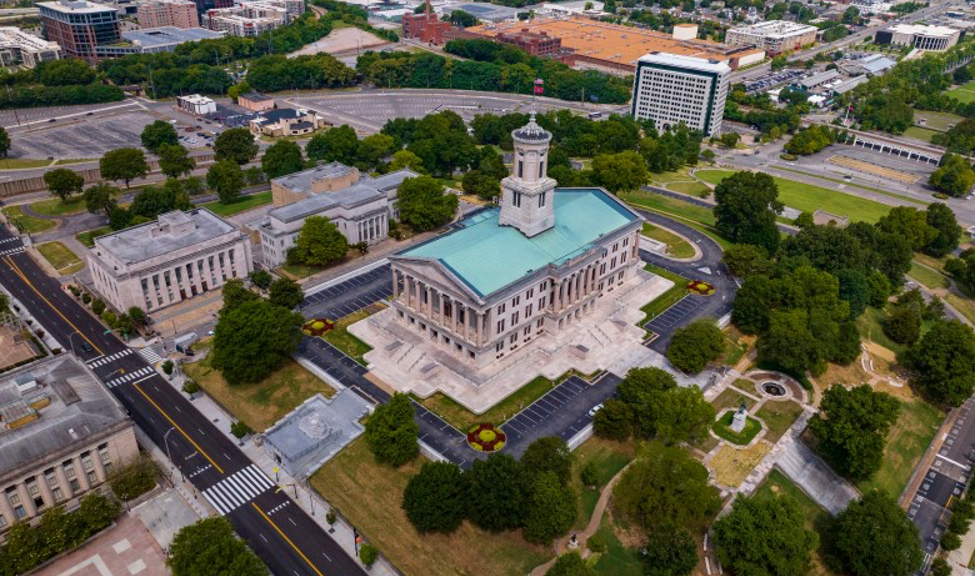
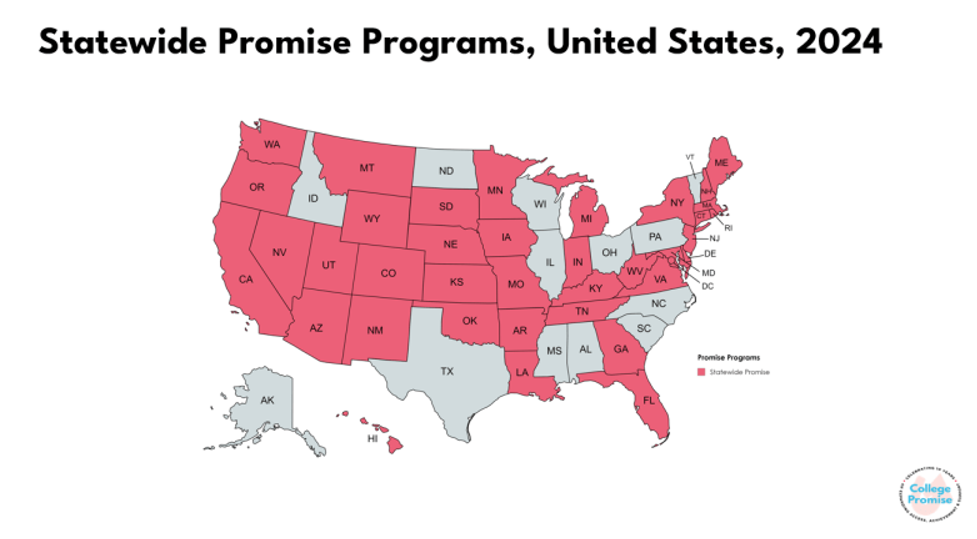
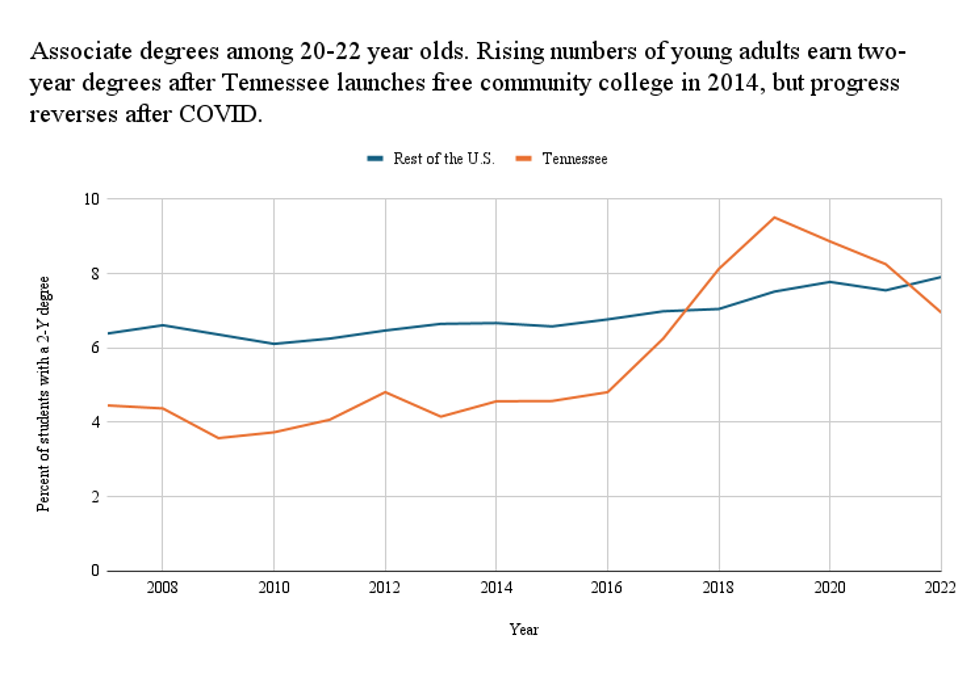
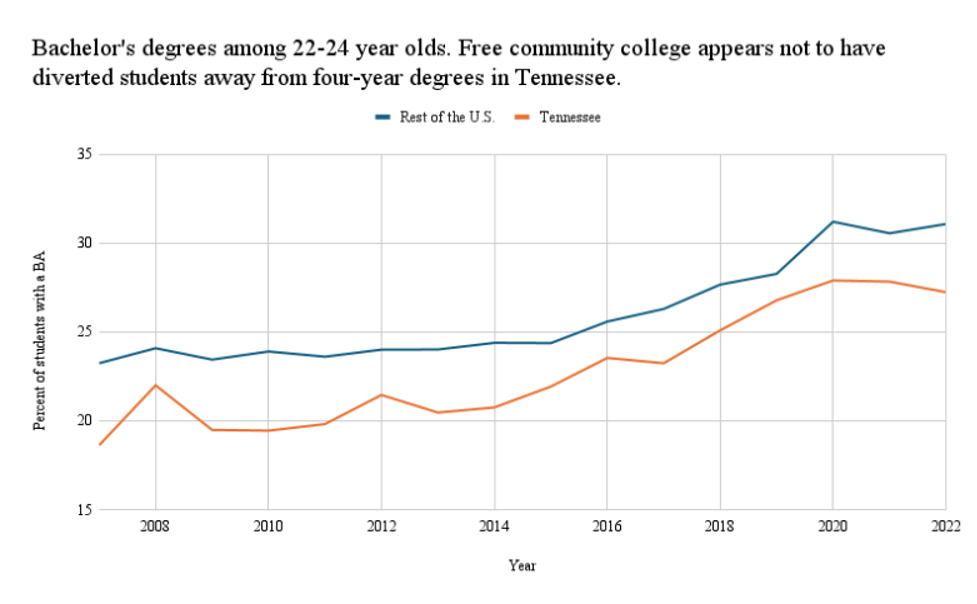







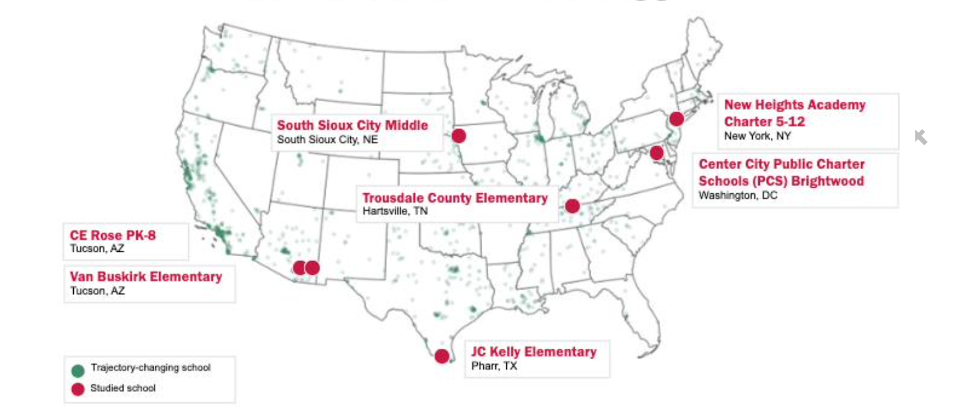
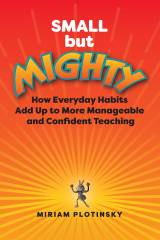 This sink-or-swim approach to education has lost popularity over time, particularly in the wake of both increased awareness of equity-driven instruction and amid the aftereffects of teaching and learning during the pandemic. Turning a blind eye to student struggle is harmful, and so is closing down opportunities for growth. Additionally, the idea of determining student achievement within any given content standard only at the close of a unit of instruction is fundamentally unsound. Ideally, teachers clear up confusion and check for understanding continuously throughout a unit of study.
 Miriam Plotinsky