Report Finds Teachers Underutilize Resources for Digital Games in the Classroom

iStock
iStock

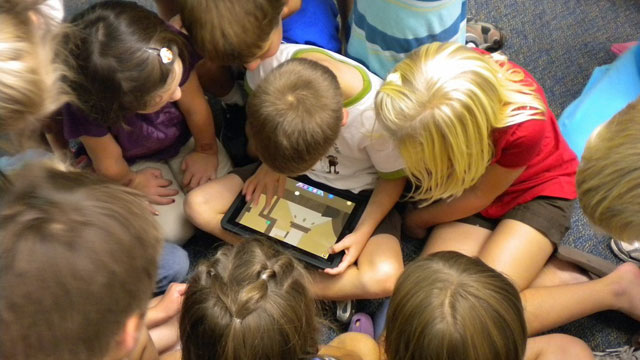
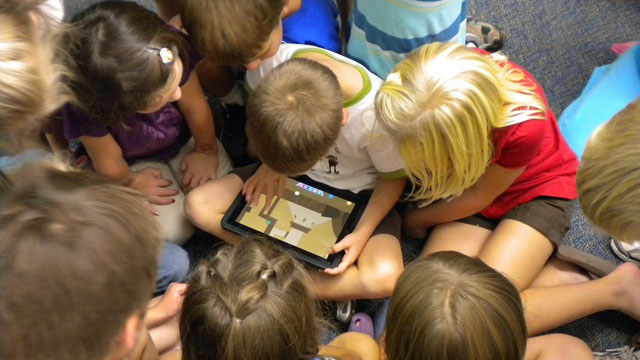
While more teachers are using digital games in the classroom, how they decide which games to use and why is less standardized, according to a teacher survey of 694 K-8 teachers by the Games and Learning Publishing Council called Level Up Learning: A National Survey on Teaching with Digital Games.

The report finds that teachers learn about games through informal means, such as peers within the school or school district, and could benefit from more explicit training programs. By not having a more formal process, the report finds that “teachers may not be getting exposure to the broader range of pedagogical strategies, resources, and types of games that can enhance and facilitate digital game integration.”

“There’s a problem with discovery. They aren’t aware of all the types of games they could be using and all the ways they could be using them,” said Lori Takeuchi, senior director and research scientist at the Joan Ganz Cooney Center who co-authored the report. The GLPC is a project of the Cooney Center. “We need an easier way for teachers to find the best game titles that will meet their needs,” she said.

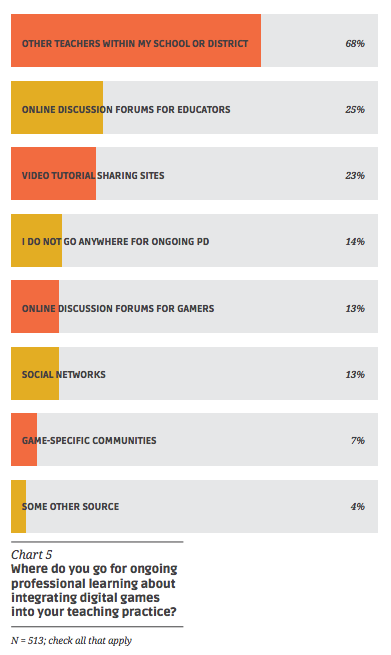
From "Level Up Learning: A National Survey on Teaching with Digital Games" from the Joan Ganz Cooney Center.
From “Level Up Learning: A National Survey on Teaching with Digital Games” from the Joan Ganz Cooney Center.

The report says a minority of teachers are using resources available to them. Teachers already using digital games get most of their professional learning  from other teachers within the school or district (68 percent) and a quarter of surveyed teachers go to online forums for educators. For those reasons, the report authors recommend finding alternative ways to reach out to teachers. The report states, “This means that we need to do more to promote these online resources and identify how they can more effectively address teachers’ pedagogical questions as well as their lifestyles, learning styles, and organizational constraints.”

Overall, most teachers they surveyed use games in the classroom. Many times, a teacher’s exposure to gaming outside of school impacts whether students get the benefit of games in the classroom. Of the teachers surveyed, 74 percent use digital games to teach in the classroom. Most of those said they let their students play at least monthly. About 40 percent of teachers who use digital games are using them to meet curriculum standards.

The report also finds that certain types of games are favored over others, and that duration plays a key part. Role-playing games, like World of Warcraft, can help students with problem solving skills, but only 5 percent of teachers surveyed report using such involved games. “All the research shows the potential of video games for learning and its usually through these immersive games, but those are not the types of games we’re seeing in the classroom,” said Takeuchi.

“Teachers tend to use shorter form games that could be finished in a class period or just a few minutes. Because developers realize that teachers can fit a shorter form game into a classroom period, they’re going to make those games.”

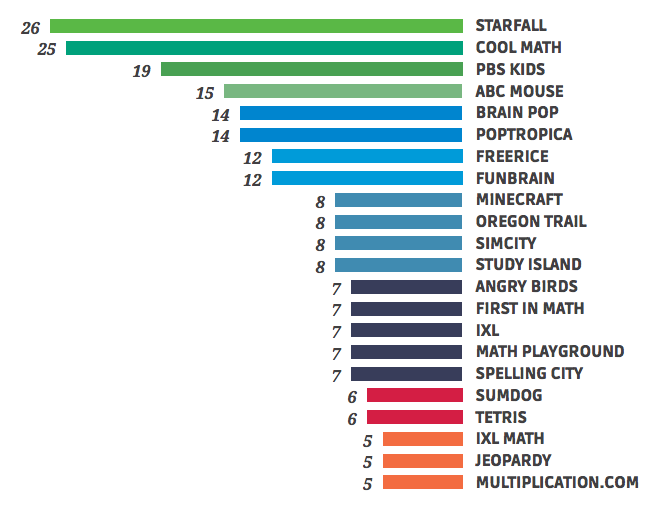
Part of the Bill and Melinda Gates Foundation funded report was released earlier this year and highlighted how teachers use games for reasons like assessment, reaching low-performing students, motivating students, and teaching new material. The full report shows which games the teachers surveyed are using in their classroom.

From "Level Up Learning: A National Survey on Teaching with Digital Games" from the Joan Ganz Cooney Center. Surveyed teachers listed titles of up to three digital games used with students.
From “Level Up Learning: A National Survey on Teaching with Digital Games” from the Joan Ganz Cooney Center. Surveyed teachers listed titles of up to three digital games used with students.

Note: MindShift has been developing The MindShift Guide to Games and Learning with the support of the Joan Ganz Cooney Center. The guide is a project of the Games and Learning Publishing Council.

How to Transform The Odyssey into an Epic Game in Alternate Reality

(Flickr/Nick Thompson)

How would Homer have told the story of The Odyssey as a game? What would participatory learning look like in ancient times? Learning about the lessons raised in classics like The Odyssey is getting a fresh perspective thanks to several educators who have started experimenting with how alternate reality games (ARGs) can be used as an immersive learning system that combines rich narrative, digital technology, and real-world game play.

John Fallon, a Fairfield Country Day School teacher and game enthusiast, brings game-based learning to The Odyssey with a game he designed called Dolus: Finding the Journal of Odysseus. Many educators today struggle to keep the classics relevant for a generation reared in the fast paced world of Internet and video games, and Fallon’s game bridges the classical past with the digital future for his seventh grade English students. Rather than merely reading about the adventures of Odysseus in English class, students can walk a mile in his shoes by channeling the skillset of the Greek hero who masterminded the Trojan Horse and outwitted the Cyclops. Students must exercise critical thinking, resilience, and creative problem solving to succeed in an ARG.

The idea came to Fallon while playing The Secret World, a video game that incorporates real-world browser searches to help solve puzzles. “It all hit me at once,” remembered Fallon. “The portability of cross-media ARG puzzles, the use of real world information in a fictional game world, and the ancient Siren-song of puzzle solving. Immediately, the game about the crafty thief who stole the journal of Odysseus was born.”

Courtesy of John Fallon
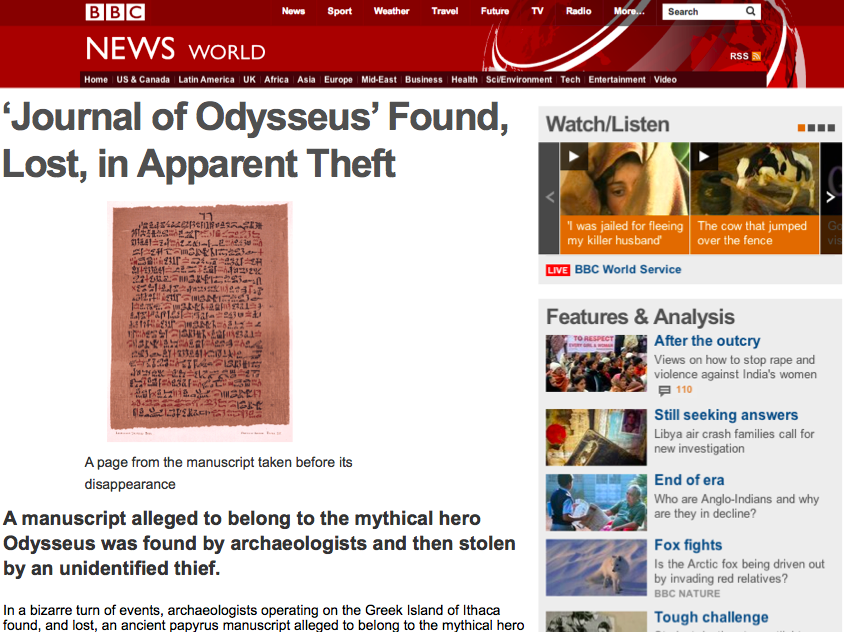
A screen grab of the fictitious BBC story used in John Fallon’s Dolus ARG. (Courtesy of John Fallon)

Fallon drew his students into the game’s narrative with a bogus BBC News story about the theft of recently discovered ancient Greek manuscripts. A riddle concealed within the article led players to master-thief Dolus, who challenged them to follow his trail of clues and re-assemble the lost journal of Odysseus. Clues and puzzles were distributed across QR codes, password protected videos, PDF files, and a variety of web 2.0 tools. He also enlisted his school’s IT department and fellow teachers to help deliver hints in a variety of unexpected ways. One puzzle required finding a Freemason symbol, which a few perceptive players discovered pinned to the lapel of their History teacher, a practicing Mason. Once they gave him the correct password and passed a quick test on Masonic iconography, they received a key to help them unscramble a cipher that unlocked the next step.

Sticking to the “this is not a game” ethos common to ARGs, Fallon feigned ignorance and never admitted to know anything about the month-long caper. “Students had to identify, research, and master a variety of different codes and ciphers. They had to parse difficult riddles – with no guidance from me – and solve multiple phase problems and then synthesize their findings to succeed,” said Fallon.

This type of elaborate puzzle solving is standard fare for mainstream ARGs. Originating in the early 1990s, ARGs are designed and run by development teams called “puppet masters” who combine the digital and the real to deliver intricate narratives that blur the line between reality and fiction. Players enjoy a great deal of agency as they solve elaborate puzzles while they negotiate a world of phony websites and documents, midnight phone calls, and park bench envelope exchanges, to name a few of the tactics that can make these games indistinguishable from everyday life.

Educational versions tend to be scaled down to accommodate specific learning objectives and operate safely within a school setting. Fallon’s model shows that any motivated teacher can design and run their own ARG without programming skills, specialized technical knowledge or a big budget. This is assisted by the availability of free or inexpensive user-friendly, web-based tools, and digital software. The modular nature of ARGs also lets educators decide how simple or complex they want to make their game, and allows them to choose elements that best suit their unique circumstances.

Alternate Reality’s Impact on Real Life

While they can be played from elementary school to college, most existing educational examples are found in middle schools. “It’s a developmental period of transition where kids begin to build and exercise critical thinking skills,” said Dr. Tanner Higgin, who helped produce the United Colonies ARG. “They are still relatively untainted by the social pressures and inhibitions that set in with growing older and they are also less entrenched/acclimated to the traditional school model.”

Despite the paucity of studies specific to educational ARGs, this new learning system combines three ingredients whose benefits are supported by a growing body of research: game-based learning, embodied learning and the use of transmedia in education. Jane McGonigal, author of Reality is Broken, draws one distinction between video games and ARGs:

Historically, in fact, most ARGs, like most computer and video games, have been designed simply to be fun and emotionally satisfying. But my research shows that because ARGs are played in real-world contexts, instead of in virtual spaces, they almost always have at least the side effect of improving our real lives.

ARGs are not for everybody, but Fallon noted that students who were not typically motivated in his class kicked into high gear, some laboring into the wee hours at home to untangle a conundrum. To succeed in Dolus, students had to inhere the very qualities that helped the cunning Odysseus to prevail on his journey. “Odysseus is mortal and without superpowers but, above all, he’s a tenacious problem solver,” explained Fallon. “He is put into seemingly impossible situations and, through sheer human ingenuity and persistence, he finds a way out.”

Students wrote their own creative adaptations of The Odyssey to conclude the unit. Fallon noticed a substantial improvement in the quality of the work over past more traditional deliveries of the lesson. “They did a better job of making their individual versions of Odysseus more clever and better problem solvers rather than just a cardboard cutout hero who bashes his way through problems. This likely stems from having experienced some difficult problem solving of their own in similar circumstances.”

Empathy for Injustice

The multidisciplinary potential for these games ranges far beyond English class, as their narrative and content can be tailored to accommodate a broad rang of subjects and learning outcomes.

“Any situated learning experience can most definitely promote learning better than traditional pedagogical strategies and there’s some good research to support the benefits,” said Randall Fujimoto, an instructional designer and former video game developer who founded GameTrain Learning, a not-for-profit that helps schools implement game-based learning initiatives. Inspired by The Beast, a sci-fi whodunit ARG designed to promote the film A.I. Artificial Intelligence, Fujimoto felt that the dynamic and embodied gameplay could make a potent learning tool.

Fujimoto was so enthralled with the idea that he decided to focus on how ARGs could be used in the classroom for his masters thesis, ultimately developing a game focused on the Japanese experience of internment camps during World War II. In Arising from Injustice, students are contacted to investigate why Dr. Alice Sasaki had been found unconscious in her lab. To wake her from her coma, players must access her high-tech Memory History Cognition device and reconstruct her memories as a Japanese American in the 1940s. In ARG parlance, this is known as the rabbit hole – the initial event or clue that pulls players into the game world.

[contextly_sidebar id=”AlDkWWDdW8nHP8JLazfttcMxBeugrjWD”]

The modular, web-based narrative relays the story of the Japanese Americans with eclectic historical documents and media, including pictures, letters, journals, videos and audio. In classic ARG style, players progress from Pearl Harbor to post-war resettlement by solving puzzles, following clues, and carrying out assignments and sharing their findings on a group discussion board. The game was designed to service a wide range of age groups and was trialed by eighth graders at Tomodachi Gakko, a summer camp whose focus on Japanese American heritage fit well with the game’s theme.

Arising from Injustice embeds clear learning objectives within the narrative. Players evaluate and analyze primary documents to determine the social conditions that precipitated prejudice and discrimination against Japanese Americans. They also hone their media literacy skills by synthesizing their learning in collaborative media projects where they support their research with primary sources. All of these fit with Common Core standards, and post-game surveys indicated that players were not only engaged, but that the intended learning outcomes were achieved.

But perhaps the most important lesson learned was one of empathy.

“The game puts players in a situated learning environment where they must interact and empathize with various characters in order to succeed,” said Fujimoto. While playing Arising from Injustice, students experienced the hardships and discriminations suffered by Japanese Americans through the eyes of the victim. One player reported that “you could really put yourself in Alice’s shoes,” highlighting the game’s capacity to emotionally connect players to their subject. Dr. Mary Flanagan and Jonathan Belman’s research supports that games can be designed to foster empathy, a quality that not only produces better human beings, but also better learners.

The Anytime, Anywhere World of United Colonies

One fall morning, sixth grade students from the PlayMaker School in Santa Monica were surprised to find a mysterious note labeled “UV got a message” in their lockers. A few students eventually connected it to an ultraviolet bulb that had appeared in their classroom and, when the note was placed under the UV light, a secret set of instructions was revealed.

The UV message from the United Colonies game.

For the rest of the school year, the United Colonies ARG led players along an elaborate trail of clues that included books with hidden compartments, alien codes, meteors inscribed with cuneiforms, and even a bacon puzzle. Not tied to any one class or subject, but drawing from many, the game added an extracurricular layer that extended beyond the classroom. “The ARG made school an anytime, anywhere experience, a thread running between and within classes and carrying through to home,” said designer Mike Minadeo, the game’s creator.

Participation in the game was entirely voluntary and outcomes were not attached to grades or points. “Students self-selected to be involved and were driven purely by interest, curiosity, and excitement of the unknown to figure things out together,” said Higgin, who was lead researcher at GameDesk when he worked with Minadeo to develop United Colonies.

Any object in their midst might be a code, a message or the start of a puzzle, so their learning environment was transformed into a spatial text that was alive with possibilities. The school’s neglected online discussion board was reinvigorated as game-related updates and information were actively exchanged. Students crafted their own riddles, and even started a club for designing ARGs, an important shift from students consuming games to creating them.

Students were clearly engaged, but what did they learn?

“The United Colonies ARG explored how learning opportunities could be presented through a transmedia platform that inspired associative learning, gritty persistence, cross-disciplinary thinking, and critical analysis,” Minadeo said. The creators found academic support in Dr. Angela Lee Duckworth’s work on grit and a scholarly article from MIT press that identifies seven core literacies delivered by ARGs: gather, make sense, manage, solve, create, respect and collaborate. In an effort to make the project available to teachers, the game designers posted a detailed lesson plan to GameDesk’s Educade site, outlining how the game fulfills specific learning outcomes and Common Core standards.

A Rethinking of Roles

Some educators are convinced that alternate reality games have huge potential to invigorate learning environments, but they face some implementation challenges. Administrators operating in a risk-averse climate of national standards and testing want to see clearly defined learning outcomes and assessment strategies to accompany any new teaching strategy. ARGs also take time to plan and ask that teachers think differently about how they delivery their instructional material.

Good ARGs are often custom crafted to specific classrooms and schools, making them difficult to transfer into new environments, Fallon said. Further study, experimentation, dedicated technology and user-friendly ARG designs will not only help overcome hurdles, but also open the door for other dynamic, immersive games that combine digital media and reality. ARGs may also occasion a rethinking of the roles of teachers and schools.

United Colonies is a product of the collaboration between educators and game designers; a model espoused by schools like Quest to Learn in New York City and CICS ChicagoQuest in Chicago. These charters might be forecasting a future where game and learning environment designers become standard personnel who work in conjunction with teachers in schools and districts, making initiatives like ARGs more feasible.

The discovery of this Freemasons pin helped students unlock the next phase of the Dolus game. (Courtesy of John Fallon)
The discovery of this Freemasons pin helped students unlock the next phase of the Dolus game.(Courtesy of John Fallon)

Alternately, John Fallon is a model of the autonomous teacher-designer, who relies more on holistic creativity and resourcefulness than specialized knowledge. Teachers may welcome the opportunity to engage their students and invigorate their practice with a unique creative outlet. Perhaps they need only take a page from Odysseus’s book and, like their students, push the creative boundaries, problem solve and overcome adversity with resilience.

How Students Lead the Learning Experience at Democratic Schools

Courtesy of Fairhaven School

While teaching at Catholic and public schools in the 1990s, Mark McCaig and his wife, Kim, grew increasingly frustrated with the amount of time they were having to devote to managing behavior and teaching material that didn’t interest students. They started reading about different approaches and were intrigued by the Sudbury Valley School, a democratic school in Massachusetts where students are in charge of what and how they learn. After paying a visit, they quit their teaching jobs to create a Sudbury-type school in Maryland.

The Fairhaven School, which opened its doors in 1998, has no tests or grades, and no assigned homework. Its goal is to help students develop two core traits: agency and autonomy. (In response to one of the most common questions posed by prospective parents, one parent and former staffer wrote a blog post explaining how a democratic school differs from other alternative approaches to education.)

To foster those traits, the school aims “to strike that balance between freedom and responsibility,” McCaig says, which he sees as two sides of the same coin. The institutional framework — rules and community responsibilities and related meetings — “provides a sense of order that is vital, but around that, students have a lot of liberty to shape their day.” They have at their disposal a large meeting hall, a workshop, two kitchens, several smaller meeting rooms, a library, and rooms dedicated to art, computer gaming, digital arts, and play. The grounds include a stream, a forest, playing fields, a basketball court, a playground, and lots of porches.

How it Works

Designed to be an affordable, “green” learning space with a heterogeneous student body, the school is in a racially diverse, middle-class suburb of Washington, DC. Today about 15 percent of the students are non-white, and the school provides grants or reduced tuition to low-income families. The only entrance requirement is a trial week to ensure prospective students are interacting positively with others and not endangering anyone, including themselves.

The roughly 60 students range in age from five to 18, with a fairly even distribution of ages, except for a recent uptick in 11-year-old boys who have transferred there from conventional schools. The children and adults mix freely, creating the essential “scaffolding” experiences for the younger members of the community. All of the children, regardless of their ages, “know what they want to do, and learning is a by-product of what they do,” McCaig says. “Learning is the result of doing, not vice versa.”

Five-year-olds who haven’t been exposed to formal classrooms are in many ways better prepared for this ‘discovery learning’ approach, because they are more attuned to this “natural way of interacting,” says David Bjorklund, a professor at Florida Atlantic University who specializes in developmental psychology. “Children begin as explorers—they explore the environment around them, watch others, and try out what peers as well as adults are doing. … What they need to acquire, they are able to acquire quite proficiently through ‘discovery learning.’”

Courtesy of Fairhaven School

Newcomers respond to this environment in different ways, reflecting their varied personalities, interests and needs (students who enroll at Fairhaven are not necessarily any more self directed to start with than other children, McCaig says, especially if they’ve grown accustomed to having lots of restrictions). Those who crave more structure, he says, create it for themselves. Some exult in their newfound freedom and immerse themselves in previously curtailed activities such as playing video games, but eventually “they figure out how to manage that part of their lives,” he notes. On the other end of the spectrum, there are students who have become so accustomed to doing what they’re told and being praised by teachers, that they find it harder to adjust to the freedom than to the responsibility.

The most significant responsibility at the school is that “you are responsible for what you make of your life,” McCaig says. To graduate, students write and defend a thesis that they have “prepared themselves to become effective adults in the larger community.”

The students’ endeavors are supported by five adult staff members, who bring varied skills and interests to the table: two are former schoolteachers; one is an artist; another is a former nature center interpreter; and the third is a movie sound technician. (The former schoolteachers also had some “unlearning” to do in order to work there effectively, McCaig says, including himself.) They help students clarify and achieve their goals, handle administrative matters, and serve as mentors or “village elders — people with life experience who know some interesting things and can help in a crisis,” as McCaig puts it. The entire school community — staff and students alike — votes each year to decide whether or not to extend each staffer’s contract.

The adults facilitate but don’t drive anything for the students, McCaig explains. “The hard work [the students] do here is learning how to become agents of their own lives and how to make things happen, whether it’s something academic, or organizing a fundraiser, or another event.” Technology, he says, “has increased efficiency and opportunity for our students; nevertheless, the liberty, respect, and community the school provides seem far more important and valuable than laptops or smart phones.”

The staff members organize classes when students request them. Staffers will teach the classes or hire someone else. Some of the classes are just one to one. If students lose interest in the subject and stop coming to class, there is no penalty, but there is a consequence. “I will say we’re done,” McCaig explains. “I don’t want to spend time preparing for something and not have the social contract met. … That is part of our job, to give students the reality of how to do things.”

One staffer, he notes, describes Fairhaven as a place to “practice life.” Students are given the opportunity to “practice the skills that one succeeds in life with, such as communicating with people, taking on jobs, learning how to cook. Academics may be just a part of that.” He adds: “A lot of what happens seems almost invisible. … Play and conversation, broadly defined, are the two most common categories of activity here, and seldom do these ‘look like school.’ Nevertheless, our students are constantly practicing life itself, and the rewards of this practice are as profound as they are difficult to measure.”

Some students shift their main focus to academics after they leave Fairhaven, or during the hours they’re not in school. “We’ve had people go on to college who did few academic things when they were here, to study all sorts of subjects,” ranging from social work to biology and creative writing, McCaig says.

Courtesy of Fairhaven School

The Pluses and Minuses of a Democratic School

The freedom of democratic school does not translate into license to do whatever students wish. There is a “thick law book,” McCaig says, that has been developed over the course of 17 years at the “School Meeting,” where each staff member and student gets an equal vote. (Among other things, it describes the level of skill students need to demonstrate before being able to use expensive or potentially dangerous equipment, such as workshop tools or microwave ovens.) The students are required to participate in judiciary committees, follow the school rules, and record their hours of attendance. Students must attend school for a minimum of five hours each day, though many stay longer. The school’s governance system is explained in more detail here.

Freedom is relative — some families who are accustomed to homeschooling find the rules at Fairhaven too constraining, and also don’t like the fact that, like all schools, it’s cloistered from the surrounding community. There are also those who prefer to be exposed to more adult-initiated activities. A small school such as Fairhaven is also limited by its size, McCaig notes. It doesn’t have a completely stocked science lab, for example, or a large faculty to consult. “Some students arrange those kinds of experiences for themselves off campus,” he adds. “They get internships or jobs, or take community college classes.”

What the students do have at Fairhaven is “basic freedoms, like freedom of movement,” McCaig says, and the ability to devote themselves to projects for as long as they want. The responsibilities that are attached to the freedoms help the students mature, he adds: “To be exposed to a place where there is so much responsibility leads to responsible people.”

The school culture and the transparent and democratic judicial system have made bullying almost non-existent, he says, but “we are not immune to the normal challenges life presents. People have conflicts. … The young people here are working on figuring out what to do with their lives, and answering this question and discovering how to make it happen can involve difficult work. People struggle here from time to time, and we expect this. What’s empowering is that we do not have to label or assess their struggles; rather, we are present to support and witness the students as they overcome life’s challenges.”

Leaving Fairhaven For Other Schools And College

A significant number of students (including the younger of McCaig’s two teenage daughters) eventually opt to transfer to a larger school, to meet more people, take advantage of the academic or extracurricular offerings, or just see what else is out there. “The macro issue is that students should be in charge of what they do, and if that means they want to go to public school, more power to them,” McCaig says. “It feels like a different thing than compelling them to do so.”

Long-time students often “want to see if they measure up, because we don’t evaluate them,” he adds. “They treat [the conventional high school] like college. They take it seriously, they know what they want, and they are there to master it.” Many have to really apply themselves at first and get additional support to catch up academically, he says, but most go on to make the honor roll within a year. “A significant number then come back,” he adds, “because they decide they find it boring.”

Fairhaven alumni have not experienced any particular difficulties getting into colleges, especially if they can distinguish themselves by going for interviews or submitting video interviews, McCaig says. But students with very specific goals — such as attending a technical college with less flexible requirements—“need a conscious plan,” which often involves taking specific community college classes on the side while they’re enrolled at Fairhaven.

Alumni have gone on to careers as varied as helicopter technician in the military, organic farmer and social worker. McCaig gauges the success of the school in terms of whether the alumni are satisfied with their lives: “Are they happy and thriving, doing something they want to do, and making a living?” Fairhaven has not collected hard data on its alumni, but the staffers do keep in touch with them, and McCaig says their experiences are comparable to those documented by Peter Gray and by the Sudbury Valley School in its book, Legacy of Trust.

Watch the trailer for “Voices from the New American Schoolhouse” below, a 2005 documentary about Fairhaven School by Danny Mydlack:

[youtube http://www.youtube.com/watch?v=rgpuSo-GSfw&w=420&h=315]

How Virtual Reality Meets Real Life Learning With Mobile Games

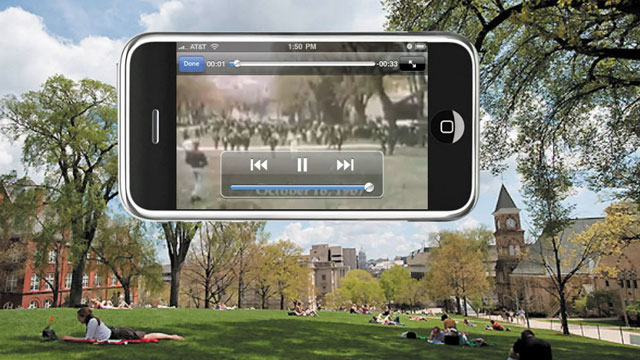
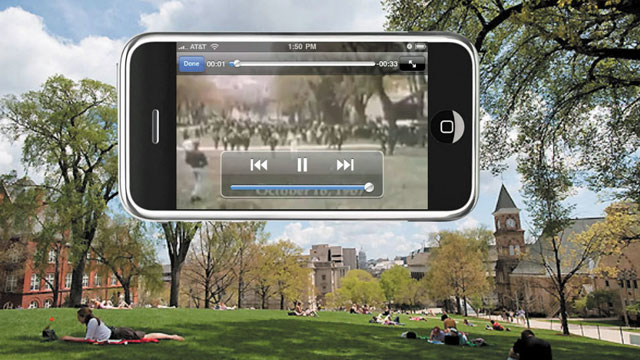
Participatory games let students see archival footage of events that happened in the places where they stand.(Rosenfeld Media/Flickr)
Participatory games let students see archival footage of events that happened in the places where they stand. (Rosenfeld Media/Flickr)

The buzz around games and learning has mostly focused on how educators can learn from game structure to create engaging learning experiences. Or else, educators are experimenting with video games meant to help students practice academic skills. Less attention has been paid to a niche of mobile gaming seeking to bridge the gap between the screen and the real world — pervasive gaming.

“Most games are not automatically motivating,” said Benjamin Stokes, postdoctoral scholar at the University of California, Berkeley School of Information and co-founder of Games for Change. “One of the things that makes a game engaging is that the choices are meaningful.”

Giving students the opportunity to make meaningful choices isn’t at the center of every classroom, especially when it comes to civics. Most civics classes focus on teaching about democracy and governance in its most ideal form, as a static system. The focus is on preparing students for their eventual participation in the system, without giving them a real-life experience of what it means to be civically engaged.

In these situated games, students play a game on mobile devices that also requires them to interact with the real world. For example, the game might include a challenge to go to a park where something historically significant happened, like a famous protest. While looking at the historical marker, the game could require students to read the text out loud or to tell passers-by about the history that happened at that place.

“Part of what’s interesting about mobile is that it takes a speech students might have read in the classroom and puts them at the location,” Stokes said in an edWeb webinar. In another instance, the game might ask students to act out a protest. “The goal of the game is not just to convey some facts, but to let people test out this disposition of protesting and engaging with the theater of it,” Stokes said.

These games allow students to walk in the shoes of historical figures, make the tough decisions those figures faced and deal with the consequences of those choices. That’s very different from merely visualizing what it might have been like.

[contextly_sidebar id=”zsGtdzipVFM8B9hOM5Dt13EDLnnckQWy”]

While the mobile game keeps track of students’ progress, assigning different missions and cataloging evidence and the resulting points, the game is played out in the communities where students live, requiring them to engage with people of all ages.

“The breakthrough for me is that you are participating in the real world, so that participation has to be authentic to what the real world wants as well,” Stokes said. In other words, the game is not just a simulation of an event; it necessarily has an impact on the public spaces where it is played.

And because the game is on a mobile platform, students can reflect on the experience with pictures, videos and short writing exercises. “When we’re being social about our reflection, we often need the skill of writing quick, short things and then linking to longer pieces,” Stokes said. If students made those reflections on a public social media site, the community could even engage with them as they learn about what makes the place where they are from distinct.

“One of the things we really need for civic renewal is having conversations with other generations about issues,” Stokes said. Allowing students to learn what it means to participate in a civics project by leading them through a mobile game might begin a conversation with adults about the past that never would have happened otherwise.

PARTICIPATORY MOBILE GAMES

Jim Matthews is a teacher and researcher interested in using games to promote place-based education about everything, not just civics. Communities that show pride in their distinctive qualities and cultures tend to be more resilient and capable of problem-solving. Matthews wants to help students and their families contribute their own stories to the local history to strengthen that sense of place.

One of the strongest elements of a pervasive game is that the skills can’t be siloed into one academic discipline. “In order to solve some kinds of problems, by default they have to be multidisciplinary,” Matthews said in an edWeb webinar. Many of the games he has experimented with require students to use cross-cutting skills that will help them solve a varied set of problems.

YELLOW ARROW: This public art project started in 2004 in Manhattan and has spread across the world. Participants print out yellow arrow stickers from the website , each with a unique identifying code, and place them in public places that have important local meaning. People who know about the project can text the Yellow Arrow phone number with the unique code and instantly receive the story or piece of local lore the author marked. Other users can even add more stories to a location, creating a crowdsourced ethnography of place.

DOW DAY: In this game, players take on the role of a journalist on the Madison campus of the University of Wisconsin in 1967 during a protest against Dow Chemical and their product, napalm. Called a situational documentary, students explore different characters’ perspectives, taking on their roles. The game also offers opportunities to research contemporary issues connected to the university and contribute stories using the platform.

MENTIRA: This game was started in Albuquerque to teach Spanish. Players interact with virtual characters as well as real residents of one of the city’s Spanish-speaking neighborhoods to investigate a fictional murder. Following clues given by game characters and real people, students must play out the narrative and engage with people using their Spanish at the same time. “One of the goals of this story is to get people out into a neighborhood, and the way you are doing it is through an invented story that uses Spanish,” Matthews said.

JEWISH TIME JUMP: Using GPS technology on students’ mobile devices, archival images and tidbits of information pop up as students move around a park that sits across the street from the Triangle Shirtwaist Factory, site of the famous fire that drew attention to the dangerous conditions in sweatshops. Players interrogate virtual historical figures like Rose Schneiderman, read primary source documents and slowly piece together the history of Jewish immigration in New York, the labor movement and women’s rights. These kinds of place-based, augmented reality games have the potential to allow students to construct their own understanding of history, while tying it tightly to the physical place where it happened.

RE:ACTIVISM: This mobile game is similar to Jewish Time Jump in that it focuses on the civics history of locations, but it extends beyond New York. Teams compete to come up with visible, public actions that engage the public around different historical moments. Players are given cards associated with different sites and document their actions along the way. It requires creativity, research and knowledge to win the challenge. Players have to walk a fine line between being authentic to history and being playful — one of the many interesting aspects of participatory gaming.

SUSTAINABLE U: Players find themselves in a dystopian future where natural resources are running out and something must be done to change the course of history. Players receive quests to explore transportation, water and waste policies at a university. After researching what’s already been tried, they come up with new ways to address sustainability. “One of the challenges is to go out and find where energy is being wasted and change your own behavior,” Matthews said.

UP RIVER: Designed to make learning about the St. Louis Estuary more participatory, this virtual game leads students through the estuary to various places, some more industrial, others that look like the natural habitat that once existed. Students investigate important scientific factors like oxygen levels in the water, vital for fish stocks, and interact with virtual historical characters who can describe what the area was once like. The game includes questions and challenges that require students to interact with contemporary people, like fishermen.

“One of the things we’re experimenting with is how can you integrate stories with field work,” Matthews said. Students are collecting water samples, but learning about the local lore of the place as well. This kind of game reinforces the notion that real problems aren’t siloed by discipline. Cleaning up an estuary has real effects on local businesses of all kinds, for good and bad.

COMMUNITY PLANIT: This game allows students to get involved in city planning at the local level. Students complete missions in the real world to win virtual coins. They can spend those coins to vote for how funds will be allocated for real city projects. “One of the neat things about this is that folks are tying it into planning projects that are already taking place,” Matthews said. The city of Philadelphia is using this game as it builds its Philadelphia 2035 plan.

DIGITAL GRAFFITI GALLERY: This game focuses on the ephemeral and often beautiful culture of street art. “You are capturing real-world graffiti that has been put out around the city before it gets painted over,” Matthews said. Capturing it creates a record of its existence, and players can curate their own list of favorite artwork.

LOCAL LOTO: Focusing on the lottery and its effects on communities, the game asks students to look at the quantitative data about the lottery and then go out into the community and gather stories of people who play and why. After they’ve conducted all their research, students form their own position about whether they think the lottery is good or bad for the neighborhood as a whole.

These are just a few examples of the kinds of activities local game labs, teachers and nonprofits have developed to connect mobile gaming to real places and the communities that bring them to life. “The games challenge learning to be relevant, using classroom skills and fascinating stories from life,” Stokes said.

He thinks real-world gaming has the power to re-engage young people with civics and ignite their passion to have an impact. “Engage them in studying places where they already hang out and use technology that they already use,” Stokes said. Doing so not only helps teach them, but it could also empower them too.

“I think we can actually try to be a little more ambitious beyond learning,” Stokes said. “Look at the contribution your young people might be able to make to their community.” As citizen scientists, community ethnographers and storytellers, chroniclers of injustice or city disfunction — students can make a difference in their communities and often find great satisfaction in learning that allows them to do so.

Measuring Students’ Self-Control: A ‘Marshmallow Test’ for the Digital Age

Credit: Dana Nelson
Credit: Dana Nelson

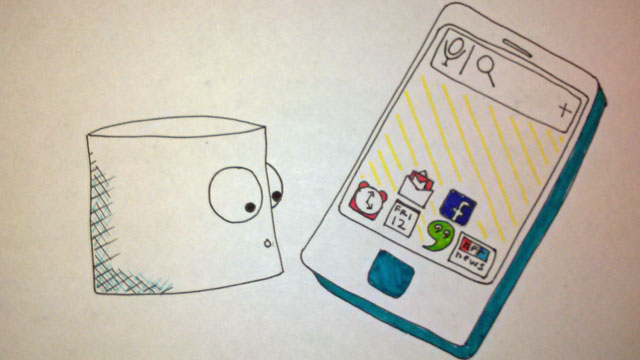
The “marshmallow test” invented by Stanford psychologist Walter Mischel and colleagues in the 1960s is famously known as a measure of willpower. The experiment gave preschoolers the option of either eating one mini-marshmallow right away or waiting 15 minutes to get two mini-marshmallows. Decades later, those who were better at delaying gratification, and resisted immediately snarfing the treat, ended up with stronger SAT scores, higher educational achievement and greater self-esteem and capacity to cope with stress in adulthood.

Now other psychology researchers have come up with a test that challenges the willpower of schoolkids to resist the brain-candy of today’s digital distractions — the YouTube videos, Instagram and mobile gaming apps like Angry Birds. Some people are calling it a “digital marshmallow test,” although it’s tailored for an educational context and doesn’t involve any sweets or near-term rewards.

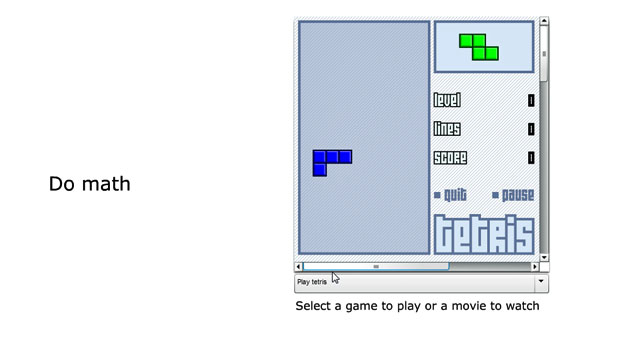
Officially known as the “academic diligence task,” the new computer-based test offers students a choice between doing math or watching videos or playing a video game. The test was created by postdoctoral research fellow Brian Galla and associate psychology professor Angela Duckworth of the University of Pennsylvania, with Sidney D’Mello of the University of Notre Dame, as a better (and free) research tool for measuring self-control. The researchers hope this new tool will advance their studies of ways to improve academic perseverance in students.

A report recently published online by the team documents the test’s reliability and validity and shows that performance on the task predicts academic achievement — including whether high school seniors graduate on time and enroll in college.

“It’s a really creative and interesting approach to measuring an aspect of self-control,” said Smith College psychologist Philip Peake, who has worked with Mischel on the longitudinal follow-up of participants in the Stanford “delay of gratification” studies. The new diligence task is quite different from the marshmallow experiment, so they can’t be equated, he said, but both are research tools that can contribute to our understanding of the processes that underlie self-control. And both have the advantage of measuring how people actually behave, not just what they say or think they do.

“It’s not just people filling out a questionnaire that says, ‘Oh, I tend to persist in things’ or ‘I work hard at things,’ ” Peake said. It’s assessing real behavior. “And you can see that that behavior has some consequential relations to real-life outcomes.”

Studying Self-Control in the Face of Digital Distractions

The recent work by the Penn and Notre Dame psychologists is part of their ongoing national study of the role that non-cognitive factors such as “grit” and self-control play in students’ persistence in school. That endeavor, which is funded by the Gates Foundation, is following about 1,800 high school seniors over six years to track who enrolls in and finishes college.

Duckworth is known for her work on grit, which she defines as a tendency to pursue long-term challenging goals with passion and perseverance. Self-control or “self-regulation,” on the other hand, is more about the short-term exercising of self-discipline in the face of momentary diversions, an ability that also feeds into perseverance. The research team needed a standardized way to assess self-control, but most of the existing measurement tools were self-report questionnaires, which can give biased results.

[contextly_sidebar id=”Mo3P7onQPy6KNMOC9QoKybmiR1UrdWKB”]

So they devised a task that uses behavioral responses to measure academic diligence, which they define as “working assiduously on academic tasks which are beneficial in the long run but tedious in the moment, especially in comparison to more enjoyable, less effortful diversions.”

The rationale behind the test is that with many subject areas or skills, such as mathematics, the basic process of building fluency and mastery involves a lot of practice. It requires “hard work that is perceived as tedious, even though people know it’s immensely important,” D’Mello said. “But that’s just the reality.”

With math, for instance, that means “studying your multiplication tables, solving equations, again and again and again,” which is essential for building more complex numerical knowledge. However, “in the digital age, it’s so hard to focus,” D’Mello said. In psychology-speak, students are faced with having to “regulate” their emotions and impulses to overcome boredom and concentrate on homework instead of something more fun.

To measure this skill in a scenario simulating real life, D’Mello, who is an assistant professor of computer science and psychology, designed the diligence task with a split computer-screen interface (click here for a demo). On the left side, students can choose to do a series of boring skill-building math problems — simple, single-digit subtraction. On the right side, they can play Tetris or watch short, entertaining YouTube video clips of movie trailers or sports highlights. The test is delivered online.

Road-Testing the Test

Galla, Duckworth and their colleagues took the diligence task into two large, ethnically diverse public high schools in Philadelphia, where they enlisted 921 seniors in early 2013. The students were instructed to answer as many math problems as they wanted, as fast as they could, in five consecutive four-minute sessions. They could take a break at any time to watch videos or play the game. The instructions informed them that practicing basic math skills could improve their problem-solving abilities for the future.

In total, the teens spent about half the time on math skill-building, answering an average of 244 problems, D’Mello said. Overall performance on the task consistently correlated with individual differences in conscientiousness, self-control and grit (which were also assessed in the students through questionnaires), just as the psychologists had theorized.

The kids who solved more math problems tended to have higher senior-year GPAs, better scores on standardized math and reading tests, and were more likely to graduate on time; they were also more likely to be enrolled in college at the end of the following fall semester, almost a year later. About 98 percent of the pupils who spent more than 17 minutes doing the math problems successfully graduated, compared with 95 percent of students who spent four minutes or less on math. While that’s a small difference, it was interesting to see it even after the researchers adjusted for other factors, including intelligence, gender, ethnicity, interest in math and whether the kids were in the free lunch program, Galla said.

Demo of the "academic diligence task" created by Sidney D'Mello.
Demo of the “academic diligence task” created by Sidney D’Mello.

The diligence test “was able to pick up a signal in college enrollment, and this was above and beyond things like cognitive ability, socioeconomic status — things that we know tend to correlate with or predict later college success,” he said. So it isn’t just IQ or braininess that matters for academic achievement, but self-control as well. Yet, unlike IQ, the researchers believe self-control in schoolwork is a skill that can be taught and developed.

The correlation between performance on the diligence task and academic achievement is modest, but it is significant and important, commented Peake of Smith College. Whether the task predicts long-term consequences, and whether those are limited just to academics or apply more broadly to other aspects of self-control, are interesting questions to further explore, he said.

Staying on Task

The results held some surprises. “I was really shocked that some people actually stayed entirely on the math problems the whole time,” D’Mello said. “It’s a really difficult task. I can’t do it myself, frankly.” One super-diligent student did 966 math problems; a few kids did none at all.

The teens used a range of tactics to resist the distractions. “Some students would turn it into a game for themselves,” Galla said. “So they want to just see how many problems that they can solve in the four-minute task blocks.” Others did math until they needed a break, then switched to the fun stuff, which is “very healthy behavior,” D’Mello said. “We all know there’s advantages to taking a break. … It’s just that if you do that too much, then you get into trouble.”

The research team will track the students through the six-year national college persistence study, and is updating their diligence task to include verbal and spatial reasoning problems. “The hope is that by giving a good measure, you could really inspire a lot of science,” said D’Mello. At this point, the researchers say they don’t envision the test as something teachers would routinely use to assess students in the classroom; it isn’t designed or validated for that purpose.

Different Takes on Willpower and Grit

Not everyone believes the growing focus on individual students’ responsibility to demonstrate self-control or grit is the best way to support academic achievement. Some progressive education experts worry low-income or minority kids who are struggling in school might be blamed for lacking grit as the primary reason for underperformance. Those critics point out that in many schools, poverty and an inequitable lack of resources are much bigger roadblocks to teaching and learning that need to be addressed.

This viewpoint identifies an economic, social and racial overtone to the notion that if students “would just put their nose to the grindstone harder and work harder, and be more diligent and more resilient, that they will do better,” said Grant Lichtman, education consultant and author of #EdJourney: A Roadmap to the Future of Education, who moderated an impromptu heated discussion on this issue on his blog. “It sort of plays into the mythology of the American dream. It sounds good, but it may be more relevant to some folks than to others,” Lichtman said.

It’s absolutely necessary to structurally address the income inequalities in society, said psychologist David Yeager of the University of Texas in Austin. “Increasing diligence is no replacement for that.” But he believes cultivating skills like diligence and grit in students can still be valuable. Yeager points to high-performing urban charter high schools in the poorest areas that boosted their graduation and college enrollment rates with substantial financial investment, yet still find that 60 to 70 percent of their graduates drop out of college. At several such schools where Yeager worked with Duckworth in studying low-income students in their senior year, kids’ performance on the academic diligence task predicted their likelihood of dropping out of college a year later.

“Diligence still matters when [students] make transitions to the next setting,” Yeager said. And the unfortunate and unfair reality is that it matters more for pupils who are disadvantaged than for those with ample resources, he added. When rich students fail at self-control and make poor choices, they can fall back on family support or finances to keep them pushing through school. In contrast, “disadvantaged kids simply have fewer opportunities to make up for poor decisions,” Yeager said. But a “sense-of-purpose” mindset intervention and other strategies that boost self-control and academic perseverance might help to narrow the inequality gap in education, he said. And, he points out, teachers and schools could start these interventions tomorrow.

A Debate Over Drudgery

Meanwhile, the research on self-control and the diligence task also raise broader questions about drudgery and the definition of success in education. “If you had done this study with the metaphorical Bill Gates in his senior year in high school,” Lichtman said of the diligence task, “he would have gone to the other side of the screen” — skipping the math problems — “or he would have tried to start hacking into the computer.”

Screenshot of Marshmallow Test video. (FloodSanDiego/YouTube)

Lichtman is one of many progressive educators who think schools need to teach content in ways that are more engaging and relevant to students’ lives, rather than just drilling them with monotonous math practice sets. More and more teachers, parents and students believe that academic success should be measured not by repetitive regurgitation of facts, high test scores or even a college degree, he said, but rather by whether kids learn skills like collaboration, creativity, communication, empathy, and, yes, persistence and resilience, too. Instead of trying to make the assembly-line education system work better by turning up kids’ self-control, Lichtman says it’s time to focus on alternatives such as the deep, project-based learning experiences offered at Expeditionary Learning schools, among others.

“We all support a forward-looking view of education and are excited to see the future of learning,” said D’Mello in response. The research on the diligence task is an attempt “to study how learning occurs today for better or for worse,” he said. Not everything taught in schools can be fun and easy, he said — that’s why he and his colleagues are focusing on “boring but important” skill-building tasks — and a lot of research has demonstrated the merits of impasse-driven learning, desirable difficulties and productive failure in promoting deep learning. “I’m in favor of doing what it takes to make learning more engaging and intrinsically motivating when appropriate, and fortifying kids with the appropriate mindsets, emotion regulation strategies and cognitive strategies when things get difficult and tedious,” D’Mello said.

Regardless of one’s educational philosophy, there’s no question that diligence is universally necessary for anyone to accomplish something important in life that they really want to do. Any job, career or project, no matter how inspiring, will at times require the self-discipline to resist distractions and plod through some drudgery — whether it’s proofreading a book chapter for the umpteenth time or hand-pipetting hundreds of samples of reagents for a molecular biology experiment.

While diligence may be an independent factor that contributes to academic success, “it’s really important to know it’s just one contributor,” Peake said. “And it’s not going to determine by itself whether or not kids do well in college — there are so many other factors that are playing into this.” The relationships between self-control and positive outcomes are correlations, “not determinative kinds of things.”

That was certainly true for the pre-schoolers who couldn’t wait to gobble the marshmallow in the Stanford experiments, Peake said: “There are many, many kids who didn’t wait, who by all the standards that you put out there do perfectly well in life.”

Using Games for Learning: Practical Steps to Get Started

Joan Ganz Cooney Center

Part 19 of MindShift’s Guide to Games and Learning

By now, you’ve probably read enough to be convinced that it’s worth trying games in your classroom. You understand that games are not meant to be robot teachers, replacing the human-to-human relationship. Games are a tool that teachers can use to do their jobs more effectively and more efficiently. Games provide a different approach to developing metacognitive skills through persistent self-reflection and iteration of particular skill sets. Games offer experiential contextualized learning through virtual simulation. Games can also offer an especially engaging interdisciplinary learning space.

There are so many great reasons to include digital games among classroom activities. But the landscape of learning games is very confusing and many teachers understandably have no idea how or where to begin.

Though every educator can find her own way, here are ideas for the first four steps to getting started with digital games in the classroom.

Step 1: Assess Your Resources

What platforms do you have available in your class? Is yours a BYOD (bring your own device) classroom, or do you have school-owned hardware to work with? Will games be a full class activity or just one station in a room full of learning activities?

Hardware is one of the biggest determining factors, and it will have a significant impact on the way you use games in the classroom. Each different platform has its pros and cons, and few teachers are actually in control of the purchasing decisions. If you’re fortunate enough to make decisions about which hardware to use, a variety is nice — students shouldn’t be siloed into one platform or another. Provide them with exposure to a variety of computing devices.

[contextly_sidebar id=”6G8FaaqJcAofwK0ptGxuUijI0DnbFrHw”]

Tablets work great for lots of different reasons. Whether it’s an iPad or an Android, tablets offer a touchscreen interface and are still mostly used for entertainment, which makes them a good choice for gaming, but not necessarily for word processing. The old paradigm of one desktop PC for everything is quickly being replaced by single-use devices. Tablets have the largest selection of educational games, and at this point, the majority of developers seem to be focusing their attention there. Motion Math: Pizza!, for example, is a great tablet drill and practice app that contextualizes basic arithmetic. And Toontastic is a simple drag and drop animation and storytelling app that will get even very young kids thinking about writing their own stories.

Laptops also have their virtues. There’s no denying the convenience of a portable multi-use device with lots of processing power. There are different operating systems: Windows, Mac, Chromebook. The Windows/Mac debate has been going on for decades. It’s like arguing between a Honda and a Mercedes: both can reliably get you from point A to point B, but the Mercedes has a lot of luxury additions that make the ride smoother. If you’re willing to pay a premium for a more deluxe experience, go with a Mac. If not, the Windows laptop is sometimes a much more powerful option albeit with a bumpier ride. Chromebooks are basically web browsers; they can run any web-based software, but little else. The advantage is less technical problems and a lower price point. The sacrifice is that you can’t run a lot of popular software options. However, in the world of learning games, web-based options are more common than Windows or Mac specific options. The Chromebook, therefore, is adequate for many of the best learning games.

If you’re using Mac or Windows, Spore is a popular game that introduces students to the basics of biological adaptation. Duolingo, maker of the popular smartphone language learning app, also makes a web-based version that will work on any laptop (including Chromebooks). And Lightsail is web-based responsive literacy platform that many teachers rave about.

There are hybrid devices, too, of which the Microsoft Surface is the best example. It can function as a tablet or (with the keyboard attachment) as a full Windows laptop. Right now, most tablet game developers are not yet making Windows Tablet versions, but this will likely change in the near future. Microsoft is very dedicated to serving the education market (check out Bing for Education, a truly ad-free, completely private search engine for students).

The key point here is that before you can even begin your search, you’ll need to know how the hardware impacts your options.

Step 2: Find Games

Once you know what kind of hardware you have at your disposal, you can begin to search for games. But you probably already know from trying to find apps for your smartphone that searching the Google Play Store or the iOS App store can be overwhelming. Likewise, the Windows and Mac app stores can also be frustrating.

All of these companies have added education specific stores and/or categories, but it still feels like shopping in a department store: The big players can pay for featured placement and some of the best independent options remain buried at the bottom of pages and pages of search results. How can you get better, more even recommendations, or information about the lesser known games that are available?

MindShiftGamesOne option is to read blogs that regularly review learning games. MindShift has a long list of game reviews and descriptions. You can also read my Forbes blog, as well as columns in Edutopia, EdSurge, Edudemic, TeachThought, and Gamesandlearning.org. Still, no matter how hard bloggers try to cover everything, the game developers that can afford expensive professional public relations firms are always going to get the most coverage. Where is a teacher to go for reliable information that puts students, rather than profit, first? My first choice is Graphite, a rating site developed by Common Sense Media. (Disclosure: Graphite has a monthly app review column on MindShift that’s not related to this series, and no paid advertising.)

Graphite is a bit like Yelp — a crowd-sourced, (actually, teacher-sourced) site full of listings and ratings of educational apps and games. The site’s objective, according to Seeta Pai*, Common Sense Media’s vice president of research and digital content, is to reveal the vast amounts of games out there to educators and to “raise the bar of quality in the marketplace.” Teachers can filter Graphite ratings by platform, subject matter, and age level, looking for the right app. One of the most useful features are the editorial reviews and comments from other teachers, who comment on the practicality and effectiveness of the games and apps.

Take, for example, Slice Fractions, a short-form game that aims to teach fractions to students grades 2-5. Graphite rates it highly in all three categories: engagement, pedagogy, and support. It lists pros and cons. The review categories — What’s it like? Is it good for learning? How can teachers use it? — provide usable information written specifically for teachers. A sample teacher review includes: “visually based math app is like ‘angry birds’ for fractions,” writes one teacher from Virginia.

After you determine what kind of hardware you’ll be using, Graphite is the easiest way to search for games. The only limitation is that the site breaks down games and apps into traditional education categories. This is great, but if it’s your only source, you might miss useful but obscure ways of thinking outside the common learning paradigm. So it’s also important to keep reading the blogs for outside-the-norm ideas. Because they’re beholden to “newsworthiness,” blogs tend to cover the more innovative, or seemingly revolutionary, ed-tech.

Step 3: Play Games

After choosing a game, you have to play it. Really play it. Play it all the way through and make sure you know it intimately.

Games are not the same as textbooks or handouts. You don’t prepare in the same way. This is not about just making sure you’re familiar enough with the material that you can facilitate a discussion. Nor is it about just understanding the mechanics well enough that you can provide technical support, helping your students understand how to operate the game. Instead, preparing to assign a game is about play.

Play is exploration. It involves imagination. It means investigating the world of the game and feeling the frustration, flow, and fiero that goes along with playing it. When you engage with the game, you not only try to see the game from the perspective of your students, you also understand how the game presents the material. Before students play, teachers can introduce concepts in ways that resonate with the game. After students play, teachers can refer back to the game’s particular way of conceptualizing an idea.

The goal is not just to add games; it is to integrate learning games into existing curricula. If games are used as babysitters, simply to keep the students occupied, or superficially “engaged,” or to fill the time, the criticisms will be true: games are problematic. Nobody needs robot teachers. But when great teachers use the games to introduce and/or reinforce material, they become another extremely effective classroom project or activity. In order to do this, teachers need to play the games themselves. Or even better, when time permits, play alongside students.

Step 4: See How Others Do It

The Joan Ganz Cooney Center has a great video series about how teachers are using games in the classroom.

In this video, Joel Levin talks about the way he uses MinecraftEDU in his second grade classroom. He’s clear that it involves creating a structure with boundaries, designing activities, that provide meaningful learning experiences for the students.


[youtube http://www.youtube.com/watch?v=-mTf3j2koJA]


See how Ginger Stevens uses games for sixth grade special education at Quest to Learn School. The immersive environment that she spotlights in this video is especially interesting, it’s a reminder that game-based learning doesn’t always mean kids glued to a computer screen.


[youtube http://www.youtube.com/watch?v=YRxLMcjbpig]


Lisa Parisi describes how she uses games freely available from BrainPop in her fourth grade classroom. Note how she ties it together with project-based learning. Plus, she describes the transitions from board games to digital games.

[youtube http://www.youtube.com/watch?v=e54Vq3W8kNM]


Seventh and eighth graders learn computer science and coding in Steve Isaacs’ classroom. He uses Gamestar mechanic to teach game design. But it goes beyond the computer, his students write up game plans first and workshop the games together after they’re built.


[youtube http://www.youtube.com/watch?v=PN8o7Mv6Tlc]


Check out the entire series, Teaching With Games: Video Case Studies to get an idea of what other teachers are doing with games in the classroom.

Step 5: Find Support

Game-based learning is getting very popular, but finding support remains difficult. Most education conferences are adding games and learning tracks, or at least adding games to their ed-tech tracks. In addition, most game developers recognize that professional development is one of the biggest obstacles to adoption, and often provide video tutorials and other materials for teachers on their websites.

For more general support and resources, there are a number of websites cropping up specifically for the purpose of providing teachers with resources around ed-tech. Two sites that are specifically focused on games in the classroom are Playful Learning and Educade. Both are full of articles, videos, and other resources that can help you think of creative ways to integrate games into your teaching. For example, learn how to use the game Quandary to teach ethics. Find lesson plans for using Angry Birds as an intro to Physics. (They also have reviews that can help you choose a game).

The Joan Ganz Cooney Center at the Sesame Workshop and the Institute of Play are also good places to look for information and support. The Joan Ganz Cooney Center focuses on research and evidence around digital media and learning. The Institute of Play is focused on helping to bring a game-based mindset into our common education practices. Check out TeacherQuest for game design inspired professional development, or the MobileQuest CoLab for a two week summer camp like introduction to game-based curriculum design and ed-tech integration.

It can feel overwhelming to consider adding learning games to the classroom. But once you get started you’ll be amazed at the results. But don’t be afraid to jump right in — it’s worth the effort!

*The original version of this story incorrectly identified Seeta Pai as a vice president of Graphite. We regret the error.

Need Help Picking the Right Learning Game? Some Things to Consider

Getty
Getty

Part 18 of MindShift’s Guide to Games and Learning

To make sense of the broad and complex world of games and learning, we’re inclined to create neatly organized lists and categories. The truth is that there are so many different kinds of learning games, it’s difficult to break them down into clear-cut categories. Especially in an atmosphere of ed-tech entrepreneurship that aims to disrupt our habitual way of thinking about education, familiar classification structures can sometimes hold us back more than they move us forward.

It feels contradictory to divide up the learning games landscape after arguing, earlier in this series, that games can help address the educational need to break down the boundaries between traditional academic content areas. Taxonomy is always tricky and useful only to the degree in which it simultaneously acknowledges ambiguity and fuzziness. But to make it easier to digest, let’s explore some classifications.

What criteria matter when considering learning games? First, ask the broad questions: How and when a game can be used? Then, be more specific: What kind of game is best suited to particular learning objectives?

Short-form, Long-form and Crossover Games

When teachers plan activities for the classroom, we’re usually constrained by the school schedule. Time is set aside for class and we need to work within this framework. Teachers, therefore, think in blocks of time; video game developers don’t. Most video games are played over a longer period of time, often broken down into smaller individual sessions.

[contextly_sidebar id=”6co4wDTE1G50fXB2gNUASQm9L52u2Tfh”]

Think about the earliest iterations of “Super Mario Brothers.” Although you may play only for 30-40 minutes at a time, the game remembers your progress and you can come back to start again from just where you left off last time. Gamers remain on a long continuum toward mastery. How does such a journey translate into the classroom?
In their report, Games for a Digital Age: K-12 Market Map and Investment Analysis, the Joan Ganz Cooney Center makes the distinction between short-form and long-form games. They point out that in a day that’s divided into 40-minute class periods, “transition time and time for instruction or discussion connected to curricular material frequently leaves only 20 to 30 minutes for actually using a learning game.” Short-form games can easily fit within that time frame, but long-form games require a multi-period commitment.

Short-form games tend to resemble the kinds of casual smartphone games that even adults tend to fiddle with during idle time. The majority of games recommended in this series have been short form. “Wuzzit Trouble,” for example, the game Keith Devlin created in order to allow students to actively experience number partitions, can occupy a player for hours, or it can be played for 10-15 minutes.

Played in small doses, short-form games can serve as great interactive examples, reinforcing and supplementing a teacher-driven curriculum. Short-form games tend to work best for learning when they’re focused on a specific skill set or concept. Think of them like brief simulations. For argumentation and rhetoric, check out GlassLab’s “Mars Generation One: Argubot Academy.” For environmental science, try Filament Games’ “Reach For The Sun.”

Long-form games tend to be more open-ended and intricate. These games often start simply and expand over time, so they can easily form the backbone of an entire curriculum. Games like Muzzy Lane’s “Government In Action” can replace a textbook.

The Cooney Center reports that recent research “points to the significant engagement factor produced by long-form learning games.” The coherent unification around both short-term and long-term goals leads increased motivation and ongoing commitment to class projects. In addition, long-form games tend to foster skills like “critical thinking, problem solving, collaboration, creativity, and communication.”
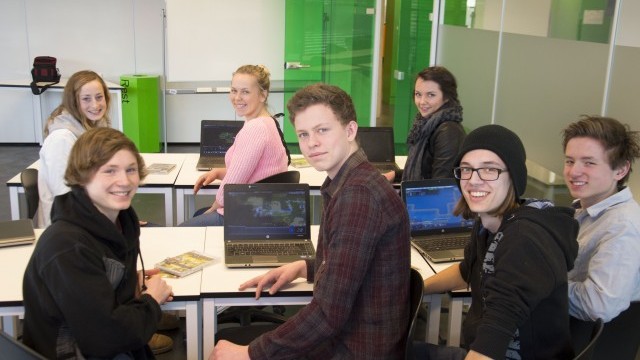
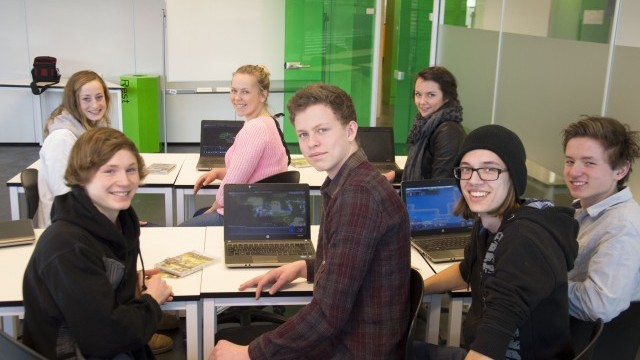
Long-form games, such as Amplify Learning’s “Lexica,” are great for teachers who are really comfortable with video games and have dependable access to newer hardware. Or, try a game-based curriculum, like the Mind Research Institute’s “ST Math.

Crossover Creative Game-based Platforms can fit into either one of these categories. They are flexible in the way they can be implemented. “Minecraft” is a great example of a game that can be used as either short form or long form. Teachers can create short one-time simulation-based assignments, or longer multi-period projects. Game design and coding platforms, such as Gamestar MechanicScratch, or ScratchJr, also cross over and can be used in either short-form or long-form applications. Teachers could introduce these platforms early in the year so that kids become familiar with the interfaces; then they can be used throughout the year for a variety of projects that don’t even have to be related to one another.

GAME GENRES

There are also different genres of games. Puzzlers are probably the most familiar kind of game. They involve identifying a pattern or system and arranging objects according to a certain set of rules. “Tetris” is not only the best-selling video game of all time, but also a fairly simple puzzle game. Many games that began in non-digital versions — solitaire, mahjong, Sudoku — are also puzzlers. In fact, almost all games have an underlying puzzle structure. Otherwise, they’d be completely random, with no patterns whatsoever, and not much fun.MindShiftGames

All video games, like puzzlers, are about pattern recognition. And once the player understands the pattern, the challenge comes from either more intricate puzzles (more complicated levels), or from changing the speed or circumstances in which the player needs to solve the puzzle.

When this happens, the game becomes a Drill and Practice game. Great games like “DragonBox Algebra” and “DragonBox Elements” combine drill and practice with increasingly difficult puzzles. Both of these types of games are especially well suited to mathematics. Traditional manipulatives and non-digital games are plentiful in math because those skills are easily translated into simple patterns. Video game technologies allow developers to design interactive versions of classic math problems.

When developers add compounding puzzles to be solved through a series of moves, it becomes a Strategy Game. Strategy games are also often multiplayer. And when it comes to learning games, it’s common for them to be focused on history. Games like “Historia” or “Making History” can offer experiential simulations of historical events. When students control the armies, key moments in geopolitics suddenly feel substantially more dynamic than just a chronological account of battles. Games like these work well when implemented alongside traditional lecture and research strategies. The long-form strategy games offer an engaging motivation for students to understand and internalize the material.

Some strategy games ask players to embody individual characters. These become Role-Playing Games. Think of “Dungeons and Dragons.” Digital role-playing games are very similar to dice-based role-playing games. Digital platforms, however, make the logistics easy and efficient. No need for tons of cards, binders of scenarios, and little pieces; these things can be employed virtually.

Mission US: Cheyenne Odyssey” is a great example of an educational role-playing game. As the game is described, players become Little Fox, a Northern Cheyenne boy whose life is changed by the encroachment of white settlers, railroads, and U.S. military expeditions. Think of it like a historically accurate digital choose-your-own-adventure book that takes place between 1866 and 1876. Students imagine themselves in the role of a Cheyenne youth. It makes something that seems initially foreign immediately relatable. All of the “Mission US” games are free and come with exhaustive teacher guides.

Some games offer a world of experience without clear objectives. These are called Sandbox Games. Minecraft is the most well-known example of a sandbox game. Just like its life-world namesake, Minecraft is an open-ended creative space but with virtual shovels. Certainly the block world has unique properties (physics engine), but players can do whatever they want within those parameters. MinecraftEdu is a version of the game modified for education that allows teachers to create even more specific parameters that correlate to lesson plans. You can read a lot more about how teachers use Minecraft here.

This list is certainly not exhaustive. There are other kinds of game genres and even subcategories within each genre. But the learning game space is still in its infancy. So many possibilities have not yet been explored. Platformers, fighters and first-person shooters, for example, are among the most popular commercial genres, though I’ve yet to see a good educational implementation of these genres’ conventions. One thing is for sure: creative educators will continue surprising us with ingenious game-based tools that can help teachers and students achieve success together.

Let this list be a starting point to help you to choose appropriate games for your classroom.

Video Games and the Future of the Textbook

Amplify's digital offering includes a dramatic reading of Edgar Allan Poe's
Amplify’s digital offering includes a dramatic reading of Edgar Allen Poe’s “The Raven” with animation.

Part 16 of MindShift’s Guide to Games and Learning

The textbook is a problem that consistently plagues classrooms. At best, textbooks are innocuous, offering simple summaries of a very broad subject area. At worst, they oversimplify things, providing less information than an encyclopedia article without enough nuance or context to make it meaningful.

One study showed that when students read textbooks, they tend to retain “absurd” details, but fail to “grasp the main point.” Susan M. Hubbuch writes, “The trouble with too many textbooks is that they are badly written” and “badly organized.” What’s more, they give students the wrong impression about knowledge. Typical subject areas — physics, geography, algebra — are all dynamic. “They are constantly being critiqued by members of the field, and all are open to change.” The traditional textbook approach, however, gives students the impression that knowledge is constructed of static ideas, facts, and definitions. [Watch this scene in Dead Poets Society that perfectly captures this quandary.]

Teachers have always struggled with mediating the tension between the need for stable content and desire to support our students as they become creative and flexible thinking individuals. How can we keep things open-ended without doing a disservice to children? How do we encourage students to remain invested in learning ways of knowing that will always be questionable and uncertain? The very purpose of an education is to teach fluid critical thinking skills, to maintain analytical perspectives about the world, to teach people that problems can never be solved with certainty. But sometimes the way we teach contradicts our intentions. Sometimes we forget that what we teach and how we teach it will always be inseparable. And textbooks, unfortunately, seem to structure learning in a way that’s antithetical to our intended outcomes.

MindShiftGamesJust as we need to move away from a top-down model of teaching, we also need to move away from the textbook. In an ideal world, all learning would happen through direct engagement with primary texts. But unfortunately, not everyone can be a historian, perusing through documents and artifacts to piece together an account of the past. Nor can everyone read Euclid and Pythagoras in the original Greek. Some summarizing, briefing, and encapsulating will always be necessary. But is the problematic textbook really the only way?

Many ed-tech entrepreneurs are currently attempting to address this problem with games and electronic media. It’s probably an oversimplification to say they’re attempting to update the textbook because to understand precisely what they are trying to do, we need to step outside of our habitual way of thinking about school and learning.

Game-based learning and electronic media enable us to blur the boundaries that separate the delivery of content, drilling for practice, and assessment. And in an educational atmosphere where those boundaries dissolve, the textbook becomes obsolete. Certainly, there is still academic content, but that content suddenly becomes interactive. The texts can be more easily and immediately tied directly into a broad set of activities and projects. Video and other multimedia content can be integrated right into the text — perhaps videos of teachers–enabling the kind of flipped instruction that is rapidly becoming popular.

One company that is really pushing a new approach is Amplify Learning. They call their tablet-based platform a “digital curriculum.” In time for fall 2014, they released ELA programming for sixth, seventh, and eighth grade students that includes more than 300 books and “academic lessons authored by world-class intellectuals.” Amplify has always focused on the content, and in addition to comprehensive interactive reading and writing activities, they also include some pretty dramatic and animated readings of classic texts.

[youtube http://www.youtube.com/watch?v=gdgPQZ8yyTE&w=640&h=360]


At the time of release, Amplify CEO Joel Klein said, “This is not some old wine in a new bottle, like a digitized textbook with a few animations. We’ve brought together world-class instructional materials, rich multimedia and a powerful analytics engine that will transform the way teachers teach and students learn.”

What’s most intriguing is the way Amplify curriculum integrates games. They’re designing a suite of tablet-based games that are not envisioned as part of the formal curriculum, but rather as opportunities for additional student directed playful learning.

One such game is meant to let students experience the process of  metabolism from the inside. It’s a fun game, where players need to manage their resources carefully in order to win. Students need to understand how each resource plays a part in the metabolic system. The game teaches basic biological literacy. Amplify is also making some other impressive biology, environmental science, math and literacy games.

[contextly_sidebar id=”OzNvsI4JYSOzuapWsW6deFHw72njYoX3″]

“The goal of our games is to both help recapture lost learning time—both after school and during holidays—and engage kids in ELA, math and science in ways that weren’t possible until now,” Klein said in an interview. When I asked him if he thought electronic media would detract from more traditional forms of text-based learning he said, “Our goal is to encourage more reading and more writing. I think that if we can help middle school children develop a love for reading books, the positive impacts of that will be felt across their entire educational career.”

The game Lexica is a great example of Amplify’s approach to games. Lexica is a literacy game that Greg Toppo covered beautifully in USA Today. Toppo describes Lexica as “a massive role-playing game for young teens that invites them to interact with characters from great novels and read the books outside of class if they want to get ahead in the game.”

Players free classic book characters that have been trapped in an imaginary library by an evil empire. By reading the books, students learn what kinds of powers the characters can offer them. They are motivated to save the characters and to do so they need to read the books.

Lexica is so comprehensive that the sheer scale of complexity overwhelms. There are even mini games that, like everything in Lexica, require familiarity with the characters and plots of classic books.

Many teachers have concerns about Amplify’s corporate origins and connections to News Corp mogul Rupert Murdoch. Questions about private for-profit curriculum development and the conflation of media and education demand a lot of consideration. And Amplify is not the only company we should approach with caution. But for the purposes of this post, it is the quality and ingenuity of the curriculum that interests us, the way the company’s curriculum designers are rethinking not only the textbook, but also educational content delivery in general.

Other companies are developing games that are imagined to be played all semester long. These are often multiplayer games that classes play together. For example, Muzzy Lane has developed a series of games that provide an immersive experience for students. There is one, in particular, called Government In Action that’s designed to allow students to “role play a member of Congress as a way of exploring American Government.”

Students sponsor bills, trade in influence, awareness, and approval. The game simulates meeting with lobbyists, donors, and volunteers. The object is to get reelected to office. It is a strategy game that requires students to become familiar with the mechanics and processes of U.S. government.

When a role-playing game like this supplements typical classroom content, students see how their new knowledge manifests as better in-game performance. They learn how the government of the United States works through the experience of digital simulation rather than through memorizing textbook blurbs and taking quizzes. The knowledge is contextualized and the motivation is intrinsic.

For middle school students, there are games like Historia. This game started as a paper-based role playing game in which students “work in teams to lead fictional civilizations that compete alongside (and sometimes against) the great empires of the past.” Now it’s being developed into a tablet, or PC based game that uses new ed-tech. One of the great things about Historia is that, like a textbook, it forms the skeleton of a full curriculum. However, it also requires traditional teaching and ordinary research skills. Students use the information from book-based learning, handouts, videos, and other academic materials as if it were a collection of “power-ups” meant to give them the strength they need to succeed in the game.

The thing about interactive electronic media is that it allows us to rethink the way we interact with information. The internet has already changed the way we think about media and now it is time to let it redefine the way we think about content in general. Academia was about participatory knowledge construction long before buzzwords like “crowd-sourced” entered our mainstream vernacular. But many of our academic conventions, like the textbook, have neglected to preserve the spirit of collaboration. Even worse, these methods of teaching have taught generations of young people that facts are fixed.

Video games are one method of interacting with content in context that can change students’ approach to knowledge. Games can help them to understand that all ideas are located in some dynamic stage of ongoing iteration. And games can help to teach our students the value of a cooperative (or multiplayer) construction of truth.

Welcome to Epic, A School Where Students Are Heroes On a Quest

A "tinkering" day for students of Epic Charter school.
A “tinkering” day for students of Epic Charter school.

Students starting in sixth grade at Epic charter school in Oakland, California will begin their first step on a hero’s journey. Over the course of three years, students will tackle complex quests, earn points, level up to more difficult tasks up until the time they graduate eighth grade.

The school opens August 25 in the Fruitvale neighborhood, a tough part of town known for its high crime rate. It’s part of the Education For Change charter management organization, which has seven other schools in the neighborhood. But Epic is different from its sister schools — the whole school is one big game.

“You’re always in the game at Epic,” said Michael Hatcher, the school’s principal. “There’s never a point where the game is not being played. And that’s what we love.”

The broad outline looks something like this: students are working to create their own definition of what it means to be a hero over three years of middle school. Those years are broken down into nine* trimesters, each with a different theme, and projects to complete related to those themes. The first trimester of every year will involve students examining man’s relationship to man. The second trimester will involve a challenge connected to man’s relationship to technology and the third trimester will be man’s relationship to nature.

For example, in the first trimester a student’s heroic journey might involve trying to help Winston Smith, a character from George Orwell’s famous novel 1984, stop media manipulation and people’s perceptions of reality. The second semester might involve saving history from the impacts of a time travel machine that has just been invented. And the third trimester could find students facing a world where nature runs unchecked by man or technology and kids must learn to survive.

In all of these narratives, students are the protagonists, working their way through tasks, challenges and projects to build standards-based skills. They’re working together to solve this big, complex problem, and at the same time they’re learning the content and skill mandated by the state of California.

Epic isn’t exactly the first school of its kind. Game-based schools are popping up all over the country, including Quest to Learn in New York and Chicago, and the Playmaker School in Los Angeles. And the idea of using games as the platform and structure for learning has been catching on in classrooms across the country (read more in MindShift’s Guide to Games and Learning.) What makes Epic singular is that entering the school immediately puts students inside one big holistic game, a thread that follows them until they graduate, and it revolves around a crucial social and emotional element.

Hatcher created this particular construct for the school — the hero’s journey — for a lot of reasons, but mostly as a means to get the kids from the neighborhood to see themselves differently.

“Students in adolescence start telling the story of themselves; who am I, what do I do, and there’s this narrative out there that people tell them about who they are,” Hatcher said. In Oakland, often the expectation is that African American and Latino students won’t succeed. Epic educators are challenging that narrative by giving students the chance to become the superheroes of their community. Hatcher wants his students to feel they can control their lives despite the random violence happening in the neighborhoods where they live.

SCHOOL STRUCTURE

In sixth grade and in its first year, school life at Epic will look fairly traditional as students get used to a new system. Educators at the school are hoping to help kids build the skills they need to eventually direct their own learning as they progress through the school. They call it, “norming the space” — helping students understand the new kind of school they’ve entered. As they demonstrate responsibility and emotional maturity, students will get badges. Teachers can create competitions for badges on the fly, to help correct behavior they think is going off course. For example, if there are interpersonal issues, a teacher might ask all the students to compete for a compassion badge. When they can prove they’re ready for more independence, students will be “released” into a more flexible model in which no traditional classes exist.

In flex time, teachers create digital playlists of basic content that students can access any time to show that they’re developing certain skills. Teachers will also create projects that ask students to connect what they’ve learned with cognitive skills like synthesizing, analysis and evaluation. Throughout this time teachers can pull small groups and students will be able to ask questions. In the vision put forward by Epic educators, a fully realized student will set and achieve goals she’s defined, move at her own pace and and be responsible for staying on task.

The students of Epic Charter School in Oakland:


“I know that sounds really idealistic,” said Epic teacher Reina Cabezas. “But that’s where I want my kids to go. That’s the vision I have as a teacher, that we’re collaborators and that I don’t have to pull you up to a group because you’re growing into that self-directed person that is going to tell me, ‘I need help.’”

To create the sense of belonging that the Epic team feels is so crucial to a strong learning culture, students are grouped into “houses,” like in Harry Potter. Each student is on his or her own individual hero’s journey to finish middle school, but houses are integral to many of the games that are part of everything at the school. For example, houses might compete at lunch time over who can produce the least waste. Or, members of different houses might have to solve challenges focused on building their social and emotional skills, a core part of the curriculum.

A DAY AT EPIC

A typical day in sixth grade includes three blocks of time, 100 minutes in each block, dedicated to humanities, math/science, and engineering/design. The different houses rotate through those three blocks each day. During those chunks of time, some students could be working on computers to hone skills using programs like ST Math and Reading Plus, others might be immersed in a project to demonstrate their knowledge. The teacher will constantly be working with students in small groups or individually. During each block of time all students will have an opportunity to use technology to practice their skills, work independently and be either challenged or supported by their teacher.

[contextly_sidebar id=”iqANtCUUftNLBqwYtjfHUGgIJn6Fjsj4″]

“I think teachers are better at intervening with kids than tech,” Hatcher said. “So if the kid really needs help, the teacher’s the person you want with him. If a kid really wants to be challenged, the teacher’s the one to do it.” On the flip side, software programs can make practicing basic skills more convenient and efficient. Hatcher says the technology’s role is to plug knowledge gaps so students can spend time with teachers talking about big ideas.

As students work their way through projects in the different subject areas they’ll be earning points and badges to mark their learning. The assessment system at Epic is entirely based on the gaming concept of “leveling up,” or moving on to a more difficult task once the student is ready. Students don’t receive grades, they just move on to a more challenging concept when they’ve mastered something.

Throughout this process teachers are present to measure what students are learning against a rubric and help recognize if a child needs more support staying on task. Performance on individual skills will be transparent to students, teachers and parents alike, so a student’s progress shouldn’t be a surprise to anyone by the end of the year. And, instead of a report card, students will be asked to sit down with a teacher and a parent and explain what they’ve learned, where they excel and what needs more work.

Epic's founding staff at the soon-to-be-completed site, from left: Michael Hatcher, principal; Reina Cabezas, teacher; Francis Abbatantuono, math coach.
Epic’s founding staff at the soon-to-be-completed site, from left: Michael Hatcher, principal; Reina Cabezas, teacher; Francis Abbatantuono, director of personalized learning. (Tina Barseghian/MindShift)

BUILDING INTRINSIC MOTIVATION

One goal of Epic is to help students become self-directed, motivated learners. Most incoming students will be coming from traditional schools where they were told what to do and when. Epic’s teaching staff is expecting that it may be tough at the outset to help build up students’ intrinsic motivation to learn. They hope that through the continuous game play and competition, students will soon value their personal growth over any extrinsic motivator like badges or points.

“Children at this age often times don’t really know what they want and what they like,” said Francis Abbatantuono, the school’s director of personalized learning. “At first they’re going for this badge, they’re going for their house to gain points, but eventually it becomes, ‘Oh, I really like reading.’” He compared it to his own experience as a young boy participating in library reading challenges. He was drawn to the challenge because he could win a prize for reading a set number of books, but at the end of the competition he’d learned he loved to read.

“It becomes part of who they are and then it doesn’t really matter,” Abbatantuono said. “And they’ll get the badge but they’re not doing it for the badge anymore.” Hatcher sees this method of building motivation as an act of faith in students and their ability to be independent problem-solvers. “If we are very diligent about knowing who they are as people, and put challenges in front of them that they can solve autonomously, then it becomes intrinsic,” Hatcher said.

GUIDES ALONG THE WAY

A core part of the Epic model includes young teaching assistant figures called “guides” in the Epic nomenclature. Most of them come from the same neighborhoods as the kids and are paying special attention to students’ social and emotional growth, helping them stay on track academically and taking note of what’s going on at home. These staffers are almost like older siblings, supportive figures students that follow a group of students all they way from sixth grade through graduation.

“You have to make a goal,” Hatcher said. “You have to have somebody helping you keep track of your goal.” Guides will visit students’ homes, check in with families, bring teachers into the community, and generally look out for the well-being of the child. To help students set their own goals, Epic teachers have translated the Common Core standards into student friendly language and laid them out on a gameboard. From the outset students know exactly what they are responsible for mastering and can play their “game” the way they want.

“Why not tell them everything they’re going to learn at the beginning of the year and as they learn it, they can check it off,” Hatcher said. “And then they can say, ‘Later on we’re going to be learning this.’” In his view there’s no reason to keep students in the dark about what’s on the horizon, and being transparent is a great way to give them ownership.

THE PERVASIVE GAME

One of the most interesting features about Epic, and the thing that really gets Hatcher and his colleagues excited, is the game they’ve baked into the school itself. “There is a game that is built into the school that you can choose to, or choose not to engage in,” Hatcher said. “It has to do with puzzles hidden in different places on campus.”

This game doesn’t serve an educational purpose, the Epic team just thinks it’s really cool and they’re hoping it will get kids excited to come to school everyday. Students will start to discover that something doesn’t quite add up about Epic and will need to solve puzzles, investigate gaps in logic and maybe even build some tools in engineering class to help solve the mystery. Participation isn’t required, but kids who figure out the puzzle could graduate as “superheroes.”

SCHOOL DESIGN

The school building is cavernous, with lots of open space to facilitate exploration and collaboration within grades. Although Epic is trying to do away with the idea of grade levels, following more of a student-directed competency model, the building is divided into three hubs that roughly correlate to sixth, seventh and eighth grade. Each has its own maker space that students will use as part of their engineering and design classes, but also to create independent work, complete 3D printers and laser cutters.

The different class “houses” will even have their own Etsy stores where they can sell the products they’ve designed and made in the maker spaces. Houses can win points through games to spend at one another’s stores.

All of the novel elements about the school are built in to help students identify as designers, builders, creators — not just consumers. Hatcher and his team have visited many other schools as they gathered ideas, and found that at affluent private schools, students didn’t just have better access to cutting edge technologies and progressive teaching tactics — they were also given autonomy and respect.

“You go to other schools, the kids get to wander, do what they want, hang out, kick it, play, talk,” Hatcher said. “You come to a public school, and they’re like, you need to sit in this quadrant of this sector for five minutes and if you don’t you get in trouble.”

He wants Epic to be a place where students know they are trusted to make decisions about things big and small, partners in the learning experience.

*An original version of this story stated Epic has 12 trimesters. There are only nine. We regret the error.

— With reporting by Tina Barseghian; images by Amanda Lucier for MindShift.

Literature, Ethics, Physics: It’s All In Video Games At This Norwegian School

Aleksander Husoy's classes use video games as text and context at the school in Norway.
Aleksander Husoy’s classes use video games as text and context at the school in Norway.

A group of Norwegian high school seniors sit in religious studies class, absorbed by a moral conundrum unfolding in the midst of a zombie apocalypse. Their teacher, Tobias Staaby, is screening a scene from the critically acclaimed video game, The Walking Dead, which depicts a knotty ethical dilemma confronting the group of rag-tag survivors: Supplies are running low and only four food items are left to ration, but there are 10 hungry mouths to feed. Who should eat? The grumpy old guy? The injured teen? The children? The leader?

Once the class reaches a consensus, they have to justify their choice with one of the concepts they’ve learned from moral philosophy. Was their decision guided by situational ethics, utilitarianism or consequentialism? This is one instance of how commercial video games are used at Nordahl Grieg Upper Secondary, a public high school located in the coastal city of Bergen in Norway.

Building a School for the Future

Two years before the school opened in 2010, principal Lin Holvik was mandated to build a school for the future, and she focused on creating both the physical and curricular space for teachers to experiment with video games.  The vision materialized into a modern building encased in high glass windows and translucent interior walls that convey an atmosphere of transparency and openness that reflects the school’s pedagogical philosophy. “We have a sociocultural view of learning,” explained Holvik, “and believe in sharing and constructing knowledge together. We also strongly encourage innovation and believe that freedom to fail should be much more emphasized.” And so fittingly, video games have been used to help foster collaboration and an appreciation for the art of failure.

“We have been well aware of and interested in the potential of games in school for a long time,” Holvik added, describing how video games were part of the school’s DNA. So when English and Social Studies teacher Aleksander Husøy approached her about using the history simulation game, Civilization IV, she welcomed the opportunity with open arms.

The World at Your Fingertips

Husøy pioneered teaching with video games at Nordahl Grieg, paving the way for his colleagues to follow suit. Like many teachers today, he’s a lifelong gamer who credits his playing history-based video games as a factor in his decision to major in political science. He teamed up with colleague Vegard Relling and used Civilization IV as the linchpin in a four-week cross-curricular unit combining Norwegian, English and Social Studies.

The first obstacle was getting students up to speed with the game’s elaborate interface. This might seem like time away from “real learning,” but studies increasingly support the idea that learning to play a complex game is, in and of itself, a valuable exercise in cognitive calisthenics. To ease the familiarization process, experienced players were strategically grouped with novices, which Husøy observed altered the class’s social dynamic. “Students became more willing to share and collaborate through working with this project. There grew a community spirit that occurs when a group of people are doing something unique together.” This unintended consequence played well into the school’s sociocultural aim of co-constructing knowledge.

Civilization IV proved useful in fulfilling both the English language and culture elements required by the curriculum. Playing through empire simulations helped students better understand British colonialism, the spread of English and US cultural hegemony. As to language acquisition, Husøy explained that the game “introduces fairly advanced terminology in small chunks at a time, making it well suited for vocabulary work.”

The game’s diplomacy mechanics and customizable scenarios facilitated the study of international relations in Social Studies. The class built simulations and played through various outcomes to unpack contemporary conflicts and reflect on resolution strategies. “Though the model is not a perfect representation of the real world, the game gives students a deeper understanding of the subject matter,” said Husøy. He feels that Civilization holds a unique value in letting students experiment with “what if” scenarios to see how changing variables like political structures or social policies affect and alter the course of a nation.

The unit concluded on a metacognitive note, as students reflected on gender issues in games, video game addiction and the unique affordances and limitations of video games as a medium.

Teacher
Aleksander Husoy

Reducing Resistance in Physics

Encouraged by Husøy’s work, physics teacher Jørgen Kristoffersen decided to experiment with Portal 2, a venture that came at no cost due to the free educational licenses available from Valve, the game’s publisher.

Portal 2 challenges players to solve elaborate puzzles to escape the labyrinthine Aperture Science Laboratory complex. They manipulate cubes, redirect lasers and tractor beams, time jumps, and teleport through walls, all of which rely on the game’s physics engine. Kristofferson’s class played with variables affecting in-game object behavior and freely designed physics experiments with Portal 2’s flexible level editor. “Should we have a large mass and height? Drop 50 kilograms from 50 meters? Oh, the air resistance kicks in – let’s shorten the height,” said Kristofferson, illustrating how his students toyed with the power of gravity.

“Real world experiments are important and the game can’t replace them,” he said, “but the game gives students a different perspective on the laws of physics, where mechanics are simulated by a computer to create a realistic gaming environment. It can also be a great source of discussion when the laws of physics are broken!” Students think about how the simulation deviates from reality and transform what might be perceived as a game’s shortcoming into a critical thinking opportunity.

Hunting, Gathering and Survival

Also inspired by Husøy, Tobias Staaby uses video games to teach units ranging from ethics to narrative and cultural history. “I wanted to use video games as something more than chocolate covered broccoli,” he said. “It’s important that video games are regarded as useful and engaging learning tools in their own right.” To that end, he uses popular commercial games that would not outwardly seem suitable for the classroom.

Elder Scrolls V: Skyrim, the sword and sorcery action role-playing game, is set in a rugged, Scandinavian-inspired wilderness that echoes Norway’s natural landscapes. Staaby leverages this connection to teach Norwegian romantic nationalism, a 19th century independence movement that set out to document uniquely Norwegian cultural elements and natural settings to affirm their national identity. Like their historic predecessors, students explore the wilds of Skyrim in search of features and landscapes that aligned with the aesthetics of romantic nationalism. “Video games do not give you the answers up front. You have to look for traces of national romanticism in Skyrim. It does not come by itself,” explained Staaby, identifying a video game’s potential for an active and participatory approach to learning.

Staaby also used the post-apocalyptic zombie survival game The Last of Us in his lit class. Critics swooned over its intricate storyline and engaging character development, which his students studied much as they would any traditional work of literature – with a few differences. They played the first eight hours at home, and then completed the game together in class. During class play, Staaby reported that his students applauded, were visibly moved and reduced to absolute silence in the game’s final moments. “These were all events that I could not imagine having happened if we watched a movie or read a novel together.”

A Model for Game-Enhanced Learning

In each case, game-based learning seems to be a misnomer, as the learning is not based on games, but enhanced by them. Commercial games are repurposed and modified to support curricular goals, as opposed to driving them. Of course, learning can and should also be based on games, as they are valid texts that can be studied in and of themselves, but it is important to see video games as elastic tools whose potential uses exceed their intended purpose.

The Norwegian Center for ICT in Education, which works on behalf of the Ministry of Education, now takes video games seriously, and has designated two officials, Jørund Høie Skaug and Vibeke Guttormsgaard, to undertake a national project to integrate games in schools. “With a great team of young teachers with game experience, and with time to plan and develop their game pedagogy, Nordahl Grieg now shines as an example and an inspiration to other schools,” said Guttormsgaard. Skaug added that they are developing a Civilization, The Walking Dead and Portal 2 teaching guide with the gamer-teachers at Nordahl Grieg.

The school’s transparent walls not only speak to its open approach to learning, but also invite the rest of the country, and perhaps the world, to look inside and see how video games can play an important role in the school of the future.

How Teachers Can Use Video Games In The Humanities Classroom

Part 12 of MindShift’s Guide to Games and Learning.

We often think about game-based learning as if video games can become robotic teachers. In the same way that software file systems have created more flexible and efficient file cabinets, we imagine that video games can make great instruction more scalable and accessible. In the same way that email, text messages, and social media have provided more efficient methods of communication, we imagine that digital analytic systems will streamline assessment. These things are true.

Erin Scott
Erin Scott

While digital games will certainly never replace a great teacher, they are tools that can help teachers do their jobs more effectively. Just like a shovel works better than digging with only your hands, game-based teaching tools will enable teachers to reach students in ways we can only begin to imagine.

But let’s approach video games in a different way. What if teachers used video games as texts? Let’s think about how we might teach kids to think critically about the underlying messages in commercial games and how we might leverage video games for their ability to engage students and provoke conversation.

At the moment, there’s far too little critical examination of video games happening in school. We take it for granted that we should teach our students how to read books interpretively, how to analyze movies, and how to read the newspaper critically. But all too often we overlook video games as a meaningless triviality.

On the contrary, video games may be indicative of a shift in the way we construct narrative. A good argument could even be made that video games are the new mythology, a kind of non-linear interactive storytelling that shapes the conscious attitudes of today’s youth. Video games might even represent the modern examples of storytelling that will eventually become the classics of literature in hyper-connected centuries to come. After all, nobody could’ve imagined that the novel would be so important to the future of schooling when they read Miguel de Cervantes’ Don Quixote in 1605.

MindShiftGames

If video games are shaping the conscious attitudes of an entire generation, we need to start asking difficult questions about the kinds of stories we want to tell. These video games are shaping the next generation. These video games are teaching our students how to think about the world, how to make meaning. And we’re letting it happen by accident. That’s crazy. We need help from Humanities teachers.

How can we be more cognizant of the implicit messaging in video games? In my book, FREEPLAY, I try to model a practice and a method of analyzing the underlying psychology of video game narrative. But we need more people to jump on that bandwagon. We need more video game studies departments that are not about game development and computer programming, but rather about critical thinking. Not video game classes that analyze game design and mechanics — video game classes that are about analyzing the literature of gaming. We have film studies, now it’s time for video game studies.

You can start by adding a game to your curriculum. In my undergraduate college classroom, I sometimes require all of my students to play a popular game in the weeks immediately following a unit on Freud. I challenge them to analyze the game like a dream. I ask them to identify the latent content. We identify gender biases, the subtle differences between games aimed at boys and games aimed at girls. What skills are these games teaching? What conceptions of reality are they privileging?

There are also many games that are intentionally created to provoke thought. Some games are designed so that they force us to ask questions. One good example is a game called Republia Times. In the game, you are editor-in-chief of the newspaper in “the free nation of Republia.” Your job is to use your influence to sway public opinion. How much space on the front page do you give to each article? Which items coming over the wire do you ignore? What and how do you deem things newsworthy? You must make quick decisions as stories come into the newsroom. How do the stories impact the readers’ loyalty to the government? You earn points by increasing readership and manufacturing more citizens that are loyal to the state.

[contextly_sidebar id=”5e388d2c9e3ce8b412ee666192b90c21″]

This is a simple game that students can play for a few minutes. It’s free and web-based, and works in any browser. You could assign it as homework.

Imagine how this game could fit into a social studies classroom. Imagine the discussion it could inspire about free speech, about how political conversations are framed, about media bias, about political agendas. This is a game that inspires critical thinking rather than rote memorization.

There are many games like The Republia Times, and they belong to a category that’s often called “Social Impact Games.” These are games designed as simulations of real life situations. The mechanics of the game are organized with images and stories in order to make the underlying patterns in our present culture more apparent. They are essentially interactive essays and social commentaries. Or, from a teacher’s perspective, they are simply games that can be used as texts.

The great thing about using video games as a text is that they help to make it clear that the reason I’m writing this series about bringing video games into the classroom is not because game-based learning is some amazing new technique or method for teaching. Instead, the reason we teach in the first place, and the reason to bring video games into the classroom is social impact.

We want to educate students into good citizens for a future world that’s better than the one we live in now. We do that by teaching students to think critically about the world. We do that by teaching them to think about the images, stories and technologies that surround them.

The MindShift Guide to Games and Learning is made possible through the generous support of the Joan Ganz Cooney Center and is a project of the Games and Learning Publishing Council.

From Mars to Minecraft: Teachers Bring the Arcade to the Classroom

Argubot Academy
Argubot Academy

Part 11 of MindShift’s Guide to Games and Learning.

Teachers have found many different ways of using digital games in the classroom. But what kind of games are these students playing? And how are teachers incorporating them in the classroom?

Last year’s report from the Joan Ganz Cooney Center, “Games For A Digital Age,” made the distinction between “short-form” and “long-form” learning games. Short-form games are designed to be played during a single class period. “They focus on a particular concept of skill refinement, skills practice, memorization, or performing specific drills.” Long-form games “extend beyond a single class period” and sometimes gameplay can “spread over multiple sessions or even several weeks.”

Often long-form games are comprehensively tied to a full curriculum. They can replace textbooks by offering an interactive experience that seamlessly blends content, practice, and assessment into a contextualized learning experience. While some programs like this already exist, it’s difficult to implement well. For teachers who want to get started, short-term games can supplement their already established curricula with fresh and engaging activities.

Learning Games

Some games are designed to do just that. Consider Mars Generation One: Argubot Academy. Designed by GlassLab, in collaboration with NASA, the game is aligned with Common Core ELA standards and infused with STEM content. It focuses on teaching argumentation, and in particular, it focuses on how to use evidence to support claims.

Mars Generation One: Argubot Academy is a role playing game that combines a space-age storyline about building a Mars colony with great animations. It engages students in a topic that is often hard to contextualize. While we ordinarily demand that students demonstrate argumentation skills in expository writing, modern education practices rarely approach it in such an explicit way.

MindShiftGames

“By teaching ELA standards through a STEM-themed storyline, the game is fundamentally interdisciplinary in all the right ways,” wrote Patricia Monticello Kievlan, a San Francisco classroom teacher who reviewed the game for Graphite. “Showing students how these skills bridge disciplines is a critical lesson, and that point is deftly delivered.”

 Argubot Academy is a great short-form tablet game that many teachers use to add contextualized interactive practice to your existing ELA curriculum (grades 6-8). John Paul Sellars, a fifth grade teacher who used the game during this past year at Red Bank Elementary School in Lexington, South Carolina, says his students “loved the ability to combine gaming with their learning.”

Classroom Modifications

Teachers are also using commercial games that have been modified for classroom use. Perhaps the most famous is MinecraftEDU. This classroom-ready modification of the popular sandbox game is not only less expensive than the commercial version, it also provides many tools that empower teachers with the ability to adapt gameplay to established class curricula.

Joel Levin, one of the creators of MinecraftEDU, uses it with second graders. But it works with students of any age. What makes MinecraftEDU great for teachers is the same thing that makes it so popular among gamers: it is so open-ended that that the possibilities are only limited by your imagination. Search the web and you’ll find thousands of examples of teachers using MinecraftEDU.

MinecraftEDU provides a virtual world where teachers and students can build simulations with unlimited resources. When I was a student, we held mini-Renaissance Faires and built toothpick bridges. We were always limited by time, space, and resources. In today’s Minecraft-equipped classrooms, both teachers and students build entire multi-player worlds full of interactive scenarios. For example, when I visited the Quest to Learn school in NYC at the end of their school year, I saw final projects that used Minecraft in their presentations. One class used Minecraft-polar-ice blocks to model the potential impact of global warming. Another demonstrated their understanding of urban water treatment and sewage engineering by building a working system out of pixelated blocks and then simulating rainfall and flooding.

Commercial Games

Most teachers and parents are on board with games that are manufactured or modified for educational purposes. But what about big, bloody, shoot-’em-up commercial games? Could they also be put to use in a classroom?

Consider Norwegian high school teacher Tobias Staaby. He’s a relative newbie in the classroom. But it may actually be to his advantage that he’s only been teaching for two years; he doesn’t feel like he’s got it figured out yet. “I’m constantly searching for new ways to improve my classes, and to engage and motivate my students,” he says. One thing that has worked is using zombie-themed video games to teach moral philosophy and ethical theories. “I was looking for a way to make these concepts easier to understand without oversimplifying the material.”

One of the hardest things about facilitating class discussions about ethics is presenting engaging dilemmas that they haven’t “necessarily thought or heard much about, thus making their arguments and decisions much more their own.” Staaby settled on using The Walking Dead video game by Telltale Games.

[contextly_sidebar id=”b9d27906205c6796ab228e314a07ccd5″]

Loaded on his personal laptop and streamed through the classroom projector, Staaby boots up The Walking Dead and hands the controller to a student. The rest of the class shouts commands at the player. Then, whenever the game presents an ethical dilemma, they “pause the game and discuss the next course of action using the ethical models and theories they had learned earlier that year — relational ethics, consequential ethics, ethics of virtue, and ethics of duty — as a basis for their arguments.” What started as Staaby’s spontaneous unplanned class exercise quickly evolved into a rigorous project. He now prepares short lectures and ties ethical theories to specific dilemmas within the game. (More about Staaby and his school in a soon-to-be-published MindShift article.)

There is research to support Staaby’s intuitive findings. A recent study out of the University at Buffalo Department of Communication, Michigan State University, and the University of Texas, Austin says that playing violent video games may increase moral awareness. “Our findings suggest that emotional experiences evoked by media exposure can increase the intuitive foundations upon which human beings make moral judgments.” Says Matthew Grizzard, one of the study’s authors. Imagine it like a low stakes practice run; simulated opportunities to practice moral and ethical decision making can teach individuals to iterate their initial reactions and make better choices in the future.

In Jerome and Donna Allender’s new book Ethics for the Young Mind: A Guide for Teachers and Parents of Children Becoming Adolescents, they write about the importance and challenges involved in teaching ethics. Their work reminds us that it all comes down to considering “responses to otherness.” When the bell rings at the end of the day, isn’t this what school is all about? We not only want to raise caring individuals, but we also want to provide our students with the skills necessary to maintain fulfilled work-a-day lives. Becoming an ethical person requires “learning more about connecting with others in ways that satisfy our needs and wants while attending to those of others.”

The common attribute of all effective learning games is that they simulate systems. They teach students how to understand academic concepts in relationship to the world around them. Certainly this increases engagement and retention, but what really matters is that it is about using knowledge in an inter-disciplinary way.

Digital or analog, game-based or not, good teaching and learning is about building social awareness, considering the individual’s impact on a wider world.

The MindShift Guide to Games and Learning is made possible through the generous support of the Joan Ganz Cooney Center and is a project of the Games and Learning Publishing Council.

Games Can Advance Education: A Conversation With James Paul Gee

Getty
Getty

Part 10 of MindShift’s Guide to Games and Learning.

Most people involved with games and learning are familiar with the work of James Paul Gee. A researcher in the field of theoretical linguistics, he argues for the consideration of multiple kinds of literacy. The notion of “New Literacies” expands the conception of literacy beyond books and reading to include visual symbols and other types of representation made possible through, among other things, current digital technologies.

At this point in the evolution of education, it’s critical that we expand our conception of literacy to include more than just words. In fact, we may need to reimagine how we nurture early literacy to make sure we provide a foundation not only for reading, but also for “New Literacies.”

Gee is included in this series because outside of academic psycholinguistics circles, he’s especially well known for his work on video games. He’s written and edited many books on game-based learning and education. He’s influenced countless game designers and educators. Some of his theories have provided the foundation for many of the ideas I’ve covered in this series, especially those having to do with systems thinking.

In the following conversation with Gee, we discuss literacy, systems thinking, education, socio-economic inequality, and, of course, video games.

Jordan Shapiro: Your book, What Video Games Have to Teach Us About Learning and Literacy, is a classic in games and learning circles. It is rare that I meet a game developer who doesn’t mention it. Did you expect it to have such a big impact when you wrote it?

James Paul Gee: No, I did not expect such a big impact. I wrote the book because my then six-year-old’s gaming turned me on to try an adult game. I had never played video games before.

I was, at first, truly amazed by how hard and long they were.  To learn to play them well required a great deal of persistence past failure.  Eventually, I loved playing games and realized that if I did not write about them I would not have an academic career anymore.

JS: One of key concepts in the book is that literacy is about more than just reading words. I find that it is a bit of a leap for people who aren’t familiar with linguistics to grasp that idea. These days we talk about “digital literacy” and “financial literacy” as if it just means “competency.” But it is more complicated than that. Can you briefly explain how literacy and systems thinking are related?

JG: The human brain devotes only one special function to reading (namely, decoding sounds into letters and vice-versa).  Otherwise, all the mental capacities that we use to understand and give meaning to print are the very same ones we use to understand and give meaning to oral language and to the world.

Current work on the mind argues that words gain meaning from experiences we have had in the world.  We use our previous experiences to build simulations (images and actions) that we attach to words to assign them contextually appropriate meanings.

In a sense, then, video games are like an external version of the mind.  When we understand things and plan actions we run game-like role-playing simulations in our heads. In a sense, our mind is a game engine.  We can combine elements from disparate experiences and create fantasies and think through complex problems.

System thinking involves being able to think in terms of complex interacting variables that make a system more than the sum of its parts. We most certainly want to see much of the social and natural world in these terms, since being stupid about systems (e.g., global warming) can lead to nasty unintended consequences.

MindShiftGames

Video games are complex systems composed of rules that interact.  Gamers must think like a designer and form hypotheses about how the rules interact so they can accomplish goals and even bring about emergent results.  Thinking like a designer in order to understand systems is a core 21st Century skill.

JS: Okay, so systems thinking is related to literacy, but certainly playing video games won’t teach kids how to read books, will it? In fact, the way you’re talking about literacy, it applies to more than just the language arts. And thinking in this way about literacy makes it easy to see that STEM and ELA are fundamentally both just semiotic systems. Why is this concept so important to the future of education?

JG: Understanding oral and written language involves essentially running video-game like simulations in our heads. We run problem-based simulations where we try out various actions in our heads (as ourselves or someone else) and gauge their possible consequences.

A game manual is given meaning by the game world it is about, not by a dictionary. A physics textbook is a “game manual” for the actions, experiences, and problem solving that physicists engage in. The textbook, too, is given meaning by the “game” and the world it is played in (a somewhat different world than our everyday world, since physicists, thanks to their tools, can see things like electrons).

In school, we give people texts when they have not had enough experience in the worlds the texts are about, the experiences that give the texts meaning. It is as if we were to give kids game manuals without the games. It only works for kids who are getting a lot of experiences at home—backed up by lots of talk with adults about these experiences, talk which helps the kids learn to map language on to experience and vice-versa—but it is disastrous for less advantaged kids.

Whether it is STEM or ELA, if we do not deliver the game, but only the text, we do not get problem solvers and system thinkers, we get, at best, paper-and-pencil test passers.

JS: Clearly, you’re not just proposing that we throw video games into the existing educational landscape willy nilly, are you? It is not that games are going to improve test scores or content retention. You’re suggesting we need to fundamentally change the way we think about learning–or at least the way we think about what and how we TEACH. Can you explain?

JG: Yes and Amen.  Games can be used—like any other technology—to instantiate the current paradigm of mindless testing, punitive accountability, and fact-based education untied to thinking or problem solving.  However, this is like using a machine gun to kill an ant.

Games and other related technologies—together of course with talk and texts—have the potential to radically change the paradigm and unless we do change the paradigm they will just be co-opted by the current grammar of schooling.

[contextly_sidebar id=”52e2e87a7242e283de52ab5570606319″]

Schools today contribute to our massive inequality by providing (some of) the rich with a good education and the poor with test-prep to fit them for future service jobs. In the face of making profit and competing with near monopolies, it is easy to sell out and become part of the problem and not part of the solution.

There is a reason why the great game heroes we love (e.g., Solid Snake, Gordon Freeman, Lara Croft, Mario) don’t wear suits.

JS: It seems to me, then, that your message is more about learning from games than it is about using games. Am I correct? Your (and my) vision of a utopian school doesn’t look like a video game convention full of kids clutching joysticks. So, if you had to pick one primary way of thinking about learning/teaching that our schools should appropriate from video game developers–the big soundbite takeaway–what would it be?

JG: I want to bring rich, well-mentored, well-designed learning systems to school. These systems would connect digital tools, other technologies, interactions, talk, and text (each being used for what they are best for) to marry experience and language in the name of problem-solving and design thinking.

James Paul Gee
James Paul Gee

JS: Still, video games can be one tool that’s used in the classroom, right? It is possible to design really impactful game-based learning platforms, isn’t it? In addition to the lessons we can learn about education from video games, do you think we should continue to integrate games into some parts of the school curricula?

JG: Of course. But I am against any one tool (think textbook) being used for everything. I want all the best tools we have used in concert with each other to create collective intelligence. I want tools to be recruited in a learning system to do the jobs for which they are best fitted (which might be different in differently designed learning systems).

For example, games are often good for preparation for future learning, motivation, and getting lots of practice in core skills and concepts at an experiential level.  They can be good, as well, at helping learners to form non-cognitive skills like passion-fueled persistence past failure in the name of copious deliberate (thoughtful, strategic) practice.

JS: How about on a practical everyday level? Teachers are operating within an environment that you’ve called a “toxic mess.” They might change the way they think about education and literacy, but actually changing the way they teach is a much bigger challenge. Parents and politicians say they want to fix education, but they stubbornly resist anything that looks like a paradigm shift. Do you have any suggestions for how teachers might begin to make incremental changes within a maddening infrastructure?

JG: The goal is not to make the prison better, it is to let the prisoners (students and teachers) free. Our society today is a mess. We have the highest level of inequality we have ever had. We readily ignore and even disdain evidence (e.g., global warming, evolution). We have a casino capitalism unmoored from productivity or social good.  School reform has very little to do with schools.

There are no other silver bullets. The problem of making school good for everyone is one of having the social will to gain more equality in our society, to honor more than money and status, and to give everyone the right to be a producer and participant–not just a consumer and spectator.

We keep talking about schools and teachers, because we do not want to talk about society, ourselves, and the craven way we have empowered the rich, corporations, and rampant social Darwinism. We cannot change our society in one fell swoop.

Sneak in, move quietly, attack unseen, put away the suit—be a snake.

JS: In your most recent book, The Anti-Education Era: Creating Smarter Students Through Digital Learning, you express a lot of concern about how technology is integrated into schools. What is it that worries you?

JG: What worries me is the way in which we in the United States have enshrined human stupidity. In an age where interacting complex systems are killing us with the consequences of greed and stupidity, we regularly disdain evidence and honor ideology. Lots of Americans believe the Earth is about 6000 years old, do not believe in evolution, and think that Christianity was about wealth and a form of social Darwinism.

For me, evidence means trying to do something in the world (as an everyday person or a scientist) and paying close and respectful attention to how the world responds to our “probe.” Is its response good for our goals or should we rethink and act again in a new way? When we disrespect the world, the world bites back and, boy, is it biting back now.

Our current situation is now too dire and the complexity of the world is now too great for us to any longer rely on traditional silo-based notions of expertise (look what Alan Greenspan did to the global economy).

We need collective intelligence where we view humans, in mind and body, as plug and play devices that get smart only when they are plugged into good tools, good people, and good practices in the service of pooling knowledge and diversity to make the world a better place. Games like Foldit or things like Galaxy Zoo are already interesting beginnings here. Digital and social media can niche our silos into pure echo chambers or they can create worlds of new experiences and possibilities.

JS: What do parents and educators need to know about the future of education and the future of game-based learning? Some things about edtech are inevitable, are there places where we need to be especially mindful?

JG: When I say in talks that Armageddon is upon us, people laugh and dismiss the claim as far-fetched. But the reality is Armageddon has already come for untold millions of people in the world who are starving and dying as the consequences of global warming, the global economy, and conflicts over resources.

It is clear from massive amounts of research that while we cannot predict what will happen in the future—because we have created a swarm of black swans due our greed and stupidity—we can say it will be a time of great change and transformation.

People and institutions will have to be resilient and change with change. They will have to gain very real skills with critical thinking and complexity in order not to be dupes and victims of the rich, corporations, media, and governments. They must become activists, knowers, producers, and participants and plug into and play with right team of people and tools.

This requires ethical thinking and a vision for a better world.  People must become proactive, deliberate learners in and out of school and for their lifetimes. Good parents and good teachers must mentor them to be such deliberate, strategic, and ethical learners. Then people will face the future as gamers gaming systems to mod our world.

JS: Anything else you want to say that I haven’t asked you about?

JG: Don’t trust people in suits who don’t game.

The MindShift Guide to Games and Learning is made possible through the generous support of the Joan Ganz Cooney Center and is a project of the Games and Learning Publishing Council.

College Scholarships for Video Game Players?

League of Legends is a video game with 70 million players a month. (Riot Games, Inc)

Imagine the lede in the campus newspaper:

The Eagles swept to a win last night in 100 hours of tournament gameplay. Tabbz made the absolute best usage of the shields and heals that were available to him. Froggen went for utility and pushing power, while Nyph’s black shields were near perfect, and he hit a bunch of bindings. Airwak’s Lee Sin kick ended the encounter with a massive multicolor explosion.

Monday morning quarterbacking will never be the same.

A private university in Chicago has become the first in the country to make video games a varsity sport. Robert Morris University-Illinois says it will offer between 45 and 50 athletic scholarships to competitive gamers who play an online, multiplayer battle-arena video game called League of Legends.

Kurt Melcher, the associate athletic director, has been a gamer himself. He says that in addition to the scholarships, which are worth about $19,000 each, the school will also be looking to hire a video game coach. (Unlike other team coaches, whose job is to get players to practice more and harder, Melcher told Inside Higher Ed that the job for a video game coach is to exhort the team to ease up on the all-night Red Bull marathons and actually include some balance in their lives.)

Why League of Legends? The game has 70 million players per month and was the most popular video game in the U.S. and Europe in 2012 in terms of hours played. It’s a six-year-old descendant of the game Warcraft, featuring a loose medieval/fantasy/Asian theme.

Players spent $624 million last year on in-game purchases like “skins” to modify the look and powers of their “champions.”

“LoL,” as it’s called by fans, is designed for large-scale competition, with players combining into teams to do virtual battle.

In many ways the move marks yet another step in the mainstreaming of video games, which in this context are also called e-sports, within education. There’s already a Collegiate Star League dedicated to video gaming, with teams at 100 universities including MIT and the University of California, Berkeley. At some schools these are official student clubs, while at others they are informal groups of gamers. The RMU Eagles will be part of this league.

They’ll be competing in a North American Collegiate Championship with $100,000 in scholarship prizes. The players are often drawn from a High School Star League, which includes 750 schools. And just as with other college sports, they will have a chance to join the major leagues–that is, Major League Gaming, which by coincidence, held its national championships in Anaheim, California this past weekend.

The connection to traditional sports raises some interesting questions. David Williamson Shaffer, a professor of educational psychology at the University of Wisconsin-Madison and an expert in educational games, says this is a sign of games as a growing “cultural phenomenon.” He compares the move to what many high schools have done by turning debate into a letter ‘sport.’

“It seems to me this fulfills the goals of the university as much as any varsity sport does,” he said. “It provides support for students who have a passion and want to develop it toward mastery and excellence. It attracts students with talent to the university, and promotes the university through the achievements of those students.” The promotional angle is clear here–Robert Morris University-Illinois, a school of 7000 students, reports it has received 70 applications and over 500 email inquiries since the announcement.

The only qualm Shaffer has, he said, is the existence of varsity sports in the first place, and the millions of dollars spent on them by universities around the country. “Whether it makes sense to award scholarships to an academic institution based on performance in a sport (whether electronic or not) is less clear.”

In other words, if giving kids money to hit buttons on a controller seems strange, so is rewarding kids who are good at putting a ball through a hole.

This post originally appeared on NPR.