Tag Archives: Water

Handicapping the Snowpack Derby

shasta_0759

On the eve of the season’s fourth Sierra snow survey, David Gorn files a report that poses the question: “Is it time for Californians to redefine the term “drought?” His report airs on The California Report Thursday morning and some additional thoughts appear here:

Anybody who’s lived in California for a while has been trained to watch the snow. When the monthly snow surveys come around, we handicap them like they’re the Triple Crown. We all know what’s at stake: when it doesn’t snow, our reservoirs don’t get enough runoff, and we dive deeper into drought.

The snowpack gives us a sneak preview of the coming summer, when our other water sources dry up. The last big snow measurement of the season happens on Thursday. State officials are hoping for the best but preparing for something less than a miracle.

We get about a third of our water from snowpack runoff. But the biggest number in water circles is not the number of inches of snow. It’s the amount of runoff that snowmelt produces. And that can be deceiving, which may explain the caution that always seems to pervade official post-survey pronouncements.

Case in point: Last year at this time, the snowpack measurement was 100% of normal and state officials were breathing easier. And yet the amount of runoff that snow produced last year was only 58 percent of normal, and that’s frighteningly low.

What accounts for the difference? Department of Water Resources meteorologist Elissa Lynn says that the wind can disperse snow, which happened last year (maybe Nevada had a “windfall”). Also, a hot spring can melt snow before its time, resulting in too much runoff being released too early, leaving too little for the summer months.
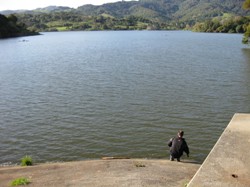
A deceptively full Stafford Lake reservoir in northern Marin County. Photo by David Gorn.

A little rainy weather can be deceiving, too. Even though some local reservoirs around the state topped off–or nearly so–with the late-season storms of February and March, some of the people served by those same reservoirs may still face rationing this summer. That’s because many communities draw their water from multiple sources, which may include mountain runoff.

Projections this year are for snowpack runoff to clock in at about 70% of normal. That beats than the 52% and 58% of the previous two years but is still cause for concern.
Water Allocations Tweaked Slightly Upward

A few drops of good news for farmers and cities this week: a heftier late-spring snowpack means there will be slightly more water headed their way this summer.

Earlier this week, the State Department of Water Resources said it will increase water from state reservoirs from 15% of what cities and farms had hoped for, to 20%.  Today the federal Bureau of Reclamation (Central Valley Project) followed suit and nudged some of its projected allocations up, too.

The five-percentage-point bump is mildly good news for some northern California farmers.  But farmers in the southern San Joaquin Valley are still slated to get zero gallons from federal reservoirs. For that to change would require an April of historically soggy proportions.

The previous nadir for State Water Project deliveries was set in 1991, when urban and industrial customers got 30% of their requested water and farms got zero.

Delta Smelt Listed as Endangered

The California Fish and Game Commission today officially qualified two species of freshwater fish for special protection under the California Endangered Species Act.

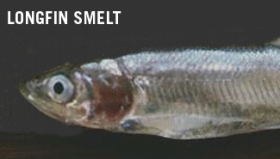
Longfin smelt. Photo: NOAA
Photo: NOAA

The Commission listed the delta smelt as “endangered” and the longfin smelt as “threatened,” a lesser classification. Both are denizens of the Sacramento-San Joaquin Delta and have long been at the center of controversy over water diversions from the Delta. According to the San Francisco-based Center for Biological Diversity:

“The San Francisco Bay-Delta Estuary is home to the largest and southernmost self-sustaining population of longfin smelt. Longfin smelt populations that inhabit the estuaries and lower reaches of Humboldt Bay and the Klamath River have also declined and may now be extinct. Since 2000, the Bay-Delta longfin smelt population has fallen to unprecedented low numbers. Since 2002, the delta smelt has plummeted to its lowest population levels ever recorded.”

CBD was among the environmental groups that petitioned the state for listing of the longfin in 2007. Delta smelt have been protected as a “threatened” species since last year but today that designation was escalated to “endangered.” The Center has also petitioned for–but has yet to attain–federal listing for both species by the U.S. Fish & Wildlife Service.

The listing could have major implications for water supplies this year. Court decisions in favor of the fishes have already forced reductions in water pumped out of the Delta for diversion to the San Joaquin Valley and Southern California. The rulings have prompted some to characterize subsequent reduced water deliveries as a “regulatory drought.”

Snowpack Buildup “Too little, too late”

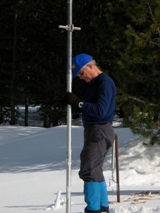
Frank Gehrke at Tamarck Flat last winter.
Frank Gehrke at Tamarack Flat last winter.

That’s how Frank Gehrke described the somewhat improved numbers in the latest Sierra snowpack survey. Gehrke has been trekking up to the snow courses for decades to do the seasonal surveys. Today, the statewide average for water content in the snowpack came in at 80% of normal for this date.

Northern Sierra locations clocked in a bit better at 84%, southern locations at 77%. These are an improvement over last month’s tally, when the state averaged only 61% of normal–but reservoirs are not filling fast enough to make up for the long, dry winter that preceded this recent string of storms.

Not that the recent rains haven’t helped. Oakland, Long Beach, Riverside and San Diego are among several spots that have now had at least 90% of their normal precipitation–and some local reservoirs have been catching up. But up in the Sierra, where it really counts for the Big Picture, they’re not catching up fast enough. The main holding “tanks” for the state’s two major water supply systems, Shasta Lake and Lake Oroville, are still at 60% and 55% of normal, respectively.

The recent storms have been relatively warm, too, with precipitation falling as rain all the way up to 7,500 or 8,000 feet. This is precisely the condition that climatologists have been warning about. Snow sticks to the mountain and makes its own reservoir, slowly releasing water well into the spring, as it melts off. But rain at those high elevations is double trouble. It runs off immediately into the rivers and also accelerates the snow melt. That means less water for later in the season, when we really need it.

That may be why the Governor didn’t wait around for today’s numbers. He went ahead and declared a statewide drought emergency on Friday, urging urban water users to cut consumption by 20%.

Record-Low Water Allocations for Farms

Photo by Sasha Khokha
Deceptively soggy fields in Fresno County. Photo by Sasha Khokha

This morning’s news for Central Valley farmers was bad–but not unexpected: record low allocations of water from state and federal irrigation systems, just as growers make their spring planting decisions.

There are two major plumbing systems that supply water for Valley farms. This morning, the federal Bureau of Reclamation said the best-case scenario will be that ag customers of its Central Valley Project get 10% of their requested water this year. Zero is more likely for most, especially if the current season’s weather patterns persist. The previous low for CVP allocations was 25% in the early 1990s.

Also today, the California Department of Water Resources confirmed its earlier estimate of 15% allocations for farms served by the State Water Project.

The recent string of rainy days has left fields soggy but failed to make a dent in the current drought. Elissa Lynn, Senior Meteorologist for the state Department of Water Resources says we’d need four or five more big storms by April to bring the state’s precipitation levels up to normal.

It’s unlikely it will keep raining hard enough, for long enough, to bring California out of a drought.

And that means more fighting over the state’s water supply. Especially when it comes to the massive state and federal plumbing projects that pipe water from northern California to make arid Central Valley fields bloom.

Not only is there less water in the state’s reservoirs, but there are restrictions on pumping it because of legal decisions to protect the endangered delta smelt.

On The California Report this morning, we visited with a Fresno County tomato farmer, to find out how he’s coping. If you missed it, that radio story will be posted here sometime today.

For more on the drought, explore Climate Watch’s newest resource, California’s Water. Visit this page for access to KQED’s drought coverage, data and reports from the Department of Water Resources and the National Oceanic and Atmospheric Administration, and California water news from across the Web.

The End of Ag? Chu Drops a Climate Bomb

arizona-drought-small.jpgHigher temperatures and drier conditions could destroy California’s vineyards by the end of the century if Americans do not act fast to slow global warming, Secretary of Energy Stephen Chu said Tuesday in his first interview since joining the Obama cabinet.  Chu, a California native, warned that increased water shortages in the West and a loss of up to 90 percent of the Sierra snowpack are likely to have a severe impact on the state’s agricultural industries as well as California’s cities.

“I don’t think the American public has gripped in its gut what could happen,” Chu told the Los Angeles Times.  “We’re looking at a scenario where there’s no more agriculture in California.”

Californians may appreciate this kind of attention in Washington to what is shaping up as potentially the worst drought in the state’s history.  The California Department of Water Resources reports $308.9 million in agricultural losses last year due to drought in the state, and if January was any indication of what’s to come, that number will be even higher for 2009.  The Santa Rosa Press Democrat reports that grape growers in the counties of Sonoma and Mendocino are facing a difficult choice this month as they decide whether to use some of their reduced water allotments for frost protection. With such a rapidly dwindling supply, water used now could mean none for irrigation later in the season.

This morning on KQED’s Forum, California water experts discussed the direness of the situation and the probability of water rationing and other measures to deal with it.

The California Department of Water Resources website has extensive information about drought conditions and mitigation efforts across the state, including this fact sheet updated for January 2009.

Photo by Reed Galin

Snowpack Slips Further

bay_2981.jpgAfter the puny amount of precipitation we had in January, you sort of knew this was coming. Sure enough, after the second survey of the season, the statewide average for water content in the Sierra snowpack has slipped further.

As of today’s survey, the state’s Dept. of Water Resources says the snowpack’s water component is 61% of normal for this date. A month ago it was closer to three-quarters. Normally water content increases over the course of the snow season.

It only serves to cement growing fears that the coming summer will make last year’s water restrictions look like a tea party. In an unusually blunt statement, DWR Director Lester Snow said “We may be at the start of the worst California drought in modern history.” Reports are already coming out of the Central Valley of farmers planning to take more acreage out of production this year, and some cities anticipate going to court to get their desired water allocations.

Today’s survey combines manual tests at four alpine locations with readings from a network of electronic sensors. Even more alarming are some of the readings from key reservoirs. Lake Oroville, the main holding tank for the State Water Project, is at 43% of “normal” and just 28% of total capacity.

A developing La Nina condition in the Pacific may divert the jet stream and hold more rain at bay, as the season winds down. There are about two months left in California’s core “wet” season.

Photo by Heidemarie Carle: San Pablo Bay after some sparse January rain.

New Blueprint for California Water Use

img_3449.JPGCalifornia’s Dept. of Water Resources has issued a new gameplan for managing the state’s precarious water supply. DWR calls its draft California Water Plan “a new chapter in the way California must manage her water resources,” warning that “the system has lost its reslience.”

The agency appears to fully recognize the impact of climate change in assessing the challenges ahead. In its conclusion, the draft plan says:

“Population is growing while available water supplies are static and even decreasing. Climate change, as evidenced by changes in snowpack, river flows and sea levels, is profoundly impacting our water resources.”

Note that the report doesn’t say that climate change “may be” affecting water resources, it says that it is already. The plan also recognizes for the first time, that water and flood management need to be part of the same process, and that there has to be a coordinated, long-term strategy for investing in California’s water system:

“…funds from bond-to-bond are neither sufficient nor sustainable. California needs more stable and continuous sources of revenue to invest in statewide and regional integrated water management and the build resilience back into the state’s water and flood management systems, as well as into the watersheds, groundwater basins, and ecosystems that support them.”

The “public review draft” released today provides a good piece of perspective when it notes that while the current drought seems comparable to the 1977 dry spell, the state’s population is nearly 75% larger now.

The draft catalogs 27 potential strategies for managing the state’s water. Much of the report reiterates well established positions at DWR, such as the call for more (surface) water storage and a peripheral canal for the Sacramento-San Joaquin Delta.

Photo: A nearly dry reservoir in the Santa Cruz Mountains.

Sierra Snowpack Levels Below Normal

3151697945_495462fcb0_m.jpgYes, heavy snow closed Interstate 80 for several hours on Christmas, and true, four feet of snow fell on North Lake Tahoe in the days since then. But this season’s first snow survey reveals that California still has far to go to make up for two years of drought.  Teams from the Department of Water Resources (DWR) found that statewide the water content of the Sierra snowpack is still only 3/4 of where it should be this time of year.

Conducted today by teams across the state, the survey revealed snow water levels at 54% of normal for the northern Sierra, 76% for the central Sierra, and 99% for the southern Sierra.

Today’s numbers are an improvement over this time last year, when the water content for snow in the Sierra statewide was just 60% of normal, but they are not high enough, say DWR officials.

After two years of drought and last year’s driest spring on record, reservoirs across the state are far below normal levels. Lake Oroville, which we wrote about in the fall, contains less than half the amount of water that’s normal for this date.

The Sierra is going to have to see a lot more snow this winter if Californians want to avoid water restrictions and another big fire season come next summer.

Craig Miller reported on the snow survey on this morning’s broadcast of The California Report.

Use the player below to hear more about the current state of California’s water supply from Department of Water Resources Senior Meterologist Elissa Lynn.

[audio:http://www.kqed.org/.stream/anon/climatewatch/Lynn_Snowpack.mp3]

PPIC Analyst: Start Adapting Now to Climate Change

This is a guest post from Louise Bedsworth, research fellow at the Public Policy Institute of California.  She and PPIC Research Director Ellen Hanak are co-authors of the report: “Preparing California for a Changing Climate,”  which we wrote about here last month. The report discusses the challenges that climate change poses for a number of the state’s environmental and resource institutions and how well prepared we are for addressing these challenges.

What is adaptation to climate change and why do we need it now?

We have discussed our report on preparing for climate change with a variety of audiences over the past several weeks, beginning with a half-day event in Sacramento on December 2nd that included state leaders, representatives from environmental organizations, and city officials from all over California.  We found that while the topic of adaptation can seem to be all doom and gloom, there are several programs in place and underway that should help California prepare for the effects of climate change that we can’t prevent. One important question that keeps coming up at these events is why we need to be thinking about adapting to global warming now that the state has focused on fighting it.

Adaptation, or climate change preparedness, refers to the adjustments that can be made to help to cope with the effects of climate change.  These impacts include higher temperatures, accelerated sea level rise, and disruptions to the state’s water supply, all of which have real consequences for California.  For example, the San Francisco Bay Conservation and Development Commission has prepared maps showing what the Bay would look like with one meter of sea level rise.  These maps show the significant impacts on San Francisco Bay communities and infrastructure, including inundation of the region’s airports and Silicon Valley.

Ideally, adaptive actions will help to reduce vulnerability in the face of change or to improve resiliency.  Even under the most optimistic scenarios (e.g., successful emission reductions globally), some amount of climate change appears to be inevitable.

Adaptation goes in hand-in-hand with efforts to reduce greenhouse gas emissions.  Generally speaking, the more successful efforts to reduce emissions are, the less adaptation will be needed.  And, some efforts to reduce emissions – such as energy efficiency – will also help us adapt by lessening energy use under high demand conditions.  But, adaptation and mitigation efforts can be in conflict – for example, planting non-native trees either to store carbon or provide shade can help to reduce greenhouse gas emissions, but could place additional stress on efforts to protect native species in a changing climate.  To avoid such conflicts now and in the future, adaptation needs to be well-defined and integrated in the current climate policy discussion in California.

A recent report from the Yale School of Forestry and Environmental Studies found significant obstacles to climate change adaptation in the United States.  These were similar to barriers that we observed for California – uncertainty in the science of climate change, lack of funding or resources, regulatory and legal obstacles, and lack of political will or incentive.

But, we also found some reasons to optimistic about the prospects for adaptation in California.  Water and electricity agencies appear to be out in front on adaptation and overcoming these obstacles.  As service providers, both water and electricity providers have an incentive (and an obligation) to be considering adaptation.  They are used to doing long-range planning and weathering supply uncertainties.  Finally, and very importantly, water and electricity providers have a rate-payer base that can provide funding for undertaking adaptation.  In addition, there are tools in other sectors that can help with adaptation.  There are public health programs such as disease tracking and heat emergency plans that can provide a starting point for developing climate change preparedness.

As the California Resources Agency develops the state’s Climate Adaptation Strategy, the knowledge and experience from these programs should provide a solid starting point.