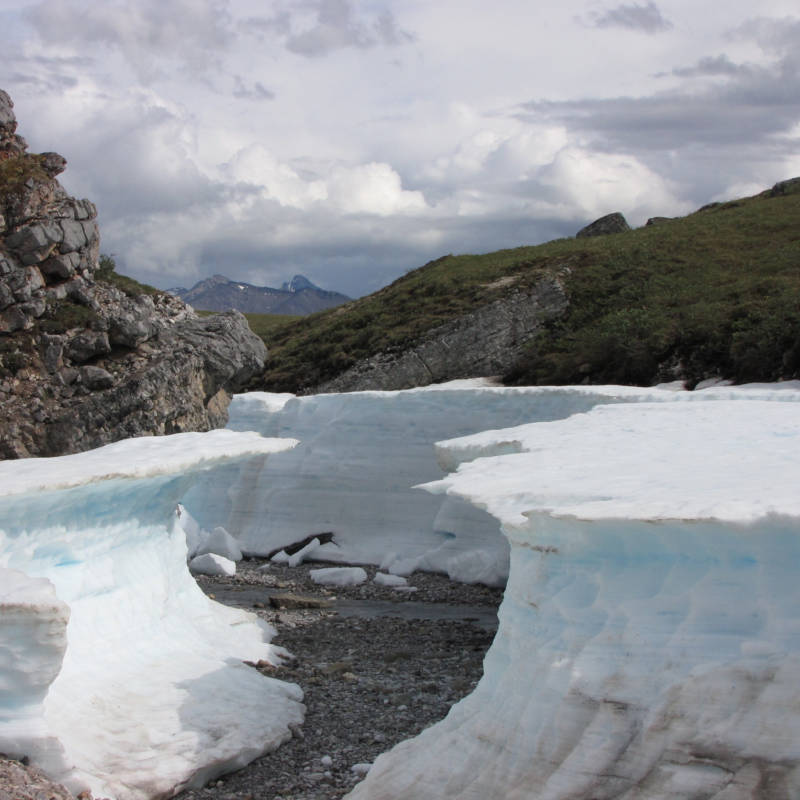
Melting snow and ice near the Arctic National Wildlife Refuge last June (Photo: Gretchen Weber)
Australia’s Chief Climate Commissioner, Tim Flannery, stopped by KQED this morning for an appearance on Forum, the station’s live call-in program. He spoke about the status of international climate agreements and expressed hope for the process, which is not something I came across very often as a reporter at the UN climate talks in Cancun last December.
Researchers say sea levels haven’t been rising along the West Coast of North America for decades, but that could be about to change, according to a new study.
Researchers at Scripps Institution of Oceanography say they’ve observed changing wind patterns that, if persistent, could soon speed up sea level rise along California’s shores.
Global sea level rise averaged about two millimeters per year throughout much of the 20th century and then accelerated to 3 millimeters per year in the 1990s, said researcher Peter Bromirski. But along the West Coast, he said, sea levels have been steady since about 1980.
In the weeks to come, Climate Watch will launch a three-part radio series on the nuclear waste dilemma. As part of the reporting for that series, The California Report’s senior producer, Ingrid Becker, traveled to Sweden to examine a program touted as a potential model for the world. This dispatch from Becker is a preview of the series.
How Sweden is getting some to say, “Yes, in my backyard,” Part 1
The country that brought the world Alfred Nobel and his dynamite, Volvo cars and IKEA furniture is busy touting another invention. The Swedish Nuclear Fuel and Waste Management Company, or SKB, has asked for government permission to build what could become one of the world’s first permanent geologic repositories for spent nuclear fuel.
SKB public relations officer Brita Freudenthal encourages visitors to touch models of the copper canisters at the Äspö Hard Rock Laboratory, where plans are being developed for permanent storage of nuclear waste. (Photo: Ingrid Becker)
I’m in Sweden this month to learn just what this environmentally-conscious nation of nine million people can teach us about managing the radioactive refuse from commercial reactors. While the waste from California’s two nuclear power plants — Diablo Canyon and San Onofre – is piling up in temporary storage containers (with still more at the decommissioned Rancho Seco plant, near Lodi), Sweden is moving forward with a program 30 years in the making, to safely dispose of the spent uranium dioxide pellets that fuel its ten reactors
”I believe it has been a strength that industry has had a clear task to solve the (waste) problem,” says SKB’s Chief Executive Officer Claes Thegerström, in a recent interview for the company website. “When we began, we had right from the beginning a mix of experienced people from the industry. We had outgoing academics and, strong authorities, which allowed us – in contrast to the American way – to own the mission.”
This week I’m in Stockholm where we’ll hear more about the Swedish example during a two-day gathering of social scientists, legal scholars, and industry experts, as well as political and community leaders from Sweden and abroad. Continue reading Sweden’s Nuclear Waste Solution→
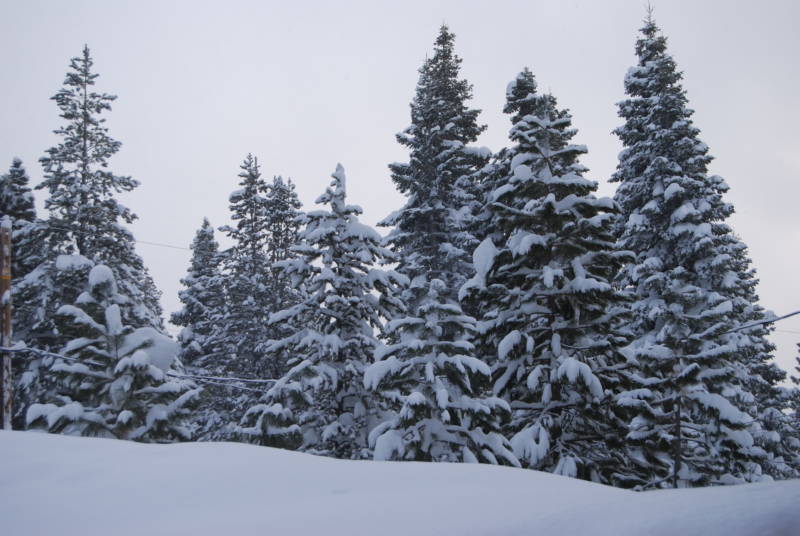
Snowy trees in Truckee, CA, in February 2011. (Photo: Lauren Sommer)
Surveyors from the Department of Water Resources strapped on their skis today and headed out to measure the status of the Sierra snowpack for the fifth and final time this season. As expected, they reported good news for the state’s water supply.
It’s been a big year for the snowpack – the biggest since 1995 – and the snow’s water content is about 180% of what’s “normal” for early May. The spring melt has already begun, so there’s less snow than there was month ago. Historically, early April is when the snowpack is at its peak, as it was this year. And yet, the current water content of the snowpack is still 50% higher than the historic average for April first.
All this water has prompted officials to project water deliveries of 80% of requests from farms and towns served by the State Water Project this year. That’s the highest percentage since 2006. Last year just 50% was delivered.
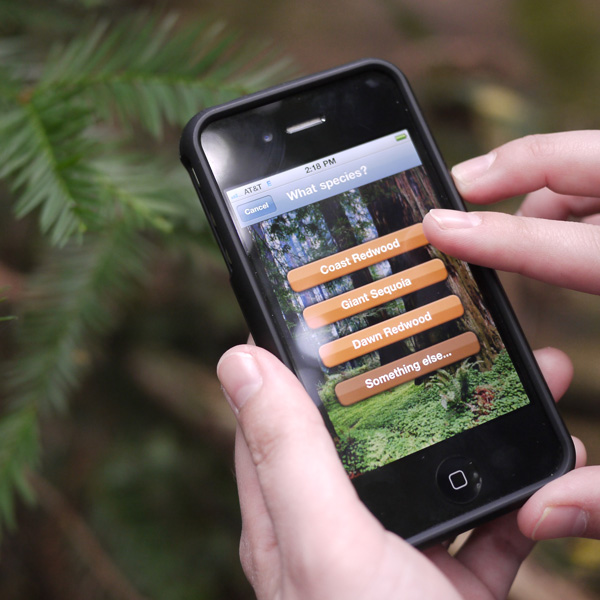
The San Francisco-based conservation organization has teamed up with the biodiversity-tracking social networking site to create an iPhone app exclusively for monitoring redwood and giant sequoia forests. It’s called Redwood Watch. It uses the same technology as the iNaturalist iPhone app, aggregating data on a special Redwoods page within iNaturalist.org.
“We hope that this will help us have a better idea of where redwoods are, and then we can use that data to understand what kinds of conditions they can tolerate,” said Emily Limm, director of science and planning for Save the Redwoods. Continue reading Saving Redwoods: There’s an App for That→
Yes, it rained and snowed a lot this winter and left us with an epic Sierra snowpack. Now forget all that. The long-range outlook: still dry.
A new report from the federal Bureau of Reclamation may offer the most comprehensive forecast yet for western water in the 21st century — but few surprises.
The report, Managing Water in the West, breaks down the outlook for eight key river systems, including three vital to California. The overall message is predictably sobering.
The risks that California faces from climate change are pretty well known, says Peter Gleick of the Oakland-based Pacific Institute. He says the 200-plus-page report “doesn’t offer any new surprises about those risks — but it does reaffirm those risks in an increasingly compelling way.”
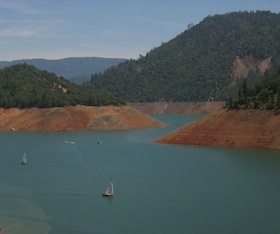
Lake Oroville reservoir during California's recent three-year drought. (Photo: Craig Miller)
Some media coverage of the report seems to conclude that California gets off lightly in the study. But the section of the report covering the critical Sacramento and San Joaquin basins seems sobering at best. While it does predict a small (0.6%) increase in annual precipitation on the Sacramento, the report also foresees a drop in San Joaquin precipitation of somewhere between 4.2% and 5.3% by 2050. Continue reading News Flash (Not): Western Water in Peril→
It had been a good month for BrightSource Energy, the Oakland-based company that’s building the massive Ivanpah solar farm in the Mojave Desert.
Google announced it would invest $168 million in the project. The Department of Energy announced $1.6 billion loan guarantee. And on Friday, the company announced it plans to go public with a $250 million initial public offering. But a recurring issue has popped up: the desert tortoise.
A Mojave desert tortoise. (Image: USGS)
“It’s an endangered species. No project that is sited out there in within their habitat can negatively impact the population,” says Erin Curtis, a spokesperson for the Bureau of Land Management. As anyone following the battles over solar farms knows, prime desert tortoise habitat also happens to be prime solar territory and has been targeted by a number of proposed solar farms.
BrightSource Energy agreed to mitigate the impacts their solar farm would have on the tortoises by capturing and relocating them to new habitat. Fences are being constructed to prevent the tortoises from returning. Continue reading Speed Bump for Big SoCal Solar Project→
Time is running out to fix Northern California’s beleaguered Sacramento-San Joaquin Delta. That seems to be the consensus from the latest major meeting of officials and stakeholders.
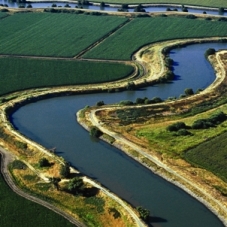
Part of the labyrinth of waterways in the Sacramento Delta. (Image: CA Dept. of Water Resources)
Today’s meeting in Sacramento was a rarity; both state and federal officials sat down to explain the complicated Delta planning process in a public setting.
David Hayes, Deputy Secretary of the federal Department of the Interior, underscored the urgency, telling the gathering that “We are one seismic event away” from a potential three-year interruption in water supplies to Southern California.
“Even if you don’t have a seismic event, the effects of climate change, a major flooding event, threaten the Delta because it’s built on quicksand — basically levees that will not hold against a major event,” said Hayes. The Delta provides water for 25 million Californians. Hayes said his agency and the White House are “in full lockstep” with Governor Jerry Brown’s process for dialing in a Delta strategy. The state is pursuing “co-equal goals” of satisfying California’s water demands while protecting Delta eco-systems, which several speakers said are “crashing.” Continue reading Time Running Out for Delta Fix→
Those are the options offered by the environmental justice groups who won a court ruling against the California Air Resources Board (CARB) in March. The groups were seeking to halt cap-and-trade over health concerns for communities located near industrial polluters. A California Superior Court judge ruled that CARB had violated state environmental law by not adequately considering alternatives to cap-and-trade, and suspended all 68 regulations that implement California’s global warming law, AB 32, until the board complies.
The two sides entered negotiations to find ways for the state to move forward with parts of AB 32 other than cap-and-trade, but those talks broke down on March 30.
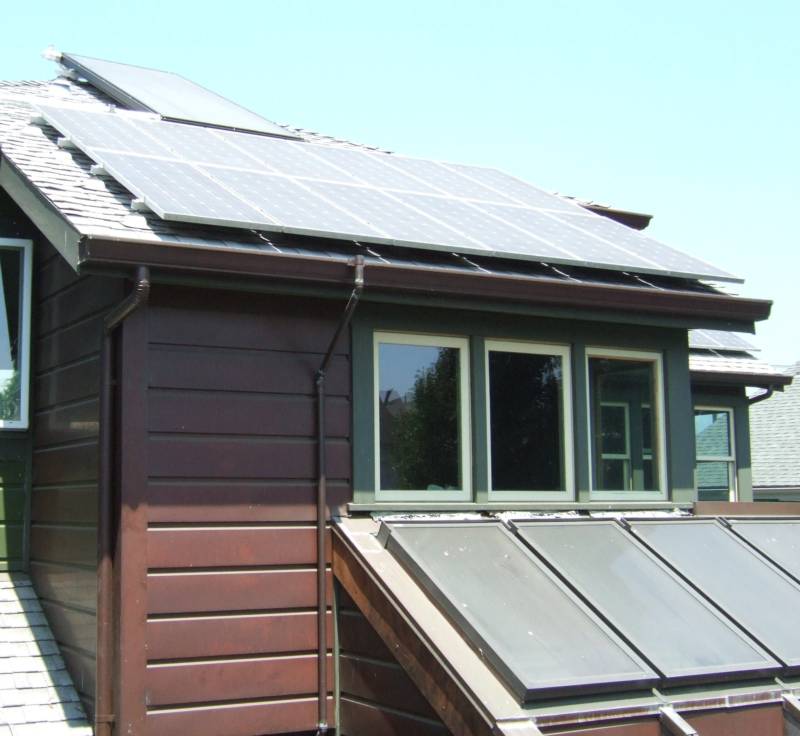
A new study from Lawrence Berkeley National Lab could help California’s homeowners decide whether or not to “go solar.” Researchers found that on average, homeowners who recently installed solar photovoltaic (PV) panels recouped most or all of their investment when they sold their homes.
“A house that has a PV system compared to a house that doesn’t have a PV system is expected to sell for more,” said Ben Hoen, the lead researcher on the study and a principal research associate at Berkeley Lab. “This is for systems that are relatively new – between 1.5 to 2.5 years old.” Continue reading Report: Solar Panels Boost Home Prices→