California’s Dirty Secret: The Five Coal Plants Supplying Our Electricity

The “invisible” fossil fuel that may be powering your lifestyle
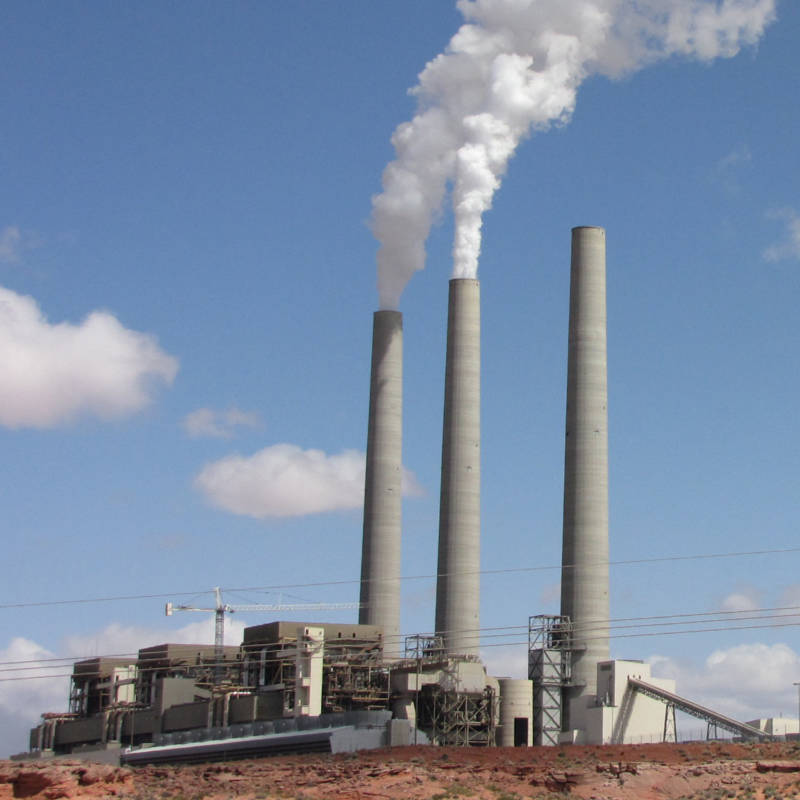
The Navajo Generating Station is coal-fired power plant in Arizona, just outside the Grand Canyon National Park. It’s one of two coal plants that supplies more than 40% of Los Angeles’ power.

Here in California, you hear a lot about our “green” reputation.  We have one of the most ambitious greenhouse gas reduction goals in the country, and the state is certainly a hotbed for new solar and wind energy investments and installations. We also have a law that says electricity providers have to get 33% of their power from renewable sources by 2020.

So… you might be surprised to hear that coal — that’s right, dirty ol’ coal — is still very much a part of the power supply in parts of Southern California. If you’re one of the 1.4 million residents of Los Angeles who gets power from the city’s Department of Water and Power, about 40% of your electricity comes from coal.

But how’s that possible?  Here in California, we don’t have much in the way of coal deposits, and no significant coal power plants. But we do have several public utilities that own portions of out-of-state coal power plants, and that entitles them to lots of less-than-clean, coal-fired energy. Continue reading California’s Dirty Secret: The Five Coal Plants Supplying Our Electricity

Pacific Islanders Dance for Sea Rise Awareness

“Just for you to hear our voices…This is our only hope.”

Traditional dancers from Kiribati, which is threatened by the rising Pacific

In Pacific island cultures, dance can be a form of prayer — which may be why three dozen people from the disappearing coral atolls of Tuvalu, Kiribati and Tokelau are on a fourteen-city US tour with what they see as their futures at stake.

The message: that what we in the United States do here, affects them there. It’s a performance and educational campaign called “Water Is Rising.”

Instead of looking at bar graphs, we heard the beat of sticks on large biscuit tins. No Power Point here, just artfully synchronized hands and hips, fingers and bare feet. Continue reading Pacific Islanders Dance for Sea Rise Awareness

Sneak Preview of Living in a “Zero-Net Energy” World

Davis housing development claims to the the nation’s biggest

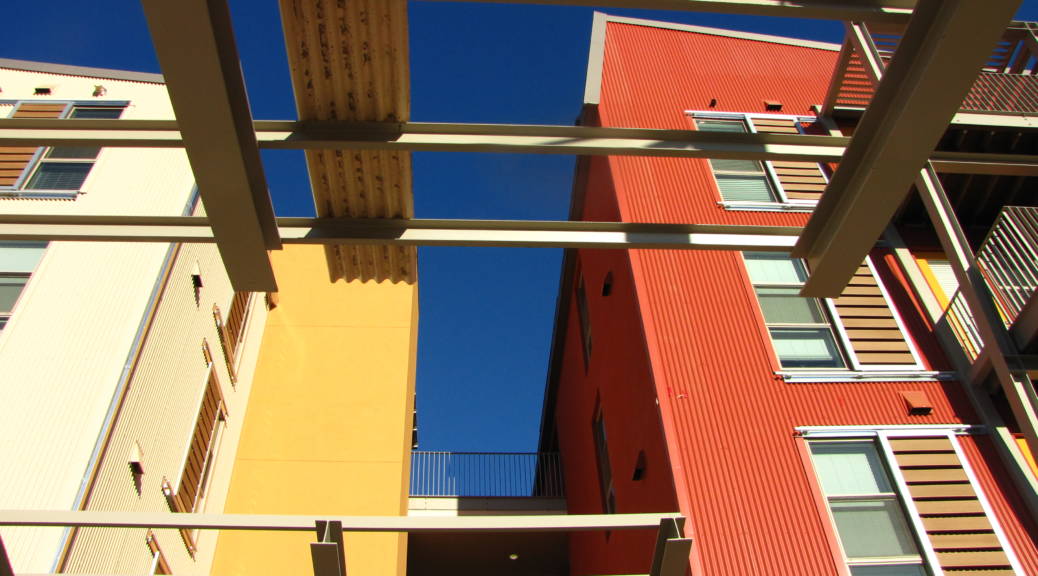
West Village features sleek lines and cutting-edge energy efficient design concepts.

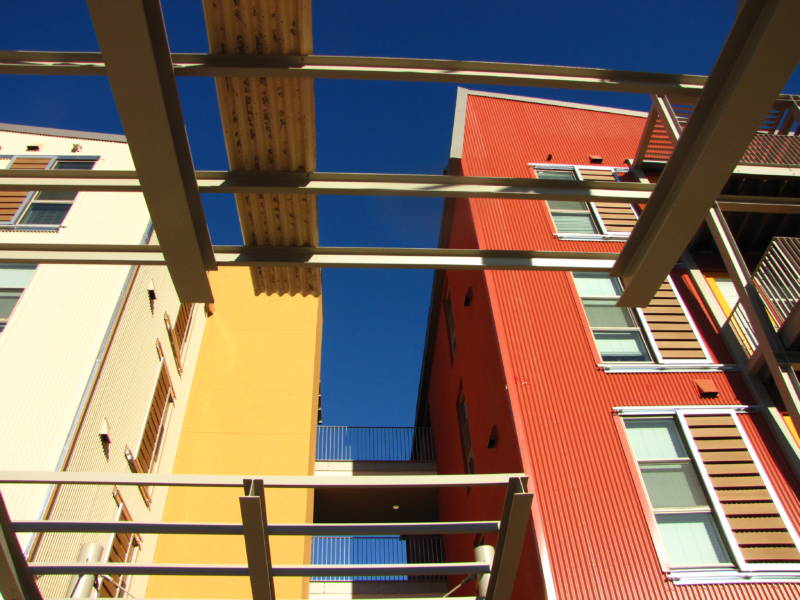
The typical American master-planned community sill features cookie-cutter houses, cement driveways and green lawns. But UC Davis is putting a new spin on the concept with the unveiling of West Village, a $300 million student and faculty housing community designed to be “zero-net energy.” Developers say it’s the nation’s largest to employ this kind of green construction.

And although “zero-net” [PDF] may sound complicated, the concept is actually quite simple: All the buildings in West Village will take in as much energy as they put back into the power grid — not on a daily basis but at the end of each year, the total consumption of the entire housing development should “net out” to zero. Continue reading Sneak Preview of Living in a “Zero-Net Energy” World

Yergin: Tar Sands Opposition is Misguided

The energy guru weighs in on dirty oil, fracking and California’s energy leadership

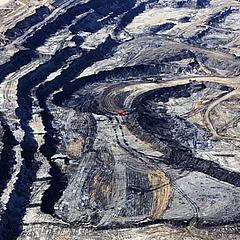
One of America’s foremost energy experts says Canada’s controversial oil tar sands are getting a bum rap.

Daniel Yergin, who became a go-to guy for energy wisdom after winning a Pulitzer Prize for his 1990 oil tome, The Prize, appeared on KQED’s Forum program today to promote his latest book, The Quest: Energy, Security and the Remaking of the Modern World.

When host Michael Krasny asked Yergin about the Canadian tar sands boom and a plan to construct a pipeline to bring it into the US for refining, Yergin said the project “has become a huge symbolic target.” Indeed the controversial Keystone XL pipeline proposal has been a lightning rod for demonstrations at the White House and a target of ongoing protests across the country. But Yergin said he thinks the risks of importing tar sands oil from Alberta have been overblown. Continue reading Yergin: Tar Sands Opposition is Misguided

Global Warming May Worsen Effects of El Niño, La Niña Events

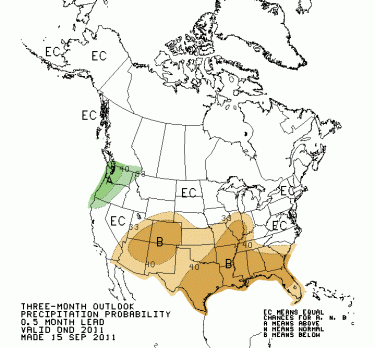
Precipitation outlook for winter 2011-12, showing the likelihood of below average precipitation in Texas and other drought-stricken states.

Does this mean Texas is toast?

By Michael D. Lemonick

As most Californians know, El Niño is a periodic unusual warming of the surface water in the eastern and central tropical Pacific Ocean. Actually, that’s pretty much a lie. Most people don’t know the definition of El Niño or its mirror image, La Niña, and truthfully, most people don’t much care.

What you do care about if you’re a Texan suffering through the worst one-year drought on record, or a New Yorker who had to dig out from massive snowstorms last winter (tied in part to La Niña), or a Californian who has ever had to deal with the torrential rains that trigger catastrophic mudslides (linked to El Niño), is that these natural climate cycles can elevate the odds of natural disasters where you live. Continue reading Global Warming May Worsen Effects of El Niño, La Niña Events

Climate Change Could Mean Cloudy Future for Lake Tahoe

New threats to lake’s clarity are emerging just as restoration funding is drying up

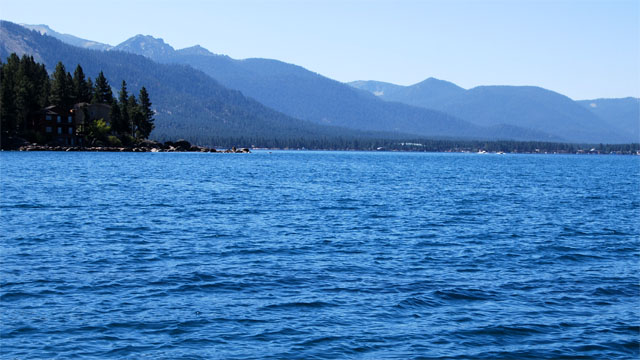
Climate change and invasive species threaten Lake Tahoe just as restoration funding dwindles.

Over the last 15 years, more than a billion dollars has been spent to protect Lake Tahoe’s clear waters from runoff and erosion. Now, new threats to lake’s clarity are emerging, just as restoration funding is drying up.

Researchers from UC Davis are hot on the trail of one of those threats. On a recent late summer morning, Katie Webb and a team from UC Davis’s Tahoe Environmental Research Center went looking for it on a boat near South Lake Tahoe.

Hear the radio version of this story Wednesday on The California Report. Continue reading Climate Change Could Mean Cloudy Future for Lake Tahoe

Snow in Tahoe Already: How Weird is That?

Meteorologists say it’s the shortest Sierra “summer” in four decades

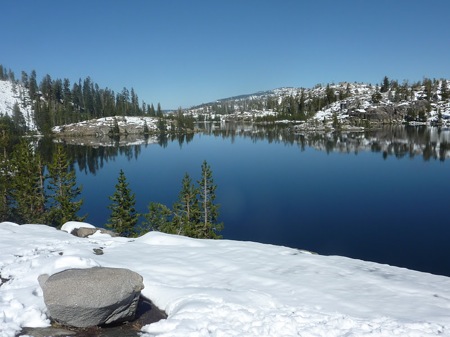
An early snow in the Grouse Lakes area of the Sierra Nevada

By Matthew Green

For months now, I had reserved the second weekend in October for my annual grand finale “summertime” backpacking trip. Culminating an unusually short warm season, this was to be the ceremonial final alpine lake swim, the last mosquito bloodletting until well after next year’s thaw. Which is why, as my partner and I proceeded to pitch our tent in about 10 inches of snow last Friday evening, I couldn’t help but feel I’d been had.

Last week’s storm, which swept across the northern half of California early Wednesday, dumped up to a foot of snow in the Sierra’s high peaks, with accumulation as low as 5,000 feet. According to the Central Sierra Snow Lab, this is the first snowstorm in 96 days – since July 1 – marking the shortest duration between storms in the Sierra since 1969. Continue reading Snow in Tahoe Already: How Weird is That?

Should California Put Hybrids Back in the Carpool Lane?

You’d think that kicking thousands of solo drivers out of the carpool lane would make traffic move faster…at least for carpoolers. But you’d be wrong, according to researchers from UC Berkeley.

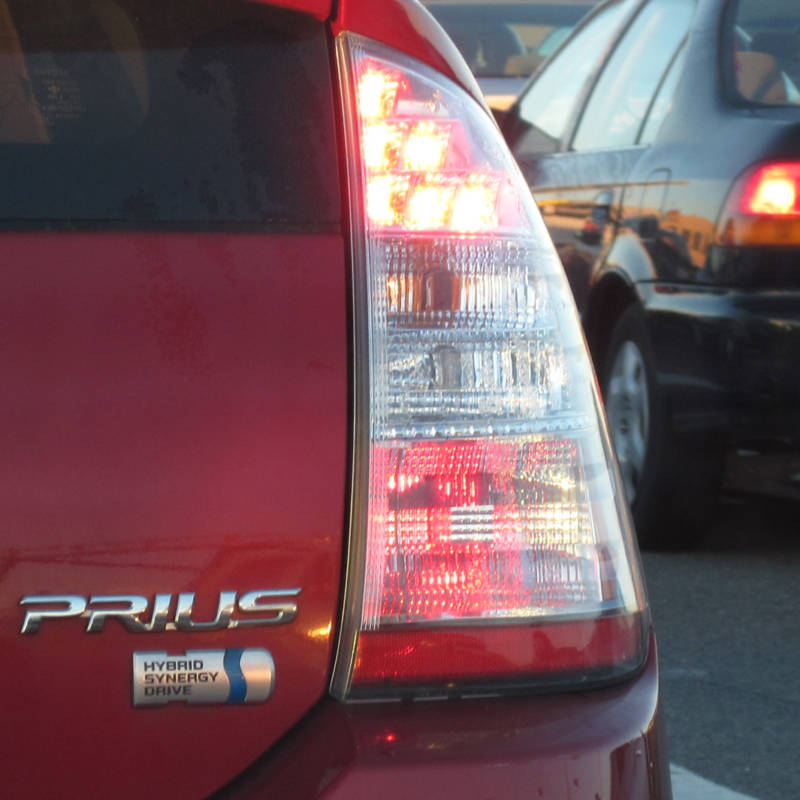
In 2005, California granted drivers of hybrid vehicles access to carpool lanes (regardless of the number of riders) as a way to spur adoption of low-emissions vehicles. But that program ended this summer, after critics argued that the 85,000 cars that had qualified for special lane access were too many, and all the new hybrid drivers were clogging things up for carpoolers. Continue reading Should California Put Hybrids Back in the Carpool Lane?

Sea Level Rise Laps at Developers’ Feet


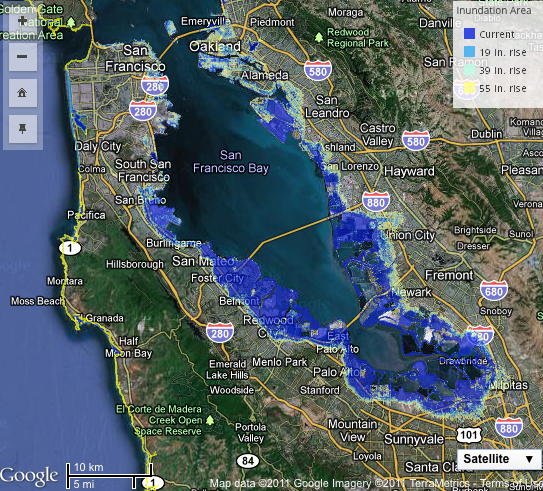
Google Maps image of the Bay Area from Cal-Adapt’s online interactive sea level rise tool.

Developers building on the shore of San Francisco Bay will now have to consider climate change in their plans.

Despite a unanimous vote on Thursday by the Bay Conservation and Development Commission (BCDC), it hasn’t been easy planning process for the state agency that regulates development along the San Francisco Bay shoreline. The state agency approved a first-of-its kind policy that makes sea level rise part of regional planning decisions.

“It’s kind of like childbirth,” said Will Travis, the Executive Director of the commission.

“It wasn’t an easy thing to get done,” he said. “Some didn’t even believe that climate change was happening, and some weren’t aware of the great impact that sea level rise will have the Bay Area.” Continue reading Sea Level Rise Laps at Developers’ Feet

Drought Gone, Less Support for California’s Water Bond?

By Lance Williams, California Watch

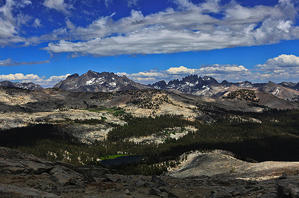
Post Peak Pass is a granite notch on the remote southern boundary of Yosemite National Park, altitude 10,700 feet.

On Saturday, its north face was partly covered with a 100-yard-long patch of crusted snow – a reminder of just how emphatically California’s three-year drought was broken by the wild winter of 2010-11.

Although California’s high peaks still are capped with last year’s snowpack and its reservoirs are brimming with runoff [PDF], voters will be asked next year to approve an $11.1 billion state water bond measure that was crafted in response to the crippling drought.

But with the drought a fading memory and the state’s finances in disarray, many believe the pricey package of dam-building and water conservation infrastructure has an even slimmer chance of passage today than in 2010, when then-Gov. Arnold Schwarzenegger yanked it off the ballot and slated it instead for November 2012. Continue reading Drought Gone, Less Support for California’s Water Bond?