Category Archives: Water

Potentially the biggest climate impact on life in California

California, Feds Ratcheting Back on Farm Water

Allocations cut back on major water projects
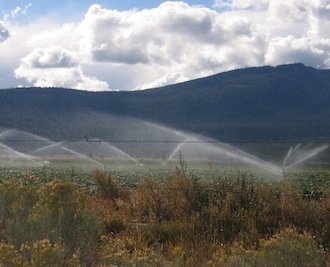
 ” credit=”Craig Miller

Given the forecast for the final week of February, now it really is down to a “March Miracle” to salvage the California water season.

So this time they didn’t even wait for the next snow survey. Water managers are pulling back on estimates of how much water they’ll deliver to contractors on major water projects. With winter precipitation running about half of normal, today the California managers set probably deliveries at half of what contractors (mostly irrigation districts) on the State Water Project are asking for — that’s ratcheted down from 60%. Continue reading California, Feds Ratcheting Back on Farm Water

The “Magic Dust” that Brings More Sierra Snow

Dust from across the Pacific seeds Sierra snowflakes

Researchers found that heavy snowfall in the Sierra is connected to the amount of dust floating over from Asia.

In a weird twist on the “butterfly effect,” evidence is that Asian dust storms can mean more snow in the Sierra. The strange finding surfaced in research by scientists working on NOAA’s CalWater program. Scientists compared two Sierra storms, and found the one that contained dust particles from Asia had 40% more precipitation than the one that did not. The other storm had more particulate matter from sources in California, for instance, from burning trees or grass.

The researchers, including Kim Prather and Doug Collins from the Scripps Institute of Oceanography at UC San Diego compared the two storms from the air.

Continue reading The “Magic Dust” that Brings More Sierra Snow

The Case of the Disappearing Sierra Snowfall

A new report says snowfall in the Sierra hasn’t shrunk, but not everyone’s buying it

Snow has been sparse in the Sierra Nevada this winter.

There are good years and there are bad years, but overall, snowfall in the Sierra hasn’t declined in the past century. That’s according to a new study by University of Alabama climatologist John Christy (who, it’s worth noting, has come under fire as a climate change denier).

The San Francisco Chronicle had a story about the report, “Searching for information in 133 years of California snowfall observations,” (link is to the abstract; full article is behind a pay wall) in today’s paper:

Continue reading The Case of the Disappearing Sierra Snowfall

Take Me to the River (Without Leaving My Desk)

A new project to visually map American waterways will start with California’s Sacramento

The Sacramento River is a lifeline for California.

By the end of the summer, you may be able to float down the Sacramento River from your computer, thanks to the Riverview Project. It’s an initiative to document and map rivers, using similar tools to the ones Google used to create Street View, and with similar results: the ability to drop into a place on a map, click to move down the street (or float down the river), and take a look around.

“There’s reams of data (about rivers),” Jared Criscuolo, one of the founders of the Riverview Project told me. “But the thing we’ve noticed we’re missing is a visual piece.”

Continue reading Take Me to the River (Without Leaving My Desk)

Next-Gen Snow Surveys: “Activate the Laser”

New technology could provide a much clearer picture for water forecasts

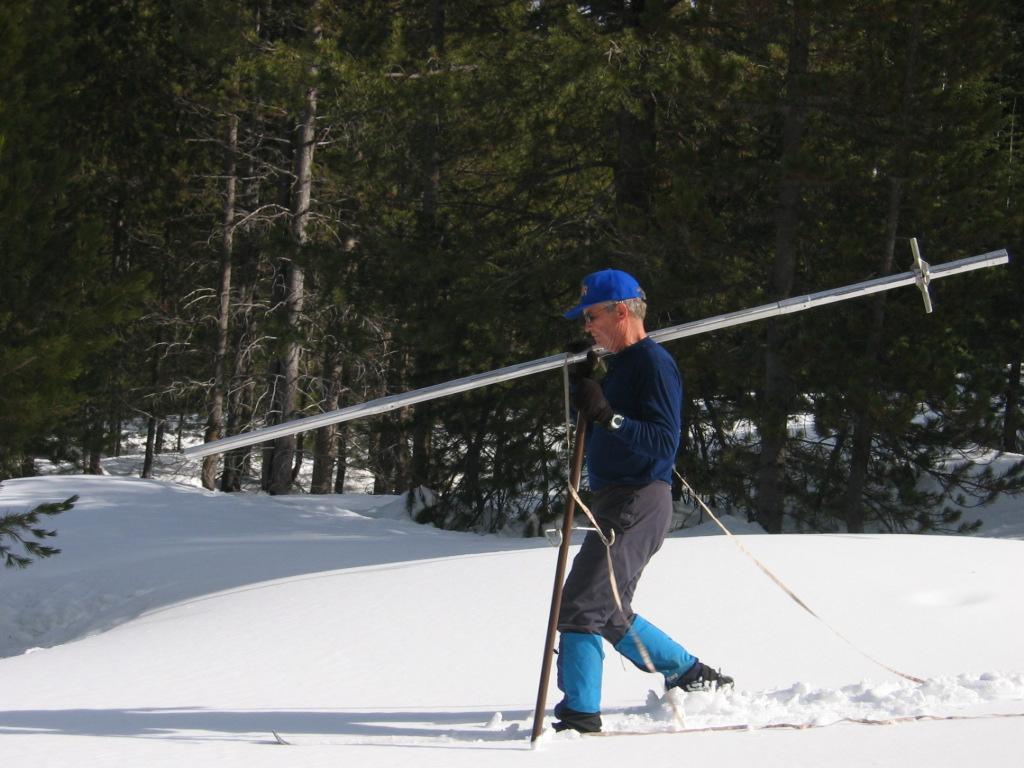
Frank Gehrke conducts a manual snow survey using a "Mt. Rose gauge," essentially a hollow aluminum tube shoved into the snow at predetermined locations.

In California, where most of our water comes from the mountains, being able to accurately measure the snow pack is vital. And it is in outlier years like this — very dry years, though the same goes for very wet ones — when water managers have the hardest time making accurate predictions.

“Knowing the water content of the snow in an entire watershed is the holy grail for snow scientists,” survey guru Frank Gehrke told me.

During the winter, Gehrke trudges into the woods on a monthly basis to do manual snow surveys for the state Department of Water Resources. DWR uses remote snow sensors, too. But even with all that data we don’t get an exact picture of the snow pack. So scientists from National Center for Atmospheric Research (NCAR) and NASA Jet Propulsion Laboratory (JPL) are developing tools to measure snow with lasers. This new technology has the potential to be that holy grail that Gehrke’s looking for.

Continue reading Next-Gen Snow Surveys: “Activate the Laser”

Climate Adaptation and Unintended Consequences

Radio documentary explores the social and economic impacts of adapting to climate change

Rising seas will irrevocably change life near the San Francisco Bay. That’s the premise of RISE: Climate Change and Coastal Communities, a three-part documentary by independent producer Claire Schoen. The final part, “Chuey’s Story,” airs this evening at 8 pm on KQED 88.5 FM.

By Claire Schoen

Chuey Cazares works as a fisherman out of the South Bay town of Alviso. Adapting to climate change may save his town, but it's having unintended consequences for his livelihood.

There’s an old adage that goes something like this: “The human capacity to create technology exceeds our capacity to understand its impact.”

Lots of people have referred to this idea, Einstein perhaps most famously when he said, “The unleashed power of the atom has changed everything save our modes of thinking and we thus drift toward unparalleled catastrophe.” Splitting the atom certainly brought us the promise of unlimited energy to run industry and military might to protect the world from Hitler. It also brought us a nuclear North Korea and Fukushima.

Continue reading Climate Adaptation and Unintended Consequences

Snow Survey May Portend a Dry 2013

Skimpy Sierra snowpack may take a while to show up in water supplies

snow Tahoe Sierra California water
After a record dry December, there's finally snow on the ground near Soda Springs, at Lake Tahoe.

This morning’s snow survey (PDF) didn’t turn up any big surprises. As remote sensors foreshadowed, water content in the Sierra snowpack is 37% of normal for this time of year, and less than a quarter of the average for April, which is when the snowpack is usually at its peak before it begins melting and filling up California’s reservoirs.

What’s worrisome about that, according to Jeanine Jones, Interstate Resources Manager at the Department of Water Resources, is that about half of California’s annual precipitation typically falls between December and February, months that are mostly already behind us. “So where we are this year is: November was dry, December was close to record dry, January was maybe half of average,” Jones told me. “And currently the forecast for the first  ten days or so of February is essentially dry.” Continue reading Snow Survey May Portend a Dry 2013

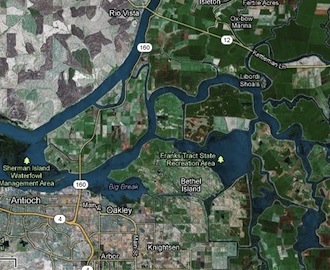
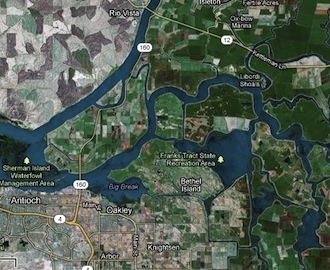
Dunno Much about Hydrology: Californians Clueless about Delta’s Role in Their Water

Most respondents statewide said they knew nothing about the Delta or hadn’t heard of it

The Sacramento-San Joaquin Delta is a key to the water supply for 25 million Caliornians.

Quick: What is the Sacramento Delta?

Not where. What. According to a new statewide poll commissioned by Southern California water interests, three out of four surveyed could not answer that question correctly…or at all. This despite the fact that the maze of channels around the confluence of the Sacramento and San Joaquin River is a crucial cog in the water supply of 25 million Californians and the subject of intense, ongoing political and legal skirmishes.

According to Probolsky Research, which conducted the survey, 78% of respondents statewide said they either knew nothing about the Delta or hadn’t heard of it. About four percent knew that it plays a role in supporting endangered fish species, but only 2.3% cited the Delta as a “source of water.” (The poll has a margin of error of +/- 3.7%). Water from California’s northern rivers is funneled from the Delta to serve thirsty customers as far south as San Diego. Continue reading Dunno Much about Hydrology: Californians Clueless about Delta’s Role in Their Water

Drought Is in the Eye of the Beholder

Are we in one? Water officials say the answer is “Yes and No”

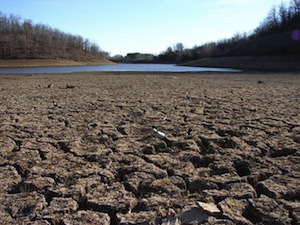
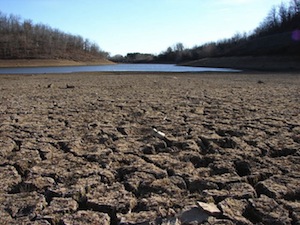
How do you define a "drought?"

As state surveyors trudge into the mountains this week for the season’s second official survey of the Sierra snowpack, the auspices aren’t good. Remote sensors currently show that statewide, water content is averaging just 38% of the average for this date, and less than a quarter of what water managers would hope to see on April first — just two months away.

Consequently, the “D-word” is being nervously bandied about. Are we in a drought?

The state’s newly revamped Current Water Conditions website takes on the question with a definitive “Yes and no.” Drought status, it says “can be very different depending on your location.” Continue reading Drought Is in the Eye of the Beholder

A Watered-down Bond for Water System Improvements?

CA Senate President Pro Tem tells water conference $11 billion is too much 

Is the 2012 water bond heading for the drain?

“There are two subjects water people least want to talk about: politics and money,” said the former head of the Los Angeles Department of Water and Power, David Nahai. He was speaking at the “Future of Water in Southern California” conference on a dry and windy Friday, here in the City of Angels. And those two were the uncomfortable topics State Senate President Pro Tem Darrell Steinberg (D-Sacramento) talked about in his lunch hour keynote.

[module align=”left’ width=”half” type=”pull-quote”]”Everybody asks ‘what’s gonna happen with the bond?’ I don’t know,” Steinberg countered, to modest chuckles.[/module]

Sponsored by UCLA’s Luskin School of Public Affairs, the conference was generously sprinkled with Southland water and sanitation district staff. They’d just spent the morning presenting new ideas for water “banking,” and new technologies for advanced recycling, and Steinberg knew the idea of less money would not wash down well with the noontime pasta salad and sandwiches. In fact, a proposal to cut 25% from each project in the water bond measure even failed an Assembly committee vote on Jan. 10th. Continue reading A Watered-down Bond for Water System Improvements?