Category Archives: Power

Progress and pitfalls in California’s clean energy quest

Two-Year Drop in California Carbon Emissions

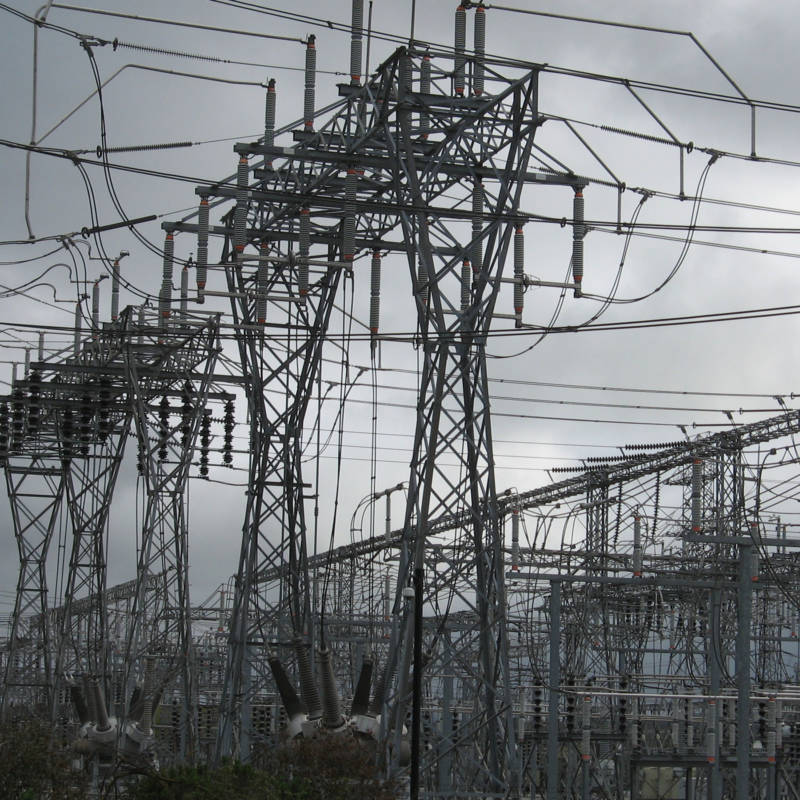
Power Substation in San Jose, CA (Photo: Craig Miller)

If you’re ready for some good news on the climate front: California’s carbon emissions from power generation dropped in 2009 and 2010.

That’s according to a new analysis from Thomson Reuters’ Point Carbon that looked at power generated here in California, as well as electricity imported from out of state.

According to the report (available by subscription only), emissions were down 12% over the study period. Part of the drop, not surprisingly, was due the global recession and the state’s slowed economy in 2009. But the study found that even when the economy started growing again, emissions continued to decline.

Sound mysterious? Not really, according to study co-author Ashley Lawson. Continue reading Two-Year Drop in California Carbon Emissions
Boom Times for Field Biologists

Big wind and solar buildouts spur a “bio-boom” in the California desert

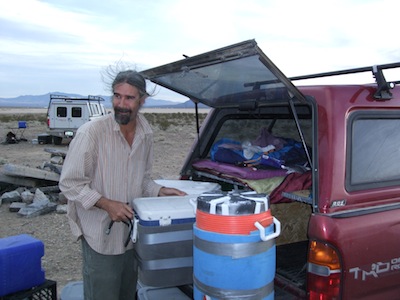
Field biologists like Mike Sally live a windblown, nomadic lifestyle, surveying sites for renewable energy projects. (Photo: Sarah McBride)

By Sarah McBride

I’ve reported on bubbles in plenty of stocks and commodities, but my springtime visit to the Ivanpah Valley was the first I’d heard anyone talk about a bubble in field biologists. The guy who used those words, Alex Mach, is a field biologist himself — and he was only half kidding.

Mach is one of dozens of field biologists who are out in the desert working to protect threatened animals and plants from solar and wind development projects. They’ve tapped into the rich vein of desert tortoises, whose habitats coincide with many of the areas scientists say are best positioned for solar plants — including Mach’s worksite at the time, BrightSource Energy’s solar plant in Ivanpah Valley, near the California-Nevada border. Continue reading Boom Times for Field Biologists

Californians: No Thanks to New Nukes

Survey shows confidence in existing plants but little enthusiasm for new ones

A fresh poll from the Field Research Corporation shows statewide support for nuclear power plummeting.

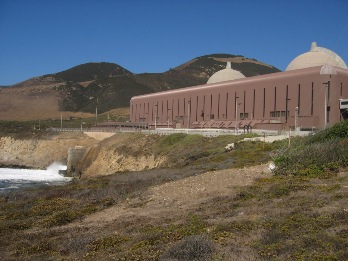
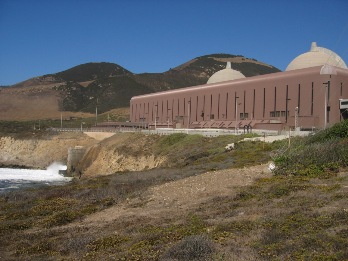
PG&E's Diablo Canyon Nuclear Power Plant, near Avila Beach. (Photo: Craig Miller)

The survey, taken earlier this month, shows that support for expanding nuclear power in California has dropped to 38%, from 48% last year, when only 44% opposed the idea. In the newest poll, 58% surveyed said they did not agree that more nuclear power plants should be built in the state.

Field analysts say the numbers are a clear reflection of the shift in sentiment worldwide, since the Fukushima nuclear crisis in Japan, a tense series of events that have remained front page news since March 11. Since then, Germany, Switzerland and Italy have all decided to scrap their nuclear energy programs. Continue reading Californians: No Thanks to New Nukes

Google Invests Millions in Residential Solar

SolarCity infusion is Google’s largest yet

(Photo: Craig Miller)

Google is giving a boost to the solar industry today – but not to those large solar farms in the California desert. Nope, the company’s largest clean energy investment to date is going to home solar.

Five years ago, SolarCity was a small, Bay Area start-up. Today, it’s getting a $280 million-dollar investment from one of the most influential players in the game.

“We are very excited,” says Lyndon Rive,  CEO of SolarCity. “It’s a big vote of confidence in SolarCity as well as hopefully a big vote of confidence to the entire market.” Continue reading Google Invests Millions in Residential Solar

An Assault on Hetch Hetchy Dam from the Flank

Activists take a new tack in attempt to restore a scenic valley in Yosemite

After years of frustration with the frontal assault, activists have shifted to a flanking maneuver to restore Yosemite’s Hetch Hetchy Valley. The group Restore Hetch Hetchy (RHH) says it will challenge the re-licensing of Don Pedro hydroelectric dam, downstream from Hetch Hetchy.

The flooded Hetch Hetchy Valley stores water from the Tuolemne River, for San Francisco. (Photo: San Francisco PUC)

Often compared to Yosemite Valley in grandeur, Hetch Hetchy Valley has been flooded since the construction of O’Shaughnessy Dam in the 1920’s. Water from the reservoir serves the City and County of San Francisco but activists have long argued that it’s not needed, and that the Valley’s original attributes are more valuable. Continue reading An Assault on Hetch Hetchy Dam from the Flank

Planting Seeds for a New CA Nuclear Plant

Could California’s next nuke be on the horizon?

Backers of a new Fresno “clean energy park” aim to use nuclear power to clean up salty irrigation water in California’s Central Valley.

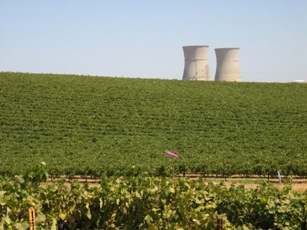
The twin cooling towers of the decommissioned Rancho Seco nuclear power plant. Could the Central Valley see another nuke constructed near Fresno? (Photo: Craig Miller)

They see the state’s 35-year-old moratorium on expansion of nuclear power as a mere speed bump in the road. They wouldn’t be the first. There have been several attempts to challenge the ban over the years – in the courts, in the legislature, and even a couple false starts through the initiative process.

But the idea of simply drawing up plans for a plant and gearing up to build it – without getting permission from the state – that’s a new approach, which I explain in my Wednesday radio feature for The California Report.

Fresno Nuclear CEO John Hutson told me he thinks it would be much more profitable to sell precious clean water to farmers than to generate electricity for the grid. Continue reading Planting Seeds for a New CA Nuclear Plant

Google Writing More Checks for Renewable Energy

Another major renewable energy project is getting a cash infusion from Google.

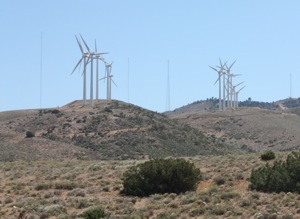
Wind turbines clustered on hilltops near Tehachapi. (Photo: Sasha Khokha)

This time it’s Terra-Gen’s multi-phase wind project in Kern County, known as the Alta Wind Energy Center.

Google’s clean-tech investment arm will reportedly invest $55 million in the project, being built near Tehachapi.

Bill Weihl, Google’s green energy “czar,” told me in an interview last year that the company would support clean energy technologies with two main attributes; global scalability and the potential to become cost-competitive with coal power. In a 2010 interview with the New York Times, Weihl said he thought Google’s “culture of innovation” made it a good fit with renewable energy development.

Google has now made substantial investments in wind, solar and geothermal projects, in and around California, as well as bankrolling an ambitious scheme to build a connective spine connecting offshore wind projects along the Atlantic coast.

Protesters Shell Mojave Solar Plant

Oakland’s BrightSource Energy and Environmentalists throw down over a threatened tortoise

What some have billed as the world’s largest solar project in the Mojave came under fire again today. This time a baby desert tortoise led the charge with a cohort of environmentalists. While the tortoise provided a slow-motion picket around downtown Oakland, protestors lined up in front of BrightSource Energy’s corporate headquarters, determined to preserve the Mojave desert and keep solar projects local.

A baby desert tortoise wades among protesters. (Photo: Chris Penalosa)

At risk of habitat loss from the project, the tortoise is becoming the iconic image for preservation of the Mojave. The Bureau of Land Management put the brakes on two-thirds of the Ivanpah solar farm when field biologists found more tortoises than initially expected. Tortoises found on site are being relocated and fenced off, preventing their gradual return. Continue reading Protesters Shell Mojave Solar Plant

PG&E Abandoning Wave Power

Challenges prove too much for one of California’s largest utilities

Waves crash along the Monterey coast. (Photo: Craig Miller)

One of the nation’s more progressive electric utilities is bailing out of wave energy.

Pacific Gas & Electric is giving up its pilot projects along the California coast.

“There’s definitely still a future for wave energy,” PG&E renewable energy spokesman Denny Boyles told me in a Sacramento interview. “Our hope is that one day it will become a more viable source,” PG&E had secured development permits for three areas along the California coast but with the technology for converting wave action into electric power still in its nascent stage, the company never got as far as getting any hardware into the water. “We did several different studies,” said Boyles. “There is wave energy conversion  technology that’s out there that’s working. It’s just not at a point where it’s widespread enough for us.” Continue reading PG&E Abandoning Wave Power

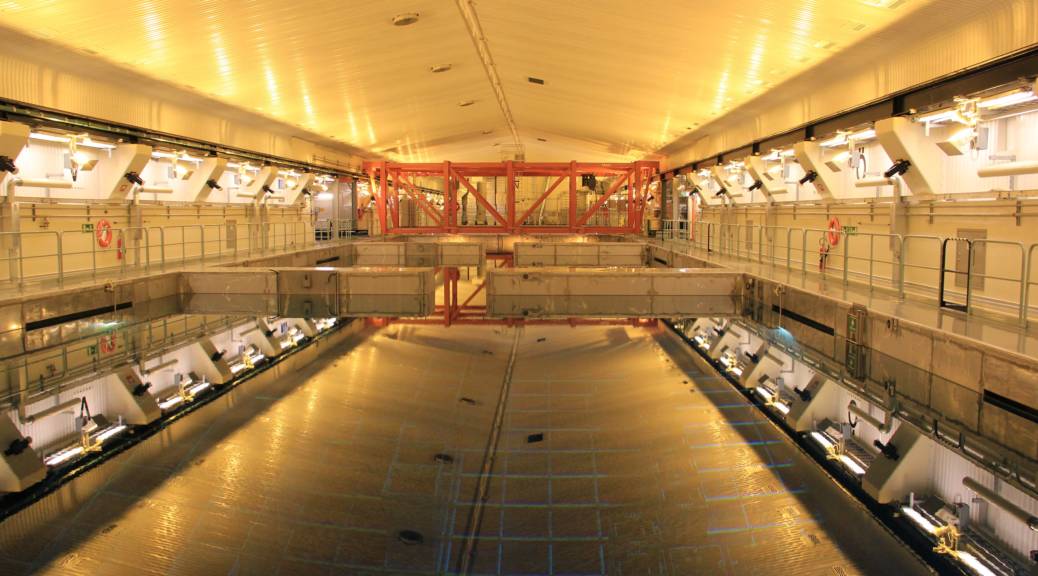
Sweden’s Holding Tank For Nuclear Waste

This is the third in a series of dispatches from Sweden, where Ingrid Becker is touring facilities for storage of nuclear waste. These posts preview an upcoming radio series on The California Report.

The panel advising President Obama is recommending the United States “proceed expeditiously” to establish one or more consolidated “interim” sites for storing high-level nuclear waste. Expeditious isn’t a word often associated with the U.S. Department of Energy’s troubled waste siting program. And, commissioners didn’t say where they would suggest putting the spent fuel, but Yucca Mountain certainly wasn’t mentioned in the series of draft reports from the Blue Ribbon Commission on America’s Nuclear Future. What the commissioners did recommend is that a new organization –independent of the Department of Energy — be formed to develop a waste disposal program.  The idea didn’t set well with some House Republicans. Continue reading Sweden’s Holding Tank For Nuclear Waste