
Category Archives: Government & Business

What’s brewing in Sacramento, Silicon Valley, and beyond

Fire and (Less) Ice: California’s Climate Future

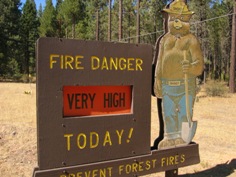
firesign_blogThere was little “news” in this week’s report from California’s inter-agency Climate Action Team. The distillation of 37 academic studies mostly affirmed what we’ve been hearing from multiple sources lately; that “severe and costly impacts” likely lie ahead as the state’s climate changes.

The report’s findings are aligned with two of the scenarios modeled by the U.N.’s climate panel; the “B1” outlook for moderate emissions of CO2, and the higher-emissions “A2” scenario. While California has ambitious plans to curb carbon emissions, many recent reports agree that the world is presently on a path toward emissions even higher than the worst IPCC scenario.

Under that more severe tableau, says report co-author Dan Cayan of the Scripps Institution of Oceanography in San Diego, the number of wildfires in the state could double by 2085. Cayan said that “by every model,” the state is warming and in some areas, drying. One regional model sees precipitation in Southern California tailing off by 10% in years to come.

There’s more coverage of the report in Jane Kay’s article for the San Francisco Chronicle and Bettina Boxall’s story in the L.A. Times.

The Times article points to some relatively “good” news in the report; a UCLA study that the strength of fire-fanning Santa Ana winds may be subsiding. But there is also research out of Lawrence Berkeley National Laboratory that points to a longer Santa Ana season, so it’s unclear what the net effect might be in the long run.

In a media conference call attended by report authors and state officials, I asked about murmurings that the Western Climate Initiative may be unraveling. Eileen Tutt of Cal-EPA denied that the planned regional cap & trade program for cutting carbon emissions is in trouble. She said that in working with people from California’s six potential partner states, it’s her view that they “aren’t backing off at all.” She admitted that “rumors abound,” however.

Climate Watch has dispatched freelance correspondent Tom Banse to look further into those rumors. He’ll be reporting in from Washington and Oregon in the weeks to come.

A Billion People in the Dark?

Where will you be when the hour arrives? Wherever it is, you might want to take a flashlight–LED, of course. In it’s third year, the organizers of Earth Hour are shooting for one billion people to turn out the lights in this global demonstration in support of decarbonization.

It’s being promoted as a kind of switchplate referendum. Begun in Sydney, Australia, in 2007, it’s a simple concept, which may be part of its appeal: Wherever you are, at 8:30 local time tomorrow (Saturday) evening, turn off the lights for one hour.

Last year organizers estimated that 50 million people complied. California icons like the Golden Gate Bridge went dark. This year, about two dozen California cities and counties have signed up to participate, as well as the State of California.

They’re not telling you to turn off your computer or iPhone, however. Electrons we save at the light switch might be made up for on the Internet, which will likely be abuzz with a worldwide conversation documenting the event on blogs and social networks like Twitter (tag your updates with #earthour and #location). Photo sites will be bombarded with picture uploads.

Personally, I’ll be in the high desert of New Mexico, beyond the sight of any town or even neighbors, so the event won’t make for much of a snaphot.

It might also be a bit anticlimactic for the folks who run California’s power grid. I asked Gregg Fishman at the California ISO (Independent System Operator) if they’d be able to see a dip in the load at 8:30 p.m. tomorrow. He’s not counting on it: “It will probably have some impact but it’s really hard to measure,” he told me.

This time of year, the state is usually pulling about 27-28,000 megawatts at that hour on a Saturday evening. In fact, if you look at the ISO’s grid status graph, you can see a little spike around 8 p.m., as people normally start turning lights on. But Fishman says that even though “most of the load is lighting” at that hour, it may be hard, even for grid technicians, to measure the actual effect of Earth Hour.

But of course, that’s kind of beside the point. The event isn’t designed to achieve palpable energy savings for one hour. It’s supposed to be a visual show of support for policies designed to reduce energy consumption and the global carbon footprint. Recent surveys have shown that economic woes have pushed concerns about global warming and the environment to their predictable recessionary lows, at least in this country. Tomorrow night we’ll find out how the rest of the world feels about it.

Letter from Paris: Confessions of a Generalist

eb_blog21Eleanor Beardsley, whose  South Carolina drawl is often heard emanating from Paris on NPR, agreed to take on her first climate policy symposium for us. She’s covered presidential elections, civil riots and the Tour de France. But climate policy wonks–whoa. Now that’s scary. From her notebook:

When I walked into the rather run-down conference room at Paris’ Universite Dauphine at the edge of the city, about 20 people were sitting around a huge circular table discussing climate issues. I have to say that I almost gave up the idea of doing a report at first, because I couldn’t get my head around what they were talking about. They were discussing the minute points of such things as paying for carbon emission reduction schemes, and the fairness of the CMD, or clean development mechanism! It seemed like a lot of blah, blah techno-speak. I jotted down several beyond-me phrases in my notebook, like “sectoral baselines without additionality.”

But I decided to stick it out. I had schlepped out there early in the morning, making two changes on the Paris metro. I might as well stay a while. That’s often the hardest part about being a reporter. You’re not really an expert at anything, and sometimes you have to find a way to quickly understand a complex story. But you just have to keep focused on what you think your general audience would want to hear about. They always tell you, “pretend as if you’re explaining it to your grandmother.”

In the end, all of the officials — both French and Californian — were more than happy to explain the main issues to me and what the stakes were.

I got the feeling these climate experts from the US and Europe have been working together and learning from each other for years, despite America’s seeming non-interest in the topic under the second Bush administration. Everyone seemed to know each other and be familiar with each other’s work. Someone described the advances that had been made over the years as “leap-frog progress.”

Now here was a concept I could grasp. You can see an example with the cap-and-trade policy on emissions the Obama administration wants to put in place. Apparently they are studying the already-existent European scheme to limit carbon emissions. But that European system, in turn, is based on the US’s successful reduction of sulfur dioxide, or acid rain, in the 1990s.

So even though everyone said global warming was already well under way, I came away from the conference with a comforting sense that at least there are some very smart people working passionately on the issue. I think they will find a way for the world to work together on this, rich and poor nations alike. There was also a lot of talk about fairness; making sure the richer, industrialized nations helped the developing countries get their act together.

They might even achieve those sectoral baselines without additionality…whatever that is.

Possible Detour on the “Electron Superhighway”

electwr_blog

It appears that almost 200,000 acres of Mojave Desert will be under federal wilderness protection now that Congress passed the Omnibus Land Management Act of 2009.

Much more was set aside throughout California, as I report in my radio story for The California Report.

Now, Senator Dianne Feinstein is eyeing almost a million additional acres in the Mojave off of old Route 66 between Ludlow and Needles.

There are currently 163 proposed renewable energy projects for federal lands in the Mojave Desert region. Nineteen of them are slated for the land Senator Feinstein wants to set aside. If energy companies can’t build on that land, it follows that they’ll try to build it in the land that’s left.

And that’s got a lot of people who live in the unprotected areas of the Mojave worried. Not only are most of the state’s large-scale renewable energy projects planned for this region, but as I explored in a recent two-part series for Climate Watch, there’s also a transmission corridor in the works to carry that power to Los Angeles.

Use the player below to listen to my conversation with Jim Harvey, who heads the Alliance for Responsible Energy Policy, about what all of this new land protection means for environmentalists like him.

[audio:http://ww2.kqed.org/climatewatch/wp-content/uploads/sites/54/2009/03/jimharvey-blog2.mp3]

Oh, No–Another “Superhighway”

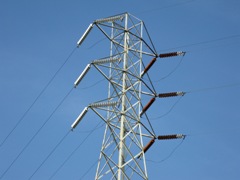
Just when we could exhale, assured that the term “Information Superhighway” had faded mercifully into the rear-view mirror–at the signpost up ahead: Your next stop: the “Electron Superhighway.”

That’s the term that Interior Secretary Ken Salazar is using to describe the transmission web that will facilitate the nation’s transformation to clean energy. Some random notes from his (and others’) appearance today before the Senate Energy & Natural Resources Committee:

Salazar:

– 6,000 miles initially identified on BLM lands for new transmission lines on the “Electron Superhighway,” 1,000 on US Forest Service lands.

Access to land for transmission will be the “Achilles heel” of the plans for a new  clean-power grid.

– Oil & gas need to be part of a “comprehensive energy plan,” along with renewables. The US now imports 70% of its oil.

– Seven major onshore leases already approved, auctioning off another 34 million acres along the Gulf Coast this week.

Ron Wyden (D-OR):

– Let’s use the “backlog of deadly fuels” on the floor of federal forests to generate bio-fuels and reduce fire danger at the same time (Energy Act of 2000 apparently excluded forest slash from its definition of “biomass.”)

Hydrokinetic (wave & tidal) power should be higher on the priority list for energy development.

John McCain (R-AZ):

– The Obama administration “has effectively killed nuclear power in the foreseeable future, for this country” (by its actions regarding Yucca Mountain and reprocessing of fuel).

Phil Moeller, FERC (Federal Energy Regulatory Commission):

– Wave & tidal power could potentially fill 10% of the nation’s energy portfolio.

Joanna Prukop, NM Secretary of Energy, Minerals & Natural Resources:

– Wind energy is now price-competitive with natural gas (about 5 cents/KW-Hour currently) and could thrive without federal subsidy. Solar, not so much.

Dan Arvizu, Director, Nat’l Renewable Energy Lab:

– Used the term “smart grid” one hour and 38 minutes into the hearing, the first and only time it was mentioned.

You can view the entire webcast at the DOI archive.

By the way,  Salazar will hold a public hearing on energy policy in San Francisco on April 16th. It’ll start at 9 a.m. at UCSF’s Mission Bay Conference Center.

Robust Discussion of Rising Seas

KQED’s Forum program devoted a full hour this morning to recent projections for sea level rise and the threat it poses to California. Listen to the archived program here.

I joined host Michael Krasny and guests Peter Gleick and Will Travis, to discuss some of the recent findings. Travis heads the Bay Conservation & Development Commission and Gleick’s Pacific Institute issued a new report on the impacts last week.

Travis is just back from a trip to The Netherlands where he was studying some of the engineering techniques that the Dutch have deployed, to keep the North Sea at bay. Gleick has been tracking the issue here in California since 1990.

Gleick’s impact projections were underscored last week when scientists at a climate conference in Copenhagen projected a potential one-meter rise in the mean sea level by the end of this century, depending on how soon and how much we’re able to cut greenhouse gas emissions. That’s a pretty significant adjustment from the 2007 UN report, which had the rise pegged at a foot or two over the same time span. And two months ago, a USGS-led report postulated that a four-foot rise isn’t out of the question.

Some interesting questions and comments that came in from listeners:

– Sewage treatment plants in the Bay Area recently overwhelmed by storms are one glimpse into a future with higher sea levels.

– If pumps that convey water through the giant state and federal water projects in the Central Valley were solar-powered, it would reduce the carbon footprint of moving water around in California (often cited as 20% of our electricity use).

– A barrier at the Golden Gate could help “stem the tide” and potentially be part of a plant generating tidal power (Travis was skeptical).

– The Earth’s rotational bevavior also affects sea level and should be factored in.

In response to a listener who asked about a recent newspaper column that was dismissive of the prevailing climate science, I got the following note from Dave Johnson, a former Silicon Valley lawyer who teaches at Stanford:

“As to the climate-change contrarians, my short-form answer is this: I favor giving the scientifically-credible contrarian point of view some credit, and quite likely more than Al Gore or others would like. Why? Not because they necessarily have the science part right (or closer to right) than the IPCC.  Rather, it’s because the problem itself is a very complex system. Science is just now scoping the boundaries and behaviors of complex systems; to predict their behavior (especially of non-physical systems) will, to paraphrase Edward Witten, require ’22nd century’ knowledge.  As such, we all have to recognize the possibility, if not likelihood, that the global climate system might do things that we cannot fathom, much less predict. One possibility is self-correction to an equilibrium that can hold for another century or two. The other, sadly, is the converse – a spin-out into disequilibrium. Objectively, each has its percentage of possibility; so, objectively, each has to be seriously considered.  In short, whether I agree or disagree with the contrarians is, objectively, of no moment whatsoever.  In science, the strongest advocate of a particular conclusion must embrace the most aggressive testing of that conclusion. “

Hard to disagree with that. It’s always perilous to dismiss contrarian views out of hand. Galileo was a contrarian.

A Rising Tide Raises All Costs

Pacific Institute. Complete maps at link, below.
Photo: Pacific Institute. Complete maps at link, below.

This has been a week of dire predictions about the rising sea level and its eventual consequences.

On Tuesday, scientists preparing for the Copenhagen climate talks this year said that the current IPCC working model for sea level is out of date and overly cheerful.  German climate researcher Stefan Rahmstorf told the International Scientific Congress on Climate Change that even the most optimistic outlook for carbon emissions now portends at least a one-meter rise, or 3.28 feet by the end of this century. The U.N.’s 2007 report had anticipated a rise of up to two feet over the same time period.

Then today, analysts at Oakland’s Pacific Institute chimed in with a projection of California impacts from rising seas, based on a rise of 1.4 meters by 2100.

The report, which includes maps of projected inundation, projects nearly a half-million people at risk of a “100-year” flood event and loss of 41 square miles of coastal land, due to erosion.

“Critical infrastructure” in harm’s way includes highways, hospitals, schools, power and sewage treatment plants, as well as residential neighborhoods. It also includes several of the state’s busiest airports.

The report estimates that the tab for protecting that infrastructure could easily run to $14 billion. According to co-author Matt Heberger, “Communities really have to decide what it is that they value about the coast, whether that’s habitat, recreation, aesthetics, boating, shipping, all sort of things. We won’t necessarily be able to preserve all of those things at the same time. ”

The Governor has already issued an executive order requiring sea level rise to be factored into urban planning in all vulnerable regions of California. There remains an enormous planning task ahead.

Heberger sums it up thusly: “The evidence is in and we know what the impacts to the state are going to be. Now, what are we going to do about it?”

We’ll get some answers to that question on Monday’s Forum program on KQED and Sirius satellite. Listen to the archived program here.

Oceans Rising
Guests joining our discussion include Will Travis, executive director of the San Francisco Bay Conservation and Development Commission; Peter Gleick, president of the Pacific Institute, a non-partisan research institute on the environment and social equity; and Craig Miller, senior editor of KQED’s Climate Watch.

EPA Waiver Still Not “In the Can”

Now the waiting begins–or resumes. After nearly seven hours watching opposing sides duke it out in a Beltway hearing room this week, the EPA will settle down to deciding (again) if California should be allowed to set its own standards for auto emissions.

During the hearing, one group was using Twitter to pass around an online petition supporting the required EPA waiver. They weren’t too late. EPA will continue accepting public comment until April 6. EPA spokesman Cathy Milbourn says “We will review all of the comments, with a decision to follow.” No further timeline for that decision has been made public, however.

Meanwhile, the Detroit News is reporting today that California’s top air regulator may be ready to compromise on a new national standard that would obviate the need for a special waiver.

In case you need a quick review, the issue is whether the tailpipe emissions standards passed into law by California several years ago–the so-called Pavley regulations–can actually be enforced. The Pavley standards are more stringent than the current federal standard and the state is leaning heavily on them to attain its greenhouse gas targets under the Global Warming Solutions Act of 2006 (AB 32). But the waiver was denied under the Bush administration.

Thirteen other states are lined up to enact the California standard if they get a green light from EPA. The auto industry has long argued that this will create a “patchwork” of regulations across the nation, and the ensuing complications of compliance would place an onerous burden on the industry and push up prices for car buyers.

Supporters of the California standard, like Jim Kliesch of the Union of Concerned Scientists, say that automakers already have the technology and can easily comply. Kliesch conceded that consolidating the most efficient technology into one car would add–he figures–about $700 to the cost. But he says the same technology would recoup $1,800 in fuel savings over the life of the car.

Mark Cooper of the Consumer Federation of America pointed to an apparent disconnect in the car maket. He referred to a survey in which half the respondents said they wanted their next car to get at least 30 MPG–but Cooper said only 2% of models currently on the market deliver that.

And so, the argument goes, that if car makers would just follow the market toward cleaner, more fuel-efficient cars, it would actually help them recover from a financial abyss that threatens to topple them.

At the end of the day, the EPA has to make its decision based on three criteria, says David Doniger of the NRDC. To be valid, the California standard must be:

1. Equally strict or more stringent than the federal standard,

2. Needed to meet “compelling and extraordinary conditions,” and

3. Technologically and economically feasible.

Hmm. It seems like you could make a solid case for checking off numbers 1 and 2 but what’s “economically feasible” is a potential tripwire, especially with General Motors teetering on the brink of bankruptcy. Much of it will come down to whether the Obama administration buys into the “patchwork” argument. It’ll be at least another month before we know.

Can There Be This Much Climate News?

"Reports to the Contrary" by Chester Arnold

Some weeks it seems like KQED could fill up its entire “news hole” with climate-related stories (thank goodness we don’t). Last week was a prime example.

Monday: A keynote speaker at U.C. Berkeley’s annual Energy Symposium said that we need a “Fed” for energy policy. John Hofmeister, a former executive at Shell Oil and founder of Citizens for Affordable Energy, told the lunch crowd that the only way to overcome the current two-year “policy cycle” (the length of a congressional term) is with an autonomous policy group like the Federal Reserve Board, which can take a longer view.

Tuesday: PG&E announced a massive new solar power initiative (it was brought to my attention this week that no news story is complete these days without the word “massive”–at least when there’s no opportunity to use “deadly”). If approved by state regulators, the project will provide 500 megawatts of photovoltaic energy by 2015. Perhaps the most interesting aspect of the plan is that instead of, say, taking over huge tracts of the Mojave, the project will rely heavily on “solar infill;” making use of property already owned by the company, where they can conveniently access the grid.

Wednesday: Senator Barbara Boxer chaired a hearing of the Energy and Public Works Committee to update members on the latest climate science. They heard testimony from four experts, including Christopher Field of Stanford, who essentially said things are worse than you think. Ranking minority member James Inhofe of Oklahoma seized the moment to decry a $6.7 trillion “climate bailout,” a reference to upcoming federal climate legislation and costs associated with an aggressive plan to fight global warming. You can watch the entire two-and-a-half hour webcast for the gory details.

And of course also on Wednesday, the Coen Brothers rolled out their TV ad for The Reality Coalition, assailing the concept of “clean coal.”

Thursday: The California Air Resources Control Board rolled out new regulations to control some of the lesser known (but highly potent) greenhouse gases, including sulfur hexaflouride, used in the manufacture of computer chips. CARB says a pound of it has the same atmospheric warming potential as ten metric tons of CO2. The board also unveiled a new drought page on its website.

Friday: The Governor issued the latest in a series of drought declarations, this one proclaiming a state of emergency and called on cities to reduce their water use by 20%.

And this week wasn’t all that unusual.

Monday, another week begins with the winter’s third survey of the Sierra snowpack. While recent storms will no doubt have raised the water content from last month’s 61% of normal, it should be something of an anticlimax, especially given that the Governor didn’t wait for the numbers to make his drought declaration last week.

Governor Gets His White House Climate Confab

Our Governor is a hard man to ignore. Less than a month ago, he and eleven other U.S. governors wrote a letter to the new President, reminding him of commitments he made to work in earnest with states on climate issues. Governor Schwarzenegger specifically recalled a line from President (then-elect) Obama’s remarks to the Governors’ Climate Summit last November: “Any governor willing to promote clean energy will have a partner in the White House.”

The January letter (this link is a .pdf download) requested a meeting with top-level members of the White House environmental team “as soon as possible…to discuss a state-federal partnership on clean energy and climate change issues.” This weekend the governors got their meeting.

The President didn’t show up but at least four high-level players did, including energy secretary Steven Chu, interior secretary Ken Salazar, EPA chief Lisa Jackson and the President’s energy and climate deputy, Carol Browner.

While no substantive announcements came out of it, Governor Schwarzenegger said afterward:

“Today’s meeting was the first step in creating a close and lasting partnership with President Obama and his administration on climate change. I look forward to working hand-in-hand with our federal partners to realize the ambitious clean energy and climate change goals I know we share, and that I know will provide a boost to our nation’s economy.”

Some remain skeptical that the path back to prosperity is paved with Green. California’s governor has been a vocal cheerleader for just such a strategy, to tackle both environmental and economic challenges.

The governors’ group’s stated goals include aggressive programs to reduce greenhouse gas emissions and harnessing “market mechanisms” (read that: “cap-and-trade”) to fund development of clean energy technology. They also want to “preserve and enhance state and local authority” in the regulation arena, and stave off “federal preemption” of what the states have already started.