Category Archives: Government & Business

What’s brewing in Sacramento, Silicon Valley, and beyond

What’s Soot Got to Do With It?

By Andrew Freedman, Climate Central

Most of the discussion regarding the highly anticipated Senate energy and climate change legislation, which Senators John Kerry (D-MA) and Joseph Lieberman (I-CT) introduced last week following months of negotiations, has focused on the bill’s provisions pertaining to offshore oil and gas drilling, incentives for renewable energy, and cap on carbon emissions for certain economic sectors.

Although the bill’s carbon dioxide (CO2) emissions reduction targets–an 80 percent emissions cut by 2050 compared to 2005 levels–would yield significant long-term climate benefits, the bill also addresses man-made climate change in the shorter term.
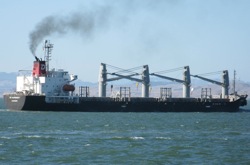
Stack emissions from a bulk freighter in San Francisco Bay. Photo: Craig Miller

A little-noticed portion of the bill concerns short-lived air pollutants such as black carbon (otherwise known as soot) and tropospheric ozone. These pollutants disrupt the climate on far shorter timescales than CO2, which scientists consider the most important greenhouse gas and the main villain in the climate change story.

Once emitted by the burning of fossil fuels, the use of solid-fuel cooking stoves or biomass burning, among other sources, black carbon only stays aloft for days to a few weeks before being washed out of the atmosphere by precipitation. This means that once black carbon emissions are reduced, there would be almost immediate climate benefits.

The Kerry-Lieberman bill would direct the US EPA to use its existing authority under the Clean Air Act to reduce black carbon emissions from diesel engines, using devices called diesel particulate filters which trap soot emissions before they escape from a vehicle’s tailpipe.

It would also call upon the EPA to publish a report on black carbon “sources, impacts, and reduction opportunities,” including an examination of how foreign assistance programs could help reduce emissions in other nations. In addition, the bill would establish an inter-agency process to facilitate “fast mitigation strategies” that focus on non-CO2 warming agents. This process would involve agencies such as the EPA and the Energy Department (DOE).

How big a climate player is black carbon?

Black carbon is thought to be a powerful warming agent in many regions, particularly snow and ice-covered areas such as the Himalayas and the Arctic. As its name suggests, black carbon particles are dark in color, and are therefore strong absorbers of incoming solar radiation. They warm the atmosphere and alter cloud characteristics, and when they land on brightly colored snow and ice, they darken the surface, causing a large uptick in the absorption of solar radiation, which hastens melting.

In the Arctic, black carbon contributes to a feedback loop that has helped cause a rapid melting of sea ice cover and drive temperatures upward at nearly twice the rate of the rest of the world. The decade from 1999-2008 was the warmest ten-year period in the Arctic of the past 2,000 years, according to a study published in the journal Science in 2009.

In addition to Arctic warming, black carbon has been shown to alter regional climate patterns such as the Indian monsoon, and human inhalation of soot particles is known to be a major health hazard worldwide.

In recent years numerous scientists, most prominently V. (Ram) Ramanathan of the Scripps Institution of Oceanography and James Hansen of NASA have called for significant cuts in short-lived air pollutants as a way to reduce climate change in the near term, while efforts continue to address CO2 emissions in the long run. Ramanathan’s studies have shown that black carbon may be the second largest contributor to global climate change.

In March testimony before the House Select Committee for Energy Independence and Global Warming, Ramanathan stated that the current global warming effect of black carbon “may be as much as 60 percent” of the CO2 warming effect. He noted, however, that there are significant uncertainties about black carbon’s role in the climate system.

Ramanathan told House lawmakers that reducing black carbon emissions “may provide a possible mechanism for buying time to develop and implement effective steps for reducing CO2 emissions.”

Bill is aligned with recent scientific advice

The Kerry-Lieberman bill’s inclusion of rapid mitigation strategies is consistent with advice contained in a new paper from an interdisciplinary panel of scholars, published on May 11 by the University of Oxford in the UK. The paper argues that non-CO2 drivers of climate change have been overlooked “for reasons of convenience in framing policy” rather than due to scientific concerns, and it presents a vision for an overhaul of climate policy that would include a much more prominent role for addressing emissions of short-lived air pollutants.

“Since action on these non-CO2 ‘forcers’ may have quicker impact and large, immediate primary benefits, we would give them priority, now. In contrast to long and arduous tasks, these can be ‘quick hits’,” the report states.

The bill’s provisions are also consistent with the findings of a scientific panel that examined options to address rapid Arctic climate change. In a 2008 report, the panel strongly endorsed pursuing emissions reductions of black carbon and other short-lived air pollutants. “…Curbing short-lived climate forcing agents, through rapid international action and Arctic nation leadership, may prove to be the best and perhaps only viable strategy for slowing Arctic warming in the time frame of years to a decade,” the report stated.

Considering that the Kerry-Lieberman bill itself faces a highly uncertain future, with significant resistance in both political parties, it may yet take even longer to address what many experts consider to be a ripe, low hanging fruit of the climate challenge. This does not bode well, given the much more difficult work that lies ahead to reduce CO2 and other longer-lasting greenhouse gases.

In April, Molly Samuel reported on the effects of black carbon and snow albedo on the California’s water forecasting efforts.

Another Whack at a Federal Climate Bill

87767226The latest version of a federal climate bill sets a series of national targets for greenhouse gas emissions and would halt California’s plans for state and regional carbon trading.

Unveiled by Senators John Kerry and Joe Lieberman today, the American Power Act aims to push GHG emissions down to slightly below 2005 levels by 2013, then sets a longer-term reduction timetable of 83% (of 2005 levels) by 2020, 58% by 2030, 17% by 2050 (or to flip it around, an 83% reduction from 2005 levels by 2050), in line with the promise that President Obama made following the “Copenhagen Accord.”

The 987-page bill regulates seven greenhouse gases, with room for the Environmental Protection Agency to add others under the Clean Air Act. The cap-and-trade provisions focus on “7,500 factories and power plants,” which is to say those that put out more than 25,000 metric tons of carbon per year. That’s the same benchmark used by the federal EPA in its proposed regulations.

Like previous drafts, this one nullifies state and regional carbon regulation, setting up “one clear set of rules” for industry and providing “compensation for the revenues lost as a result of the termination of their cap-and-trade programs,” such as California’s AB 32, and regional efforts, such as the Western Climate Initiative. California’s Legislative Analyst has estimated that the state has committed about $120 million so far, to the implementation of its 2006 climate law. California regulators have already weighed in on the concept of “federal preemption,” warning against leaving the job of carbon reduction to the federal government alone. The Kerry-Lieberman bill requires “consultation” with states that currently have their own emissions plans.

Significantly, the first several sections of the Senate bill address development of energy sources. The reduction goals for greenhouse gas emissions aren’t even spelled out completely until page 265. Energy provisions that may come to bear on California policy include:

Agribusiness:

– All farms appear to be exempt from cap & trade but benefit from offset programs

Oil Industry:

– According to a summary of the bill from Kerry’s office: “Producers and importers of refined products” will get a fixed price for their carbon allowances.

– Offshore drilling is included as part of the energy strategy but states can prohibit leasing within 75 miles of the coast

Nuclear Power:

– Provides several incentives, including an “expedited procedure for issuing combined construction & operating licenses for qualified new nuclear reactors.”

– Increases loan guarantees to $54 billion

Missing from the bill is a comprehensive national strategy for storage of spent nuclear fuel, an unresolved issue that prevents California utilities from any expansion of nuclear power.

Governor Schwarzenegger issued a statement that barely acknowledged federal preemption, saying only that “California has been an unparalleled leader in clean energy, pioneering policies that have benefited the entire nation, and we must be able to continue our important, groundbreaking work that will both improve the environment and help our economy.”

Some environmentalists have already responded with raspberries. In a statement based on draft summaries of the bill, the group Friends of the Earth called it “dangerous,” claiming that the bill would “scrap crucial tools for solving the climate crisis” and provide “billions in giveaways to corporate polluters.” In a statement from the Environmental Defense Fund, on the other hand, its western regional vice president said that the bill’s announcement “marks real progress in the fight against climate change.”

Andrea Seabrook reported on the bill’s rollout and prospects for NPR’s All Things Considered.

California Scientists Join Climate Appeal

More than 50 California-based scientists are among those who signed a letter protesting “McCarthy-like” attacks on climate scientists in the United States.

The letter was published in this week's issue of the journal Science.

The letter, circulated as a kind of petition to selected members of the National Academy of Sciences (NAS), is both a defense of established climate science and a counter-offensive against an increasingly vocal community that rejects that science and some of the proposed policy responses. The letter asserts that the signatories are “deeply disturbed by the recent escalation of political assaults on scientists in general and on climate scientists in particular.”

Steering the core group of scientists behind the letter (full text and list of signatories available as a PDF download) was Peter Gleick, who heads the Pacific Institute in Oakland. Gleick, whose primary focus is on water policy issues, has been an outspoken defender of the prevailing climate science and has, on occasion, answered critics on this blog. Gleick declines credit as the sole author, saying it was written by a group of a half-dozen co-authors.

Other excerpts:

“Many recent assaults on climate science and, more disturbingly, on climate scientists by climate change deniers, are typically driven by special interests or dogma, not by an honest effort to provide an alternative theory that credibly satisfies the evidence.”

“The Intergovernmental Panel on Climate Change (IPCC) and other scientific assessments of climate change, which involve thousands of scientists producing massive and comprehensive reports, have, quite expectedly and normally, made some mistakes. When errors are pointed out, they are corrected. But there is nothing remotely identified in the recent events that changes the fundamental conclusions about climate change…”

The letter concludes by calling for “an end to McCarthy- like threats of criminal prosecution against our colleagues based on innuendo and guilt by association, the harassment of scientists by politicians seeking distractions to avoid taking action, and the outright lies being spread about them.”

A total of 255 scientists signed the letter, which was published this week in the journal Science (available by subscription only). High-profile signers include Paul Ehrlich and Stephen Schneider, both based at Stanford.

Perhaps just as interesting as who signed the letter is who did not. Missing are several luminaries in California climate science circles, such as Dan Cayan and Richard Somerville of the Scripps Institution, and Ben Santer at Lawrence Livermore National Lab. Santer has participated in media calls organized to defend findings of the IPCC. Santer has served as an IPCC lead author.

Gleick explained to me that the letter was circulated only to NAS members listed in climate-related disciplines. From a check of the proprietary NAS member database, it appears that Cayan and Santer are not members. Also missing from the signatories is Stanford’s Chris Field, who is engaged in preparing the next IPCC report. Field has been an NAS member since 2001.

According to Gleick, a few declined to sign as they were “involved in ongoing assessments” for NAS when the letter was circulated and wished to avoid any apparent conflicts of interest. Gleick admits that scientists walk a precarious line when they cross over from research into activism, but says sometimes it’s justified. “It’s important that scientists speak out when an issue is as important as climate is,” he said.

CA Power Plants Must Find New Cooling Methods

California’s electrical power generators will be scrambling for new ways to cool their turbines, now that state regulators have ordered a phase-out of  “once-through cooling.” The practice, which has been under study by regulators since at least 2005, requires sucking in billions of gallons of cold ocean or river water and then returning it at higher temperatures. Nineteen major power plants across the state, including California’s only two commercial nuclear plants, are currently using once-through cooling.

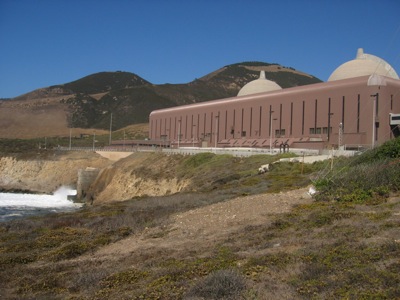
Sea water used for cooling at Diablo Canyon nuclear power plant. Photo: Craig Miller
Sea water spews from an outlet after being used for cooling at PG&E's Diablo Canyon nuclear power plant. Photo: Craig Miller

Prior to Tuesday’s vote by the Water Resources Control Board, the head of that body’s ocean unit testified that once-through cooling systems kill 2.6 million fish, 19 billion fish larvae and 57 seals, sea lions and sea turtles each year, Dow Jones reported.

According to the Board’s summary:

“The proposed policy establishes technology-based standards to implement federal Clean Water Act section 316(b) and reduce the harmful effects associated with cooling water intake structures on marine and estuarine life.”

The rules require that companies phase out the practice and install equipment that reduces impact on marine ecosystems within the next several years.  Some generators have warned that the high cost of complying with the regulations could force them to shut some plants down.

For more on the practice of “once through cooling” and its effects on marine life, listen to Amy Standen’s Quest radio report from Monday.

AB 32 Stopper Headed for Ballot

It looks like there will be a measure on November’s statewide ballot to block full implementation of California’s greenhouse gas regulations.

Groups supporting the measure they call the “California Jobs Initiative” claim they gathered more than 800,000 signatures, nearly twice what they needed to qualify the proposal as a statewide referendum.

The existing climate law, known widely as AB 32, allows for the Governor to declare an emergency suspension of up to one year. But John Kabateck, who heads the California branch of the National Federation of Independent Businesses, says small businesses in particular can’t wait to see what the next governor might do; that the measure is needed to “stop the madness.” Kabateck said it’s time to “just push the pause button and please stop loading small businesses with new costs, new mandates and new regulations at a time when we need to crawl out of the hole.”

Studies have reached varying conclusions about what effect the state’s current regulatory path for carbon emissions would have on the California economy. Opponents of the measure have already formed their own campaign, trying to keep momentum behind the three-year-old climate law known as AB-32.

Steve Maviglio, who works for the the pro-AB 32 Californians for Clean Energy and Jobs, formed to oppose the ballot initiative, says he doesn’t think all those signatures necessarily signify broad support. “I think what that represents is the travesty of the initiative system and how out-of-state oil companies can buy their way onto the ballot,” he told me, in a telephone interview. The push to get the measure on the ballot has been financed largely by Texas-based oil companies and a somewhat obscure organization called the Adam Smith Foundation, based in Missouri.

“It took them $2 million to round up these signatures” said Maviglio. “And if you look at every single poll, you can see that Californians know we can have both clean air and a strong economy, and that we’re not going to be fooled by Texas oil companies,” he added.

The proposed ballot measure would freeze AB-32 until the state’s unemployment level dropped to five-and-a-half percent—or lower–for one full year. That’s something that’s happened only three times since the mid-1970’s: once in the late 1980s (for about ten quarters), a similar stretch in the late ‘90s, and once in 2005-06. After the deep recession of the early ‘80s, it took the state’s unemployment rate about four-and-a-half years to move from its 11% peak back to the 5.5 percent threshold.

Governor Arnold Schwarzenegger today called the effort to halt AB-32 “the work of greedy oil companies.”

Playing the State Water Lottery

Craig Miller
Photo: Craig Miller

I don’t know Mark Cowin, the director of the state’s Department of Water Resources. I haven’t even met the man, in person. But after listening to and reading his pronouncements about the state’s water supply, I’d guess he’s a guy who would barely crack a smile if he found himself holding a winning lottery ticket. I hazard that opinion because even after today’s great news about the Sierra snowpack–which is a little like finding out the state has won its annual water lottery–what Cowin emphasizes is that California isn’t out of the woods after the dry spell of 2007-2009. But more about that to follow. First, the details on the DWR’s final Sierra snow survey.

DWR announced on Friday that statewide, the water content stored in the Sierra snow is at 143% of normal for the date; 188% in the northern Sierra, 121% in the central mountains, and 139% in the southern reaches of the range. Up and down the Sierra, those figures are more than double the levels of the past two years, and are up to seven times as much as surveyors found in the bone-dry spring of 2007.

Last week, the Department announced it would increase allocations from the State Water Project to 30% of the amount requested from 29 urban and agricultural customers. Today’s snowpack news prompted the department to say that it’s likely to increase deliveries. How much? “Only marginally,” Cowin said in a phone interview this afternoon. “We’ll have to run the numbers, and we’ll probably make that determination in the next week or two.”

How much water will State Water Project customers get, eventually? Let’s run some numbers of our own.

The main reason the department cites for the very tight supply in the midst of a year of “normal” precipitation is the continuing below-average levels at California’s biggest state-owned reservoir, Lake Oroville. As of Friday afternoon, the lake is at 72% of normal for the date and about 60% full. But the stats that Cowin’s water geeks are crunching aren’t about the level today, but where they guess it will be as runoff begins to pour from the snow-blanketed mountains through the Feather River watershed into Lake Oroville. DWR officials have insisted that it believes runoff will be held down because of dry conditions caused by the last three drought years. You wonder if they’ll still believe that after assessing the impact of an unusually wet April and its impact on the snowpack.

While pondering that, here are some other numbers to consider if you want to play what I’ll call the State Water Project Allocation Game:

  • After running far below its 2008-2009 levels all season, the water storage in Lake Oroville caught up and passed year-ago levels this week. The lake’s storage has increased six percent—more than 150,000 acre-feet—since last Friday.
  • As noted above, this year’s snowpack is better than double last year’s.
  • Last year, the state delivered 40 percent of requested water shipments to its SWP customers. The average allocation for the past 10 years is 68 percent.

Considering all of the above—last year’s deliveries, the snowpack, the sudden late-season surge in Lake Oroville’s levels—it’s a no-brainer that water deliveries will at least match last year’s 40 percent. The question is whether the allocation will go higher. All Cowin would say on that subject today is that he thinks that 45%, the amount DWR described two months ago as the upper limit for shipments this season, is still accurate.

But Cowin did say, as he has more and more frequently of late, that a preoccupation with the this year’s water level misses the point about California’s water reality.

“That’s why we’re so concerned when we get the black and white question, ‘Is the drought over,'” he said. “We are in a period of long scarcity in California. We have no idea what next year’s water supply picture will look like. It’s possible we could have two or three more dry years in a row. So we’re trying to get a message out that we need to have a new attitude about how we use water in California, and it shouldn’t depend on this week’s outlook. We need to conserve water just as a way of life.”

If you want to explore the state’s water supply picture for yourself, check out our California Reservoir Watch map, below:

View KQED: California Reservoir Watch in a larger map

East Coast Leads Offshore Wind Derby

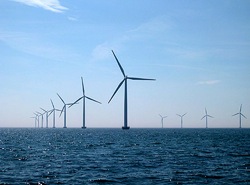
The Nysted wind farm off Denmark. Image: Cape Wind Assoc.

The nation’s first offshore utility-scale wind farm has won federal approval but it was no slam dunk. The Dept. of Interior has approved the 130-turbine Cape Wind project, off Nantucket.

The plan launched such an epic debate that at least one book has been written about it. Today’s nod comes just weeks after a federal advisory panel recommended against approval and doesn’t necessarily mean the project will go forward. Opposition groups have already vowed to go to court.

Cape Wind is just one of numerous offshore wind projects under consideration for the East Coast and Great Lakes region.

Permitting for most wind projects in California comes under local jurisdiction but a spokeswoman at the California Energy Commission told me that to her knowledge, no offshore wind projects are currently under review for California. An obstacle often cited is the extreme ocean depths off California, which make construction difficult. Various wave power projects have been proposed for the coastline.

New Solar Manufacturing Plant for Silicon Valley

SunPower CEO Tom Werner and Gov. Arnold Schwarzeneggar announcing the creation of a new solar manufacturing plant in Milpitas, CA (photo: Gretchen Weber)
SunPower CEO Tom Werner and Gov. Arnold Schwarzenegger. Photo: Gretchen Weber

Silicon Valley-based solar cell manufacturer SunPower Corp. announced today that it’s decided to site its newest manufacturing plant in California, a move that CEO Tom Werner says will create hundreds of jobs and may prompt an “economic cluster” that will attract similar projects.

SunPower has partnered with contract manufacturer Flextronics, and plans for the Milipitas-based operation to be up and running by the end of the year, producing high-efficiency solar cells.

Werner and Flextronics CEO E.C. Sykes were joined at the announcement in Milipitas by Gov. Arnold Schwarzenegger, who sported a green tie and chastised the assembled crowd for not celebrating Earth Day with similar fashion choices.

“I am so excited about this,” said Schwarzenegger about the new project. “This proves that protecting the economy and protecting the environment can be done simultaneously.”

Werner said locating the manufacturing operation in California makes sense both for economic reasons and because California is home to a large solar market, thanks to  the state’s Renewable Portfolio Standard, requiring 33% renewable energy by 2020, and the Million Solar Roofs Initiative.  Werner added that a record 50 megawatts of rooftop solar power were installed last month in California.

“You want to be close to your customer for logistical reasons, and also because you learn from your customer and you build it back into your product,” Werner told me following the staged media event.  “And by being local you can learn faster than you can if you’re distant.”

Other California selling points were a green manufacturing equipment sales tax exemption, which enabled SunPower to buy equipment for the facility tax-free, and low-interest loans from Recovery Act funds granted through the City of Milpitas, said Werner.

Governor Schwarzenegger used the occasion to warn Californians against taking the state’s environmental laws for granted.

“Right now there are greedy Texas oil companies that want to come in here and spend millions of dollars to roll back AB 32 (the state’s 2006 carbon legislation) and our other environmental laws,” he said. “Why? Because they don’t like that there’s alternative energy being created.  They don’t like what you are doing here.”

States Bridle Against “One-Size” Carbon Rules

Next week the US Senate will take the wraps off a long-awaited national energy and climate bill, which–even before its unveiling–is already making California businesses and regulators nervous.

Though exact language has not been revealed, the compromise bill reportedly includes sections that would nullify state and regional programs to regulate carbon emissions. That does not sit well with Mary Nichols, California’s chief carbon regulator. “When it comes to energy policy and the environment, one size truly does not fit all,” Nichols told reporters in a Tuesday conference call. Nichols chairs the California Air Resources Board, which is the lead agency charged with implementing the state’s Global Warming Solutions Act, passed in 2006.

The state has already invested three years and more than $100 million dollars (approximately $40 million per year, according to a policy brief issued last week by the state’s non-partisan Legislative Analyst’s Office), laying the groundwork for sweeping new regulations, including a carbon trading scheme with several other Western states. The regional cap-and-trade program known as the Western Climate Initiative could also be jeopardized by the current Senate bill, though from most appearances, the program is already languishing.

Businesses also have much at stake. Jan Smutny-Jones heads the Independent Energy Producers Association, whose members generate almost half the electric power produced in California. “My members are making literally billion-dollar decisions about infrastructure that’s going to be around in California generating electricity or transporting electricity to customers for the next 40-50 years, and they kind of need to know sooner rather than later, in terms of what the actual rules of the road are gonna be,” Smutny-Jones told me in his Sacramento office on Monday. “Having the rules change is disruptive,” he said.

California Senator Barbara Boxer, who co-sponsored the first Senate version of the bill last fall, says she does “not support federal preemption” but also wants to avoid overlap between the state and federal systems. “It depends on how the bill is written,” Boxer told reporters at the recent state Democratic Convention. “I’ve had environmentalists say ‘Well if we do a trading system on the credits, we want one system, we don’t want two systems,’ so there’s some areas where it may make sense.”

Nichols offered little latitude in her remarks on Tuesday.  “We need to put down a marker here and remind the senators that they will not have an effective climate program without the states,” she said. “We don’t want there to be any room for doubt about whether states are permitted to do things that advance their economic and energy agendas.” Nichols cited large amounts of “green” venture capital flowing into California as fruit already borne by the state’s actions toward reducing carbon emissions.

The Senate bill is expected to be rolled out on Monday. Optimists are hoping that a finished bill could reach the Senate floor by June or July, according to a report from Reuters news service.

Stop-AB 32 Drive Draws Money from Farther Afield

87606151Environmentalists have registered much consternation over the fact that out-of-state oil companies have been bankrolling a ballot measure to freeze implementation of AB 32, backbone of the state’s climate strategy.

Today Anthony York updates the situation with the latest intrigue on his Capitol Weekly website.

The latest major contribution–nearly a half-million dollars–reportedly comes from a Missouri foundation with tenuous links to climate policy.