
Category Archives: Government & Business

What’s brewing in Sacramento, Silicon Valley, and beyond

L.A.’s Holy Grail: Transit that Works for Most

When cities add light rail and cut bus service, are they “robbing Peter to pay Paul?”

By Alex Schmidt

It really is true that decent public transport to Angelenos is like the Holy Grail to Indiana Jones — especially on L.A.’s Westside. Looking a bit more deeply into transportation in L.A. makes you check certain assumptions that you may have grown up with. There are, after all, over one million people who ride public transport here every day, and most of that takes place on buses.

Now, and when bus cuts were previously threatened L.A. (notably when the Red and Gold lines opened on the east side of town), Metro has been accused of racism. In fact, in 1996, the NAACP and Bus Rider’s Union sued the MTA in federal court and won a consent decree to expand the bus system every year for 10 years. Now that the consent decree has ended, bus lines have been cut regularly. And once again, the Bus Rider’s Union has filed a complaint with the FTA’s Office of Civil Rights. Such investigations take many months, and sometimes as long as a year, so it’s not likely that it will halt the cuts this time around. Continue reading L.A.’s Holy Grail: Transit that Works for Most
CA Cap and Trade Compliance Delayed

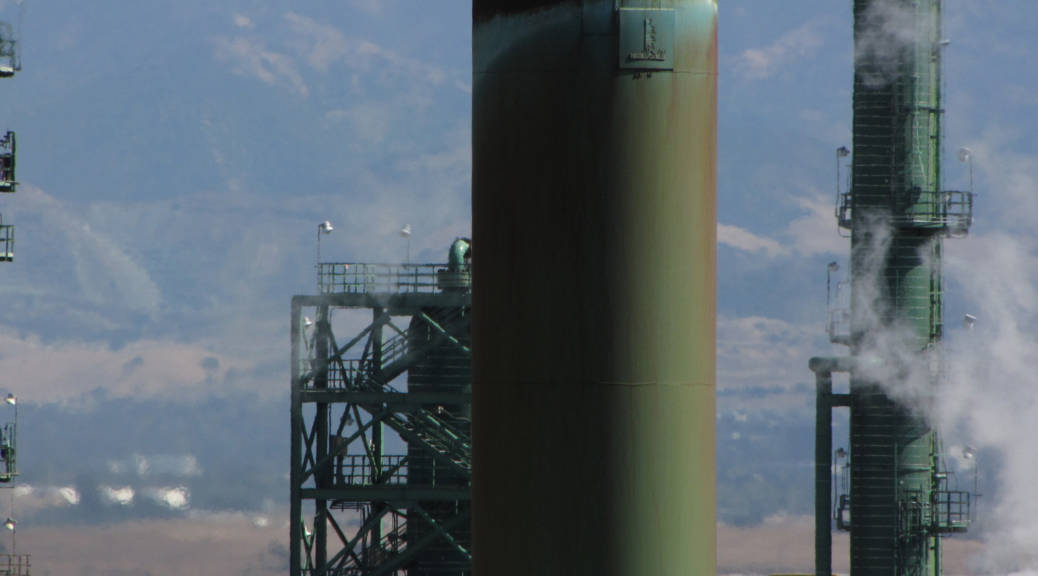
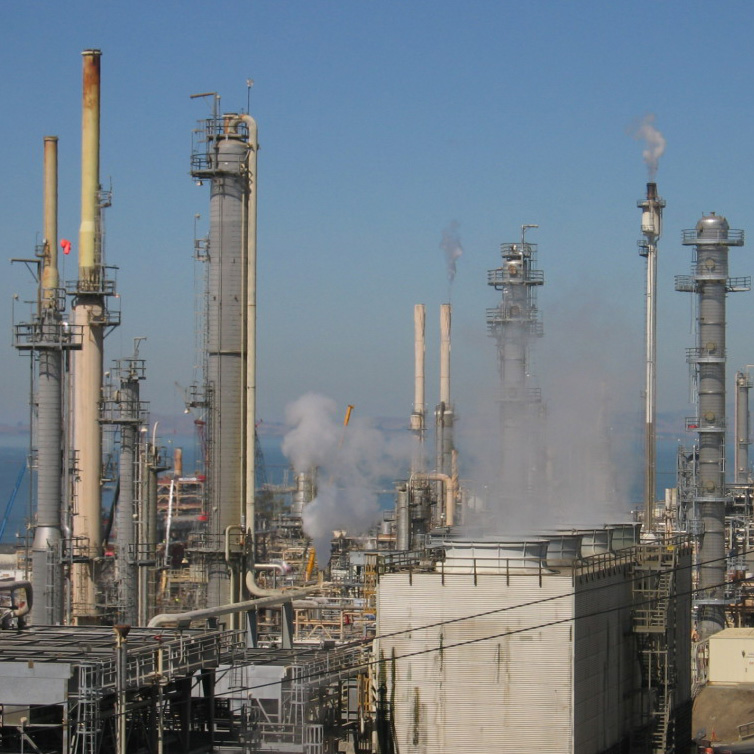
California power plants and refineries will likely have an extra year to comply with the state’s proposed cap & trade program, according to Mary Nichols, head of the California Air Resources Board.

In testimony to the Senate Select Committee on the Environment, the Economy, and Climate Change on Wednesday, Nichols said that the program would still begin in 2012 as planned, but that polluters would not be held accountable during that year. The extra slack would give participants and regulators time to “test” the program, she said. Continue reading CA Cap and Trade Compliance Delayed

California Moves Ahead With Cap and Trade

Conoco Phillips power plant in Rodea, CA (Photo: Craig Miller)

California has the legal right to move ahead with preparations for cap and trade after all, according to an appellate court decision.  An earlier ruling had required regulators to halt work pending further review, after environmental justice groups brought suit against the Air Resources Board (ARB) over its plans for carbon trading.

Caroline Farrell of the Center on Race, Poverty and the Environment, one of organizations involved in the suit, said she was disappointed by the decision, handed down late Friday. Continue reading California Moves Ahead With Cap and Trade

Boom Times for Field Biologists

Big wind and solar buildouts spur a “bio-boom” in the California desert

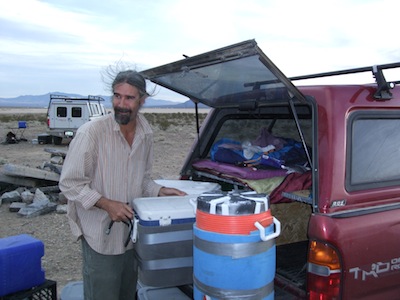
Field biologists like Mike Sally live a windblown, nomadic lifestyle, surveying sites for renewable energy projects. (Photo: Sarah McBride)

By Sarah McBride

I’ve reported on bubbles in plenty of stocks and commodities, but my springtime visit to the Ivanpah Valley was the first I’d heard anyone talk about a bubble in field biologists. The guy who used those words, Alex Mach, is a field biologist himself — and he was only half kidding.

Mach is one of dozens of field biologists who are out in the desert working to protect threatened animals and plants from solar and wind development projects. They’ve tapped into the rich vein of desert tortoises, whose habitats coincide with many of the areas scientists say are best positioned for solar plants — including Mach’s worksite at the time, BrightSource Energy’s solar plant in Ivanpah Valley, near the California-Nevada border. Continue reading Boom Times for Field Biologists

Water Efficiency May Ease Colorado River Woes

Study shows most western cities aren’t wasting as much water

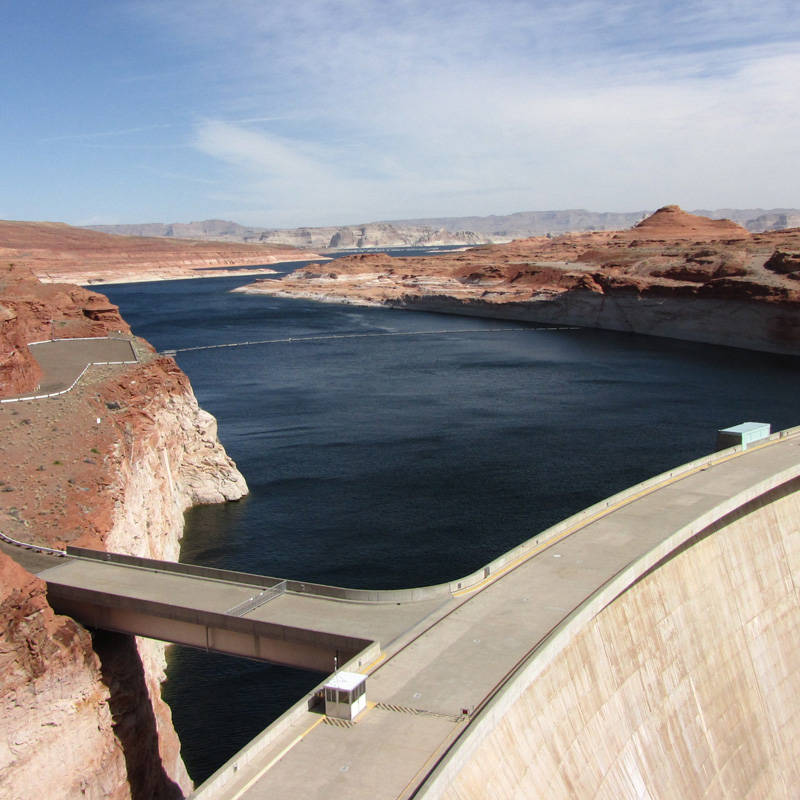
Lake Powell, the Colorado River’s second-largest reservoir, in April 2010 (Photo: Gretchen Weber)

There’s some good news for the 35 million people in the Western United States who rely on the Colorado River for their water, says a new study from the Oakland-based Pacific Institute.

No, the supply isn’t increasing.  And yes, the population is still growing.

But according to the paper, entitled Municipal Deliveries of Colorado River Basin Water, more efficient water use by water agencies across the West is making the supply/demand gap a lot less painful than it could be.

“Although population growth has increased very quickly, the amount of water delivered has not kept pace,” said study author Michael Cohen. “That shows that people have been getting much more efficient with their use of water.” Continue reading Water Efficiency May Ease Colorado River Woes

Shrugs Over High Court Decision

Immediate impact of greenhouse gas ruling on California seems minimal

The states' lawsuit was aimed originally at coal-fired power plants.

The silence is deafening since the US Supreme Court ruled this week that states can’t take utilities to court over greenhouse gas (GHG) emissions on their own.

NPR’s reporting of the decision calls it “the court’s most important environmental ruling in years.”

But here in California, I’m seeing mainly tepid reaction from officials — and without the usual cavalcade of releases from industry and environmental groups, applauding or condemning. In response to an email inquiry I made after the ruling came out, Mary Nichols, chair of the California Air Resources Board, replied that the ruling:

“…re-affirms that EPA has the authority and responsibility to regulate greenhouse gas pollution in order to protect the public health and welfare from the urgent threat of climate change. The careful, deliberate approaches developed under the Clean Air Act – including California’s Clean Cars rule – provide a more reasonable and feasible alternative to the uncertainty of court-imposed limits on carbon pollution.”

California was one of six states involved in the case, which dates back to 2004. But that was before the EPA had taken definitive steps to assert its own regulation of greenhouse gases (a role upheld by the Supreme Court in 2007).

Air Board spokesman Stanley Young explained that California’s participation in the suit was “an effort by California to get some kind of national action on the climate front. Now that EPA is fully engaged, that kind of judicial action is no longer necessary.”

Just how “fully engaged” the Environmental Protection Agency is remains a matter of some debate. The federal agency recently postponed release of a draft rule on GHG emissions from power plants.

The full decision is available as a PDF download from the Supreme Court website.

Lawsuits Loom Over “Fantasy Island”

Concerns linger over plans to transform Bay island into city of the future

The massive redevelopment of Treasure Island in San Francisco Bay has cleared all regulatory hurdles and is now officially green-lighted for construction as early as next year. But the project’s eco-credentials are still in dispute.

As San Francisco Mayor Ed Lee signed off on the project last week, environmental groups were pondering a lawsuit. They’re calling the $1.5 billion project to remake the former military base too car-centric to be labeled “sustainable.” And they say housing as many as 19,000 people on bay fill is too risky with the triple threat of earthquakes, tsunamis, and sea level rise. Continue reading Lawsuits Loom Over “Fantasy Island”

Out On a Limb

PG&E green program helps preserve forests already saved by state taxpayers

By Susanne Rust
California Watch

California’s largest utility company promises its customers green salvation through its ClimateSmart program.

For every bit of energy a PG&E ratepayer uses – turning on a vacuum cleaner, powering up a computer or heating up an oven – a little part of a tree or forest is saved to erase the carbon sins of the customer. The voluntary program costs ratepayers an average of $60 a year.

But the company isn’t telling its customers one crucial fact: Those forests were purchased years ago by a Virginia-based conservation group that used nearly $50 million in loans and grants from California taxpayers. That group, The Conservation Fund, then sold PG&E carbon credits on the land it had already purchased for preservation and selective logging.

Thousands of PG&E customers are effectively paying twice for the same Mendocino County forests. Continue reading Out On a Limb

Deconstructing the Drought

A new report disputes some alleged impacts to the Central Valley from water restrictions, reveals others

(Photo: Craig Miller)

Blame the housing recession, not water restrictions. That’s the conclusion of a new report from the Oakland-based Pacific Institute, which scrutinizes the connection between cutbacks in farm water deliveries and Central Valley job losses during California’s recent three-year drought.

Impacts of the 2007-2009 California Drought: What Really Happened? is described by its authors as a “nine-month assessment of new data from California’s agricultural, energy, and environmental sectors.”

Its main finding, that “Farm job losses were largely unrelated to water constraints,” appears to be a direct refutation of claims by Congressman Devin Nunes (R-Fresno), and others, that regulatory and court-ordered restrictions on water deliveries have caused “massive unemployment” in the San Joaquin Valley. Continue reading Deconstructing the Drought

A Water Meter Mandate for California Farms

Regulators seek better tracking of farm water use

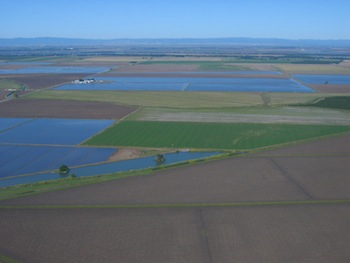
Flooded rice fields in the Sacramento Valley. (Photo: Craig Miller)

Most urban dwellers get a water bill each month that’s based on how much water they use. But on some California farms, that’s not the case.

“In many parts of the state, the amount of water farmers use is not measured,” says Susan Sims of the California Water Commission.

Instead, farmers are charged a flat rate for water in some districts. Sims says that makes it difficult for farmers to conserve water. “It’s very hard, even when you want to conserve. I think the first step in saving water is knowing what you’re using.”

Toward that end, the Water Commission votes today on rules that would require water districts to meter the volume of water farmers use — and to charge them accordingly. Sims says many water districts, including some in the San Joaquin Valley, already do this. Others in Northern California don’t. Continue reading A Water Meter Mandate for California Farms