Category Archives: Government & Business

What’s brewing in Sacramento, Silicon Valley, and beyond

Rough Waters for Sea Level Rise Planning

Salt ponds in Redwood City where the new Saltworks development is proposed. Photo: Lauren Sommer.

What do Bay Area airports and some big Silicon Valley companies have in common? They sit right on the edge of San Francisco Bay, where sea level rise is expected to have a big impact by the end of the century.

That may seem far in the future, but state agencies are preparing for climate change now by writing new rules for construction along the bay’s shoreline. As you can imagine, developers and environmentalists aren’t exactly seeing eye to eye.

That’s evident on a patch of land at the edge of the bay in Redwood City. For more than a century, it’s been home to one thing: salt. Continue reading Rough Waters for Sea Level Rise Planning

Brown Praises Tougher Federal Fuel Standards

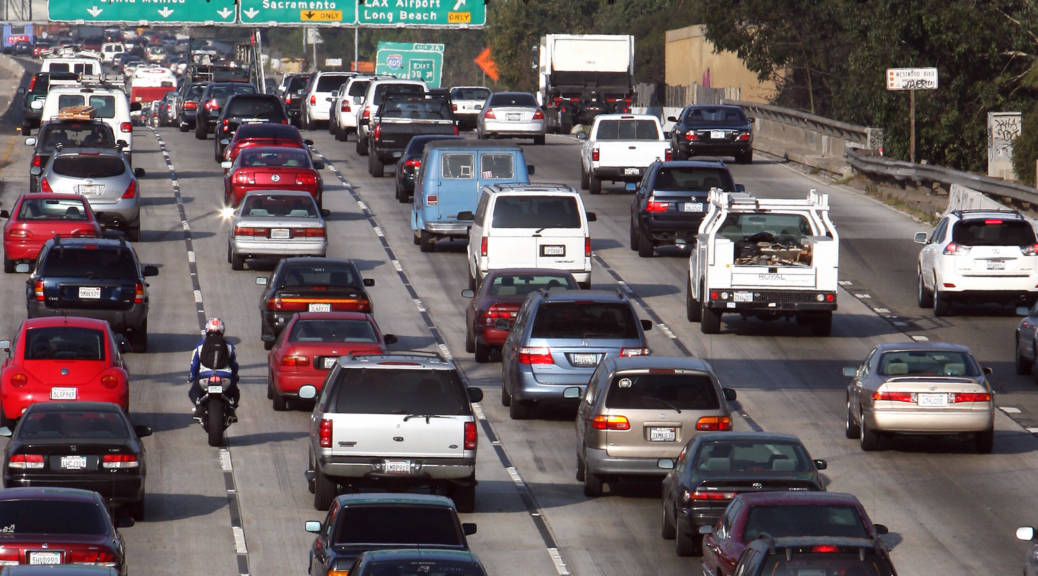
Fifteen years from now, the average car in the United States must get nearly 55 miles to the gallon,  according to new fuel-efficiency standards proposed Friday by the Obama Administration.  That’s a sharp increase from the current requirement that vehicles average 34.5 miles per gallon by 2016.

California officials, environmental groups, and automakers are praising the new rules, which would require  a fleet-wide average for cars and light trucks of 54.5 miles per gallon by 2025.

On a call with reporters today, Governor Jerry Brown called the new regulations, “probably the brightest light I’ve seen in Washington in many a month, if not years.” Continue reading Brown Praises Tougher Federal Fuel Standards

Support for Climate Policy High in California


Three-quarters of Californians believe climate change is a serious threat to the state’s economy. And a majority thinks we need to act now to reduce emissions, rather than wait until the economy improves. These are among the findings of a new survey by the Public Policy Institute of California

“Californians really believe that in our state there’s an opportunity to have a better environment and a better economy through addressing climate change,” concludes Mark Baldassare, who directed the survey and says Californians believe — by a two-to-one margin — that climate change policies, like requiring more renewable energy, will create jobs.

The survey also finds overwhelming bipartisan support for requirements mandating more fuel efficient cars (81%), “greener” buildings and appliances (74%), requiring utilities to increase renewable energy sources (82%), and for requiring industry to reduce emissions (82%). Continue reading Support for Climate Policy High in California

Yes, In Our Backyard

After more than a decade with a nuclear waste dump next door, the sky has not fallen on Carlsbad

Okay, so Yucca Mountain hasn’t worked out so well. In fact, the current betting is that the planned Nevada repository for nuclear waste will never open its doors. No matter. New Mexico beckons.

A transport container for nuclear waste, outside the Waste Isolation Pilot Plant in New Mexico.

Few Americans seem to realize that the world’s only functioning geologic repository for nuclear waste of any kind is already open for business in the southeastern corner of New Mexico. In fact, the Waste Isolation Pilot Plant is well beyond the “pilot” phase. It’s been taking in truckloads of the stuff since 1999, without mishap, it’s success no doubt a factor in its anonymity.

An average of 30 truckloads a week from all corners of the US, roll into what is essentially a glorified salt mine, licensed by the federal government to accept low-level “transuranic” waste from defense-related facilities only. Continue reading Yes, In Our Backyard

California Cities Confront Water Challenges

Scientists and planners expect the Bay Area to face a host of water-related threats in the coming decades due to climate change, including flooding due to rising seas and summer water shortages due to warmer temperatures and a shrinking Sierra snowpack.

A new analysis released Tuesday from the non-profit Natural Resources Defense Council catalogs these threats, for San Francisco, and for 11 other American cities, including Los Angeles. The study also looks at how prepared the cities are to adapt to these climate challenges. It finds, in general, that San Francisco is leading the way when it comes to being prepared. Continue reading California Cities Confront Water Challenges

Sweden Tries Taming its “Fox”

Making strides toward nuclear waste disposal by empowering communities

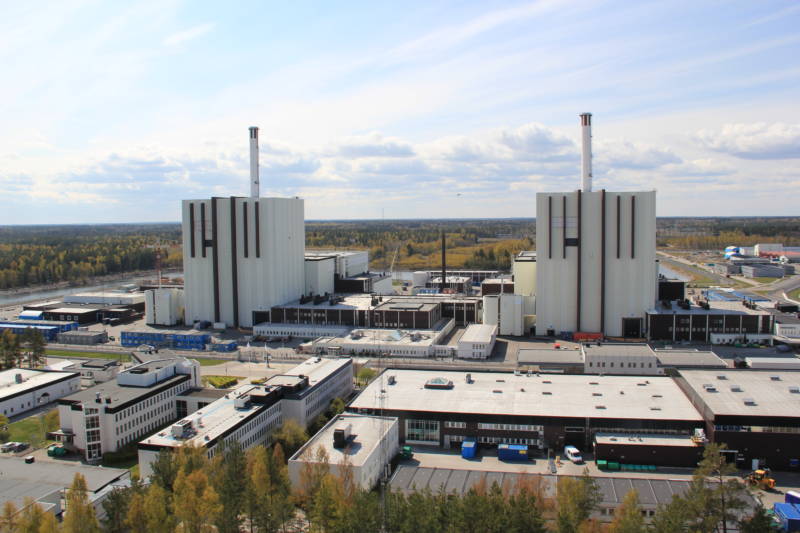
The Forsmark nuclear power plant is one of three in Sweden where about half the nation’s electricity comes from 10 reactors built on the coast.

Sweden gets a lot of press as the country that’s figured out not only how and where to dispose of its nuclear waste but – significantly — how to win community support.
Continue reading Sweden Tries Taming its “Fox”

Roofing It: Brown Stumps for Distributed Solar

Governor Brown moves forward with plans to encourage more local solar generation in the state.

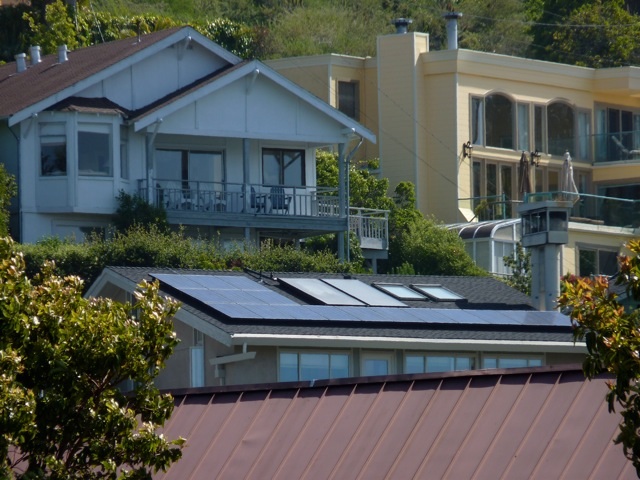
California has been on something of a solar frenzy recently, approving permits for more than 4,000 megawatts of new solar power in 2010 alone. Most of that is in the form of large, industrial-scale installations, which will provide lots of power, but also will require transmission infrastructure to get the clean energy from the desert sun to where its needed, primarily, the coastal cities.

This week Governor Jerry Brown is focusing on the other kind of renewable energy: the local kind that is smaller in scale and doesn’t require transmission to get where it’s needed. Continue reading Roofing It: Brown Stumps for Distributed Solar

California’s Nuclear Burden

Nearly 3,000 tons of spent nuclear fuel have accumulated at nuclear power plants in California…with nowhere to take it.

"Dry casks" waiting to be loaded with spent fuel at Diablo Canyon. (Photo: Craig Miller)

It could be worse. This could be Illinois, the undisputed spent fuel champ, with more than 8,000 tons piled up at plants. As it is, California ranks eighth in the nation.

“This country has an obligation to those states and those communities to take those materials and put them into deep geologic disposal, where they can be safely isolated for a very long period of time,” says Per Peterson, who chairs the nuclear engineering department at UC Berkeley.

Trouble is, the country seems farther now from meeting that obligation than it was in 1998, the original legislative deadline for opening a permanent repository for spent nuclear fuel. Continue reading California’s Nuclear Burden

Cutting Emissions…With Car Insurance?

The “Pay As You Drive” approach to auto coverage could save some drivers money–and cut lots of CO2, studies say.

Most car insurance is priced in the United States kind of like an all-you-can-eat salad bar, says Justin Horner, a transportation analyst at the Natural Resources Defense Council. You pay a set amount once or twice a year, and then you can eat one little salad, or you can totally chow down, making several trips back for more food, piles of cole slaw and jello threatening to topple from your over-filled plate. Either way, it makes no difference to your wallet.

And, of course, regardless of hunger level, it can be kind of tempting to go back again and again, just because you can.

On the other hand, if you get your salad at one of those pay-by-weight places, you’re likely to be a lot more discriminating about what’s on your plate. That’s how we buy gas, says Horner.

Continue reading Cutting Emissions…With Car Insurance?

Free Cap-and-Trade System Beats Carbon Tax, Study Finds

By Susanne Rust

As governments try to figure out the best way to get carbon polluters to invest in and produce cleaner energy, two scenarios continue to come forward: cap and trade vs. carbon tax.

A new study from UC Merced and the University of New South Wales in Australia suggests that a free and uninhibited cap-and-trade system is the best way to go. The authors argue such a system will “trigger adoption of clean technologies at a considerably lower level of carbon prices” as compared with a tax system.

In addition, the study concludes that the higher risk and volatility of an unhindered market “are likely to induce suppliers to take early action to hedge against carbon risks.”

Continue reading Free Cap-and-Trade System Beats Carbon Tax, Study Finds