Category Archives: Government & Business

What’s brewing in Sacramento, Silicon Valley, and beyond

New Federal Fuel Rules Expected Soon, California Poised to Benefit

Stricter fuel standards for cars and light trucks could bring tens of thousands of jobs and billions of dollars to the Golden State, one report says.
In July, when the Obama Administration announced a plan for strict new fuel efficiency standards that would require a fleet-wide average for cars and light trucks of 54.5 miles per gallon by 2025, the sustainable business non-profit CERES reported the move would create nearly 500,000 new jobs nationwide.

“The new jobs will be related directly to the auto industry, and there will be additional jobs because consumers will have more money to spend because they will be saving on fuel,” said Carol Lee Rawn, director of the transportation program at CERES. Continue reading New Federal Fuel Rules Expected Soon, California Poised to Benefit
San Francisco Plans for Sea Level Rise

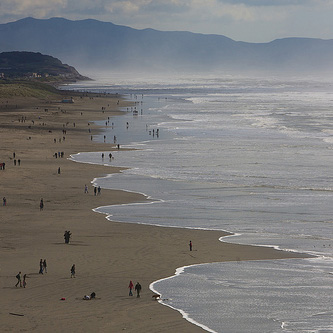
Ocean Beach could be in big trouble without some serious planning

By Jon Brooks

As more warnings go out to coastal communities about rising sea levels, local planners are starting to sharpen their pencils. Hence the Ocean Beach Master Plan. The San Francisco Planning + Urban Research Association (SPUR) is facilitating a coordinated effort among multiple agencies to create a “sustainable long-range plan” for San Francisco’s shoreline. Why do we need a plan? Because erosion of the beach and anticipated rising sea levels may necessitate major changes in the infrastructure that serves the area.

In September, economist Philip King of San Francisco State University unveiled a study aimed at putting estimated price tags on potential economic losses from sea level rise, a study in which San Francisco’s Ocean Beach emerged as a major potential loser. Continue reading San Francisco Plans for Sea Level Rise

How Saving Water Could Help Keep the Lights On

Water and electricity do mix

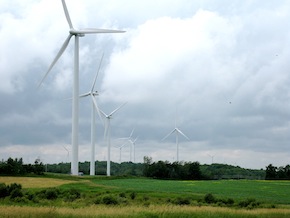
Wind is one of the few energy sources that requires virtually no water.

The Gordian knot of interdependence between water & power (not the political kind — that’s another story) has been getting a lot of attention lately as the “water-energy nexus.” A new report from Oakland’s Pacific Institute warns that as population grows and a changing climate further wrings water out of the West, “These trends will intensify water resource conflicts throughout the region.”

Oh, goody. Just what the West needs; more water conflicts. Continue reading How Saving Water Could Help Keep the Lights On

New Satellite Launched to Watch Climate, Weather

Agencies hope the next-generation satellite will serve as a bridge between the nation’s aging satellite fleet and the new ones yet to come.

Launch of the NPP satellite from Vandenberg Air Force Base on Friday.

In a joint effort to improve observations of the Earth from space, NASA and NOAA launched a new satellite on Friday from Vandenberg Air Force base near Lompoc, CA. The satellite carries with it a suite of next-generation technologies and tools that the agencies say will enable scientists to continue monitoring climate change and weather patterns as many existing Earth-observing satellites are reaching the outer edge of their life expectancies.

The new satellite is part of the NPOESS Preparatory Project (NPP), which aims to monitor the entire planet, collecting and processing data on the Earth’s weather, atmosphere, oceans, land, and near-space environment.  The agencies say this data will not only help with monitoring climate change, but also with natural disaster prediction and planning, and military strategies.  NASA describes the NPP as a bridge between the aging Earth Observation System (EOS) satellites and the “forthcoming” Joint Polar Satellite System (JPSS) satellites, which are scheduled to begin launching in 2016. Continue reading New Satellite Launched to Watch Climate, Weather

California Governor Plans Year-End Climate Conference

Brown administration urges local preparations for climate impacts

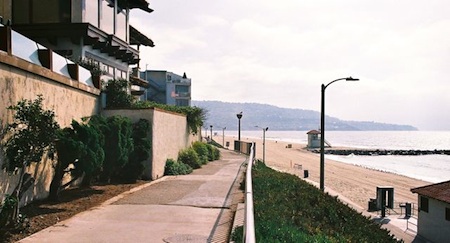
Coastal communities need to ponder the future of homes like these in Redondo Beach.

California Governor Jerry Brown is picking up the climate baton from his predecessor, planning his first climate conference. According to officials, Brown will host  the Governor’s Conference on Confronting Climate Change, currently pegged for December 15th at the California Academy of Sciences in San Francisco.

The conference is still taking shape but recent remarks from the administration seem to imply that the focus will be on planning for climate change impacts. “We have to move from planning to action…and we are behind,” says Julia Levin, Brown’s deputy secretary for climate change and energy at the California Natural Resources Agency. Continue reading California Governor Plans Year-End Climate Conference

California Adopts Nation’s Most Sweeping Cap & Trade Plan

But it’s just another milestone in a long journey that’s far from finished

It’s official (no, really, this time). California has cap & trade — or will once the program starts ramping up next year. Today’s approval by the state’s Air Resources Board was described by chair Mary Nichols as like “moving a large army a few feet in one direction.”

Ready to roll: A license plate in Sacramento bears the legislative shorthand for California's landmark climate policy.

The objective that “army” is marching — or shuffling — toward is, of course, the fulfillment of California’s goal to roll back greenhouse gas emissions to 1990 levels by the end of this decade. With at least a semi-intentional pun, Nichols calls cap & trade the “capstone” of that effort, although the program is expected to produce at most, 20% of the hoped-for reductions in carbon emissions. The rest will come from other measures either lumped under or related to the state’s Global Warming Solutions Act, more widely known as AB 32.

Those other measures include stricter standards for tailpipe emissions, a “low-carbon fuels standard” (still being worked on), and the ambitious-but-attainable goal to get a third of the state’s electricity from renewable energy sources, also by 2020. Continue reading California Adopts Nation’s Most Sweeping Cap & Trade Plan

California’s Dirty Secret: The Five Coal Plants Supplying Our Electricity

The “invisible” fossil fuel that may be powering your lifestyle

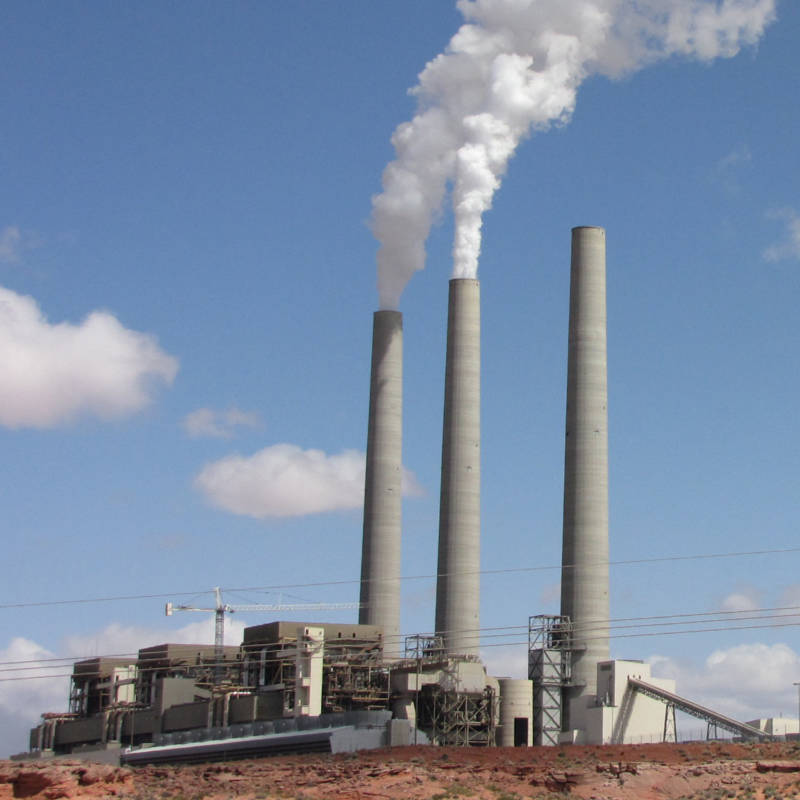
The Navajo Generating Station is coal-fired power plant in Arizona, just outside the Grand Canyon National Park. It’s one of two coal plants that supplies more than 40% of Los Angeles’ power.

Here in California, you hear a lot about our “green” reputation.  We have one of the most ambitious greenhouse gas reduction goals in the country, and the state is certainly a hotbed for new solar and wind energy investments and installations. We also have a law that says electricity providers have to get 33% of their power from renewable sources by 2020.

So… you might be surprised to hear that coal — that’s right, dirty ol’ coal — is still very much a part of the power supply in parts of Southern California. If you’re one of the 1.4 million residents of Los Angeles who gets power from the city’s Department of Water and Power, about 40% of your electricity comes from coal.

But how’s that possible?  Here in California, we don’t have much in the way of coal deposits, and no significant coal power plants. But we do have several public utilities that own portions of out-of-state coal power plants, and that entitles them to lots of less-than-clean, coal-fired energy. Continue reading California’s Dirty Secret: The Five Coal Plants Supplying Our Electricity

Sneak Preview of Living in a “Zero-Net Energy” World

Davis housing development claims to the the nation’s biggest

West Village features sleek lines and cutting-edge energy efficient design concepts.

The typical American master-planned community sill features cookie-cutter houses, cement driveways and green lawns. But UC Davis is putting a new spin on the concept with the unveiling of West Village, a $300 million student and faculty housing community designed to be “zero-net energy.” Developers say it’s the nation’s largest to employ this kind of green construction.

And although “zero-net” [PDF] may sound complicated, the concept is actually quite simple: All the buildings in West Village will take in as much energy as they put back into the power grid — not on a daily basis but at the end of each year, the total consumption of the entire housing development should “net out” to zero. Continue reading Sneak Preview of Living in a “Zero-Net Energy” World

Yergin: Tar Sands Opposition is Misguided

The energy guru weighs in on dirty oil, fracking and California’s energy leadership

One of America’s foremost energy experts says Canada’s controversial oil tar sands are getting a bum rap.

Daniel Yergin, who became a go-to guy for energy wisdom after winning a Pulitzer Prize for his 1990 oil tome, The Prize, appeared on KQED’s Forum program today to promote his latest book, The Quest: Energy, Security and the Remaking of the Modern World.

When host Michael Krasny asked Yergin about the Canadian tar sands boom and a plan to construct a pipeline to bring it into the US for refining, Yergin said the project “has become a huge symbolic target.” Indeed the controversial Keystone XL pipeline proposal has been a lightning rod for demonstrations at the White House and a target of ongoing protests across the country. But Yergin said he thinks the risks of importing tar sands oil from Alberta have been overblown. Continue reading Yergin: Tar Sands Opposition is Misguided

Should California Put Hybrids Back in the Carpool Lane?

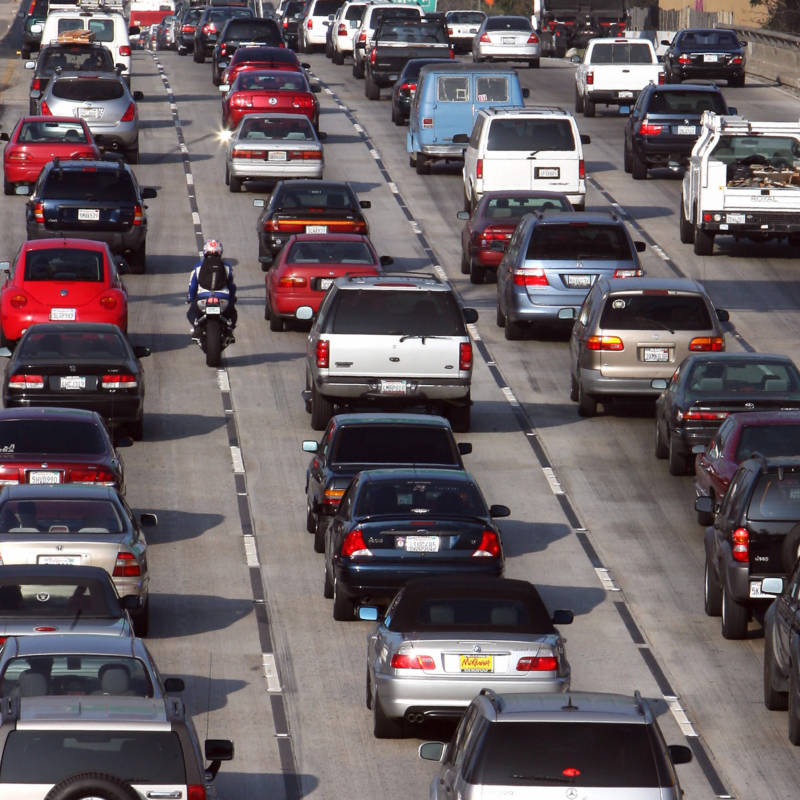
You’d think that kicking thousands of solo drivers out of the carpool lane would make traffic move faster…at least for carpoolers. But you’d be wrong, according to researchers from UC Berkeley.

In 2005, California granted drivers of hybrid vehicles access to carpool lanes (regardless of the number of riders) as a way to spur adoption of low-emissions vehicles. But that program ended this summer, after critics argued that the 85,000 cars that had qualified for special lane access were too many, and all the new hybrid drivers were clogging things up for carpoolers. Continue reading Should California Put Hybrids Back in the Carpool Lane?