Category Archives: Government & Business

What’s brewing in Sacramento, Silicon Valley, and beyond

Sea Level Rise Laps at Developers’ Feet


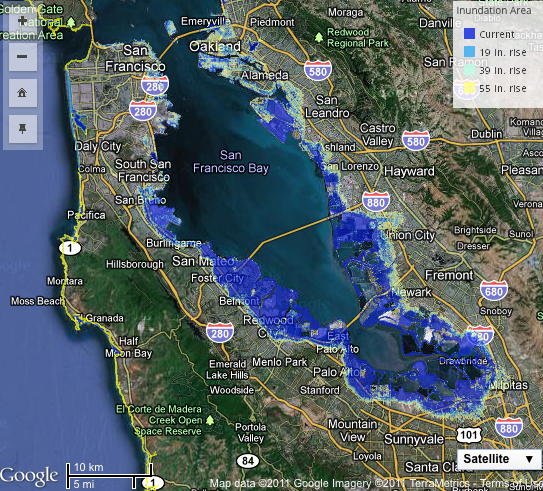
Google Maps image of the Bay Area from Cal-Adapt’s online interactive sea level rise tool.

Developers building on the shore of San Francisco Bay will now have to consider climate change in their plans.

Despite a unanimous vote on Thursday by the Bay Conservation and Development Commission (BCDC), it hasn’t been easy planning process for the state agency that regulates development along the San Francisco Bay shoreline. The state agency approved a first-of-its kind policy that makes sea level rise part of regional planning decisions.

“It’s kind of like childbirth,” said Will Travis, the Executive Director of the commission.

“It wasn’t an easy thing to get done,” he said. “Some didn’t even believe that climate change was happening, and some weren’t aware of the great impact that sea level rise will have the Bay Area.” Continue reading Sea Level Rise Laps at Developers’ Feet
Drought Gone, Less Support for California’s Water Bond?

By Lance Williams, California Watch

Post Peak Pass is a granite notch on the remote southern boundary of Yosemite National Park, altitude 10,700 feet.

On Saturday, its north face was partly covered with a 100-yard-long patch of crusted snow – a reminder of just how emphatically California’s three-year drought was broken by the wild winter of 2010-11.

Although California’s high peaks still are capped with last year’s snowpack and its reservoirs are brimming with runoff [PDF], voters will be asked next year to approve an $11.1 billion state water bond measure that was crafted in response to the crippling drought.

But with the drought a fading memory and the state’s finances in disarray, many believe the pricey package of dam-building and water conservation infrastructure has an even slimmer chance of passage today than in 2010, when then-Gov. Arnold Schwarzenegger yanked it off the ballot and slated it instead for November 2012. Continue reading Drought Gone, Less Support for California’s Water Bond?

Clean-Tech’s Unlikely Champion

Is the Pentagon setting the pace for renewable energy?

A Riverine Command Boat running on a 50/50 blend of algae-based and traditional fuel.

Thirty years ago, the idea of a military-alternative energy partnership might have raised some eyebrows, particularly among solar entrepreneurs here in Northern California. But in the wake of Solyndra’s crash and burn, the Pentagon has become one of clean-tech’s strongest remaining allies in Washington. Leading the charge is Navy Secretary Ray Mabus, whom I interviewed last week for my radio report on KQED’s Quest.

According to a recent study from the Pew Charitable Trust, the military has tripled its investment in technologies like biofuels, solar panels, and electric vehicles over the last four years. Today, it spends $1.2 billion a year on alternative fuels. That amount is expected to reach $2.25 billion by 2015. Mabus says he wants to see the Navy and Marine Corps getting at least half of their fuel from non-fossil fuel sources by 2020. Continue reading Clean-Tech’s Unlikely Champion

Salazar: Risky Times for Western Water

Interior Chief to California: Don’t allow significant water supply and infrastructure projects be derailed

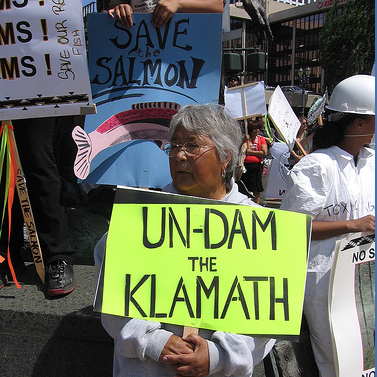
Demonstrators rally in 2006 for the removal of dams on the Klamath RIver.

Today at the Commonwealth Club in San Francisco, Secretary of the Interior Ken Salazar weighed in on three major water projects in the state and called on Californians to “stand firm” and defend the “hard-gained agreements and settlements” built in past decades.

“Never before have water agreements that provide safety and certainty for Westerners been so at risk,” said Salazar, referring to debates over the future of the San Joaquin River, the California Bay Delta, and the Klamath River.

Salazar argued that the state, and the country, should not back away from the 2006 San Joaquin River Restoration Program settlement, which, he said enabled the river to run from its headwaters to the ocean this year for the first time in half a century. He lobbied for the Bay Delta Conservation Plan, calling it a “comprehensive approach that includes new habitat for endangered fish species, coordinated measures to attack toxics that are fouling delta waters, and improvements to the state’s water infrastructure.” Continue reading Salazar: Risky Times for Western Water

EPA Chief: Cap & Trade a Distant Hope

Agency head says “green jobs” are the priority now

Remember those national carbon trading bills that were moving through Congress as Barack Obama was setting up shop in the Oval Office? The head of the federal Environmental Protection Agency says: Don’t hold your breath.

EPA chief Lisa Jackson: "What America's talking about right now is jobs."

EPA Administrator Lisa Jackson’s appearance on KQED’s Forum Wednesday seemed to confirm that her boss is picking his battles carefully. “What America’s talking about right now is jobs,” Jackson told host Michael Krasny. “Green jobs are what we have to be working on with everything we do.” The message seemed to be that environmental goals will take a back seat, unless they can be linked to job creation.

Krasny walked Jackson through the checklist of recent controversies, such as today’s decision to postpone greenhouse gas regulations beyond a September 30 deadline, and to let stand Bush-era standards for ozone pollution. Continue reading EPA Chief: Cap & Trade a Distant Hope

Rising Seas and Your Wallet

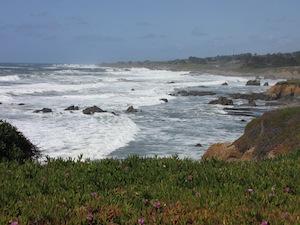
As sea levels rise, so does the economic toll on coastal communities

What happens to the beach economy when the beach is vanishing?

That’s what a new study seeks to answer in some of the most specific terms yet attempted.

The projections are from a team at San Francisco State University led by economist Philip King, who says in the study release that “Sea level rise will send reverberations throughout local and state economies.” He expects those reverberations to come from the effects of temporary flooding, beach and upland (cliffs and dunes) erosion, which King has estimated for five California locations, using sea-rise scenarios ranging from one-to-two-meters (6.5 feet) by the end of the century. Continue reading Rising Seas and Your Wallet

Bill McKibben: On the Front Lines of the Climate Fight

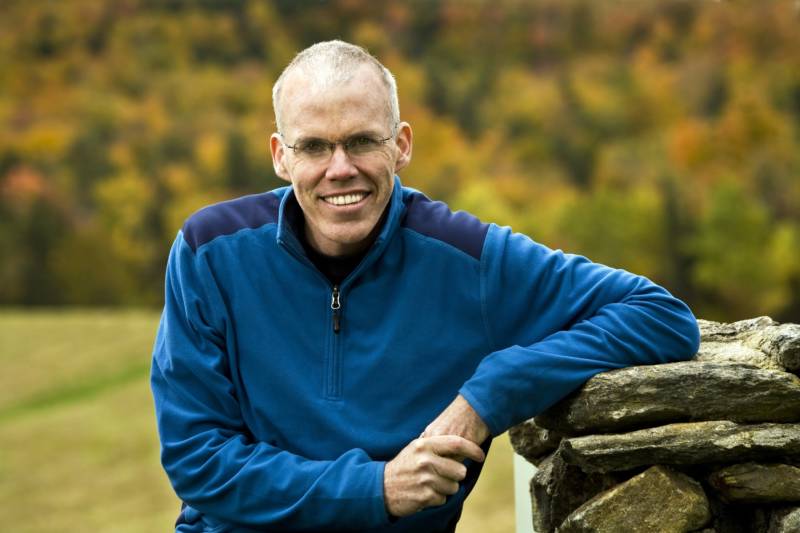
Author and climate activist Bill McKibben says that if we want to put the brakes on global warming, it’s time to put our bodies on the line.

Nancie Battaglia

Today McKibben dropped by KQED for a discussion on Forum with entrepreneur and fellow environmentalist Paul Hawken about the fight for a coherent national climate policy.  McKibben is the founder of the environmental group 350.org and was among the hundreds of people arrested near the White House last week during a protest over a controversial oil pipeline that has been proposed to run from Canada to the Gulf of Mexico.

Afterward, I sat down with McKibben and asked him about the role of civil disobedience in the fight against climate change. Continue reading Bill McKibben: On the Front Lines of the Climate Fight

Central Valley Faces “Smart Growth” Conundrum

How “smart” is it if you can’t walk to the store…any store?

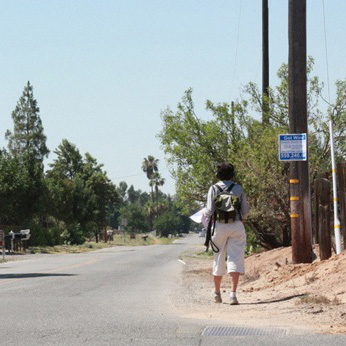
Reporter Sasha Khokha hits the road.

By Jefferson Beavers

When we decided to take a look at smart growth in the Central Valley, we wanted to see if the goal of compact, walkable living was a realistic option for the largely suburban, car-loving communities of central California.

So, Central Valley bureau chief Sasha Khokha decided to get out of her car, put on her walking shoes, and burn some shoe leather…almost literally.

As the story’s field producer, I first researched dozens of developments in Fresno and Madera counties. I looked for good examples of high-density housing and sustainable neighborhoods as defined by the San Joaquin Valley Blueprint, the area’s land use and transportation planning process. Continue reading Central Valley Faces “Smart Growth” Conundrum

Is Your City Planning Ahead?

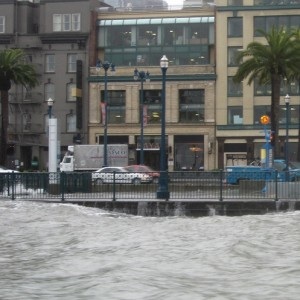
Flooding along San Francisco's Embarcadero during an extreme high tide in February, 2011.

With little being done at the national and international level to cut carbon emissions and curb the march of climate change, more and more communities and institutions are seriously considering how they will adapt to the environmental changes that lie ahead. 

Sea levels are rising, and in the Bay Area, planners are expecting an increase of nearly five feet by the end of the century.  According to climate models, temperatures across the state are likely to rise between three and seven degrees Fahrenheit by 2100, leading to increased heat waves and stressing the state’s water supply.

So, are we prepared?  Not really, according to a story today on the public radio program Marketplace.

And yet, as reporter Sarah Gardner explains, there are communities, including some in California, that are taking action now, and investing real money, to protect themselves (and their real estate) from the changes ahead, despite current fiscal challenges.

Officials Call for Federal Clean Energy Standards

In Las Vegas, politicians and industry leaders point to California’s lead

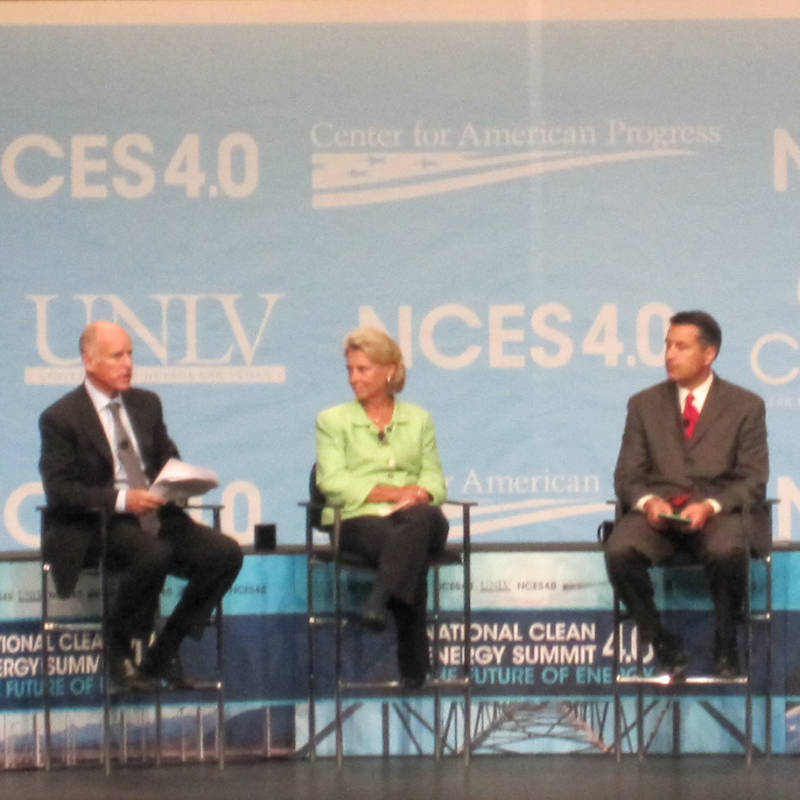
Gov. Jerry Brown with Washington Gov. Christine Gregoire and Nevada Gov. Brian Sandoval at the National Clean Energy Summit in Las Vegas.

In his keynote address at this week’s National Clean Energy Summit, Vice President Joe Biden said America is at a crossroads when it comes to energy, and that the choice is clear.

“If we shrink from deciding that we’re going to lead in the area of alternative energy, renewable energy, then we will be making the biggest mistake this nation has made in its entire history,” he said.

The Vice President was joined by Energy Secretary Steven Chu, California Governor Jerry Brown, and other political and industry leaders at the summit, which is in its fourth year and is sponsored by several entities, including the Center for American Progress and Nevada Senator Harry Reid.

“If we don’t lead in this new energy technology, we’re going to follow, and I’d hate like hell to be trading the importation of oil, for the importation of new technologies,” said Biden. “Neither is very acceptable.” Continue reading Officials Call for Federal Clean Energy Standards