All posts by Gretchen Weber

Santer: “Loss of Innocence” for Climate Scientists

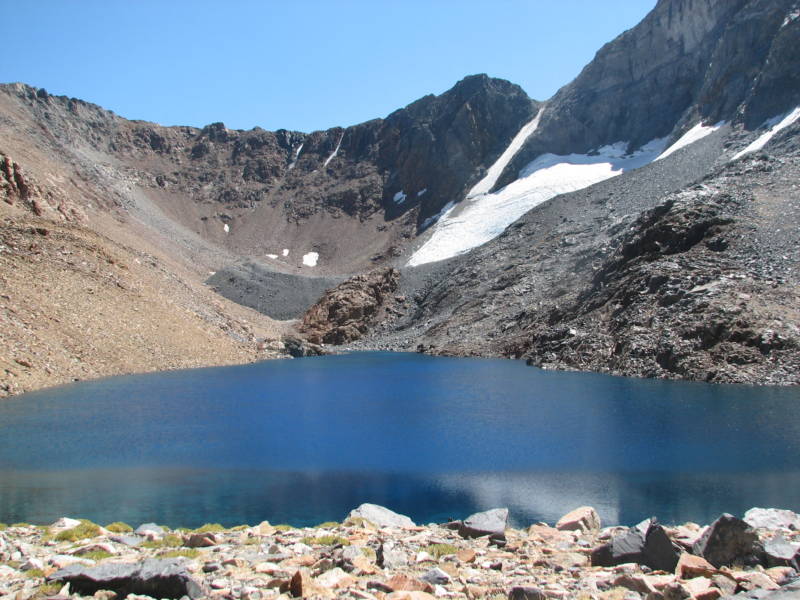
The Dana Glacier, outside Yosemite, CA. Photo: Gretchen Weber

Yet another climate controversy has revived what have become increasingly common attacks on scientists’ credibility.  The latest flap arose when  the IPCC admitted on Wednesday, that its 2007 prediction that Himalayan glaciers could melt away by 2035 was unfounded.

Attacks on the integrity of scientists have brought about a “loss of innocence” in the climate science field, said Ben Santer, a Research Scientist for Climate Model Diagnosis and Intercomparison at Lawrence Livermore National Laboratory.

On a conference call with reporters Wednesday, Santer lamented that “Fourteen or fifteen years ago, it was possible to do science and not be too worried about being the subject of Congressional investigations, Freedom of Information Act requests, and very personal and very public attacks. Those innocent days are over now.”

Santer, who’s been a key author of some IPCC reports, said the science that goes into those reports is the most rigorous that he’s seen in his career.”If your research suggests that humans are having a pronounced effect on climate,” he continued,  “I think the expectation is that you will be subjected to tremendous scrutiny.  And some of that is appropriate, certainly in terms of the science and the integrity and credibility of the science, but unfortunately, that scrutiny is moving to very unwelcome areas, and it’s also focusing on individuals and motives, and all of this stuff is very distasteful,” he said.

Santer was joined on the call by Lonnie Thompson, a glaciologist at Ohio State University’s Byrd Polar Research Center , who raised concern that the intense and personal nature of much of the criticism climate scientists have been facing (most recently in response to the East Anglia hacked email incident, now widely known as “Climategate”) may be keeping promising young scientists out of the field at a time when they are most needed.  In the wake of the East Anglia emails, a blizzard of accusations of data manipulation blew through the blogosphere and in certain corners of the Senate.

“It does make it difficult to bring young scientists into the field,” Santer agreed.  They look at what has gone on and there is genuine concern there. They must be asking themselves, ‘Do I really want to get involved in critical but possibly contentious issues if there is the possibility that I will spend months or even  longer dealing with questions not about the science that I have done, but about my own personal integrity?'” said Santer.

Thompson affirmed that while it’s difficult to put a specific timetable on the disappearance of glaciers, the scientific evidence documenting glacier recession is overwhelming.  Research indicates that more than 90% of the world’s glaciers are receding, he said, including approximately 95% of the glaciers in the Himalayas.

“Glaciers do not have any political agenda,” said Thompson.  “They just sum up what’s happening in the environment and they retreat or react to that en masse.”

The conference call was organized by the activist Union of Concerned Scientists.

UPDATE 1/25/10
The London tabloid, the Daily Mail, reported yesterday that a lead author of the Asia chapter of the IPCC’s 2007 assessment admitted that he knew the 2035 claim was unsubstantiated, but he approved including it in the report anyway.  Murari Lal reportedly said in an interview with the Daily Mail that he knew the 2035 number came from a report that was not peer-reviewed, but that the claim of imminently disappearing glaciers would, “impact policy-makers and politicians and encourage them to take some concrete action.”

Michael Schlesinger, a professor of Atmospheric Sciences and director of the Climate Research Group at the the University of Illinois at Urbana-Champaign responded to the Daily Mail report with dismay.

“I am greatly saddened and deeply offended by this person’s behavior,” he wrote in an email. “A scientist does not lie nor change the facts to suit an agenda.  Rather s/he tells it as it is, as best as it is known to her/him.”

Joe Romm at Climate Progress has a spirited response to the Daily Mail story.  According to Romm (who reached Lal by phone):
[Lal] He said these were “the most vilest allegations” and denied that he ever made such assertions.  He said “I didn’t put it [the 2035 claim] in to impress policymakers….  We reported the facts about science as we knew them and as was available in the literature.”
MAP: California’s Climate Lobby

Climate Watch now features a new page that brings together all of the interactive maps we’ve created so far. For the launch we’ve added an interactive map to our coverage of climate lobbying efforts in Washington. See our recent blog post, “The Climate Lobby Bulks Up” for more on who’s been spending big to influence climate legislation on Capitol Hill.

View KQED: Climate Lobbying in California in a larger map
The data for the map is from the Center for Public Integrity’s The Climate Change Lobby project. CPI tracks money helping to fuel the climate change legislation debates and maintains a database compiled from lobbying disclosure reports filed with the Secretary of the Senate’s Office of Public Records. (Read about the project’s methodology here.) The data does not include lobbying activity aimed at state laws and regulations, or dollars spent on advertising campaigns.

Climate Watch intern David Ferry combed the data and mapped the lobbying efforts based in California.  Chevron and PG&E top the list with $36 million and $34 million spent since 2003, respectively. Intel ranks third with $12 million. Our map skims the top of the database, showing only those organizations with more than a half-million dollars in spending.

Click here to view a larger map and to see a list of the CA lobbying efforts.
View KQED: Climate Lobbying in California in a larger map

Don’t forget to visit the new Climate Watch Maps page, where you’ll see this map as well as all of the interactive maps we’ve created to illustrate data from various sources, including the Department of Water Resources, the California Air Resources Board and The Center for Public Integrity.

NASA: 2009 Tied for Second-Warmest Year

Parts of the northern hemisphere may have had an extremely cold December, but nevertheless, last year tied for the second-warmest in 130 years of global instrumental temperature records, according to the latest surface temperature analysis of the NASA Goddard Institute for Space Studies (GISS).  The analysis finds that global temperatures were so similar in 1998, 2002, 2003, 2006, 2007, and 2009, that they are all tied for second place. In the Southern Hemisphere, 2009 set the record as the warmest year, according to this report.

James Hansen, head of NASA’s GISS, and his team have released their end-of-year summary for 2009, initially posted on the Real Climate blog.  It’s pretty dense, but here are some additional highlights:

– The scientists offer an explanation for an apparent data discrepancy over whether 1998 or 2005 was the warmest year.  In short, it comes down to the difference in the way GISS and HadCRUT (Hadley Centre/University of East Anglia Climatic Research Unit) assign or do not assign temperature data for areas without observing stations.  (HadCRUT leaves them out of the analysis, while GISS assigns values based on various factors outlined in the summary.)  GISS maintains that 2005 was the warmest year.

– According to the report:

“There were strong negative temperature anomalies at middle latitudes in the Northern Hemisphere, as great as ‐8°C in Siberia, averaged over the month. But the temperature anomaly in the Arctic was as great as +7°C.”

In other words, 2009’s cold December in certain areas of the planet, as well as an unusually cold 2009 summer in the United States and Canada, do not reflect overall global temperatures nor signal a cooling trend:

“It is obvious that in December 2009 there was an unusual exchange of polar and mid‐latitude air in the Northern Hemisphere. Arctic air rushed into both North America and Eurasia, and, of course, it was replaced in the polar region by air from middle latitudes. The degree to which Arctic air penetrates into middle latitudes is related to the Arctic Oscillation (AO) index, which is defined by surface atmospheric pressure patterns…”

According to GISS data, December 2009 was the most extreme negative Arctic Oscillation since the 1970s.

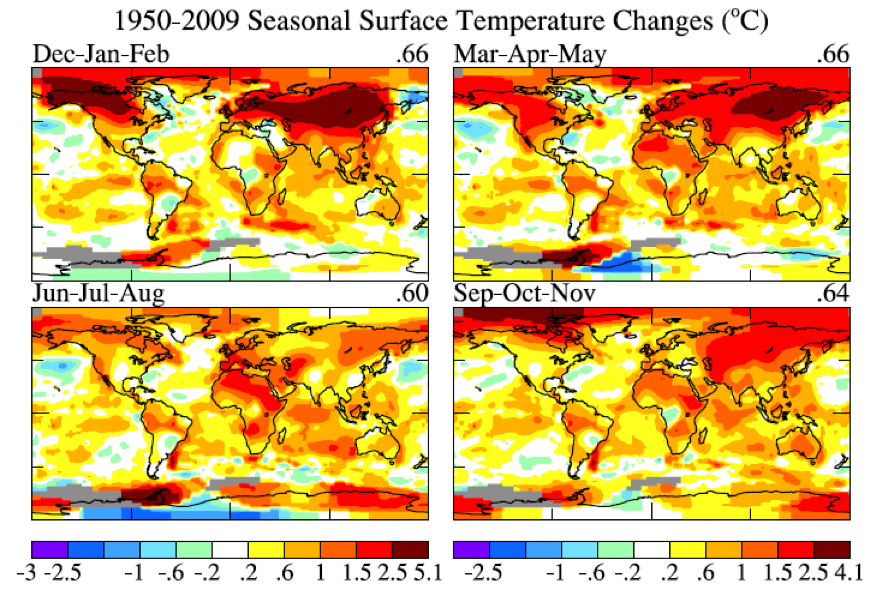
– The report underscores that monthly temperature anomalies tend to be greater than seasonal anomalies and that the the mean temperature of a particular month might not be the best way to identify global warming. Instead, one needs to look at measurements over the long-term, which, according to GISS data, indicate general warming over at least the last 50 years, just about everywhere on the planet.

The summary concludes with a sort of admonishment:

“The bottom line is this: there is no global cooling trend. For the time being, until humanity brings its greenhouse gas emissions under control, we can expect each decade to be warmer than the preceding one. Weather fluctuations certainly exceed local temperature changes over the past half century. But the perceptive person should be able to see that climate is warming on decadal time scales.”

Climate and Development Affecting CA’s Butterflies

Atlantis Fritillary butterfly at Sierraville, CA Photo: Jennifer Wolf

California’s butterfly populations are suffering from the combination of a warming climate and increased land development, according to a new analysis from scientists at UC Davis.

The study, scheduled to be published online this week in the journal Proceedings of the National Academy of Sciences, draws from butterfly expert Arthur Shapiro’s database of more than three decades of observations of 159 species from 10 sites in the Sierra Nevada at varying elevations, from sea level to tree line.

The data shows that over the last three decades butterfly species diversity declined at half of the sites, with the most severe reductions occurring at the lowest elevations, where habitat destruction is greatest.  The sites in the middle range showed evidence of habitats shifting upslope, as lower elevation butterflies began appearing at higher elevations.  The only site studied where butterfly biodiversity and abundance has increased is at the highest elevation site, at 2,400-2,775 meters.

“These patterns are quite consistent with other studies on a variety of organisms,” said Shapiro.  “The trend is for organisms to seek the climate to which they are adapted. So if it’s getting warmer, that means you go north, or you go up.”

While the population shifts appear consistent with warming temperatures (Both average maximum temperatures and average daily minimum temperatures increased across the majority of the sites), the study finds that warming alone is not enough to account for the loss of biodiversity at low and middle elevations.  Researchers analyzed county land use data at the sites, and found that it correlates with the butterfly population data.  The authors propose that habitat destruction due to urban and suburban development is most likely the leading cause of butterfly population deterioration at the lower elevation sites.

Citing pressures from human development as the main cause for species loss, the United Nations declared 2010 to be the International Year of Biodiversity.  At the Johannesburg summit of 2002,  governments agreed to achieve “significant reduction” in the rate of biological diversity loss by 2010, but according to the BBC, conservation organizations are acknowledging that this target is not going to be met, and that, in fact, the problem may be worsening.

Western Lakes Warming Up Rapidly

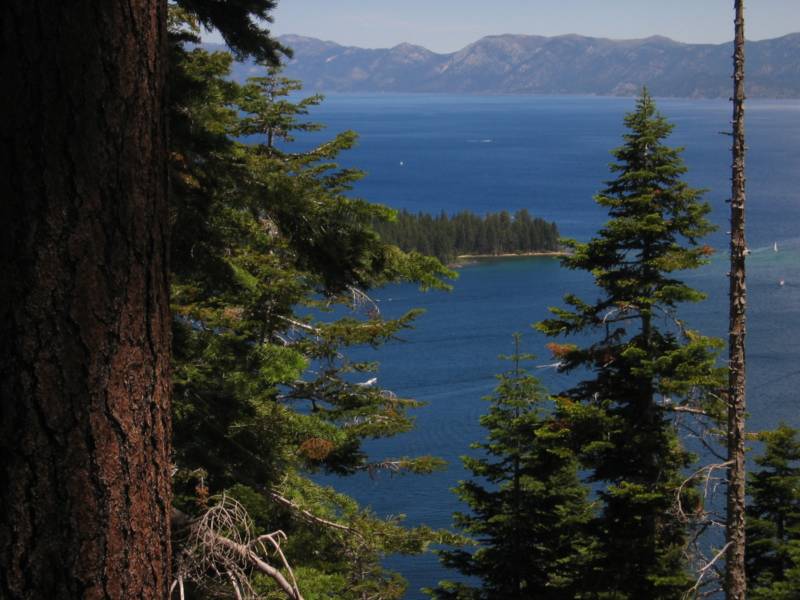
Photo: Craig Miller

Some lakes in Northern California and Nevada are warming twice as fast as the surrounding air temperature, raising concerns that climate change may be affecting aquatic ecosystems more rapidly than terrestrial ones, according to a recently published study.

Researchers from the Tahoe Environmental Research Center, UC Davis and NASA’s Jet Propulsion Laboratory in Pasadena, studied Lake Tahoe, Lake Almanor, Clear Lake, and Mono Lake in California, and Nevada’s Pyramid and Walker Lakes, by analyzing 18 years of temperature data from satellite sensors.

Long-established instrument buoys provided a flow of temperature data for Tahoe, dating back to 1968, which allowed the team to calibrate satellite readings, raising confidence in data gathered from the other lakes. Previous studies have documented the warming of Lake Tahoe but John Reuter, associate director of the Tahoe Environmental Research Center (TERC), says the new study takes that information one step further.

“This study really shows that this phenomenon is happening on a much larger scale than just Lake Tahoe,” said Reuter.

All of the lakes studied showed a strong warming trend among summer nighttime temperatures between 1992 and 2008.  The two lakes that warmed the most during that time, Almanor and Mono, warmed 4.3 degrees (F).  During that time Lake Tahoe’s surface waters warmed 3.7 degrees, averaging .23 degrees annually.  In contrast, Tahoe City’s air temperature increased just .1 degree each year.

TERC director Geoffrey Schladow, who co-authored the study, said there is no doubt in his mind that rising lake temperatures are related to climate change, and he expects that it’s happening across the world, not just in Northern California and Nevada.

“The significance of this study is that across the western United States these very different lakes are displaying signs of warming.  It’s not just a Tahoe issue, it’s a regional issue.  And in all likelihood, it’s a global issue,”said Schladow.

Over the next six months, researchers will be using the remote sensors to extend the study to 50 lakes across the world to evaluate whether or not large lakes everywhere are warming at similar rates.

Warmer temperatures can affect water circulation, which influences the amount of oxygen and nutrients available throughout the lake.  A 2008 study from TERC predicts that warming due to climate change could dramatically affect the amount of mixing in Lake Tahoe, which would deplete the bottom water of oxygen and drastically disrupt the food web.

“Temperature is one of the conditions that dictates who lives in the lakes,” said Schladow. “Warmer temperatures may make the lakes more hospitable to invasive species and put native species under stress.  I’m not saying this is happening yet, but it could.”

In his article about the study, Matt Weiser of the Sacramento Bee has some examples of how warmer temperatures can affect lake ecosystems. And KQED news editor Dan Brekke has assembled an interactive map (below), showing the locations and some temperature data for lakes in the study.


View California’s Warming Lakes in a larger map

Closing the Climate Psychology Gap

A Matter of Degree is a survey of attitudes about climate change developed in partnership with Yale and George Mason Universities.
A Matter of Degree is a survey of attitudes developed by Climate Watch, in partnership with Yale and George Mason Universities.

Keep emotions out of it and meet the uncertainties head-on. Those tips are among the advice offered in a new guide for climate change communicators. Published by the Center for Research on Environmental Decisions at Columbia University,  “The Psychology of Climate Change Communication” is a 54-page guide available on the CRED website that attempts to help educators, journalists, and scientists communicate more clearly about the complicated, politically-charged subject of climate change.   The gist?  It’s not just what you say, it’s how you say it.  Not that this is an earth-shattering revelation but it’s a good reminder to those tasked with conveying detailed scientific information to a general audience that might not have the time, context, or desire to fully process the message.

From the introduction:

… in order for climate science information to be fully absorbed by audiences, it must be actively communicated with appropriate language, metaphor, and analogy; combined with narrative storytelling; made vivid through visual imagery and experiential scenarios; balanced with scientific information; and delivered by trusted messengers in group settings.

This guide speaks to the messengers.  Key recommendations include common-sense strategies such as knowing your audience, getting their attention, and being sure to translate scientific data into concrete experience.    The guide also stresses avoiding the overuse of emotional appeals reasoning that while they may work in the short term, they could backfire down the road because people have a “finite pool of worry” and repeated emotional appeals could lead to “emotional numbing” and apathy.  Most of these recommendations sound useful for all kinds of communication — not just about climate change.

One point, however, seems especially relevant to climate change; the recommendation to directly and precisely address scientific and climatic uncertainties. In other words, meet the unknowns head-on but keep them in perspective:

Climate science uncertainty often conveys the mistaken impression that scientists are hopelessly confused about this complicated subject, when in fact scientific uncertainties about exactly how much warmer the planet will be in 100 years does not change the very high confidence scientists have that human-made greenhouse gas emissions are warming the planet and are likely to continue doing so.

The guide stresses the importance of being very clear about where the uncertainties lie, because they are easy to overstate or understate, which leads to more confusion.  A particularly interesting resource is Table 4: Words with Different Meanings to Scientists and the General Public.  The table itself is a little confusing, but it gives recognition to the “language barrier” between scientists and “laymen,” a key to getting a clear message across.

A study published last month by the Pew Center for People and the Press found that the percentage of American adults who think that there is solid evidence that the average temperature on earth has been getting warmer over the past few decades has declined over the past year, from 71% to 57%. The proportion of Americans who say global temperatures are rising as a result of human activity, such as burning fossil fuels, shrank from 47% to 36% in the same period. It’s an indication that those who have taken on the mantle of communicating the current science can use a little help.

$11 Billion in Water Bonds: Follow the Money

Governor Schwarzenegger traveled to Fresno County Monday to sign the centerpiece of last week’s package of water bills—an $11.14 billion bond measure that would pay for new dams and reservoirs and a sweeping program of conservation, water recycling and drought relief projects.

The governor appeared at a Friant Dam press conference with state Senator Dave Cogdill, R-Modesto, author of the bond initiative. Schwarzenegger said he’s hopeful that the bond, along with other measures in last week’s comprehensive water agreement, will put an end to the “holy water wars” pitting Northern v. Southern California and among cities, agriculture, fishing communities, and environmentalists.

The the governor signed the bond bill amid criticism that last-minute negotiations added more than $1 billion in earmarks designed to win support for the measure.

See our map, prepared by KQED editor Dan Brekke, for a detailed breakdown of where the $11.14 billion in bond money is supposed to go.


View KQED: California Reservoir Watch in a larger map

Marketplace Parses Climate Questions

The public radio program Marketplace continues its ambitious series on climate change, later this month. New reports will air November 16-20 as part of “The Climate Race”, a multidimensional look at “how global warming is already affecting us and the tough choices we have to make.” While the geographic scope of the series ranges well beyond California’s borders, it underscores that much of the nation grapples with the same issues that confront us here in the West. The first four reports, aired last week, are worth catching up with online.

Part 1: “Climate Change in Our Own Backyards” is a snapshot of how climate change is already affecting residents of Helena, MT.  Fewer cold snaps have allowed the mountain pine beetle to run rampant, devastating the area’s surrounding pine forests, and leaving a tinderbox of dead trees for miles across the landscape.  Reporters Sam Eaton and Sarah Gardner talk to residents about how this reality has changed the way people think about climate change and what challenges lie ahead.

Part 2: “The Planet Will Survive, But Will We?” explores episodes of severe climate change in the Earth’s distant past, and explains what ancient tree stumps can tell us about climate past, present, and future

Part 3: Is There Energy to Slow Climate Change?” focuses on energy and the political, social, technological, and economic challenges we face as we consider moving from fossil fuels to renewable energy supplies.  This report zeroes in on West Virgina and the debate between the coal industry and wind power advocates.  In Part 4;  “How Do We Live With a Warmer Planet?”, Eaton and Gardener look at what lies ahead for business, agriculture, and society, as temperatures continue to rise.

Photographs and audio slide shows related to the radio stories are available on the series web page:  “Futuristic Farming” offers a look at a farm that takes water efficiency to new heights, and “Climate Past” features stunning shots of Mono Lake and an interview with paleoclimatologist and geomorphologist, Scott Stein. The “Climate Race” page also includes links to resources, an interactive map of the United States with statistics about how climate change is affecting regions and what changes are expected by the end of the century, and audio clips from experts on topics such as how climate change is expected to affect health and agriculture.

Climate Watch will be sharing resources with Markeplace to cover the U.N. climate talks in Copenhagen, next month. KQED’s L.A. Bureau Chief Rob Schmitz will team up with Eaton for coverage of the two-week conference. Schmitz, who recently reported a series of Climate Watch stories from Japan, speaks Chinese and has extensive experience in international reporting.

USGS: Americans More Water-Conscious Overall

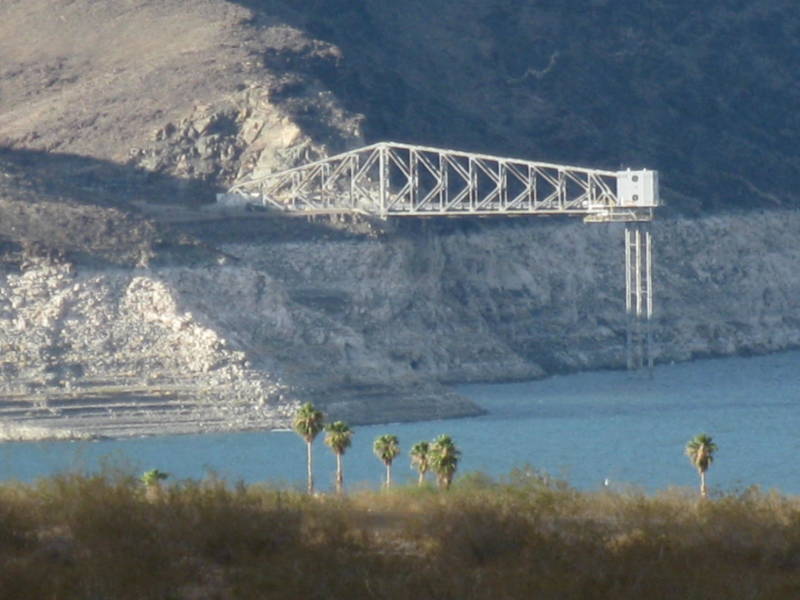
Lake Mead in September 2009 Photo: Craig MIller

Despite the addition of 81 million people over the period, Americans were using less water in 2005 than they were in 1975, according to the latest numbers released from the USGS.

The per-capita decrease of 30% since 2000, down to 1383 gallons per person per day, is a level not seen since the 1950s.  Of course this doesn’t mean that each person in the United States is using more than a thousand gallons per day at home–that number is somewhere between 54 (if you live in Maine) and 190 (if you live in Nevada).  The USGS number is derived from dividing total water withdrawals by total population.  In 2005, the total withdrawal was 410 billion gallons per day (5% less than in the peak year, 1980) and the total population was approximately 310 million.

An analysis by the Oakland-based Pacific Institute finds that the changes in national water use are due to improvements in efficiency, particularly in industrial use and irrigation. However, the largest category of water use–that used for producing energy–is growing (by 3% between 2000 and 2005), and the analysis cites this as a worrying trend as the population increases, particularly in dry parts of the country.  In 2005, 49% of all water withdrawals were for cooling power plants.

“Far more water is required for nuclear and fossil fuel energy systems than for most renewable energy systems,” said Peter Gleick, president of the Pacific Institute, in a statement about the new numbers.  “Water availability will increasingly limit our energy choices as climate change accelerates and population continues to grow.” California’s two commercial nuclear plants are located on the coast and use sea water for cooling.

More efficient farming seems to be one of the bright spots in the report.  Irrigation withdrawals in 2005 declined to the 1970 level of 1.28 billion gallons per day, even though the amount of irrigated land in the nation has increased by millions of acres since 1970.  It seems that American agriculture is, in fact, doing more with less, thanks to more efficient sprinklers and drip irrigation systems. Even so, agriculture still claims about 77% of “developed” water in California, according to Ellen Hanak, water policy analyst with the Pubic Policy Institute of California.

The Pacific Institute commentary added some sobering notes:

The United States, although relatively water-rich, faces a range of threats to its vital supplies of freshwater. Overuse has turned the Colorado River into little more than a trickle. Overuse and contamination threaten the massive Ogallala aquifer, which runs from Texas to South Dakota and is an important source of irrigation and drinking water. Political and economic conflicts are growing between Alabama, Florida, and Georgia over water use. And other serious threats to our water resources – including climate change, environmental destruction, and population growth – remain unaddressed.

Household water use across the country is growing proportionately to U.S. population growth.  While people are becoming more water-efficient at home, these behavioral changes are being balanced out by a shift in population to hotter, drier areas, such as the Southwest.

The Pacific Institute’s Circle of Blue Water News has interactive maps showing which states have decreased their water withdrawals between 2000 and 2005 and total water withdrawals by state for this time period, as well as charts tracking U.S. water withdrawals since 1950.

11/18/09 Update:
Listen to audio of Peter Gleick discussing the report’s findings on today’s broadcast of NPR’s Morning Edition.

Attitudes about Climate Change are Shifting. Is Yours?

app_full_proxy
One possible Facebook results "badge" from KQED's "Matter of Degree" survey

Coinciding with the release of a Climate Watch Facebook survey that explores attitudes toward climate change, a new national poll by the Pew Research Center for People and the Press shows that the percentage of people who believe that climate change is a reality has decreased significantly in the past year.  Last year, 71%  nationwide believed the Earth was warming, regardless of the cause. This year the number is 57%.

Yesterday, Andrew Kohut, who directs the Pew Research Center for People and the Press, and Dr. Anthony Leiserowitz of the Yale Project on Climate Change joined Neal Conan on Talk of the Nation to discuss changing attitudes about climate change. (You can listen to the 30-minute segment or read the transcript here.)

Kohut said that the economy most likely plays a large role in the drop.  The number of respondents who assigned a top priority to protecting the environment dropped from 56% to 41% in this year’s study, while the proportion who chose dealing with the economy rose to 85%.  That squares with another part of the survey, in which fewer people said they were willing to protect the environment if it meant slowing economic growth or higher energy prices.

“I think what happens,” said Kohut on yesterday’s program, “is if you’re giving [the environment] a low priority, people will sometimes develop a rationale for that low priority. So you have more people saying, ‘Well, maybe it’s not all that serious’…”

Kohut also pointed out that the cool summer experienced by much of the country this year could have played a role in the apparent flagging acceptance of climate change.

The Pew report, released last week, shows a dramatic partisan split in attitudes toward climate change.  Just thirty-two percent of conservative Republicans believe there is solid evidence for global warming, compared with 83% of liberal Democrats, according to Pew.

Leiserowitz discussed his research into attitudes about climate change, which was done in collaboration with the George Mason University Center for Climate Change Communication.

“This research really came from the recognition that Americans don’t speak with a single voice about climate change,” said Leiserowitz. “And what we found, in fact, is that there are six different Americas within America on this particular issue.” National surveys of attitudes toward climate change often yield very different results from polls in California, where there has been greater acceptance of the warming concept in general, as well as the role of human activity in it.

The original Yale-George Mason study, called “Global Warming’s Six Americas,” divides survey-takers into six psychographic groups: Alarmed (18%), Concerned (33%), Cautious (19%), Disengaged (12%), Doubtful (11%), and Dismissive (7%).

Climate Watch teamed up with Leiserowitz and his colleague Ed Maibach from GMU, to create an online version of this survey, called “A Matter of Degree.”  You can take the survey on KQED’s website or on Facebook.  Both versions allow you to compare your results to those of the original study as well as all online survey-takers.  With the Facebook version you can also compare your results with your Facebook “friends” who have already taken the survey and can invite new friends to take the survey.  The Facebook application also features a discussion area where respondents can share thoughts about the climate change and the survey itself, and there are links to learn more about each profile “type”.

What’s your climate profile?  Take the survey and find out.