Audio: Renewed Hope for One Undocumented Student

KQED NEWS
June 17, 2012
Mina Kim

Friday was a day of celebration for many young people in the country illegally. President Obama announced the U.S. will no longer deport them if they’re under 30 years old, have been here five years and have no felony record. Undocumented students can now study here legally. One recent UC Berkeley grad has lived under the threat of deportation most of his life. His dream? listen to the rest of the audio file to find out.

Part 1 of the TED Radio Hour: How Do Schools Suffocate Creativity?

"There's a terrible tendency to confuse raising standards with standardizing." — Sir Ken Robinson

KQED News
June 22, 2012
Written by: NPR/TED Staff

Part 1 of the TED Radio Hour episode Building A Better Classroom. Watch Sir Ken Robinson’s full Talks — Schools Kill Creativity and Bring On The Learning Revolution — on TED.com

About Sir Ken Robinson’s Talks

In his first Talk, Schools Kill Creativity, education expert Sir Ken Robinson makes a moving case for creating an education system that nurtures, rather than undermines, creativity.
In the second Talk, Bring On The Learning Revolution, he makes the case for a radical shift from standardized schools to personalized learning — creating conditions where kids’ natural talents can flourish.

Listen to this compelling series here.

Oakland Graduates Series

Margarita Brizuela, Arise HS College: Mills College
Roxanna Ambriz, Arise HS College: Chico CSU
Kwodwo Moore, Emery Secondary HS College: East Bay CSU
Greg Belvin, Skyline HS College: University of West Georgia
Diana Ocampo, Arise HS College: UC Santa Cruz


Congratulations to these American Graduates! In the next couple of weeks we will share their inspiring stories and get an insight as to what they look forward to in college and beyond.


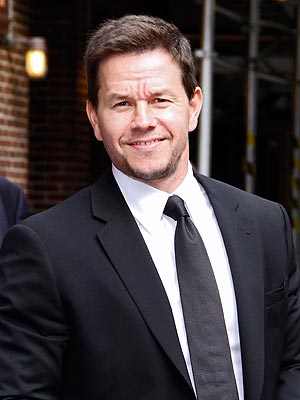
Mark Wahlberg Heading Back to High School

Mark Wahlberg Will Earn His High School Diploma Online

CBS News
June 13, 2012

Actor Mark Wahlberg is returning to school later this month to study for his high school diploma.

The star quit school at the age of 13 and, after a stint behind bars for assault, he became a model and pop star before making it in Hollywood.

Last year, the Massachusetts-born Wahlberg admitted he was eager to go back to school so he can become a better role model for his children – and the actor has now enrolled in an online course to complete his education.

He tells David Letterman, “I am going back now. They have this new program in Massachusetts now where you can actually take the courses online, so I’m starting this month; I’m gonna go and get my high school diploma.”

Wahlberg admits he is “a little nervous” at the prospect of returning to his school books, but he is determined to pass with flying colors – and he’s hoping to take advantage of his spare time in between filming movies so he can speed through the tests and graduate within months.

He says, “It’s an actual diploma, so I gotta take up all the courses that I missed and I’m a little nervous, but … I have a lot of down time on sets and in trailers so I just wanna blast through (the course). Hopefully be able to do it (graduate) in six to eight months.”

Wahlberg’s kids aren’t the only reason behind his desire to complete school. He feels guilty serving as the spokesman for Taco Bell’s Graduate To Go program, which provides support to at-risk students.

He adds, “They asked me to do this and I was like, ‘Dude, I never graduated, why would you pick me to do this?’”

And Wahlberg has his sights set on another type of studies once he passes his high school exams.

He says, “I would love to, at some point, go to film school.”

Teaching America’s New Majority

Washington Post
June 1, 2012
Maggie Severns

A couple weeks ago, the Census bureau announced that minority babies made up the majority of births in the United States in 2011. I wrote an opinion piece for today’s Washington Post about why this symbolic shift should be a wake-up call for the public school system: Student demographics are changing, but policies revolving around how we instruct English language learners have yet to catch up.

Read the full article here.

New Education Standards End Rote Learning, Cursive

San Francisco Chronicle
June 11, 2012
Written By Jill Tucker

Like fashion, trends in public education come and go.

What’s in vogue depends on the decade and often reflects which way the political wind blows and what shiny gadgets have hit the market.

With the threat of Soviet innovation and Sputnik, old math became new math in the 1960s and then back to old arithmetic about 10 years later.

Phonics, like bell bottoms, always makes a comeback, although some fads are but brief historical blips. Think the metric system and mullets.

But with such limited time to teach, there have long been debates about what children need to know and how and when to teach it – and when to stop teaching something altogether.