Major partnership is said to be the most ambitious of its kind
Up to now, tracking greenhouse gas emissions around the world has been a patchwork affair for scientists. But if it lives up to its hype, a new partnership with roots in California will mean a much more accurate picture of the heat-trapping gases that cause global warming.
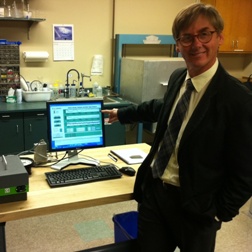
Climate scientist Ralph Keeling tracking real-time carbon dioxide readings from his lab at UC San Diego. (Photo: Ed Joyce)
Scientists come up with a way to handicap a key harbinger of spring
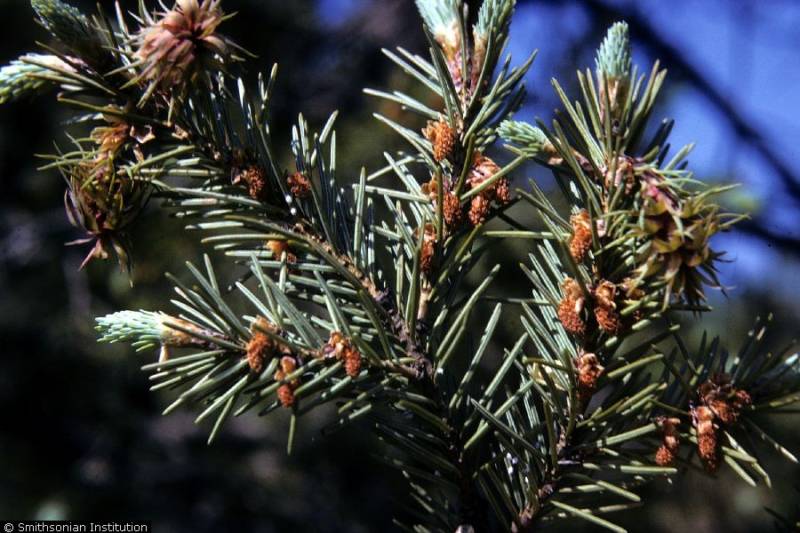
Photo: R.A. Howard from the USDA-NRCS PLANTS Database
Bud burst, when the buds on a tree begin to open up, marks the end of winter dormancy and the beginning of a tree’s growing season. Timing’s important: If a tree buds too early, it may be susceptible to a late frost. Too late, and it misses out on some or all of its growing season. As the climate warms, this delicate timing can go awry.
Scientists at the US Forest Service’s Pacific Northwest Research Station in Portland, Oregon, have developed a model to predict bud burst. They used Douglas firs in their experiments but also surveyed research on about 100 other species, so they expect to be able to adjust the model for other plants and trees.
Both cold and warm temperatures affect the timing, and different combinations yield different outcomes — not always intuitive. With plenty of hours of cold temperatures, trees need fewer warm hours to burst. So earlier spring warmth will drive bud burst earlier. If a tree isn’t exposed to enough cold, though, it needs more warmth to burst. So under the most dramatic climate change scenarios, warmer winters could actually mean a later bud burst.
Genes play a roll, too. The researchers experimented with Douglas firs from across Oregon, Washington, and California. Trees from colder or drier environments showed earlier burst. Trees descended from those lines could fare better in places where their warmer-and-wetter-adapted cousins live now.
The team, led by research forester Connie Harrington, hopes to use the model to predict how trees will respond under various climate projections. With that information, land managers can decide where and what to plant, and, if necessary, plan assisted migration strategies.
A report pinpoints critical areas in California for protecting critters
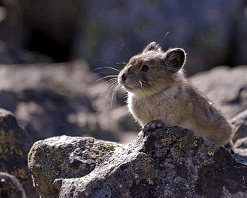
The North American pika like the protection and cool refuge of high-elevation talus slopes. (Photo: US Forest Service)
California is one of five places on earth with a Mediterranean climate. It has enough endemic plant species to be its own “floristic province.” It’s also what biologists refer to as a biodiversity hotspot. So it’s not surprising that a report by the Endangered Species Coalition includes three places either completely or partially within California in its list of ten of the most important locations to protect endangered species.
Reporting on climate change sinks to its lowest level since 2005
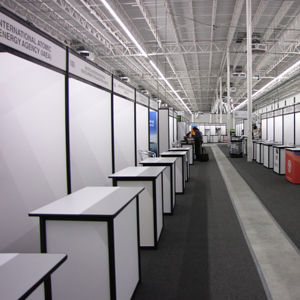
Empty stalls outside the UN climate talks the night before the opening. (Photo:Gretchen Weber)
When Al Gore lamented recently in the Huffington Post that “the media has failed to appropriately cover the climate crisis,” he was talking about the relatively small amount of science that made it into reporting about the 2009 climate conference in Copenhagen.
But it looks like in 2010, the issue wasn’t so much a lack of science in the reporting, as the lack of reporting in general. An analysis by the Daily Climate that’s been making the rounds, finds that in 2010 coverage among major media outlets of climate change dropped to its lowest level since 2005. Between 2009 and 2010, it dropped 30%, according to the Daily Climate tally. Continue reading Climate’s 10 Seconds of Fame→
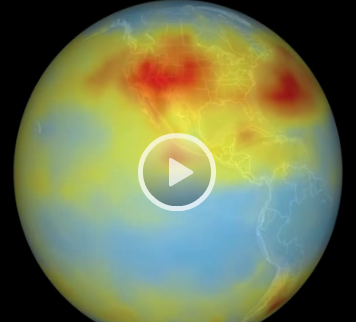
In order to reduce CO2 levels, we need to know where they are coming from. In the video below, produced by Climate Central, NASA scientist David Crisp of the Jet Propulsion Lab at California Institute of Technology explains how scientists use satellites to identify the sources of CO2 in the atmosphere.
Pollution reduction measures that were aimed primarily at reducing California’s notorious smog problem and improving public health, also helped cut emissions of black carbon — a key global warming agent — according to a new study published Tuesday.
Black carbon, more commonly referred to as soot, is an atmospheric particulate that scientists have shown to be a significant contributor to global warming. It is an attractive target for emissions reductions because relatively cost effective technologies to reduce it already exist, such as diesel particulate filters for trucks, and because unlike carbon dioxide (CO2), which stays in the air for decades to millennia, black carbon only remains airborne for days to weeks. Continue reading The Other Effect of CA’s Clean Air Laws→
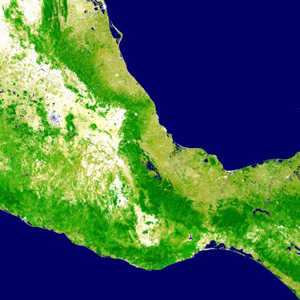
Map of Mexico created with Google Earth Engine by scientist Matthew Hansen and CONAFOR. Google says this is the finest scale forest cover map produced of Mexico to date.
This week in Cancun, in a jungle-themed conference room with green lighting and an audio track of rain forest sounds, Google launched a new technology platform designed to help scientists — and ultimately developing countries — monitor deforestation. Google Earth Engine combines LandSat satellite imagery from the last 25 years (much of which was not previously available online) with analytical tools provided by scientists, which will allow users to make fine-scale maps.
Greg Asner of the Carnegie Institute at Stanford is one of Google’s partners in the project. His lab provided some of the algorithms built into the Earth Engine that will allow users to analyze the satellite data online.
“There have been two major bottlenecks in helping people to map and keep track of deforestation and degradation: getting access to the satellite data and making it user-friendly,” said Asner. Continue reading New Google Tool Helps Monitor World’s Forests→
Marjorie Sun’s story on climate education efforts by science museums is particularly timely, since the legislative landscape in Washington is most likely to become more hostile to climate science, when Congress turns over next month (see John Broder’s post for the New York Times, for more on the Senate’s highest-profile climate contrarian).
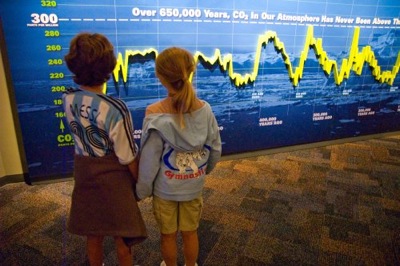
Part of the "Feeling the Heat" exhibit at Birch Aquarium, near San Diego. (Photo: Birch Aquarium)
One of the educators interviewed in her radio feature, Tom Bowman, was among the signatories of a letter published in the journal Science shortly after the story first aired on KQED’s Quest. Bowman’s firm helps develop climate exhibits, including those at the Monterey Bay Aquarium and the Birch Aquarium in La Jolla.
The letter declared that “Because the potential consequences of climate change are so high, the science community has an obligation to help people, organizations, and governments make informed decisions.”
The missive went on to call for a major initiative among scientists to improve public understanding of climate issues:
“The initiative must make concerted efforts to provide people, organizations, and governments with critical information, to address misperceptions, and to counter misinformation and deception.” Continue reading A Call for Better Climate Awareness→

 In order to reduce CO2 levels, we need to know where they are coming from. In the video below, produced by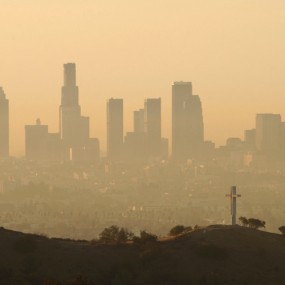
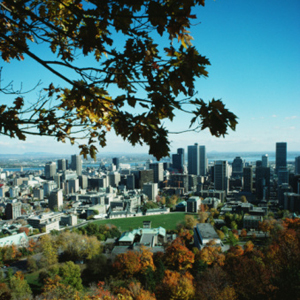 When the temperature shoots up, cities usually feel the heat the most. But some cities feel the heat more than others.