Category Archives: Power

Progress and pitfalls in California’s clean energy quest

California Leads Clean Energy Derby

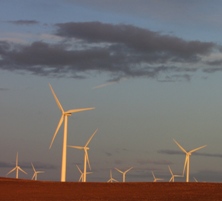
Wind turbines in Solano County. (Photo: Craig Miller)

A new ranking of clean energy development in the US has California well out in front, with Oregon running a distant second.

Clean Edge, which describes itself as “the world’s first research and advisory firm devoted to the clean-tech sector,” has released its “first annual U.S. Clean Energy Leadership Index.” Massachusetts, Washington, and Colorado round out the top five. The firm, which has offices in San Francisco and Portland, Oregon, says it used 80 indicators and 4,000 individual data points to calculate the rankings, including numbers of alternative-fuel vehicles and the flow of clean-tech venture capital, as well as the states’ portion of electricity generated from carbon-free sources.

As Todd Woody points out in his post for Reuters, the rankings may furrow brows in a couple of Midwestern states that have been showing some leadership in specific areas. Iowa, for example, is ahead of California in the wind energy race.

Also this week, Florida-based NextEra Energy Resources said it had reached a settlement with regulators and environmental groups to replace more than 2,000 older wind turbines in California’s Altamont Pass, to reduce the number of bird fatalities. The new turbines, while much larger, spin at slower speeds and provide fewer places for birds to nest.
Chu Tones it Down for Cancun

Energy Secretary takes the cautious route in Cancun; just part of the sideshow at COP16.

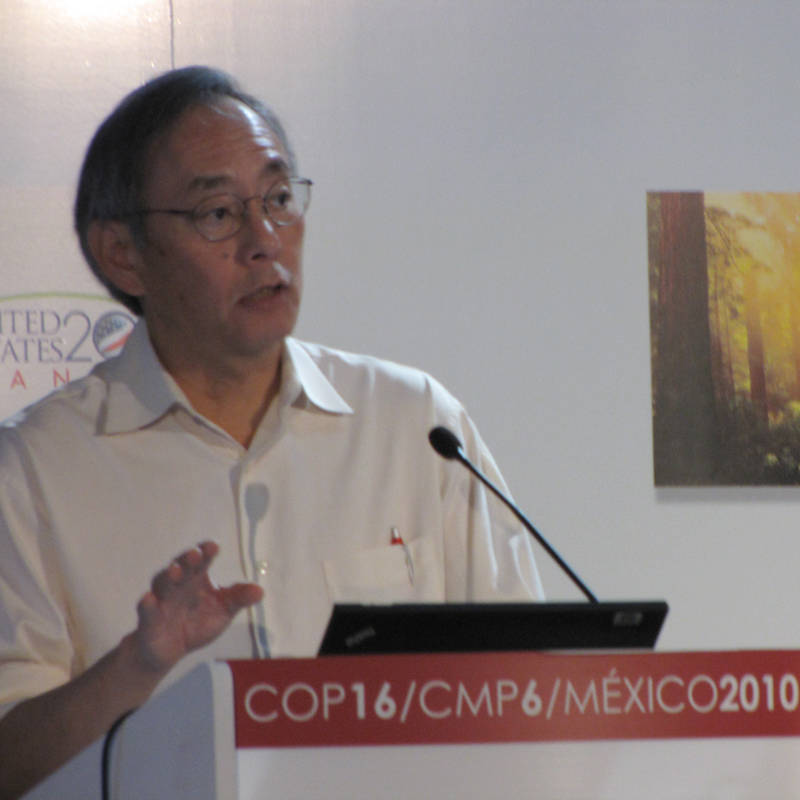
US Secretary of Energy Steven Chu adhered to COP16’s more casual dress code when he spoke at the US Center in Cancun on Monday. (Photo: Gretchen Weber)

The UN climate negotiations in Cancun may be the official attraction, but in many ways, there’s just as much happening at the “side events” here at COP16.  There are dozens everyday — last week there were more than 150, and that number is increasing this week as more people arrive for the final days of the talks.  While the negotiations are limited to representatives from national governments, the side events provide a stage for non-governmental organizations (NGOs), scientists, business leaders, and local and regional government officials, many of them, it turns out, from California. Continue reading Chu Tones it Down for Cancun

Climate News Roundup

Geoengineering: Use it or Lose it?

Just as delegates from 193 nations agreed to a voluntary moratorium on geoengineering research last week at the international Convention on Biological Diversity (CBD) in Nagoya, Japan, the US House Science and Technology Committee issued a report outlining how federal geoengineering research could be pursued in the United States. The international agreement to ban the research does not apply to the US, which has not ratified the CBD. (More from The Washington Post and Climate Central.) Continue reading Climate News Roundup

Climate News that Went By in a Blur

Some of the week’s energy, climate, and emissions developments in California, that may have been overshadowed by other news:

Largest Solar-Thermal Project Breaks Ground
Officials broke ground on the first large-scale solar-thermal plant to be built in the United States in 20 years. BrightSource Energy says its $2 billion, 10,000-MW Ivanpah project, located in the Mojave Desert, will be the largest solar thermal project in the world.  (More from KQED’s The California Report and The New York Times)

Prop. 23 Funding
Opponents of Proposition 23 have contributed three times as much money to the campaign as those in favor of the measure that would suspend California’s climate change legislation.  As of October 29, the “No” campaign had raised more than $30 million, while the “Yes” campaign had raised just over $10 million, mostly from out-of-state oil refiners Valero and Tesoro.  (More from maplight.org, and to see where across the US the money is coming from, check out Climate Watch‘s interactive map that tracks the major funders.) Continue reading Climate News that Went By in a Blur

Water and Power

Two recent events provide a timely backdrop for this conversation, the water level in Lake Mead, the huge reservoir on the Colorado River, reached a record low — and the National Center for Atmospheric Research released a new report on projected drought impacts, worldwide, described as “possibly reaching a scale in some regions by the end of the century that has rarely, if ever, been observed in modern times.”  — Ed.


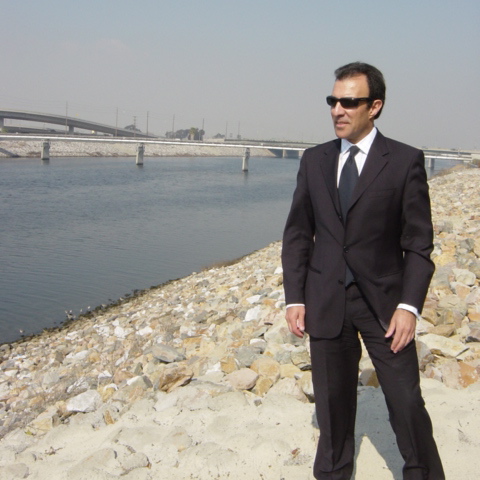
David Nahai on at the Los Angeles River in 2006

David Nahai was CEO and General Manager of the Los Angeles Department of Water and Power (LADWP) from 2007 to 2009. On Nahai’s watch, the utility amped up renewable energy projects and launched new outdoor water restrictions that resulted in Angelenos cutting their consumption by more than 20%.

 I first met Nahai a decade ago when he and other members of the Los Angeles Regional Water Quality Control Board were grappling with what was arguably the nation’s worst urban runoff problem.
 Currently he’s a green-tech consultant and advisor to the Clinton Climate Initiative (CCI).

 I sat down with him in his little corner of a Century City high rise. He started by reminding me that opinions expressed in our discussion were his alone, not those of CCI: Continue reading Water and Power

Parks Chief: No “Free Ride” for Renewables

Renewable energy developers will get no special treatment in the National Parks, according to National Park Service Director Jon Jarvis.

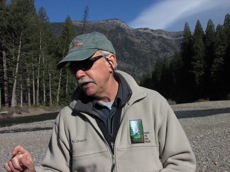
National Park Service Director Jon Jarvis at McDonald Creek, Glacier National Park (Photo: Craig Miller)

Jarvis made the comment yesterday while touring Glacier National Park in Montana, with members of the Society of Environmental Journalists. “Renewables do not get a free ride,” said Jarvis, when asked about how the parks would treat development of renewable energy sources on park property.

Using the backdrop of Glacier National Park, where the remaining 25 glaciers (out of an estimated 150) are expected to disappear by 2030, Jarvis called climate change the most serious threat ever posed to the integrity of the park system. Continue reading Parks Chief: No “Free Ride” for Renewables

San Benito PV Array Clears a Key Hurdle

Photo: Craig MIller

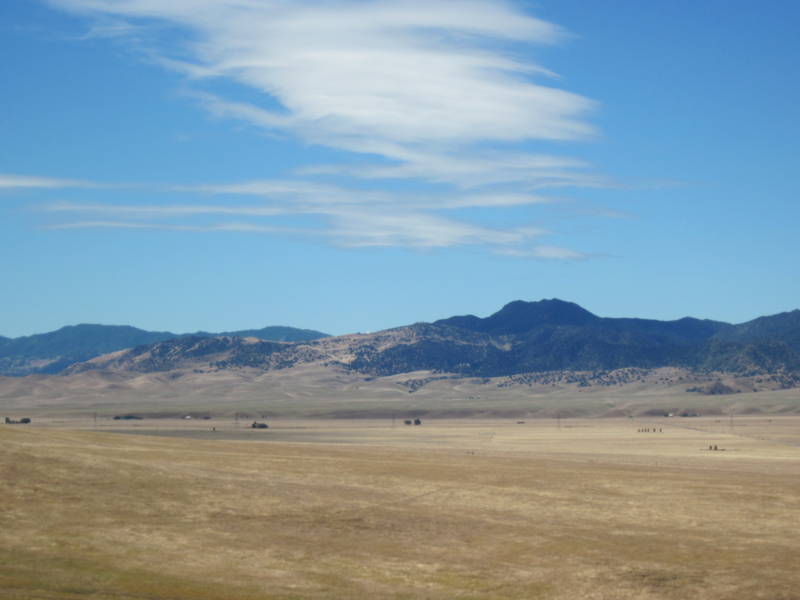
Cupertino-based Solargen Energy cleared a major hurdle this week in its plan to build a nearly 400-megawatt solar farm in the Panoche Valley. Late Tuesday the San Benito County Board of Supervisors unanimously  approved the company’s environmental impact report. The project has seen opposition from environmental groups and valley residents concerned about the impact of covering more than 4,700 acres with photovoltaic (PV) solar panels. The Board also approved the water supply assessment and canceled several Williamson Act contracts, both paving the way for the project to move forward.
Continue reading San Benito PV Array Clears a Key Hurdle

Prop 23: The View from Valero

Carbon dioxide is “not pollution,” say engineers for the nation’s biggest refiner.

Listen to Rachael Myrow’s radio feature on The California Report.

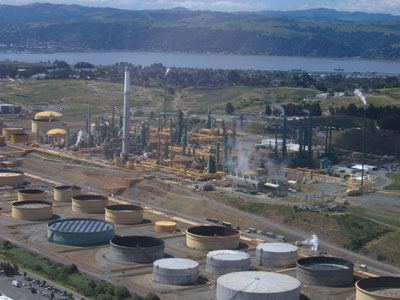
Valero's Benicia refinery in Solano County. (Photo: Craig Miller)

Last week, as the campaign rhetoric for and against Proposition 23 was heating up, The California Report host Rachael Myrow and I spent an afternoon with three of Valero’s environmental specialists at the company’s refinery in Benicia, up the Sacramento River from San Francisco Bay. They briefed us on the refining process in some detail and drove us around the 400-acre refinery site, near the Carquinez Strait in Solano County.
Continue reading Prop 23: The View from Valero

Offshore Wind’s Google Boost

Google makes a billion-dollar bet on offshore wind–but not on this coast.

When Google announced that it was taking a nearly 40% stake in a $5 billion underwater transmission line to serve offshore wind farms that haven’t been built, nobody even seemed to flinch. Such is the effect of having the Google imprimatur on renewable energy projects.

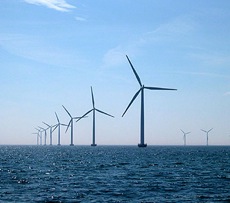
The Nysted wind farm, off the coast of Denmark. The US presently has no offshore wind generation.

According to reports, the cable would run for 350 miles, about 20 miles off the Atlantic coast, connecting yet-to-be-built wind energy turbines to the mainland and to each other. It would not connect the only offshore wind farm to so far win approval from the federal Department of the Interior, the long-contested Cape Wind project off Massachusetts. Continue reading Offshore Wind’s Google Boost

First Federal Approvals for Big Solar

UPDATE: Since this post was first published, the BLM has also given the nod to another major solar energy installation, the approximately 400-megawatt Ivanpah project, being developed in San Bernardino County by Oakland-based BrightSource Energy.

The federal Bureau of Land Management today issued its first approvals of major solar energy projects in California.

The Tessera project will use "SunCatchers" to concentrate solar power. (Image: Tessera Solar)

Tessera Energy’s 700-megawatt Ocotillo project, located in the Imperial Valley, about 100 miles east of San Diego, and a smaller photovoltaic (PV) project by San Ramon-based Chevron Corp., are both cleared to go forward.

The two projects set a precedent not just for California. On a call with reporters this morning, Department of Interior Secretary Ken Salazar called it a “historic day,” saying the two projects “bear the distinction of being the first large-scale solar energy projects ever approved for construction on our nation’s public lands.” Continue reading First Federal Approvals for Big Solar